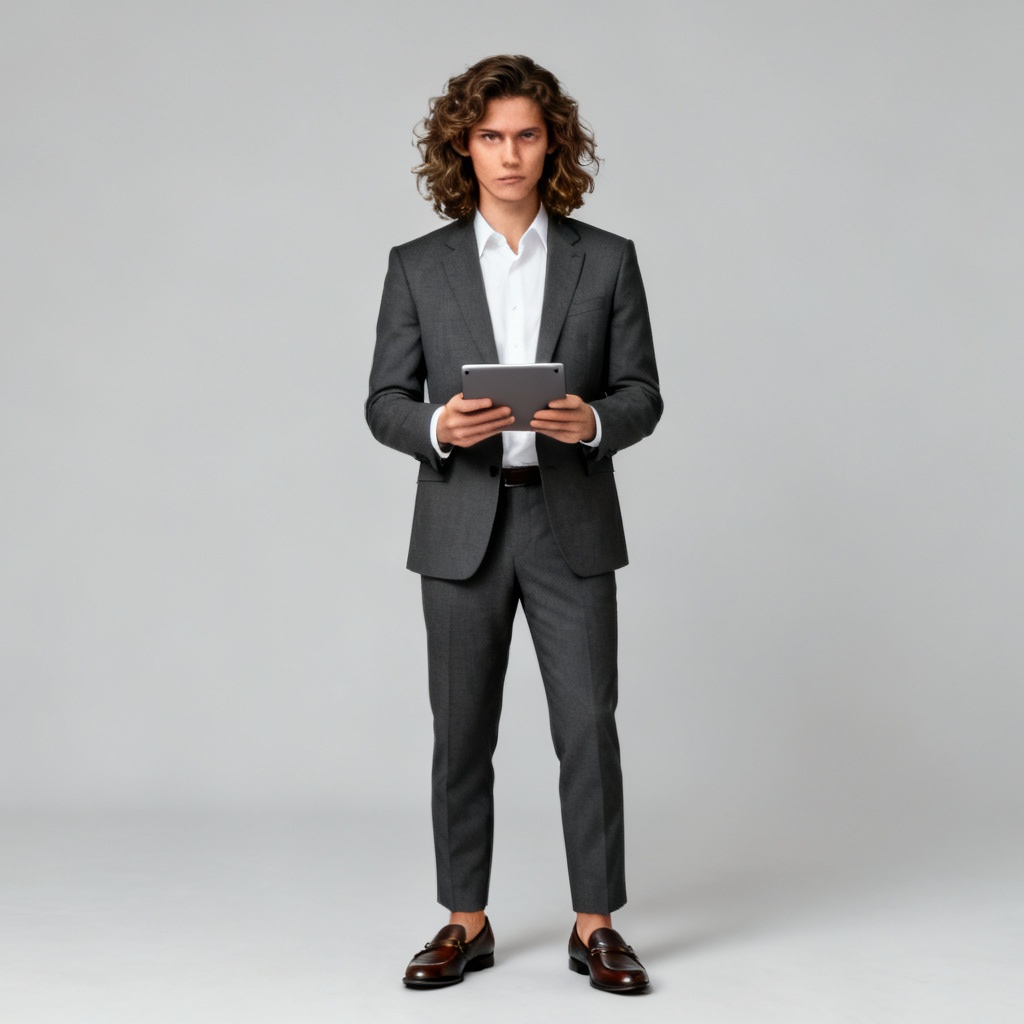
TR Rome Fabric: A Versatile NTR Knitted Fabric for Modern Apparel
TR Rome Fabric: A Versatile NTR Knitted Fabric for Modern Apparel
Introduction
TR Rome fabric is a practical and adaptable textile developed from a polyester-rayon blend and manufactured in a knitted structure. Often classified as an NTR knitted fabric, it combines the easy-care performance of polyester with the soft hand feel and elegant appearance associated with rayon. This balance makes it suitable for men’s and women’s clothing, uniforms, fashion collections, workwear, lightweight jackets, trousers, dresses, skirts, and many other apparel applications.
In today’s textile market, buyers are looking for more than attractive fabric. They need a material that is dependable during cutting and sewing, comfortable during wear, stable after laundering, suitable for dyeing and printing, and available at a commercially practical price. TR Rome fabric responds to these requirements by bringing together durability, light weight, color versatility, and a comfortable surface in one textile solution.
The fabric is also supported by an integrated manufacturing background. Hangzhou Jinfeng Textile Co., Ltd. operates across blended-fabric production, processing, post-dyeing, finishing, and DTY polyester yarn production. This type of production structure gives buyers access to a supplier that understands both the yarn stage and the finished-fabric stage. It can help improve communication, support customized development, and create greater consistency between different production orders.
This article examines the construction, performance, manufacturing process, applications, purchasing advantages, and quality considerations of TR Rome fabric. It also explains why this NTR knitted fabric can be a strong alternative to less balanced materials when apparel manufacturers need a combination of comfort, appearance, durability, and cost control.
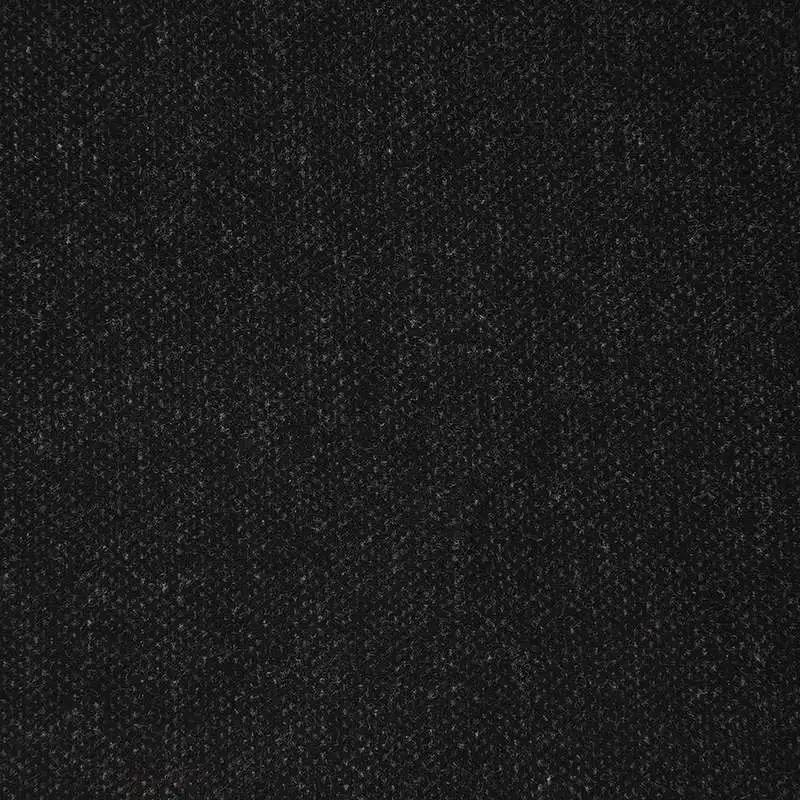
TR Rome Fabric(Men's and women's clothing fabrics)
1. Understanding TR Rome Fabric
1.1 What Does TR Mean?
The abbreviation “TR” generally refers to a polyester and rayon blend. Polyester contributes strength, dimensional stability, abrasion resistance, and ease of maintenance. Rayon contributes softness, a pleasant drape, and a more natural-looking surface. The exact blend ratio may vary according to the intended end use, customer specifications, and required performance characteristics.
Blending these two fibers allows manufacturers to reduce the limitations of using either fiber alone. Polyester by itself can sometimes feel less natural, while rayon by itself may require more careful handling because of its lower wet strength and greater tendency to shrink or crease. In a well-engineered TR construction, the two fiber types complement one another.
TR Rome fabric is therefore not simply a basic polyester textile. Its value comes from the interaction between fiber composition, yarn selection, knitted structure, dyeing, finishing, and quality control. These elements determine how the fabric feels, stretches, recovers, accepts color, and performs in a finished garment.
1.2 What Is Rome Fabric?
Rome fabric is commonly associated with a compact knitted construction that offers a smooth appearance, moderate thickness, and useful body. Depending on the specific machine settings and finishing treatment, it may have a stable surface, a clean reverse side, and a degree of natural stretch created by the knitted loops.
Unlike many lightweight single-jersey fabrics, a Rome-style knitted structure can provide greater substance and support. This makes it suitable for garments that need to hold their shape without becoming excessively heavy. It can be used for structured dresses, tailored-looking knitwear, trousers, jackets, skirts, and coordinated fashion sets.
The fabric’s construction also supports a refined appearance. The surface can be dyed in solid colors or developed with printing effects, while the compact knitted body helps garments look more polished. This combination of comfort and visual structure is one reason TR Rome fabric is attractive for both casual and semi-formal clothing.
1.3 Relationship to NTR Knitted Fabric
NTR knitted fabric represents a category in which knitted fabric design and fiber blending are selected to achieve a balance of wearability and appearance. TR Rome fabric belongs to this practical category because it uses a polyester-rayon composition in a knitted construction. The result is a textile that can serve a broad market rather than a single specialized application.
Although fabric specifications can differ from one production program to another, a buyer should evaluate the material according to measurable requirements. These may include width, weight, composition, colorfastness, shrinkage, pilling resistance, stretch and recovery, spirality, surface appearance, and compatibility with cutting and sewing equipment.
2. Main Performance Advantages
2.1 Balanced Durability
One of the most important advantages of TR Rome fabric is its balance between softness and durability. Polyester fibers help the fabric resist daily abrasion, repeated handling, and the mechanical demands associated with garment production. This is especially valuable for trousers, uniforms, jackets, and other garments that receive frequent wear.
Rayon helps soften the overall hand feel and can improve the visual depth of dyed colors. Rather than producing a rigid or overly synthetic surface, the blend can offer a smoother and more comfortable touch. Buyers therefore receive a textile that is practical for commercial production while still meeting consumer expectations for comfort.
Compared with some delicate rayon-rich fabrics, TR Rome fabric can be easier to manage during manufacturing and use. Compared with a basic polyester knit, it can provide a more refined surface and more pleasant drape. This middle position is a major competitive advantage for brands seeking broad market appeal.
2.2 Lightweight Comfort
TR Rome fabric is designed to provide useful coverage without unnecessary bulk. Its relatively light weight supports comfortable movement and makes it suitable for garments intended for indoor use, transitional seasons, travel, work, and everyday wear.
A lightweight textile can also reduce the total material burden of a garment. This may simplify handling during cutting, reduce shipping weight, and make finished clothing easier for consumers to wear and care for. At the same time, the Rome-style knitted structure can provide enough body to prevent the fabric from appearing excessively thin or unstable.
Comfort is influenced by more than weight alone. Surface smoothness, air movement, moisture behavior, seam construction, and garment design all affect the wearing experience. TR Rome fabric supports a comfortable result by combining a soft rayon component with the flexible nature of knitted construction.
2.3 No Unnecessary Heat Retention
The supplied product information identifies the fabric as having no heat-retention disadvantage in normal use. In practical terms, this means the material can be suitable for garments where consumers want coverage and structure without an excessively warm or heavy feeling.
Actual thermal comfort depends on fabric weight, knitting density, garment fit, lining, color, climate, and activity level. For this reason, responsible product development should include wear trials and laboratory testing. Nevertheless, the balance of a lightweight construction and a comfortable knitted surface makes TR Rome fabric appropriate for many environments in which excessive insulation is not required.
2.4 Soft Hand and Attractive Drape
Rayon is widely valued for its soft touch and fluid appearance. Within a TR blend, it can help the fabric drape more naturally than many conventional polyester fabrics. This is beneficial for dresses, skirts, relaxed jackets, wide-leg trousers, and fashion items that depend on movement and visual flow.
The fabric does not need to be limited to loose silhouettes. Its compact body can also support cleaner, more tailored designs. Designers can use pattern shape, seam placement, pleats, darts, and panel construction to create garments that appear structured while remaining comfortable.
2.5 Shape Stability
Polyester contributes to shape retention and helps the garment maintain a consistent appearance during repeated wear. The knitted construction can provide natural flexibility, while suitable finishing can improve dimensional stability and reduce undesirable deformation.
Shape stability is especially important for garments that are expected to look professional throughout the day. Uniforms, office clothing, travel garments, and coordinated fashion pieces all benefit from a material that does not lose its visual form quickly.
As with all knitted fabrics, production and care conditions should be controlled. Excessive tension during knitting, dyeing, drying, or compacting can influence final dimensions. Reliable manufacturing therefore requires process monitoring rather than relying on fiber composition alone.
2.6 Dyeing and Printing Versatility
TR Rome fabric can be dyed and printed in many colors and patterns. This versatility gives designers considerable freedom when developing seasonal collections, private-label programs, uniforms, and promotional clothing.
Solid dyeing is suitable for classic garments, corporate uniforms, schoolwear, and minimalist fashion. Printed designs can support floral patterns, geometric effects, abstract artwork, stripes, checks, and other visual concepts. Color development can be coordinated with a brand palette or adjusted for a particular market.
Color performance should be evaluated through appropriate testing. Important properties may include washing fastness, rubbing fastness, perspiration fastness, light fastness, and color matching between production lots. The final result depends on the dye class, pretreatment, dyeing temperature, fixation, washing, drying, and finishing parameters.
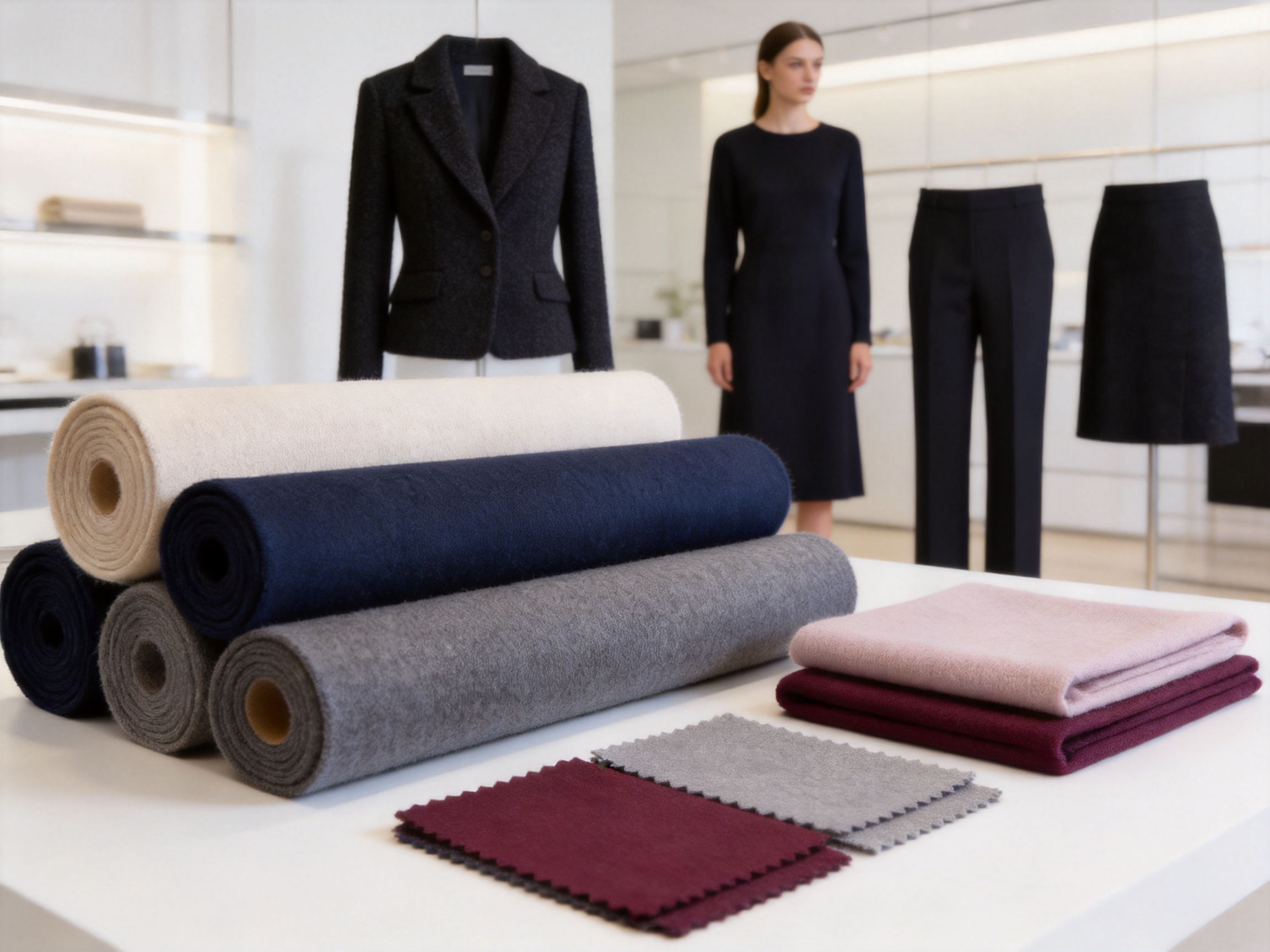
3. Comparison with Alternative Fabrics
3.1 TR Rome Fabric Compared with Plain Polyester Knits
Plain polyester knits are popular because they are durable, economical, and easy to process. However, some basic polyester constructions may have a more synthetic hand feel or a less natural drape. TR Rome fabric can provide a softer touch and a more elegant appearance because of its rayon component.
For buyers whose priority is the lowest possible material cost, a basic polyester knit may remain appropriate. For buyers who need a stronger balance between commercial price, comfort, and fashion presentation, TR Rome fabric can offer greater value. The choice depends on the end use, but TR Rome fabric often occupies a more versatile position.
3.2 TR Rome Fabric Compared with Rayon-Rich Knits
Rayon-rich knits can offer excellent softness and drape, but they may require more careful control during cutting, washing, and finishing. They can also be more sensitive to dimensional change and mechanical stress depending on the specific construction.
TR Rome fabric adds polyester to improve practical performance. This can help the garment retain its shape, withstand regular handling, and meet the durability expectations of commercial clothing. The fabric may therefore be a better option for products that need both a soft hand and dependable service life.
3.3 TR Rome Fabric Compared with Cotton Blends
Cotton blends are valued for their familiar natural hand and broad consumer acceptance. However, cotton can bring challenges related to moisture retention, drying time, shrinkage, and color maintenance. TR Rome fabric can provide a smoother and more stable alternative for garments where easy care and appearance retention are important.
It is not necessary to view these materials as direct substitutes in every situation. Cotton blends may be preferred for products emphasizing natural fiber content, while TR Rome fabric may be selected for fashion garments, uniforms, or travel clothing that require a lighter-care construction and more fluid drape.
3.4 TR Rome Fabric Compared with Woven Suiting
Woven suiting fabrics can create a highly structured silhouette, but they generally offer less natural stretch and may feel restrictive during movement. A knitted Rome construction can provide greater flexibility while retaining a polished visual effect.
This makes TR Rome fabric attractive for modern workwear and smart-casual clothing. Consumers increasingly expect office garments to provide comfort during commuting, sitting, walking, and extended daily use. A knitted fabric can address these needs without making the garment look overly casual.
3.5 Competitive Value in Commercial Production
The strongest competitive advantage of TR Rome fabric is its combination of several moderate-to-strong properties rather than dependence on one feature alone. It is durable without being excessively heavy, soft without being too delicate, attractive without requiring an unusually complex construction, and versatile enough for dyeing and printing.
This balance can reduce the need to maintain multiple fabric programs for different product lines. A manufacturer may use the material for several garment categories, simplifying sourcing, sampling, color development, and inventory planning.
| Performance Area | TR Rome Fabric | Basic Polyester Knit | Rayon-Rich Knit | Typical Buyer Benefit |
|---|---|---|---|---|
| Durability | Balanced and suitable for regular wear | Generally strong | May require more careful handling | Improved service life and product reliability |
| Hand Feel | Soft with a refined surface | Can feel more synthetic | Usually very soft | Better comfort and consumer acceptance |
| Drape | Fluid but supported | May be less natural | Fluid and soft | Suitable for fashionable silhouettes |
| Shape Retention | Good when correctly finished | Generally good | May be more sensitive to care | Cleaner appearance during use |
| Design Flexibility | Suitable for solid dyeing and printing | Broad color options | Broad color options | More collection and customization possibilities |
| Commercial Position | Balanced performance and cost | Cost-focused | Comfort-focused | Useful for value-oriented fashion and uniforms |
4. Manufacturing Process and Technical Control
4.1 Raw Material Selection
Manufacturing begins with the selection of polyester and rayon raw materials suitable for the required fabric specification. Fiber quality, fineness, staple length, moisture condition, cleanliness, and consistency can influence yarn performance and final fabric appearance.
Polyester selection affects strength, resilience, dye behavior, and resistance to abrasion. Rayon selection influences softness, absorbency, drape, and the visual character of the finished fabric. A controlled blending plan is necessary to ensure that the two components are distributed consistently throughout production.
Raw-material inspection helps reduce problems such as uneven dyeing, weak yarn sections, excessive hairiness, and inconsistent surface appearance. A professional supplier should maintain clear records for incoming materials and connect those records with production batches.
4.2 Yarn Preparation and DTY Expertise
The company’s production scope includes drawn textured yarn, commonly known as DTY polyester yarn. DTY is produced by applying drawing and texturing processes to polyester yarn so that it gains a more flexible, voluminous, and textile-like character.
Experience in DTY production can support knitted-fabric manufacturing because yarn behavior influences loop formation, surface regularity, stretch response, and fabric hand. A supplier familiar with yarn production is better positioned to identify the relationship between yarn parameters and finished-fabric performance.
DTY production requires control over drawing ratio, texturing conditions, temperature, winding, package formation, and yarn uniformity. Differences in these parameters can affect fabric streaks, barre, uneven dye uptake, and mechanical behavior. Integrated technical knowledge can therefore contribute to more consistent production.
4.3 Knitting
During knitting, yarns are converted into interconnected loops. Machine gauge, stitch length, yarn tension, take-down tension, production speed, and fabric structure all influence the final result. For Rome-style fabric, the knitting program must be selected to achieve the intended body, surface appearance, flexibility, and dimensional behavior.
Stable yarn tension is particularly important. Excessive variation can lead to horizontal lines, uneven density, or an inconsistent hand. Operators and quality personnel should monitor the fabric continuously rather than waiting until the entire roll has been completed.
Knitting inspection may include checking for dropped stitches, holes, thick and thin places, oil contamination, needle lines, barré, and other visible defects. Early detection helps reduce waste and makes corrective action more efficient.
4.4 Pretreatment
Before dyeing, knitted fabric may require pretreatment to remove oils, dirt, sizing residues, and processing impurities. Proper pretreatment promotes more even wetting and supports consistent dye penetration.
For a polyester-rayon blend, pretreatment must be designed with both fiber components in mind. Excessively aggressive conditions can damage the rayon component, while insufficient preparation can create uneven coloration or poor absorbency. Water quality, chemical concentration, time, temperature, and fabric movement must all be managed carefully.
4.5 Dyeing
Dyeing is a critical stage because TR fabrics contain fibers with different chemical characteristics. Polyester and rayon may require different dyeing conditions or a carefully selected combined process. The goal is to achieve a uniform, attractive color without damaging the knitted structure or reducing dimensional stability.
Important controls include liquor ratio, heating rate, pH, dye concentration, circulation, holding time, and rinsing. Operators must also manage fabric loading and movement to minimize creases, rope marks, shade variation, and edge-to-center differences.
Color matching should be evaluated under standardized lighting conditions. Production samples may be compared with approved standards using visual assessment and, where required, instrumental color measurement. This helps reduce disputes and improves shade consistency across repeat orders.
4.6 Finishing
Finishing gives the fabric its final hand, width, weight, surface appearance, and dimensional characteristics. The process may include drying, heat setting, compacting, softening, brushing, or other treatments selected according to the target specification.
For TR Rome fabric, finishing should preserve the balance between a compact body and comfortable flexibility. Excessive heat or tension can create unwanted stiffness or distortion. Insufficient control can lead to excessive shrinkage, width variation, or poor recovery.
Post-dyeing and finishing capabilities are among the company’s stated strengths. Having these stages within an organized production system can improve communication between dyeing, finishing, inspection, and sales teams. It also enables faster feedback when a customer requests adjustments to hand feel, color, width, or weight.
4.7 Inspection and Packing
Finished fabric should be inspected using a systematic method. Common inspection points include appearance, width, weight, shade, holes, stains, needle lines, barre, surface consistency, and roll length. Depending on the customer’s requirements, laboratory tests may also be conducted for shrinkage, colorfastness, pilling, bursting strength, and stretch recovery.
After inspection, fabric is rolled, labeled, wrapped, and packed to protect it during storage and transportation. Correct labeling is important for lot traceability. It should identify the product, color, batch, roll number, width, length, and other information needed by the buyer’s warehouse and production teams.
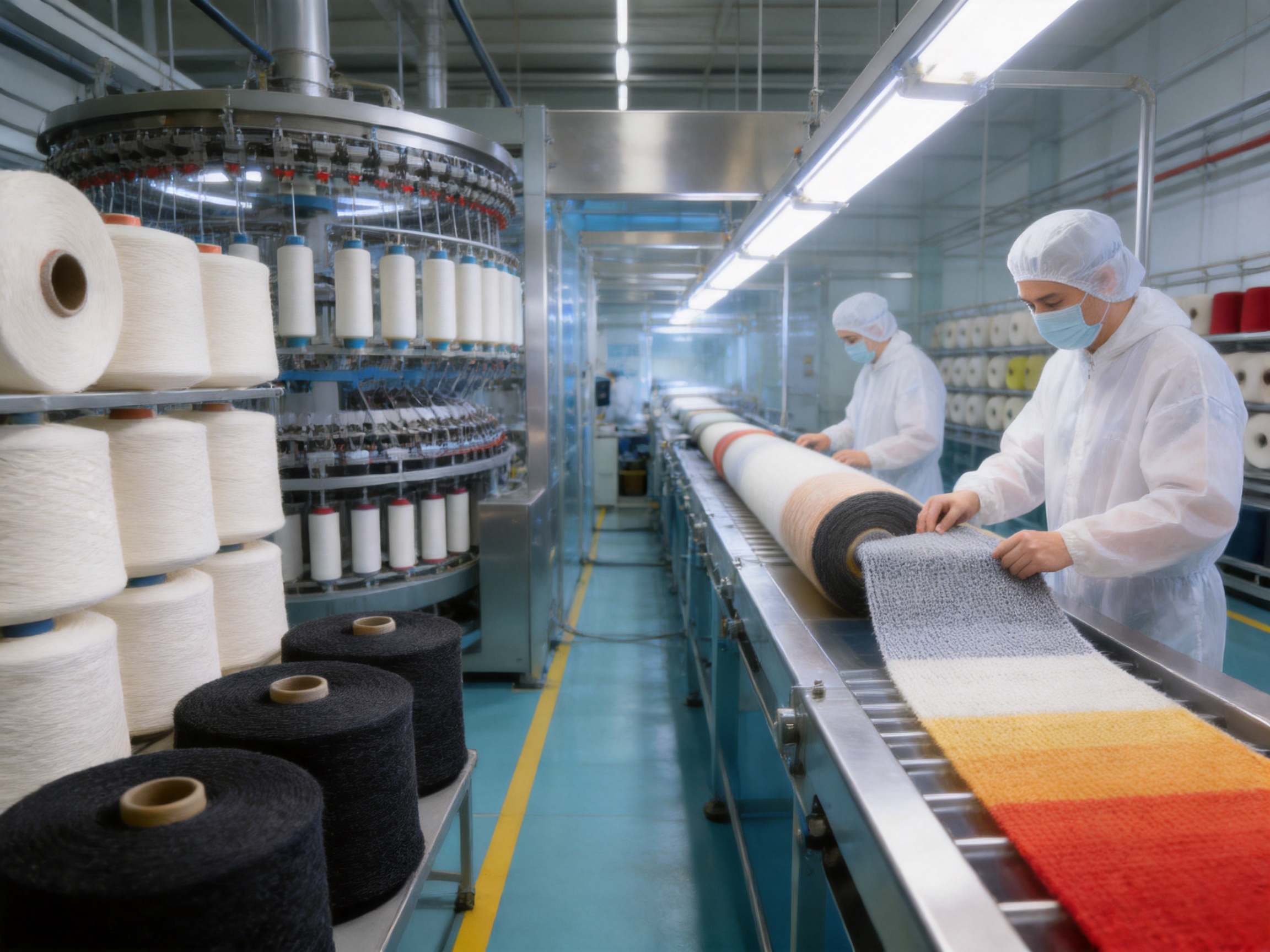
5. Manufacturing Strengths of the Supplier
5.1 Integrated Production and Service
Hangzhou Jinfeng Textile Co., Ltd. is based in Xiaoshan District, Hangzhou, Zhejiang Province, an area with a strong textile and manufacturing background. The company’s activities include the production, processing, post-dyeing, finishing, and sales of blended fabrics such as polyester and spandex, together with DTY polyester yarn production, processing, and sales.
This combination creates an integrated supply capability. Instead of treating yarn, fabric, dyeing, finishing, and sales as completely separate activities, the company can coordinate them as connected stages. For buyers, this may simplify technical communication and reduce the number of intermediaries involved in product development.
Integrated production can also support better problem solving. If a fabric shows unexpected pilling, dye variation, surface irregularity, or dimensional change, technical personnel can examine possible causes at the yarn, knitting, dyeing, and finishing stages. This broader view is valuable when developing stable products for repeated orders.
5.2 Production Site and Capacity Foundation
The company reports an operating area of approximately 32.6 acres and a plant area of about 18,000 square meters. A substantial production site provides room for organized manufacturing, equipment placement, material flow, inspection, storage, and order coordination.
Physical scale alone does not guarantee quality, but it can provide an important foundation for systematic production. Adequate space helps reduce unnecessary congestion, supports safer handling of raw materials and finished rolls, and allows different processes to be arranged more efficiently.
5.3 Research, Development, and Customization
The company describes itself as an export-oriented enterprise integrating research and development, production, and sales. This structure is relevant to buyers who need more than a standard stock fabric. Fashion brands, wholesalers, uniform suppliers, and garment factories often require adjustments in color, weight, width, blend, surface finish, or performance.
Product development may begin with a reference swatch, a garment sample, a technical specification, or a description of the intended market. The supplier can then work toward a suitable construction and finish. Sampling is essential because the same fiber blend can produce very different results when knitting density, yarn type, finishing conditions, and weight are changed.
Customization should be supported by clear documentation. The final specification should identify fiber content, finished width, target weight, color standard, acceptable tolerances, finishing method, testing requirements, packing method, and approval procedure. This reduces uncertainty when the product moves from sampling into bulk production.
5.4 Export and Customer Service Orientation
The company’s export-business structure reflects an intention to serve customers in domestic and international markets. Export buyers often need support with specifications, sample confirmation, production schedules, packing marks, inspection documents, and shipping coordination.
A supplier with experience in international business can help customers manage these requirements more efficiently. Communication remains essential. Buyers should provide clear information about destination-market regulations, restricted substances, testing standards, labeling, and expected delivery conditions.
The company’s stated business principle emphasizes cooperation and mutual benefit. In practical terms, a cooperative textile relationship involves transparent communication, realistic lead times, consistent quality, clear handling of claims, and a willingness to improve products according to market feedback.
6. Apparel Applications
6.1 Women’s Clothing
TR Rome fabric is suitable for women’s dresses, skirts, trousers, jackets, tops, cardigans, coordinated sets, and officewear. Its combination of drape and body allows designers to create both fluid and structured silhouettes.
For dresses, the fabric can provide a smooth fall and comfortable movement. For skirts and trousers, it can offer useful coverage and shape retention. For jackets and coordinated sets, the knitted structure can create a softer alternative to rigid woven suiting.
6.2 Men’s Clothing
In men’s apparel, the fabric can be used for trousers, casual jackets, smart-casual tops, lightweight outer layers, vests, and coordinated garments. Its durability and easy-care potential are valuable for clothing that is worn frequently.
Modern men’s clothing increasingly combines formal appearance with relaxed comfort. TR Rome fabric supports this direction by allowing a garment to look neat while maintaining the flexibility associated with knitwear.
6.3 Uniforms and Workwear
Uniforms need a reliable balance of appearance, comfort, durability, and maintenance. TR Rome fabric can be used for office uniforms, hospitality garments, retail clothing, service apparel, and other applications where employees need to remain presentable during extended working hours.
Before selecting the material for demanding workwear, buyers should test abrasion resistance, colorfastness, pilling, dimensional stability, and seam performance. The fabric should also be assessed together with the selected garment construction and care instructions.
6.4 Fashion Collections
Fashion brands can use TR Rome fabric as a dependable base for seasonal color stories and printed collections. Its dyeing and printing versatility supports a wide range of creative directions, from neutral essentials to bright statement pieces.
The fabric can also support small design changes across a collection. A brand may use one color family for trousers, another for dresses, and a printed version for a jacket or skirt. This creates visual coordination while retaining product variety.
6.5 Travel and Everyday Clothing
Consumers often prefer travel clothing that is comfortable, light, easy to coordinate, and capable of maintaining a neat appearance. TR Rome fabric can meet these needs when the garment design and finishing are appropriately selected.
Everyday clothing benefits from the same characteristics. A fabric that is comfortable against the skin, resistant to ordinary wear, and available in multiple colors can support repeat-use products and commercial basics.
7. Design and Garment-Making Considerations
7.1 Pattern Planning
Because TR Rome fabric is knitted, pattern makers should consider stretch direction, recovery, grain stability, and finished width. Patterns may need different ease allowances from those used for woven fabrics. Excessive ease can create a loose appearance, while insufficient ease can place unnecessary stress on seams.
The fabric’s body can support clean lines, but designers should still test curves, darts, pleats, hems, and pocket openings. A sample garment reveals how the fabric behaves in real construction better than a flat swatch alone.
7.2 Cutting
Knitted fabric should be relaxed before cutting when required by the specification. Tension introduced during spreading can cause panels to change size after cutting or washing. Cutting tables, spreading speed, ply height, and marker layout should be adjusted to minimize distortion.
Pattern alignment is particularly important for printed fabrics or fabrics with a visible surface direction. Rolls should be inspected for shade variation before spreading, and different dye lots should not be mixed casually within one garment.
7.3 Sewing
Needle size, thread selection, stitch type, stitch density, and machine tension should be matched to the fabric. A suitable stretch stitch or overlock construction may be required in areas where the garment must accommodate movement.
Seam puckering, skipped stitches, stretching at the seam, and needle damage should be monitored during production. Trial sewing allows the factory to adjust settings before bulk manufacturing begins.
7.4 Pressing and Care
Pressing temperature and pressure should be controlled because rayon and polyester respond differently to heat and moisture. Overheating may affect surface appearance, shine, color, or dimensional stability.
Care labels should be based on actual testing rather than assumptions. Depending on the final composition and finish, recommended care may include machine washing under controlled conditions, gentle handling, low-temperature drying, or professional cleaning. Buyers should confirm the correct care method with the supplier and through garment testing.
8. Quality Assurance and Testing
8.1 Appearance Inspection
Visual inspection is used to identify defects such as holes, stains, yarn contamination, needle lines, barré, uneven dyeing, creases, and inconsistent finishing. Inspection should be performed under suitable lighting and according to an agreed grading system.
8.2 Dimensional Stability
Knitted fabrics can change dimensions during washing or relaxation. Testing should measure lengthwise and widthwise shrinkage, spirality, skew, and recovery where relevant. These results help garment factories determine cutting allowances and care instructions.
8.3 Colorfastness
Colorfastness testing evaluates how well the fabric retains its color under washing, rubbing, perspiration, water, and light exposure. The required test method depends on the destination market and product category.
Colorfastness is particularly important for dark shades, bright colors, printed designs, uniforms, and garments worn next to the skin. A fabric that looks attractive at the sampling stage must also maintain acceptable appearance after normal use.
8.4 Pilling and Abrasion
Pilling can influence consumer perception even when the garment remains structurally sound. The testing method should reflect the intended application, and the fabric should be evaluated after appropriate laundering or conditioning when required.
Abrasion testing helps estimate resistance to surface wear. Trousers, uniforms, seating-related garments, and workwear may require higher abrasion performance than occasional-wear fashion items.
8.5 Chemical and Compliance Requirements
The supplied product information emphasizes that the fabric does not contain harmful chemicals when disposed of. In commercial sourcing, this type of environmental and safety statement should be supported by appropriate testing and documentation.
Buyers should confirm compliance with the regulations and restricted-substance requirements applicable to the destination market. Depending on the order, documentation may include chemical test reports, material declarations, production records, and certifications from recognized organizations.
Responsible manufacturing also involves wastewater management, controlled chemical storage, safe handling procedures, and appropriate disposal or treatment of production residues. Environmental performance should be considered across the full supply chain rather than judged only by the fiber name.
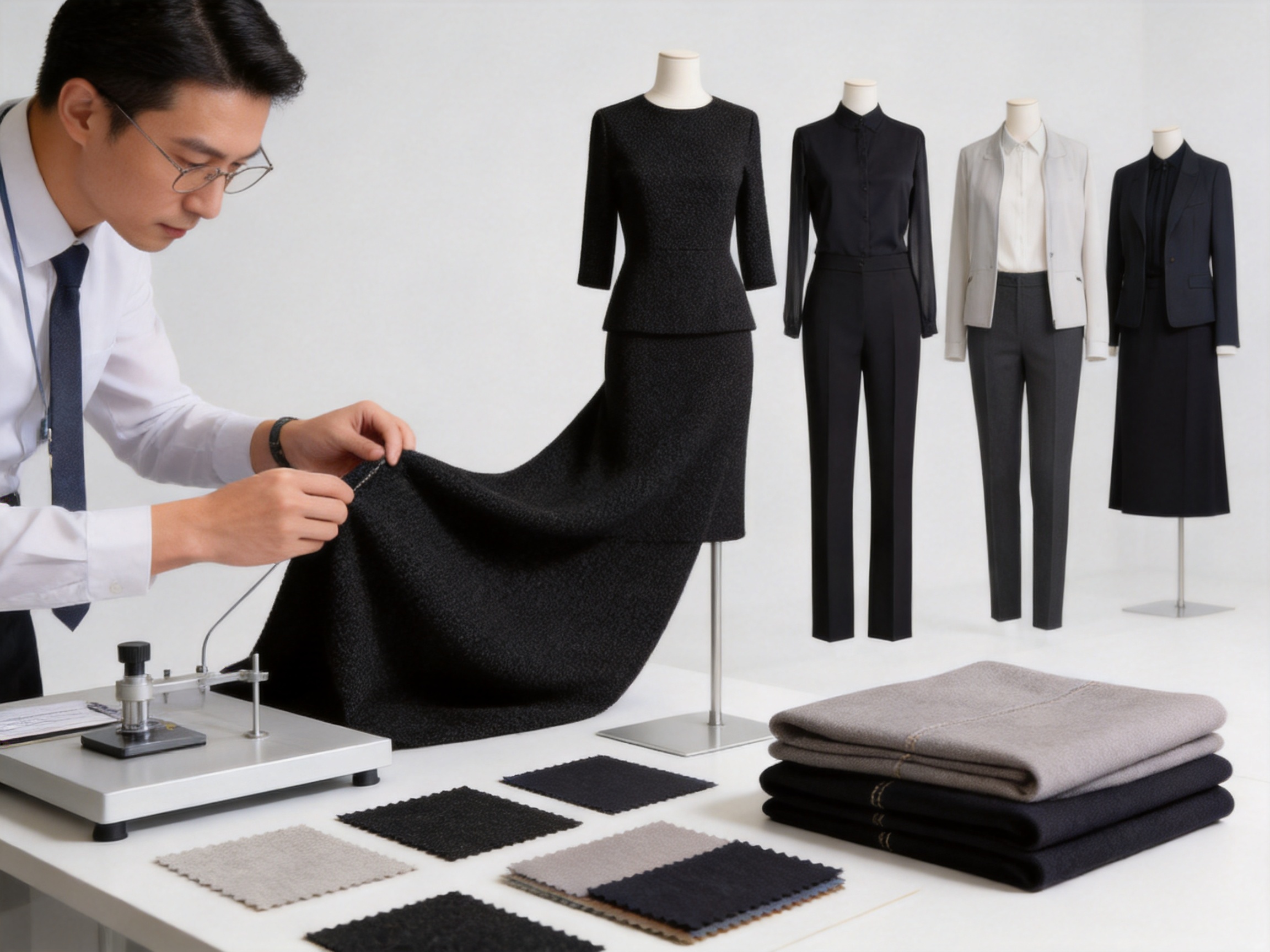
9. Cost and Supply-Chain Advantages
9.1 Practical Pricing
TR fabric is described as economical and accessible to buyers across different industries. Its commercial appeal comes from the reasonable cost of polyester, the functionality of blended construction, and the ability to produce a fabric suitable for multiple garment categories.
Cost should not be evaluated only by the price per meter. Buyers should also consider yield, defect rates, cutting efficiency, sewing performance, durability, return rates, and product lifespan. A fabric with balanced performance may create a lower total cost even if another material has a lower initial quotation.
9.2 Fewer Material Changes
Because TR Rome fabric can serve both men’s and women’s clothing and can be dyed or printed in different styles, it may help brands reduce the number of separate textile types used across a collection. Fewer material changes can simplify supplier management, sampling, inventory planning, and production training.
9.3 Integrated Communication
When a supplier manages yarn-related knowledge, fabric production, post-dyeing, finishing, and sales, communication can be more direct. Buyers can discuss the final performance goal rather than separately coordinating every stage with different vendors.
This is especially useful when a customer wants to adjust softness, weight, width, color depth, surface appearance, or dimensional stability. Direct communication can shorten the feedback cycle and improve the chance of achieving the desired result.
9.4 Support for Repeat Orders
Repeat orders require more than simply reproducing a product name. They require the supplier to preserve the approved construction, shade, finish, and testing standards. Batch records and clear specifications help ensure that subsequent production remains aligned with the original sample.
Buyers should retain approved swatches, laboratory reports, color standards, and signed technical data. These documents create a shared reference for future orders and reduce ambiguity between supplier and customer.
10. Sustainability and Responsible Use
TR Rome fabric can contribute to practical sustainability when it is designed for long use, efficient production, and responsible care. Durability helps garments remain in service longer, reducing the frequency of replacement. Lightweight construction can also reduce material and transportation requirements in certain product categories.
However, sustainability is a broad subject. Polyester is synthetic and rayon is regenerated cellulose, so each component has different environmental considerations. Buyers should evaluate the origin of the raw materials, energy consumption, water use, chemical management, wastewater treatment, packaging, and end-of-life options.
Manufacturers can improve responsible production through accurate chemical dosing, water reuse where appropriate, energy-efficient machinery, process optimization, reduced fabric waste, and careful quality control. Preventing defects is itself an environmental benefit because defective rolls consume raw materials, energy, water, and labor without creating a usable product.
Garment designers can also support better resource use by creating durable styles, selecting appropriate care instructions, reducing unnecessary trims, and planning patterns to improve fabric utilization. When buyers work collaboratively with fabric suppliers, performance and environmental goals can be considered together.
11. How to Select the Right Specification
11.1 Define the End Use
The first step is to identify whether the fabric will be used for dresses, trousers, jackets, uniforms, tops, or another product. Each application requires a different balance of weight, stretch, coverage, drape, abrasion resistance, and recovery.
11.2 Confirm Fiber Composition
Although the product is identified as TR fabric, the precise polyester-rayon ratio should be confirmed before ordering. Composition affects hand feel, price, dyeing behavior, shrinkage, and performance. If a product requires spandex or another component, it should be specified separately.
11.3 Specify Weight and Width
Finished weight and usable width directly influence garment yield and appearance. A heavier fabric may provide more coverage and structure, while a lighter version may be preferable for warm-weather clothing. Width should be measured consistently and confirmed according to the buyer’s inspection standard.
11.4 Approve Color and Finish
Color should be approved using a physical standard or an agreed color reference. Buyers should also approve the surface finish and hand feel because descriptions such as “soft,” “compact,” or “smooth” can be interpreted differently.
11.5 Test Before Bulk Production
Bulk orders should follow sample approval and, where necessary, laboratory testing. Testing should be selected according to the intended market and garment use. A complete evaluation can prevent problems that would otherwise appear only after production or consumer use.
12. Frequently Asked Questions
Q1: What is TR Rome fabric?
TR Rome fabric is a knitted polyester-rayon textile with a compact, versatile construction. It is commonly used for men’s and women’s clothing because it combines durability, softness, drape, light weight, and practical shape retention.
Q2: Is TR Rome fabric woven or knitted?
It is a knitted fabric. The knitted structure gives the material flexibility and comfort, while the Rome-style construction can provide more body and stability than many lightweight single-jersey fabrics.
Q3: What does NTR knitted fabric mean in this product range?
NTR knitted fabric is a product category associated with knitted textiles developed for practical apparel applications. TR Rome fabric is included in this category because it uses a polyester-rayon blend in a knitted construction.
Q4: Is the fabric suitable for both men’s and women’s clothing?
Yes. It can be used for dresses, skirts, trousers, jackets, tops, uniforms, officewear, and coordinated garments for both men and women. The final suitability depends on the selected weight, finish, color, and garment design.
Q5: What are the main advantages over basic polyester fabric?
TR Rome fabric can provide a softer hand, more natural drape, and a more refined appearance because of its rayon component. It retains the practical benefits associated with polyester, including durability, shape support, and ease of processing.
Q6: Is TR Rome fabric suitable for uniforms?
It can be suitable for office, hospitality, retail, service, and other uniforms. Buyers should conduct tests for abrasion, pilling, colorfastness, shrinkage, and seam performance before confirming a large uniform program.
Q7: Can the fabric be dyed in custom colors?
Yes. The product information states that TR fabric can be dyed in many colors. Custom color development should be based on an approved standard, laboratory dips, and agreed tolerances.
Q8: Can patterns be printed on TR Rome fabric?
Yes. The fabric can support various printed colors and patterns. Printing performance depends on the specific construction, pretreatment, printing method, ink or dye system, and finishing process.
Q9: Does the fabric retain heat?
The supplied product description identifies the fabric as having no heat-retention disadvantage. Actual comfort depends on weight, density, garment design, lining, climate, and activity, so product testing is recommended for specific applications.
Q10: Is TR Rome fabric easy to sew?
It can be suitable for normal garment production when the factory adjusts needle size, thread, stitch type, machine tension, and feed settings to the knitted structure. Trial sewing is recommended before bulk production.
Q11: What quality tests should buyers request?
Common tests include fiber composition, finished width, weight, dimensional stability, colorfastness to washing and rubbing, pilling, abrasion, bursting strength, stretch recovery, and appearance inspection. The exact test list should match the end use and destination market.
Q12: Can the supplier develop customized fabric?
The company reports research and development, blended-fabric production, post-dyeing, finishing, and sales capabilities. Buyers can discuss customized requirements such as color, weight, width, blend, surface finish, and intended garment application.
Q13: What information should be included in an inquiry?
An inquiry should identify the intended end use, composition, target weight, width, color, estimated quantity, desired finish, testing requirements, packing method, delivery destination, and whether the order is for sampling or bulk production.
Q14: How should the fabric be stored?
Fabric should be stored in a clean, dry, ventilated area away from direct sunlight, excessive heat, moisture, and contamination. Rolls should be protected from crushing and clearly labeled by batch and color.
Q15: Why is supplier integration important?
Integration of DTY yarn production, blended-fabric manufacturing, dyeing, finishing, and sales can improve technical communication and traceability. It may also support more efficient customization and problem solving compared with a supply chain involving many disconnected stages.
Conclusion
TR Rome fabric is a balanced NTR knitted fabric developed for the practical and aesthetic requirements of modern apparel. Its polyester-rayon composition combines durability, light weight, shape support, softness, and attractive drape. Its ability to accept many colors and patterns further expands its usefulness for fashion collections, uniforms, workwear, travel garments, and everyday clothing.
Compared with basic polyester knits, it can offer a softer and more refined appearance. Compared with rayon-rich textiles, it can provide greater durability and practical stability. Compared with rigid woven suiting, it can deliver greater comfort and movement. These advantages make the fabric a commercially useful option for buyers who want balanced performance rather than a single specialized characteristic.
The manufacturing background of Hangzhou Jinfeng Textile Co., Ltd. adds further value. Its capabilities cover DTY polyester yarn, blended-fabric production, processing, post-dyeing, finishing, research and development, and export-oriented sales. With a reported plant area of approximately 18,000 square meters, the company has a substantial foundation for organized production and customer cooperation.
For the best result, buyers should define the end use carefully, confirm composition and technical specifications, approve color and hand feel, conduct appropriate testing, and maintain clear documentation for repeat orders. When these steps are followed, TR Rome fabric can become a dependable foundation for comfortable, attractive, and commercially successful garments.
References
1. Hangzhou Jinfeng Textile Co., Ltd. Product information for TR Rome Fabric and NTR knitted fabric.
2. Hangzhou Jinfeng Textile Co., Ltd. Company profile and manufacturing capability information.
3. Textile Institute. Textile Terms and Definitions.
4. ASTM International. Standard Test Methods for Textile Fiber Composition, Colorfastness, Dimensional Change, and Pilling Resistance.
5. International Organization for Standardization. Textile Testing and Performance Evaluation Standards.
6. AATCC. Technical Manual: Colorfastness and Textile Performance Test Methods.
7. Textile engineering references covering polyester fibers, rayon fibers, knitted structures, dyeing, finishing, and garment manufacturing.