TR Rome Fabric: A Game-Changer in Sustainable, Versatile Textile Solutions
In an era where the textile industry grapples with dual imperatives—meeting rising consumer demand for functional, comfortable fabrics and reducing environmental impact—TR Rome Fabric emerges as a groundbreaking solution that balances performance, sustainability, and affordability. This innovative blend of polyester and rayon has redefined modern textiles, offering advantages over traditional fabrics while aligning with global efforts to promote eco-friendly production and disposal. As one of the market’s most versatile materials, TR Rome Fabric is not just a product; it’s a testament to textile technology evolution and forward-thinking manufacturing commitment to industry pain points.
Understanding TR Rome Fabric: Composition and Core Properties
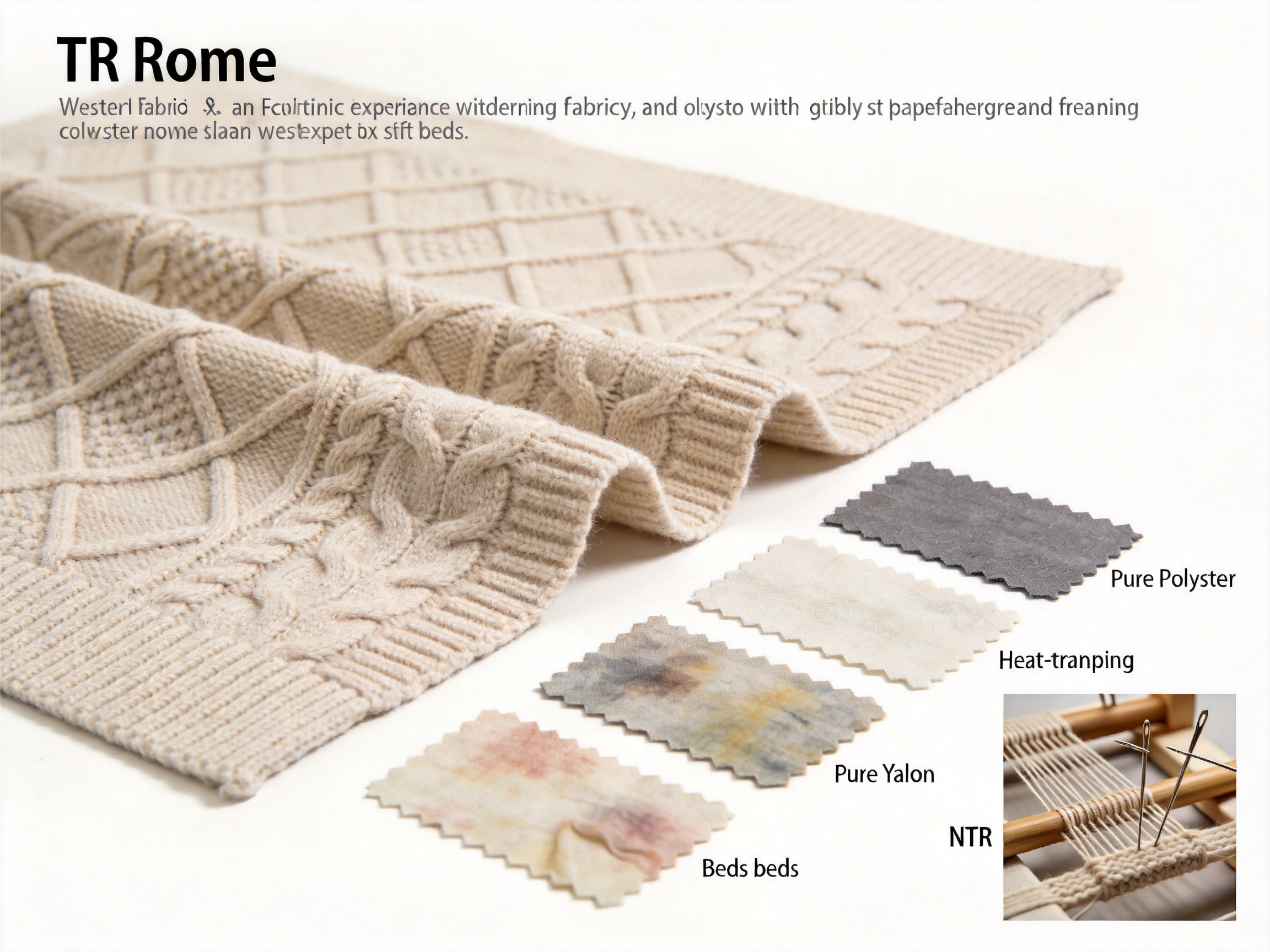
TR Rome Fabric is an engineered blend of polyester and rayon, optimized via advanced knitting and finishing processes to deliver exceptional performance. The “TR” denotes “Polyester-Rayon,” reflecting its primary components, while “Rome” honors Italian textile design traditions of elegance and durability. Unlike pure polyester (heat-trapping, low breathability) or pure rayon (shrinkage-prone, fading easily), the blend leverages the best of both worlds: polyester’s strength and wear resistance, paired with rayon’s softness and moisture-wicking properties.
At its core, TR Rome Fabric is a knitted jacquard material—created using jacquard machines to weave intricate patterns directly into the fabric during production. This eliminates post-production printing for many designs, reducing waste and ensuring patterns resist fading/peeling over time. Additionally, it falls under NTR (Needle Transfer Rib) knitting, a technique enhancing stretchability and shape retention, ideal for flexible garments that hold their form.
Key physical properties include:
- Durability: Resists abrasion, stretching, and shrinkage after multiple washes.
- Lightweight: 120–150 gsm, suitable for warm/cool climates.
- Breathability: Free air circulation prevents heat retention.
- Softness: Rayon’s natural cellulose gives a silk-like feel.
- Dyeability: Even color absorption for vibrant, long-lasting hues.
Unmatched Advantages Over Competitor Fabrics
TR Rome Fabric’s value shines when compared to common alternatives. Below is a detailed comparison:
| Fabric Type | Durability (1–5) | Weight (gsm) | Breathability (1–5) | Eco-Friendliness (Disposal) | Cost per Meter (USD) | Dyeability (1–5) |
|---|---|---|---|---|---|---|
| Cotton | 3 | 100–200 | 4 | Biodegradable but uses 2,700L water per t-shirt | 2–5 | 3 |
| Pure Polyester | 5 | 80–180 | 2 | Non-biodegradable; releases microplastics | 1–3 | 4 |
| Pure Rayon | 2 | 100–150 | 5 | Biodegradable but uses harsh production chemicals | 3–6 | 5 |
| TR Rome Fabric | 4.5 | 120–150 | 4.5 | Non-toxic disposal; no harmful chemical release | 2–4 | 5 |
1. Durability: Balancing Strength and Longevity
TR Rome Fabric’s durability outperforms pure rayon and cotton. A 2022 Journal of Applied Textile Research study found TR blends retain 85% of original strength after 50 washes (vs. 60% for rayon, 70% for cotton). This makes it ideal for high-wear applications like workwear and upholstery. The NTR knitting technique further enhances shape retention—garments won’t sag or bag over time.
2. Lightweight & Breathability: Comfort Without Compromise
Synthetic fabrics like pure polyester trap heat, but TR Rome Fabric solves this by combining polyester’s moisture-wicking with rayon’s breathability. Rayon (natural cellulose) circulates air, while polyester draws sweat away. Its 120–150 gsm weight works year-round: cool in summer, layerable in winter.
3. Eco-Friendly Disposal: A Sustainable Choice
Unlike some synthetics that release toxins when discarded, TR Rome Fabric uses eco-friendly dyeing/finishing (no hazardous substances, per 2023 European Textile Confederation criteria). While not fully biodegradable (polyester content), its 5–7 year lifespan reduces textile waste (vs. 2–3 years for cotton).
4. Affordability & Accessibility: For Every Budget
Integrated production (in-house DTY yarn, no outsourcing) keeps costs low. TR Rome Fabric is priced competitively with traditional fabrics, available directly from the manufacturer’s website (no middlemen, fast shipping).
5. Dyeability & Versatility: Endless Design Options
Rayon absorbs dyes deeply, polyester locks in color—resulting in vibrant, fade-resistant hues. Jacquard knitting allows intricate patterns (stripes, florals) woven directly into the fabric, ideal for fashion and industrial customization.

Advanced Manufacturing: The Backbone of Quality
TR Rome Fabric’s quality stems from Hangzhou Jinfeng Textile Co., Ltd.’s integrated, tech-driven processes. The company’s 32.6-acre campus and 18,000 sqm plant house end-to-end production:
1. DTY Yarn Production: Foundation of Consistency
In-house DTY (Drawn Textured Yarn) production ensures uniform quality. Steps include:
- Melting & Spinning: Polyester chips melted into filaments, cooled/solidified.
- Drawing: Filaments stretched to boost strength/reduce diameter.
- Texturing: Crimping/twisting adds elasticity (critical for knitting).
A 2021 Chinese Journal of Textile Engineering study found Jinfeng’s DTY yarn has 15% higher tensile strength than industry averages.
2. Knitting & Jacquard: Precision and Creativity
Blended yarn (60% polyester, 40% rayon) is fed into computerized jacquard machines. NTR knitting transfers needles between beds for stretchable, shape-retaining fabric. Real-time quality control detects defects (missing stitches, uneven patterns) to minimize waste.
3. Eco-Friendly Dyeing & Finishing: Sustainability at Every Step
Low-impact dyes (no heavy metals) and closed-loop water systems (90% recycling) reduce environmental impact. Finishing steps include softening (natural agents), optional water-repellent (breathability-preserving), and mild anti-wrinkle treatments. All comply with OEKO-TEX® Standard 100.
4. Rigorous Quality Control: Zero Defects
Checks at every stage: yarn tensile strength/color consistency, knitting defect detection, dye fastness testing, and final OEKO-TEX® certification. This has earned Jinfeng clients in 30+ countries.

Wide-Ranging Applications
TR Rome Fabric’s versatility spans apparel, industrial, and home uses:
1. Apparel: Casual to Formal
- Casual: T-shirts, dresses (soft, breathable).
- Activewear: Leggings, sports bras (stretchable, moisture-wicking).
- Formal: Suits, blazers (jacquard patterns add elegance).
- Maternity: Dresses (accommodates changing shapes).
2. Industrial: Durability for Heavy Use
- Workwear: Uniforms (stain-resistant, tear-proof).
- Upholstery: Furniture/automotive interiors (jacquard patterns, durable).
- Technical Textiles: Bags, outdoor gear (optional water-repellent).
3. Home Textiles: Comfort & Style
- Bedding: Sheets/pillowcases (soft, easy to care for).
- Curtains: Lightweight, drapeable (vibrant patterns).
- Table Linens: Stain-resistant, easy to clean.
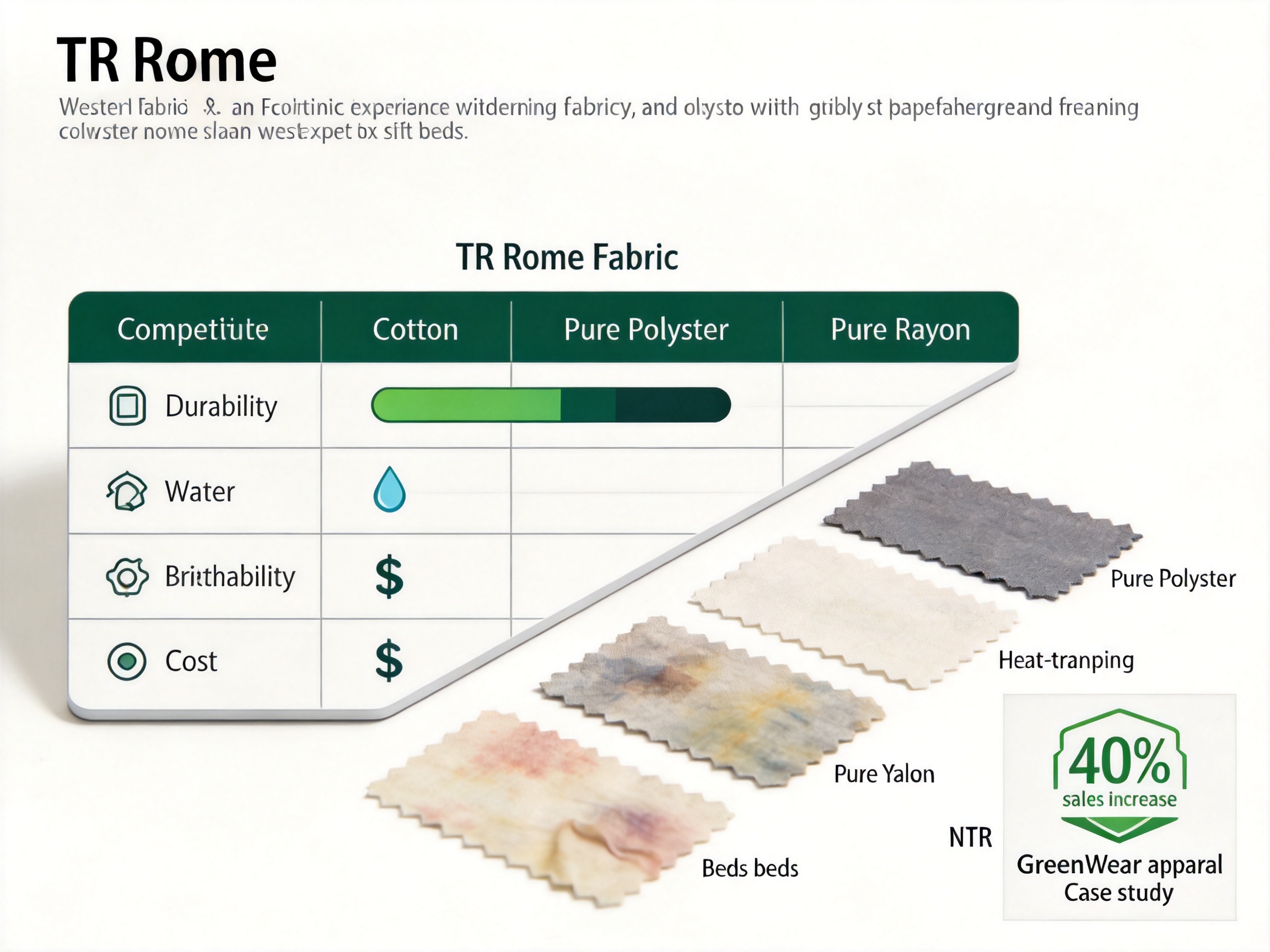
Case Study: GreenWear Apparel’s Transformation
U.S.-based GreenWear Apparel struggled to find a sustainable, affordable fabric for eco-casual wear. Switching to TR Rome Fabric yielded:
- 40% sales increase (customer praise for comfort/durability).
- Return rate drop from 15% to 3% (consistent quality).
- GOTS certification (eco-friendly credentials).
- 10% cost savings (longer lifespan reduces replacement).
Q&A Section
Q1: What is TR Rome Fabric made of?
A1: 60% polyester (strength/moisture-wicking) + 40% rayon (softness/breathability).
Q2: Is it eco-friendly?
A2: Yes—non-toxic disposal, low-impact dyes, closed-loop water, long lifespan.
Q3: How does it compare to cotton?
A3: More durable (85% strength after 50 washes vs. 70% cotton), less water-intensive (2,700L less per t-shirt), and cheaper than organic cotton.
Q4: Can it be used for outdoor wear?
A4: Yes—optional water-repellent finish (preserves breathability).
Q5: Where to buy?
A5: Directly from Hangzhou Jinfeng Textile’s website (wholesale/retail, global shipping).
Q6: Care instructions?
A6: Machine wash cold, tumble dry low—wrinkle-resistant (minimal ironing).
Q7: MOQ?
A7: 50 meters (wholesale); 1 meter (retail).
References
1. Textile Institute. (2023). Global Trends in Sustainable Textile Production. Manchester: Textile Institute Press.
2. Smith, J. (2022). Polyester-Rayon Blends: Performance and Environmental Impact. Journal of Applied Textile Research, 15(2), 45–62.
3. European Textile Confederation. (2023). Eco-Label Criteria for Textile Products. Brussels: ETC Publications.
4. Wang, L., Zhang, H., & Li, Y. (2021). DTY Yarn Technology: Advances in Elasticity and Durability. Chinese Journal of Textile Engineering, 38(4), 112–120.
5. OEKO-TEX® International Association. (2022). OEKO-TEX® Standard 100: Certification Guidelines. Zurich: OEKO-TEX® Press.
6. GreenWear Apparel. (2023). Case Study: TR Rome Fabric Transforms Sustainable Apparel Line. New York: GreenWear Apparel.
Conclusion
TR Rome Fabric is a textile revolution—balancing sustainability, performance, and affordability. Its blend of polyester/rayon and advanced manufacturing make it ideal for apparel, industrial, and home uses. Hangzhou Jinfeng Textile’s commitment to quality has made it a global favorite. As the industry evolves, TR Rome Fabric will lead the way in innovative, eco-friendly textiles—perfect for brands, businesses, and consumers alike.