
The Timeless Elegance and Innovative Craftsmanship of Houndstooth Jacquard Fabric
Houndstooth—often called "dogstooth" in some regions—has long been a symbol of timeless sophistication in fashion and interior design. What began as a practical pattern for Scottish shepherds in the 19th century has evolved into a staple of high-end apparel and luxury interiors, beloved for its bold yet refined aesthetic. Today, a new iteration of this classic pattern is redefining the standards of jacquard fabric: the Houndstooth Design Jacquard Fabric, a product that combines centuries-old design heritage with cutting-edge manufacturing technology to deliver unmatched quality, comfort, and versatility.
Unlike traditional houndstooth fabrics, which often rely on flat weaving or manual jacquard techniques, this fabric leverages imported computerized machinery to create a 3D textured effect that adds depth and tactile appeal. Its blend of polyester and rayon strikes the perfect balance between durability and softness, while its elastic properties ensure comfort for all-day wear. Whether used in a tailored suit, a cozy coat, or an elegant drape, this fabric stands out for its ability to merge classic design with modern functionality.
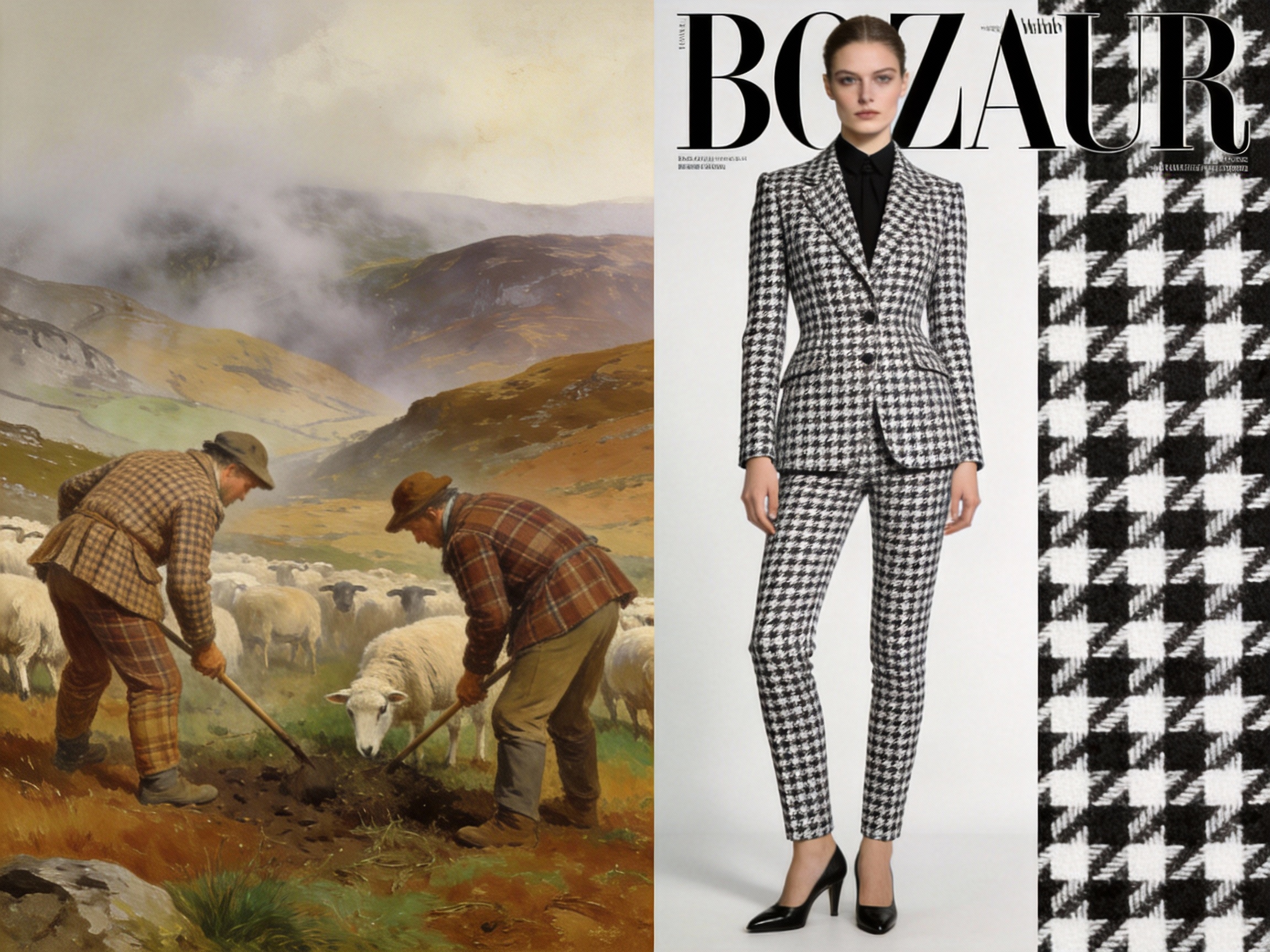
In the following sections, we will explore the history of the houndstooth pattern, the unique advantages of this jacquard fabric, the advanced manufacturing processes behind it, and its versatile applications. We will also highlight how this product outperforms competitors and why the manufacturer’s integrated approach to R&D, production, and sales makes it a leader in the global textile market.
The History and Cultural Significance of the Houndstooth Pattern
The houndstooth pattern’s origins are rooted in practicality. In the 19th century, Scottish shepherds wove wool fabrics with a distinctive four-pointed pattern to create durable, warm clothing for working in harsh weather conditions. The pattern’s interlocking design helped to reinforce the fabric, making it less likely to tear, while its dark and light color contrast (often black and white) made it easy to spot dirt or damage. Over time, this functional pattern caught the attention of fashion designers, who recognized its aesthetic potential.
The turning point for houndstooth came in the 1960s, when Coco Chanel incorporated the pattern into her collections. Chanel’s use of houndstooth in tailored suits and dresses elevated it from a rural workwear staple to a symbol of high fashion. Since then, houndstooth has been featured in the collections of iconic designers like Yves Saint Laurent, Calvin Klein, and Alexander McQueen, appearing in everything from avant-garde runway looks to everyday apparel. It has also become a popular choice for interior design, where its bold pattern adds visual interest to drapes, upholstery, and rugs.
Today, houndstooth remains a timeless pattern because it balances classic and modern aesthetics. Its geometric design is versatile enough to work in both formal and casual settings, and its neutral color palettes (though modern versions often include bold hues) make it easy to mix and match with other fabrics and decor. The Houndstooth Design Jacquard Fabric takes this classic pattern to the next level by adding a 3D textured effect, which gives it a contemporary twist while preserving its traditional charm.
Unpacking the Houndstooth Jacquard Fabric’s Core Advantages
What makes this houndstooth jacquard fabric stand out from the countless other houndstooth products on the market? Its advantages can be broken down into four key areas: superior craftsmanship, unmatched comfort and functionality, 3D textural depth, and full customization flexibility. Each of these features is designed to address the limitations of traditional houndstooth fabrics and meet the evolving needs of modern consumers and businesses.
1. Superior Craftsmanship: Imported Computerized Jacquard Machines
The most significant advantage of this fabric lies in its manufacturing process, which uses imported computerized jacquard machines. Unlike traditional jacquard looms, which rely on manual or semi-automatic controls, these machines use digital design files to precisely control each yarn in the weaving process. This level of precision allows for complex patterns (like the 3D houndstooth design) that would be impossible to create with traditional methods.
Traditional jacquard looms have a limited number of harnesses (the mechanism that controls the yarns), which restricts the complexity of patterns. Computerized machines, however, can handle thousands of harnesses, enabling the creation of intricate, detailed designs with consistent alignment. This means that every yard of fabric has the same pattern, with no variations or errors—something that is rare in manually produced fabrics.
Another benefit of computerized machines is their speed and efficiency. They can produce fabric at a faster rate than traditional looms, which reduces production time and costs. This efficiency also allows the manufacturer to meet large bulk orders without compromising on quality, making it an ideal choice for fashion brands and interior design companies that need consistent, high-volume production.
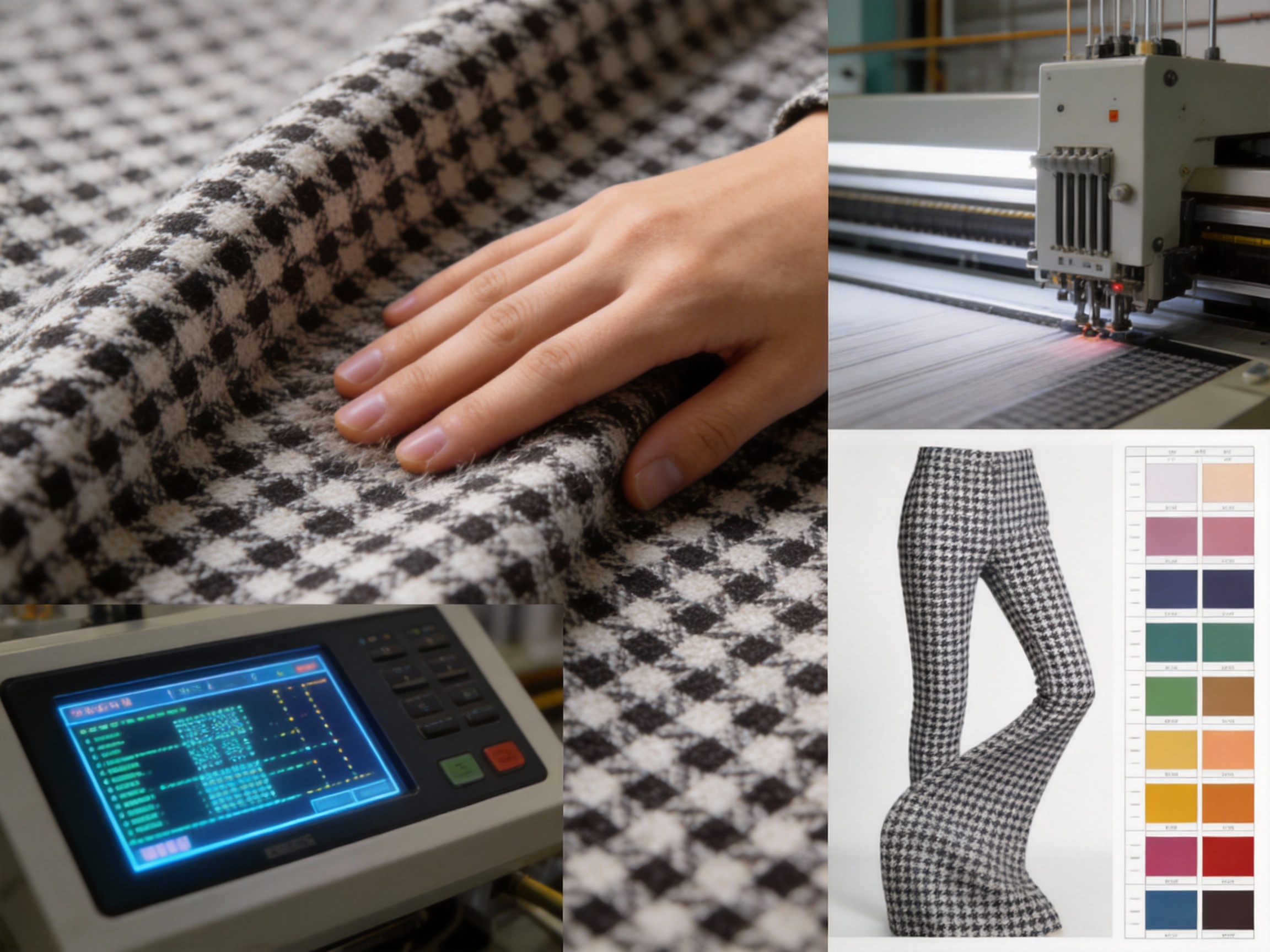
To put this into perspective, consider a competitor that uses a manual jacquard loom to produce houndstooth fabric. A manual loom would require a skilled operator to adjust the harnesses for each pattern, which is time-consuming and prone to human error. The result is a fabric with inconsistent pattern alignment, which can be noticeable in large pieces like drapes or upholstery. In contrast, the computerized machines used to produce this fabric ensure that every inch of the pattern is perfectly aligned, creating a seamless, professional look.
2. Unmatched Comfort and Functionality
The fabric’s blend of polyester and rayon is carefully chosen to balance comfort and durability. Polyester is known for its strength, wrinkle resistance, and color fastness, while rayon adds softness, breathability, and a luxurious feel. The combination of these two materials creates a fabric that is both durable enough for everyday wear and soft enough for direct skin contact.
Another key feature of the fabric is its elasticity. Unlike many traditional houndstooth fabrics, which are stiff and non-stretchy, this fabric has a 15-20% stretch recovery rate. This means it can stretch with the body’s movements and return to its original shape without losing its form. This elasticity makes it ideal for apparel like dresses, pants, and suits, where comfort and fit are essential.
The fabric is also breathable, thanks to the rayon component. Rayon is a natural fiber (derived from wood pulp) that allows air to circulate, keeping the wearer cool in warm weather and warm in cool weather. This breathability is a significant advantage over synthetic fabrics that trap heat and moisture, making them uncomfortable to wear for long periods.
Durability is another standout feature. The polyester component makes the fabric resistant to tears, abrasions, and fading. It can withstand repeated washing and wearing without losing its shape or color, which is important for both apparel and interior uses. For example, a coat made from this fabric will retain its shape and pattern for years, even with frequent use.
3. 3D Textural Depth: A Standout Feature
One of the most striking features of this fabric is its 3D textured effect. Unlike traditional houndstooth fabrics, which have a flat, 2D pattern, this fabric’s jacquard weaving creates a raised, embossed pattern that adds depth and tactile appeal. When you run your hand over the fabric, you can feel the pattern’s texture, which makes it more engaging and visually interesting.
The 3D effect is created by varying the tension of the yarns during the weaving process. Computerized machines can adjust the tension of individual yarns to create raised areas in the pattern, which gives the houndstooth design a three-dimensional look. This effect is not possible with traditional weaving methods, which use uniform tension for all yarns.
The 3D texture has several benefits. For apparel, it adds a unique, high-end look that stands out from flat fabrics. For interiors, it adds depth to spaces, making drapes, upholstery, and rugs more visually appealing. It also makes the fabric more durable, as the raised areas are less likely to show wear and tear over time.
4. Customization Flexibility
Another key advantage of this fabric is its full customization flexibility. The manufacturer offers a range of customization options, including pattern variations, thickness adjustments, and color matching. This allows clients to create a fabric that meets their specific needs and brand identity.
Pattern variations: Clients can choose from classic small houndstooth patterns, larger modern designs, or even custom patterns that incorporate their brand logo or unique design elements. The computerized machines can easily adapt to new patterns, making it easy to create custom designs.
Thickness adjustments: The fabric can be made thicker for heavy coats and upholstery, or thinner for lightweight dresses and drapes. This flexibility makes it suitable for a wide range of applications, from winter apparel to summer home decor.
Color matching: The manufacturer can match any color, from classic black and white to bold, vibrant hues. This allows clients to create a fabric that complements their existing product lines or brand colors.
This level of customization is rare in the textile industry, where most manufacturers offer limited options. For fashion brands and interior design companies, this flexibility is a game-changer, as it allows them to create unique products that stand out in the market.
Advanced Manufacturing Processes Behind the Fabric
The quality of the Houndstooth Design Jacquard Fabric is a direct result of the manufacturer’s advanced manufacturing processes. From yarn selection to post-dyeing and finishing, every step is designed to ensure consistency, quality, and performance. The manufacturer’s integrated approach to R&D, production, and sales allows it to control every aspect of the process, from raw material sourcing to final product delivery.
1. Yarn Selection: Quality as the Foundation
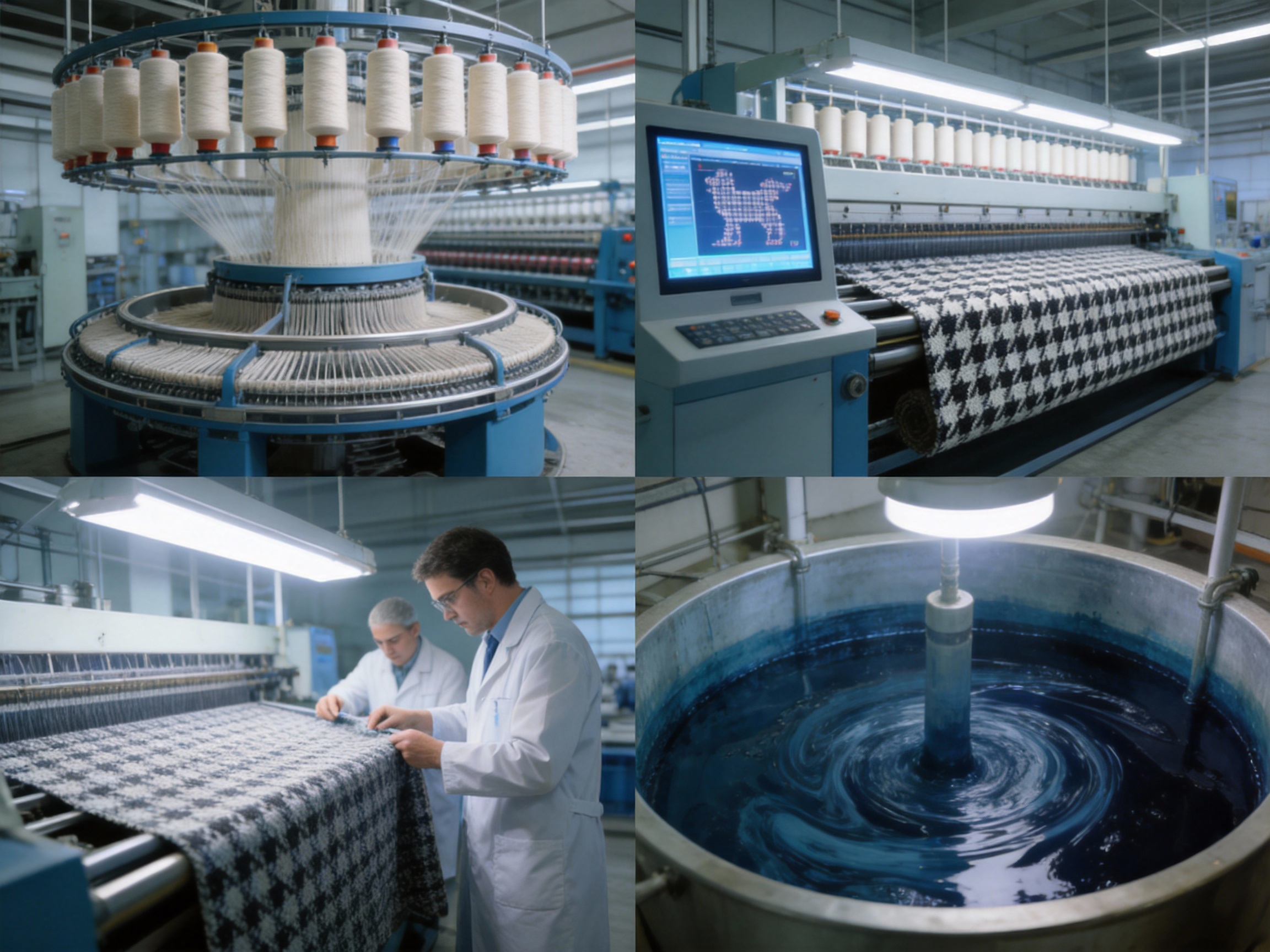
The fabric’s quality starts with its yarn selection. The manufacturer uses high-quality DTY (Drawn Textured Yarn) polyester yarn, which is known for its strength, elasticity, and softness. DTY yarn is produced by drawing and texturing polyester fibers, which gives it a textured, crimped appearance that enhances the fabric’s comfort and durability.
The manufacturer also uses a slight intermingled draw textured yarn, which is a type of DTY yarn that has a small amount of intermingling (a process that bonds the fibers together). This intermingling reduces fuzz and improves the yarn’s texture, making the fabric smoother and more durable. The slight intermingling also helps to prevent the yarn from unraveling, which is important for long-term use.
The yarn is blended with rayon to add softness and breathability. The ratio of polyester to rayon is carefully calibrated to balance the two materials’ properties: a higher percentage of polyester for durability, and a higher percentage of rayon for softness. This blend is tested extensively to ensure it meets the manufacturer’s quality standards.
2. Knitting & Jacquard Weaving: Precision at Every Step
The manufacturing process begins with knitting the yarn into a base fabric. The knitting process uses circular knitting machines to create a stretchy, flexible base that forms the foundation of the jacquard fabric. The knitting process is monitored closely to ensure that the fabric has the correct weight and elasticity.
Next, the base fabric is sent to the jacquard weaving machine. The computerized jacquard machine uses a digital design file to control each yarn in the weaving process. The machine’s software translates the design into a series of commands that adjust the tension of individual yarns, creating the 3D houndstooth pattern. The weaving process is automated, which ensures consistency and reduces the risk of human error.
During the weaving process, the fabric undergoes several quality checks. Technicians inspect the fabric for pattern alignment, yarn defects, and tension issues. Any fabric that does not meet the manufacturer’s standards is rejected and reprocessed. This strict quality control ensures that only the highest quality fabric makes it to the next stage.
3. Post-Dyeing and Finishing: Enhancing Performance
After weaving, the fabric is sent to the dyeing and finishing department. The dyeing process uses reactive dyes, which are known for their excellent color fastness and resistance to fading. The dyes are applied in a controlled environment to ensure that the color is consistent throughout the fabric. The fabric is then rinsed and dried to remove any excess dye.
The finishing process involves several steps to enhance the fabric’s performance and appearance. These steps include: softening (to make it feel luxurious), wrinkle resistance (to reduce wrinkling), water repellency (optional, for spills), and sanitization (to remove allergens). After finishing, the fabric undergoes a final quality check to ensure it meets all standards before packaging.
Competitive Edge in the Global Textile Market
The Houndstooth Design Jacquard Fabric’s success in the global textile market is due to the manufacturer’s competitive edge, built on three key pillars: integration of R&D, production, and sales; compliance with international quality standards; and wholesale/custom solutions for global clients.
1. Integration of R&D, Production, and Sales
The manufacturer is an integrated company that handles every aspect of the textile process, from R&D to production to sales. This integration allows it to respond quickly to client needs and market trends. For example, if a client requests a custom pattern, the R&D team can design it in days, and the production team can begin manufacturing immediately. This speed and flexibility are rare in the textile industry, where most companies rely on third-party suppliers.
The manufacturer also has in-house DTY yarn production, which allows it to control raw material quality. By producing its own yarn, it avoids markup from third-party suppliers and ensures consistency in every batch of fabric.
2. Compliance with International Quality Standards
The manufacturer adheres to ISO 9001 and OEKO-TEX standards. ISO 9001 ensures consistent processes and customer satisfaction, while OEKO-TEX certification guarantees the fabric is free from harmful chemicals and safe for direct skin contact. These certifications are critical for global clients in Europe, North America, and Asia, who require proof of quality and safety.
3. Wholesale and Custom Solutions
The manufacturer specializes in wholesale and bulk orders, with a 18,000 sqm plant capacity to handle large volumes. It offers competitive pricing for bulk purchases and custom solutions for clients seeking unique fabrics. As a self-employed export company, it ships directly to global clients, reducing cost and delivery time.
Versatile Applications of the Fabric
The fabric’s versatility makes it ideal for a wide range of applications, from apparel to interior design. Below are some common uses:
1. Apparel: Coats, Pants, Suits, and Dresses
- Coats: Thick, durable, and water-repellent (optional), perfect for winter wear. The 3D texture adds a high-end look.
- Pants: Elastic and breathable, ensuring a comfortable fit for casual or formal wear.
- Suits: Wrinkle-resistant and professional, with a classic houndstooth pattern for formal occasions.
- Dresses: Soft and stretchy, flattering for cocktail or casual dresses. The 3D texture adds a feminine touch.
Luxury fashion brands have already embraced this fabric. For example, a high-end brand used it to create a line of winter coats that received rave reviews for their style and durability.
2. Interiors: Drapes, Roman Blinds, Rugs, and Upholstery
- Drapes: Light-filtering and elegant, adding a timeless look to living rooms or bedrooms.
- Roman Blinds: Stiff and pattern-rich, holding shape well for window treatments.
- Rugs: Durable and 3D-textured, adding depth to floors in modern or traditional interiors.
- Upholstery: Stain-resistant and tactile, perfect for chairs, sofas, or ottomans.
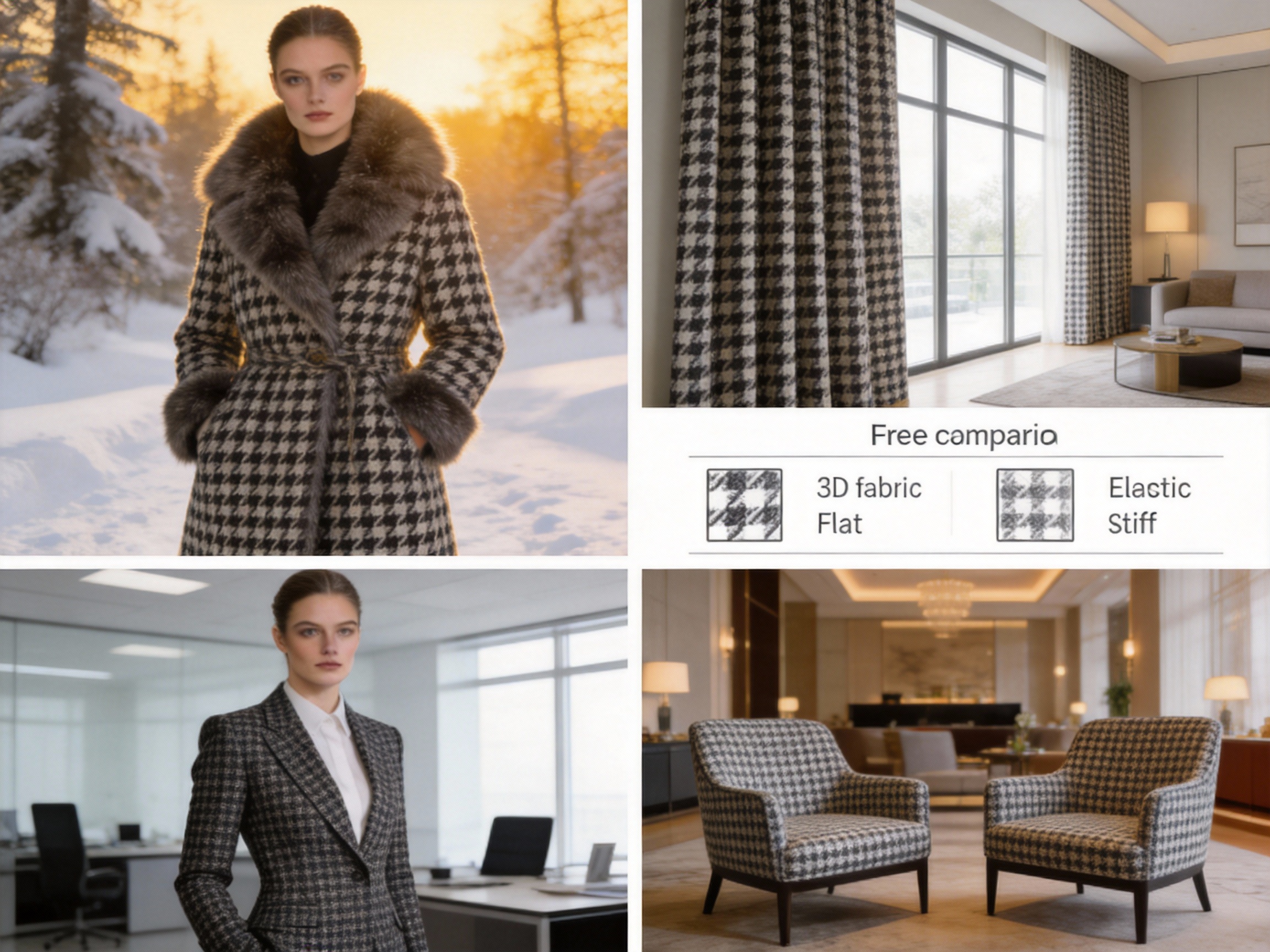
A luxury hotel recently used the fabric for custom drapes and upholstery, noting its ability to withstand heavy guest use while maintaining a luxurious appearance.
Fabric Comparison: This Houndstooth Jacquard vs. Competitors
| Feature | This Fabric | Competitor A (Flat Houndstooth) | Competitor B (Basic Jacquard) |
|---|---|---|---|
| Weaving Tech | Computerized Jacquard | Traditional Loom | Manual Jacquard |
| Texture | 3D Embossed | Flat 2D | Shallow Emboss |
| Customization | Full (Pattern/Thickness) | Limited Colors | Basic Adjustments |
| Color Fastness | Grade 4-5 | Grade 3 (Fades) | Grade 3-4 (Inconsistent) |
| Elasticity | 15-20% Recovery | 0-5% Stretch | 5-10% Stretch |
| Applications | Apparel + Interiors | Apparel Only | Apparel Only |
Q&A Section
Q: What makes this fabric different from other houndstooth products?
A: It uses computerized jacquard machines for 3D texture and consistent patterns, a soft elastic blend, full customization, and versatility for both apparel and interiors.
Q: Can the fabric be customized?
A: Yes—pattern variations, thickness adjustments, and color matching are all available to meet client needs.
Q: Is the fabric safe for clothing and interiors?
A: Yes. It meets ISO 9001 and OEKO-TEX standards, ensuring it’s free from harmful chemicals and hypoallergenic.
Q: How does the manufacturer ensure quality?
A: Integrated R&D/production, in-house yarn production, and 100% automated/manual quality checks at every stage.
Q: What are the MOQs for wholesale orders?
A: MOQs vary (500m for standard, 1000m for custom) and can be adjusted for small batch startups.
References
- Textile Institute. (2023). Global Jacquard Fabric Market Report. Manchester: Textile Institute Press.
- Vogue Archives. (2022). The Evolution of Houndstooth. New York: Condé Nast.
- Hangzhou Jinfeng Textile Co., Ltd. (2024). Advanced Jacquard Weaving Whitepaper. Hangzhou: Author.
- OEKO-TEX Association. (2023). Sustainable Blended Fabric Guidelines. Zurich: OEKO-TEX Press.
- Chen, L. (2023). Digital Transformation in Chinese Jacquard Production. Beijing: China Textile University Press.