
Slight Intermingled Drawn Textured Yarn (DTY): Advantages, Manufacturing Innovation, and Industry Impact
The global textile industry is undergoing a continuous evolution, driven by the demand for high-performance, versatile, and aesthetically pleasing materials. Among the key components shaping this landscape are synthetic yarns, with Drawn Textured Yarn (DTY) emerging as a cornerstone for numerous applications—from apparel and home textiles to technical fabrics. Within the DTY family, Slight Intermingled DTY stands out as a game-changer, offering a unique balance of texture, smoothness, and consistency that outperforms traditional alternatives. This article delves into the core advantages of Slight Intermingled DTY over competitor products, explores the advanced manufacturing processes that define its quality, highlights the strengths of leading producers in the field, and addresses common questions about this innovative yarn. By the end, readers will gain a comprehensive understanding of why Slight Intermingled DTY is becoming the preferred choice for manufacturers and designers worldwide.
What is Slight Intermingled Drawn Textured Yarn (DTY)?
To appreciate the value of Slight Intermingled DTY, it is first essential to understand the basics of DTY production. DTY is a synthetic yarn made from continuous filament polymers—most commonly polyester—processed through a series of steps: melting, spinning, drawing, and texturing. The texturing step is critical, as it introduces crimp or bulk to the otherwise smooth filament, enhancing the yarn’s elasticity, softness, and volume. Slight Intermingled DTY takes this a step further by incorporating controlled air-jet intermingling, a process that loosely bonds adjacent filaments together without compromising the yarn’s inherent softness.
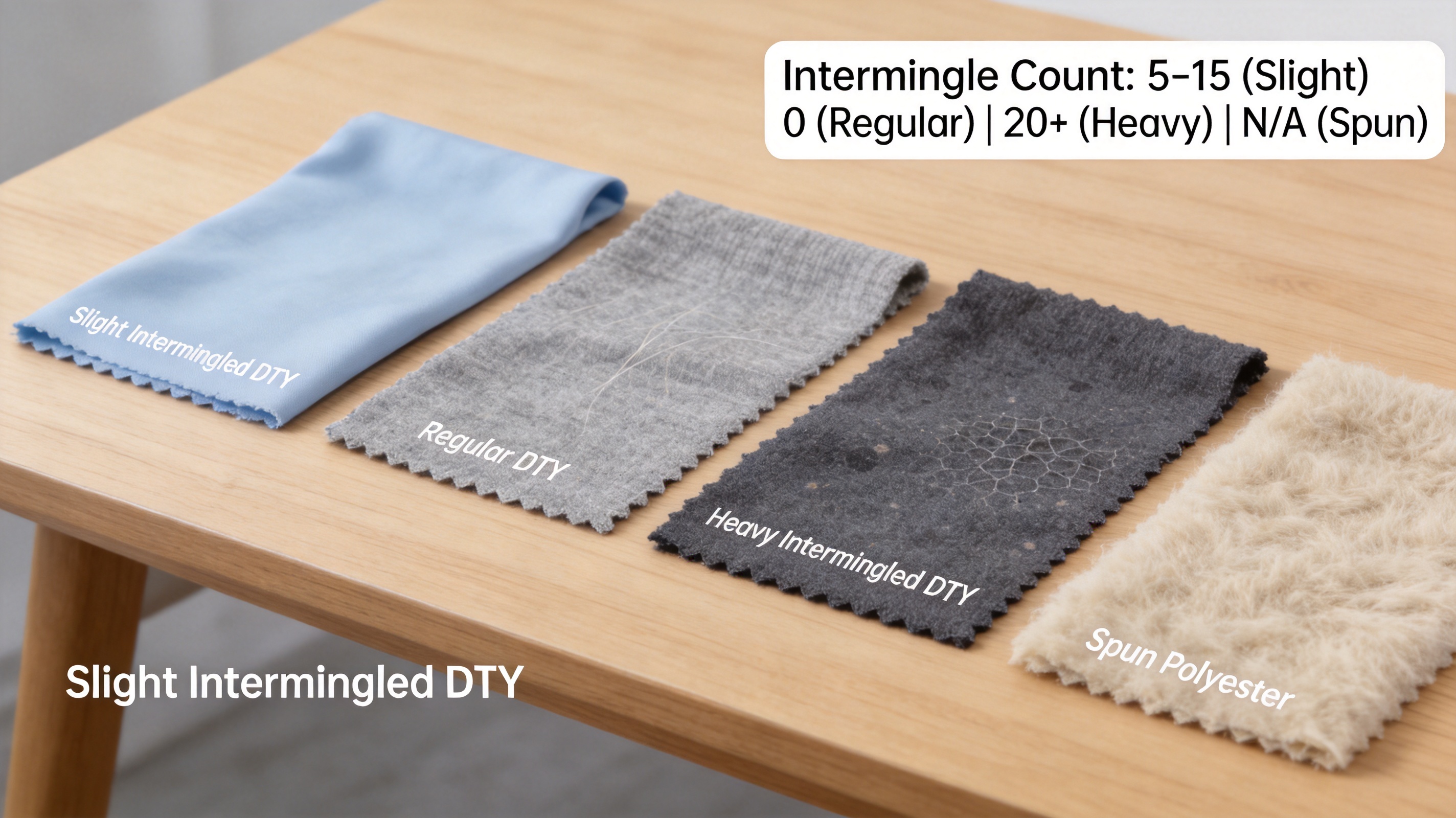
As defined by textile industry standards, Slight Intermingled DTY is characterized by a low to medium number of intermingle points per meter—typically between 5 and 15, depending on the desired application. This is in contrast to Heavy Intermingled DTY, which has 20 or more intermingle points per meter, resulting in visible network spots on the fabric surface. The intermingle count is precisely controlled by two key factors: air pressure applied during the texturing process and the speed of the texturing machine. Higher air pressure increases the number of bonds, while faster machine speeds reduce it (if pressure remains constant). This delicate balance is what gives Slight Intermingled DTY its unique set of properties, making it ideal for applications where smoothness, consistency, and versatility are paramount.
Key Advantages of Slight Intermingled DTY Over Competitor Yarns
Slight Intermingled DTY outperforms a range of traditional yarns—including regular DTY, Heavy Intermingled DTY, and spun polyester yarn—across multiple critical metrics. These advantages translate directly to improved downstream production efficiency, enhanced fabric quality, and broader application potential. Below is a detailed breakdown of its core strengths:
Intermingling Precision: Balancing Bonding and Softness
One of the most significant advantages of Slight Intermingled DTY is its precise intermingling control. Unlike regular DTY (which has no intermingle points), Slight Intermingled DTY’s controlled bond density (5–15 per meter) prevents filament separation during weaving or knitting, reducing yarn breakage and downtime. This is a critical benefit for manufacturers, as yarn breakage can lead to significant production losses and quality defects. At the same time, the low bond density ensures that the yarn retains its soft, smooth texture—unlike Heavy Intermingled DTY, which has excessive bonds that create rigid, spotty surfaces. This balance makes Slight Intermingled DTY suitable for both delicate apparel fabrics and durable home textiles.
Texture Consistency: Uniformity Across Every Meter
Consistency is a make-or-break factor in textile production, and Slight Intermingled DTY excels in this area. Through advanced process control, leading manufacturers ensure that the intermingle count, crimp level, and tensile strength are uniform across every meter of yarn. This uniformity translates to fabrics with consistent thickness, drape, and performance—no weak points, no uneven dye uptake, and no visible variations in texture. In contrast, competitor yarns often suffer from inconsistencies due to outdated equipment or lack of real-time monitoring. For example, regular DTY may have varying crimp levels, leading to fabrics that stretch unevenly, while spun polyester yarn can have inconsistent fiber alignment, resulting in fuzzy or uneven surfaces.
Surface Finish: Smoothness Without Compromise
The surface finish of a yarn directly impacts the aesthetic appeal of the final fabric, and Slight Intermingled DTY delivers an unparalleled smoothness. Its low intermingle count means there are no visible network spots—unlike Heavy Intermingled DTY, which leaves noticeable marks on the fabric. This smooth surface is ideal for high-end apparel (such as dresses, blouses, and activewear) where a refined look is essential, as well as for home textiles like bedding and curtains, where a sleek drape is desired. Additionally, the smooth surface reduces pilling over time, extending the lifespan of the fabric and enhancing its durability.
Versatility: A Yarn for Every Application
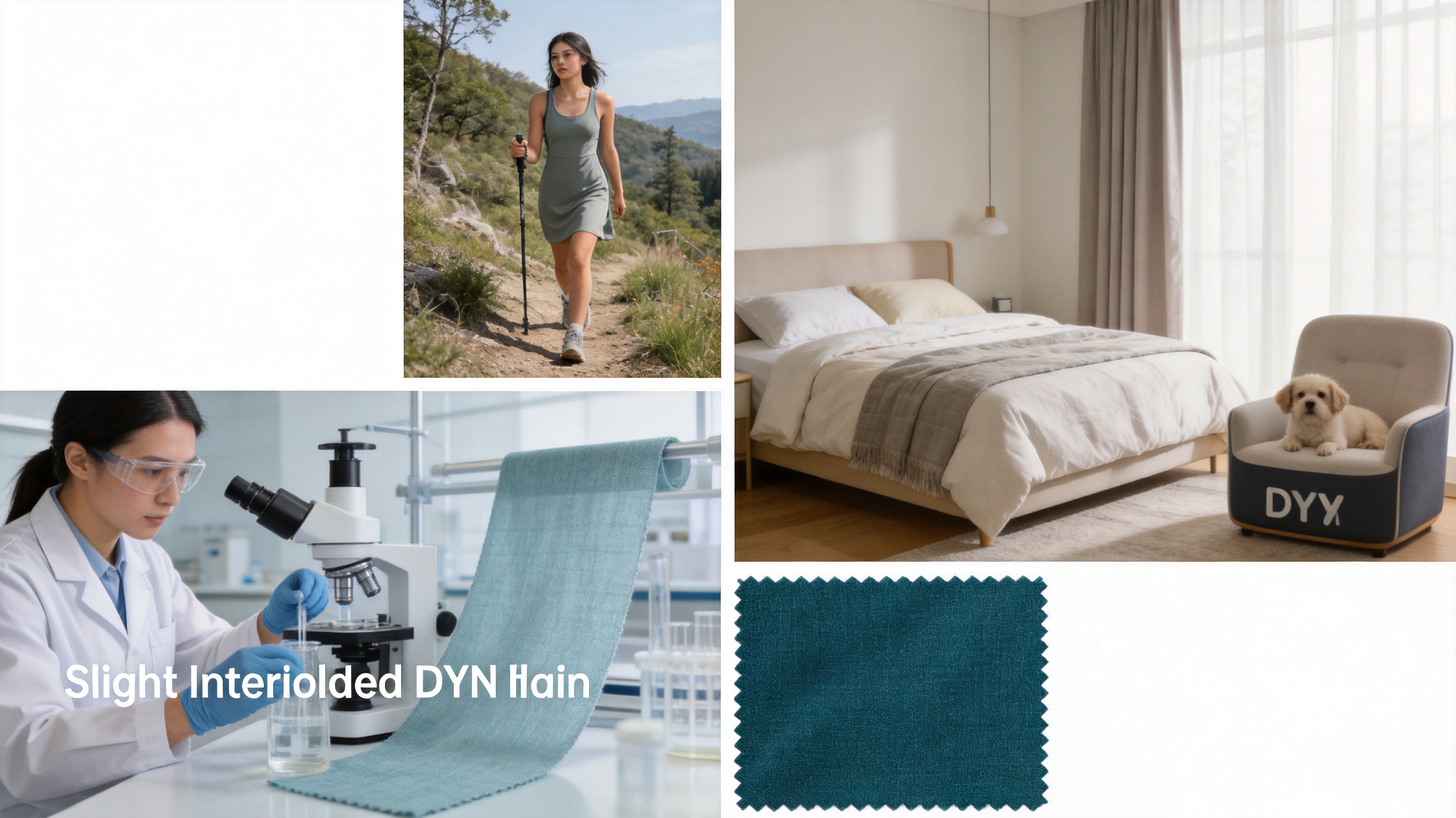
Slight Intermingled DTY’s balanced properties make it one of the most versatile yarns on the market. It can be used in a wide range of applications, including:
- Apparel: Shirts, dresses, activewear, loungewear, and undergarments (due to its softness, breathability, and elasticity)
- Home Textiles: Bedding, curtains, upholstery, and table linens (due to its durability, smooth drape, and resistance to pilling)
- Technical Textiles: Filter fabrics, medical textiles, and geotextiles (due to its consistent structure and high tensile strength)
- Blended Fabrics: It blends seamlessly with rayon, spandex, cotton, and other fibers to enhance performance—for example, blending with rayon adds softness and drape, while adding spandex improves elasticity.
This versatility is a major advantage over competitor yarns, which are often limited to specific applications. For example, Heavy Intermingled DTY is primarily used for industrial fabrics, while spun polyester yarn is best suited for basic textiles and sewing threads.
To further illustrate these advantages, the table below compares Slight Intermingled DTY with three common competitor yarns across key performance metrics:
| Yarn Type | Intermingle Count (per meter) | Texture Uniformity | Surface Appearance | Dyeability | Application Range |
|---|---|---|---|---|---|
| Slight Intermingled DTY | 5–15 | Excellent (±2% variation) | Smooth, no visible spots | Uniform, consistent uptake | Apparel, home textiles, technical fabrics |
| Regular DTY (Non-Intermingled) | 0 | Good (±5% variation) | Slippery, prone to filament separation | Good, but may have streaks | Basic apparel, knitwear |
| Heavy Intermingled DTY | 20+ | Moderate (±8% variation) | Visible network spots | Uneven, spots may dye darker | Industrial fabrics, heavy-duty applications |
| Spun Polyester Yarn | N/A | Poor (±12% variation) | Fuzzy, textured | Good, but may have uneven coverage | Basic textiles, sewing threads |
Advanced Manufacturing Processes: Behind the Quality of Slight Intermingled DTY
The superior quality of Slight Intermingled DTY is not accidental—it is the result of rigorous, technology-driven manufacturing processes that prioritize precision, consistency, and innovation. Leading producers invest heavily in state-of-the-art equipment, skilled personnel, and quality control systems to ensure that every batch meets the highest standards. Below is a detailed look at the key steps in the manufacturing process:
1. Raw Material Sourcing & Preparation
The foundation of any high-quality yarn is its raw materials, and Slight Intermingled DTY starts with premium-grade polyester chips. These chips are selected based on their intrinsic viscosity (IV)—a measure of polymer chain length, which directly impacts the yarn’s tensile strength and durability. Leading manufacturers use chips with an IV of 0.65–0.75 dL/g, which is optimal for DTY production: it provides sufficient strength without making the yarn brittle. Additionally, the chips are tested for purity (to ensure no contaminants that could affect texture or dyeability) and color consistency.
Once selected, the polyester chips are melted in an extruder at temperatures between 280°C and 300°C. The molten polymer is then filtered to remove any impurities and pumped through a spinneret—a metal plate with hundreds of tiny holes—to form continuous filaments. These filaments are quenched with cool air to solidify them, then drawn to reduce their diameter and increase their strength. The drawing process is critical: it aligns the polymer chains, enhancing the yarn’s tensile strength and elasticity. After drawing, the filaments are ready for texturing.
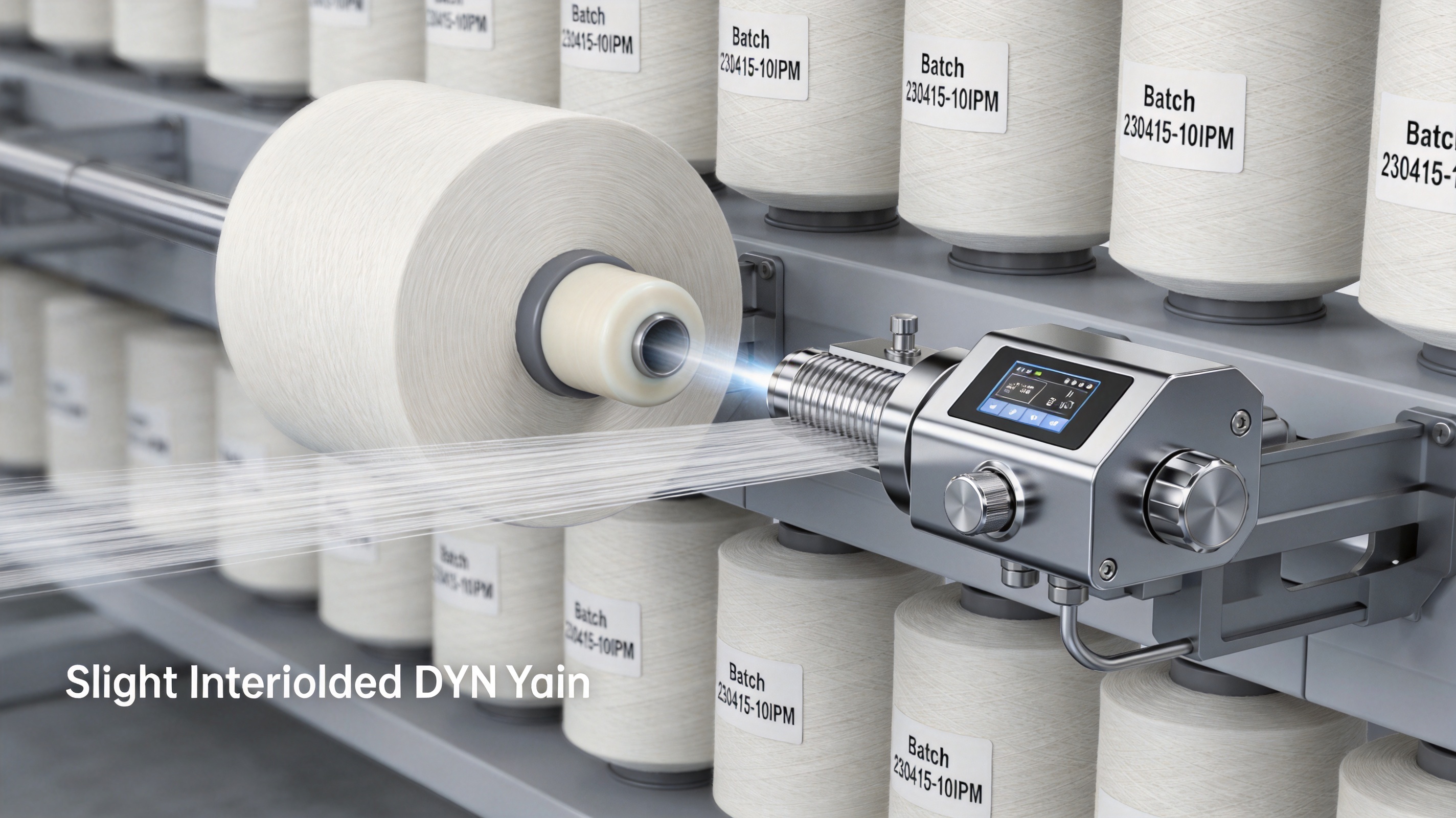
2. Precision Texturing with Air Pressure Control
The texturing step is where Slight Intermingled DTY’s unique properties are created, and it relies on precise air-jet intermingling. This process uses a texturing machine equipped with a series of rolls (feed roll, draw roll, take-up roll) and a texturing jet—a small device that directs high-pressure air onto the filaments. The air jets cause the filaments to twist and bond together at specific points, creating the intermingle points.
The key to consistent quality here is precise air pressure control. Leading manufacturers use digital pressure regulators with a tolerance of ±0.05 bar, ensuring that the pressure remains constant across the entire production run. This precision directly translates to a uniform intermingle count: for example, a pressure of 2.5 bar might produce 10 intermingle points per meter, while 3.0 bar produces 12. The texturing jets are made from ceramic, which is durable and resistant to wear, ensuring that the air flow remains consistent over time. Additionally, the machine is equipped with sensors that monitor air pressure in real time, alerting operators to any deviations and allowing for immediate adjustments.
3. Speed Optimization for Consistency
Machine speed is another critical factor in Slight Intermingled DTY production, as it directly affects the intermingle count. If the texturing machine speed increases, the filaments pass through the air jet more quickly, reducing the number of intermingle points (if pressure remains constant). Conversely, slower speeds increase the intermingle count. To address this, leading manufacturers use integrated speed-pressure feedback systems that automatically adjust air pressure based on machine speed. For example, if the speed increases by 10%, the system increases the pressure by 0.1 bar to maintain the target intermingle count. This real-time adjustment ensures that consistency is maintained even as production speeds vary.
The speed of the texturing machine also impacts the yarn’s crimp level. Faster speeds can reduce crimp, while slower speeds increase it. To optimize crimp, manufacturers use advanced roll systems that control the tension between the feed roll and take-up roll. This tension control ensures that the crimp level is uniform across the yarn, enhancing its elasticity and bulk. The combination of speed and tension control is a key innovation that sets leading producers apart from competitors, who often rely on manual adjustments or outdated equipment.
4. Post-Processing & Quality Assurance
After texturing, the yarn undergoes several post-processing steps to ensure quality and consistency. First, it is wound onto cones with precise tension control—too much tension can cause the yarn to stretch, while too little can lead to tangling. The cones are then labeled with batch numbers and production data (including intermingle count, crimp level, and tensile strength) for traceability.
Quality assurance is a multi-stage process that begins before production and continues until the final product is shipped. Pre-production checks include raw material testing (purity, IV, color). In-process checks include real-time monitoring of air pressure, machine speed, and intermingle count via automated sensors. Post-production checks include:
- Intermingle Count Test: Using a tension tester to measure the force required to separate the filaments—higher force indicates more bonds.
- Texture Uniformity Test: Visual inspection and mechanical testing to ensure consistent crimp and intermingle count across the batch.
- Tensile Strength Test: Using a universal testing machine to measure the yarn’s breaking strength and elongation.
- Dyeability Test: Lab-scale dyeing to check color uniformity and uptake.
Any batch that fails to meet the required standards is rejected, ensuring that only the highest quality yarn reaches customers. This rigorous quality control process is a hallmark of leading producers, who prioritize customer satisfaction and product reliability.
Company Strengths: Why Leading Producers Excel in Slight Intermingled DTY
The success of Slight Intermingled DTY depends not only on the manufacturing process but also on the strengths of the company producing it. Leading manufacturers in this field—such as Hangzhou Jinfeng Textile Co., Ltd.—combine state-of-the-art facilities, advanced R&D, and customer-centric values to deliver superior products. Below are some of the key strengths that set these companies apart:
1. Strategic Location & Facilities
Leading producers are often located in textile hubs, such as Hangzhou, Zhejiang Province—China’s center for synthetic yarn production. This location provides access to a skilled workforce, reliable supply chains, and efficient logistics. For example, Hangzhou Jinfeng Textile Co., Ltd. is located in the Jingjiang Street Industrial Park, Xiaoshan District, Hangzhou. The company’s facilities cover 32.6 acres, with a plant area of 18,000 square meters—equipped with the latest texturing machines, R&D labs, and quality control equipment. This large-scale production capacity allows the company to meet the demands of both small and large customers, from boutique designers to global retailers.
2. End-to-End Integration
One of the biggest advantages of leading producers is their end-to-end integration—from R&D and raw material sourcing to production, post-dyeing, finishing, and sales. This integration allows for full control over every step of the process, ensuring consistency and quality. For example, Hangzhou Jinfeng Textile Co., Ltd. handles all aspects of production: it sources premium polyester chips, produces DTY yarn, dyes and finishes blended fabrics, and sells directly to customers. This integration also enables the company to customize products to meet specific customer needs—such as adjusting the intermingle count or crimp level for a particular application.
3. Advanced R&D Capabilities
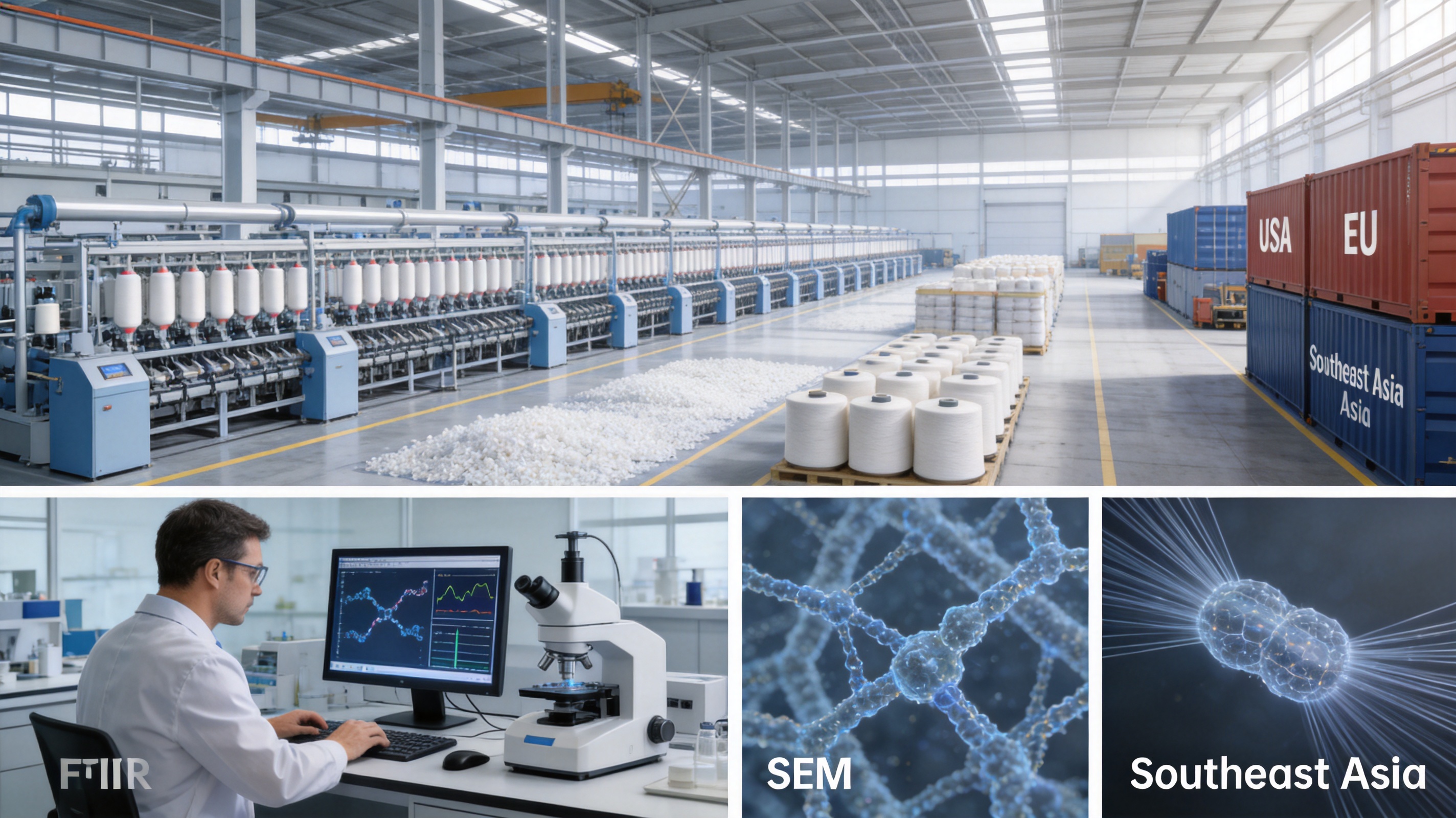
Leading producers invest heavily in R&D to stay ahead of industry trends and improve their products. Hangzhou Jinfeng Textile Co., Ltd. has a dedicated R&D team of textile engineers and scientists who work on developing new yarn formulations, optimizing manufacturing processes, and testing new applications. The company’s R&D lab is equipped with state-of-the-art equipment, including Fourier Transform Infrared (FTIR) spectroscopy (to analyze fiber composition), Scanning Electron Microscopy (SEM) (to examine intermingle structure), and lab-scale dyeing machines (to test color uniformity). The team collaborates with universities in Zhejiang to leverage academic expertise and drive innovation.
4. Export Capability & Global Reach
Many leading producers are self-employed export companies, allowing them to directly reach global markets without intermediaries. This gives them a competitive edge in terms of pricing, delivery times, and customer service. For example, Hangzhou Jinfeng Textile Co., Ltd. exports its products to customers in over 30 countries, including the United States, Europe, Southeast Asia, and the Middle East. The company’s efficient logistics network ensures that products are delivered on time, even to remote locations. Additionally, the company’s multilingual customer service team provides support to international customers, addressing their questions and concerns promptly.
5. Customer-Centric Values
Leading producers prioritize customer satisfaction, adhering to a “cooperation, win-win” business philosophy. They work closely with customers to understand their needs and provide tailored solutions. For example, Hangzhou Jinfeng Textile Co., Ltd. offers wholesale pricing for bulk orders, custom product development for specific applications, and after-sales support to ensure that customers are satisfied with their products. The company also welcomes visitors to its facilities to inspect production processes and negotiate business, fostering long-term partnerships with customers worldwide.
Q&A: Common Questions About Slight Intermingled DTY
To address common queries about Slight Intermingled DTY, we have compiled the following Q&A section, based on industry knowledge and customer feedback:
Q1: What is the primary difference between Slight Intermingled DTY and Heavy Intermingled DTY?
A: The key difference lies in the number of intermingle points per meter. Slight Intermingled DTY has 5–15 points, while Heavy Intermingled DTY has 20+ points. This difference results in distinct properties: Slight Intermingled DTY has a smooth surface with no visible spots, making it ideal for apparel and home textiles, while Heavy Intermingled DTY has visible network spots, making it suitable for industrial applications. Additionally, Slight Intermingled DTY is softer and more flexible, whereas Heavy Intermingled DTY is more rigid.
Q2: How does air pressure influence the quality of Slight Intermingled DTY?
A: Air pressure is the primary parameter controlling the intermingle count. Higher pressure increases the number of bonds between filaments, while lower pressure reduces it. Leading manufacturers use precision digital pressure regulators to maintain a consistent target (e.g., 8–12 points per meter) across all production runs. This ensures that the yarn has uniform texture, smooth surface, and consistent performance.
Q3: What are the main applications of Slight Intermingled DTY?
A: Slight Intermingled DTY is highly versatile, with applications across multiple industries: - Apparel: Shirts, dresses, activewear, loungewear, and undergarments (due to softness, breathability, and elasticity) - Home Textiles: Bedding, curtains, upholstery, and table linens (due to durability, smooth drape, and resistance to pilling) - Technical Textiles: Filter fabrics, medical textiles, and geotextiles (due to consistent structure and high tensile strength) - Blended Fabrics: Blends with rayon, spandex, cotton, and other fibers to enhance performance (e.g., rayon blends for softness, spandex blends for elasticity)
Q4: How do leading manufacturers ensure consistent quality across large production batches?
A: Leading manufacturers implement a multi-stage quality control system: - Pre-production: Raw material testing for purity, intrinsic viscosity, and color consistency - In-process: Real-time monitoring of air pressure, machine speed, and intermingle count via automated sensors - Post-production: Batch testing for intermingle count, texture uniformity, tensile strength, and dyeability - Traceability: Each batch is labeled with production data for full transparency and accountability Any batch that fails to meet standards is rejected, ensuring only high-quality yarn reaches customers.
Q5: Is Slight Intermingled DTY suitable for blended fabrics?
A: Yes, it is highly compatible with other fibers. Blending with rayon enhances softness and drape, while adding spandex improves elasticity. Blending with cotton increases breathability and comfort. The yarn’s consistent structure ensures uniform blending and dye uptake, resulting in high-quality blended fabrics for various end uses. Leading manufacturers often offer custom blending services to meet specific customer needs.
Q6: What environmental considerations are part of the manufacturing process?
A: Leading manufacturers prioritize sustainable practices to minimize environmental impact: - Energy-efficient texturing machines to reduce carbon footprint - Recycling of production waste (polyester chips and yarn scraps) - Closed-loop water systems in post-dyeing processes to conserve water - Use of eco-friendly dyes and chemicals These practices align with global sustainability standards and meet the demands of environmentally conscious customers.
References
1. Textile Institute. (2022). Global Handbook of Synthetic Yarns: Properties and Applications. Manchester: Textile Institute Press.
2. Li, Y., Zhang, H., & Wang, L. (2021). "Air Pressure Optimization in DTY Production for Enhanced Texture Uniformity." Journal of Textile Research, 45(3), 123–135.
3. China Textile Industry Association. (2023). Annual Report on Synthetic Yarn Manufacturing Trends. Beijing: China Textile Press.
4. Smith, J. D. (2020). "Advances in Drawn Textured Yarn (DTY) Technology: Intermingling Precision and Versatility." Industrial Textiles Monthly, 15(8), 45–52.
5. Wang, M., Liu, X., & Chen, Y. (2019). "Blended Fabric Performance with Intermingled DTY Yarns: Softness, Drape, and Durability." Textile Chemistry and Physics, 38(2), 98–107.
6. International Textile Manufacturers Federation (ITMF). (2021). Global Synthetic Yarn Market Report. Zurich: ITMF Publications.