RT Mesh Fabric: Performance, Manufacturing Excellence, and Versatile Textile Applications
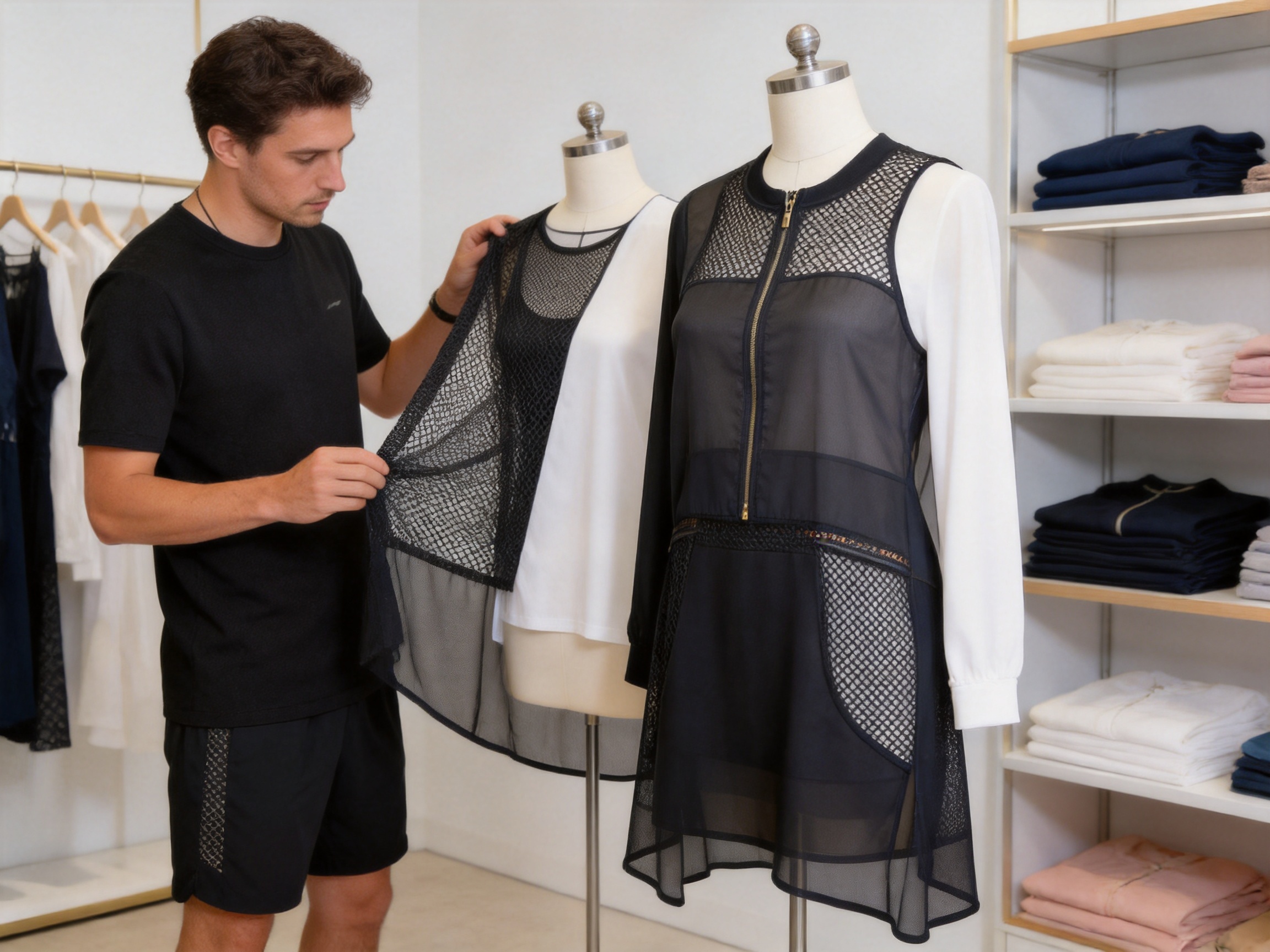
RT Mesh Fabric is a knitted textile developed for applications that require air permeability, visual texture, flexibility, and a distinctive open-surface appearance. As a type of NR knitted fabric, it combines the comfort and adaptability of knitted construction with the practical advantages of mesh engineering. Its structure allows air to circulate through the fabric, helping garments and textile products feel lighter and more breathable in suitable conditions.
Mesh fabrics are used in apparel, sportswear, lining, decorative panels, casual clothing, accessories, and many other products. However, not all mesh fabrics deliver the same performance. Differences in fiber composition, yarn quality, knitting precision, finishing, dimensional stability, and quality control can significantly affect the final product. RT Mesh Fabric is designed to provide a reliable balance between appearance, comfort, production efficiency, and application flexibility.
The fabric is manufactured by Hangzhou Jinfeng Textile Co., Ltd., an integrated textile enterprise engaged in research and development, production, processing, post-dyeing, finishing, and sales. The company works with polyester, spandex, blended fabrics, and drawn textured yarn products. This vertically coordinated capability supports consistent product development and gives buyers access to professional textile assistance from yarn selection through finished fabric delivery.
RT Mesh Fabric should not be viewed simply as a fabric with holes. Its value lies in the relationship between the yarn, the knitted structure, the openness of the surface, the stability of the construction, and the finishing process. When these factors are carefully coordinated, mesh can offer a practical and attractive solution for products that need ventilation, lightness, stretch, and visual interest.
Understanding RT Mesh Fabric
RT Mesh Fabric belongs to the NR knitted fabric category. Knitted fabrics are formed by interlocking loops of yarn rather than crossing yarns in a traditional woven pattern. This looped construction can provide a natural degree of flexibility, softness, and conformability. In mesh structures, the loops are arranged to create open areas or a patterned surface that promotes air movement and produces a characteristic textured appearance.
The exact appearance and behavior of RT Mesh Fabric depend on its yarn content, knitting parameters, fabric weight, gauge, finishing treatment, and dyeing method. A more open construction may provide stronger ventilation and a lighter visual effect, while a denser mesh may offer greater coverage and improved resistance to snagging. These variables allow the fabric to be adapted for different end uses.
Mesh fabrics are often selected when a product must avoid a heavy or closed appearance. A solid textile can retain more heat and may appear visually dense. By contrast, a mesh textile introduces openness and texture. It may be used as a complete garment material, a secondary panel, an insert, an overlay, or a decorative component. Its versatility makes it relevant to both functional and fashion-oriented product development.
RT Mesh Fabric can also be incorporated into designs that combine different textiles. For example, a designer may pair mesh with a solid knitted fabric, polyester-spandex material, woven fabric, or lining. This approach makes it possible to place ventilation zones strategically while maintaining coverage and structure in other areas. The fabric can therefore contribute not only to comfort but also to color blocking, layering, transparency control, and visual contrast.
Core Advantages of RT Mesh Fabric
Air Permeability and Breathable Construction
The most recognizable advantage of mesh fabric is its open construction. The spaces within the knitted surface allow air to move more freely than it would through many compact fabrics. This can help reduce the feeling of heaviness in warm conditions and can support a fresher wearing experience when the garment is properly designed.
Breathability is especially important in sportswear, active clothing, summer apparel, lightweight casual garments, and products worn during movement. When a textile permits greater air exchange, heat and moisture can be managed more effectively at the garment level. The actual performance depends on the fiber composition, garment design, body activity, environmental conditions, and use of additional layers, but the mesh structure provides an important starting point.
Compared with a dense textile of similar weight, an open mesh may create a lighter and less restrictive impression. It can be positioned in areas where ventilation is desirable, such as the back, shoulders, side panels, sleeve sections, or lower garment inserts. This targeted use can improve comfort without requiring the entire garment to be made from an open fabric.
Lightweight Handle and Flexible Drape
Knitted mesh generally offers a lightweight handle and flexible drape. These qualities are valuable for clothing that must move with the body rather than resist movement. The fabric can conform to curved surfaces and can be used in designs that require folds, gathers, layered panels, or a close yet flexible fit.
The looped knitted structure contributes to this adaptability. Depending on the fabric specification, RT Mesh Fabric can provide a balance between softness and resilience. A suitable finishing process can further improve the hand feel, surface appearance, and usability for cutting and sewing.
Lightness also benefits logistics and product construction. A lightweight textile may reduce the material burden of a finished garment, support compact packing, and make layered designs less bulky. For brands developing seasonal collections, this can provide more freedom to create breathable products without making them feel unnecessarily heavy.
Distinctive Texture and Visual Appeal
RT Mesh Fabric has a visual identity that separates it from plain jersey or other flat knitted materials. Its open or patterned surface adds depth, rhythm, and texture. Depending on the design, it may appear sporty, technical, modern, casual, or decorative.
This visual quality is useful for designers who want to create interest without relying on complex prints. A structured mesh surface can provide detail through construction alone. It may also serve as a background for color combinations, embroidery, appliqué, bonding, or printed graphics, provided that the chosen processing method is compatible with the fabric’s open structure.
Mesh can be used to create contrast between opaque and transparent areas. A designer may place it over a lining or solid base to produce a layered effect, or use it beside a compact textile to emphasize differences in texture. This makes RT Mesh Fabric suitable for fashion products as well as performance-oriented garments.
Adaptability for Different Applications
One of the main strengths of RT Mesh Fabric is its wide application range. It can be considered for sports shirts, training tops, casual clothing, fashion panels, lightweight jackets, children’s garments, decorative apparel, accessories, and selected home textile products.
In sportswear, the fabric can support ventilation and freedom of movement. In casual clothing, it can create a relaxed and lightweight appearance. In fashion design, it can be used as an overlay, insert, sleeve section, or textured feature. In accessories, it may contribute to a breathable and flexible construction when appropriate lining and reinforcement are included.
The correct application depends on the selected specification. Buyers should evaluate opacity, stretch, recovery, colorfastness, abrasion resistance, edge behavior, and sewing performance before approving the fabric for mass production. The open structure is an advantage, but it also means that design and manufacturing decisions must be carefully coordinated.
Compatibility with Blended Textile Development
Hangzhou Jinfeng Textile Co., Ltd. produces and processes blended fabrics involving materials such as polyester and spandex. This experience is relevant to mesh development because fiber composition strongly influences comfort, stretch, recovery, strength, dyeing behavior, and care performance.
Polyester is widely used in technical and apparel textiles because it can offer good dimensional stability, practical durability, and efficient processing. Spandex can contribute stretch and recovery where a design requires closer fitting or greater freedom of movement. Other blended constructions may be selected according to the target handle, appearance, price level, and performance requirements.
A carefully selected blend can help balance the advantages and limitations of individual fibers. However, the best composition depends on the product objective. A fabric intended for high-movement sportswear may require different stretch behavior from a decorative fashion mesh. A fabric intended for casual garments may prioritize softness and appearance over maximum recovery. Professional material selection is therefore essential.

RT Mesh Fabric
Performance Compared with Conventional Fabric Options
RT Mesh Fabric offers several practical differences when compared with closed knitted fabrics. A compact jersey generally provides more coverage and may be easier to print or sew, but it can feel warmer and visually heavier. Mesh provides greater openness and surface texture, which can improve ventilation and reduce visual density.
Compared with some woven materials, knitted mesh can offer greater flexibility and a softer drape. Woven fabrics may provide excellent stability and resistance to certain types of distortion, but they may not conform to the body as naturally without added stretch or special construction. RT Mesh Fabric can be advantageous where movement and comfort are more important than a rigid shape.
Compared with low-quality mesh products, a professionally developed RT Mesh Fabric can offer better consistency from roll to roll. Fabric quality is not determined only by the presence of openings. Uneven loops, inconsistent density, unstable width, poor dye penetration, or weak finishing can create problems during cutting, sewing, washing, and use. Manufacturing discipline is therefore a major competitive factor.
Some synthetic mesh fabrics can feel cold to the touch in certain environments because synthetic fibers may not retain warmth in the same way as heavier natural or blended materials. This is not necessarily a defect; it is a characteristic that may be useful in warm-weather applications and less suitable in cold-weather products. Product developers should match the textile to the intended climate and garment system.
Mesh fabrics can also be more vulnerable to snagging than compact textiles because of their openings and loops. Zipper pulls, buttons, jewelry, rough surfaces, and sharp objects may catch the fabric. Heat can also affect some synthetic mesh constructions, particularly when exposed to unsuitable ironing temperatures or uncontrolled finishing conditions. These considerations should be addressed through product design, care labeling, testing, and appropriate handling.
Manufacturing Strengths Behind the Product
Integrated Textile Production Capability
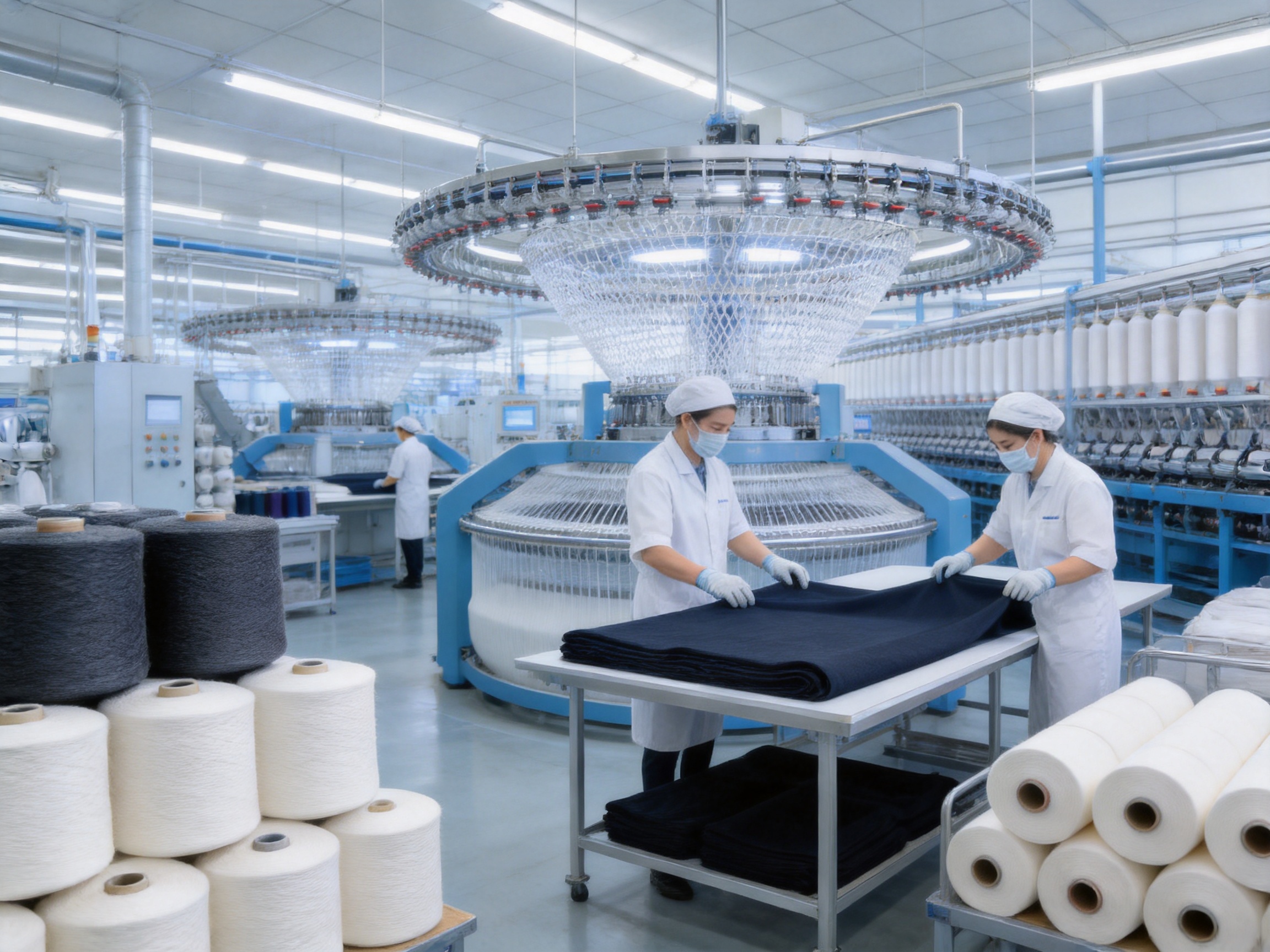
Hangzhou Jinfeng Textile Co., Ltd. operates as an integrated textile business combining research and development, production, processing, post-dyeing, finishing, and sales. This broad capability allows the company to coordinate multiple stages of product creation rather than treating fabric manufacturing as an isolated operation.
Integration can improve communication between technical teams, production personnel, finishing specialists, and sales representatives. When a buyer requests changes to hand feel, color, weight, width, stretch, or surface appearance, an integrated manufacturer can evaluate those requirements across the production chain. This can support faster problem solving and reduce the risk that decisions made in one stage create difficulties in another.
The company’s product scope includes polyester and spandex blended fabrics, DTY polyester yarn, and other textile materials. This experience provides a foundation for understanding how yarn properties affect knitted fabric behavior. Yarn selection, texturing, knitting, dyeing, and finishing are closely related, and expertise in one area can strengthen decision-making in the others.
Experience with Drawn Textured Yarn
Drawn textured yarn, commonly known as DTY polyester yarn, is an important material in modern textile production. Through drawing and texturing, polyester filament yarn can be engineered to achieve particular bulk, resilience, stretch characteristics, and surface effects. The final yarn specification influences the appearance and performance of the fabric into which it is knitted.
Knowledge of DTY production and processing can help a manufacturer select yarns more effectively for mesh applications. A yarn that is too smooth, too weak, too rigid, or unsuitable for the selected knitting structure may produce an inferior fabric. By contrast, an appropriately engineered yarn can contribute to a more even surface, stable loop formation, and a consistent hand.
Yarn quality also affects dyeing and finishing. Variations in filament behavior can cause uneven color, streaks, surface irregularity, or differences in fabric recovery. A manufacturer with experience in yarn production and fabric processing is better positioned to identify the source of such issues and establish more reliable production conditions.
Research and Development Orientation
Research and development is essential for mesh fabrics because a small change in structure can affect multiple performance characteristics. Altering yarn count, knitting density, loop arrangement, or finishing conditions may change air permeability, stretch, coverage, tear behavior, appearance, and dimensional stability at the same time.
A practical development program should begin with the intended use. The manufacturer and buyer can define the target hand feel, weight, width, color range, stretch requirements, openness, and finishing effect. Samples can then be evaluated through visual inspection, handling, sewing trials, and relevant performance tests.
Development may also involve adjusting the fabric for different markets. A mesh for sportswear may require high breathability and strong recovery. A mesh for fashion may prioritize drape, transparency, color effect, and surface design. A mesh for children’s clothing may require greater attention to softness, safety, durability, and snag reduction. R&D allows the basic fabric concept to be refined for these different needs.
Post-Dyeing and Finishing Expertise
Dyeing and finishing are decisive stages in the production of RT Mesh Fabric. Color must be developed consistently across the fabric width and from one production lot to another. The open knitted construction requires careful processing so that the fabric retains its intended shape and surface character.
Finishing can influence softness, dimensional stability, width, surface smoothness, color appearance, and sewing performance. Depending on the product requirement, the fabric may need a finish that supports a clean hand, controlled stretch, improved recovery, or a particular visual effect. The selected process must be compatible with the yarn and knitted structure.
Over-processing can damage or distort an open structure, while insufficient finishing may leave the fabric unstable or difficult to handle. Experienced technicians must balance temperature, tension, speed, moisture, and mechanical action. Consistency is especially important because mesh openings can make uneven treatment more visible than it would be on a dense fabric.
Production and Processing Facilities
The company is located in Jingjiang Street Industrial Park, Xiaoshan District, Hangzhou City, Zhejiang Province. Its facilities cover approximately 32.6 acres, with a plant area of about 18,000 square meters. This scale supports organized production, processing, storage, quality management, and coordination between different operating functions.
A properly organized plant environment can improve material flow and reduce avoidable handling. Yarn, unfinished fabric, dyed fabric, finished rolls, and packaging materials should be managed in a way that protects the product and supports traceability. For knitted mesh, careful storage is particularly important because excessive compression, moisture, contamination, or rough handling may affect the fabric before it reaches the customer.
Facility scale alone does not guarantee product quality, but it provides a practical foundation for process control. The important question is how effectively the available space, machinery, technical personnel, and management systems are used. An integrated plant can support a more stable relationship between product development, manufacturing, and delivery.
Quality Control Considerations for RT Mesh Fabric
Raw Material Inspection
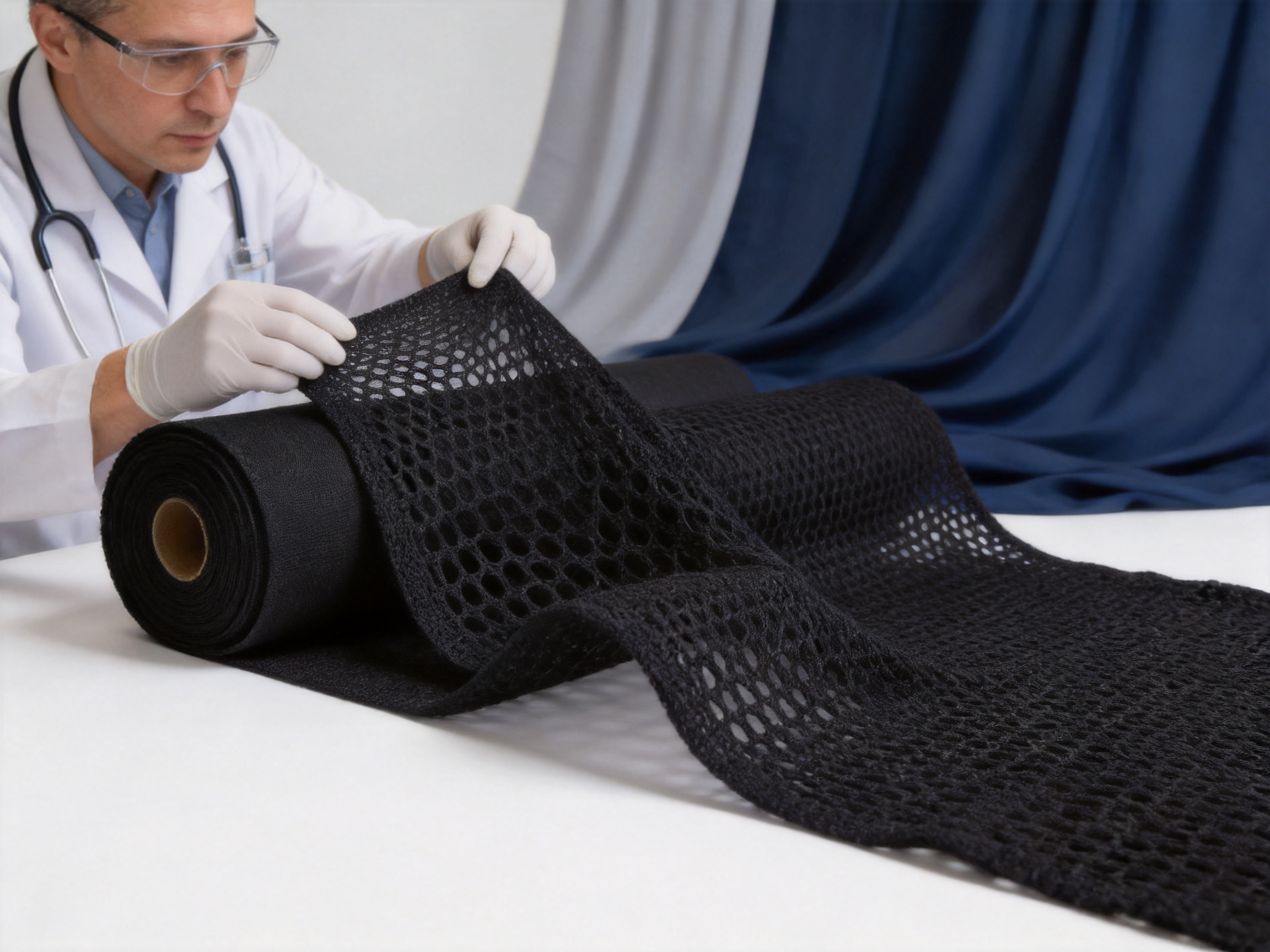
Quality control begins with the yarn. The manufacturer should evaluate yarn count, appearance, strength, elongation, evenness, color, and suitability for the selected knitting process. If blended yarns are used, the ratio and compatibility of the fibers should be verified against the product specification.
Raw material inspection helps prevent defects from entering later stages. Yarn irregularity may appear as uneven loops, streaks, holes, or changes in surface density. Weak yarn can contribute to breakage during knitting or create fabric that is more vulnerable to tearing and snagging. Consistent yarn quality is therefore fundamental to a reliable mesh textile.
Knitting Process Control
During knitting, machine settings must be managed carefully. Loop size, tension, gauge, speed, and pattern formation influence the fabric’s weight, width, openness, and appearance. If tension varies across the machine, the fabric may show differences in density or distortion. If the knitting parameters are not matched to the yarn, the fabric may develop defects or unstable dimensions.
Inspection during knitting can identify dropped stitches, holes outside the intended structure, broken yarn, uneven texture, oil marks, and other defects. Early detection is valuable because it allows corrective action before a large quantity of material is produced.
Dyeing and Finishing Inspection
After knitting, the fabric may undergo dyeing, washing, drying, heat setting, compacting, or other finishing operations. Each step can influence the final result. The manufacturer should monitor color consistency, width, weight, shrinkage, skew, spirality, surface appearance, and hand feel.
Mesh fabrics can be sensitive to tension during wet and dry processing. Excessive tension may stretch the openings and create an inaccurate finished width, while insufficient control may produce excessive shrinkage or distortion. Controlled finishing helps ensure that the fabric meets the approved sample and remains practical for cutting and sewing.
Finished Fabric Evaluation
Finished fabric inspection should be based on an agreed specification. Depending on the application, useful checks may include visual appearance, fabric weight, width, color difference, dimensional stability, stretch and recovery, tear strength, abrasion resistance, pilling tendency, colorfastness, and seam performance.
Not every application requires the same test list. A decorative overlay may need more attention to appearance and drape, while sportswear may require more detailed evaluation of stretch, recovery, perspiration colorfastness, and repeated washing. Buyers and manufacturers should select test methods that reflect the actual end use.
Roll inspection is also important. Defects should be recorded by type, location, severity, and frequency. Clear inspection records support lot acceptance, production planning, and continuous improvement. They also help the manufacturer communicate accurately with customers if a technical issue needs to be resolved.
Application Areas
Sportswear and Active Apparel
RT Mesh Fabric is a natural candidate for sportswear because its open construction can support air circulation and reduce the feeling of bulk. It may be used in training tops, running garments, warm-weather uniforms, sports panels, sleeveless shirts, and lightweight performance layers.
For active applications, fabric selection should consider movement, repeated washing, perspiration, abrasion, and recovery. A mesh panel placed under the arm or across the back may improve ventilation while a denser fabric provides coverage in other areas. The fabric may also be combined with stretch materials to create a garment that balances ventilation and support.
Sportswear manufacturers should pay close attention to seam construction. Open mesh can require suitable needle selection, thread tension, seam allowance, and reinforcement. If the garment will experience repeated stretching, seams should be tested rather than approved only through visual inspection.
Casual and Summer Clothing
Lightweight mesh is suitable for warm-weather clothing where designers want a breathable and visually open surface. It can be used in shirts, tops, cardigans, dresses, skirts, casual jackets, and layered garments. When combined with a lining, it can create texture while maintaining coverage.
The fabric’s flexible drape makes it appropriate for relaxed silhouettes and garments with movement. It can also be used in small areas, such as sleeve inserts or side panels, to introduce a subtle design feature without changing the entire garment construction.
Care instructions should be considered during development. Because mesh can be vulnerable to snagging and unsuitable heat, the garment may require a careful washing method, low-temperature ironing guidance, or protection from rough accessories. Appropriate labeling can help preserve the fabric’s appearance during consumer use.
Fashion and Decorative Design
Fashion designers often use mesh for transparency, layering, contrast, and surface expression. RT Mesh Fabric can serve as an overlay on a solid base, a panel beside lace or satin, or a background for additional embellishment. Its texture can add sophistication without requiring a heavy or rigid material.
Decorative treatments should be tested carefully. Embroidery, printing, bonding, heat transfer, and appliqué may behave differently on an open knitted surface than on a compact fabric. The selected treatment should not excessively distort the mesh or weaken the fabric around the decorated area.
Uniforms and Promotional Garments
Mesh fabrics can be used in selected uniforms and promotional garments where lightness and ventilation are important. Event staff, hospitality personnel, outdoor workers, and recreational teams may benefit from garments designed for warm or active environments.
For uniforms, consistency and repeatability are particularly important. Color matching across production lots, reliable sizing, durable labeling, and predictable care performance all contribute to the professional appearance of the finished product. A manufacturer with integrated processing capabilities can help coordinate these requirements.
Accessories and Other Textile Products
Depending on its weight and strength, RT Mesh Fabric may be considered for bags, pouches, lightweight covers, decorative panels, and other textile products. The material can provide a breathable or semi-transparent effect that is useful for visual merchandising and product organization.
Accessories may place different stresses on the fabric than garments. Seams, handles, closures, and contact points can create concentrated loads. Reinforcement, binding, lining, or a denser supporting fabric may therefore be necessary. Product testing should reflect the actual loads and handling conditions expected in use.
Design and Manufacturing Guidance
Successful use of RT Mesh Fabric begins with an accurate understanding of the intended product. Buyers should provide information about the application, target market, expected climate, garment silhouette, color requirements, washing conditions, and target price. This allows the manufacturer to recommend a more appropriate construction.
Fabric openness should be selected according to coverage and ventilation needs. An extremely open structure may provide excellent airflow but may require lining or careful placement. A denser construction may offer better coverage and durability but may reduce breathability. The correct balance depends on the product objective.
Pattern design should account for stretch, recovery, and possible relaxation after washing. Pattern pieces may need stabilization or reinforcement where the fabric is attached to zippers, buttons, labels, elastic, or other components. Cutting equipment and marker planning should also be adjusted to reduce distortion and material waste.
Sewing trials are recommended before bulk production. The development team should examine needle size, stitch type, thread selection, seam allowance, feeding pressure, and seam strength. A fabric that looks excellent in a roll may behave differently when cut into curved panels or joined to a more stable material.
Heat exposure should be controlled during pressing, bonding, transfer printing, and finishing. Synthetic mesh can be heat-sensitive, and excessive temperature may cause melting, distortion, glazing, shrinkage, or loss of surface definition. Production teams should establish suitable settings through sampling rather than relying on general assumptions.
Sustainability and Responsible Production Considerations
Textile sustainability includes material selection, production efficiency, product durability, chemical management, energy use, water use, packaging, and end-of-life considerations. RT Mesh Fabric can contribute to lightweight product design, but sustainability depends on the complete life cycle rather than weight alone.
A lightweight fabric may reduce material consumption in some products and can require less packaging space. Durable and colorfast fabric may also support longer product use, which is an important part of resource efficiency. However, buyers should evaluate durability realistically and avoid using mesh in applications where frequent failure would shorten product life.
Efficient production can reduce waste by improving yarn utilization, minimizing knitting defects, controlling dyeing batches, and reducing off-quality fabric. Process integration may support better coordination and fewer unnecessary transfers. Accurate sampling and approval procedures can also reduce the risk of producing large quantities that do not meet the customer’s requirements.
Responsible textile development should also consider chemical and wastewater management. Dyeing and finishing processes must be operated according to applicable regulations and customer standards. Buyers may request relevant documentation, testing, and production information as part of their sourcing requirements.
Fiber selection remains an important sustainability decision. Polyester offers practical durability and processing efficiency, while blended constructions can provide performance benefits. At the same time, blends may complicate recycling compared with single-fiber products. The most appropriate choice depends on the product’s expected service life, performance requirements, collection system, and target market.
Why Choose an Experienced Manufacturing Partner
Choosing a mesh fabric is not only a matter of comparing price per meter. The supplier’s ability to understand yarn, knitting, dyeing, finishing, testing, and delivery can have a major influence on the final result. An experienced manufacturing partner can help prevent problems that would otherwise appear during garment production or after market launch.
Hangzhou Jinfeng Textile Co., Ltd. brings together manufacturing and commercial capabilities within one textile organization. Its work with knitted fabrics, blended fabrics, polyester, spandex, and DTY polyester yarn supports a broad technical perspective. This can be valuable for customers seeking either a standard fabric or a more customized material.
The company’s business philosophy emphasizes cooperation and mutual benefit. In practical terms, this means maintaining communication with customers, understanding project requirements, supporting product development, and working toward stable long-term supply. Textile production often involves multiple rounds of sampling and adjustment, so responsive communication is a meaningful advantage.
The company also serves domestic and international customers. Export experience can require attention to packaging, documentation, lead times, product specifications, and communication across different markets. These operational details are important when a fabric is being used in an organized apparel or textile supply chain.
Purchasing Checklist for RT Mesh Fabric
Before placing a bulk order, buyers should confirm the fabric composition. The percentage of polyester, spandex, or other fibers will influence stretch, recovery, hand feel, dyeing, care, and cost. The composition should be recorded clearly on the product specification and verified through appropriate testing where necessary.
Fabric weight and width should also be agreed in advance. Weight affects coverage, drape, material consumption, and garment cost. Width affects marker efficiency and cutting yield. Buyers should define whether the width is measured relaxed, stretched, tubular, or open width, because different measurement methods can produce different results.
Color requirements should include a physical standard or recognized color reference. Approval should consider the fabric’s texture and openness, since the same color may appear different on mesh compared with a compact textile. Lot-to-lot color consistency should be discussed before production.
Stretch and recovery requirements should be evaluated according to the actual garment direction. A knitted fabric may have different behavior across the width and length. Buyers should specify the required stretch direction, extension level, recovery expectation, and test conditions when these characteristics are important.
End-use testing should be planned before bulk production. Washing, perspiration, abrasion, pilling, seam strength, snagging, and dimensional stability may all be relevant. The test program should reflect the market, garment design, and expected consumer use.
Packaging and storage should be agreed as well. Finished mesh rolls should be protected from moisture, contamination, excessive compression, and rough handling. Clear roll labels can support traceability by identifying composition, color, weight, width, lot number, and production date.
Care and Handling Recommendations
Because mesh fabric contains open loops and spaces, it should be handled with care during cutting and sewing. Work surfaces should be clean and free from sharp edges. Rolls should not be dragged across rough floors or equipment. Garment components should be protected from unnecessary contact with hooks, exposed fasteners, and unfinished metal parts.
Zippers, buttons, jewelry, and accessories can snag mesh. Product designers can reduce this risk by selecting smooth components, covering internal hardware, or placing mesh away from high-contact areas. If the fabric is used in children’s products or active garments, the design should receive additional attention because movement can increase contact and pulling forces.
Heat should be controlled during pressing and consumer care. Synthetic materials may be affected by high temperatures, and an open knitted structure may lose shape if pressed incorrectly. Manufacturers should conduct care trials and provide suitable instructions for washing, drying, ironing, and storage.
Proper care does not eliminate every limitation of mesh, but it can significantly improve the service life and appearance of the finished product. Clear communication among the fabric supplier, garment factory, brand, and consumer is therefore part of responsible product development.
Q&A About RT Mesh Fabric
What is RT Mesh Fabric?
RT Mesh Fabric is an NR knitted fabric with an open or patterned knitted construction. It is designed to provide air permeability, lightweight handling, flexibility, and a distinctive textured appearance. Its final performance depends on the yarn composition, knitting structure, weight, finishing, and intended application.
What are the main benefits of mesh fabric?
The main benefits include breathability, lightweight construction, flexible drape, surface texture, and application versatility. Mesh can help create cooler-feeling garments in suitable environments and can be used to introduce ventilation or visual contrast into a product.
Is RT Mesh Fabric suitable for sportswear?
Yes. It can be suitable for sportswear, training garments, active tops, and ventilation panels. The specification should be selected according to stretch, recovery, perspiration, washing, abrasion, and seam requirements. A sample garment or sewing trial is recommended before mass production.
Can the fabric be used for casual and fashion clothing?
Yes. RT Mesh Fabric can be used in summer clothing, overlays, sleeve panels, layered designs, dresses, tops, and decorative garments. It can provide transparency, texture, and visual contrast when combined with a lining or compact fabric.
Is mesh fabric difficult to sew?
Mesh can require more careful handling than a dense textile because the open structure may stretch, distort, or catch on equipment. Suitable needles, thread, stitch settings, feeding pressure, seam construction, and stabilization should be established through sewing tests.
Can RT Mesh Fabric be customized?
Customization may be possible through changes in yarn composition, fabric weight, width, openness, color, stretch behavior, and finishing. The available options depend on the specific project and production requirements. Buyers should provide detailed technical information and approve development samples before bulk manufacture.
What limitations should buyers consider?
Mesh may be more vulnerable to snagging, tearing, and distortion than a compact fabric. Some synthetic mesh fabrics may also feel cold in certain environments and may not tolerate high heat. These characteristics should be considered when selecting the application, accessories, care instructions, and production methods.
How should buyers evaluate quality?
Quality should be evaluated through composition verification, appearance inspection, weight, width, color consistency, stretch and recovery, dimensional stability, seam behavior, colorfastness, abrasion, pilling, and end-use testing. The exact test program should reflect the finished product and market requirements.
Why is yarn experience important for mesh fabric production?
Yarn properties affect loop formation, surface regularity, strength, stretch, recovery, dyeing, and finishing. Experience with polyester, spandex, blended fabrics, and DTY polyester yarn helps the manufacturer select and process materials more effectively for the target mesh construction.
What information should be included in an inquiry?
An inquiry should include the intended application, composition preference, target weight, width, color, openness, stretch requirements, quantity, testing expectations, packaging requirements, and delivery schedule. Providing this information early helps the manufacturer recommend an appropriate specification and prepare a more accurate quotation.
Conclusion
RT Mesh Fabric combines the flexibility of knitted construction with an open surface that can support air movement, lightweight comfort, and distinctive design. It is suitable for a wide range of products, including sportswear, casual clothing, fashion garments, uniforms, accessories, and decorative textile applications.
Its advantages are strongest when the fabric is matched carefully to the intended use. Buyers must consider coverage, snag resistance, heat sensitivity, stretch, recovery, colorfastness, dimensional stability, sewing behavior, and care requirements. Mesh is not a universal replacement for compact fabric, but it is a highly useful option when ventilation, lightness, texture, and flexibility are priorities.
The manufacturing strength behind the product is equally important. Hangzhou Jinfeng Textile Co., Ltd. combines research and development, fabric production, post-dyeing, finishing, sales, blended textile processing, and DTY polyester yarn experience. Its facilities and integrated operating structure provide a foundation for consistent quality, technical communication, and customized textile development.
For customers seeking a dependable mesh solution, the best approach is to work from a clear product specification, conduct appropriate testing, approve development samples, and maintain communication throughout production. With proper material selection and controlled manufacturing, RT Mesh Fabric can deliver a practical balance of breathability, flexibility, visual appeal, and commercial value.
References
1. Textile Institute, Textile Terms and Definitions, reference material on knitted fabrics, yarns, and textile structures.
2. A. R. Horrocks and S. C. Anand, Handbook of Technical Textiles, reference material on textile fibers, performance, and applications.
3. M. K. Singh, Textile Testing and Quality Management, reference material on fabric inspection, dimensional stability, colorfastness, and performance evaluation.
4. International Organization for Standardization, general textile testing standards concerning fabric composition, colorfastness, dimensional change, and physical properties.
5. Industry reference materials concerning polyester filament yarn, drawn textured yarn, knitted fabric construction, dyeing, finishing, and apparel manufacturing.