
Polyester Rayon Fabric Engineered for Comfort, Durability, and Versatile Design
Polyester rayon fabric has become one of the most practical and commercially valuable blended textiles for modern clothing, uniforms, home textiles, decorative fabrics, and fashion applications. By combining the strength, resilience, and easy-care performance of polyester with the soft touch, breathable comfort, and natural drape of rayon, this fabric offers a balanced solution for buyers who need both dependable function and attractive appearance.
For manufacturers, designers, wholesalers, and sourcing teams, the value of polyester rayon fabric is not limited to its fiber composition. Its true advantage comes from stable yarn quality, precise knitting or weaving control, professional dyeing, advanced finishing, and consistent inspection. When produced by an experienced textile manufacturer with integrated capabilities in yarn processing, fabric development, dyeing, finishing, and export service, polyester rayon fabric can deliver reliable quality across bulk orders while supporting flexible customization.
Hangzhou Jinfeng Textile Co., Ltd. focuses on the production, processing, post-dyeing, finishing, and sales of blended fabrics, including polyester, rayon, spandex, and related textile products. The company also produces and processes DTY polyester yarn, supporting a more stable supply chain from yarn to finished fabric. Located in Xiaoshan District, Hangzhou, the company operates with a plant area of about 18,000 square meters and serves domestic and overseas customers with a business philosophy centered on cooperation and mutual benefit.
Understanding Polyester Rayon Fabric
Polyester rayon fabric is a blended textile made by combining polyester fibers with rayon fibers. Polyester is a synthetic fiber known for high tensile strength, wrinkle resistance, dimensional stability, and durability. Rayon is a regenerated cellulose fiber valued for its soft texture, smooth hand feel, moisture absorption, breathability, and elegant drape. When these two fibers are blended in suitable ratios, the resulting fabric can achieve a more complete performance profile than either fiber alone.
Pure polyester fabric is strong and easy to maintain, but it may feel less breathable or less natural against the skin depending on construction and finishing. Pure rayon fabric feels comfortable and drapes beautifully, but it can be more sensitive to shrinkage, wrinkling, and wet-strength limitations. Polyester rayon fabric addresses these weaknesses by creating a fabric that is softer and more breathable than ordinary polyester while being more stable and easier to care for than pure rayon.
This balance makes polyester rayon fabric especially suitable for garments and products that require both daily comfort and dependable durability. It is widely used in shirts, dresses, trousers, skirts, uniforms, casualwear, workwear, linings, upholstery-style decorative textiles, and home textile applications. With suitable knitting, jacquard design, dyeing, and finishing, it can be adapted to lightweight, medium-weight, or textured fabric requirements.
Core Advantages Over Competing Fabrics
The strongest competitive advantage of polyester rayon fabric is its performance balance. Many fabrics offer one primary benefit, such as softness, strength, or low cost, but polyester rayon fabric combines multiple benefits in a commercially efficient way. Compared with pure polyester, it provides improved hand feel and comfort. Compared with pure rayon, it offers better dimensional stability and durability. Compared with cotton-heavy fabrics, it can provide easier maintenance, faster drying, and improved resistance to deformation.
Another important advantage is versatility. Polyester rayon fabric can be produced in plain, twill, knitted, jacquard, and other constructions. It may be developed with different weights, textures, patterns, colors, and finishes. This flexibility helps buyers reduce sourcing complexity because one fabric category can serve multiple product lines. A clothing brand, for example, may use polyester rayon fabric for office shirts, casual dresses, uniform trousers, and seasonal fashion pieces by adjusting construction and finishing.
Polyester rayon fabric also performs well in color development. Rayon fibers can contribute a rich, soft visual depth, while polyester supports durability and shape retention. With controlled dyeing and finishing, the fabric can achieve attractive color tones, smooth surfaces, and consistent batch appearance. This is especially important for bulk orders, where color matching and shade continuity affect production efficiency and customer satisfaction.
Cost-performance is another major advantage. Polyester rayon fabric often provides a premium touch and visual effect at a more practical cost than many natural-fiber or specialty-fiber fabrics. It helps brands create garments that look refined while remaining affordable for larger-scale markets. For uniform suppliers and home textile manufacturers, this cost-performance balance can support competitive pricing without sacrificing essential quality.
Why Integrated Yarn and Fabric Production Matters
In textile manufacturing, final fabric quality begins long before dyeing or finishing. Yarn quality has a direct influence on fabric strength, surface appearance, pilling tendency, elasticity, texture, and dyeing uniformity. A manufacturer with experience in DTY polyester yarn production and blended fabric processing has a stronger foundation for controlling fabric performance from the earliest stage.
DTY, or drawn textured yarn, is a polyester yarn that has been processed to create texture, bulk, and elasticity. DTY polyester yarn is widely used in knitted and woven fabrics because it can improve fabric coverage, softness, resilience, and dimensional behavior. When DTY yarn is applied with controlled tension, uniform texturing, and stable intermingling, the final fabric can have a more consistent surface and better wearing performance.
Hangzhou Jinfeng Textile Co., Ltd. produces and processes DTY polyester yarn as part of its textile capability. This supports better production coordination, faster response to fabric development needs, and stronger quality consistency. Instead of depending entirely on external yarn supply, integrated yarn knowledge allows the company to optimize yarn selection according to fabric structure, customer requirements, and finishing targets.
For buyers, this integrated capability reduces risk. If a fabric issue occurs, the manufacturer can analyze the problem across yarn, knitting or weaving, dyeing, and finishing stages. This is more efficient than a fragmented supply chain where each supplier is responsible for only one stage. Integrated control improves traceability and helps maintain stable quality in repeated orders.
Advanced Manufacturing Processes
The manufacturing of polyester rayon fabric involves several critical steps, including raw material selection, yarn preparation, fabric formation, dyeing, finishing, inspection, and packaging. Each step must be managed with technical discipline to achieve stable quality. Even a high-quality fiber blend can fail in the market if the fabric is poorly knitted, unevenly dyed, incorrectly finished, or inadequately inspected.
The first stage is fiber and yarn selection. Polyester yarn must meet requirements for strength, elongation, evenness, and texture. Rayon yarn or rayon-blend yarn must be selected according to softness, moisture absorption, and appearance requirements. When spandex or other elastic fibers are added, tension control becomes even more important to prevent curling, deformation, or inconsistent recovery.
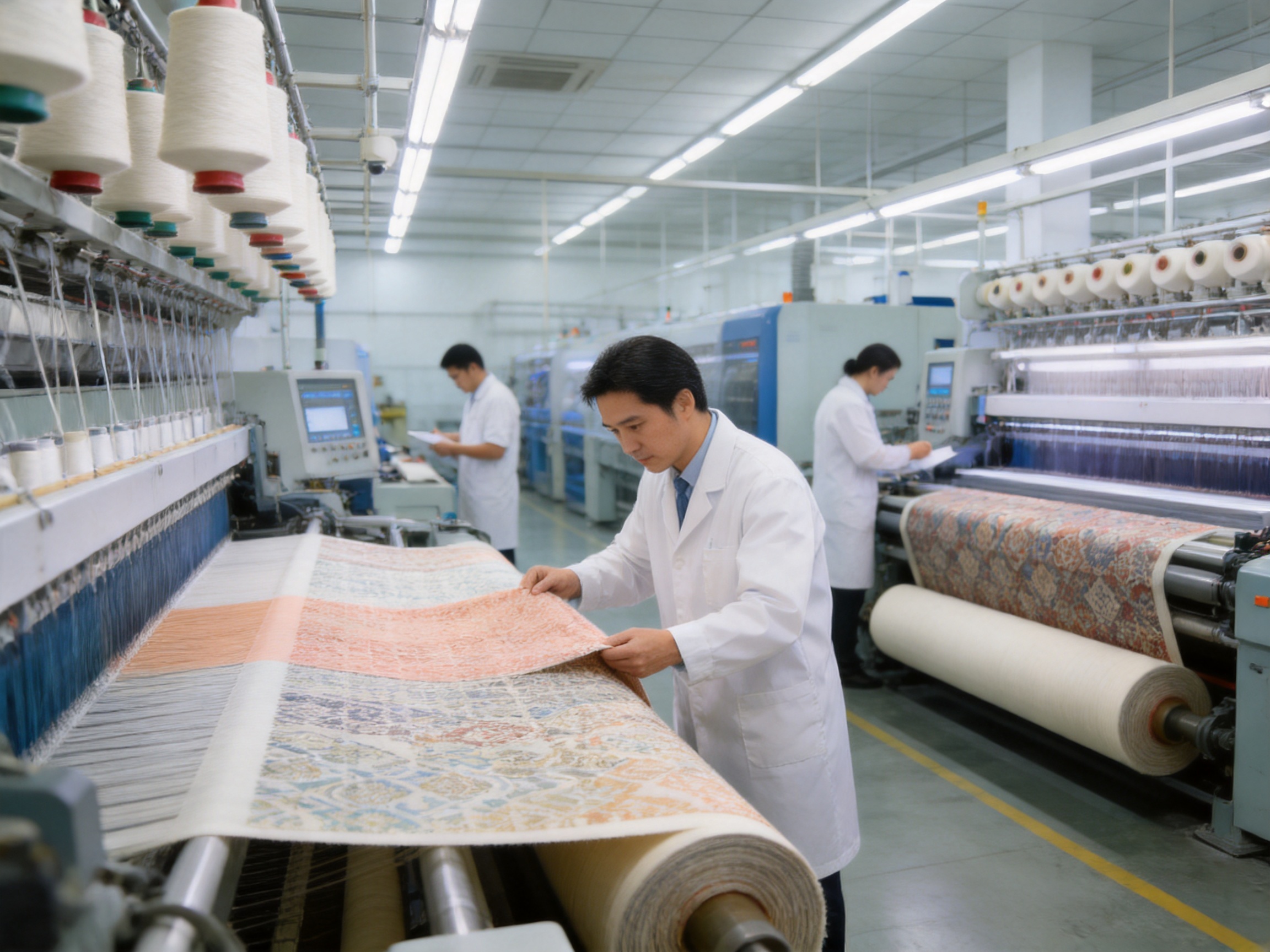
The second stage is fabric formation. Polyester rayon fabric can be knitted or woven depending on the intended application. Knitted jacquard fabric, NTR knitted fabric, and NR knitted fabric require accurate machine settings, yarn tension control, loop consistency, and pattern management. Jacquard knitting allows more complex patterns and surface effects, while plain or structured knitting can emphasize comfort, stretch, and efficient production.
The third stage is dyeing. Polyester and rayon have different dyeing behaviors, so the process must be controlled carefully. Temperature, dye selection, auxiliaries, bath ratio, pH, and time all influence final shade, fastness, and hand feel. Professional dyeing aims to produce uniform color penetration, stable shade, and good washing performance while protecting the softness of rayon and the durability of polyester.
The fourth stage is finishing. Finishing can improve hand feel, drape, shrinkage control, pilling resistance, surface smoothness, and functional performance. Depending on customer requirements, finishing may include softening, heat setting, compacting, brushing, anti-pilling treatment, or other processes. The goal is not only to make the fabric look attractive at delivery but also to ensure that it performs well during cutting, sewing, wearing, washing, and long-term use.
The final stage is inspection and packaging. Fabric must be checked for defects such as uneven dyeing, holes, oil stains, needle marks, streaks, width variation, weight deviation, and surface irregularities. Reliable manufacturers apply systematic inspection standards before shipment to reduce customer complaints and improve downstream production efficiency.
Manufacturing Strengths of Hangzhou Jinfeng Textile Co., Ltd.
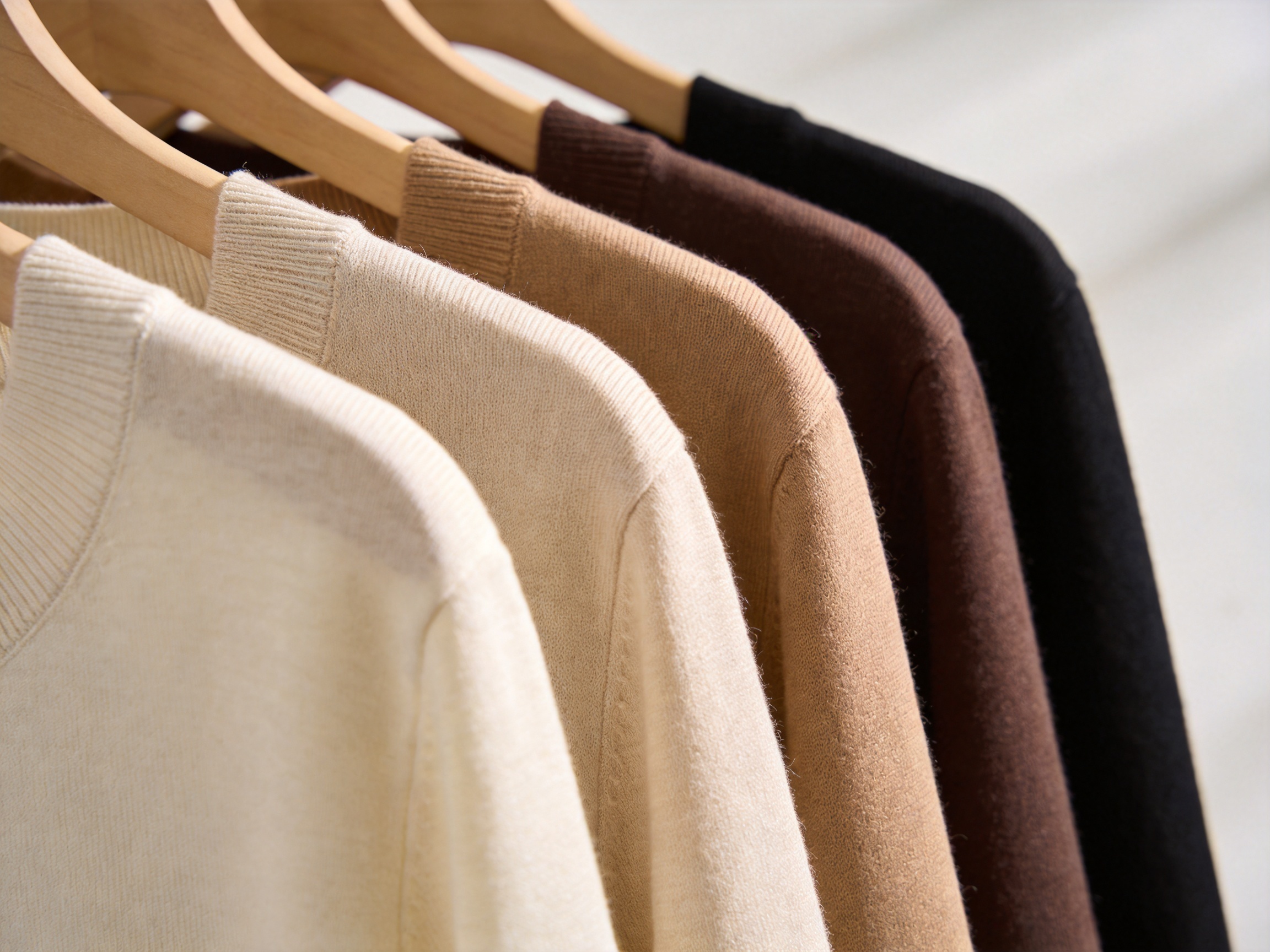
Hangzhou Jinfeng Textile Co., Ltd. is located in Jingjiang Street Industrial Park, Xiaoshan District, Hangzhou City, Zhejiang Province. The company covers an area of about 32.6 acres and has a plant area of around 18,000 square meters. This production foundation supports the company’s work in blended fabrics, post-dyeing, finishing, DTY polyester yarn production, processing, and sales.
The company operates as a self-employed export enterprise integrating research and development, production, and sales. This structure is important for international buyers because it combines manufacturing capacity with direct communication and export service. A buyer can discuss product specifications, fabric development, sampling, production planning, delivery requirements, and after-sales issues with one coordinated supplier.
The company’s experience in blended fabrics is particularly relevant to polyester rayon fabric. Blended fabric production requires more than basic machine operation. It requires understanding the different properties of each fiber and how they behave during spinning, texturing, knitting, dyeing, finishing, and storage. Polyester and rayon respond differently to heat, moisture, tension, dyes, and finishing chemicals. Professional control helps maintain fabric balance and prevents common problems such as shrinkage instability, shade variation, poor hand feel, or uneven surface appearance.
By combining DTY polyester yarn production with fabric processing, the company can support customized development for different end uses. For example, a buyer seeking soft fashion fabric may require a smoother hand and elegant drape, while a uniform supplier may prioritize abrasion resistance, wrinkle recovery, and easy washing. A home textile customer may focus on visual texture, color depth, and dimensional stability. The company’s production chain makes it possible to adjust yarn, fabric structure, and finishing according to these different requirements.
Product Performance in Practical Applications
Polyester rayon fabric is valued because it performs well in real commercial conditions. In clothing production, it cuts cleanly, sews efficiently, and can provide a refined appearance after pressing or finishing. The polyester component supports garment shape, while rayon improves touch and drape. This makes the fabric useful for garments that must look polished but remain comfortable for daily wear.
In uniforms, polyester rayon fabric can provide a professional appearance without excessive maintenance requirements. Uniforms are often washed frequently and worn for long hours. Pure natural fibers may wrinkle easily or lose shape, while low-grade synthetic fabrics may feel uncomfortable. A well-developed polyester rayon fabric can help balance durability, comfort, and easy care.
In fashion apparel, polyester rayon fabric offers design flexibility. It can be made into smooth, flowing fabrics for dresses and blouses or more structured materials for trousers and jackets. Knitted versions can provide flexibility and comfort, while jacquard versions can deliver visual interest without relying entirely on printing. This allows designers to create products with texture and pattern built directly into the fabric structure.
In home textiles and decorative products, polyester rayon fabric can offer a pleasant surface, good drape, and attractive color. The blend can be suitable for decorative covers, soft furnishings, and other fabric-based products where appearance and handling quality matter. With appropriate finishing, the fabric can meet different requirements for texture, weight, and durability.
Comparison With Common Alternative Fabrics
The following table summarizes how polyester rayon fabric compares with several common alternatives. Actual performance may vary depending on yarn quality, construction, dyeing, finishing, and customer specifications, but the comparison explains why polyester rayon fabric is widely selected for balanced applications.
| Fabric Type | Main Strengths | Common Limitations | Polyester Rayon Advantage |
|---|---|---|---|
| Pure Polyester | Durable, wrinkle resistant, easy to wash, quick drying | May feel less breathable or less natural if not properly engineered | Polyester rayon improves softness, drape, and comfort while retaining durability |
| Pure Rayon | Soft, breathable, elegant drape, comfortable touch | Can wrinkle more easily and may require more careful shrinkage control | Polyester rayon improves stability, strength, and easier care |
| Pure Cotton | Natural comfort, moisture absorption, familiar hand feel | Can shrink, wrinkle, and dry slowly depending on construction | Polyester rayon can offer smoother appearance, faster care, and refined drape |
| Low-Grade Blends | Low purchase cost | Inconsistent quality, poor hand feel, uneven dyeing, higher defect risk | Professionally manufactured polyester rayon fabric provides better consistency and value |
| Polyester Spandex Fabric | High stretch and recovery, sportswear suitability | May not provide the same soft rayon-like drape | Polyester rayon can be adapted for comfort, elegance, and moderate flexibility |
Comfort and Hand Feel
Comfort is one of the major reasons buyers choose polyester rayon fabric. Rayon contributes a soft, smooth, and pleasant touch that makes the fabric suitable for garments worn near the skin. Polyester supports resilience and reduces some of the care limitations associated with rayon. The result is a fabric that can feel refined while remaining practical for daily use.
Hand feel is influenced not only by fiber composition but also by yarn count, twist, fabric density, knitting or weaving structure, dyeing, and finishing. A professional manufacturer can adjust these variables to meet different market needs. A lightweight blouse fabric may require a soft and fluid hand, while a trouser fabric may require more body and shape retention. A knitted jacquard fabric may need both surface definition and softness.
Finishing plays a particularly important role. Softening agents, heat setting, mechanical treatment, and compacting can change the fabric’s final touch and stability. Excessive finishing may weaken performance or create an artificial feel, while insufficient finishing may leave the fabric stiff or unstable. Skilled finishing aims to achieve the correct balance between softness, strength, drape, and long-term usability.
Dimensional Stability and Easy Care
Dimensional stability is essential for apparel and textile products. If a fabric shrinks excessively, twists after washing, or loses shape during production, it creates serious problems for garment manufacturers and end users. Polyester rayon fabric benefits from polyester’s inherent stability, but it still requires careful process control because rayon can respond to moisture and mechanical stress.
Professional production uses appropriate heat setting, relaxation, washing, and finishing procedures to improve stability. In knitted fabrics, loop structure must be controlled to reduce skewing and distortion. In jacquard fabrics, pattern stability is also important because deformation can affect the appearance of the design.
Easy care is another strong selling point. Customers increasingly prefer fabrics that are comfortable but not difficult to maintain. Polyester rayon fabric can be designed to resist excessive wrinkling, maintain shape after washing, and dry more efficiently than many heavier natural-fiber fabrics. This makes it attractive for busy consumers, uniform programs, travel clothing, and practical fashion collections.
Color Quality and Surface Appearance
Color consistency is one of the most important indicators of professional textile manufacturing. In bulk fabric orders, even small shade differences can create production problems, especially when multiple garment panels must be matched. Polyester rayon fabric requires careful dyeing control because polyester and rayon have different dye affinities and processing requirements.
An experienced manufacturer manages dyeing recipes, temperature curves, chemical auxiliaries, washing procedures, and finishing conditions to achieve stable results. Proper dyeing can produce rich, uniform shades with good color fastness. The fabric should maintain an attractive appearance after normal use and washing according to care instructions.
Surface appearance is also critical. Buyers expect fabric to be clean, smooth, and free from visible defects. In knitted jacquard fabric, the pattern must be clear and stable. In plain knitted fabric, the surface should be even and balanced. In structured fabric, texture should be intentional rather than caused by production irregularities. Advanced inspection helps ensure that only qualified fabric reaches customers.
Knitted Jacquard, NTR Knitted, and NR Knitted Fabric Capabilities
Although the main focus is polyester rayon fabric, related knitted fabric capabilities strengthen the product offering. Knitted jacquard fabric allows patterns to be formed through fabric structure rather than only through printing. This can create more durable and sophisticated surface effects. Jacquard patterns are useful for fashion garments, decorative textiles, and products where visual uniqueness is important.
NTR knitted fabric and NR knitted fabric can support different performance requirements depending on yarn combination, structure, and finishing. Knitted fabrics are valued for flexibility, comfort, and body adaptability. They are widely used in casualwear, active-inspired apparel, fashion tops, dresses, and various textile products. When rayon is included, knitted fabric can achieve a softer touch and better drape. When polyester is included, it gains improved durability and recovery.
For buyers, having access to multiple knitted fabric categories from one manufacturer is valuable. It allows product development teams to compare structures, hand feels, weights, and finishing effects without searching for separate suppliers. It also supports coordinated color programs across different fabric types.
DTY Polyester Yarn as a Quality Foundation
Slight intermingled drawn textured yarn, commonly associated with DTY polyester yarn, is an important material for many fabric constructions. Intermingling helps improve yarn cohesion, processing stability, and fabric uniformity. Slight intermingling can be suitable when a softer or more flexible yarn effect is required while still maintaining sufficient process stability.
DTY yarn provides bulk and texture that can enhance fabric coverage and comfort. In polyester rayon blended fabrics, appropriate polyester yarn selection can improve resilience, anti-wrinkle performance, and durability. The quality of DTY yarn affects fabric surface smoothness, dyeing behavior, elasticity, and strength. Therefore, a manufacturer with DTY production and processing experience can better control the final fabric result.
Hangzhou Jinfeng Textile Co., Ltd. offers wholesale DTY yarn and blended fabric solutions. This combined product capability supports customers who need yarn supply, finished fabric, or coordinated textile development. It also allows the company to understand the needs of both fabric mills and downstream apparel or textile manufacturers.
Quality Control Across the Production Chain
Quality control in polyester rayon fabric production must be systematic. It begins with raw material evaluation and continues through every manufacturing stage. Yarn should be tested or checked for evenness, strength, count accuracy, and appearance. Fabric formation should be monitored for width, weight, density, pattern accuracy, and surface defects. Dyeing should be checked for shade, levelness, and fastness. Finishing should be evaluated for hand feel, stability, and functional requirements.
Final inspection is especially important for export orders. Fabric defects that seem minor at the mill can become costly during garment cutting and sewing. A hole, stain, color streak, or width variation can reduce cutting efficiency and increase waste. Professional inspection reduces these risks and helps buyers plan production with greater confidence.
Quality control also includes communication. A supplier should understand customer standards clearly before production begins. Specifications such as composition, weight, width, color, shrinkage, hand feel, packing method, roll length, and testing requirements should be confirmed. Clear communication prevents misunderstandings and improves delivery success.
Customization for Market Requirements
One of the most important strengths of polyester rayon fabric is that it can be customized for different markets. A customer may request a lightweight fabric for summer garments, a medium-weight fabric for uniforms, a jacquard pattern for fashion collections, or a soft knitted fabric for casualwear. By adjusting yarn type, fabric construction, dyeing, and finishing, the fabric can be engineered for specific performance and appearance goals.
Customization may include fabric weight, width, color, composition ratio, surface texture, elasticity, softness, drape, shrinkage standard, and packaging. In some cases, customers may need sample development before confirming bulk production. A manufacturer with R&D, production, and sales integration can support this process more efficiently because technical and commercial teams can coordinate directly.
For overseas buyers, customization also requires export experience. Requirements may include documentation, packing standards, lead time control, shipment coordination, and quality reporting. A self-operated export manufacturer can provide more direct service and reduce communication delays.
Sustainability and Responsible Textile Thinking
Modern textile buyers increasingly consider sustainability, waste reduction, and responsible production. Polyester rayon fabric can contribute to practical sustainability when produced with stable quality and long usable life. A fabric that performs well, resists premature damage, and maintains appearance after normal use can reduce waste caused by early replacement.
Efficient manufacturing also supports resource responsibility. Stable dyeing reduces rework. Accurate production planning reduces excess inventory. Quality inspection reduces downstream waste. Integrated yarn and fabric knowledge helps minimize avoidable defects. While every textile product has environmental considerations, responsible process control is an important step toward better resource use.
Rayon is derived from cellulose, while polyester is synthetic and durable. The blend can be designed to use the advantages of both fiber types. Buyers may request specific standards or testing depending on their market, and an experienced manufacturer can discuss feasible production routes according to customer expectations.
How Buyers Can Evaluate Polyester Rayon Fabric
When sourcing polyester rayon fabric, buyers should evaluate more than price. A low quotation may appear attractive, but inconsistent quality can lead to greater losses during cutting, sewing, washing, and customer use. Professional evaluation should include hand feel, weight, width, shade consistency, stretch or recovery if applicable, shrinkage, pilling resistance, color fastness, surface defects, and roll-to-roll consistency.
Sample testing is recommended before bulk order confirmation. Buyers should test the fabric under realistic conditions, including washing, pressing, sewing, and garment trial. If the fabric is intended for uniforms, durability and repeated laundering should be emphasized. If it is intended for fashion, drape, color, and hand feel may be more important. If it is intended for home textiles, texture, appearance, and dimensional behavior should be checked carefully.
Buyers should also evaluate supplier capability. Important questions include whether the supplier understands blended fabrics, whether it has stable dyeing and finishing resources, whether it can provide consistent bulk production, whether it offers export service, and whether it communicates clearly. Hangzhou Jinfeng Textile Co., Ltd. combines textile production, processing, finishing, sales, and export capability, making it a practical partner for buyers seeking polyester rayon fabric and related products.
Competitive Value for Wholesalers and Manufacturers
For wholesalers, polyester rayon fabric offers broad market potential. Its versatility allows wholesalers to serve multiple customer segments with one fabric category. They can supply apparel factories, fashion brands, uniform makers, and home textile producers. Because the fabric can be developed in different weights, colors, and structures, it supports both standard inventory programs and customized orders.
For garment manufacturers, polyester rayon fabric can improve production efficiency when quality is stable. Good fabric reduces cutting waste, sewing problems, shade matching issues, and customer complaints. A stable supplier helps manufacturers maintain delivery schedules and reduce production risk.
For brands, polyester rayon fabric supports product differentiation. Through jacquard structures, soft finishing, color development, and customized specifications, brands can create products that feel better and look more refined than basic synthetic alternatives. At the same time, the fabric remains practical and cost-effective, which is essential in competitive retail markets.
Why Choose a Specialized Blended Fabric Manufacturer
Blended fabric production requires technical understanding. Polyester and rayon must be balanced carefully to achieve the intended performance. If the fabric is not properly engineered, it may suffer from uneven dyeing, poor stability, weak hand feel, excessive pilling, or inconsistent surface appearance. A specialized blended fabric manufacturer is better equipped to prevent these issues.
Hangzhou Jinfeng Textile Co., Ltd. has experience in blended fabrics such as polyester, spandex, and related textile categories, as well as DTY polyester yarn production and processing. Its manufacturing base in Hangzhou supports production, post-dyeing, finishing, and sales. This combination helps the company provide more comprehensive textile solutions than suppliers focused on only one process.
The company’s business philosophy of cooperation and win-win service is also important. Textile sourcing is not simply a transaction; it is a production partnership. Buyers need suppliers who can understand requirements, solve problems, maintain quality, and support long-term development. A cooperative approach helps both sides improve efficiency and build stable business relationships.
Q&A Section
What is polyester rayon fabric?
Polyester rayon fabric is a blended textile made by combining polyester fibers with rayon fibers. Polyester contributes strength, wrinkle resistance, and dimensional stability, while rayon adds softness, breathability, moisture absorption, and elegant drape.
What are the main advantages of polyester rayon fabric?
The main advantages include comfortable hand feel, good drape, improved durability, easier care than pure rayon, better softness than ordinary polyester, attractive color performance, and wide application flexibility.
How does polyester rayon fabric compare with pure polyester?
Compared with pure polyester, polyester rayon fabric usually feels softer, more breathable, and more natural. It still keeps many benefits of polyester, such as strength, wrinkle resistance, and practical maintenance.
How does polyester rayon fabric compare with pure rayon?
Compared with pure rayon, polyester rayon fabric generally offers better shape retention, stronger durability, and easier care. It reduces some of rayon’s limitations while preserving much of its soft and flowing character.
What applications are suitable for polyester rayon fabric?
Polyester rayon fabric is suitable for shirts, dresses, skirts, trousers, uniforms, casualwear, workwear, knitted fashion garments, decorative textiles, and selected home textile products.
Why is DTY polyester yarn important?
DTY polyester yarn provides texture, bulk, resilience, and processing stability. High-quality DTY yarn can improve fabric surface appearance, comfort, durability, and consistency.
Can polyester rayon fabric be customized?
Yes. It can be customized by composition ratio, weight, width, color, structure, softness, drape, elasticity, shrinkage control, finishing effect, and packaging method according to customer requirements.
Why is integrated manufacturing beneficial?
Integrated manufacturing helps control quality from yarn to fabric and finishing. It improves traceability, supports faster development, reduces communication gaps, and helps maintain consistency in bulk production.
What should buyers check before ordering?
Buyers should check fabric composition, weight, width, hand feel, color consistency, shrinkage, pilling resistance, fastness, surface defects, roll quality, supplier capability, and export service reliability.
What makes Hangzhou Jinfeng Textile Co., Ltd. a suitable supplier?
The company has experience in blended fabric production, DTY polyester yarn processing, post-dyeing, finishing, sales, and export service. Its production base and integrated capabilities support stable quality and customized textile solutions.
Conclusion
Polyester rayon fabric is a high-value blended textile that combines the practical strength of polyester with the soft comfort and graceful drape of rayon. It offers a strong balance of durability, appearance, comfort, and cost-performance, making it suitable for apparel, uniforms, fashion products, knitted structures, jacquard designs, and decorative textile applications.
The fabric’s success depends heavily on manufacturing expertise. Yarn quality, fabric construction, dyeing, finishing, and inspection all influence the final result. A supplier with integrated capabilities in DTY polyester yarn, blended fabric processing, post-dyeing, finishing, R&D, production, sales, and export service can provide stronger quality control and better customization support.
Hangzhou Jinfeng Textile Co., Ltd. brings together production space, textile experience, blended fabric knowledge, and a cooperative business approach. For buyers seeking reliable polyester rayon fabric, knitted jacquard fabric, NTR knitted fabric, NR knitted fabric, or DTY polyester yarn, the company provides a practical and comprehensive manufacturing partnership focused on stable quality, flexible development, and mutual success.
References
Morton, W. E., and Hearle, J. W. S. Physical Properties of Textile Fibres. Woodhead Publishing.
Gohl, E. P. G., and Vilensky, L. D. Textile Science. CBS Publishers.
Collier, B. J., and Epps, H. H. Textile Testing and Analysis. Pearson.
Kadolph, S. J. Textiles. Pearson Education.
Cook, J. G. Handbook of Textile Fibres: Man-Made Fibres. Woodhead Publishing.
Goswami, B. C., Martindale, J. G., and Scardino, F. L. Textile Yarns: Technology, Structure, and Applications. Wiley.