
NR Mesh Fabric: Versatile Stretch, Breathability, and Reliable Textile Performance
NR Mesh Fabric is a versatile knitted textile developed for manufacturers, apparel brands, wholesalers, and designers who need a practical balance of softness, stretch, visual texture, breathability, and sewing convenience. As part of the NR knitted fabric category, it can serve a wide range of clothing applications, from dresses and blouses to skirts, cardigans, overlays, and selected baby garments. Its open or mesh-like construction gives the fabric a distinctive appearance while helping garments remain comfortable and visually appealing.
The modern apparel market requires fabrics that can perform across several stages of production. A material must be attractive at the design stage, stable during cutting and sewing, comfortable in finished garments, and consistent enough for repeat orders. NR Mesh Fabric answers these requirements through a knitted structure that combines flexibility with a decorative surface. Depending on the selected specification, it may be produced in different colors, patterns, weights, widths, and stretch levels to meet the needs of different product lines.
For buyers comparing mesh knits, lace knits, polyester-rayon fabrics, and other stretch materials, the main value of NR Mesh Fabric lies in its adaptability. It can be used as a primary fabric in lightweight garments or as an overlay that adds depth and texture to a solid base. It is also suitable for collections that require coordinated colors and patterns, making it useful for seasonal fashion programs, private-label apparel, and small or large production runs.
Manufacturing quality is equally important. A well-made knitted mesh fabric should have a stable structure, an even appearance, reliable coloration, and a surface that remains attractive after normal handling and garment production. Hangzhou Jinfeng Textile Co., Ltd. supports this type of product through integrated textile operations that include production and processing, post-dyeing, finishing, research and development, and sales. The company also manufactures and processes DTY polyester yarn and works with blended fabrics such as polyester and spandex.
NR Mesh Fabric
Understanding NR Mesh Fabric
NR Mesh Fabric belongs to a knitted fabric family characterized by flexibility, a soft hand, and a construction that may include visible openings, textured loops, or decorative patterning. Unlike a conventional woven fabric, a knitted fabric is formed through interconnected loops. This construction allows the material to move more naturally with the body and makes it suitable for garments that require comfort and ease of movement.
The term “NR” may be used commercially to identify a particular knitted fabric category or construction. Because textile naming conventions can differ between suppliers and markets, buyers should confirm the exact fiber composition, fabric weight, usable width, stretch direction, recovery, finishing treatment, and care recommendations before placing an order. In practical purchasing, the name is only one part of the specification. The physical performance of the fabric and the consistency of the production lot are equally significant.
The mesh effect can result from the knitting structure, pattern arrangement, yarn selection, finishing process, or a combination of these factors. Some versions have a more open and sheer appearance, while others provide greater coverage and a denser hand. This range allows designers to choose a specification for a particular end use rather than treating all mesh fabrics as identical.
NR Mesh Fabric may be selected for its decorative appearance, but it is not limited to purely ornamental use. Its stretch and flexibility can improve comfort in close-fitting garments. Its patterning can reduce the need for additional surface decoration. Its lightweight options can support flowing silhouettes, while more stable constructions can be used for structured panels, sleeves, waist sections, and layered garment components.
Knitted Construction and Fabric Behavior
Knitted fabrics generally offer greater extensibility than many standard woven fabrics. This is useful in apparel because the material can accommodate movement, body contours, and relaxed garment shapes. The looped construction also contributes to a soft and flexible hand. However, the precise behavior of the fabric depends on yarn type, stitch design, machine settings, finishing, and fabric density.
A mesh construction adds another performance characteristic: visual and physical openness. Open areas may improve air circulation and create a lightweight appearance. They can also give a garment a layered or semi-sheer effect. When a design requires more coverage, NR Mesh Fabric can be paired with a lining, a solid knitted base, or another compatible fabric.
For professional buyers, important evaluation points include width stability, edge behavior, dimensional change after washing, colorfastness, surface uniformity, and recovery after stretching. These characteristics should be checked through sample development and, when necessary, laboratory testing. A responsible supplier can assist buyers in selecting a specification that matches the intended garment and production method.
Key Advantages Over Conventional Alternatives
NR Mesh Fabric competes with woven polyester, basic jersey, lace, lightweight chiffon, and other decorative knits. Each alternative has its own purpose, but NR Mesh Fabric provides a useful combination of appearance and usability. Its advantages are particularly relevant to manufacturers that want a fashionable surface without sacrificing the practical benefits of a knitted material.
1. Comfortable Stretch and Movement
The knitted structure gives NR Mesh Fabric a natural degree of flexibility. This can make it more comfortable than a rigid woven textile in garments designed for movement. Dresses, skirts, blouses, cardigans, and fitted panels can benefit from a fabric that follows the body rather than resisting it.
Stretch also helps designers create softer silhouettes. A garment can be draped, gathered, ruched, or shaped with fewer restrictions. Depending on the specification, the fabric may be suitable for relaxed styles as well as closer-fitting designs. Buyers should still verify stretch and recovery values because different structures may behave differently.
2. Lightweight and Breathable Appearance
The mesh effect provides a lightweight visual character that is difficult to achieve with dense fabrics. Open or patterned areas can make a garment look less heavy and can support ventilation in warm-weather clothing. When used as an overlay, the fabric adds interest without creating the bulk associated with several dense layers.
This quality is valuable for resort wear, seasonal collections, fashion layering, sleeves, decorative yokes, and panel details. It also allows designers to create contrast between opaque and semi-sheer areas within the same garment.
3. Broad Design Versatility
NR Mesh Fabric can be produced or supplied in various colors and patterns. This enables its use across different market segments, including casual apparel, feminine fashion, contemporary basics, children's garments, and special-occasion designs. A single fabric category can support several collections when its color palette, pattern scale, and finishing options are carefully planned.
Patterned versions can reduce the need for additional printing, embroidery, or embellishment. A textured or lace-like surface may already provide enough visual character for a simple garment. This can help designers control production complexity while maintaining a distinctive appearance.
4. Easy Cutting and Sewing Potential
NR Mesh Fabric is described as an easy-to-sew material, making it practical for many apparel applications. Its flexibility allows it to conform to garment shapes, while its lightweight construction can support comfortable seams and layered designs. Nevertheless, sewing settings should be adapted to the specific fabric. Needle size, thread selection, stitch length, differential feed, seam reinforcement, and handling tension may all affect the finished result.
For more open or sheer constructions, manufacturers may use narrow seams, suitable stabilizing techniques, or compatible linings. Sampling before mass production is recommended, especially when the garment includes curved seams, gathers, elastic, delicate edges, or multiple layers.
5. Strong Styling Potential
Mesh knits are useful when the design objective is to create depth. They may be placed over a contrasting color to emphasize the pattern, over a matching base to create subtle texture, or between opaque panels to produce a balanced semi-sheer effect. This makes the fabric suitable for modern layered styling.
Designers can use NR Mesh Fabric for sleeves, shoulder details, overlays, skirt sections, neckline inserts, decorative panels, and complete garments. Its surface can create a premium impression without requiring a heavy construction or elaborate ornamentation.
6. Suitability for Multiple Product Categories
The material is not restricted to one type of apparel. It may be used for dresses, blouses, skirts, cardigans, baby clothes, and other fashion products. The final application should be selected according to fabric weight, openness, stretch, softness, colorfastness, and coverage.
For baby garments, special attention should be given to softness, safety, seam construction, colorfastness, and the suitability of any open pattern. For adult fashion, the focus may be placed on drape, transparency, recovery, print or dye appearance, and compatibility with linings. This range of applications makes NR Mesh Fabric a useful option for suppliers serving several customer groups.
| Performance Area | Value of NR Mesh Fabric | Important Buyer Check |
|---|---|---|
| Comfort | Flexible knitted construction and a soft hand can support comfortable wear. | Confirm composition, weight, softness, and stretch recovery. |
| Appearance | Mesh, textured, patterned, or lace-like effects create visual interest. | Review sample clarity, pattern consistency, and color accuracy. |
| Breathability | Open or semi-open structures can create a lightweight, airy effect. | Check coverage, openness, and the need for lining. |
| Garment Use | Suitable for dresses, blouses, skirts, cardigans, overlays, and selected baby garments. | Match fabric construction to the product category. |
| Production | Knitted flexibility can support cutting, sewing, draping, and gathering. | Test needle, stitch, seam, and handling settings. |
| Customization | Different colors and patterns can support varied collections. | Confirm minimum order quantities, shade standards, and repeatability. |
Applications in Apparel Manufacturing
Dresses
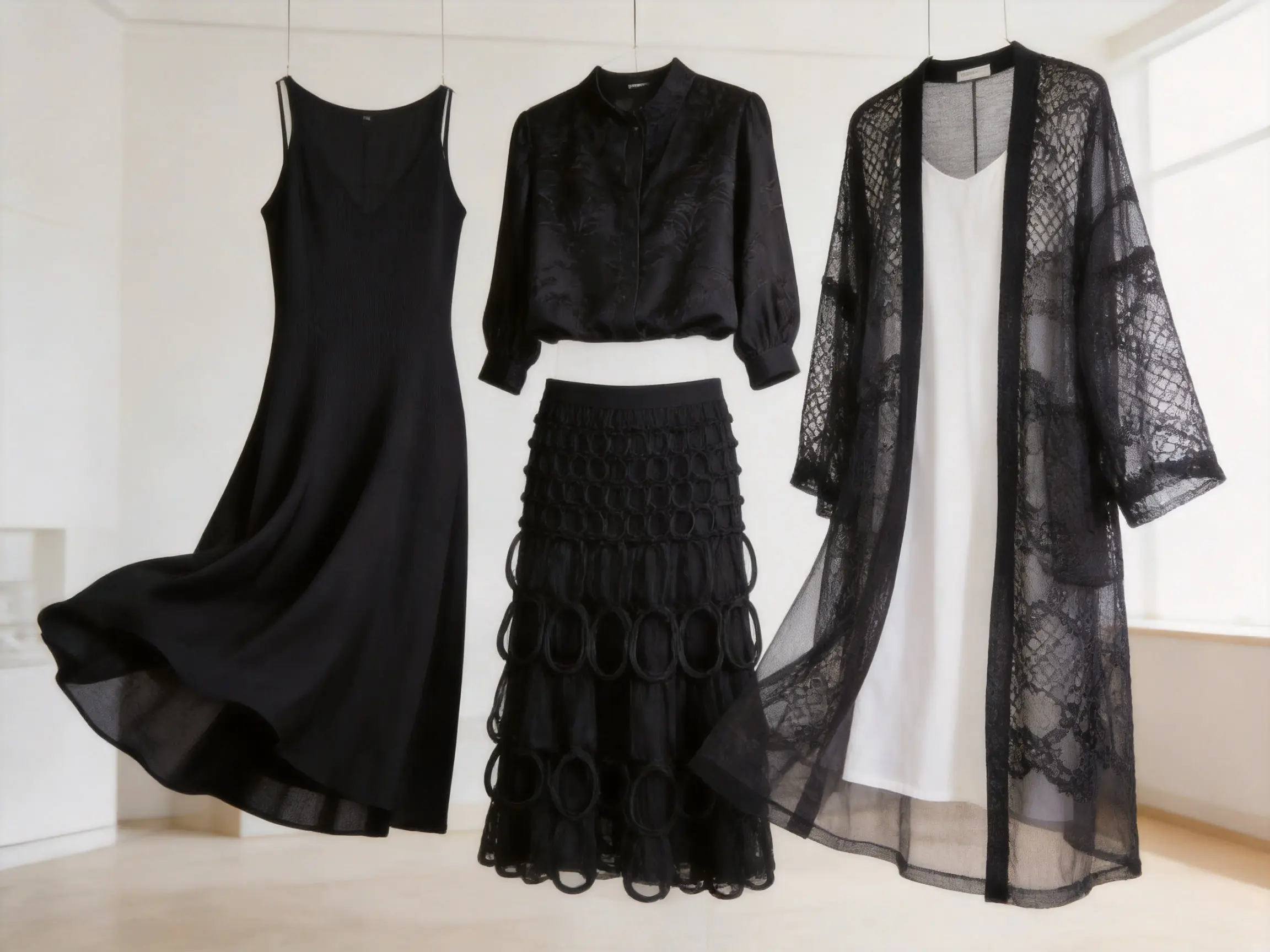
Dresses are among the most natural applications for NR Mesh Fabric. A lightweight mesh knit can create flowing volume, soft drape, or a layered surface. Designers may use it for a complete dress when the construction provides sufficient coverage, or combine it with a lining for a more controlled result.
For daywear, a patterned mesh can be used in a relaxed silhouette with a simple underlayer. For eveningwear, a lace-like or textured surface can add sophistication to fitted sections, sleeves, or skirt overlays. Stretch can improve comfort in designs with close-fitting bodices, while the fabric’s flexibility can support gathered and draped details.
Blouses and Tops
Blouses made with NR Mesh Fabric can range from casual pullovers to elegant layered tops. The material is particularly effective for sleeves, yokes, necklines, and decorative panels. A solid-colored lining can create contrast and make the pattern more visible, while a matching lining produces a quieter appearance.
Because lightweight knitted fabrics can be affected by tension during sewing, factories should control fabric handling carefully. Cutting tables should be clean and smooth, and the material should be allowed to relax before cutting when appropriate. These steps help protect the dimensions and reduce distortion.
Skirts
NR Mesh Fabric can be used for straight skirts, flared skirts, gathered styles, and layered designs. A mesh overlay placed above an opaque base can create movement and texture. Stretch can make pull-on styles comfortable, although waist construction should be engineered according to the fabric’s recovery and the requirements of the garment.
For pleats or gathers, the designer should consider the fabric’s weight and openness. Lightweight constructions may produce delicate gathers, while denser structures can create more defined volume. Testing is useful to determine how the fabric responds to pressing, stitching, and repeated movement.
Cardigans and Lightweight Layers
The softness and flexibility of a knitted mesh make it suitable for lightweight cardigans and open-front layers. These products can add texture to a wardrobe without the weight of a heavy sweater knit. Patterned surfaces can make a simple cardigan look more distinctive, while neutral colors can support year-round styling.
Edge finishing is important in these garments. Depending on the design, the edges may be hemmed, bound, overlocked, or finished with a narrow decorative treatment. The correct option depends on the fabric density and the desired appearance.
Baby and Children’s Clothing
NR knitted fabric can be considered for selected baby and children’s garments when the exact construction satisfies the required standards for softness, safety, comfort, and coverage. Lightweight, gentle fabrics can be useful for cardigans, decorative layers, and comfortable everyday pieces.
Manufacturers should evaluate every component that will contact a child’s skin. They should also consider the size of openings, seam security, colorfastness, wash durability, and the avoidance of unsuitable attachments. Product compliance requirements vary by market, so buyers should confirm applicable regulations before production.
Overlays and Decorative Components
One of the strongest uses of NR Mesh Fabric is as an overlay. It can be placed over jersey, satin, woven fabric, or another knitted base. This approach expands the design possibilities without requiring the mesh fabric to provide all the structural support of the garment.
Overlays can be used on complete dresses, skirt panels, sleeves, bodices, and accessories. The combination of a patterned or textured surface with a contrasting base can create depth, while a tone-on-tone combination can produce a refined layered effect.
Raw Materials and Yarn Selection
Fabric quality begins with yarn selection. The yarn affects softness, strength, surface appearance, dye uptake, stretch behavior, and knitting efficiency. For polyester-based or blended knitted fabrics, yarn consistency is particularly important because variations in linear density, twist, or surface condition can influence the final fabric.
Hangzhou Jinfeng Textile Co., Ltd. manufactures, processes, and sells DTY polyester yarn in addition to blended fabrics. Drawn Textured Yarn, commonly called DTY, is a textured filament yarn that can provide bulk, softness, elasticity, and a more fabric-friendly surface than an entirely flat filament yarn. Its use can support the development of comfortable and attractive knitted textiles, subject to the selected yarn specification and fabric construction.
Polyester is widely used in apparel because it can provide durability, dimensional stability, and dependable color performance. When blended with other fibers or combined with spandex, it can be engineered for different levels of softness, stretch, recovery, and appearance. The correct blend depends on the final product and the performance targets established by the buyer.
A supplier with experience in both yarn and fabric can gain a better understanding of the relationship between raw material and finished textile. This integrated knowledge can help with yarn selection, production troubleshooting, color development, and fabric consistency. It also supports communication between the customer’s design requirements and the factory’s technical processes.
Importance of DTY Polyester Yarn
DTY polyester yarn can contribute to the soft and flexible character valued in many knitted fabrics. Texturing changes the yarn’s surface and bulk, allowing it to interact with the knitting structure in a way that supports comfort and visual fullness. The result can be a fabric that feels less rigid and provides a more textile-like hand.
DTY specifications may vary in denier, filament count, intermingling, crimp, luster, and other technical properties. These differences affect the appearance and performance of the final fabric. For this reason, fabric buyers should not select yarn only by a general name. They should request technical details and evaluate fabric samples produced with the intended yarn.
Blended Fiber Considerations
Blended fabrics can combine the advantages of different fibers. Polyester may contribute durability and easy-care characteristics, while another fiber can influence moisture handling, softness, drape, or surface feel. Spandex may be included when higher stretch and recovery are required.
The blend ratio must be controlled carefully. A small change in fiber content can influence dyeing behavior, shrinkage, weight, stretch, and care performance. Reliable production therefore requires accurate weighing, consistent raw materials, and process records that can be reviewed when repeat orders are placed.
Advanced Manufacturing Processes
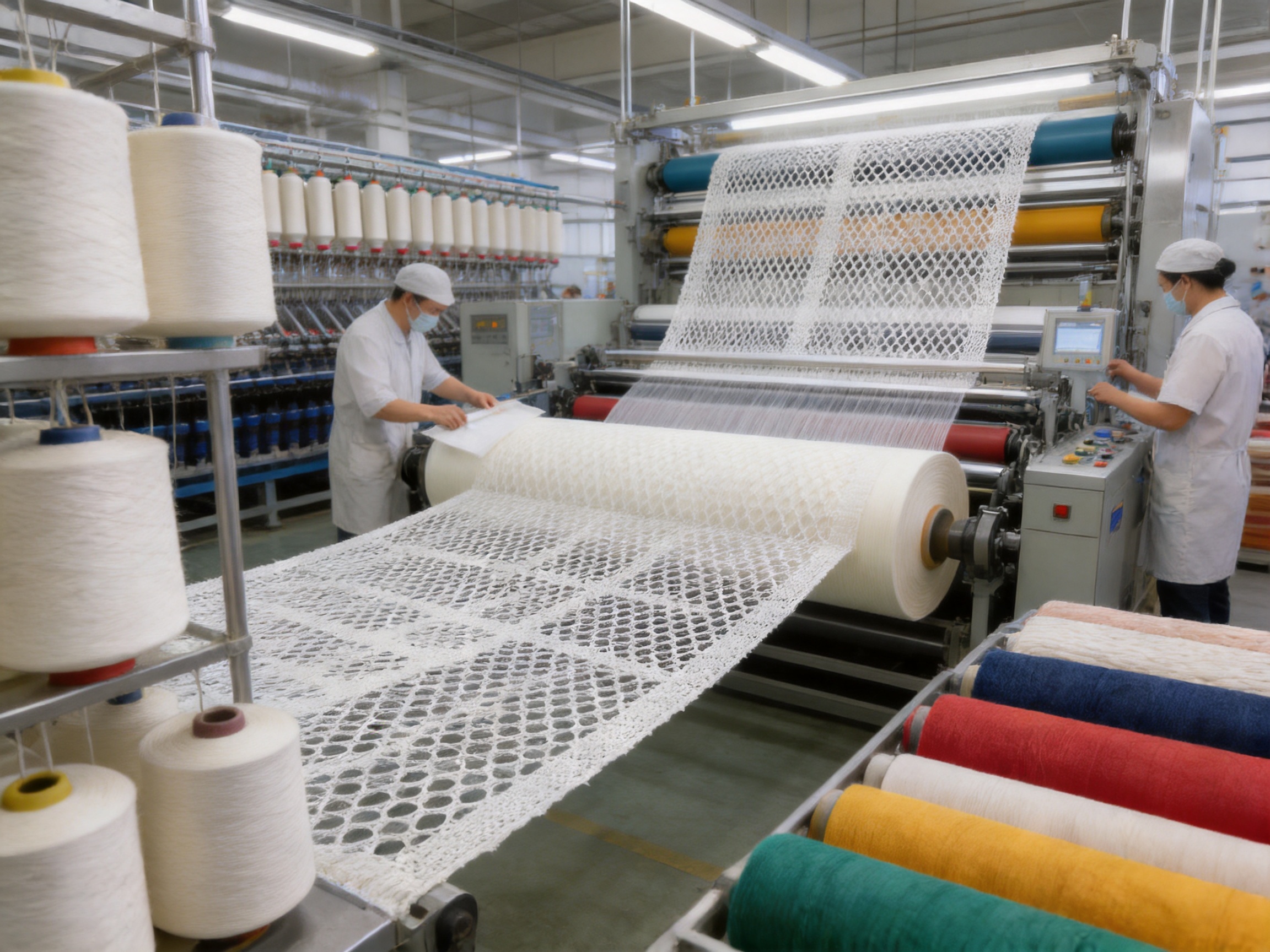
The manufacturing of a dependable NR Mesh Fabric involves more than simply knitting yarn into a patterned surface. It requires planning and control from raw-material preparation through finishing and inspection. Each stage influences the final quality delivered to the garment factory.
1. Product Development and Technical Planning
Production begins with understanding the customer’s target. The supplier may review the intended garment, required width, fabric weight, color, stretch, pattern, transparency, hand feel, and finishing expectations. A technical plan can then be developed for yarn selection, knitting parameters, dyeing, finishing, and inspection.
Product development may include sample knitting and laboratory evaluation. At this point, the factory can identify whether the selected structure provides enough stability, openness, coverage, and recovery. Adjustments can be made before bulk production, reducing the risk of expensive changes later.
2. Yarn Preparation
Yarn preparation includes checking incoming material, arranging yarn packages, and ensuring that the yarn is suitable for the selected knitting equipment. Tension must be controlled so that the yarn feeds evenly. Poor tension control can lead to horizontal lines, uneven loops, surface streaks, or inconsistent pattern definition.
When DTY polyester yarn or blended yarns are used, their condition should be monitored throughout preparation. The factory should pay attention to package quality, moisture exposure, contamination, and any visible defects. Consistent yarn preparation supports a more uniform knitted surface.
3. Knitting and Pattern Formation
Knitting parameters determine the fabric’s structure, density, openness, stretch, and appearance. Machine gauge, stitch length, yarn feed, take-down tension, and pattern programming must be coordinated. Mesh effects may be created by planned changes in stitch arrangement or by a jacquard-style patterning process.
During knitting, operators and quality personnel should monitor the fabric for holes, broken filaments, dropped stitches, pattern errors, oil marks, and width variation. Early detection is important because defects can become more difficult to correct after dyeing or finishing.
For patterned fabric, repeat accuracy is especially important. The pattern should remain aligned and consistent across the width and length. A stable production method helps ensure that garments cut from different sections of the roll have a similar appearance.
4. Relaxation and Preparation for Dyeing
Knitted fabric may retain tension from the knitting process. Relaxation allows the material to settle before dyeing or further processing. This stage can help reduce unexpected dimensional changes and improve the accuracy of later measurements.
Preparation may include inspection, seaming of fabric rolls, cleaning, and treatment designed to support even dye penetration. The exact preparation depends on the fiber composition and the finishing route selected for the product.
5. Post-Dyeing
Post-dyeing is an important part of the company’s stated textile operations. Dyeing must be controlled for shade consistency, penetration, levelness, and colorfastness. Polyester-based materials often require carefully selected dyeing conditions to achieve a clear and durable color.
Color development usually begins with a laboratory sample. The customer can review a shade standard or laboratory dip before bulk production. Once the shade is approved, the dyeing process should follow controlled recipes and documented parameters. Maintaining records supports repeatability for future orders.
Mesh structures require particular care because open areas and textured surfaces can show unevenness more clearly than dense, plain fabrics. Agitation, temperature, time, and chemical balance must be managed to protect the fabric’s appearance and dimensional properties.
6. Finishing
Finishing determines much of the final hand, width, surface appearance, and dimensional stability. It may include heat setting, softening, compacting, drying, width control, and other treatments selected according to the fabric’s requirements.
For NR Mesh Fabric, finishing should preserve the intended openness and pattern definition while improving usability in garment production. Excessive heat or tension can change the fabric’s stretch, hand, or dimensions. A carefully controlled finishing process can help the material achieve a suitable balance between softness and stability.
7. Inspection and Packing
Finished fabric should be inspected before shipment. Common inspection points include color, width, weight, pattern, surface defects, holes, stains, edge condition, stretch, recovery, and roll length. Inspection standards should be agreed with the buyer when the order requires specific quality levels.
Proper packing protects the material during storage and transportation. Fabric should be rolled or folded according to its construction, protected from contamination, and labeled with information needed for traceability. Clear labeling can include style number, color, batch, weight, width, roll length, and production date.
| Manufacturing Stage | Primary Objective | Quality Focus |
|---|---|---|
| Development | Translate the buyer’s design and performance requirements into a workable specification. | Composition, weight, width, stretch, pattern, hand feel. |
| Yarn Preparation | Provide consistent yarn feeding for knitting. | Package condition, tension, contamination, yarn uniformity. |
| Knitting | Create the mesh, jacquard, or textured loop structure. | Pattern repeat, stitch quality, openness, width, defects. |
| Dyeing | Achieve the approved color and shade levelness. | Color accuracy, penetration, colorfastness, batch consistency. |
| Finishing | Improve hand, stability, appearance, and usability. | Dimensional control, softness, stretch, surface condition. |
| Final Inspection | Confirm that the finished roll meets agreed requirements. | Appearance, measurements, defects, packing, traceability. |
Company Strengths and Integrated Supply Capability
Hangzhou Jinfeng Textile Co., Ltd. is located in Jingjiang Street Industrial Park, Xiaoshan District, Hangzhou City, Zhejiang Province. According to the supplied company information, the business covers an area of approximately 32.6 acres and has a plant area of about 18,000 square meters. This physical production base supports its activities in blended fabric production and processing, post-dyeing, finishing, DTY polyester yarn production and processing, and sales.
The company operates as an export-oriented enterprise integrating research and development, production, and sales. This integrated structure is valuable for international buyers because it can reduce communication gaps between technical development, manufacturing, and commercial service. A buyer can discuss the fabric’s intended use with a supplier that understands both yarn and finished textile production.
The company’s product categories include polyester-rayon fabric, knitted jacquard fabric, NR knitted fabric, NTR knitted fabric, and slightly intermingled draw textured yarn. This range indicates experience across both fabric and yarn products. Such experience can help customers coordinate related materials for a collection, compare alternative constructions, or develop a fabric specification that balances appearance and cost.
Research and development is another important strength. Apparel trends change rapidly, and customers often require new colors, patterns, surfaces, and performance characteristics. A supplier with development capability can support sample creation and technical adjustments rather than offering only fixed stock products.
The company also emphasizes a cooperation and win-win business philosophy. For buyers, this can translate into a more collaborative approach to sampling, specification confirmation, production scheduling, quality communication, and repeat ordering. Long-term textile supply depends not only on machinery but also on clear communication, dependable documentation, and a willingness to solve problems during development.
Advantages for Wholesale and Export Buyers
Wholesale and export buyers typically need more than an attractive sample. They need reliable specifications, repeatable color, stable production, appropriate packing, and responsive communication. An integrated textile manufacturer can provide a more coordinated service from product inquiry through shipment.
When a buyer requests NR Mesh Fabric, several questions may arise at once: Is the fabric suitable for a complete garment or only an overlay? What lining is recommended? How much stretch is available? What are the usable width and finished weight? Can the same color be repeated? Which care method is appropriate? A supplier with production and finishing expertise can address these questions more effectively than a trading channel with limited technical control.
Export experience can also support the handling of documentation, packaging, production schedules, and customer communication across borders. Buyers should still confirm commercial terms, inspection requirements, compliance documents, and delivery arrangements for each order.
Quality Control for NR Mesh Fabric
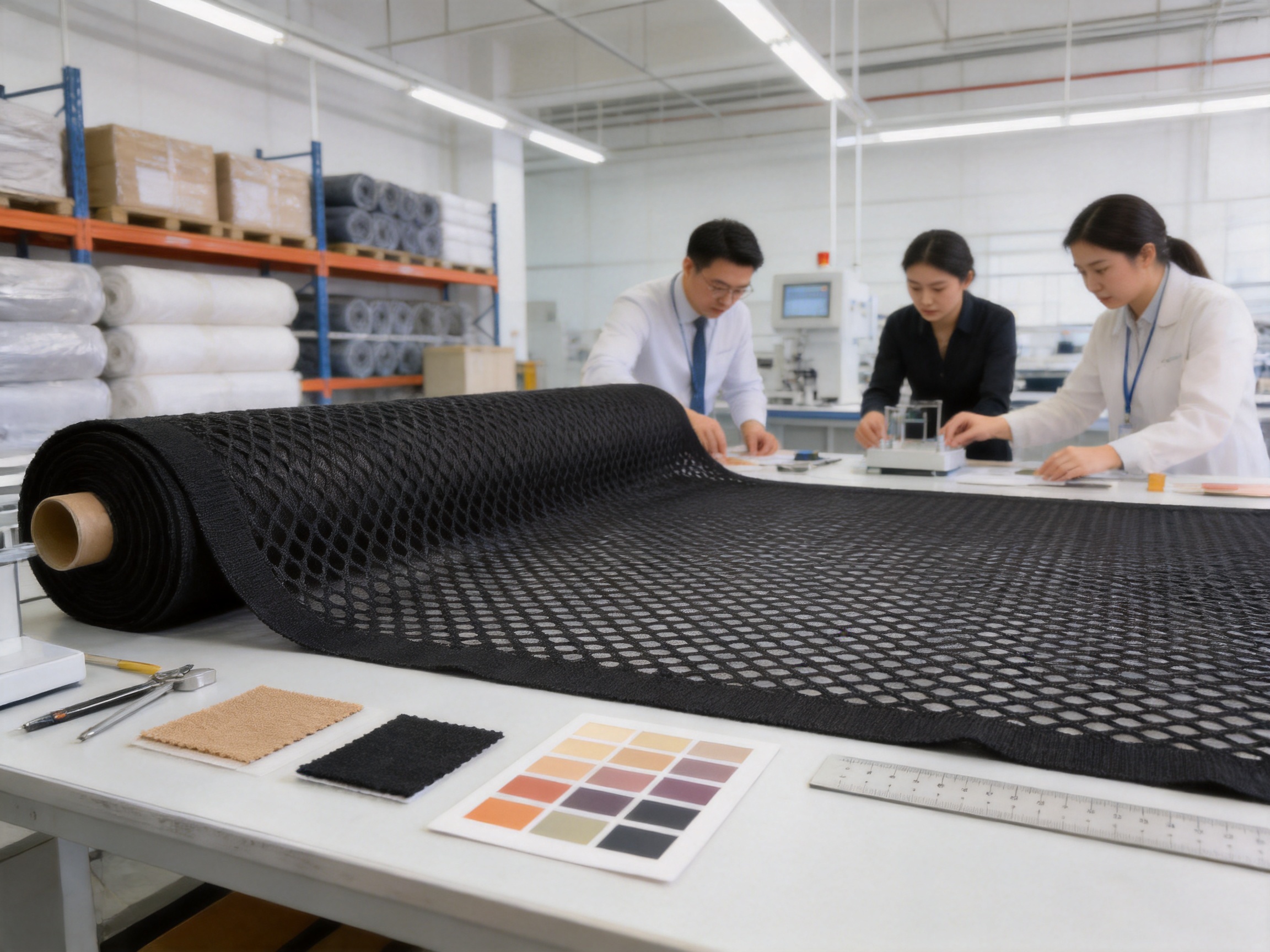
Quality control should begin before production and continue until the finished rolls are packed. A useful quality system combines visual inspection, dimensional measurement, physical testing, and batch documentation.
Visual Inspection
Visual inspection checks the overall appearance of the fabric. Inspectors may look for broken yarns, holes, dropped stitches, stains, oil marks, uneven dyeing, pattern distortion, barre, creases, and edge problems. Mesh fabrics can make defects more visible, particularly when they affect pattern continuity or transparency.
The inspection environment should provide suitable lighting and enough fabric speed to identify defects accurately. Defect points may be marked so the garment factory can avoid them during spreading and cutting.
Dimensional Stability
Dimensional stability is important because knitted fabrics can change after washing, steaming, heat setting, or exposure to production tension. Buyers should request relevant test results or conduct their own evaluation under the intended care conditions.
Measurements may include finished width, fabric weight, length, shrinkage, skew, spirality, and stretch recovery. These values help pattern makers determine whether adjustments are needed before bulk cutting.
Stretch and Recovery
Stretch makes a fabric comfortable, but recovery determines whether it returns to its original shape after wear. A fabric with high extension but weak recovery may become loose or distorted. The appropriate balance depends on the garment design.
Testing should consider both the direction of greatest stretch and the direction of lesser stretch. A buyer may also evaluate repeated extension, especially when the fabric is intended for fitted garments, waist sections, cuffs, or body-hugging panels.
Color and Fastness
Color should be evaluated against an approved standard under controlled lighting. Colorfastness testing may include washing, rubbing, perspiration, light, and water, depending on the product’s intended market. Dark or brilliant colors may require additional attention because they can show transfer or shade variation more easily.
Accurate batch records can help reduce shade differences between production orders. However, buyers should understand that dyeing conditions, raw materials, and order timing can still influence color. A physical approved standard remains important for comparison.
Hand Feel and Surface Quality
Hand feel is a major part of the value of NR Mesh Fabric. The material should be assessed for softness, smoothness, flexibility, surface fullness, and the absence of excessive stiffness. A sample should be handled in the same way as the final garment whenever possible.
Finishing treatments can change the hand, so the buyer should approve the finished version rather than evaluating only greige fabric. If a special softener, luster, or stabilizing treatment is required, it should be included in the written specification.
Guidelines for Garment Designers and Manufacturers
Pattern Planning
Designers should consider fabric direction, pattern repeat, stretch direction, and transparency before creating the final pattern. Patterned mesh may require matching at center fronts, side seams, sleeves, or other visible areas. This can increase fabric consumption and should be included in costing.
Open structures may require an underlayer, lining, facing, or carefully planned seam placement. The lining can be used to control coverage, improve comfort, and support the garment’s shape. A contrast lining emphasizes the mesh pattern, while a matching lining creates a more unified appearance.
Cutting
Knitted fabrics should be handled without unnecessary stretching during spreading and cutting. The fabric may need a relaxation period before cutting, especially if it has been tightly rolled or transported over a long distance.
Sharp cutting equipment, accurate markers, and controlled lay tension can help preserve pattern accuracy. For directional patterns, all pieces should follow the approved direction. If the mesh has a visible repeat, the marker should be planned to reduce mismatch and waste.
Sewing
Sewing parameters should be tested on production fabric. A suitable needle and thread combination can reduce skipped stitches, snagging, and seam damage. Stretch stitches, narrow zigzag stitches, overlock seams, or other construction methods may be selected according to the fabric’s stretch and the garment’s design.
Seam allowance should be sufficient for secure construction without creating excessive bulk. Delicate openings may benefit from reinforcement, while high-stress areas may require stabilizing tape or a compatible backing. The goal is to preserve comfort while ensuring durability.
Pressing and Finishing the Garment
Heat and pressure can affect knitted mesh. Garment factories should test pressing temperatures, steam levels, and contact time before production. Excessive heat may alter dimensions, surface texture, or stretch recovery.
Final garment inspection should include checking for pulled loops, distorted openings, uneven hems, color transfer, and lining movement. The finished garment should be evaluated in a way that reflects actual consumer use and care.
Commercial and Sustainability Considerations
NR Mesh Fabric can support efficient product development because one construction may be used in several garment styles. A coordinated color program can serve dresses, tops, skirts, and cardigans, reducing the need to source unrelated fabrics for every item. The same surface may also be offered in different weights or levels of openness to create a family of products.
Cost should be evaluated through total garment performance rather than fabric price alone. A fabric that requires excessive lining, complicated sewing, or high cutting loss may not be economical even if its price per meter is low. Conversely, a fabric with a distinctive pattern may reduce the need for additional decoration and improve the finished product’s value.
Responsible production also requires attention to resource use, chemical management, waste reduction, and product durability. Buyers should discuss applicable environmental requirements with the supplier and request relevant documentation when needed. Longer-lasting garments can reduce replacement frequency, while accurate cutting and efficient marker planning can help reduce material waste.
Polyester-based materials are valued for durability and dimensional stability, but buyers should consider the complete life cycle of the garment. Care instructions, fabric longevity, recycling possibilities, and responsible end-of-life planning may all contribute to a more sustainable product strategy. The appropriate approach depends on the fiber composition and the market’s requirements.
How to Select the Correct Specification
Before ordering, buyers should prepare a clear technical brief. The brief should include the intended garment, target consumer, color requirements, expected stretch, preferred hand feel, fabric weight, usable width, pattern or texture, transparency, finishing, care method, and required testing.
A sample should be evaluated in both fabric and garment form. The fabric roll may look attractive, but the final garment reveals how it drapes, stretches, recovers, behaves at seams, reacts to pressing, and interacts with a lining. A sample garment can also reveal whether the pattern scale is appropriate for the body area where it will be used.
Buyers should ask for confirmation of fiber composition and relevant technical data. If the fabric name is used differently across suppliers, a written specification prevents confusion. The purchase order should identify the approved sample, color standard, width, weight tolerance, roll length, inspection method, packaging, and other agreed requirements.
For repeat orders, the buyer should retain a production standard and compare new lots against it. Shade, hand, width, pattern, and stretch should be monitored because even small differences can affect garment cutting and appearance. Cooperation between the supplier and buyer is especially important when a seasonal collection depends on color coordination.
| Buyer Requirement | Recommended Information to Confirm |
|---|---|
| Fabric identity | Commercial name, exact composition, construction, and product code. |
| Physical specification | Finished width, weight, length, stretch, recovery, and dimensional stability. |
| Appearance | Color standard, pattern repeat, transparency, luster, and surface texture. |
| Garment suitability | Recommended applications, lining requirements, and sewing guidance. |
| Quality standard | Inspection method, acceptable defect limits, testing, and approval sample. |
| Commercial supply | Minimum order quantity, lead time, packing, payment terms, and shipment plan. |
| Repeat orders | Shade records, batch traceability, retained standards, and reordering procedure. |
Why NR Mesh Fabric Is a Practical Choice
NR Mesh Fabric offers a strong combination of flexibility, decorative appearance, and application range. Its knitted construction supports movement and comfort, while its mesh or patterned surface gives garments a distinctive visual identity. It can be used as a primary textile or as an overlay, allowing brands to create several product directions from one adaptable material.
Compared with a plain jersey, NR Mesh Fabric can provide more texture and visual interest. Compared with a rigid woven fabric, it can offer greater flexibility. Compared with a traditional lace, it may provide a practical knitted hand and easier integration into casual or contemporary garments. Compared with a heavy decorative textile, it can create a lighter garment with less bulk.
The product’s true value depends on controlled manufacturing. Consistent yarn, accurate knitting, reliable dyeing, careful finishing, and final inspection are necessary to transform a promising design concept into a dependable commercial fabric. The company’s combination of DTY polyester yarn production, blended fabric processing, post-dyeing, finishing, research and development, and export sales provides a foundation for this type of integrated supply.
For buyers seeking a fabric that can move between fashion, layering, decoration, and everyday apparel, NR Mesh Fabric deserves consideration. With the correct specification and suitable garment engineering, it can support comfortable products, attractive collections, efficient development, and repeatable manufacturing results.
Frequently Asked Questions
What is NR Mesh Fabric?
NR Mesh Fabric is a knitted fabric with a mesh-like, open, textured, or patterned appearance. It is designed for apparel applications that may require softness, flexibility, visual texture, and a lightweight effect. The exact fiber composition and construction should be confirmed with the supplier because commercial fabric names can vary.
Is NR Mesh Fabric suitable for dresses?
Yes. It can be used for complete dresses when the fabric provides appropriate coverage and stability, or it can be used as an overlay with a lining or solid base. The selected weight, openness, stretch, and pattern should match the dress design.
Can it be used for blouses and skirts?
Yes. NR Mesh Fabric can be used for blouses, tops, skirts, sleeves, yokes, and decorative panels. Stretch and softness can support comfort, while the mesh pattern can add visual interest. Garment samples should be made to verify sewing and drape.
Does the fabric require a lining?
A lining may be required when the fabric is open, semi-sheer, or intended to provide greater coverage. The need depends on the fabric construction, garment design, and market requirements. A matching lining creates a subtle look, while a contrast lining highlights the mesh pattern.
Is NR Mesh Fabric easy to sew?
It is generally considered easy to sew among lightweight knitted fabrics, but sewing settings must be tested. Needle type, thread, stitch length, seam construction, fabric tension, and edge finishing should be adjusted to the specific specification.
What types of colors and patterns are available?
The fabric can be available in a variety of colors and patterns. Specific availability depends on the supplier’s collection, current production schedule, custom development capability, minimum order quantity, and dyeing requirements.
What is DTY polyester yarn, and why is it relevant?
DTY polyester yarn is a textured filament yarn that can provide a softer, fuller, and more flexible surface than a flat filament yarn. It is relevant because yarn selection influences the hand, appearance, stretch behavior, and knitting performance of the finished fabric.
How should buyers evaluate quality?
Buyers should review composition, weight, width, stretch, recovery, color, pattern consistency, dimensional stability, surface defects, and colorfastness. A sample garment is also useful because it shows how the fabric behaves during cutting, sewing, pressing, and wear.
Can NR Mesh Fabric be used for baby clothes?
It may be suitable for selected baby garments when the exact fabric meets requirements for softness, safety, coverage, colorfastness, and durability. Buyers should confirm all applicable product safety and textile regulations before production.
What information should be included in an order?
An order should identify the fabric construction, composition, color, width, weight, stretch, pattern, finish, quality standard, packing method, quantity, delivery schedule, and approved sample. Clear specifications help reduce misunderstandings and support repeatable production.
Where is the manufacturer located?
Hangzhou Jinfeng Textile Co., Ltd. is located in Jingjiang Street Industrial Park, Xiaoshan District, Hangzhou City, Zhejiang Province. Its supplied company information states that it operates production, processing, post-dyeing, finishing, yarn, research and development, and sales activities.
References
1. Textile Institute, textile terminology and fabric construction references.
2. Standard textile testing principles for fabric weight, width, dimensional stability, stretch, recovery, and colorfastness.
3. Apparel production guidelines for knitted fabric cutting, sewing, pressing, and quality inspection.
4. Technical information on drawn textured polyester yarn and textured filament processing.
5. Supplier-provided product information for NR knitted fabric and related blended textile categories.
6. Supplier-provided company information concerning production facilities, DTY polyester yarn, blended fabric processing, post-dyeing, finishing, research and development, and export operations.