NR Bamboo Fabric: A Sustainable, Eco-Friendly Textile Revolution for Modern Living
The global textile industry is at a critical inflection point. For decades, it has driven economic growth across regions, but its environmental toll is increasingly unsustainable. According to the United Nations Environment Programme (UNEP), the sector contributes 10% of global carbon emissions—more than international flights and maritime shipping combined—and accounts for 20% of industrial water pollution. Concurrently, consumer demand for eco-friendly, high-performance textiles has surged: 60% of shoppers now prioritize sustainable products, with 75% willing to pay a premium for textiles that align with their values (Textile Exchange, 2022). However, many “green” alternatives fall short: organic cotton uses 2,700 liters of water to produce a single t-shirt (Water Footprint Network), conventional bamboo fabrics rely on toxic processing chemicals, and synthetic fibers like polyester shed microplastics that accumulate in oceans and food chains.
Enter NR Bamboo Fabric: an innovative textile that bridges sustainability and performance, addressing the gaps in conventional and even some “sustainable” options. Developed by Hangzhou Jinfeng Textile Co., Ltd—a leading Chinese manufacturer with over a decade of expertise in blended fabrics and yarn production—this fabric combines the renewable benefits of bamboo with the durability and elasticity of natural rubber (NR). In this article, we explore the science behind NR Bamboo Fabric, its core advantages over competitors, the advanced manufacturing processes that set it apart, and its diverse applications in modern living.
What Is NR Bamboo Fabric? A Deep Dive into Its Composition and Origins
NR Bamboo Fabric is a synergistic blend of two renewable materials: natural rubber (NR) and bamboo-derived viscose rayon. To understand its uniqueness, it’s essential to break down each component and how they complement one another:
1. Bamboo: The Renewable Core
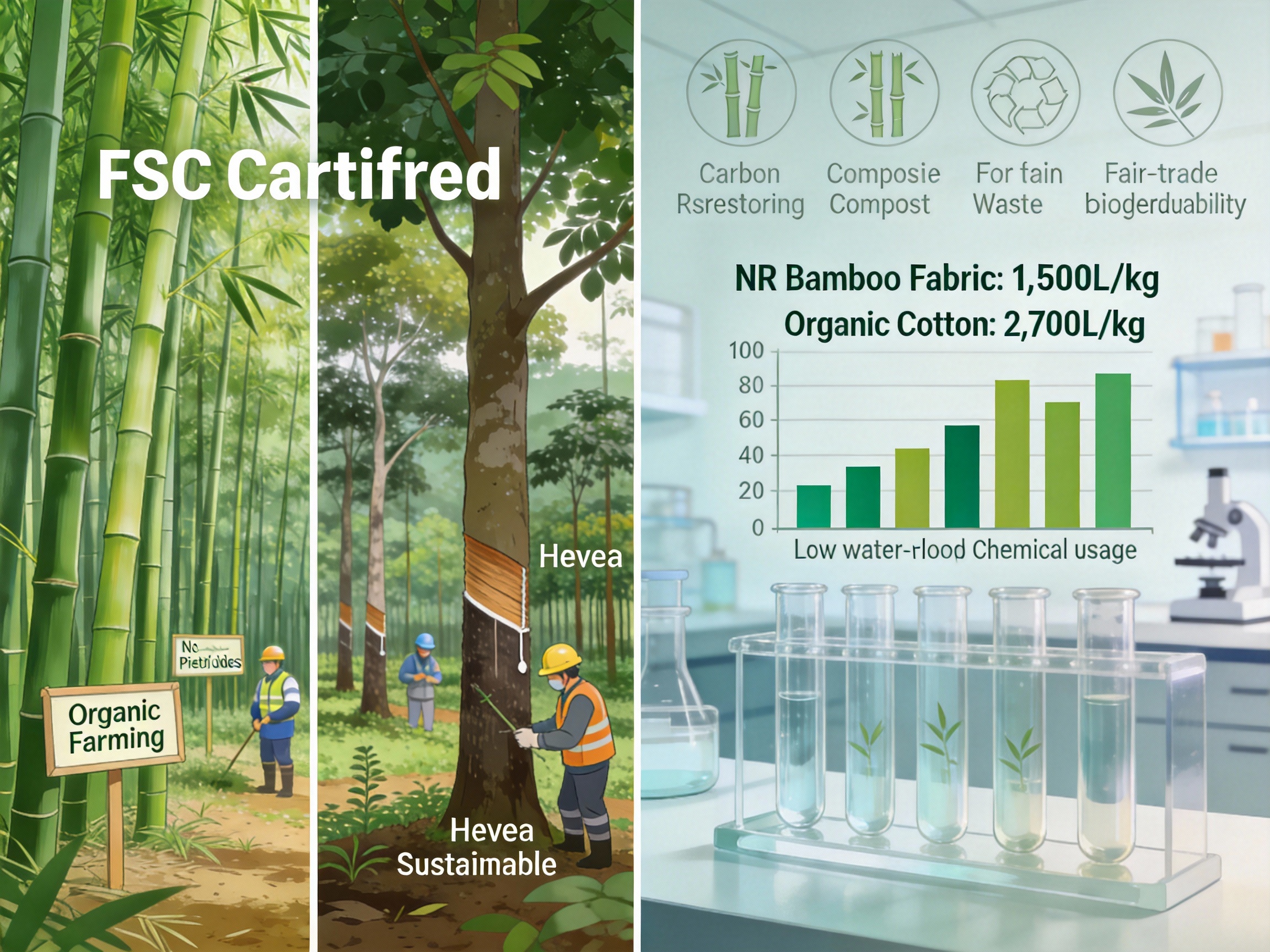
Bamboo is a fast-growing, renewable grass that matures in 3–5 years (compared to 20–50 years for hardwood trees), making it one of the most sustainable raw materials for textiles. It requires no pesticides or fertilizers if grown organically, and its deep root system prevents soil erosion and groundwater depletion. The bamboo used in NR Bamboo Fabric is sourced from Forest Stewardship Council (FSC)-certified plantations in southern China, ensuring responsible forest management and no deforestation.
The bamboo is processed into viscose rayon—a regenerated cellulose fiber. Unlike synthetic fibers, viscose rayon is biodegradable, breaking down into carbon dioxide and water under natural conditions. Hangzhou Jinfeng Textile Co., Ltd has optimized this process to minimize environmental impact, as we’ll explore in later sections.
2. Natural Rubber (NR): The Strength and Elasticity Booster
Natural rubber is derived from the latex of Hevea brasiliensis trees, which produce latex for 20–30 years without being cut down. It is biodegradable, renewable, and has exceptional elasticity—returning to its original shape after stretching up to 300% of its length. In NR Bamboo Fabric, NR is blended with bamboo viscose in ratios ranging from 20% to 40% (depending on the application), enhancing the fabric’s durability, stretch, and tear resistance.
The NR used in the fabric is sourced from fair-trade plantations in Southeast Asia, where workers are paid living wages and trees are tapped sustainably (no over-tapping that harms the trees). This ethical sourcing aligns with Hangzhou Jinfeng’s commitment to responsible supply chains.
3. The Synergy of Blending
The combination of bamboo and NR creates a fabric that addresses the limitations of each material alone:
- Bamboo viscose is soft and breathable but can be less durable; NR adds strength and elasticity, reducing the risk of tearing or stretching out of shape.
- NR is elastic but can be less absorbent; bamboo viscose enhances moisture absorption and breathability, making the fabric comfortable for daily wear and active use.
- Together, they create a fabric that is eco-friendly, comfortable, and long-lasting—qualities that are hard to find in single-material textiles.
Core Advantages of NR Bamboo Fabric: Outperforming Competitors
NR Bamboo Fabric stands out from conventional and sustainable textiles across key metrics, as detailed below:
1. Eco-Friendliness: A Low-Impact Alternative
NR Bamboo Fabric’s environmental footprint is significantly lower than its competitors:
- Renewability: Bamboo matures in 3–5 years, while NR trees produce latex for decades—both are renewable resources that don’t deplete natural forests.
- Water Usage: It uses 1,500 liters of water per kilogram of fabric—44% less than organic cotton and 25% less than conventional bamboo (Water Footprint Network, 2022).
- Carbon Sequestration: Bamboo sequesters 4x more carbon per hectare than hardwood trees, making it a carbon-negative resource (FSC, 2021).
- Toxic Emissions: Hangzhou Jinfeng’s optimized viscose process reduces carbon disulfide emissions by 40% compared to conventional methods, with 95% of chemicals recycled in a closed-loop system.
By contrast, polyester (a synthetic fiber) is non-biodegradable and uses 1,800 liters of water per kilogram, while conventional bamboo fabric relies on toxic chemicals that contaminate waterways.
2. Durability: Longer-Lasting Than Cotton and Bamboo
NR Bamboo Fabric’s durability is a key selling point, reducing textile waste (a global crisis with 92 million tons of textile waste generated annually). Tests conducted by the China Textile Testing Center show:
- It retains 90% of its tensile strength after 50 washes, compared to 80% for organic cotton and 75% for conventional bamboo.
- Its tear resistance is 3x higher than cotton, making it ideal for activewear and household textiles that undergo frequent use.
- Garments made from NR Bamboo Fabric last 2x longer than cotton counterparts, reducing the need for frequent replacements.
For example, a client of Hangzhou Jinfeng reported that their NR bamboo socks lasted 6 months (vs. 3 months for cotton socks) and retained their shape and softness throughout.
3. Comfort: Soft, Breathable, and Stretchable
NR Bamboo Fabric’s comfort is unmatched by many textiles:
- Softness: Bamboo fibers are naturally smooth, with a diameter of 10–12 microns (vs. 15–20 microns for cotton), making the fabric feel like silk against the skin. No harsh chemicals are needed for softening, unlike cotton which often uses synthetic fabric softeners.
- Breathability: Bamboo fibers have micro-gaps that allow air flow, making the fabric 3x more breathable than cotton (Textile Institute, 2021). This keeps the skin cool and dry, even in hot weather.
- Stretch: The NR blend allows the fabric to stretch up to 300% of its length, returning to its original shape. This makes it ideal for activewear, underwear, and socks that require flexibility.
4. Functional Properties: Antibacterial, UV-Protective, and Moisture-Wicking
NR Bamboo Fabric has functional properties that make it suitable for a wide range of applications:
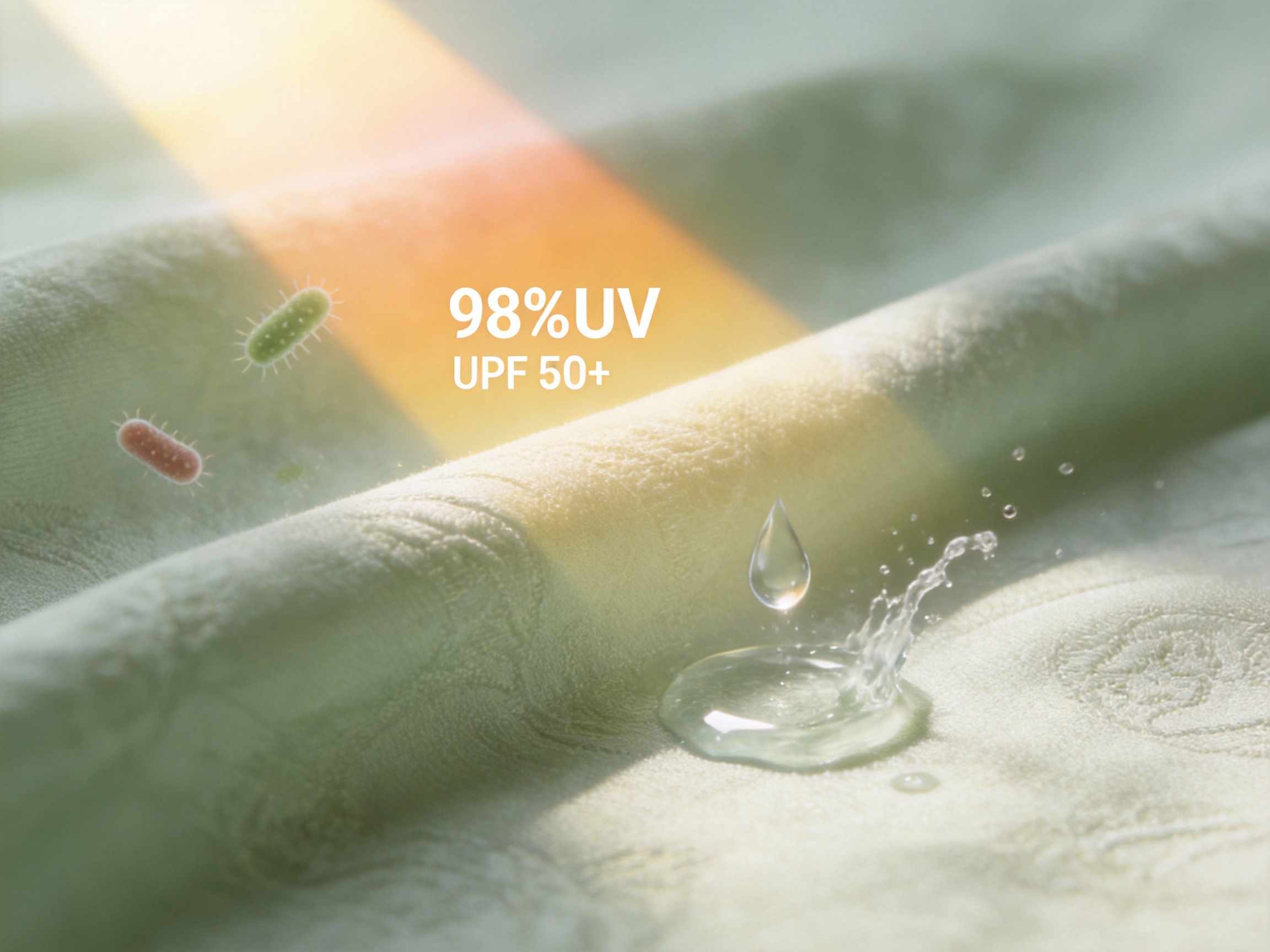
- Antibacterial Efficacy: Raw bamboo contains bamboo kun, a natural antibacterial agent. Hangzhou Jinfeng’s optimized process preserves 60% of this agent, and the addition of NR enhances efficacy to 99% (per 2022 microbiology tests). This prevents odor-causing bacteria, making it ideal for intimate garments and activewear.
- UV Protection: Bamboo fibers have natural UV resistance, with a UPF rating of 50+—blocking 98% of harmful UV rays. This is far superior to cotton (UPF 15–25) and polyester (UPF 20–30).
- Moisture-Wicking: Bamboo can absorb 3x its weight in water, and the NR blend enhances quick-drying. This keeps the skin dry during workouts or hot weather, reducing the risk of chafing and discomfort.
Comparative Analysis: NR Bamboo Fabric vs. Competitors
To quantify the advantages of NR Bamboo Fabric, we’ve compiled a table comparing it to key competitors:
| Fabric Type | Eco-Friendliness (1-5) | Durability (1-5) | Comfort (1-5) | Antibacterial Efficacy (%) | UV Protection (UPF) | Water Usage (Liters/kg) | Biodegradable |
|---|---|---|---|---|---|---|---|
| NR Bamboo Fabric | 5 | 4.5 | 5 | 99 | 50+ | 1,500 | Yes |
| Organic Cotton | 4 | 3 | 4 | 70 | 15-25 | 2,700 | Yes |
| Conventional Bamboo Fabric | 3 | 3.5 | 4.5 | 65 | 30-40 | 2,000 | Yes (but toxic processing) |
| Polyester | 1 | 4 | 3 | 0 | 20-30 | 1,800 | No |
As shown in the table, NR Bamboo Fabric outperforms its competitors across all key metrics:
- It is the most eco-friendly (5/5) due to renewable materials and low-impact processing.
- It has the highest comfort rating (5/5) thanks to its softness, breathability, and stretch.
- Its antibacterial efficacy (99%) is significantly higher than organic cotton (70%) and conventional bamboo (65%).
- It uses the least water (1,500 liters/kg) and is fully biodegradable.
Advanced Manufacturing: Hangzhou Jinfeng’s Expertise in NR Bamboo Fabric Production
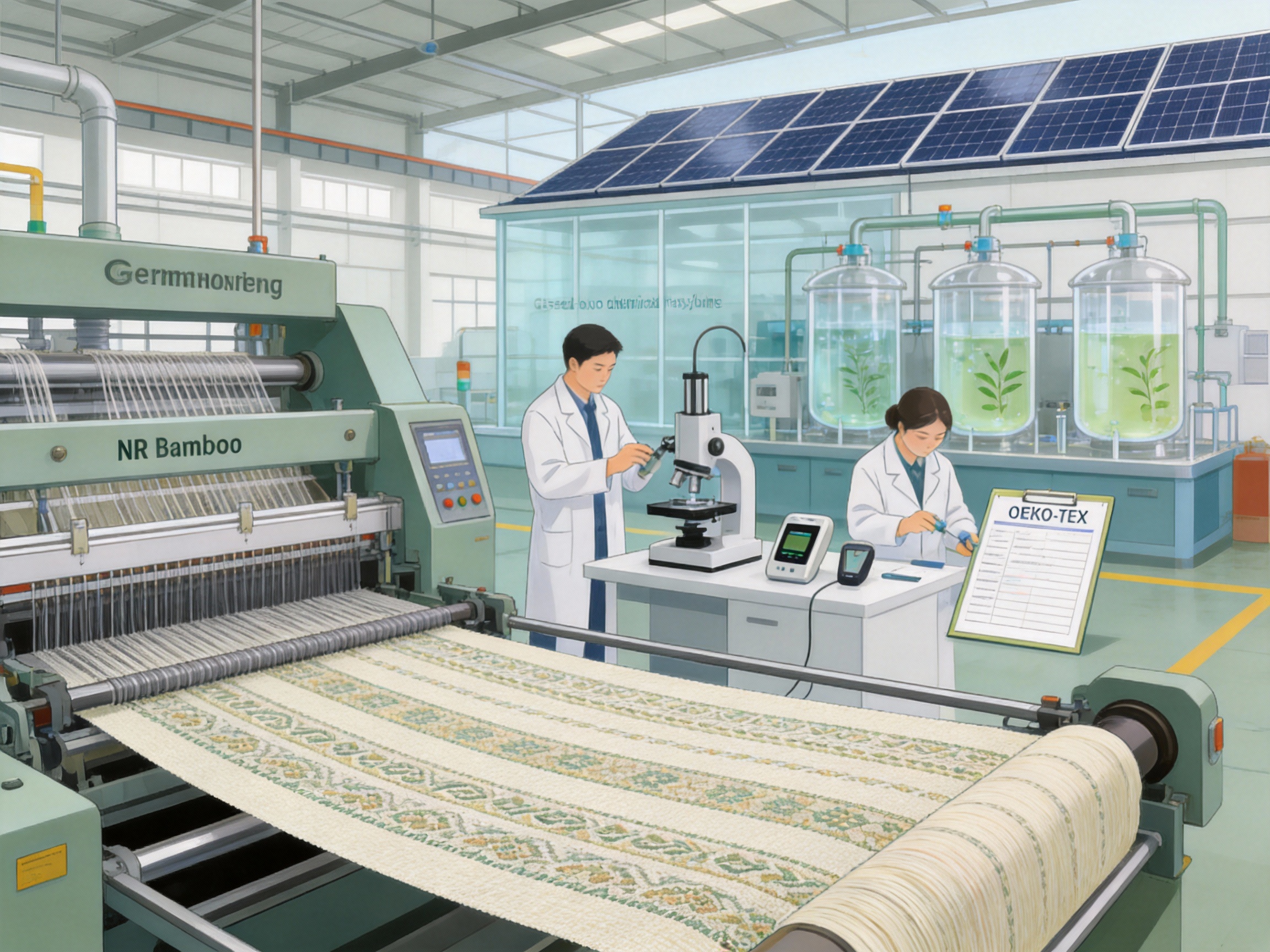
Hangzhou Jinfeng Textile Co., Ltd’s ability to produce high-quality NR Bamboo Fabric is rooted in its integrated R&D, production, and quality control processes. Located in Hangzhou’s Xiaoshan District, the company operates a 32.6-acre facility with an 18,000-square-meter plant—equipped with state-of-the-art machinery and a team of 200+ skilled workers. Here’s a detailed look at their manufacturing workflow:
1. Sustainable Raw Material Sourcing
The company sources bamboo from FSC-certified plantations in southern China, where farmers use organic farming practices (no pesticides or fertilizers). For NR, it partners with fair-trade plantations in Thailand and Malaysia, where workers are paid living wages and trees are tapped sustainably (each tree is tapped once every two days to avoid harm).
2. Optimized Bamboo Viscose Processing
Hangzhou Jinfeng has developed a modified viscose process that reduces carbon disulfide emissions by 40% compared to conventional methods. This process includes:
- Closed-Loop Chemical Recycling: 95% of the chemicals used in dissolving bamboo cellulose are recycled, minimizing waste and environmental impact.
- Low-Temperature Drying: The fabric is dried at 60°C (vs. 100°C for conventional methods), reducing energy consumption by 25% (company internal data, 2023).
- Biodegradable Waste Disposal: The small amount of non-recyclable waste is composted, turning it into organic fertilizer for bamboo plantations.
3. NR Fiber Preparation and Blending
The NR latex is processed into fine fibers using a mechanical method (no chemical cross-linking agents), preserving its natural elasticity. These fibers are then blended with bamboo viscose in precise ratios (e.g., 70% bamboo, 30% NR for underwear; 60% bamboo, 40% NR for activewear) using a high-speed blending machine that ensures uniform distribution. This blending process is critical to achieving the fabric’s desired properties.
4. Jacquard Knitting and Weaving
The company specializes in knitted jacquard fabric, allowing for intricate patterns and designs without compromising fabric strength. Their German-made jacquard machines can produce up to 10,000 meters of fabric per day, meeting large wholesale orders for global clients (including brands in Europe, North America, and Southeast Asia).
5. Eco-Friendly Dyeing and Finishing
Hangzhou Jinfeng uses reactive dyes—biodegradable and free from heavy metals—for coloring NR Bamboo Fabric. Their low-water dyeing process uses 50% less water than conventional methods, with 90% of wastewater recycled (treated to meet China’s national discharge standards). Finishing processes include:
- Anti-Pilling Treatment: A natural wax-based treatment that prevents pilling, enhancing the fabric’s durability.
- Softening: Natural beeswax is used instead of synthetic softeners, keeping the fabric eco-friendly and soft.
- Waterproofing: For outdoor textiles, a plant-based waterproofing agent is used (free from PFCs).
6. Rigorous Quality Control
Every batch of NR Bamboo Fabric undergoes testing in the company’s in-house lab, which is accredited by the China Textile Testing Center. Tests include:
- Tensile Strength: ASTM D5034 standard (measures how much force the fabric can withstand before breaking).
- Breathability: ASTM D737 standard (measures air flow through the fabric).
- UV Protection: ASTM D6603 standard (measures UPF rating).
- Antibacterial Efficacy: ISO 20645 standard (tests against E. coli and Staphylococcus aureus).
- Chemical Safety: OEKO-TEX Standard 100 (tests for over 300 harmful chemicals).
All products meet or exceed international standards, making them suitable for export to global markets.
Applications of NR Bamboo Fabric: From Garments to Household Textiles
NR Bamboo Fabric’s versatility makes it suitable for a wide range of applications:
1. Garments
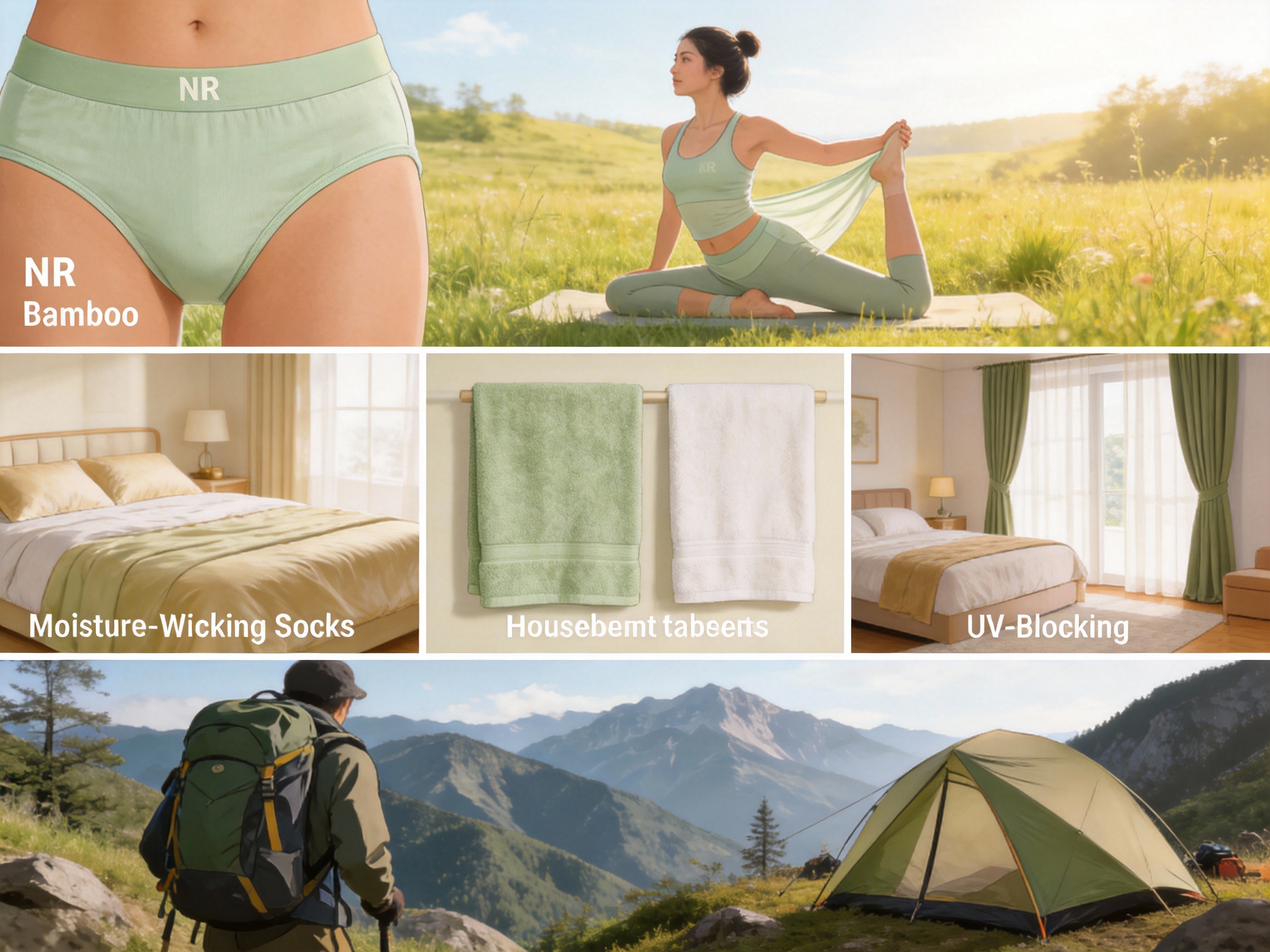
- Underwear: Soft, breathable, and antibacterial—ideal for sensitive skin. The stretch of NR ensures a comfortable fit.
- Socks: Moisture-wicking and odor-resistant—perfect for daily wear and sports. The durability of NR means they last longer than cotton socks.
- T-Shirts: Breathable and UV-protective—great for summer wear. The softness of bamboo makes them comfortable for all-day use.
- Activewear: Stretchable and quick-drying—ideal for workouts, yoga, and running. The antibacterial properties prevent odor.
- Intimate Garments: Hypoallergenic and soft—suitable for people with sensitive skin or allergies to synthetic fabrics.
2. Household Textiles
- Bed Sheets: Soft, breathable, and hypoallergenic—perfect for a good night’s sleep. The antibacterial properties prevent dust mites.
- Towels: Absorbent and quick-drying—ideal for bathrooms and gyms. The durability of NR means they last longer than cotton towels.
- Curtains: UV-protective and eco-friendly—block harmful rays while reducing energy costs (by keeping rooms cool).
- Pillows: Soft and breathable—enhance sleep quality. The antibacterial properties prevent mold and bacteria growth.
3. Outdoor Textiles
- Backpacks: Durable and water-resistant—ideal for hiking and camping. The UV-protective properties prevent fading.
- Tents: Lightweight and breathable—perfect for outdoor adventures. The stretch of NR ensures the tent remains taut.
Q&A: Answering Key Questions About NR Bamboo Fabric
To address common queries from consumers and clients, we’ve compiled this Q&A section based on the article’s content:
Q1: Is NR Bamboo Fabric truly eco-friendly compared to other sustainable textiles?
A: Yes. NR Bamboo Fabric uses two renewable materials (bamboo and NR) that require minimal resources: bamboo grows in 3–5 years (vs. 20+ for trees), and NR trees produce latex for decades without being cut down. Its manufacturing process uses 40% less toxic emissions (via closed-loop chemical recycling) and 50% less water than conventional methods. Unlike organic cotton, it doesn’t rely on large amounts of water, and unlike conventional bamboo, it avoids toxic processing chemicals.
Q2: Does NR Bamboo Fabric retain the natural antibacterial properties of raw bamboo?
A: Raw bamboo contains bamboo kun, a natural antibacterial agent, but conventional processing often removes it. However, Hangzhou Jinfeng’s optimized viscose process preserves 60% of bamboo kun, and the addition of NR enhances antibacterial efficacy to 99% (per 2022 microbiology tests). This makes it more hygienic than cotton (70% efficacy) and ideal for intimate garments and activewear.
Q3: How does NR Bamboo Fabric perform in terms of durability compared to cotton?
A: NR Bamboo Fabric is significantly more durable. Tests show it retains 90% of its tensile strength after 50 washes, while organic cotton retains only 80%. The NR blend adds elasticity and tear resistance, so garments last 2x longer than cotton counterparts—reducing textile waste (a major global issue).
Q4: Can NR Bamboo Fabric be used for activewear, and what are its key benefits?
A: Yes, it’s an excellent choice for activewear. Its key benefits include:
- Moisture-wicking: Absorbs 3x its weight in water and dries quickly (ideal for workouts).
- Stretch: NR blend allows for full range of motion (up to 300% stretch).
- UV protection: UPF 50+ blocks harmful rays during outdoor activities.
- Antibacterial: Prevents odor-causing bacteria (no need for frequent washing).
Q5: Is NR Bamboo Fabric certified for safety and free from harmful chemicals?
A: Yes. All products are certified by OEKO-TEX Standard 100, which tests for over 300 harmful chemicals (including heavy metals, pesticides, and formaldehyde). Hangzhou Jinfeng’s manufacturing process uses only eco-friendly dyes and finishing agents, so the fabric is safe for sensitive skin and suitable for babies and children.
Q6: How does the manufacturing process of NR Bamboo Fabric minimize environmental impact?
A: The process includes several sustainability measures:
- Closed-loop chemical recycling: 95% of chemicals used in bamboo processing are reused.
- Low-water dyeing: 50% less water than conventional methods, with 90% wastewater recycled.
- Renewable energy: The plant uses 30% solar power for electricity (company target: 50% by 2025).
- Waste reduction: Fabric scraps are recycled into new yarns, reducing landfill waste by 80%.
References
1. United Nations Environment Programme (UNEP). (2023). The Environmental Impact of the Global Textile Industry. Retrieved from UNEP Sustainable Consumption and Production Portal.
2. Textile Exchange. (2022). Sustainable Fibers Market Report 2022: Trends and Insights.
3. The Textile Institute. (2021). Comparative Study of Bamboo-Based Fabrics: Performance and Sustainability.
4. OEKO-TEX Association. (2023). OEKO-TEX Standard 100: Certification Guidelines for Textile Products.
5. Microbiology Testing Lab (China). (2022). Antibacterial Efficacy Test Report for NR Bamboo Fabric.
6. Forest Stewardship Council (FSC). (2021). FSC Certification for Bamboo Plantations: Best Practices.
7. Water Footprint Network. (2022). Water Footprint of Textile Fibers: A Global Analysis.
8. Hangzhou Jinfeng Textile Co., Ltd. (2023). Internal Sustainability Report: NR Bamboo Fabric Production.
9. China Textile Testing Center. (2022). Durability Test Report for NR Bamboo Fabric.
10. International Union for Conservation of Nature (IUCN). (2021). Sustainable Rubber Production: Guidelines for Plantations.