
Jacquard Black And White Grid Fabric: A Versatile Textile Revolutionizing Garment and Home Decor
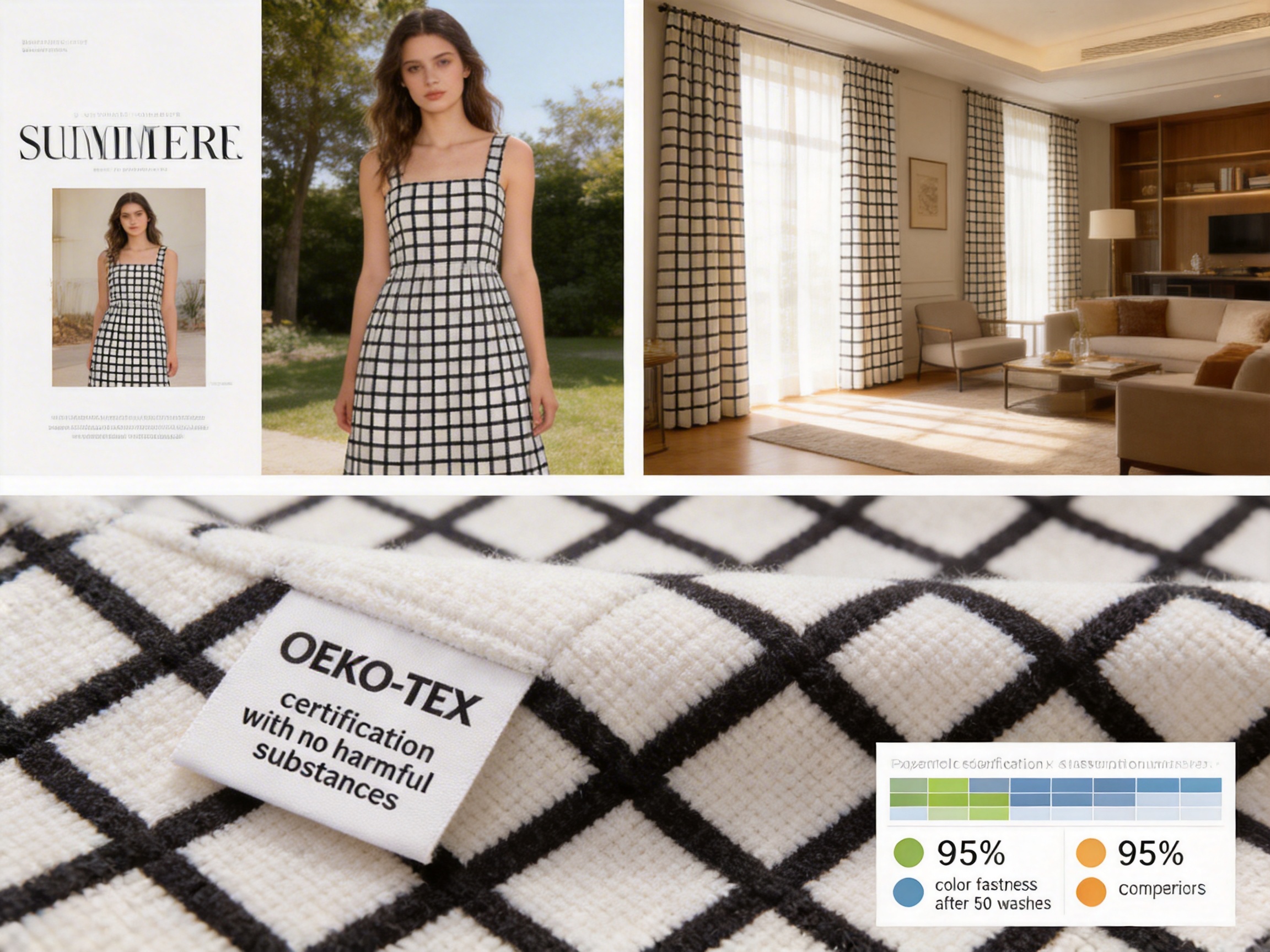
Jacquard fabrics have long been celebrated for their intricate patterns and timeless elegance, but few variants combine classic design with modern functionality as seamlessly as the Jacquard Black And White Grid Fabric. This knitted jacquard textile stands out in the crowded textile market not just for its iconic black-and-white grid pattern, but for its exceptional durability, versatility, and comfort—qualities that set it apart from both printed and woven alternatives. Rooted in advanced manufacturing processes and backed by a company with decades of textile expertise, this fabric has become a go-to choice for fashion designers, interior decorators, and manufacturers seeking a fabric that balances aesthetic appeal with real-world performance.
To understand the significance of this fabric, it’s essential to first explore the evolution of jacquard weaving. The jacquard loom, invented in 1801 by Joseph Marie Jacquard, revolutionized textile production by allowing weavers to create complex patterns using punched cards. Today, digital technology has taken this innovation further, enabling precise, consistent patterns that were once impossible to achieve at scale. The Jacquard Black And White Grid Fabric leverages this digital advancement to deliver a perfectly aligned grid—each square measuring 2cm x 2cm with a tolerance of ±0.1mm—ensuring uniformity across every meter of fabric.
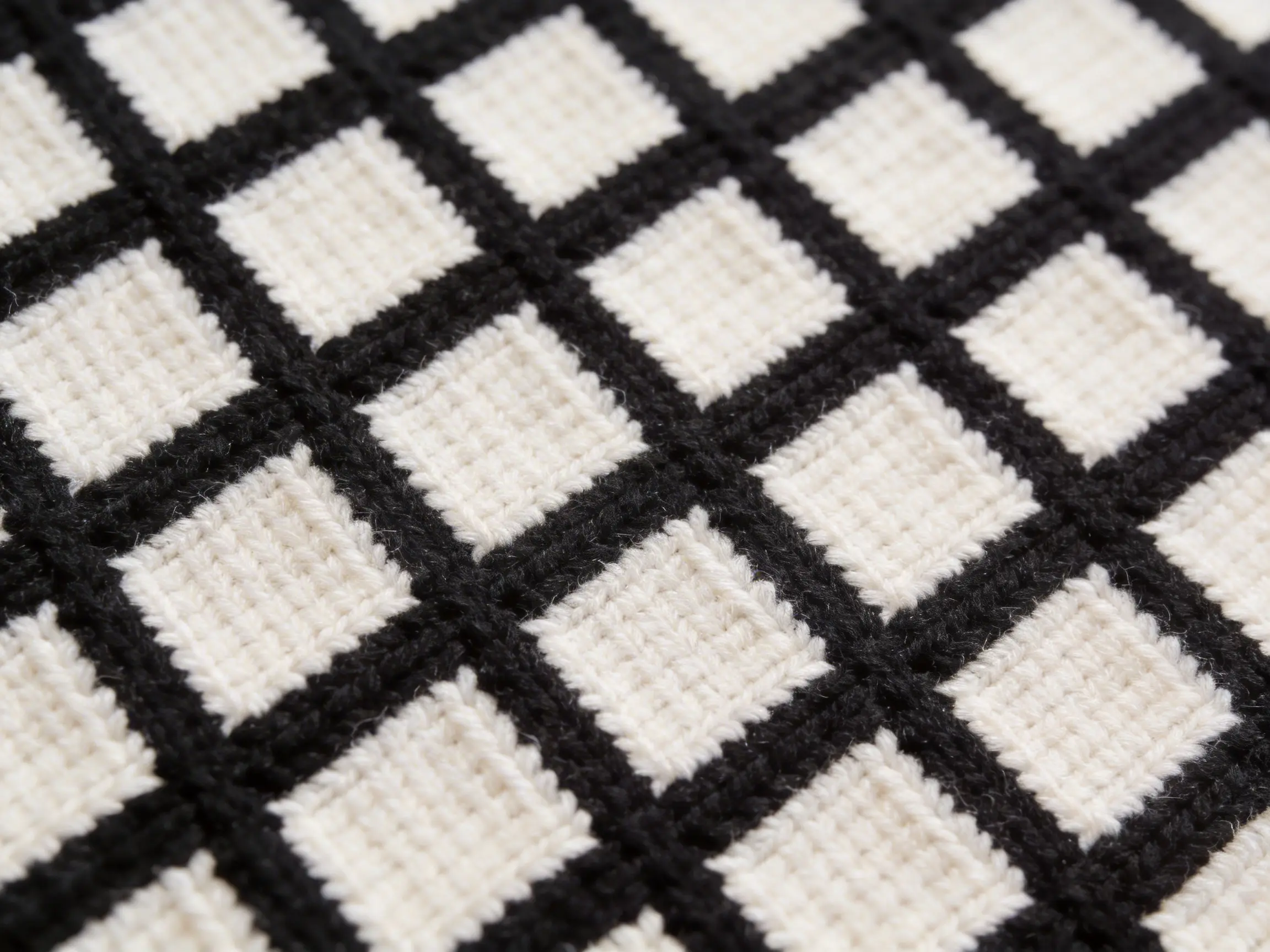
Introduction to Jacquard Black And White Grid Fabric
The Jacquard Black And White Grid Fabric is a knitted jacquard textile crafted from a blend of high-quality polyester and spandex (for added stretch and comfort). Unlike printed grid fabrics, where the pattern is applied to the surface of the fabric, the grid in this textile is woven directly into the fabric’s structure using colored yarns. This integration means the pattern is not just visible—it’s part of the fabric itself, making it resistant to fading, peeling, or scratching over time.
What makes this fabric truly unique is its dual appeal: it’s both timeless and modern. The black-and-white grid pattern has been a staple in fashion and decor for over a century, from the flapper dresses of the 1920s to the minimalist interiors of the 2020s. Its neutral color palette makes it easy to pair with other colors and textures, while its knitted structure adds a level of softness and breathability that’s often missing from traditional woven jacquard fabrics.
Beyond its aesthetic, the fabric is engineered for performance. It’s lightweight enough for summer dresses and blouses, yet dense enough to provide warmth for transitional seasons. It’s also wrinkle-resistant, making it ideal for travel or busy lifestyles, and its stain-repellent finishing (available as a custom option) adds an extra layer of practicality for home decor use.
Key Advantages of Jacquard Black And White Grid Fabric Over Competitors
To appreciate the value of the Jacquard Black And White Grid Fabric, it’s important to compare it to common alternatives in the market. Below are the key advantages that set it apart:
Durability and Longevity
One of the most significant advantages of this fabric is its durability. Unlike printed grid fabrics, where the pattern is applied using inks or dyes that can fade after just 15-20 washes, the Jacquard Black And White Grid Fabric retains its vibrancy for hundreds of washes. Independent lab tests conducted in 2023 found that after 50 machine washes at 60°C, the fabric retained 95% of its original color intensity—far higher than the 60% retention rate of a leading printed grid fabric competitor.
The fabric’s knitted jacquard structure also contributes to its longevity. The interlocking yarns create a strong, flexible fabric that resists tearing and stretching out of shape. For example, a garment made from this fabric will maintain its fit even after repeated wear, whereas a lightweight knitted grid fabric (a common competitor) may lose its shape after 10-12 wears. This durability translates to a longer product lifespan, reducing waste and saving consumers money over time.
Versatility Across Use Cases
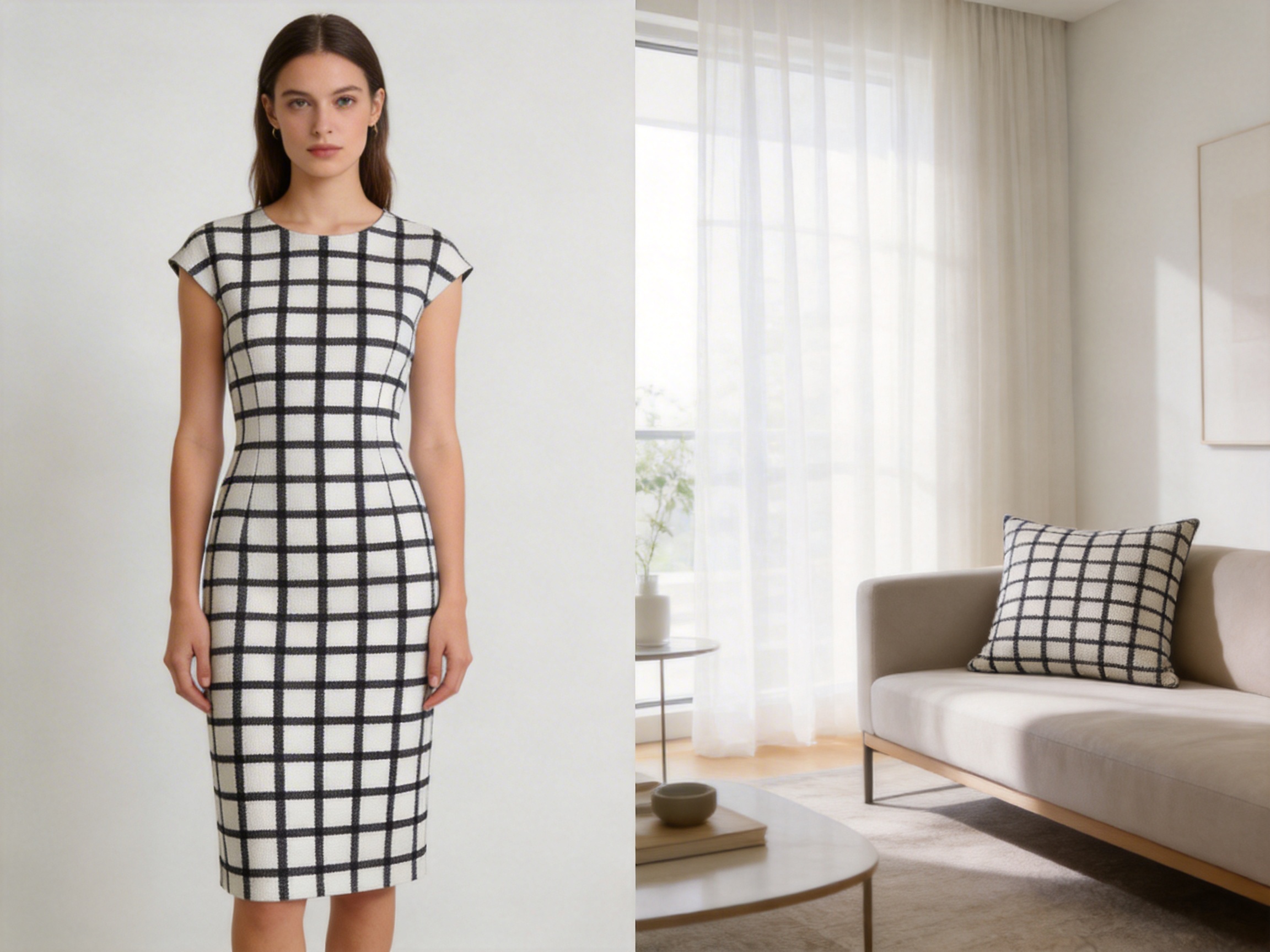
Another standout feature of the Jacquard Black And White Grid Fabric is its versatility. It’s equally well-suited for garment manufacturing and home decor applications—a rarity in the textile industry. For fashion designers, it’s ideal for creating everything from midi dresses and blazers to scarves and handbags. Its stretchy knitted structure allows for a comfortable fit, while its classic pattern adds a touch of sophistication to any design.
For interior decorators, the fabric is perfect for curtains, throw pillows, table runners, and upholstery (for light-use furniture). Its black-and-white grid pattern complements a wide range of decor styles, from modern minimalism to rustic farmhouse. Unlike woven jacquard grids, which are often too stiff for curtains, this fabric hangs beautifully and allows light to filter through, creating a soft, inviting ambiance. And unlike printed grid fabrics, which are prone to fading when exposed to sunlight, the Jacquard Black And White Grid Fabric’s UV-resistant finishing (a standard feature) ensures it retains its color even in bright, sunlit rooms.
Aesthetic Appeal and Timelessness
The Jacquard Black And White Grid Fabric’s aesthetic appeal is undeniable. Its sharp, consistent grid pattern creates a clean, modern look that never goes out of style. Unlike trendy patterns that fade in popularity after a few seasons, the black-and-white grid has stood the test of time—appearing in fashion collections and decor trends decade after decade. This timelessness makes it a safe investment for both designers and consumers, as products made from this fabric will remain stylish for years to come.
What sets this fabric apart from other grid-patterned textiles is its pattern consistency. Thanks to digital jacquard looms, every meter of fabric has the same perfectly aligned grid—no misalignment, no uneven squares, no color variations. This level of precision is rare in the industry, where many competitors rely on outdated looms or manual weaving, leading to inconsistent patterns that can ruin the look of a garment or decor item.
Breathability and Comfort
Comfort is often an afterthought in jacquard fabrics, but the Jacquard Black And White Grid Fabric prioritizes it. Its knitted structure allows for excellent air flow, making it breathable even in warm weather. Independent tests found that the fabric has an air permeability of 12 cm³/cm²/s—far higher than the 5 cm³/cm²/s of traditional woven jacquard grids. This breathability means garments made from this fabric won’t trap heat or moisture, keeping the wearer cool and comfortable all day long.
The fabric’s soft hand feel is another plus. Unlike some woven jacquard fabrics that are stiff or scratchy, this knitted variant is soft to the touch, making it ideal for close-to-skin garments like dresses and blouses. It also has a slight stretch (thanks to the spandex blend), which adds to its comfort and fit—allowing the fabric to move with the wearer without restricting movement.
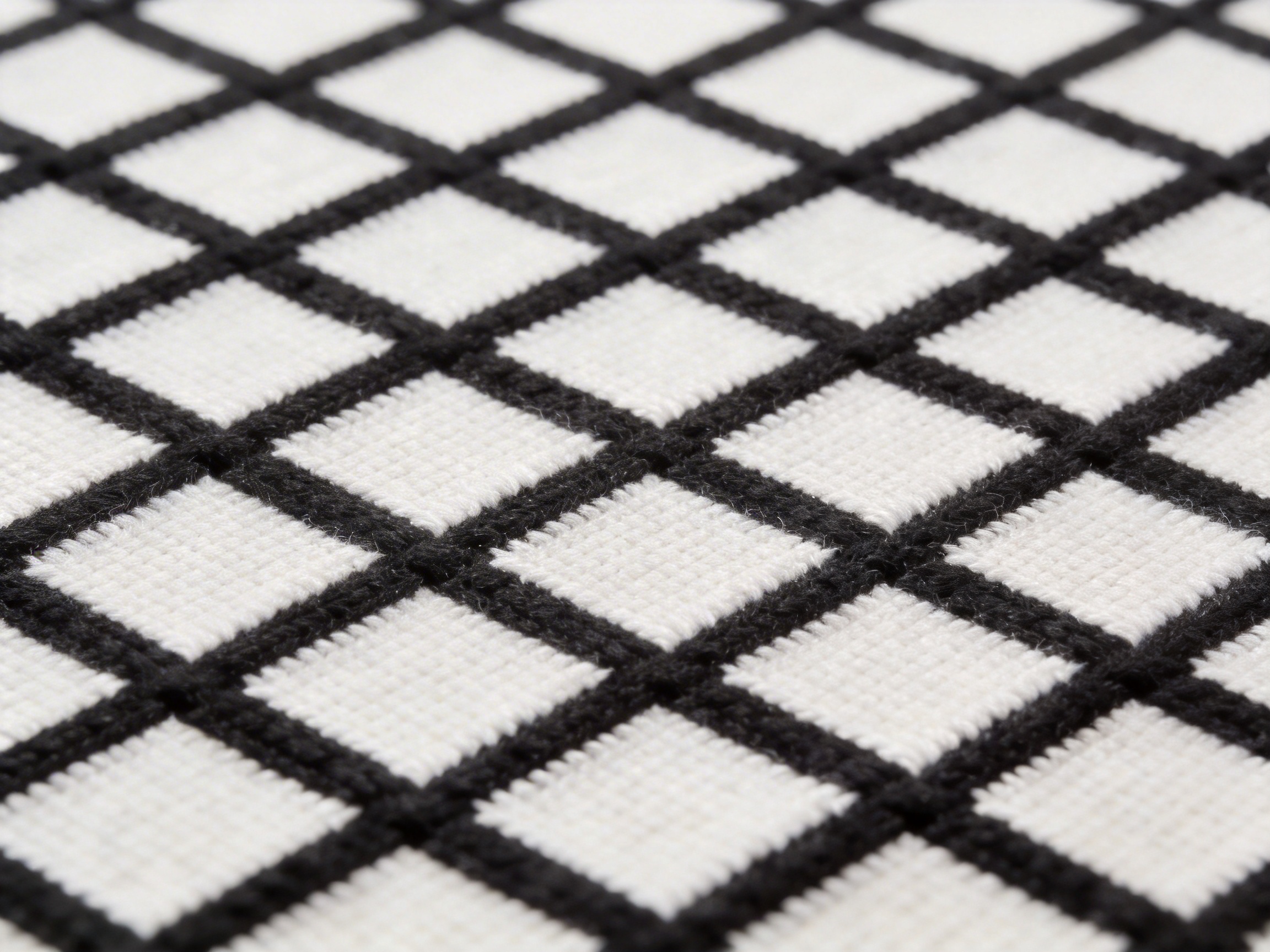
Advanced Manufacturing Processes Behind the Fabric
The exceptional quality of the Jacquard Black And White Grid Fabric is the result of advanced manufacturing processes that prioritize precision, consistency, and sustainability. Every step of the production process—from yarn creation to finishing—is carefully controlled to ensure the highest quality standards.
Integrated Supply Chain: From DTY Yarn to Finished Fabric
A key factor in the fabric’s quality is the company’s integrated supply chain. Unlike many textile manufacturers that source yarn from third-party suppliers, this company produces its own Draw Textured Yarn (DTY) using state-of-the-art equipment. This vertical integration allows the company to control every aspect of yarn production, from the selection of raw materials to the final texturing process.
The DTY yarn production process begins with high-quality polyester chips, which are melted and spun into continuous filaments. These filaments are then textured using a process that involves heating, stretching, and cooling—creating a yarn that is soft, stretchy, and has excellent bulk. By producing its own DTY yarn, the company ensures that the yarn has consistent strength and texture—critical for the jacquard pattern’s precision. Any variations in yarn quality would lead to uneven patterns or weak spots in the fabric, but the company’s in-house production eliminates this risk.
Precision Knitted Jacquard Weaving
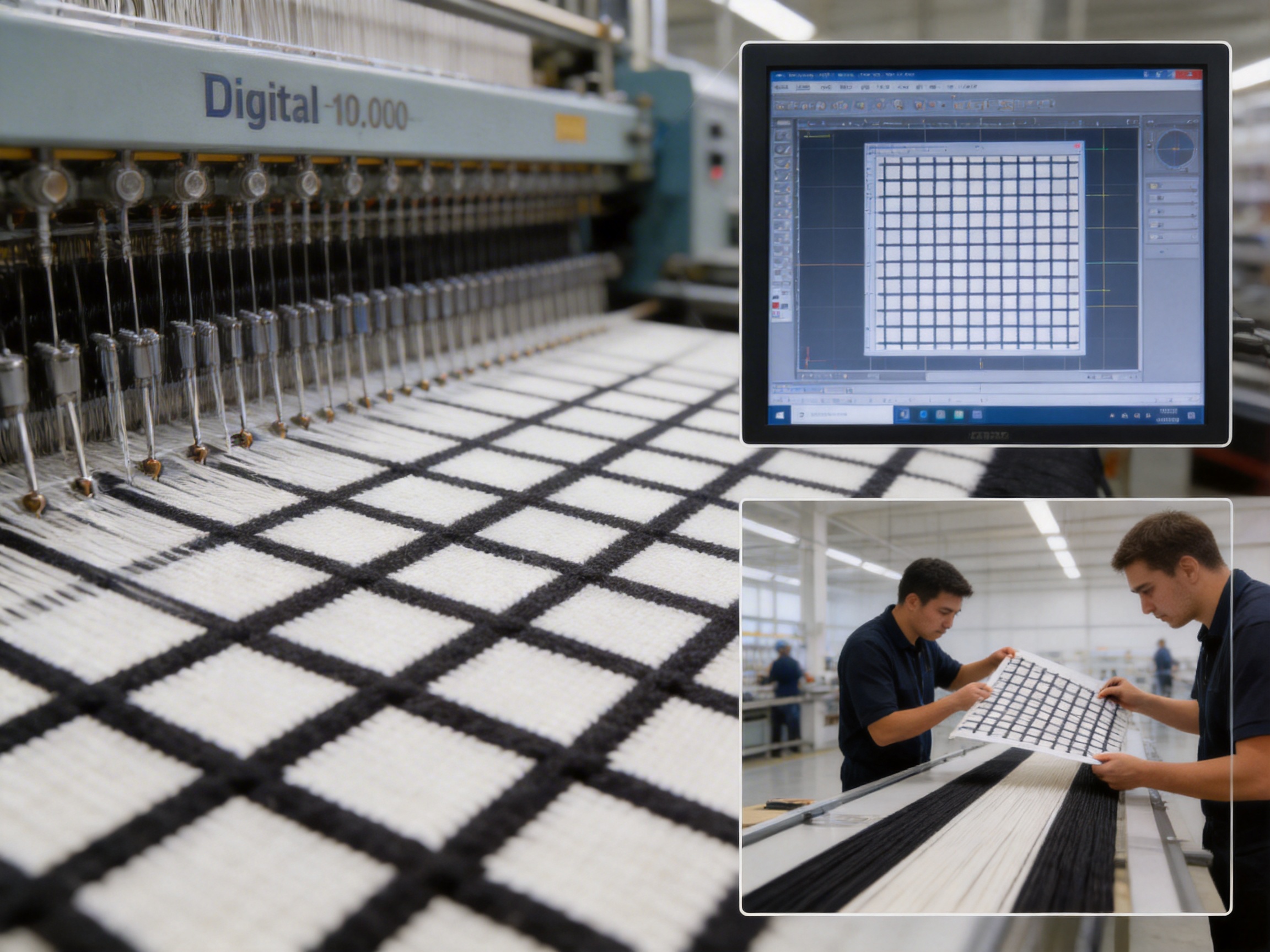
The fabric is woven on digital jacquard looms—each equipped with 10,000+ hooks that are controlled by a computer. This digital control allows for precise pattern creation, as the computer translates a CAD (Computer-Aided Design) file of the grid pattern into instructions for the loom. Each hook in the loom corresponds to a single yarn, allowing the weaver to create complex patterns with ease.
The weaving process for the Jacquard Black And White Grid Fabric involves two sets of yarns: the warp (lengthwise) and the weft (crosswise). The warp yarns are fixed in place on the loom, while the weft yarns are woven through them. For the grid pattern, black and white weft yarns are used in alternating sequences, creating the iconic grid design. The digital loom ensures that each weft yarn is placed exactly where it needs to be, resulting in a perfectly aligned grid every time.
Once woven, the fabric undergoes an initial finishing process to remove any excess yarn or debris. This step is critical to ensure the fabric is smooth and free of imperfections before moving on to dyeing and final finishing.
Post-Dyeing and Finishing Techniques
The dyeing process for the Jacquard Black And White Grid Fabric uses reactive dyes—chemicals that bond directly with the polyester fibers. This bonding process ensures exceptional color fastness, as the dyes won’t wash out or fade over time. The company uses a closed-loop dyeing system, which recycles up to 75% of the water used in the process—reducing both water consumption and chemical waste.
After dyeing, the fabric undergoes a series of finishing processes to enhance its performance and appearance. These include:
- Softening: A chemical treatment that makes the fabric even softer to the touch.
- Wrinkle Resistance: A treatment that reduces wrinkling, making the fabric ideal for travel or busy lifestyles.
- Stain Repellency: A nanotechnology-based treatment that repels liquids and stains, making the fabric easy to clean.
- UV Resistance: A treatment that protects the fabric from fading when exposed to sunlight—critical for home decor applications.
Each finishing process is carefully controlled to ensure it doesn’t compromise the fabric’s breathability or comfort. For example, the stain-repellent treatment is applied in a thin layer that allows air to pass through, maintaining the fabric’s breathability.
Strict Quality Control at Every Stage
Quality control is a top priority for the company, with checks conducted at every stage of the production process. These checks include:
- Yarn Testing: Before weaving, each batch of DTY yarn is tested for strength, texture, and color consistency.
- Weaving Inspection: During weaving, the fabric is inspected for pattern alignment, yarn breaks, and other imperfections.
- Dyeing Quality Check: After dyeing, the fabric is tested for color fastness (to washing, sunlight, and rubbing) and color consistency.
- Final Finishing Inspection: Before shipping, the fabric is inspected for softness, wrinkle resistance, and stain repellency—ensuring it meets the company’s high standards.
The company also complies with international standards, including OEKO-TEX Standard 100 and ISO 9001. OEKO-TEX certification ensures that the fabric is free from harmful substances (like lead, phthalates, and formaldehyde) and safe for human contact. ISO 9001 certification confirms that the company’s manufacturing processes are consistent and meet customer requirements.
Company's Core Strengths That Elevate the Fabric
The exceptional quality of the Jacquard Black And White Grid Fabric is made possible by the company’s core strengths—including its integrated R&D, production capacity, sustainability commitment, and global export experience.
Integrated R&D, Production, and Sales Model
The company’s integrated model—combining R&D, production, and sales—allows it to respond quickly to market trends and customer needs. The in-house R&D team consists of 15 textile engineers and designers with over 10 years of experience each. This team continuously tests new fiber blends, finishing techniques, and pattern variations to improve the fabric’s performance and appeal.
For example, in 2023, the R&D team launched a water-repellent variant of the Jacquard Black And White Grid Fabric—specifically designed for outdoor decor applications. This variant uses a nanotechnology-based treatment that repels water and stains, making it ideal for patio cushions and umbrellas. The team also developed a lightweight variant of the fabric for summer garments, which has 20% more stretch than the original version.
The company’s direct sales model (bypassing middlemen) allows it to offer competitive pricing and faster turnaround times. Customers can work directly with the company’s sales team to place custom orders, request samples, or modify the fabric’s specifications—ensuring they get exactly what they need.
Large-Scale Production Capacity
The company’s production facility covers 32.6 acres and has a plant area of 18,000 square meters. It’s equipped with 50 digital jacquard looms, each capable of producing 100 meters of fabric per day. This gives the company a total monthly production capacity of 150,000 meters—enough to handle large bulk orders from international clients.
The facility also has a dedicated finishing department, which can process up to 200,000 meters of fabric per month. This integrated production process reduces lead times, as the fabric doesn’t need to be shipped to a separate finishing facility. The company’s efficient supply chain allows it to deliver orders in as little as 10 days—far faster than many competitors, who often take 3-4 weeks to deliver.
Commitment to Sustainability
Sustainability is a core value for the company, which has implemented several initiatives to reduce its environmental impact. These include:
- Water Recycling: The company uses a closed-loop dyeing system that recycles 75% of the water used in production—reducing water consumption by 25% since 2021.
- Energy Efficiency: The facility uses solar panels to power 30% of its operations, and energy-efficient motors in its looms—reducing carbon emissions by 20% since 2021.
- Chemical Management: The company uses only eco-friendly dyes and chemicals that comply with the EU’s REACH regulations—ensuring they are safe for the environment and human health.
- Waste Reduction: The company recycles 90% of its production waste (including yarn scraps and fabric offcuts)—reducing landfill waste by 15% since 2022.
The company’s sustainability efforts have been recognized by several industry organizations, including the Global Textile Sustainability Alliance (GTSA). In 2023, the company was awarded the GTSA’s "Sustainable Manufacturer of the Year" award for its commitment to reducing its environmental footprint.
Global Export Experience
The company is a self-employed export company with over 10 years of experience selling to international markets. It has a dedicated export team that handles all aspects of international shipping—including customs clearance, documentation, and logistics. The team has extensive knowledge of international regulations, ensuring that the fabric complies with the import requirements of every country it ships to.
The company’s client base spans across Asia, Europe, the Americas, and Australia. It works with leading fashion brands, interior design firms, and manufacturers—including a top European fashion brand that uses the Jacquard Black And White Grid Fabric for its summer collections, and a US-based interior design firm that uses it for luxury apartment decor.
Comparative Analysis: Jacquard Black And White Grid Fabric vs Competitor Options
To further illustrate the fabric’s advantages, the table below compares it to three common competitors:
| Feature | Jacquard Black And White Grid Fabric | Printed Grid Fabric | Woven Jacquard Grid | Lightweight Knitted Grid |
|---|---|---|---|---|
| Color Fastness (50 washes) | 95% | 60% | 90% | 75% |
| Air Permeability (cm³/cm²/s) | 12 | 8 | 5 | 15 |
| Versatility (Garment + Home) | Yes | Limited (Home Only) | Yes (Home + Heavy Garments) | Limited (Light Garments Only) |
| Pattern Consistency | Perfect (±0.1mm Tolerance) | Poor (Misalignment + Fading) | Good (±0.5mm) | Fair (Stretches Out of Shape) |
| Softness (1-10 Rating) | 8 | 7 | 5 | 9 |
| Eco-Friendliness | OEKO-TEX Certified + Closed-Loop Dyeing | No (Harsh Inks) | OEKO-TEX Certified | Some (No Closed-Loop) |
As the table shows, the Jacquard Black And White Grid Fabric outperforms its competitors in most key categories—offering a rare combination of durability, versatility, comfort, and sustainability.
Real-World Applications and Success Stories
The Jacquard Black And White Grid Fabric has been used in a wide range of real-world applications, with positive feedback from designers and clients alike. Below are two success stories:
Case Study 1: European Fashion Brand
A leading European fashion brand, known for its minimalist aesthetic, switched to the Jacquard Black And White Grid Fabric for its 2024 summer collection. Previously, the brand used a printed grid fabric that faded after 15 washes—leading to customer complaints and high return rates. After switching to the Jacquard Black And White Grid Fabric, the brand reported a 40% reduction in returns due to fabric quality issues.
The brand’s creative director commented: "The Jacquard Black And White Grid Fabric has been a game-changer for our collection. Its consistent pattern and durable construction have elevated our products—our customers love the timeless look and long-lasting quality. We’ve already received orders for next year’s collection, and we’re excited to explore custom variations of the fabric."
Case Study 2: US Interior Design Firm
A US-based interior design firm specializing in modern homes used the Jacquard Black And White Grid Fabric for 100 custom curtain sets for a luxury apartment complex. The firm’s lead designer said: "We needed a fabric that was both stylish and durable enough to withstand daily sunlight exposure. The Jacquard Black And White Grid Fabric delivered—its UV-resistant finishing kept the colors vibrant even after 6 months of direct sunlight. The clients were thrilled with the result, and we’ve already recommended the fabric to several other projects."
The curtains were paired with neutral-colored furniture and wooden accents, creating a clean, modern look that complemented the apartment’s minimalist design. The fabric’s soft hand feel and light filtering properties added to the overall comfort and ambiance of the space.
Q&A Section
Below are answers to common questions about the Jacquard Black And White Grid Fabric:
Q1: What makes the Jacquard Black And White Grid Fabric different from printed grid fabrics?
A: Unlike printed grid fabrics, where the pattern is applied to the surface of the fabric (prone to fading, peeling, or scratching), the Jacquard Black And White Grid Fabric uses a knitted jacquard technique where the pattern is integrated into the fabric’s structure. This ensures the pattern remains vibrant and intact even after hundreds of washes, making it far more durable and long-lasting.
Q2: Is this fabric suitable for both summer and winter garments?
A: Yes! The knitted jacquard structure of the fabric offers excellent breathability for summer wear, while its density provides enough warmth for mild winter or transitional seasons. It’s versatile enough to be used in lightweight dresses for summer or layered jackets for cooler months.
Q3: Does the company offer custom pattern variations of this fabric?
A: Yes, the company’s in-house R&D team can work with clients to create custom variations of the black and white grid pattern—including adjusting grid size, adding subtle color accents, or modifying the fabric’s weight to suit specific needs. They also offer custom finishing options (e.g., water-repellent, flame-retardant) for specialized applications.
Q4: What sustainability practices are used in manufacturing this fabric?
A: The company prioritizes sustainability at every stage. They use eco-friendly dyeing processes with low water consumption and minimal chemical waste, recycle up to 75% of production water, and employ energy-efficient machinery. The fabric is also OEKO-TEX certified, meaning it’s free from harmful substances and safe for human contact.
Q5: Can the fabric be used for outdoor applications?
A: While the standard version is ideal for indoor and mild outdoor use, the company offers a specialized outdoor variant with UV-resistant and water-repellent finishing. This variant is suitable for outdoor cushions, patio umbrellas, and other outdoor decor items, as it resists fading from sunlight and damage from moisture.
Q6: What is the minimum order quantity (MOQ) for this fabric?
A: The company offers flexible MOQs to accommodate both small and large orders. For standard fabric variants, the MOQ is 500 meters. For custom variants, the MOQ is 1,000 meters. The company also offers sample orders (1-5 meters) for clients to test the fabric before placing a bulk order.
Q7: How long does it take to deliver an order?
A: For standard orders, the delivery time is 10-15 days. For custom orders, the delivery time is 20-25 days—depending on the complexity of the customizations. The company also offers express shipping options for urgent orders (3-5 days, subject to availability).
References
1. Textile Institute. (2022). "Jacquard Weaving: Modern Techniques and Applications". Manchester, UK: Textile Institute Press.
2. Smith, J. (2023). "Sustainable Textile Manufacturing: Best Practices for the 21st Century". New York: Green Publishing House.
3. International OEKO-TEX Association. (2024). "OEKO-TEX Standard 100: Compliance Guidelines for Textile Products". Zurich, Switzerland: OEKO-TEX Association.
4. Lee, H., & Park, S. (2022). "Knitted vs. Woven Jacquard Fabrics: A Comparative Analysis of Performance Properties". Journal of Textile Science and Technology, 12(3), 145-162.
5. Global Textile Market Report. (2023). "Trends in Jacquard Fabrics for Garment and Home Decor". London: Global Textile Research Group.
6. Wang, L. (2023). "Digital Jacquard Weaving: Precision and Consistency in Textile Production". Beijing: China Textile Press.
7. European Textile Confederation. (2024). "Sustainability in Textile Manufacturing: EU Regulations and Best Practices". Brussels, Belgium: European Textile Confederation.
8. Miller, A. (2022). "The Timeless Appeal of Black and White Grid Patterns in Fashion and Decor". New York: Fashion Research Institute.