
Houndstooth Design Jacquard Fabric for Modern Apparel and Interior Applications
Houndstooth design jacquard fabric is a distinctive knitted textile created for brands, garment manufacturers, designers, and interior product producers who need a fabric that combines recognizable style, comfortable hand feel, elastic performance, and reliable manufacturing consistency. With its classic broken-check pattern, dimensional surface effect, and strong visual identity, houndstooth fabric has remained relevant across generations of fashion and decoration. When produced through advanced computerized jacquard knitting, the pattern becomes more precise, the texture becomes more expressive, and the fabric can be customized for different weights, thicknesses, end uses, and market preferences.
Houndstooth Design Jacquard Fabric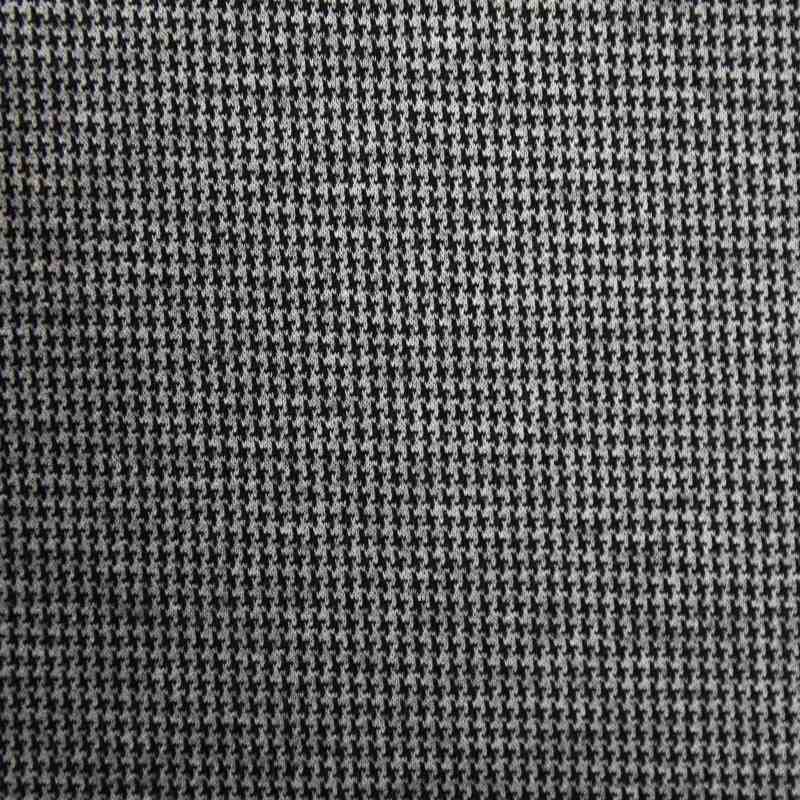
Product Overview
The houndstooth design jacquard fabric is a knitted jacquard fabric made with a classic houndstooth pattern and a soft, comfortable, elastic structure. It is produced using imported computerized jacquard machinery, allowing the fabric to achieve a stable repeat, accurate pattern formation, and a three-dimensional effect that enhances both appearance and touch. The fabric is suitable for coats, pants, suits, dresses, fashion accessories, drapes, roman blinds, rugs, and upholstery applications, depending on the selected specification and finishing process.
Unlike printed houndstooth fabrics, which rely on surface coloration to create the pattern, jacquard houndstooth fabric forms the design directly through the knitting structure. This gives the pattern more depth and durability. The visual identity is integrated into the textile itself, making it more resistant to fading in appearance caused by surface abrasion. This structural approach also provides a richer texture, making the fabric suitable for higher-value garments and decorative products.
Hangzhou Jinfeng Textile Co., Ltd. manufactures and supplies knitted jacquard fabrics, polyester rayon fabrics, NTR knitted fabrics, NR knitted fabrics, and slight intermingled draw textured yarn. With integrated production capability covering yarn processing, fabric production, post-dyeing, finishing, research and development, and sales, the company provides customers with customized textile solutions for both domestic and export markets.
The Timeless Appeal of the Houndstooth Pattern
Houndstooth is one of the most recognizable patterns in textile history. Traditionally associated with refined tailoring, coats, suits, and classic fashion, it has also become popular in contemporary streetwear, bags, soft furnishings, and interior decoration. Its visual power comes from its tessellated broken-check structure, which creates movement, contrast, and sophistication without requiring complex color schemes.
The pattern is bold enough to be noticed yet classic enough to remain wearable. This balance makes houndstooth particularly valuable for manufacturers and brands seeking products that are both fashionable and commercially stable. A fabric with an overly seasonal print may lose relevance quickly, but houndstooth has long-term appeal. It adapts to vintage styling, modern minimalism, luxury tailoring, casualwear, and decorative home products.
In apparel, houndstooth fabric can be used to create statement coats, structured jackets, slim pants, elegant dresses, skirts, and coordinated suits. In interiors, the same pattern can deliver a sophisticated accent for drapes, roman blinds, cushions, rugs, or upholstered furniture. Its scale can be adjusted from small, refined checks to oversized statement patterns, allowing designers to choose the correct visual impact for each application.
Why Jacquard Knitting Makes a Difference
Jacquard knitting is a textile manufacturing method that allows complex patterns to be formed directly into the fabric structure. In the case of houndstooth design fabric, the jacquard process enables accurate control of the classic broken-check pattern while also creating texture and depth. This is different from basic printing, where the pattern sits on the fabric surface, or simple yarn-dyed checks, where design complexity may be more limited.
Computerized jacquard machinery improves production precision by controlling needle selection and pattern formation electronically. The result is consistent repeat accuracy, clearer motif edges, and better fabric uniformity. For brands and garment manufacturers, this consistency is critical because it reduces visual defects, improves cutting efficiency, and helps maintain stable quality across bulk orders.
The knitted jacquard structure also contributes to comfort and elasticity. Compared with many woven houndstooth fabrics, knitted jacquard fabric can provide improved flexibility, softer drape, and a more comfortable wearing experience. This makes it suitable not only for formal apparel but also for modern garments that require movement and comfort, such as stretch suits, casual blazers, knit dresses, and fashion pants.
Core Product Features
The houndstooth design jacquard fabric offers several important product features that distinguish it from ordinary patterned textiles. These features are especially valuable for fashion companies, garment factories, fabric wholesalers, interior textile producers, and private label developers.
Classic Pattern with Modern Texture
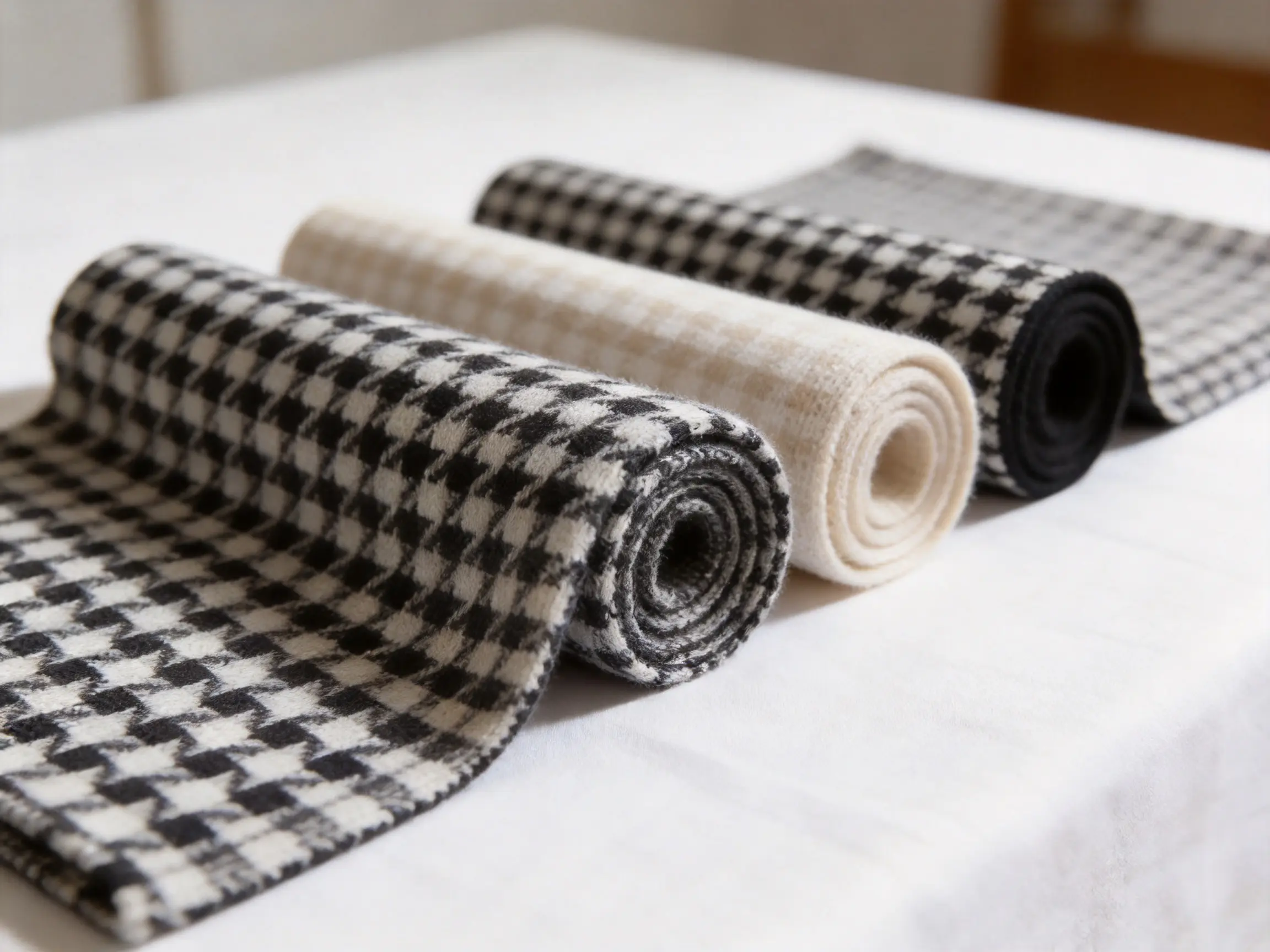
The houndstooth motif is classic, but the jacquard knitting process gives it a modern three-dimensional effect. The surface has visual depth, making the pattern more vivid than flat printed versions. This gives garments and interior products a more premium appearance.
Comfortable and Soft Hand Feel
The fabric is designed to be comfortable against the body. Its soft hand feel makes it appropriate for apparel items that require wearability, such as dresses, coats, pants, and suits. The knitted construction helps reduce stiffness while maintaining attractive structure.
Elastic Performance
The knitted fabric structure provides natural elasticity, and the fabric can be engineered for different stretch requirements. This is a significant advantage over many traditional woven houndstooth fabrics, which may feel rigid and less forgiving during movement.
Customizable Pattern and Thickness
Pattern scale and fabric thickness can be customized according to customer requirements. This customization allows the fabric to serve diverse markets, from lightweight dresses and fashion tops to heavier coats, structured jackets, and upholstery products.
Suitable for Multiple Applications
The fabric is suitable for making coats, pants, suits, dresses, and other apparel products. It can also be adapted for interior uses such as drapes, roman blinds, rugs, and upholstered furniture. This versatility improves its value for buyers who serve multiple product categories.
Advantages Over Competitor Fabrics
In the textile market, houndstooth patterns can be created through printing, weaving, yarn dyeing, or jacquard knitting. Each method has its place, but knitted jacquard houndstooth fabric offers a strong combination of visual appeal, comfort, customization, and production stability.
Compared with Printed Houndstooth Fabric
Printed houndstooth fabric is often economical and useful for fast fashion; however, it can lack depth and tactile richness. Since the pattern is applied to the surface, the design may appear flatter and may become less attractive after repeated rubbing or washing. Jacquard houndstooth fabric forms the pattern within the fabric structure, creating a more permanent and textured look. This gives it an advantage for mid-range and premium garments.
Compared with Traditional Woven Houndstooth Fabric
Woven houndstooth fabrics are classic and widely used in tailoring, but they can be less elastic and may feel more rigid. Knitted jacquard houndstooth fabric provides improved flexibility and comfort, making it better suited to modern apparel that needs both formal appearance and ease of movement. This is especially valuable for women’s suits, stretch pants, fitted dresses, casual coats, and travel-friendly garments.
Compared with Low-Precision Jacquard Fabric
Not all jacquard fabrics are equal. Low-precision machinery and weak production management can lead to uneven patterns, inconsistent texture, unstable width, and poor batch repeatability. The use of imported computerized jacquard machines supports higher pattern accuracy and more stable production. This helps customers reduce quality risks and improve final product consistency.
Compared with Generic Knitted Pattern Fabric
Generic patterned knitted fabrics may be comfortable but often lack a strong fashion identity. Houndstooth design jacquard fabric combines comfort with an established design language. It allows brands to offer products that feel wearable while still making a clear style statement.
Technical and Commercial Comparison
| Comparison Item | Houndstooth Design Jacquard Fabric | Printed Houndstooth Fabric | Traditional Woven Houndstooth Fabric |
|---|---|---|---|
| Pattern Formation | Pattern is knitted into the fabric structure | Pattern is printed on the surface | Pattern is formed by interlacing yarns |
| Visual Depth | Strong three-dimensional texture | Usually flat appearance | Classic but often less elastic |
| Comfort | Soft and elastic knitted feel | Depends on base fabric | Can be firm or rigid |
| Durability of Pattern Appearance | Good, because design is structural | May fade or wear on surface | Good, but less flexible |
| Customization | Pattern and thickness can be customized | Easy color changes, limited texture | Pattern customization may require complex setup |
| Best Uses | Coats, suits, pants, dresses, interiors | Fast fashion, promotional items | Classic tailoring and coats |
Manufacturing Strength Behind the Fabric
High-quality jacquard fabric depends not only on design but also on manufacturing capability. Hangzhou Jinfeng Textile Co., Ltd. is located in Jingjiang Street Industrial Park, Xiaoshan District, Hangzhou City, Zhejiang Province. The company covers an area of 32.6 acres and has a plant area of 18,000 square meters. This production foundation supports stable processing, quality control, and order fulfillment for customers in different markets.
The company integrates research and development, production, processing, post-dyeing, finishing, and sales. This integrated model is important because fabric quality is affected by every stage of production. Yarn selection influences strength and texture. Knitting determines structure and pattern precision. Dyeing affects color depth and shade consistency. Finishing determines hand feel, shrinkage, stability, and final appearance. By coordinating these stages internally, the company can respond more effectively to customer requirements and maintain stronger control over quality.
The company’s product range includes polyester rayon fabric, knitted jacquard fabric, NTR knitted fabric, NR knitted fabric, and slight intermingled draw textured yarn. Its ability to manufacture and process DTY polyester yarn also strengthens its supply chain. When a textile manufacturer has yarn production and fabric production capability, it can better manage raw material consistency, lead time, cost efficiency, and product development.
Imported Computerized Jacquard Machines
The houndstooth design jacquard fabric is produced using imported computerized jacquard machines. This equipment is essential for achieving clear pattern expression, stable repeats, and efficient production. Computerized control enables the machine to manage complex stitch structures and pattern variations with precision.
For customers, this translates into several practical benefits. First, fabric appearance is more consistent from roll to roll. Second, customized pattern changes can be developed more efficiently than with manual or less advanced systems. Third, the production process can support more complex designs while preserving fabric softness and elasticity. Fourth, improved accuracy reduces the likelihood of visible pattern errors that might cause waste during garment cutting.
Advanced machinery also contributes to repeatable bulk quality. A sample may look attractive, but the real challenge in textile sourcing is maintaining that quality through bulk production. Computerized jacquard equipment helps reduce variation and provides a stronger foundation for long-term supply relationships.
Yarn Expertise and DTY Polyester Capability
Draw textured yarn, often known as DTY, is an important material in modern textile production. DTY polyester yarn is valued for its elasticity, bulkiness, durability, and adaptability. It can be used in knitted and woven fabrics, providing texture, resilience, and performance. Hangzhou Jinfeng Textile Co., Ltd. manufactures and sells DTY polyester yarn, which supports its broader fabric production capability.
Yarn quality has a direct impact on jacquard fabric performance. Uneven yarn can cause streaks, weak points, inconsistent dyeing, or unstable texture. By understanding yarn production and processing, the company can better select appropriate yarns for different fabric constructions. For houndstooth jacquard fabric, yarn selection affects the clarity of the pattern, the softness of the hand feel, the elasticity of the fabric, and the durability of the final product.
Slight intermingled draw textured yarn can also contribute to fabric performance by improving yarn cohesion and processing stability. Intermingling helps yarn filaments hold together during downstream textile operations, reducing problems such as filament separation and processing defects. This supports smoother knitting and better fabric consistency.
Post-Dyeing and Finishing Advantages
Fabric is not complete after knitting. Post-dyeing and finishing are essential stages that transform grey fabric into a market-ready product. Hangzhou Jinfeng Textile Co., Ltd. has production and processing capability for post-dyeing and finishing of blended fabrics such as polyester and spandex fabrics. This is important for houndstooth jacquard fabric because the final hand feel, color appearance, shrinkage control, and surface effect depend greatly on finishing technology.
Finishing can be adjusted according to application. Apparel fabrics may require a softer touch, better drape, and comfortable stretch recovery. Suiting fabrics may require a cleaner surface and stable dimensional performance. Coat fabrics may need more body and thickness. Interior fabrics may require stronger stability and durability. Through tailored finishing, the same basic jacquard concept can be adapted for different markets.
Post-dyeing capability also supports color customization. While black-and-white houndstooth is the most classic option, modern buyers may require navy and cream, brown and beige, red and black, grey combinations, or seasonal colors. Dyeing and finishing expertise helps customers develop colors that match their brand palette and product plan.
Customization for Different Markets
One of the key benefits of this houndstooth design jacquard fabric is that pattern and thickness can be customized. Customization is increasingly important in the textile industry because brands need differentiation. A standard fabric may be useful, but a customized fabric can help a brand create a unique collection, improve product identity, and avoid direct price comparison with competitors.
Pattern Scale Customization
The houndstooth pattern can be adjusted in scale. A small-scale houndstooth is suitable for refined garments, business suits, pencil skirts, slim pants, and elegant dresses. A medium-scale pattern works well for coats, jackets, and casualwear. A large-scale houndstooth can create a bold statement for runway pieces, fashion coats, decorative cushions, or accent furniture.
Thickness Customization
Fabric thickness can be modified based on seasonal and functional requirements. Lightweight versions may be suitable for dresses and spring garments. Medium-weight versions can be used for suits, pants, and jackets. Heavier versions may be developed for coats, upholstery, or structured interior applications.
Hand Feel Customization
Through yarn selection, knitting structure, dyeing, and finishing, the fabric hand feel can be adjusted from soft and drapey to fuller and more structured. This is important because a dress fabric and a coat fabric should not feel the same. The ability to engineer the touch supports broader product development.
Color Customization
Traditional black-and-white houndstooth remains a best-selling option, but customized colorways create additional design opportunities. Neutral colors can be used for office wear and interiors. Bright colors can support youth fashion and seasonal collections. Earth tones can serve casual outerwear and home decoration markets.
Applications in Apparel
Houndstooth design jacquard fabric is especially suitable for apparel manufacturing because it delivers both design and comfort. Its knitted structure gives it a practical advantage in garments that need movement and wearability. The classic pattern also gives finished products strong shelf appeal.
Coats
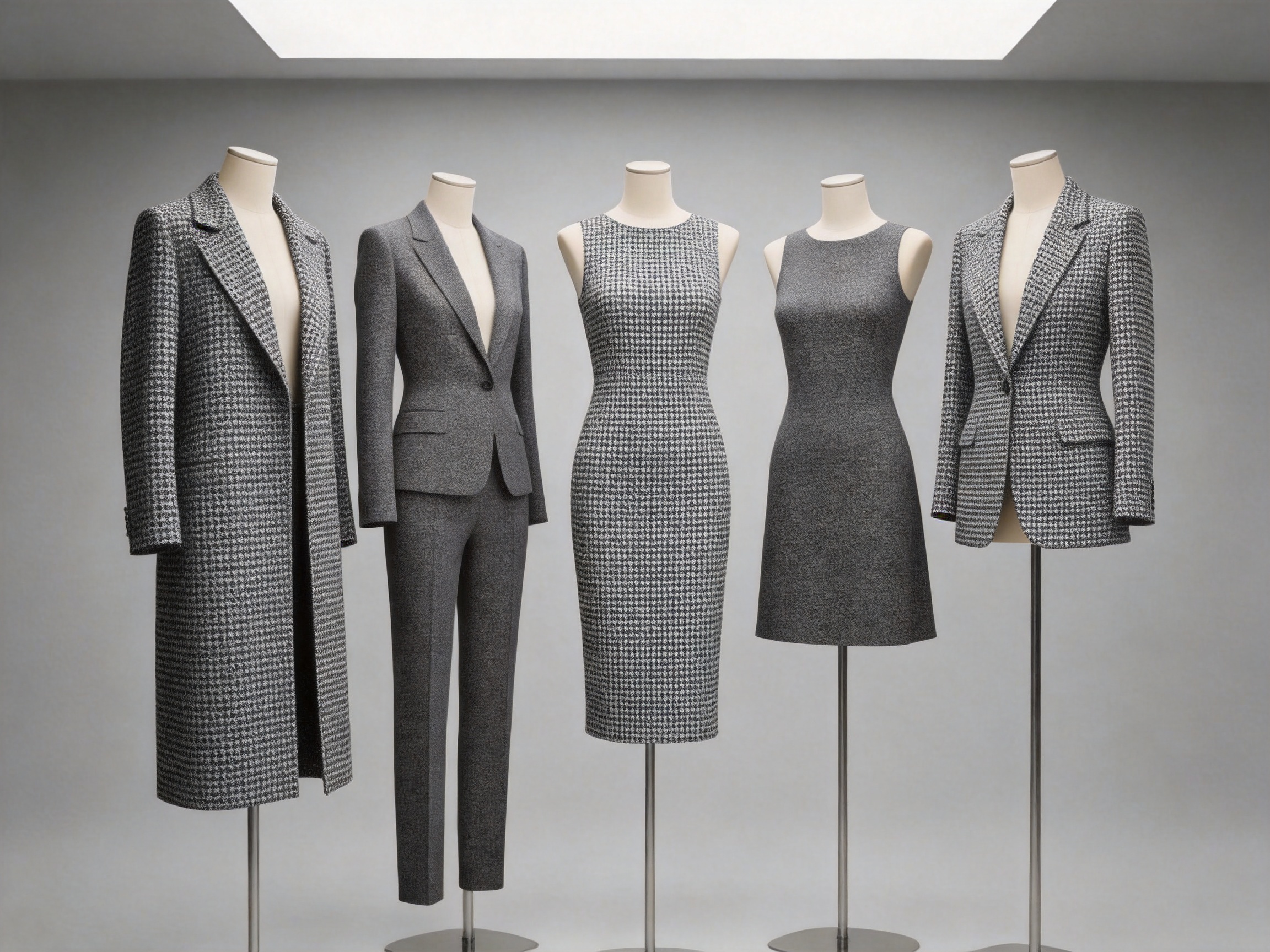
Houndstooth coats are timeless fashion items. A jacquard knitted version provides a softer and more flexible alternative to some traditional woven coats. Depending on thickness and finishing, the fabric can be used for long coats, short coats, cape-style outerwear, and fashionable overcoats. The three-dimensional pattern adds visual richness, making the garment appear more premium.
Pants
Comfort is essential for pants. The elasticity of knitted jacquard fabric allows better movement than rigid fabrics. Houndstooth pants can be styled for office wear, casual fashion, or coordinated suits. The pattern adds interest while remaining classic enough for everyday use.
Suits
Modern suits increasingly emphasize comfort. Consumers want tailored appearance without stiffness. Houndstooth jacquard fabric can be used for women’s suits, casual men’s jackets, fashion blazers, and coordinated sets. Its soft stretch makes it suitable for garments that need to look structured while allowing movement.
Dresses
For dresses, the fabric offers visual impact and comfortable wear. A small or medium houndstooth scale can create elegant dresses for workwear, social occasions, or fashion collections. The knitted structure supports drape and fit, while the pattern provides a polished look.
Skirts and Fashion Separates
Houndstooth skirts, tops, and matching sets are popular because they combine classic style with versatility. The fabric can be used for pencil skirts, A-line skirts, knit tops, vests, and two-piece sets. Designers can use pattern placement creatively to create modern silhouettes.
Applications in Interior Design
Although houndstooth is widely recognized in fashion, it is also effective in interior design. The pattern can create visual rhythm and contrast in a room. It works particularly well as an accent pattern when balanced with solid colors, leather, wood, metal, or minimalist decoration.
Drapes and Roman Blinds
For window treatments, houndstooth fabric offers a refined but distinctive look. Roman blinds made with houndstooth patterns can add structure and elegance to offices, boutique hotels, apartments, and living rooms. Drapes can be customized in scale and thickness depending on the required weight and visual impact.
Rugs and Decorative Textile Products
Houndstooth patterns can be adapted for rugs and decorative textiles. The tessellated pattern creates movement and can anchor a design scheme. Depending on construction and finishing, jacquard fabric can be used in decorative panels, cushions, throws, and related soft furnishings.
Upholstery
For upholstered furniture, houndstooth can provide a strong design statement. Chairs, benches, cushions, and accent furniture pieces can benefit from the pattern’s classic character. Fabric intended for upholstery should be specified carefully to meet the required durability, thickness, and stability.
Design Value for Fashion Brands
Fashion brands often need fabrics that can support storytelling. Houndstooth design jacquard fabric has a built-in story: heritage, tailoring, geometric rhythm, and modern reinterpretation. Because the pattern is widely recognized, consumers can understand it immediately. At the same time, customization allows brands to make it their own.
A brand may choose a refined black-and-white houndstooth for classic office wear, a bold oversized version for outerwear, or a colorful version for a youthful collection. The jacquard texture adds perceived value, helping the final garment stand out from flat printed alternatives. This can support better product positioning and stronger retail presentation.
For private label manufacturers, the fabric provides flexibility. A single houndstooth jacquard concept can be developed into multiple products within a collection, including jackets, pants, skirts, dresses, and accessories. Coordinated product groups help brands create visual consistency and improve merchandising.
Quality Control Considerations
Quality control is essential for jacquard fabrics because pattern precision, fabric stability, shade consistency, and hand feel all affect customer satisfaction. A strong manufacturing process should monitor raw yarn quality, knitting performance, dyeing consistency, finishing results, and final inspection.
During yarn preparation, yarn count, strength, evenness, and elasticity should be checked. During knitting, technicians should monitor pattern clarity, machine settings, fabric width, and defect formation. During dyeing, color matching, shade consistency, and fastness requirements should be managed. During finishing, shrinkage, softness, weight, and surface appearance should be adjusted according to the customer’s specification.
Final inspection should identify defects such as holes, stains, uneven patterning, color variation, width inconsistency, and unacceptable hand feel. For export customers, reliable inspection and documentation are especially important because fabric defects can cause costly problems after shipment.
Supply Chain Benefits for Buyers
Buyers benefit when working with a supplier that combines yarn production, fabric manufacturing, dyeing, finishing, and sales. This integrated structure can improve communication, reduce sourcing complexity, and support more efficient product development. Instead of coordinating several separate suppliers, customers can work with one manufacturing partner for multiple stages of the textile process.
For houndstooth jacquard fabric, this is particularly helpful because custom development may require adjustments to yarn, structure, color, and finish. A supplier with integrated capability can test and refine these elements more effectively. It can also provide practical advice on how to balance appearance, cost, performance, and production feasibility.
Lead time is another important factor. Textile buyers often work with seasonal calendars, sample deadlines, and bulk production schedules. A company with internal production coordination can respond more efficiently than suppliers that rely heavily on outside processing. While every order depends on specific quantity and specification, integrated manufacturing generally supports better planning and communication.

Sustainability and Responsible Production Considerations
Modern textile buyers increasingly consider sustainability, durability, and responsible production. While every fabric order may have different requirements, houndstooth jacquard fabric can support more responsible product development in several ways. First, a durable structural pattern may extend the aesthetic life of a garment compared with lower-quality printed fabrics that quickly lose appearance. Second, classic houndstooth styling can reduce the risk of rapid trend obsolescence. Third, precise manufacturing can reduce waste caused by defects and inconsistent production.
Customization can also support sustainability by helping buyers order fabric that closely matches their actual application. A fabric designed with the correct thickness, stretch, and finish is less likely to fail in production or disappoint consumers. Better product fit can reduce returns and waste in the supply chain.
In addition, integrated manufacturing can help improve process control. When yarn, fabric, dyeing, finishing, and inspection are coordinated, there is greater opportunity to optimize materials, reduce errors, and improve production efficiency. These operational improvements can contribute to a more responsible textile supply model.
How to Select the Right Houndstooth Jacquard Fabric Specification
Choosing the correct fabric specification requires careful consideration of the final product. Buyers should define the intended application before confirming weight, thickness, pattern scale, stretch, color, and finish. A coat fabric may need body, warmth, and structure. A dress fabric may require softness, drape, and moderate stretch. A suit fabric may need stability, recovery, and a polished surface. An upholstery fabric may require durability and dimensional stability.
Pattern scale should be selected according to garment size and design style. Small patterns are versatile and easier to match during cutting. Large patterns are more dramatic but require careful pattern placement and may create higher cutting waste. Color contrast also matters. High-contrast houndstooth creates a strong visual statement, while low-contrast versions are more subtle and easier to wear.
Buyers should also consider care requirements. Depending on fiber composition and finishing, recommended washing, drying, and ironing conditions may differ. For commercial garment production, care labels should be confirmed through testing. For interior applications, abrasion resistance, colorfastness to light, and dimensional stability may be especially important.
Why the Product Is Suitable for Wholesale and Custom Development
Houndstooth design jacquard fabric is suitable for wholesale because it has broad market recognition and application flexibility. It is not limited to one fashion season or one product type. Wholesalers can offer it to garment factories, fashion brands, interior textile producers, and design studios. The same pattern family can serve multiple customer segments.
For custom development, the fabric offers strong potential because pattern and thickness can be adjusted. A buyer can request a classic version for long-term stock, a special color for a seasonal collection, or a heavier version for outerwear. This flexibility helps textile distributors and brands differentiate themselves in competitive markets.
The company’s manufacturing base and integrated production system also support wholesale supply. With a plant area of 18,000 square meters and experience in blended fabrics and DTY polyester yarn, Hangzhou Jinfeng Textile Co., Ltd. can support different production needs while maintaining attention to quality and customer service.
Practical Recommendations for Garment Manufacturers
Garment manufacturers using houndstooth jacquard fabric should pay attention to pattern alignment during cutting and sewing. Although knitted fabrics may be more forgiving than some woven fabrics, visible geometric patterns require careful handling. Matching the pattern at center fronts, side seams, pockets, and lapels can improve the final garment’s perceived quality.
Before bulk production, manufacturers should test shrinkage, seam performance, stretch recovery, pressing behavior, and garment washing performance. If the fabric is used for fitted garments, stretch direction and recovery should be considered during pattern making. If used for coats or jackets, interlining compatibility and pressing temperature should be tested.
For dresses and pants, drape and opacity are important. For suits, dimensional stability and seam appearance are essential. For interior applications, abrasion and long-term use requirements should be evaluated. Close communication between fabric supplier, garment factory, and brand can help ensure the best final result.
Company Strengths Supporting Global Buyers
Hangzhou Jinfeng Textile Co., Ltd. is a self-operated export company integrating research and development, production, and sales. This structure is valuable for international buyers because export business requires not only production capability but also communication, documentation, quality awareness, and delivery coordination.
The company follows a business philosophy centered on cooperation and mutual benefit. This approach matters in textile sourcing because fabric development often involves multiple rounds of discussion, sampling, testing, and adjustment. A supplier that values cooperation can better support long-term product improvement and stable supply.
The company’s location in Hangzhou, Zhejiang Province, places it within one of China’s important textile and manufacturing regions. This regional advantage can support access to raw materials, skilled labor, processing resources, and logistics networks. Combined with its own plant area and product expertise, the company is positioned to serve buyers looking for DTY polyester yarn, blended fabric, and knitted jacquard fabric solutions.
Q&A Section
What is houndstooth design jacquard fabric?
Houndstooth design jacquard fabric is a knitted patterned fabric in which the classic houndstooth motif is created through jacquard knitting rather than simple surface printing. This gives the fabric a textured, three-dimensional appearance and a more integrated pattern structure.
What are the main advantages of this fabric?
The main advantages include a classic and recognizable pattern, soft hand feel, comfortable elasticity, three-dimensional jacquard texture, customizable pattern and thickness, and suitability for apparel and interior applications.
How is this fabric different from printed houndstooth fabric?
Printed houndstooth fabric has the pattern applied on the surface, while jacquard fabric forms the pattern within the textile structure. Jacquard houndstooth usually offers better texture, richer visual depth, and a more premium appearance.
What products can be made from this fabric?
The fabric can be used for coats, pants, suits, dresses, skirts, jackets, fashion separates, drapes, roman blinds, rugs, cushions, and upholstery products, depending on the selected specification and finishing.
Can the fabric thickness be customized?
Yes. The fabric thickness can be customized to meet different application needs, such as lightweight dress fabric, medium-weight suit fabric, or heavier coat and interior fabric.
Can the houndstooth pattern size be changed?
Yes. The pattern scale can be adjusted. Small houndstooth patterns are suitable for refined garments, while larger patterns are suitable for bold fashion pieces and decorative interior products.
Why is computerized jacquard machinery important?
Computerized jacquard machinery improves pattern precision, repeat consistency, and production stability. It helps create clear designs and supports efficient customization for different customer requirements.
Is the fabric suitable for stretch garments?
Yes. Because it is a knitted jacquard fabric, it has elastic characteristics that make it suitable for garments requiring comfort and movement, such as pants, suits, and fitted dresses.
Why choose a supplier with DTY polyester yarn capability?
A supplier with DTY polyester yarn capability can better control yarn quality, fabric performance, production stability, and development efficiency. Yarn expertise supports better fabric consistency and customization.
What should buyers confirm before placing an order?
Buyers should confirm application, fabric weight, thickness, pattern scale, color, stretch, finishing requirements, testing standards, packaging needs, and delivery schedule before bulk production.
Conclusion
Houndstooth design jacquard fabric combines timeless pattern appeal with modern textile engineering. Its classic broken-check design, three-dimensional jacquard texture, soft hand feel, and elastic knitted structure make it an excellent choice for apparel and interior applications. Compared with printed alternatives, it provides richer texture and stronger structural pattern expression. Compared with many traditional woven fabrics, it offers improved comfort and flexibility.
The product’s value is further strengthened by customization options for pattern and thickness. This allows designers, brands, wholesalers, and manufacturers to adapt the fabric to coats, pants, suits, dresses, drapes, roman blinds, rugs, upholstery, and other products. Its versatility makes it commercially practical, while its iconic pattern gives finished products lasting style.
Behind the fabric is the manufacturing capability of Hangzhou Jinfeng Textile Co., Ltd., including imported computerized jacquard machines, DTY polyester yarn production, blended fabric processing, post-dyeing, finishing, research and development, and export sales. With an integrated production system and a commitment to cooperation and mutual benefit, the company is positioned to support customers seeking reliable, customizable, and attractive knitted jacquard fabric solutions.
References
Textile Institute. Textile Terms and Definitions. Manchester: The Textile Institute.
Spencer, David J. Knitting Technology: A Comprehensive Handbook and Practical Guide. Woodhead Publishing.
Grosicki, Z. Watson’s Textile Design and Colour: Elementary Weaves and Figured Fabrics. Woodhead Publishing.
Sinclair, Rose. Textiles and Fashion: Materials, Design and Technology. Woodhead Publishing.
Kadolph, Sara J. Textiles. Pearson Education.
Braddock Clarke, Sarah E., and Marie O’Mahony. Techno Textiles: Revolutionary Fabrics for Fashion and Design. Thames and Hudson.