
Grey Cotton Polyester Rayon Fabric: Performance, Comfort, and Versatile Textile Manufacturing
Grey Cotton Polyester Rayon Fabric is a versatile textile solution designed for manufacturers, apparel brands, uniform suppliers, and textile wholesalers seeking a balanced combination of comfort, durability, appearance, and printing performance. By combining cotton, polyester, and rayon characteristics, this fabric can provide a practical foundation for suiting, workwear, fashion garments, uniforms, promotional clothing, and other applications that require both a refined appearance and dependable daily performance.
The term “grey fabric” generally refers to fabric in its unfinished or semi-finished state before dyeing, printing, and final finishing. This stage gives buyers flexibility because the material can be customized according to the intended end use. It may be dyed in solid colors, printed with patterns, finished for a smoother hand feel, or processed to meet specific requirements for drape, surface appearance, and dimensional stability.
A well-developed cotton polyester rayon construction offers more than the benefits of a single fiber. Cotton contributes natural softness and moisture comfort. Polyester supports strength, shape retention, resistance to shrinking, and easier care. Rayon adds smoothness, drape, softness, and a pleasant surface suitable for fashion-oriented applications. When these fibers are carefully combined and processed, the resulting material can offer a more balanced performance profile than many single-fiber alternatives.
For professional buyers, the value of this fabric is not limited to its fiber content. Consistent yarn selection, accurate knitting or weaving control, controlled dyeing, effective finishing, inspection procedures, and responsive order management all influence the final result. A reliable textile manufacturer must therefore provide both a suitable product and a dependable manufacturing system capable of supporting repeat orders.
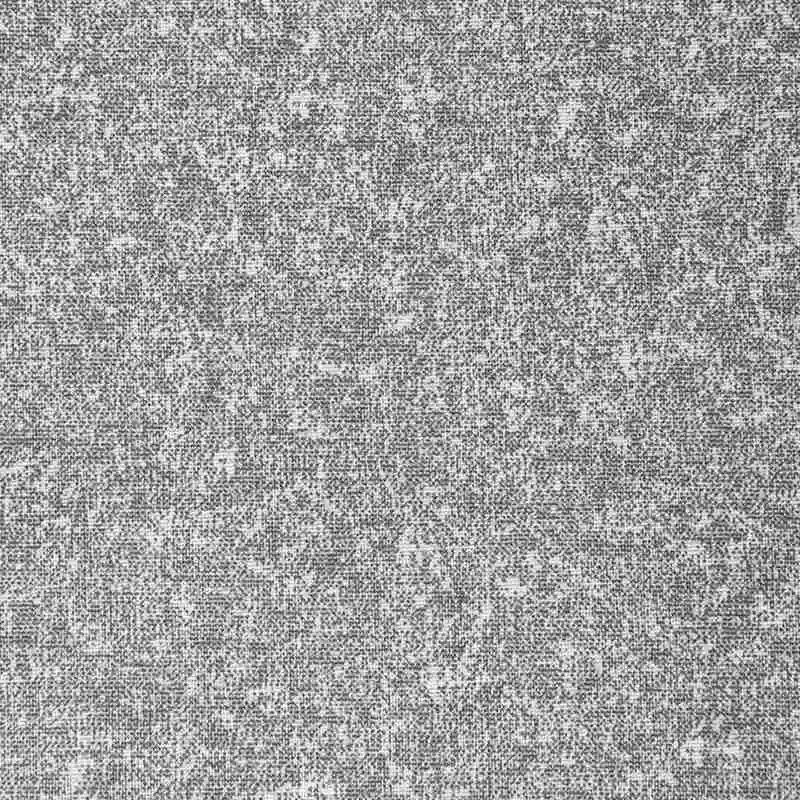
Grey Cotton Polyester Rayon Fabric
Understanding Grey Cotton Polyester Rayon Fabric
Grey Cotton Polyester Rayon Fabric is a blended textile made from cotton, polyester, and rayon yarns or fiber components. Depending on the construction and production method, the material can be developed for a variety of weights, textures, stretch levels, and surface effects. The grey stage is particularly useful for customers who require later dyeing or printing because it preserves the fabric’s flexibility for downstream customization.
The word “grey” does not necessarily indicate that the final fabric must remain grey in color. Instead, it commonly describes fabric that has not yet undergone complete coloration and finishing. Once the required inspection and preparation stages are completed, the fabric may be dyed into solid shades or printed with stripes, checks, florals, geometric designs, corporate patterns, and other visual effects.
Polyester rayon fabric is widely associated with TR suiting, where “TR” commonly refers to a polyester and rayon blend. When cotton is also incorporated, the fabric may offer an additional natural-fiber dimension, including a softer touch and improved comfort in direct contact with the skin. The precise behavior of the fabric depends on fiber ratios, yarn specifications, fabric construction, finishing methods, and the requirements of the final garment.
For buyers, it is important to distinguish between a general fiber description and a complete technical specification. Fiber content alone does not determine quality. Two fabrics with similar fiber percentages may perform differently because of differences in yarn quality, fabric density, knitting or weaving accuracy, dyeing conditions, finishing chemistry, and inspection standards. Product evaluation should therefore consider the complete manufacturing process rather than relying only on a label.
Fiber Contributions and Product Balance
Cotton for Natural Comfort
Cotton is valued for its familiar natural hand feel, breathability, and ability to provide comfort in everyday clothing. It can make a blended fabric feel less synthetic and more pleasant for shirts, uniforms, casual jackets, dresses, and other garments that are worn for extended periods.
Cotton can also support moisture comfort by helping absorb and distribute perspiration. However, cotton may shrink or wrinkle more readily than polyester, particularly when it is used alone. In a blended construction, some of these limitations can be balanced by the polyester component and by appropriate finishing processes.
The amount and quality of cotton influence the fabric’s softness, appearance, moisture behavior, and care requirements. A manufacturer must manage cotton carefully during yarn preparation and fabric formation because variations in fiber length, cleanliness, and blending consistency may affect the final surface.
Polyester for Strength and Stability
Polyester contributes tensile strength, abrasion resistance, shape retention, and improved resistance to dimensional change. It is also less likely than many natural fibers to shrink significantly during ordinary care. These properties are useful in uniforms, workwear, suiting, school garments, travel clothing, and other products exposed to repeated wear and washing.
Polyester can help the fabric maintain its structure during production, transportation, and use. It may also improve resistance to creasing and support easier garment maintenance. For commercial customers, these characteristics can reduce concerns about excessive deformation and help finished garments retain a neat appearance.
Polyester also provides a stable base for many printing applications. When the fabric is properly prepared, its smooth and consistent surface can support clear visual effects. The final print result still depends on the selected dye or pigment system, printing method, temperature control, curing, and post-treatment.
Rayon for Softness and Drape
Rayon is a semi-synthetic cellulosic fiber known for its soft touch, fluid drape, and comfortable appearance. It can give a polyester-containing fabric a less rigid and more luxurious feel. This is particularly valuable in fashion garments, women’s apparel, blouses, dresses, suiting, and products where movement and surface softness are important.
Rayon can also enhance the visual depth of a fabric because of the way it reflects light. It may help create a more elegant surface than a basic polyester construction. At the same time, rayon requires careful processing because excessive moisture, tension, or heat may influence dimensional stability and surface quality.
When cotton, polyester, and rayon are combined, the objective is to create a practical balance. Cotton supports comfort, polyester supports durability and stability, and rayon supports softness and drape. The specific blend should be selected according to the intended use rather than based on the assumption that one ratio is ideal for every application.
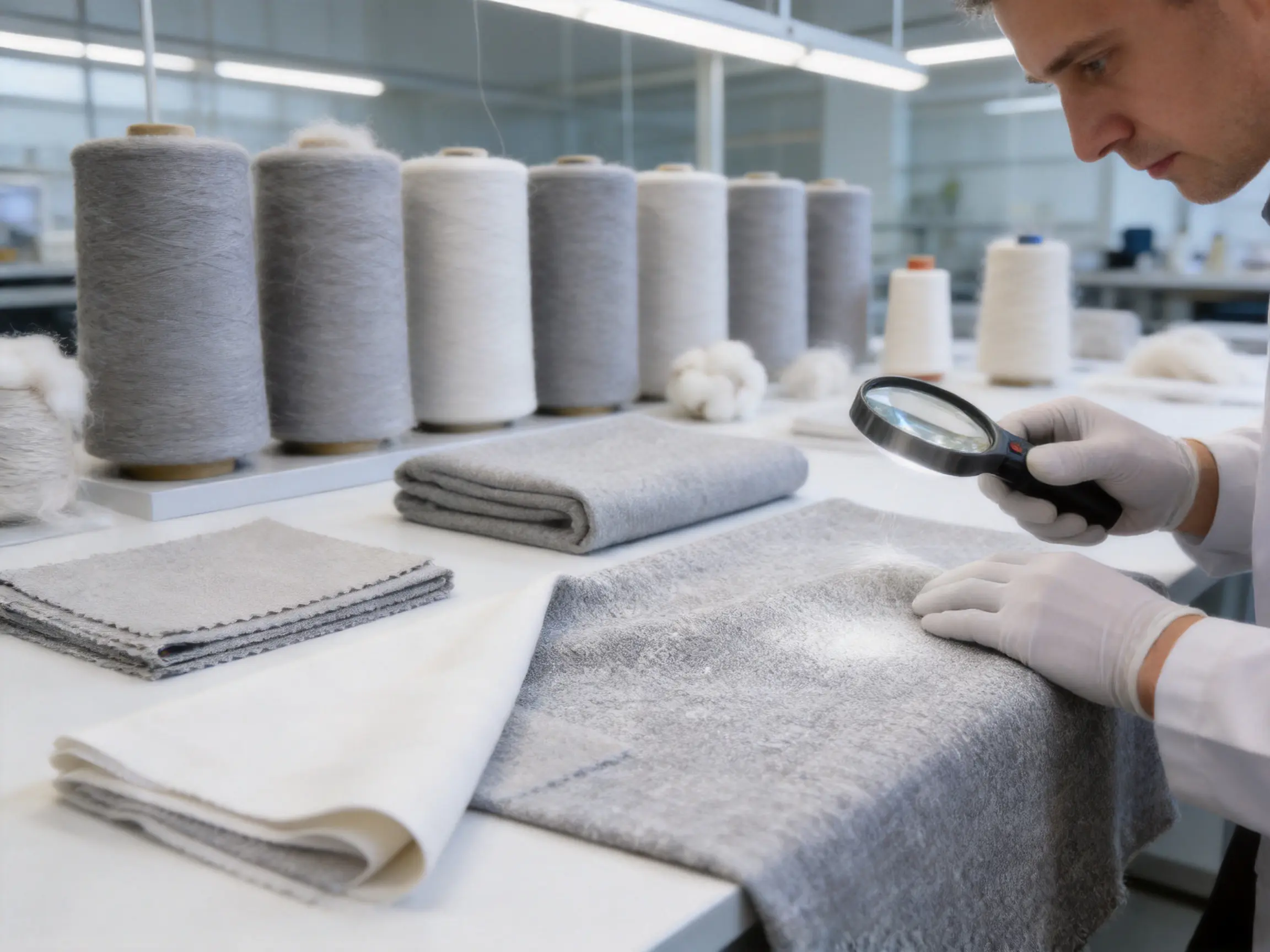
Key Advantages Over Single-Fiber Alternatives
One of the main advantages of a blended fabric is its ability to reduce the weaknesses associated with individual fibers. A pure cotton fabric may provide excellent comfort but can be more vulnerable to shrinkage, wrinkling, and extended drying time. A pure polyester fabric may be strong and easy to care for but can feel less natural. A rayon-rich fabric may offer attractive drape and softness but may require more careful handling.
A cotton polyester rayon construction can offer a more balanced combination of appearance and performance. It can be comfortable enough for regular wear, stable enough for commercial garment production, and attractive enough for fashion applications. This balance is a key reason that blended fabrics remain important in the global apparel and textile industry.
Improved Dimensional Control
Polyester can help offset the shrinkage tendency of cotton and the dimensional sensitivity that may be associated with rayon. Although no fabric is completely immune to shrinkage or distortion, an appropriately engineered blend can provide improved dimensional control compared with some natural-fiber-only constructions.
Dimensional control is especially important for garment factories. Fabric that changes significantly after washing, dyeing, or finishing can create cutting problems, inconsistent garment measurements, and higher production waste. Consistent pre-treatment and finishing are therefore essential to realizing the potential of the blend.
Balanced Comfort and Durability
Comfort and durability are sometimes treated as competing objectives. A very soft fabric may not always offer the strength required for demanding use, while a highly durable fabric may feel less comfortable. The blended structure helps address this challenge by combining different fiber characteristics within one textile platform.
The cotton and rayon components can support a soft, breathable, and flexible hand feel, while polyester provides structural support and resistance to wear. The result can be suitable for clothing that must remain presentable through repeated use without sacrificing all-day comfort.
Suitable Surface for Printing
A smooth and stable blended surface can provide an effective foundation for printed designs. Polyester supports dimensional stability, while rayon and cotton can contribute to a pleasant visual and tactile surface. With suitable preparation and printing conditions, the fabric may be used for both understated patterns and high-impact graphics.
Printing performance depends on more than the fabric itself. The printer must select compatible inks, dyes, temperatures, pressures, and curing conditions. Still, a properly manufactured grey fabric gives the finishing facility a more reliable starting point and can help reduce unevenness, shade variation, and print distortion.
Broad Application Range
Grey Cotton Polyester Rayon Fabric can serve several market segments. It may be developed for business suiting, uniforms, office clothing, dresses, skirts, shirts, jackets, hospitality garments, schoolwear, promotional apparel, and coordinated fashion collections.
This broad application range is commercially valuable. Buyers may be able to use related fabric constructions across different product lines, simplifying sourcing and reducing the need to work with too many unrelated suppliers. A manufacturer with multiple processing capabilities can also help customers adapt the fabric to different seasonal and market requirements.
Manufacturing Process and Quality Control
The quality of blended fabric begins before the fabric reaches the knitting or weaving machine. Fiber and yarn selection, blending accuracy, moisture management, machine settings, and production planning all influence the finished material. A professional process should be organized to limit variation from the first stage through final packing.
Raw Material and Yarn Preparation
Cotton, polyester, and rayon components must be selected according to the target construction and performance requirements. The manufacturer evaluates yarn count, strength, evenness, twist, color condition, and compatibility with the planned production method.
Where blended yarns are used, accurate mixing is important. Uneven blending can lead to irregular appearance, inconsistent hand feel, weak areas, or differences in dye uptake. Yarn preparation should therefore include careful handling, appropriate storage, and systematic inspection.
Polyester yarn may also be produced in drawn textured yarn form. Drawn Textured Yarn, commonly known as DTY, is a textured polyester yarn that can provide bulk, flexibility, and a more fabric-friendly surface compared with a completely flat filament yarn. The use of suitable textured yarn can support specific requirements for softness, elasticity, fullness, and appearance.
Fabric Formation
After yarn preparation, the fabric is formed through the selected knitting or weaving process. Knitted structures can offer flexibility, stretch, and comfort, while woven structures may provide a more tailored appearance and greater dimensional firmness. The appropriate construction depends on the product’s intended use.
During fabric formation, machine calibration is essential. Operators must monitor yarn tension, stitch or weave density, fabric width, surface uniformity, and production speed. Excessive tension may cause distortion or unwanted tightness, while insufficient control may create loops, bars, streaks, holes, or uneven density.
For knitted jacquard or other patterned constructions, additional attention is required to manage design definition and repeat accuracy. For plain or printing-oriented fabrics, a clean and even surface is particularly important because irregularities may become more visible after coloration or printing.
Grey Fabric Inspection
Inspection at the grey stage allows defects to be identified before further processing adds cost. Typical checks may include width, length, weight, fabric density, surface appearance, holes, oil marks, slubs, missing yarns, needle lines, streaks, and other irregularities.
Early inspection supports better process decisions. A roll with a structural defect can be isolated, repaired when possible, or assigned to a suitable lower-risk application. This approach helps protect the consistency of dyed and printed lots and reduces the likelihood that defects will reach the garment factory.
Pre-Treatment and Preparation
Before dyeing or printing, the fabric may require preparation to remove processing residues, improve absorbency, stabilize the structure, and create a consistent surface. Pre-treatment conditions must be selected according to the fiber blend because cotton, polyester, and rayon respond differently to water, chemicals, temperature, and tension.
Over-processing can weaken fibers, change the hand feel, or create unnecessary dimensional movement. Under-processing may result in poor wetting, uneven coloration, or inadequate print adhesion. Controlled preparation is therefore one of the foundations of repeatable performance.
Dyeing and Printing
Once prepared, the fabric can undergo dyeing, printing, or other coloration procedures. Solid dyeing may be selected for uniforms, suiting, shirts, and coordinated collections. Printing may be used when the customer requires visual patterns, branded designs, seasonal motifs, or decorative effects.
Because blended fibers have different chemical properties, coloration may require carefully coordinated dye systems and process conditions. The objective is to achieve an attractive and even appearance while maintaining the desired softness, strength, and dimensional behavior.
Printing quality is influenced by fabric preparation, print paste or ink compatibility, design resolution, machine settings, drying, curing, and post-washing. A reliable manufacturer or finishing partner should maintain control over these variables and evaluate the result through color, surface, fastness, and appearance checks.
Finishing and Stabilization
Finishing gives the fabric its final functional and tactile characteristics. Possible objectives include improving softness, adjusting fullness, controlling width, enhancing smoothness, supporting dimensional stability, and creating the desired drape.
Finishing may involve mechanical and chemical treatments. The exact process should be matched to the fabric composition and intended application. A fabric designed for tailored garments may require a different finish from one intended for soft fashion apparel.
Heat setting and controlled drying may assist with dimensional stabilization, especially where polyester is present. However, temperature and tension must be managed carefully to avoid damaging rayon or creating an unnecessarily harsh hand feel. The finishing process should enhance the fabric rather than conceal inconsistent manufacturing.
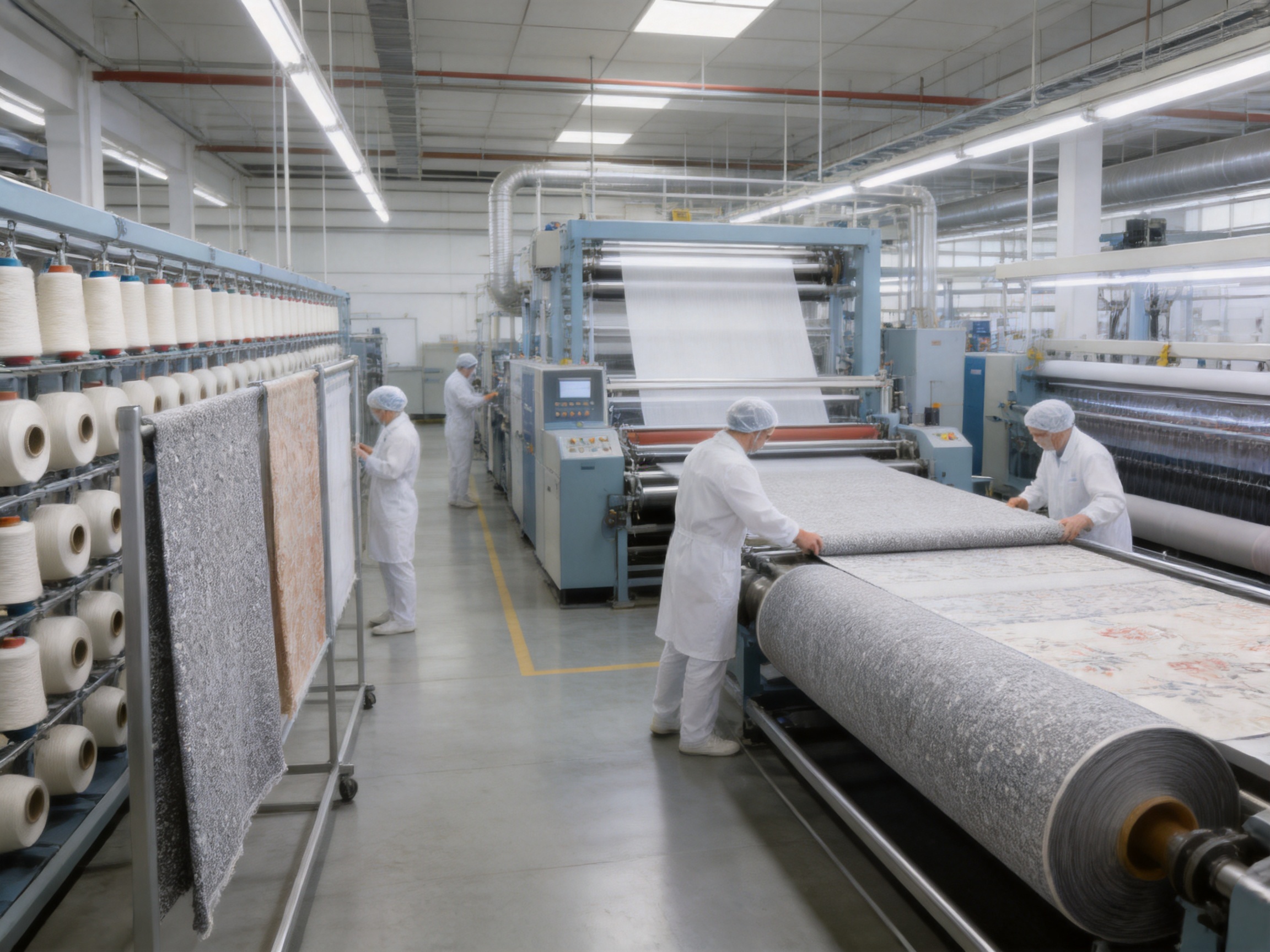
Manufacturing Strengths and Supply Capabilities
Hangzhou Jinfeng Textile Co., Ltd. operates in Jingjiang Street Industrial Park, Xiaoshan District, Hangzhou City, Zhejiang Province. The company’s facilities cover approximately 32.6 acres, with a plant area of about 18,000 square meters. Its activities include the production and processing of blended fabrics, post-dyeing, finishing, and the production, processing, and sales of DTY polyester yarn.
This combination of textile and yarn capabilities can support better coordination between raw material selection and finished fabric development. Instead of treating yarn supply, fabric production, dyeing, and finishing as completely separate activities, an integrated operation can connect these stages more effectively.
The company also operates as an export-oriented business integrating research and development, production, and sales. For international customers, this structure can simplify communication and provide a single commercial contact for product development, manufacturing coordination, and order follow-up.
Integrated Product Development
Integrated research and development can help a manufacturer adjust fabric constructions according to market needs. Customers may require changes in weight, texture, stretch, drape, surface appearance, printing suitability, or finishing. A supplier with experience in both yarn and fabric can evaluate these requirements at an earlier stage.
Product development should begin with the intended application. For example, a fabric for business suiting may need a controlled surface, stable width, good recovery, and a professional appearance. A fabric for casual fashion may prioritize softness, fluid movement, color depth, and a more relaxed hand feel. The same general fiber family can be engineered differently for each market.
Post-Dyeing and Finishing Experience
Post-dyeing and finishing are important because they determine how the grey fabric becomes a commercially usable textile. The company’s stated capabilities in these areas support the development of fabrics with customized color, hand feel, and appearance.
For buyers, finishing experience is also important when repeat orders are required. A fabric may look satisfactory in a single trial lot but show unwanted variation across later production if process records and finishing parameters are not controlled. An organized supplier should retain relevant production information and use it to improve repeatability.
DTY Polyester Yarn Capability
DTY polyester yarn is relevant to many knitted and blended fabric applications because textured yarn can provide bulk, resilience, flexibility, and a softer visual effect. In-house or closely coordinated DTY production can help support product development and supply planning.
Textured yarn selection affects fabric weight, surface character, stretch response, and comfort. It may also influence how the fabric behaves during knitting, dyeing, drying, and finishing. A manufacturer familiar with DTY production can better evaluate how yarn parameters influence the final textile.
Export-Oriented Service
International textile sourcing requires more than production equipment. Buyers also need clear communication, organized documentation, practical lead-time coordination, packaging suitable for shipment, and attention to order details. An export-oriented supplier can be better positioned to manage these requirements.
Hangzhou Jinfeng Textile Co., Ltd. emphasizes cooperation and mutual benefit as part of its business philosophy. In practical terms, a cooperative textile relationship involves accurate specification confirmation, transparent discussion of production conditions, timely handling of technical questions, and an effort to solve problems before they affect the shipment.
Application Areas
Business Suiting and Office Apparel
Polyester rayon-based fabrics are commonly selected for business suiting because they can offer a smooth appearance, useful durability, and relatively easy care. Adding cotton can contribute a more natural hand feel and improved comfort, making the construction suitable for blazers, trousers, skirts, vests, and coordinated office garments.
For suiting applications, buyers should evaluate fabric weight, drape, resistance to pilling, crease recovery, colorfastness, surface smoothness, and compatibility with tailoring equipment. The finished garment must retain a professional appearance while remaining comfortable during long working hours.
Uniforms and Workwear
Uniform fabrics need to withstand repeated use, routine washing, friction, and regular handling. Polyester helps provide strength and shape retention, while cotton and rayon can improve comfort and appearance. Depending on the construction, the fabric may be suitable for hospitality uniforms, office uniforms, schoolwear, transportation clothing, and service-industry garments.
For workwear, buyers should define the required performance level before ordering. A light office uniform and a heavy industrial garment may require very different fabric constructions. The blend provides flexibility, but the specification must still match the actual working environment.
Fashion Apparel
The softness and drape associated with rayon can make the fabric attractive for fashion products. It may be used for dresses, blouses, skirts, jackets, wide-leg trousers, casual tailoring, and seasonal collections. Printing capability expands the design possibilities further.
Fashion brands may value the material because it allows them to combine a polished appearance with comfortable wear. The final finish can be adjusted toward a smooth, soft, crisp, fluid, or lightly textured result, depending on the product concept.
Printed Textile Products
A prepared blended fabric can be used as a base for printed collections. Designs may range from small repeating patterns to large engineered placements. The grey stage is useful for customers who want to coordinate fabric development with a specific printing program.
Before full production, a sample should be tested for print clarity, color depth, washing behavior, rubbing fastness, and visual consistency. Print success is determined by the interaction between the fabric, dye or ink system, equipment, and post-treatment process.
Purchasing and Technical Evaluation Guide
Professional buyers should provide a clear technical brief before requesting quotations or samples. Important details include fiber content, fabric construction, target weight, usable width, color requirements, stretch expectations, finishing preferences, intended end use, printing method, order quantity, packaging, and delivery schedule.
If the fabric will be dyed or printed after purchase, the buyer should communicate the planned process. A construction that performs well in solid dyeing may require different preparation for printing. Similarly, a fabric intended for a structured jacket may need a different finish from one intended for a soft dress.
| Evaluation Area | What to Review | Why It Matters |
|---|---|---|
| Fiber composition | Cotton, polyester, and rayon percentages; tolerance requirements | Influences comfort, strength, care, dyeing, and legal labeling |
| Fabric construction | Knitted or woven structure, density, stitch or weave uniformity | Controls stretch, drape, appearance, and dimensional behavior |
| Weight and width | Target GSM, finished width, usable width, roll length | Affects garment yield, cost, cutting, and product suitability |
| Surface quality | Smoothness, hairiness, slubs, streaks, holes, needle lines | Determines visual quality and printing performance |
| Dimensional stability | Shrinkage, skew, spirality, width change after washing | Helps maintain garment measurements and production accuracy |
| Color and printing | Shade consistency, print definition, colorfastness, rubbing performance | Protects appearance during use and care |
| Hand feel | Softness, fullness, smoothness, stiffness, drape | Influences comfort and customer perception |
| Order support | Sampling, production communication, packaging, lead-time coordination | Reduces sourcing risk and supports repeat purchasing |
Sampling and Approval
Samples should be evaluated under conditions similar to the final application. A buyer should examine the material before and after washing, pressing, dyeing, printing, or garment construction when possible. Important observations include hand feel, width, weight, surface appearance, stretch recovery, shrinkage, and color behavior.
For printed fabric, laboratory or small-batch trials are particularly valuable. They can identify problems such as uneven absorption, blurred edges, insufficient color depth, poor rubbing resistance, or unexpected changes in hand feel after curing.
A signed sample or approved standard can provide a useful reference for bulk production. It should be accompanied by a written specification so that appearance and technical expectations are not based solely on memory or informal descriptions.
Bulk Production Control
During bulk production, the supplier should maintain consistent yarn sources, machine settings, finishing conditions, and inspection procedures. Lot-to-lot differences can occur in any textile supply chain, but effective process management can reduce their scale and frequency.
Buyers may request inspection records, test results, roll reports, or other quality documentation according to the order requirements. The exact documents depend on the customer’s market, internal standards, and destination regulations.
Care, Handling, and End-Use Considerations
The correct care method depends on the exact fiber ratio, construction, dyes, and finishing. Buyers should follow the care instructions established through testing rather than assuming that every cotton polyester rayon fabric behaves identically.
Polyester can support easier care and reduced shrinkage, but cotton and rayon may still influence washing and drying behavior. Excessive heat, aggressive agitation, or unsuitable detergents may affect color, softness, or dimensional stability. Garment manufacturers should test the finished product and provide care instructions appropriate to the final textile.
During storage, fabric should be protected from moisture, contamination, direct sunlight, and excessive compression. Rolls should be packed securely but not subjected to conditions that could permanently distort the material. Proper handling is especially important before dyeing or printing, when surface cleanliness and dimensional condition can influence processing results.
Sustainability and Responsible Textile Planning
Blending fibers can extend product functionality and service life, which may support more durable clothing and reduce premature replacement. However, a blended textile also requires thoughtful end-of-life planning because mixed-fiber materials can be more difficult to recycle than single-fiber products.
Responsible textile development should consider the entire product life cycle. Buyers can begin by selecting an appropriate fabric weight, avoiding unnecessary overproduction, planning realistic order quantities, and testing durability so that the finished garment performs as expected.
Efficient production planning can also reduce waste. Accurate specifications, early sample approval, controlled cutting, defect inspection, and coordinated dyeing or printing help limit rejected material. The most sustainable fabric is not necessarily the lightest or simplest one; it is the fabric that performs well for its intended use while being produced and managed responsibly.
Customers with specific environmental requirements should discuss them directly with the manufacturer and request documentation appropriate to the project. Claims relating to recycled content, restricted substances, factory standards, or certifications should be confirmed through relevant records rather than assumed from the general fiber description.
Why Choose a Specialized Blended Fabric Manufacturer?
A specialized manufacturer can provide more useful technical guidance than a trading source that only handles finished rolls. Textile production involves interconnected decisions: yarn selection affects fabric formation, fabric formation affects dyeing, dyeing affects finishing, and finishing affects garment performance.
When these relationships are understood, the supplier can help customers select a construction that is more likely to meet the intended requirements. This reduces the risk of purchasing a fabric that appears attractive in a small sample but performs poorly during bulk processing or garment manufacturing.
Hangzhou Jinfeng Textile Co., Ltd. combines blended fabric production and processing with post-dyeing, finishing, and DTY polyester yarn activities. Its facility scale, export-oriented structure, and stated focus on research and development provide a foundation for serving customers that require both standard products and customized textile solutions.
The company’s cooperation-oriented approach is also relevant to long-term sourcing. Fabric development often involves adjustments and technical discussion. A supplier that communicates clearly and works toward mutual benefit can help customers respond more efficiently to changing fashion trends, new garment programs, and different market specifications.

Q&A
What is Grey Cotton Polyester Rayon Fabric?
It is a blended textile made with cotton, polyester, and rayon components, supplied in an unfinished or semi-finished grey state before final dyeing, printing, and finishing. The fabric can later be customized for color, pattern, hand feel, and end use.
What does the grey stage mean?
The grey stage generally means that the fabric has not yet received its final coloration and finishing treatment. It does not necessarily mean that the finished product must remain grey. The material may be dyed or printed after preparation.
What are the main benefits of combining cotton, polyester, and rayon?
Cotton can contribute natural comfort and softness, polyester can provide strength and dimensional stability, and rayon can add smoothness and fluid drape. The blend is intended to provide a more balanced performance profile than many single-fiber fabrics.
Is this fabric suitable for business suits?
Polyester rayon constructions are widely used for suiting, and a cotton-containing version may also be suitable when the required weight, surface, drape, and stability are achieved. A sample and application-specific testing should be completed before bulk production.
Can it be printed?
Yes, a properly prepared polyester rayon or cotton polyester rayon fabric can provide a suitable surface for printing. Print results depend on the fiber ratio, preparation, printing technology, color system, curing, and post-treatment.
Will the fabric shrink?
Shrinkage depends on the blend ratio, fabric construction, finishing, and care method. Polyester can help reduce dimensional change, but cotton and rayon may still contribute to shrinkage or movement. Testing after the intended washing or finishing process is recommended.
What is DTY polyester yarn?
DTY means Drawn Textured Yarn. It is a textured polyester filament yarn designed to provide characteristics such as bulk, flexibility, resilience, and a softer textile effect. Its suitability depends on the fabric construction and final application.
What should buyers specify when requesting a quotation?
Buyers should provide the desired fiber content, fabric structure, weight, width, stretch requirement, color or printing plan, finishing preference, end use, quantity, packaging requirements, and delivery destination. Clear specifications improve quotation accuracy and sampling efficiency.
How should a fabric sample be evaluated?
Inspect the sample for weight, width, surface uniformity, hand feel, drape, stretch recovery, shrinkage, color consistency, and defects. If the fabric will be dyed or printed, conduct a trial under conditions similar to bulk production.
What manufacturing capabilities support this product?
The supplier’s stated capabilities include blended fabric production and processing, post-dyeing, finishing, DTY polyester yarn production, research and development, and export sales. These capabilities can support coordinated product development and supply management.
Is the fabric suitable for uniforms?
It may be suitable for office, hospitality, school, service, and other uniforms when the selected construction matches the wear, washing, comfort, and appearance requirements. Heavy-duty applications should receive additional performance testing.
Can the fabric be customized?
Customization may be possible in areas such as blend composition, fabric construction, weight, width, color, printing, texture, and finishing. The available options depend on production conditions, order quantity, and technical feasibility.
Conclusion
Grey Cotton Polyester Rayon Fabric provides a flexible platform for textile buyers who want a combination of comfort, strength, stability, softness, and design adaptability. Cotton adds a natural touch, polyester contributes durability and shape retention, and rayon improves drape and surface appeal. Together, these fibers can support a broad range of apparel and textile applications.
The fabric’s commercial value is strengthened when it is manufactured through a controlled and coordinated process. Yarn preparation, DTY polyester yarn capability, fabric formation, grey inspection, pre-treatment, dyeing, printing, post-dyeing, and finishing all contribute to the final result. Consistency across these stages is essential for reliable bulk production.
Hangzhou Jinfeng Textile Co., Ltd. offers blended fabric production and processing, post-dyeing, finishing, DTY polyester yarn production, research and development, and export-oriented service from its manufacturing base in Xiaoshan, Hangzhou. Its integrated capabilities can support customers seeking standard blended fabrics as well as buyers requiring product development and customized finishing.
For the best purchasing decision, buyers should evaluate the complete specification rather than focusing only on fiber content. Sampling, testing, clear communication, and process coordination help ensure that the selected fabric performs correctly in dyeing, printing, garment production, care, and long-term use.
References
International Organization for Standardization. Textile terminology and fiber identification principles.
American Society for Testing and Materials. Standard practices for textile testing, dimensional change, colorfastness, tensile strength, and fabric inspection.
Textile Institute. Principles of textile fibers, yarn formation, fabric construction, dyeing, printing, and finishing.
Technical literature on cotton, polyester, rayon, blended yarns, and textured polyester filament yarns.
Manufacturer-provided company and product information concerning blended fabric production, post-dyeing, finishing, DTY polyester yarn, and export-oriented textile services.