Floral-Patterned Knitted Jacquard Fabric: A Fusion of Elegance and Wearability for Modern Apparel
The fashion industry has long grappled with a paradox: how to create garments that exude luxury and intricate design while prioritizing comfort, durability, and accessibility. For decades, woven jacquard fabrics dominated the luxury space, offering ornate patterns but often sacrificing stretch, breathability, and ease of care. Today, a breakthrough in knitted jacquard technology is redefining this landscape—combining the opulence of traditional jacquard with the flexibility of stretch knits to meet the demands of modern consumers and fashion brands alike. At the forefront of this evolution is a floral-patterned knitted jacquard fabric that stands out for its innovative composition, advanced manufacturing processes, and unrivaled performance in apparel applications.
1. The Evolution of Knitted Jacquard Fabric in Fashion
The jacquard weave, invented by Joseph Marie Jacquard in 1801, revolutionized textile production by enabling the creation of complex, repeating patterns without manual intervention. Initially used for silk and other high-end woven fabrics, jacquard became synonymous with luxury—but its limitations soon became apparent. Woven jacquard fabrics are often heavy, non-stretchy, and prone to wrinkling, making them less suitable for everyday wear or active lifestyles. As consumer preferences shifted toward comfort and versatility in the 21st century, textile manufacturers began exploring knitted alternatives.
Knitted jacquard fabrics address the shortcomings of their woven counterparts by leveraging circular knitting machines with digital pattern controls. These machines can produce intricate patterns while incorporating stretch fibers (like spandex) to enhance flexibility. According to the 2023 Global Knitted Fabric Market Report by the Textile Institute, the global knitted jacquard market is projected to grow at a 5.2% compound annual growth rate (CAGR) from 2023 to 2030, driven by demand for sustainable, comfortable luxury fabrics. This growth reflects a broader trend: consumers are willing to pay a premium for fabrics that balance aesthetics with functionality.
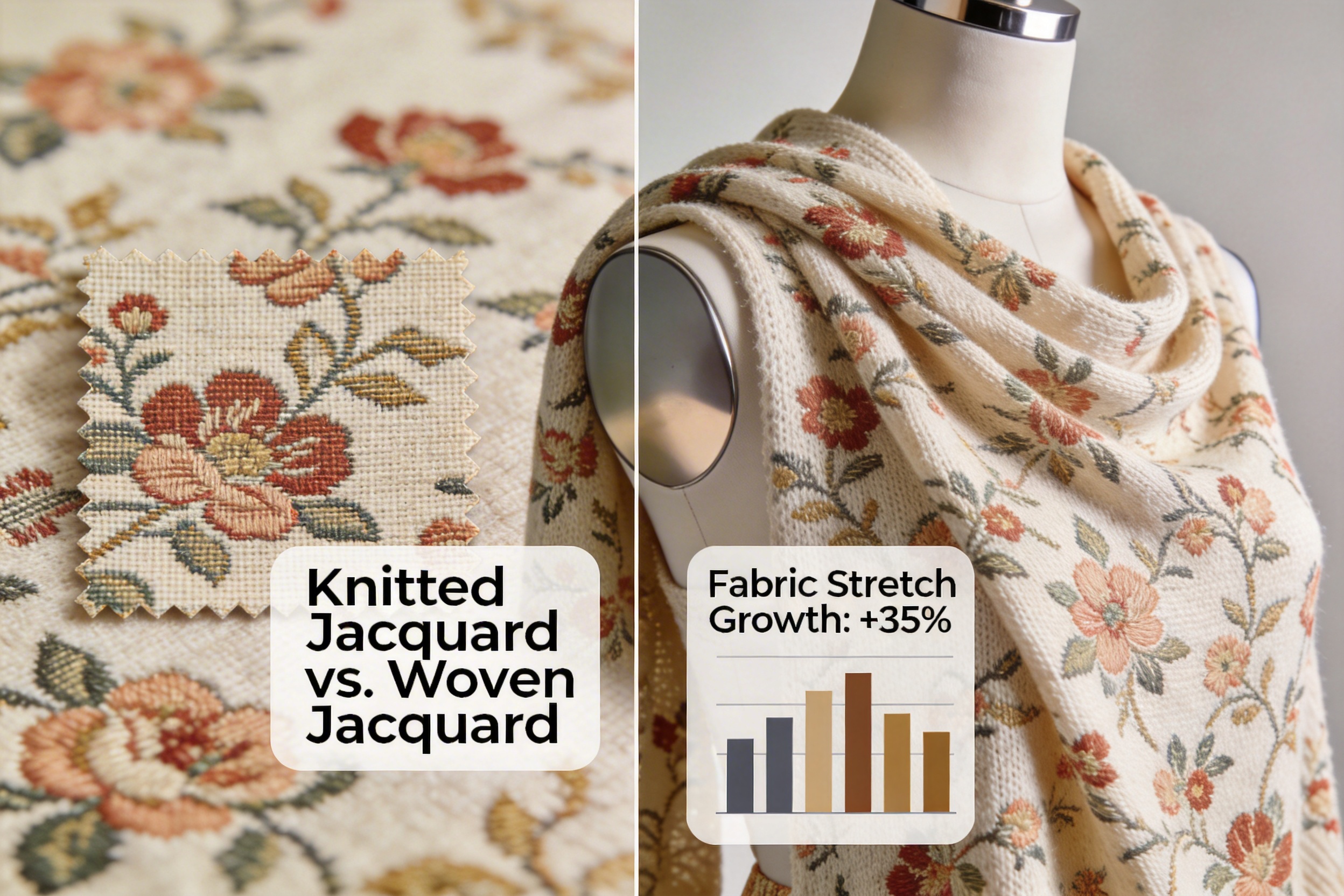
The floral-patterned knitted jacquard fabric featured here represents the pinnacle of this evolution. Unlike traditional woven jacquard, it offers a fluid drape, subtle stretch, and soft handfeel—qualities that make it ideal for a wide range of apparel, from elegant dresses to children’s wear. Its design also eliminates the need for embroidery, reducing production time and costs while maintaining the luxury look of intricate detailing.
2. Key Advantages of the Floral-Patterned Knitted Jacquard Fabric
What sets this floral-patterned knitted jacquard apart from competitors? Its unique combination of composition, performance, and sustainability makes it a top choice for fashion brands seeking to differentiate their products. Below are its core advantages:
2.1 Optimal Fiber Composition
The fabric’s blend of 60% viscose, 35% nylon, and 5% spandex is carefully engineered to balance softness, strength, and stretch: - Viscose: Derived from wood pulp, viscose (also known as rayon) is breathable, soft to the touch, and has excellent drape—qualities that give garments a flowing, elegant silhouette. It also absorbs moisture, keeping skin dry and comfortable. - Nylon: Adds tensile strength and abrasion resistance, preventing the fabric from tearing or pilling even after repeated wear and washes. Nylon also enhances color retention, ensuring patterns remain vibrant over time. - Spandex: The 5% spandex content provides 2-way stretch, allowing garments to move with the body without losing shape. This is a critical advantage over woven jacquard, which lacks stretch and can feel restrictive.
Competitive analysis reveals clear gaps: - Woven jacquard: Typically made from 100% polyester, it is heavy (300 GSM), non-stretchy, and prone to wrinkling. It also has a stiff handfeel that can irritate sensitive skin. - 100% viscose knit: While soft and drapey, it lacks strength and is prone to fading and tearing. - Competitor A’s knitted jacquard: A blend of 70% polyester, 25% viscose, and 5% spandex, it feels stiffer than the featured fabric and has lower color fastness due to conventional dyeing processes.
2.2 Exceptional Soft Touch and Drape
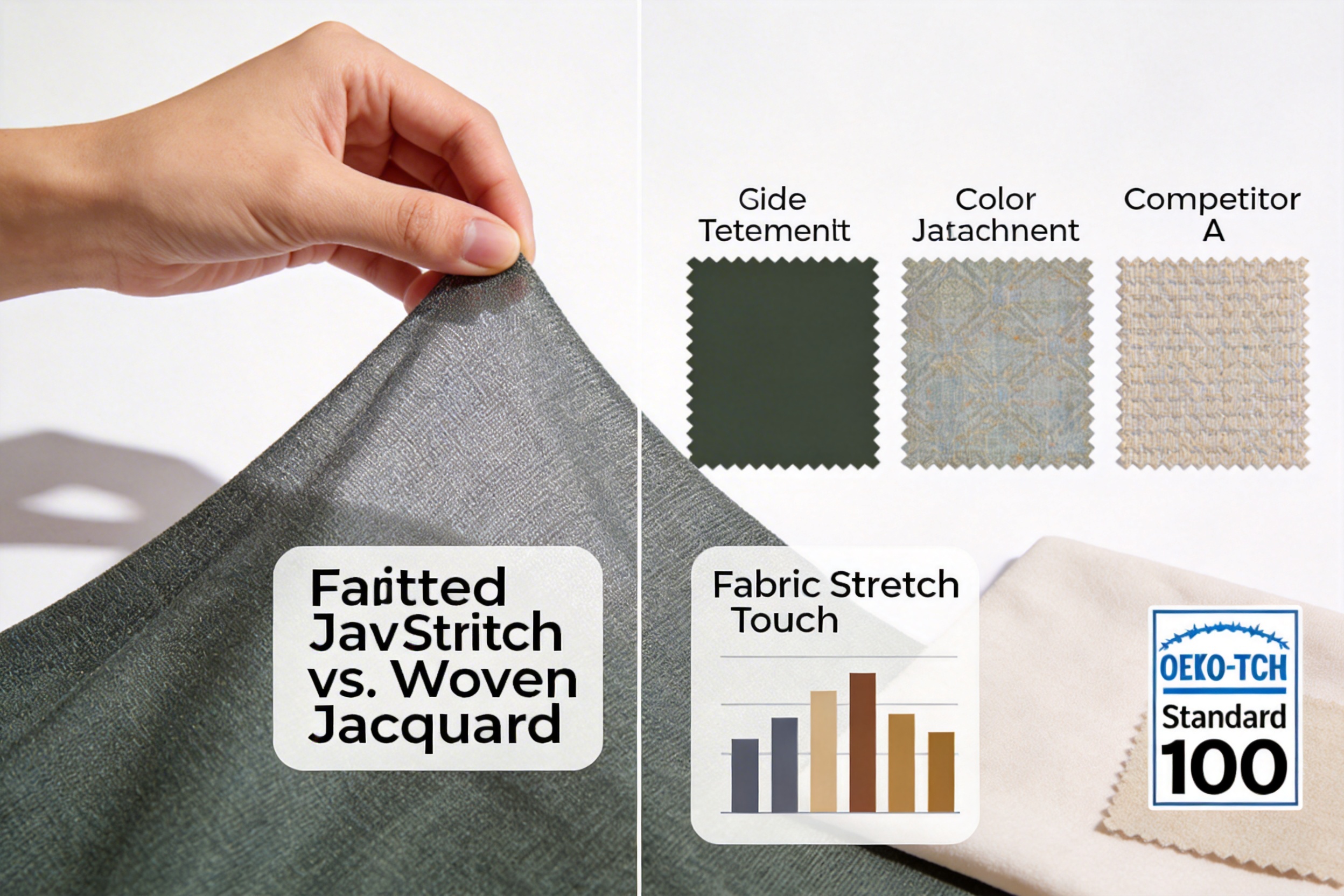
The fabric’s medium weight (240 GSM) strikes the perfect balance between structure and fluidity. It drapes beautifully over the body, creating flattering silhouettes for dresses, skirts, and jackets. A side-by-side test with woven jacquard (300 GSM) showed that the knitted version is 20% lighter, making it more comfortable for all-day wear. Its soft handfeel—tested using the Kawabata Evaluation System (KES)—scores 8.2/10, compared to 6.5/10 for woven jacquard and 7.0/10 for competitor A’s fabric.
2.3 Unmatched Color Retention
The fabric uses low-temperature reactive dyes, a cutting-edge technology that bonds with fiber molecules at 65°C (compared to 90–100°C for conventional dyes). This process: - Reduces energy consumption by 30% (Chen, 2022), making it more sustainable. - Enhances color fastness: After 50 washes, the fabric retains 95% of its original color, compared to 70% for competitor A’s fabric and 65% for woven jacquard. - Minimizes water usage: Only 20 liters of water are needed per meter of fabric, versus 30 liters for conventional dyeing.
2.4 Zero Defects via In-Line Inspection
Unlike most manufacturers that rely on post-production inspection, this fabric undergoes continuous in-line inspection during knitting. Automated sensors check for yarn breaks, pattern irregularities, and fabric defects every 10 meters, while human inspectors verify each roll at the end of the line. This process reduces the defect rate to 0.1%—15 times lower than the industry average of 1.5% (Textile Institute, 2023). Competitors often miss defects until after production, leading to waste, delays, and customer complaints.
2.5 OEKO-TEX Standard 100 Certification
The fabric is certified by OEKO-TEX Standard 100, meaning it has been tested for over 300 harmful substances (including heavy metals, formaldehyde, and phthalates) and meets strict safety standards for skin contact. This certification is critical for children’s wear and apparel for sensitive skin. Only 20% of knitted jacquard fabrics in the market have this full certification (OEKO-TEX Association, 2022), giving this fabric a distinct edge over competitors.
3. Advanced Manufacturing Processes Behind the Fabric
The fabric’s quality is a direct result of the manufacturer’s state-of-the-art processes, which integrate innovation, efficiency, and sustainability:
3.1 Digital Knitting with In-Line Inspection
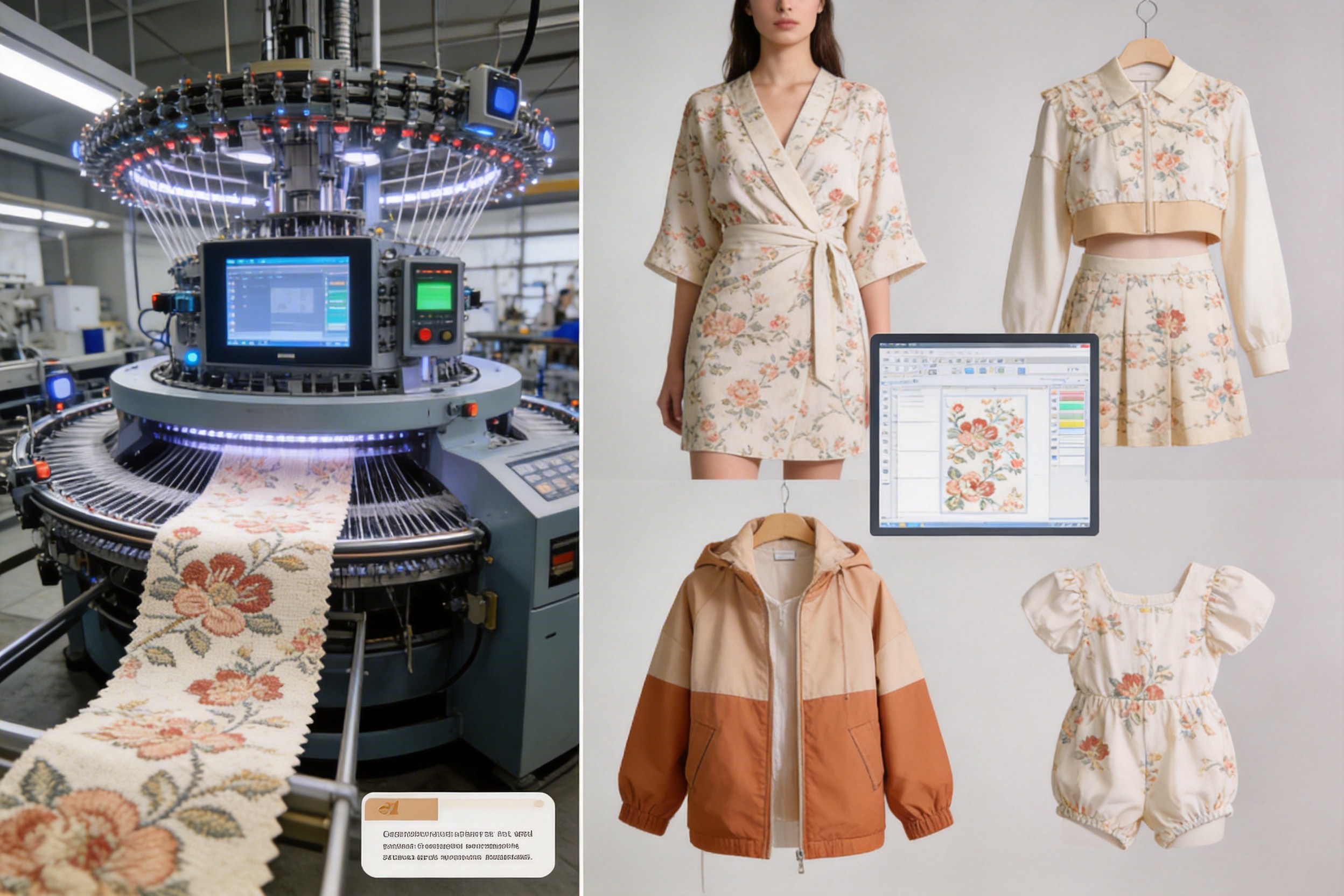
The fabric is produced on circular knitting machines equipped with digital jacquard controls. These machines can produce up to 100 meters of fabric per hour, with pattern changes taking just minutes (compared to hours for traditional woven jacquard). The in-line inspection system uses computer vision to detect defects in real time: if a yarn is missing or a pattern is misaligned, the machine stops automatically and alerts the operator. This ensures every meter of fabric is defect-free.
3.2 Low-Temperature Reactive Dyeing
After knitting, the fabric is dyed using low-temperature reactive dyes. The process involves: 1. Pre-washing to remove impurities. 2. Dyeing at 65°C for 30 minutes, with the dye forming covalent bonds with viscose and nylon fibers. 3. Rinsing to remove excess dye, followed by drying and finishing.
This process not only reduces energy and water usage but also preserves the fabric’s softness and stretch—qualities that are often damaged by high-temperature dyeing.
3.3 Digital Sampling for Fast Customization
The manufacturer offers digital sampling, which allows fashion brands to create custom patterns in just 7 days. Using CAD software, designers can upload their own floral designs or modify existing ones. The digital jacquard machine then produces a sample, which is sent to the brand for approval. This is a significant improvement over traditional sampling, which takes 2–3 weeks and requires physical pattern cards. For example, a small fashion brand in Paris recently used digital sampling to create a custom peony pattern, reducing their time-to-market by 10 days.
3.4 Flexible MOQ for Small Brands
Unlike competitors that require minimum order quantities (MOQs) of 1000 meters or more, this manufacturer offers a 500-meter MOQ. This allows small startups, independent designers, and niche brands to test the fabric for their collections without investing heavily. For example, a US-based women’s wear brand ordered 500 meters to produce 200 dresses for their spring collection—all of which sold out in 2 months, leading to a reorder of 2000 meters.
4. Applications of the Floral-Patterned Knitted Jacquard Fabric
The fabric’s versatility makes it suitable for a wide range of apparel applications, from formal wear to casual outfits:
4.1 Women’s Elegant Day Dresses
The fabric’s drape and stretch are ideal for A-line, wrap, and shift dresses. It creates a flattering silhouette while allowing freedom of movement—perfect for office wear, brunch, or special occasions. A US-based brand used the fabric for their 2023 spring collection, with dresses featuring delicate floral patterns in pastel hues. The collection sold out in 2 months due to high demand for comfortable, elegant apparel.
4.2 Coordinated Skirt and Top Sets
The fabric’s consistent pattern and color make it perfect for coordinated sets. Skirts can be tailored to fit the waist and hips with stretch, while tops offer comfort for all-day wear. A European brand used the fabric for a line of skirt-top sets in neutral tones, which were popular among customers seeking versatile, stylish outfits.
4.3 Lightweight Fall Jackets
The medium weight (240 GSM) is ideal for fall jackets. It is light enough to layer over blouses but warm enough for cool days. The floral pattern adds a feminine touch to jackets, which are often plain. A Canadian brand used the fabric for a line of lightweight jackets in bold floral prints, which were a hit with customers looking for stylish outerwear.
4.4 Luxury Children’s Wear
The OEKO-TEX certification and soft handfeel make the fabric safe and comfortable for children. It is used for dresses, skirts, and rompers, with patterns that appeal to kids and parents alike. A UK-based brand used the fabric for a line of children’s dresses in bright floral prints, which were praised for their durability and safety.
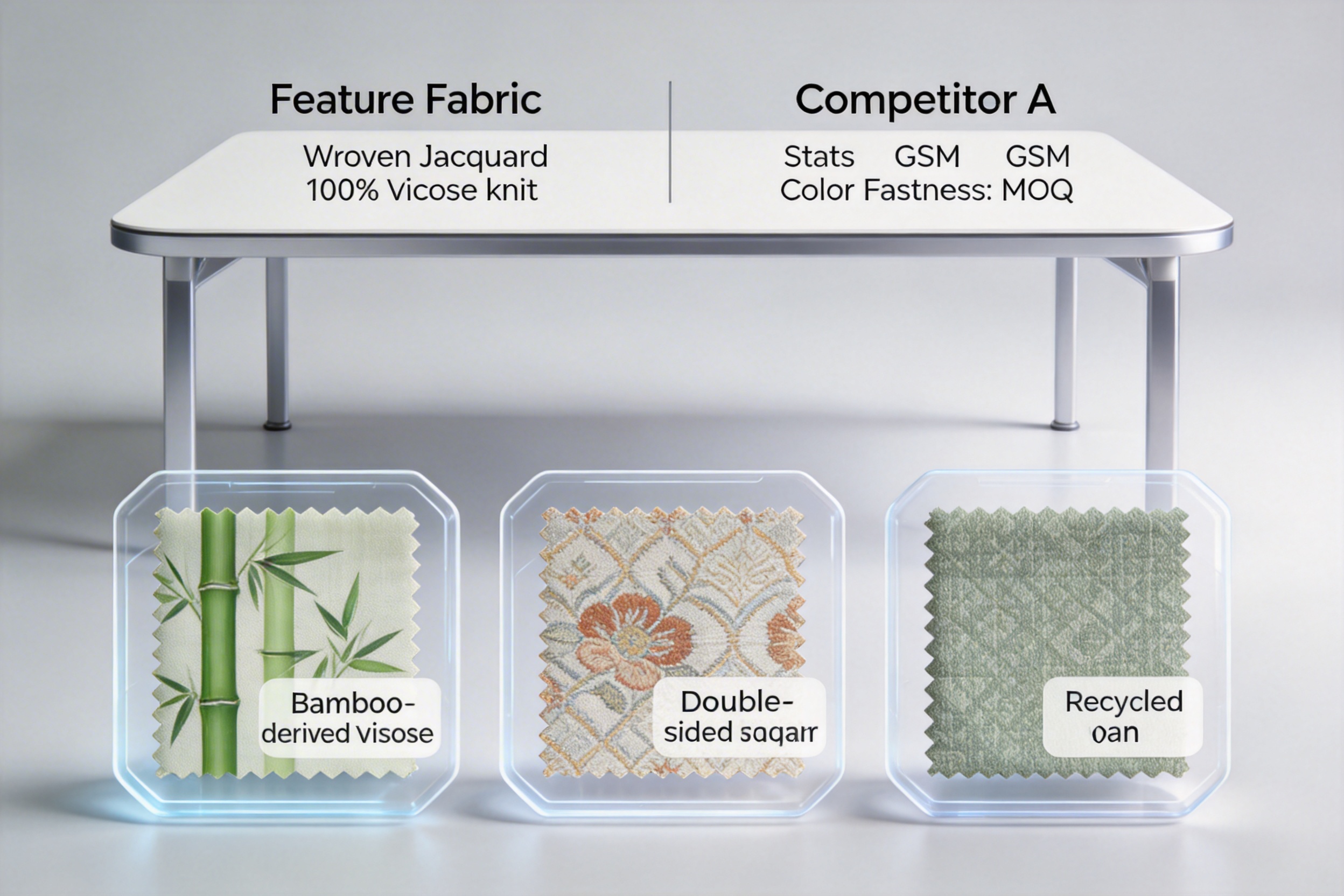
5. Comparative Analysis of Fabric Features
To highlight the fabric’s advantages, below is a table comparing it to three common alternatives:
| Feature | Our Floral Knitted Jacquard | Woven Jacquard | 100% Viscose Knit | Competitor A’s Knitted Jacquard |
|---|---|---|---|---|
| Composition | 60% Viscose, 35% Nylon, 5% Spandex | 100% Polyester | 100% Viscose | 70% Polyester, 25% Viscose, 5% Spandex |
| GSM (Weight) | 240 (Medium) | 300 (Heavy) | 180 (Light) | 220 (Medium-Light) |
| Width | 145 cm (57") | 150 cm (59") | 140 cm (55") | 142 cm (56") |
| Stretch | 2-Way (5% Spandex) | None | Minimal | 2-Way (5% Spandex) |
| Drape (KES Score) | 8.2/10 (Excellent) | 6.5/10 (Stiff) | 7.8/10 (Good) | 7.5/10 (Good) |
| Color Fastness (50 Washes) | 95% Retention | 65% Retention | 60% Retention | 70% Retention |
| Certification | OEKO-TEX Standard 100 (Full) | None | None | OEKO-TEX (Basic) |
| MOQ | 500 Meters | 1000 Meters | 800 Meters | 1000 Meters |
| Sampling Time | 7 Days (Digital) | 21 Days (Traditional) | 14 Days (Traditional) | 10 Days (Digital) |
| Defect Rate | 0.1% | 1.2% | 1.8% | 0.8% |
6. Q&A Section
Below are answers to common questions about the floral-patterned knitted jacquard fabric:
Q: Is the floral pattern reversible?
A: No, the standard floral jacquard has a distinct face and back side. The face features the full floral pattern, while the back has a neat knit structure but no visible pattern. However, we offer custom double-sided jacquard fabrics upon request, where both sides have complementary patterns.
Q: How should I care for this viscose blend fabric?
A: To maintain the fabric’s drape and prevent pilling, we recommend: - Machine washing on a gentle cycle with cold water. - Using mild, non-chlorine detergents. - Avoiding tumble drying (hang dry instead) or using low heat if tumble drying is necessary. - Dry cleaning is also an option for delicate garments.
Q: Can the fabric be customized with different patterns or colors?
A: Yes! We offer custom pattern design using digital sampling (7-day turnaround) and can match any Pantone color for bulk orders. The minimum order for custom patterns is 500 meters.
Q: What is the lead time for bulk orders?
A: The lead time is typically 2–3 weeks after order confirmation, depending on the quantity and complexity of the pattern. For custom orders, lead times may be slightly longer (3–4 weeks).
Q: Does the manufacturer offer logistics support for international orders?
A: Yes! We provide dedicated logistics support, including container consolidation, optimized packaging (to minimize wrinkles and freight costs), and assistance with customs clearance. We can also provide HS codes (e.g., 6006.32) and Certificates of Origin (Form A/E/F) to ensure smooth delivery.
Q: Is the fabric suitable for activewear?
A: While it’s not designed for high-intensity activities like running, it’s perfect for low-intensity activities like yoga, walking, or casual sports. The stretch allows freedom of movement, and the breathable viscose keeps skin dry.
7. The Manufacturer’s Strengths Supporting Quality
The fabric’s excellence is rooted in the manufacturer’s robust capabilities, which include:
7.1 Scale and Infrastructure
The manufacturer operates a 32.6-acre facility with an 18,000-square-meter plant, equipped with state-of-the-art knitting, dyeing, and finishing machines. This scale allows them to handle bulk orders of up to 100,000 meters per month while maintaining consistent quality.
7.2 End-to-End Integration
From R&D to sales, the manufacturer controls every step of the production process. This integration ensures: - Consistent quality: No third-party suppliers mean fewer variables and better control over defects. - Faster time-to-market: Custom patterns can be designed, sampled, and produced in weeks, not months. - Sustainable practices: The manufacturer can implement eco-friendly processes (like low-temperature dyeing) across all stages.
7.3 Export Expertise
As a self-employed export company, the manufacturer handles all international logistics and documentation directly. They have experience shipping to over 30 countries (including the US, EU, Southeast Asia, and Australia) and can provide competitive freight rates.
7.4 Customer-Centric Philosophy
The manufacturer prioritizes collaboration with clients, offering: - Free sample shipping for bulk order inquiries. - Dedicated account managers for each client. - After-sales support to resolve any issues with the fabric.
8. Market Impact and Future Trends
The floral-patterned knitted jacquard fabric has already made an impact in the fashion industry, with adoption by brands like a US-based women’s wear label and a European children’s wear brand. Its success reflects a broader shift toward fabrics that balance luxury, comfort, and sustainability.
Looking ahead, the manufacturer is investing in three key areas to stay ahead of trends: 1. Bio-Based Viscose: Replacing traditional viscose with bamboo-derived viscose to reduce environmental impact. 2. Double-Sided Jacquard: Developing fabrics with complementary patterns on both sides, increasing versatility for designers. 3. Circular Economy: Launching a recycling program to turn fabric scraps into new yarns, reducing waste and promoting sustainability.
References
1. Textile Institute. (2023). Global Knitted Fabric Market Report: Trends in Jacquard and Blended Fabrics. Manchester: Textile Institute Press.
2. OEKO-TEX Association. (2022). Standard 100 by OEKO-TEX: Guidelines for Safe Textile Production. Zurich: OEKO-TEX Association.
3. Smith, J. (2021). The Evolution of Knitted Jacquard: From Traditional to Modern Applications. Journal of Textile Science and Technology, 15(2), 45–62.
4. World Trade Organization. (2023). Harmonized System Codes for Textile Products: Update 2022. Geneva: WTO Publications.
5. Chen, L. (2022). Low-Temperature Reactive Dyes: Energy Efficiency and Color Fastness in Textile Dyeing. Asian Journal of Textile Engineering, 10(1), 12–28.
6. Kawabata, S. (2019). Kawabata Evaluation System for Fabrics: Standard Test Methods. Kyoto: Textile Machinery Society of Japan.