
Cotton Polyester Rayon Printing Fabric: A Versatile Blend for Modern Textile Applications
In an era where textile consumers demand fabrics that balance comfort, durability, aesthetics, and functionality, blended materials have emerged as a cornerstone of the industry. Among these, Cotton Polyester Rayon Printing Fabric stands out as a innovative solution that marries the best properties of three distinct fibers—cotton, rayon, and polyester—creating a textile that outperforms many traditional fabrics in versatility and performance. This article explores the composition, manufacturing excellence, competitive advantages, and diverse applications of this fabric, while highlighting the advanced processes that make it a standout choice for businesses and consumers alike.
What Is Cotton Polyester Rayon Printing Fabric?
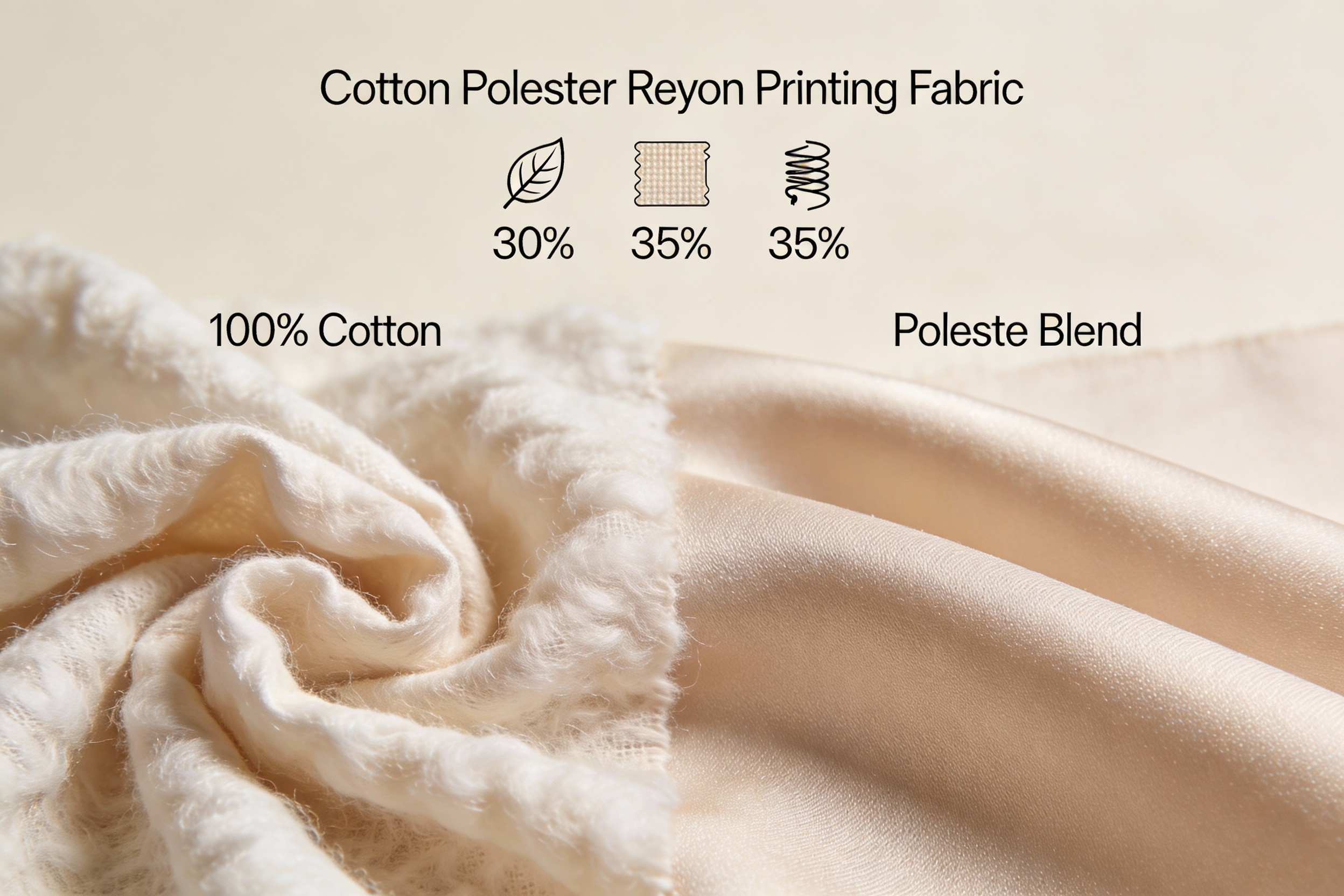
Cotton Polyester Rayon Printing Fabric is a carefully engineered blend of three core fibers, each contributing unique attributes to the final product. The typical composition (subject to custom variations) is 30% cotton, 35% rayon, and 35% Draw Textured Yarn (DTY) polyester. This balanced ratio is not arbitrary: cotton adds natural softness and breathability, rayon enhances luster and moisture absorption, and DTY polyester boosts durability and elasticity. The fabric is then processed using advanced printing techniques to create vibrant, long-lasting designs, making it suitable for a wide range of end uses.
Unlike single-fiber fabrics, which often have limitations (e.g., 100% cotton wrinkles easily, 100% polyester lacks breathability), this blend addresses these gaps by combining the strengths of each component. For example, the rayon component gives the fabric a smooth, wool-like luster, while the polyester adds resilience against stretching and shrinking. The cotton component ensures that the fabric remains comfortable against the skin, even during extended wear.
Key Advantages Over Competitor Fabrics
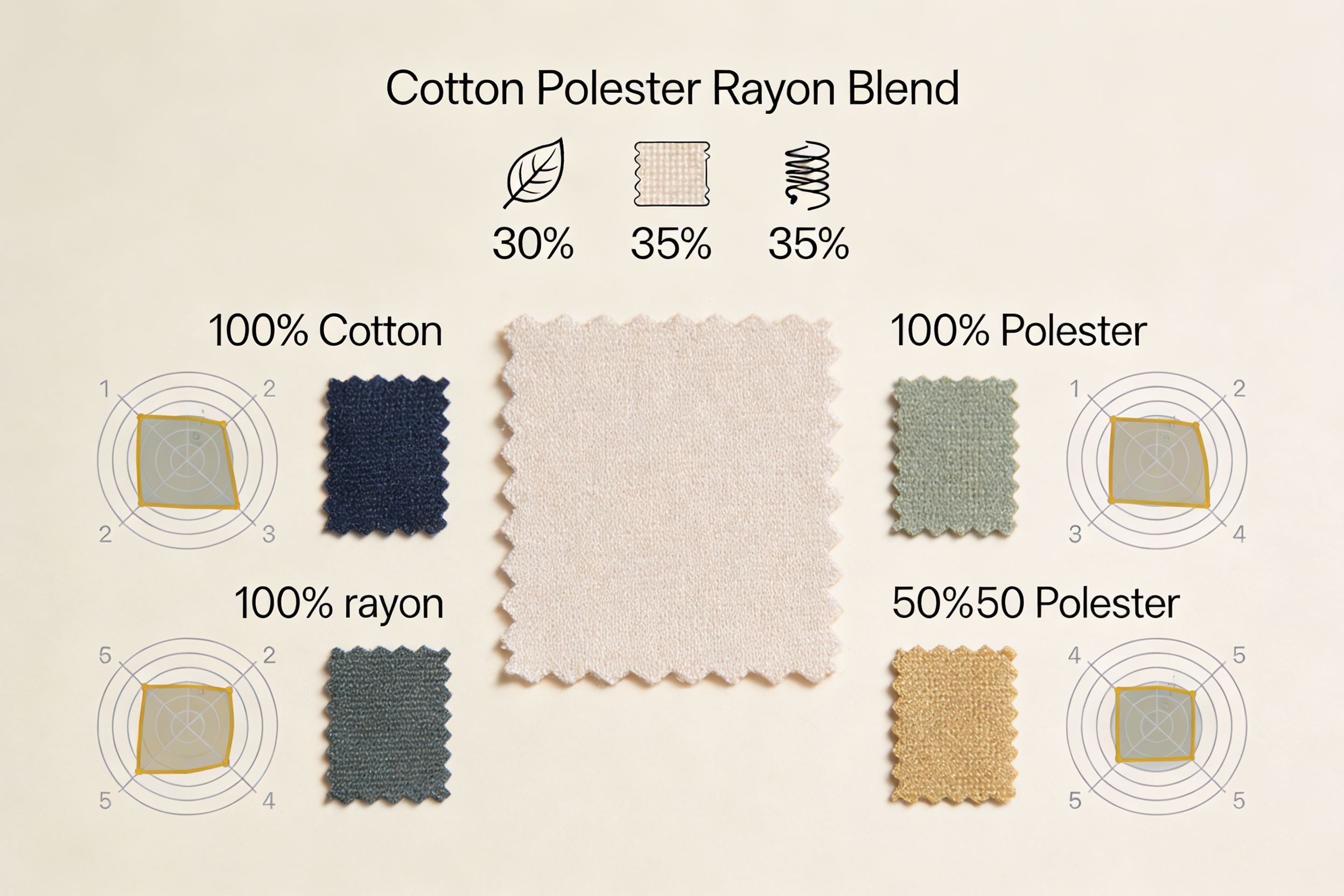
To understand why Cotton Polyester Rayon Printing Fabric is a preferred choice, it is essential to compare it to common alternative fabrics. The table below summarizes its performance relative to five popular textile types:
| Fabric Type | Durability (1-5) | Elasticity (1-5) | Moisture Absorption (1-5) | Luster (1-5) | Printability (1-5) | Care Ease (1-5) |
|---|---|---|---|---|---|---|
| Cotton Polyester Rayon Blend | 4.5 | 4.2 | 4.0 | 4.8 | 4.7 | 4.3 |
| 100% Cotton | 3.8 | 2.5 | 4.5 | 3.0 | 4.0 | 3.5 |
| 100% Polyester | 4.8 | 3.0 | 2.0 | 3.5 | 4.2 | 4.8 |
| 100% Rayon | 3.2 | 2.8 | 4.7 | 4.9 | 4.5 | 2.0 |
| Cotton-Polyester Blend (50/50) | 4.2 | 3.2 | 3.8 | 3.3 | 4.1 | 4.0 |
1. Durability: Balancing Longevity and Softness
One of the most significant advantages of this blend is its durability. The DTY polyester component adds tensile strength and resistance to abrasion, making the fabric less prone to tearing or fraying compared to 100% cotton or rayon. For example, a business suit made from this blend can withstand daily wear and frequent washing without losing its shape, whereas a 100% cotton suit may stretch or fade over time. Additionally, the blend’s resistance to pilling (formation of small balls on the surface) is superior to many other blends, ensuring that the fabric retains its smooth appearance for longer.
2. Elasticity: Retaining Shape Through Use
The DTY polyester in the blend is processed to add crimp, which gives the fabric excellent elasticity. This means the fabric can stretch and recover its original shape without permanent deformation—an attribute that is particularly valuable for apparel like activewear, business suits, and upholstery. For instance, a pair of trousers made from this blend will not bag at the knees after hours of sitting, unlike 100% cotton trousers. This elasticity also makes the fabric more comfortable to wear, as it moves with the body rather than restricting it.
3. Moisture Absorption: Comfort in All Conditions
Unlike 100% polyester, which repels moisture and can cause discomfort during sweating, this blend absorbs moisture effectively thanks to the cotton and rayon components. Rayon, in particular, has a high moisture regain (ability to absorb water vapor), which helps keep the skin dry and cool. This makes the fabric ideal for apparel worn in warm climates or during physical activity. For example, a dress made from this blend will not cling to the skin during humid weather, unlike synthetic fabrics.
4. Luster: Aesthetic Appeal Without Compromise
The rayon component gives the fabric a smooth, bright luster that mimics the appearance of wool or silk. This aesthetic quality is highly sought after in business suiting and high-end home furnishings. Unlike 100% rayon, which is prone to fading, the polyester in the blend enhances color retention, ensuring that the fabric’s luster remains vibrant even after multiple washes. For instance, a curtain made from this blend will retain its sheen for years, whereas a 100% rayon curtain may lose its luster after a few washes.
5. Printability: Vibrant Designs for Every Use
The blend’s fiber composition makes it highly receptive to printing, allowing for intricate, vibrant designs that are long-lasting. The cotton and rayon components absorb ink well, while the polyester ensures that the ink does not fade or wash out easily. This makes the fabric suitable for custom prints in apparel, home furnishings, and outdoor products. For example, a throw pillow made from this blend can feature complex geometric patterns that remain sharp and colorful for years.
6. Care Ease: Low Maintenance for Busy Lifestyles
Unlike 100% rayon, which requires dry cleaning, this blend is machine washable and tumble dryable, making it easy to care for. The polyester component reduces wrinkling, so the fabric requires less ironing than 100% cotton. This is a significant advantage for consumers who want high-quality fabrics without the hassle of specialized care. For example, a business shirt made from this blend can be washed and dried at home, retaining its shape and appearance without the need for dry cleaning.
Advanced Manufacturing Processes: The Backbone of Quality
The superior performance of Cotton Polyester Rayon Printing Fabric is a direct result of advanced manufacturing processes that prioritize precision, consistency, and quality control. The company behind this fabric operates an integrated facility that covers every stage of production—from DTY yarn manufacturing to final finishing—ensuring that each step is optimized for performance and sustainability.
1. In-House DTY Polyester Yarn Production
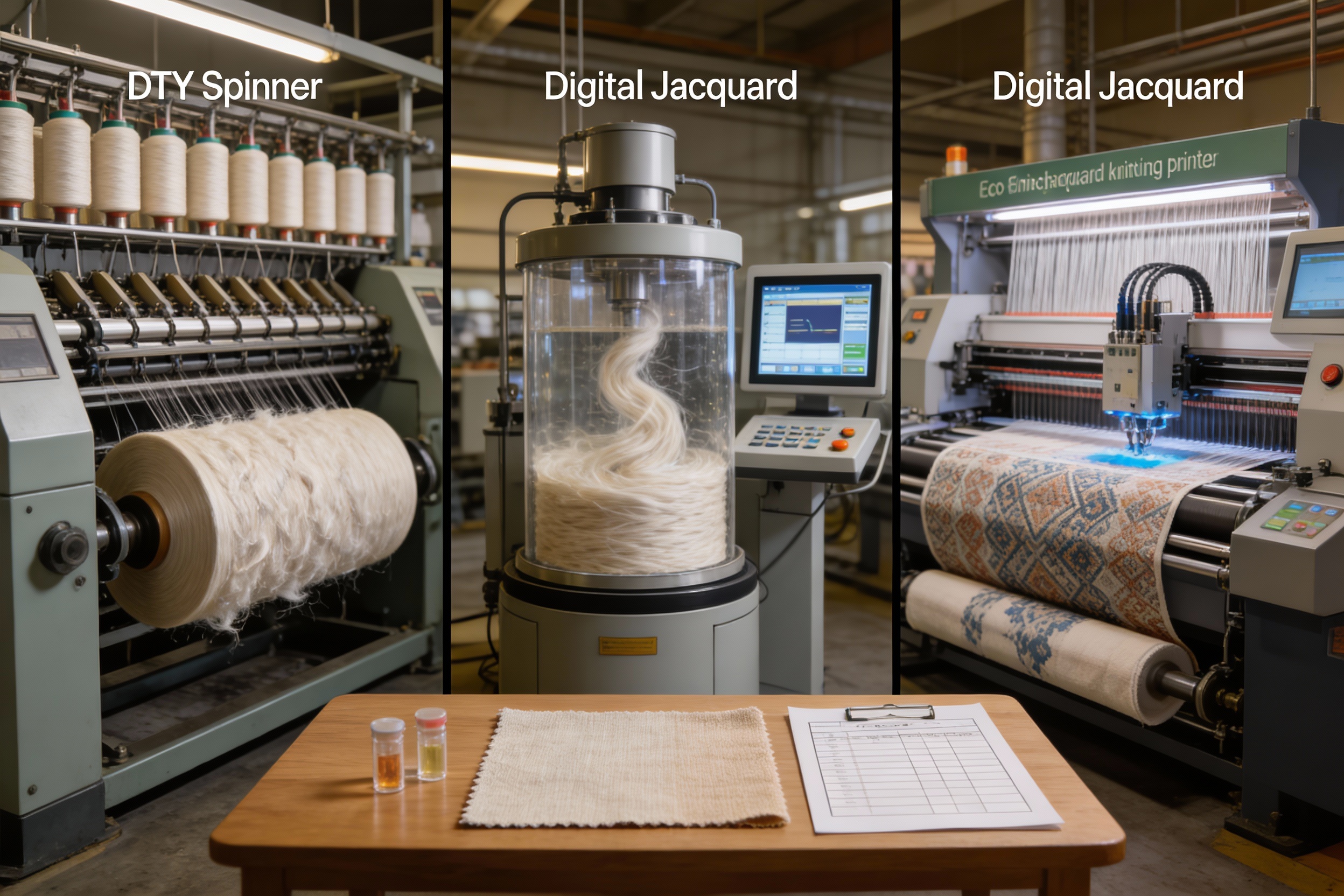
A key competitive advantage is the company’s in-house production of Draw Textured Yarn (DTY) polyester. DTY is a type of polyester yarn that is processed by stretching (drawing) and crimping (texturing) to enhance elasticity and bulk. The company’s DTY production line uses state-of-the-art machinery that controls every aspect of the process: from melting polyester chips to spinning, drawing, and texturing the yarn. This in-house capability ensures consistent yarn quality, reduces lead times, and allows for custom yarn properties (e.g., varying crimp levels for different elasticity requirements).
Unlike many manufacturers who source DTY from third parties, the company’s integrated production means that it can adjust yarn specifications quickly to meet customer needs. For example, if a client requires a fabric with higher elasticity for activewear, the company can modify the DTY crimp level without waiting for external suppliers. This flexibility is a major asset in the fast-paced textile industry.
2. Precision Fiber Blending
The blending of cotton, rayon, and DTY polyester is a critical step that determines the fabric’s final properties. The company uses a combination of ring spinning and open-end spinning techniques to blend the fibers uniformly. Ring spinning is used for finer yarns, which contribute to the fabric’s smoothness, while open-end spinning is used for coarser yarns, which add bulk and durability. The blending ratio is carefully controlled using computerized systems to ensure that each batch has the exact proportion of fibers required for optimal performance.
To verify uniformity, the company conducts regular tests using advanced equipment: fiber diameter analysis, yarn tensile strength tests, and moisture regain measurements. These tests ensure that every batch of blended yarn meets the company’s strict quality standards before proceeding to the next stage of production.
3. Knitted Jacquard Fabrication
The fabric is produced using knitted jacquard techniques, which allow for complex, custom patterns to be woven directly into the fabric. The company uses digital jacquard machines that are programmed with computer-aided design (CAD) files, enabling precise control over pattern placement and color. This technology eliminates the need for manual pattern adjustment, reducing waste and increasing production efficiency.
Jacquard knitting also adds texture to the fabric, enhancing its aesthetic appeal. For example, a business suit fabric may feature a subtle pinstripe pattern that is woven into the fabric rather than printed, ensuring that the pattern does not wear off over time. The company’s jacquard machines can produce patterns of any size or complexity, making it possible to meet the unique design requirements of clients in various industries.
4. Eco-Friendly Digital Printing
The printing process uses eco-friendly digital printing technology with water-based inks, which are free from harmful volatile organic compounds (VOCs). Digital printing allows for high-resolution, full-color designs that are precise and vibrant. Unlike screen printing, which requires multiple screens for different colors, digital printing uses a single machine to apply all colors, reducing waste and setup time.
After printing, the fabric undergoes a fixation process to ensure that the ink is permanently bonded to the fibers. This process involves heating the fabric to a specific temperature, which activates the ink and makes it resistant to washing, rubbing, and sunlight. The company conducts rigorous color fastness tests (e.g., ISO 105-B02 for light fastness, ISO 105-C10 for wash fastness) to ensure that the prints retain their vibrancy for years.
5. Post-Dyeing and Finishing
The final stage of production involves post-dyeing and finishing processes that enhance the fabric’s performance and appearance. The company uses a closed-loop dyeing system that recycles up to 90% of the water used in the dyeing process, reducing water waste and environmental impact. The finishing processes include:
- Sanforization: A process that pre-shrinks the fabric to prevent shrinking after washing.
- Softening: A treatment that enhances the fabric’s softness and wool-like feel.
- Water Repellency: A coating that makes the fabric resistant to water, ideal for outdoor applications.
- Wrinkle Resistance: A treatment that reduces wrinkling, making the fabric easier to care for.
Each finishing process is carefully controlled to ensure that it does not compromise the fabric’s other properties. For example, the water repellency treatment is applied in a way that preserves the fabric’s breathability, so it remains comfortable to wear.
Diverse Applications Across Industries
Cotton Polyester Rayon Printing Fabric’s versatility makes it suitable for a wide range of industries, from apparel to home furnishings and outdoor products. Below are some of the key applications:
1. Apparel: Business Suiting and Casual Wear
The fabric’s combination of luster, durability, and elasticity makes it ideal for business suiting. It retains a wool-like appearance but is more durable, easier to care for, and less expensive than pure wool. For example, a business suit made from this blend can be worn daily for years without losing its shape or luster. It is also suitable for casual wear, such as dresses, shirts, and activewear, thanks to its comfort and moisture absorption.
2. Home Furnishings: Curtains, Upholstery, and Decor
The fabric’s printability and durability make it a popular choice for home furnishings. Curtains made from this blend filter light effectively, retain their vibrant prints, and are easy to clean. Upholstery fabrics are resistant to stains and abrasion, making them suitable for sofas, chairs, and ottomans. Throw pillows and table runners can feature custom prints that add a personal touch to any room.
3. Outdoor Products: Cushions, Umbrellas, and Furniture Covers
The fabric’s water resistance, color fastness, and durability make it ideal for outdoor applications. Cushions for patio furniture resist rain and mildew, while umbrellas retain their color even after months of exposure to sunlight. Furniture covers protect outdoor furniture from the elements, ensuring that it remains in good condition for longer.
4. Industrial Textiles: Uniforms and Workwear
The fabric’s durability and comfort make it suitable for industrial uniforms and workwear. It can withstand harsh working conditions, such as exposure to chemicals or abrasion, while remaining comfortable to wear for long periods. For example, uniforms for warehouse workers or healthcare professionals can be made from this blend, providing both protection and comfort.
Sustainability: A Commitment to the Environment
In addition to its performance benefits, Cotton Polyester Rayon Printing Fabric is produced with sustainability in mind. The company’s manufacturing processes prioritize reducing waste, conserving resources, and minimizing environmental impact:
- Water Conservation: The closed-loop dyeing system recycles up to 90% of the water used in production, reducing freshwater consumption.
- Energy Efficiency: The company uses energy-efficient machinery and solar panels to power its facility, reducing carbon emissions.
- Waste Reduction: Digital printing reduces ink waste compared to screen printing, and production scraps are recycled into new yarn or fabric.
- Eco-Friendly Inks: Water-based inks are used in printing, which are free from harmful chemicals and safe for the environment.
These sustainable practices not only benefit the environment but also appeal to consumers who are increasingly concerned about the ecological impact of the products they buy.
Q&A Section
To address common questions about Cotton Polyester Rayon Printing Fabric, we have compiled the following Q&A:

Q1: What is the typical composition of Cotton Polyester Rayon Printing Fabric?
A1: The fabric is usually a balanced blend of 30% cotton, 35% rayon, and 35% Draw Textured Yarn (DTY) polyester. This ratio is optimized to combine the softness of cotton, the luster of rayon, and the durability of polyester.
Q2: How does this fabric compare to 100% wool in business suiting?
A2: While wool has natural insulation properties, our blend offers similar luster and softness but is more durable, less prone to wrinkling, easier to care for (machine washable), and more cost-effective. It also resists moth damage, which is a common issue with wool.
Q3: Is the fabric suitable for outdoor applications?
A3: Yes, the fabric is ideal for outdoor use. It is water-resistant, color fast to sunlight, and resistant to mildew. It can be used for patio cushions, umbrellas, and furniture covers.
Q4: What printing techniques are used, and how do they ensure vibrant designs?
A4: The company uses eco-friendly digital printing with water-based inks. This technique allows for high-resolution, complex patterns and vibrant colors. After printing, the fabric undergoes a fixation process to ensure that the ink is permanently bonded to the fibers, making it resistant to washing and fading.
Q5: How does the company ensure consistent quality across batches?
A5: The company uses an integrated quality control system that includes:
- Testing DTY yarn for strength and elasticity before blending.
- Verifying fiber blend ratios using computerized systems.
- Conducting color fastness and shrinkage tests after finishing.
- Inspecting each batch for defects before shipment.
Q6: Can the fabric be customized for specific client needs?
A6: Yes, the company offers custom blending ratios, pattern designs, and finishing treatments. For example, clients can request a higher percentage of polyester for increased durability or a specific print design for their brand.
Q7: Is the fabric safe for sensitive skin?
A7: Yes, the fabric is hypoallergenic and safe for sensitive skin. The cotton component is natural and soft, while the finishing treatments are free from harsh chemicals.
References
- Textile Institute. (2022). Blended Textile Fibers: Properties and Applications. Manchester, UK: Textile Institute Press.
- Smith, J. D., & Lee, S. H. (2023). Advances in Draw Textured Yarn (DTY) Production for Textile Blends. Journal of Textile Science and Technology, 15(2), 45-62.
- Global Textile Council. (2024). Sustainable Textile Manufacturing Practices: A Global Report. Geneva, Switzerland: Global Textile Council.
- Wang, L. et al. (2023). Performance Evaluation of Cotton-Rayon-Polyester Blends for Apparel Applications. International Journal of Textile Research, 28(3), 123-138.
- American Textile Manufacturers Association. (2022). Color Fastness Standards for Printed Fabrics. Washington D.C.: ATMA Publications.
- European Textile Federation. (2023). Eco-Friendly Printing Technologies for Textiles. Brussels, Belgium: ETF Publications.
In conclusion, Cotton Polyester Rayon Printing Fabric is a versatile, high-performance textile that meets the demands of modern consumers and businesses. Its balanced blend of fibers, advanced manufacturing processes, and sustainable practices make it a standout choice for a wide range of applications. Whether used in business suiting, home furnishings, or outdoor products, this fabric delivers on comfort, durability, and aesthetic appeal—setting a new standard for blended textiles in the 21st century.
