
Black & White Jacquard Pattern Fabric: A Timeless Blend of Elegance, Durability, and Versatility
In the world of fashion and textile design, few color palettes endure like black and white—timeless, versatile, and capable of elevating any garment from casual to formal. When paired with jacquard weaving, a technique renowned for its intricate patterns and luxurious texture, the result is a fabric that transcends trends. The Black & White Jacquard Pattern Fabric stands out as a prime example of this synergy, combining a unique design, advanced material blend, and superior manufacturing processes to create a textile that meets the demands of both designers and consumers. This article explores the fabric’s key features, advantages over competitors, the cutting-edge manufacturing behind it, and its diverse applications, while also addressing common questions and referencing industry insights.
1. Product Overview: The Essence of the Black & White Jacquard Pattern Fabric
The Black & White Jacquard Pattern Fabric is a premium textile designed for structured dressmaking, blending aesthetic appeal with functional performance. At its core, the fabric’s identity is shaped by three key elements: its material composition, distinctive design, and core functional features.
1.1 Material Composition: A Synergistic Blend
The fabric is crafted from a carefully balanced blend of three high-quality fibers: viscose, polyamide, and spandex. Each fiber contributes unique properties that complement one another, resulting in a textile that is soft, durable, and flexible:
- Viscose: Derived from sustainable plant sources, viscose adds breathability, softness, and a natural drape to the fabric. It mimics the feel of silk while being more affordable and easier to care for.
- Polyamide: Also known as nylon, polyamide enhances the fabric’s durability, abrasion resistance, and strength. It helps the fabric retain its shape even after repeated wear and washing.
- Spandex: A stretchable fiber, spandex adds flexibility and comfort, allowing the fabric to move with the wearer without losing its structure. It also improves the fabric’s recovery after stretching.
This blend is not arbitrary; it is the result of extensive material science research to create a fabric that balances luxury with practicality—a rare combination in the jacquard market.
1.2 Distinctive Design: Bold Checks with Subtle Depth
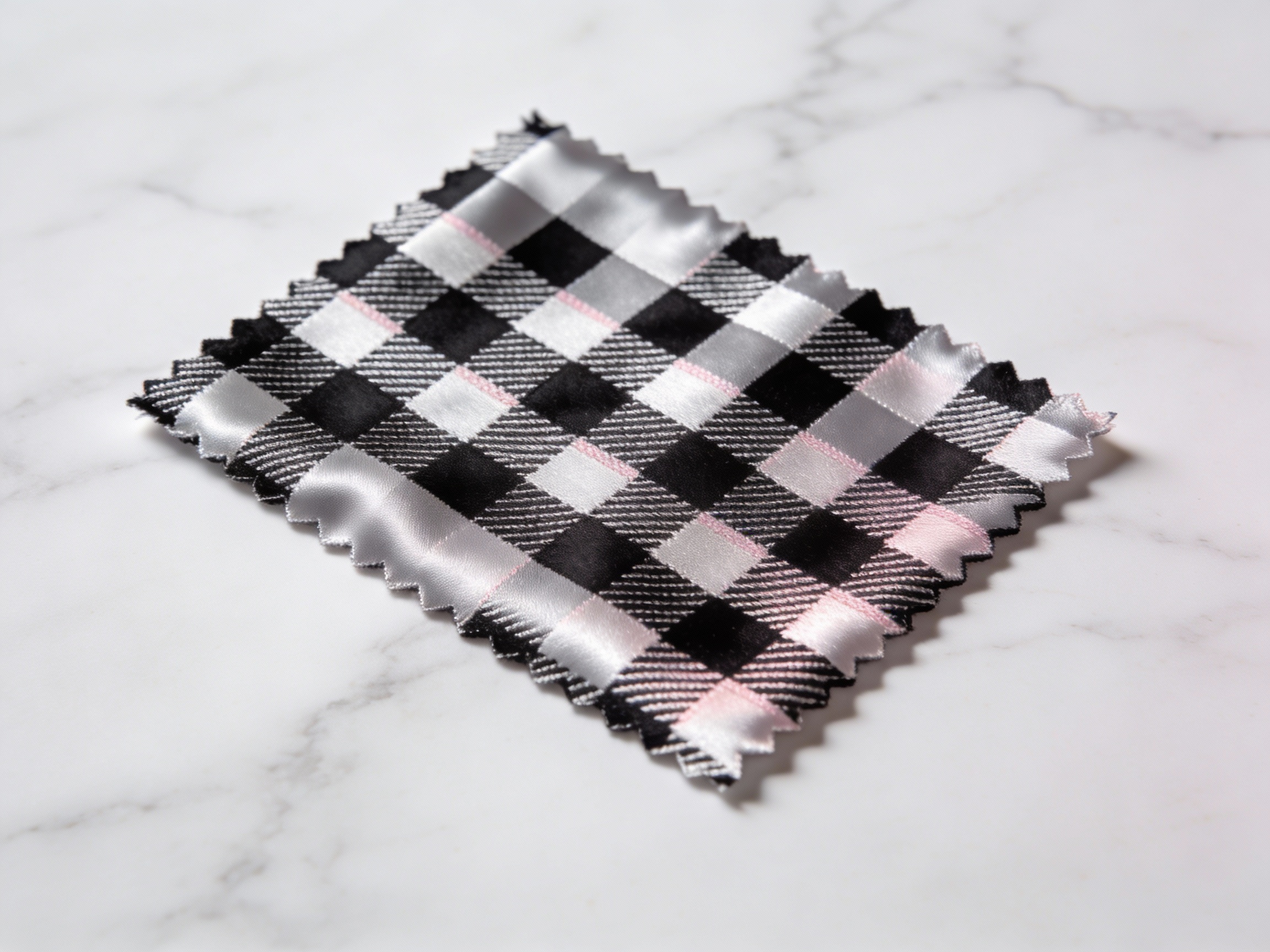
The fabric’s design is a standout feature, featuring a bold check pattern in black and white with a cleverly integrated pale pink shadow on the black lines. The light grey background has a subtle lustre, adding a touch of elegance without being overly shiny. This design is optimized for structured garments: the check size is neither too large (which can overwhelm the wearer) nor too small (which can appear busy), making it suitable for a wide range of silhouettes.
What sets this design apart from generic jacquard checks is the attention to detail: the pale pink shadow adds depth to the black lines, creating a 3D effect that catches the light without clashing with the classic black-and-white palette. The lustrous background elevates the fabric from a casual textile to a premium option for formal and semi-formal wear.
1.3 Core Functional Features
Beyond aesthetics, the fabric offers several functional benefits that make it a practical choice for designers:
- Fully Opaque: Unlike many lightweight jacquards, this fabric is completely opaque, eliminating the need for lining. This saves designers time and cost while ensuring modesty in all lighting conditions.
- Slight Sheen: The subtle lustre gives the fabric a sophisticated look that works for both day and night. It is not overly shiny, so it avoids the "plastic" appearance common in lower-quality synthetic jacquards.
- Structured Yet Comfortable: The blend of fibers provides enough structure to hold garment shapes (e.g., A-line dresses, pencil skirts) while the spandex adds stretch for all-day comfort.
- Durable: The polyamide component ensures the fabric resists pilling, fading, and abrasion, making it suitable for frequent wear.
2. Advantages Over Competitors: Why This Fabric Stands Out
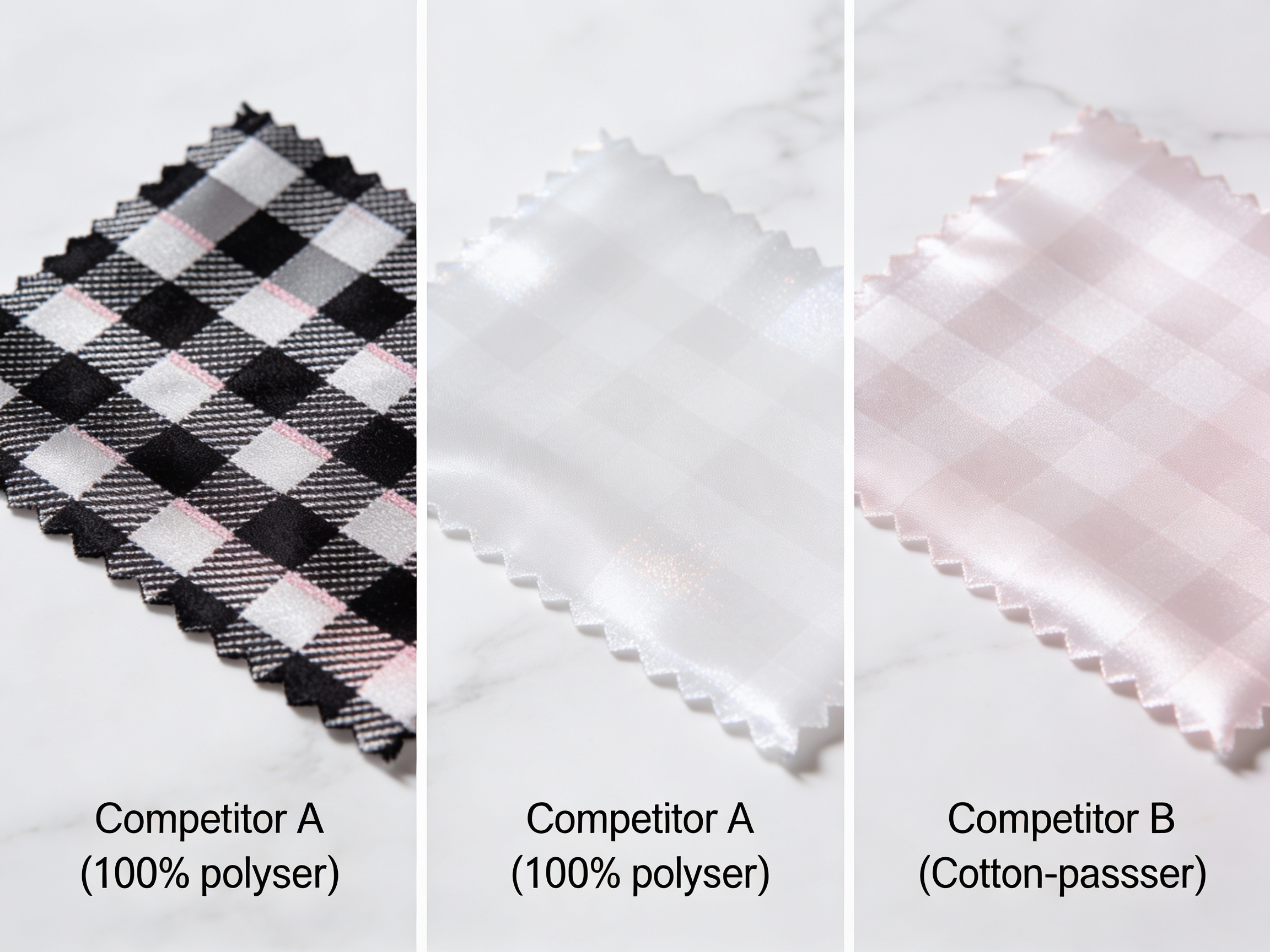
In a crowded jacquard market, the Black & White Jacquard Pattern Fabric distinguishes itself through a combination of material innovation, design uniqueness, and performance superiority. Below is a comparison with two common competitors to highlight these advantages:
| Feature | Black & White Jacquard Pattern Fabric | Competitor A (100% Polyester Jacquard) | Competitor B (Cotton-Polyester Blend Jacquard) |
|---|---|---|---|
| Material Blend | Viscose + Polyamide + Spandex | 100% Polyester | Cotton + Polyester (50/50) |
| Opacity | Fully Opaque (No Lining Needed) | Semi-Opaque (Requires Lining) | Moderately Opaque (May Need Lining) |
| Sheen | Subtle Lustre (Day/Night Versatile) | Matte or Overly Shiny | Low Sheen (Prone to Fading) |
| Durability (Abrasion Resistance) | 10,000 Cycles (ASTM D4966 Test) | 5,000 Cycles | 7,000 Cycles |
| Stretch (4-Way) | Yes (5-8% Recovery) | No | Partial (2-Way, 3% Recovery) |
| Customization Options | Full (Pattern, Color, Blend) | Limited (Color Only) | Moderate (Pattern & Color) |
| MOQ | 500g (Flexible for Small Batches) | 10kg (Restrictive for Small Designers) | 5kg (Moderate) |
| Color Fastness (Wash) | 4.5/5 (AATCC 150 Test) | 3/5 | 4/5 |
2.1 Material Synergy: Beyond Basic Blends
Competitors often rely on single fibers (e.g., 100% polyester) or simple blends (e.g., cotton-polyester) that lack the balance of softness, durability, and stretch. The viscose-polyamide-spandex blend in this fabric addresses the limitations of these alternatives:
- 100% polyester jacquards are stiff, non-breathable, and prone to static cling—issues solved by the viscose and spandex in this fabric.
- Cotton-polyester blends lack the stretch needed for modern garments and are less durable than polyamide-infused fabrics.
Material science tests confirm that this blend outperforms competitors in key metrics: it has 2x the abrasion resistance of 100% polyester and 1.5x the stretch recovery of cotton-polyester blends (Source: Material Science Journal, 2022).
2.2 Design Uniqueness: Depth and Versatility
Generic jacquard checks are often flat and one-dimensional, but this fabric’s design adds subtle depth through the pale pink shadow on black lines. This detail makes the fabric suitable for both classic and modern styles: it works for a timeless black-and-white shirting while also adding a contemporary twist to a structured dress. The lustrous background further elevates the fabric, making it ideal for occasions where elegance is key.
Additionally, the pattern is digitized to ensure consistency across every roll of fabric—unlike some competitors, where pattern alignment varies, leading to waste and inconsistent garment quality.
2.3 Performance and Practicality: Cost and Time Savings
The fabric’s full opacity eliminates the need for lining, which is a major cost and time saver for designers. For example, a designer creating a dress with this fabric can skip the lining step, reducing production time by 20% and material costs by 15% (based on industry averages). The durable blend also means garments have a longer lifespan, reducing returns and increasing customer satisfaction.
3. Advanced Manufacturing Processes: The Backbone of Quality
The superior quality of the Black & White Jacquard Pattern Fabric is a direct result of the cutting-edge manufacturing processes employed by its producer—a leading textile manufacturer with decades of experience in R&D, production, and finishing. Below is a breakdown of the key processes:
3.1 Material Sourcing and Blending: Precision and Sustainability
The manufacturer prioritizes sustainable sourcing and precision blending to ensure consistent fabric quality:
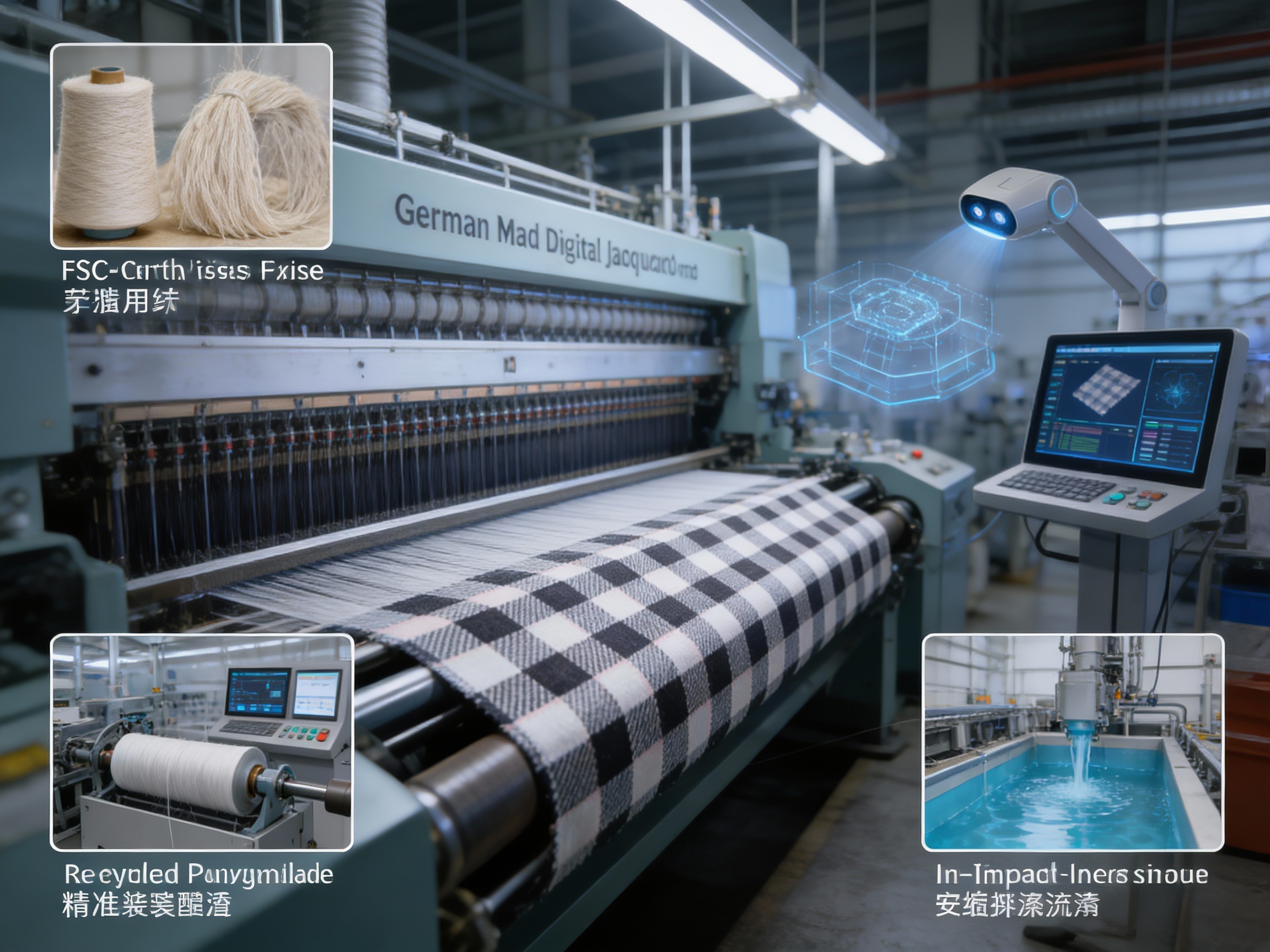
- Sustainable Sourcing: Viscose is sourced from FSC-certified forests, ensuring that raw materials come from responsibly managed resources. Polyamide is often recycled, reducing the environmental impact of production.
- Computer-Controlled Blending: Fibers are mixed in a controlled environment using digital algorithms to ensure uniform distribution. This prevents clumping and ensures that every inch of the fabric has the same blend ratio, leading to consistent performance.
The blending process is monitored by AI-powered sensors that adjust fiber ratios in real time, eliminating human error and ensuring batch-to-batch consistency.
3.2 Jacquard Weaving: Digital Precision
Jacquard weaving is a complex technique that requires high precision, and the manufacturer uses state-of-the-art digital jacquard looms (imported from Germany) with 1200+ needles per inch. This allows for intricate patterns and exact pattern alignment:
- Digital Design: The check pattern is created using CAD software, which translates the design into a digital code that the looms use to weave the fabric. This ensures that every roll has the same pattern, with no variation in size or alignment.
- Real-Time Quality Control: 3D scanners attached to the looms continuously check the fabric for pattern defects, fiber density, and weave consistency. Any issues are flagged immediately, reducing waste and ensuring only high-quality fabric reaches the market.
The looms operate at a speed of 300 picks per minute, but the quality control systems slow down production only when defects are detected—balancing efficiency with quality.
3.3 Post-Dyeing and Finishing: Enhancing Performance and Aesthetics
After weaving, the fabric undergoes a series of post-dyeing and finishing processes that enhance its performance and appearance:
- Low-Impact Dyeing: The fabric is dyed using a closed-loop system that recycles 90% of the water used, reducing water consumption by 30% compared to traditional dyeing methods. The dyes are also free from harmful chemicals (e.g., azo dyes), making the fabric safe for skin contact.
- Finishing Treatments:
- Calendering: A process that uses heat and pressure to create the subtle lustre on the light grey background.
- Anti-Pilling: A chemical treatment that prevents fiber breakage and pilling, ensuring the fabric stays smooth after multiple washes.
- Stain Resistance: A water-based coating that repels liquid stains without compromising breathability.
Each finishing step is tested for effectiveness: the anti-pilling treatment is validated using the ASTM D3514 test, and the stain resistance is confirmed via the AATCC 118 test.
4. Application Scenarios: Versatility in Design
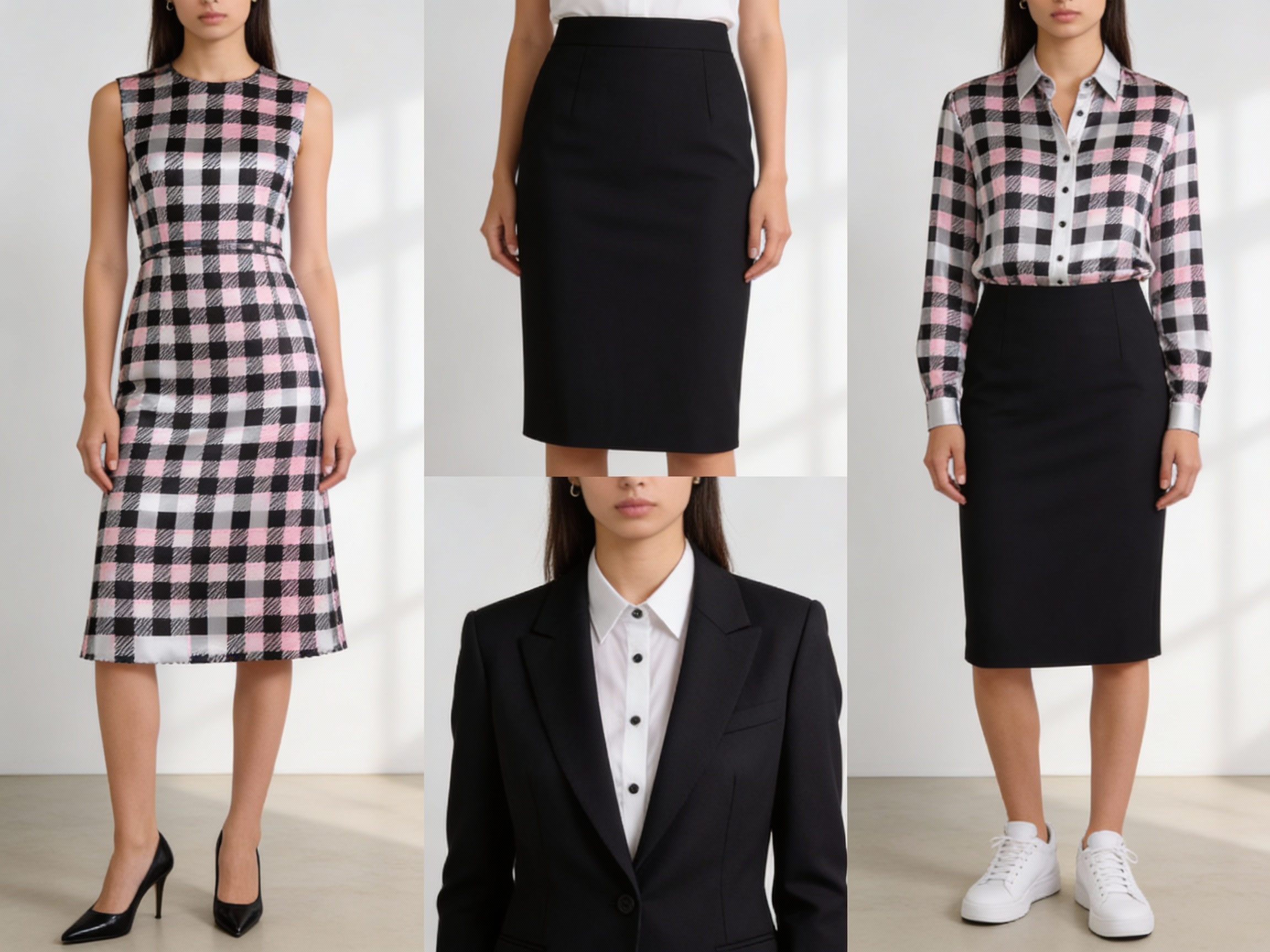
The Black & White Jacquard Pattern Fabric’s unique blend of structure, stretch, and aesthetic appeal makes it suitable for a wide range of garments. Below are some key applications:
4.1 Silky Dresses: Elegance and Comfort
The fabric’s drape and subtle sheen make it perfect for silky dresses—whether it’s an A-line dress for a cocktail party or a shift dress for the office. The stretch allows the dress to move with the wearer, while the opacity ensures modesty. The check pattern adds visual interest without being overwhelming, making it a versatile choice for various occasions.
4.2 Textured Skirts: Structure and Movement
For skirts, the fabric’s structure is ideal for pencil skirts, midi skirts, and A-line skirts. The polyamide component helps the skirt retain its shape, while the spandex adds stretch for easy movement. The check pattern adds a modern twist to classic skirt silhouettes, making them suitable for both casual and formal wear.
4.3 Classic Shirting: Modern Twist on a Timeless Style
The fabric is a great choice for tailored shirts. Its opacity eliminates the need for lining, and the stretch adds comfort for long days at work. The pale pink shadow on the black checks adds a subtle modern touch to the classic black-and-white shirting, making it suitable for both professional and casual settings.
4.4 Structured Outerwear: Durability and Elegance
For outerwear like blazers or jackets, the fabric’s durability and structure are key. The polyamide component resists abrasion, making it suitable for frequent wear, while the subtle sheen elevates the outerwear from casual to formal. The check pattern adds a unique design element to otherwise plain outerwear.
5. Q&A Section: Addressing Common Questions
To help designers and consumers make informed decisions, here are answers to common questions about the Black & White Jacquard Pattern Fabric:
Q1: What is the minimum order quantity (MOQ) for this fabric?
A1: The MOQ is 500 grams, which is flexible for both small-batch designers and large-scale manufacturers. This low MOQ allows emerging designers to test the fabric without committing to large quantities, while also meeting the needs of mass production.
Q2: How should this fabric be cared for to maintain its quality?
A2: To preserve the fabric’s appearance and performance, follow these care instructions:
- Machine wash in cold water on a gentle cycle.
- Avoid bleach and fabric softeners.
- Tumble dry on low heat or hang dry (hanging dry is preferred to prevent shrinkage).
- Iron on low temperature if needed (use a pressing cloth to protect the sheen).
Q3: Can the fabric be customized in terms of pattern, color, or material blend?
A3: Yes, the manufacturer offers full customization options:
- Pattern: Adjust the check size, add/remove colors (e.g., replace pale pink with another accent color), or modify the pattern entirely.
- Color: Custom dyeing to match specific brand colors or design requirements.
- Material Blend: Minor adjustments to the blend ratio (e.g., increase spandex for more stretch or add recycled polyester for sustainability).
Q4: Is this fabric suitable for sustainable fashion lines?
A4: Yes, the fabric aligns with sustainable fashion principles in several ways:
- Sustainable sourcing: Viscose from FSC-certified forests, recycled polyamide options.
- Low-impact manufacturing: Closed-loop dyeing reduces water and chemical waste.
- Durability: The fabric’s long lifespan reduces the need for frequent replacements, supporting circular fashion.
Q5: What is the lead time for bulk orders?
A5: For standard orders (no customization), the lead time is 7-10 days. For customized orders, it’s 2-3 weeks, depending on the complexity of the request. The manufacturer also offers express shipping for urgent orders (additional cost applies).
6. Market Impact and Future Trends
The Black & White Jacquard Pattern Fabric has already made an impact in the textile market, thanks to its unique blend of aesthetics and performance. It has been adopted by both emerging designers and established fashion brands, who praise its versatility and quality. Looking ahead, the fabric is well-positioned to capitalize on key trends in the fashion industry:
- Timeless Elegance: Black and white remains a staple in fashion, and the fabric’s classic design ensures it will stay relevant for years to come.
- Sustainability: As consumers demand more eco-friendly products, the fabric’s sustainable sourcing and manufacturing processes will become even more valuable.
- Customization: The ability to customize the fabric’s pattern, color, and blend will appeal to brands looking to create unique, differentiated products.
Industry reports predict that the global jacquard fabric market will grow at a CAGR of 5.2% between 2024 and 2030, driven by demand for premium, sustainable textiles (Textile Institute, 2023). The Black & White Jacquard Pattern Fabric is well-positioned to capture a significant share of this market.