
Black and White Jacquard Pattern Fabric: Structure, Style, Performance, and Manufacturing Excellence
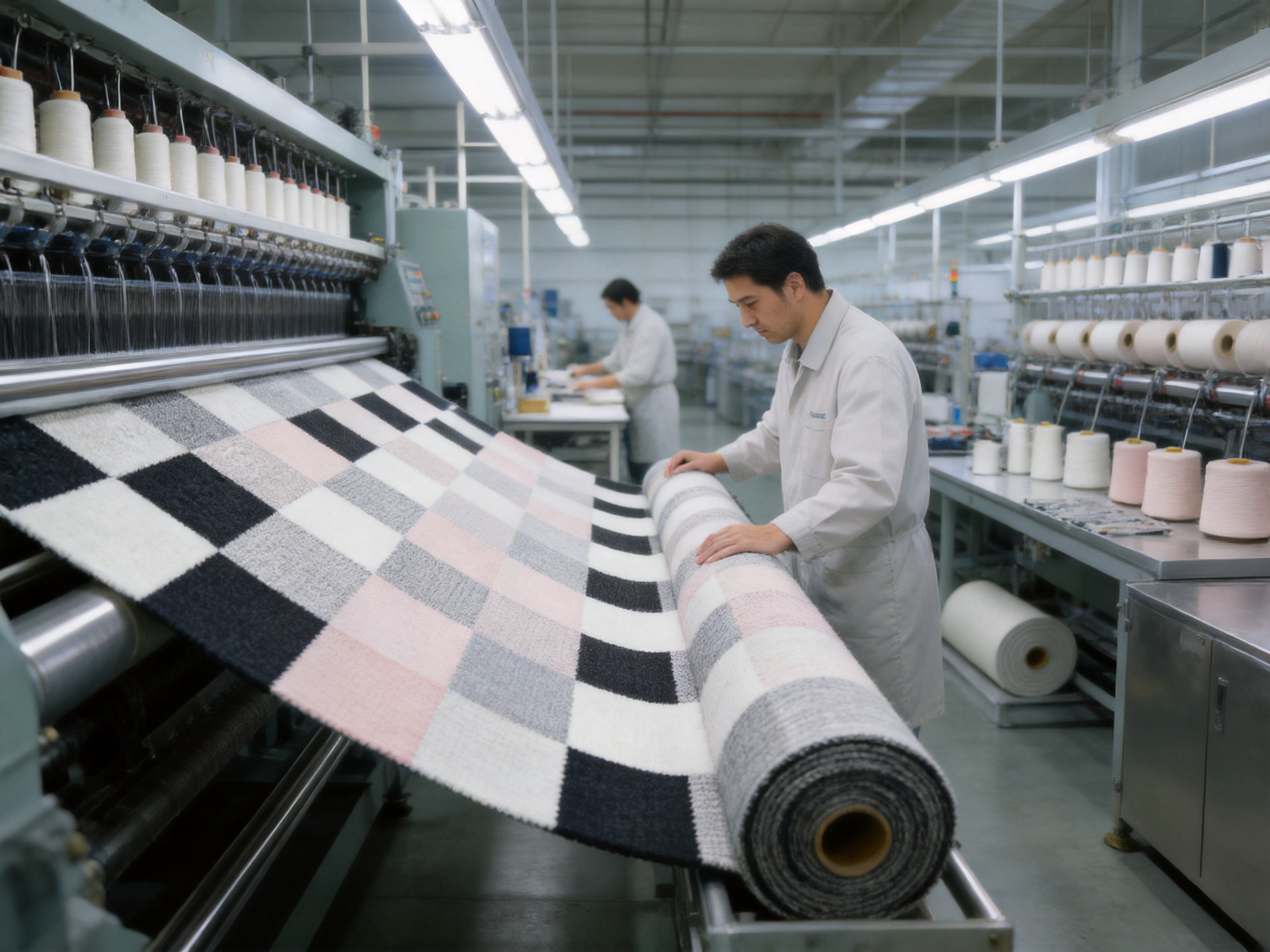
Black and white jacquard pattern fabric combines graphic design, dimensional texture, and dependable wearability in a material created for distinctive fashion garments. This fabric features a bold check arrangement in black and white, with pale pink shadowing alongside the black lines and a light grey ground that offers a discreet lustre. The result is a sophisticated textile with visual depth rather than a flat printed appearance.
Designed for structured dressmaking, the fabric is fully opaque and has a slight sheen. Its balanced composition of viscose, polyamide or polyester, and spandex brings together softness, resilience, and controlled stretch. These characteristics make it suitable for dresses, skirts, fashion separates, jackets, and other garments where a polished appearance and stable construction are important.
Unlike an ordinary printed check fabric, a jacquard textile develops its design through the arrangement of yarns during weaving or knitting. This construction gives the surface a more substantial handle and creates a pattern that is integrated into the fabric rather than simply placed on top. The black-and-white geometry therefore remains visually compelling from different angles and works well in both classic and contemporary apparel design.
Product Overview
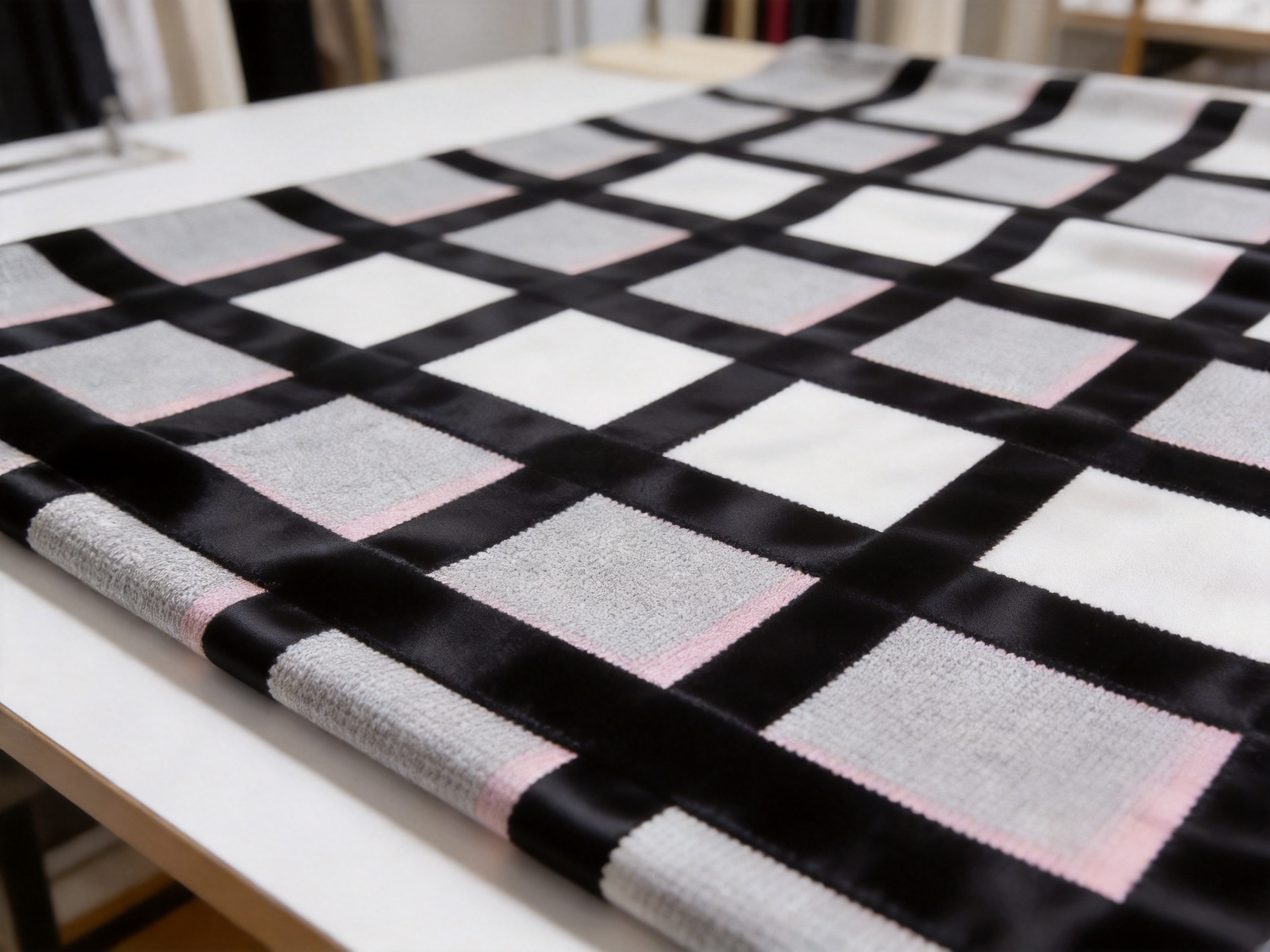
The fabric belongs to the knitted jacquard fabric category. Its appearance is defined by a strong geometric check pattern softened by subtle color transitions. Black lines provide contrast, pale pink shadows add refinement, and the light grey background prevents the design from appearing excessively harsh. A restrained surface lustre gives the fabric a dressier character without making it overly glossy.
The material specification is listed as viscose, polyamide or polyester, and spandex. Each component contributes a different functional quality. Viscose is valued for its smooth touch, fluid appearance, and ability to take color attractively. Polyamide or polyester contributes strength, dimensional stability, abrasion resistance, and ease of care. Spandex introduces controlled elasticity, helping garments accommodate movement while maintaining a neat silhouette.
The minimum order quantity is 500 grams. This relatively accessible quantity can be useful for independent designers, small fashion studios, sample rooms, costume departments, and buyers who want to evaluate the material before committing to a larger production program. Larger apparel manufacturers may also use the fabric for coordinated seasonal collections or selected statement garments.
Because the fabric is fully opaque, it can often be used without a heavy secondary layer. This supports clean garment construction and allows the check pattern to remain the visual focus. Depending on the design, a lightweight lining may still be selected for comfort, easier dressing, or a smoother interior finish, but the fabric itself provides substantial coverage.
The combination of structure and slight stretch distinguishes this material from many conventional fashion checks. It is firm enough for tailored silhouettes, yet the spandex content can make fitted styles more comfortable. The fabric is therefore appropriate for designs that need both visual authority and practical wearability.
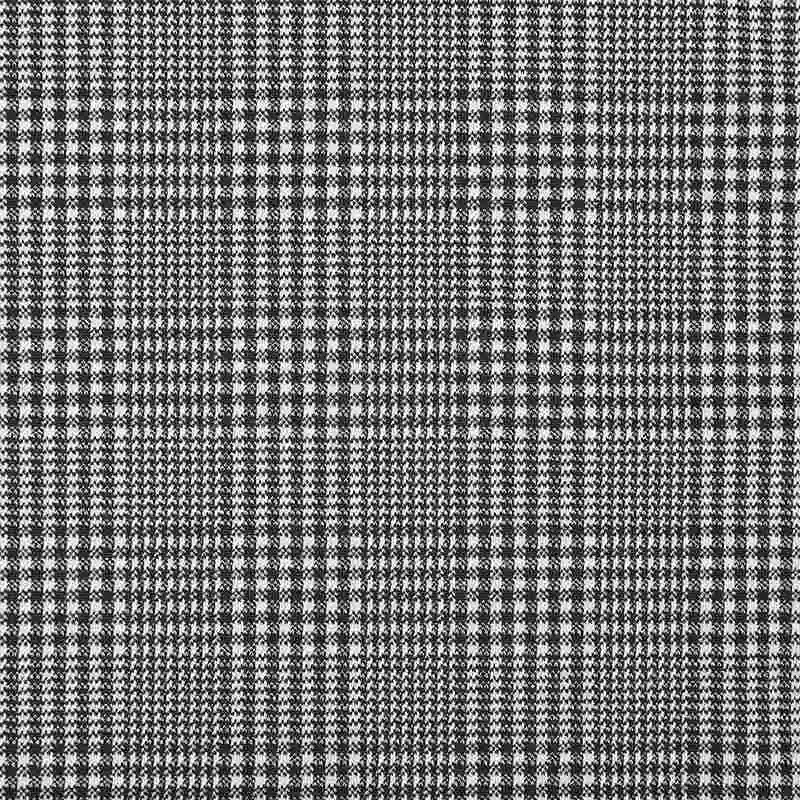
Black And White Jacquard Pattern Fabric
The Visual Character of the Jacquard Pattern
The primary design language of this fabric is geometric. Checks communicate order, precision, and timeless style, but the additional pale pink shadowing gives the pattern greater sophistication than a simple two-color grid. The light grey ground adds a softer transition between the dark lines and the surrounding garment design.
Black and white textiles are highly adaptable because they can be styled with a broad range of accessories and complementary colors. In this fabric, however, the presence of pale pink and grey creates additional opportunities. Designers can coordinate the material with blush, rose, charcoal, silver, cream, or muted lavender. Alternatively, a completely monochromatic styling approach can emphasize its architectural character.
The slight lustre is another important visual feature. A matte surface would produce a quieter, more casual effect, while a high-gloss surface might appear overly formal or reflective. The restrained sheen occupies a useful middle ground. It catches light across the raised or patterned areas and gives the garment a more refined finish, particularly under indoor lighting, evening illumination, or photography.
Jacquard construction also gives the surface a sense of texture. Even when the pattern is viewed from a distance, the fabric can appear more dimensional than a standard printed cloth. At close range, the arrangement of yarns and the interaction of light with the surface create subtle changes in tone. This quality helps a simple garment pattern look more considered and premium.
The check scale is especially important when planning a garment. Larger checks can make a bold statement on a skirt, coat, or simple shift dress. Smaller or more closely arranged checks may be more suitable for fitted bodices, sleeves, or separates. Pattern placement should be considered carefully so that seams, darts, pockets, and hems do not interrupt the geometry in an unintended way.
Suitable Color Combinations
The fabric can be used as the central visual element of an outfit or combined with solid-color materials. Black can be repeated in trims, buttons, belts, or footwear. Light grey can be used for lining, knit accessories, or coordinating separates. Pale pink can add a feminine accent without overpowering the graphic structure.
For a modern urban look, the fabric may be paired with black tailoring, dark leather accessories, and minimal silver hardware. For a softer presentation, designers can use cream, blush, or warm grey. A strong color accent such as cobalt blue, deep red, or emerald green can also create a fashion-forward contrast, provided that the garment design remains sufficiently simple.
Material Composition and Functional Benefits
The blend of viscose, polyamide or polyester, and spandex is designed to balance comfort, appearance, and performance. Blended fabrics are often selected when a single fiber cannot provide all the characteristics required by a finished garment. Here, the soft and attractive qualities of viscose are supported by synthetic fibers that help the material withstand regular use and retain its shape.
Viscose Contribution
Viscose is known for its smooth hand and elegant drape. It can provide a pleasant surface next to the skin and can help a garment move naturally as the wearer walks. In a jacquard construction, viscose may also contribute to the depth of color and the soft visual transitions between the black, grey, and pale pink areas.
For dressmaking, viscose can make a structured fabric feel less rigid. This is beneficial when creating dresses or skirts that need definition without appearing stiff. The exact drape will depend on fabric weight, knitting structure, finishing, and garment pattern, but the viscose component generally supports a more comfortable and refined handle.
Polyamide or Polyester Contribution
The product specification identifies the synthetic component as polyamide or polyester. Both fiber families are widely used in apparel because they can contribute strength, durability, and dimensional stability. They also support consistent production and help a fabric maintain its appearance during handling and wear.
Polyamide is recognized for toughness, abrasion resistance, and a smooth technical feel. Polyester is valued for stability, resilience, ease of processing, and reliable color performance. Depending on the exact production specification, one or both may support the fabric’s resistance to stretching out, surface wear, and deformation during manufacturing.
This synthetic component is particularly useful in a patterned jacquard fabric. Geometric designs require stable construction so that checks remain visually balanced across the garment. A stable yarn system can help reduce distortion during cutting, sewing, pressing, and everyday use.
Spandex Contribution
Spandex provides elasticity and recovery. In a dress or skirt, this can improve comfort when the wearer sits, walks, reaches, or moves through daily activities. A small amount of stretch may also make a fitted garment easier to put on while allowing the designer to maintain a close silhouette.
Stretch does not eliminate the need for accurate patternmaking. The direction of stretch, recovery level, fabric weight, and garment ease should all be assessed before production. Nevertheless, the presence of spandex gives designers greater flexibility than a completely rigid jacquard material would offer.
Advantages Over Conventional Check Fabrics
One of the most important advantages of this product is its integrated jacquard appearance. A conventional printed fabric may offer a sharp design, but its surface can remain visually flat. Jacquard construction introduces a more developed textile character, making the fabric suitable for garments intended to look elevated and carefully made.
The design also offers more nuance than a basic black-and-white check. Pale pink shadowing and a light grey base create depth, allowing the pattern to appear bold without becoming severe. This makes the fabric suitable for both classic shirting concepts and more modern geometric fashion pieces.
Another advantage is opacity. Some lightweight fashion checks require a lining or underlayer to achieve adequate coverage. This fabric is described as fully opaque, giving manufacturers more freedom in garment construction. It can reduce concerns about transparency and allow the designer to focus on silhouette, seam placement, and finishing.
The slight sheen gives the material a more polished appearance than many everyday woven checks. It can transition from daywear to occasionwear depending on the garment design. A simple skirt may be appropriate for professional styling, while a tailored dress or evening top can take advantage of the fabric’s subtle reflective quality.
The blended construction is also advantageous when compared with a single-fiber textile. Viscose contributes comfort and visual softness, the synthetic component contributes stability and durability, and spandex contributes movement. The resulting balance is appropriate for modern consumers who expect clothing to look refined while remaining practical.
The 500-gram minimum order is another commercial benefit. Large minimums can discourage smaller buyers from testing a new material. A lower entry quantity makes sampling and limited production more accessible. Designers can order enough fabric for prototype development, fit testing, color coordination, and small-run sales before expanding their purchase volume.
Applications in Fashion Design
Structured Dresses
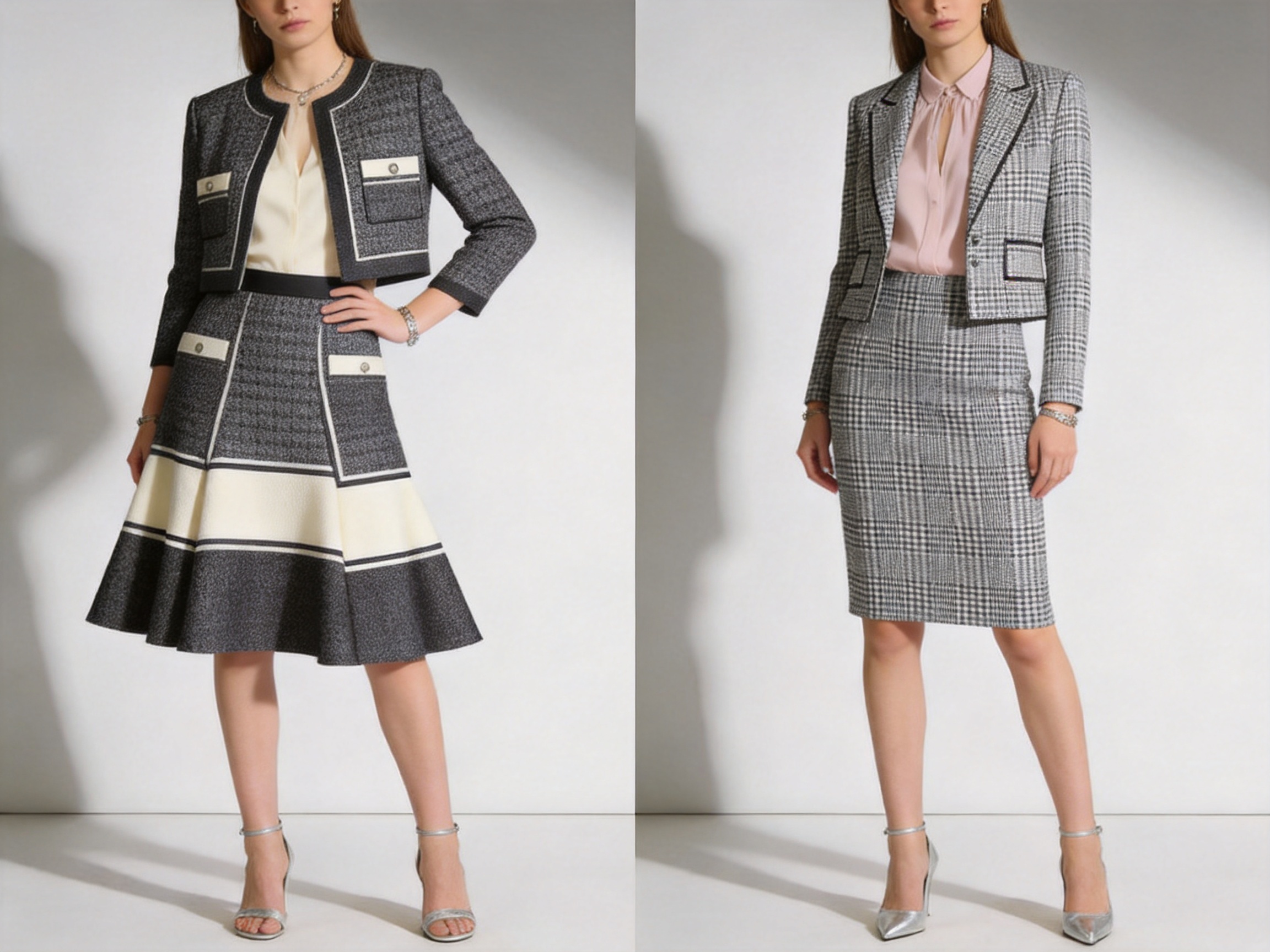
The fabric is particularly well suited to structured dresses. A shift dress can showcase the complete check pattern with minimal interruption. A fitted sheath dress can use the fabric’s stretch for comfort while preserving a clean outline. A panelled dress can place the checks in contrasting directions, creating an architectural effect.
For a more feminine design, the fabric may be used in a fit-and-flare dress with a controlled skirt. The pale pink shadowing can be emphasized through matching piping, a narrow belt, or coordinated lining. For a more formal result, a simple boat neckline, three-quarter sleeves, and carefully matched seams can highlight the sophistication of the jacquard surface.
Textured Skirts
A textured skirt is another natural application. Pencil skirts can benefit from the fabric’s stability and slight stretch, while A-line skirts can emphasize its body and geometric design. A straight skirt with a back vent may provide a polished office wardrobe option, whereas a pleated or panelled skirt can create a more directional fashion statement.
Designers should consider the relationship between the check pattern and the skirt’s fullness. Excessive gathering may obscure the geometry, while a smooth waistband and strategically placed seams can preserve the pattern’s visual rhythm. When the fabric is used for a wrap skirt, pattern alignment at the overlap should be planned during cutting.
Blouses and Shirting
Although the fabric has a structured character, it can also be used for distinctive shirting. A simple button-front shirt can present the check as a refined alternative to traditional woven plaid. Designers may use a plain black collar, cuffs, or placket to frame the patterned body.
Because the fabric includes a slight sheen, it can support an evening blouse with a relaxed shape. A draped neckline, gathered sleeve, or softly tailored shoulder can balance the graphic pattern. The material may also be suitable for a cropped top, peplum blouse, or coordinated two-piece ensemble.
Jackets and Fashion Separates
Light jackets, cropped blazers, waistcoats, and tailored vests can benefit from the fabric’s substantial appearance. A black-and-white jacquard jacket can serve as the focal point of an otherwise neutral outfit. A designer may use solid black facings or a plain grey lining to create a clean interior finish.
For separates, the material can be combined with black trousers, a grey skirt, or a pale pink knit top. A coordinated jacket and skirt set can create a strong geometric suit, while using the fabric for only one garment can make styling more accessible for everyday wear.
Accessories and Specialty Garments
Depending on its weight and flexibility, the fabric may also be considered for belts, decorative panels, handbags, hair accessories, or costume applications. These uses can make efficient use of small quantities and help designers develop a complete product story around the main garment.
Cutting, Sewing, and Garment Construction
Pattern matching is a central consideration when working with a geometric jacquard. Before cutting, the fabric should be laid flat and inspected for the dominant direction of the checks, the alignment of the shadowed lines, and any difference between the face and reverse. Pattern pieces should be arranged so that major visual lines meet as consistently as possible at side seams, centre fronts, pockets, and waistlines.
For symmetrical garments, the fabric should be cut with particular attention to the centre front and centre back. A slight mismatch can be noticeable in a bold check, especially on a tailored garment. Designers may need additional material to allow for matching, particularly when working with large pieces, directional layouts, or garments with multiple panels.
Needle and thread selection should be based on the actual fabric weight and stretch. A suitable stretch needle may be considered if the knitted structure and spandex content require it. The chosen stitch should accommodate movement without creating excessive bulk. Testing on a fabric sample is recommended before production begins.
Seam finishing should preserve the fabric’s appearance and comfort. Depending on the construction, overlocking, a clean turned finish, binding, or another controlled method may be suitable. Heavier seam treatments should be evaluated carefully because they can affect the garment’s drape and create unwanted ridges beneath the surface.
Pressing should be carried out with appropriate temperature, pressure, and protective layers. Excess heat may influence synthetic fibers or affect the fabric’s lustre. A pressing cloth and a test on an unused edge can help reduce risk. Since the surface has a jacquard texture, direct aggressive pressing may flatten the design or create shine in areas where it is not wanted.
Garment makers should also evaluate the fabric’s recovery after stitching. If the garment is close fitting, seam stability and hem behavior are important. A sample garment or toile can reveal whether additional ease, stabilizing tape, lining, or interfacing is needed.
Manufacturing Process and Production Strengths
The manufacturing value of this fabric begins with the coordination of yarn selection, knitting structure, pattern development, dyeing, finishing, inspection, and sales support. A high-quality jacquard product is not created by pattern design alone. Its performance depends on how accurately each stage is managed and how well the stages work together.
Yarn Preparation
Yarn preparation establishes the foundation for fabric consistency. The company produces, processes, and sells drawn textured yarn, including DTY polyester yarn. Drawn textured yarn is commonly used to provide bulk, flexibility, and a more textile-like surface compared with a completely smooth filament yarn. Consistent yarn preparation can contribute to even fabric formation and stable color uptake.
For a geometric jacquard, yarn uniformity is especially important. Variations in yarn thickness, tension, or surface character can influence the clarity of pattern boundaries. Careful preparation supports cleaner transitions between the black, grey, white, and pale pink areas.
Knitted Jacquard Formation
The knitted jacquard process arranges different yarns or color effects within a programmed knitted structure. This allows the fabric to develop a patterned face while retaining the flexibility associated with knit construction. The fabric’s check design is therefore integrated into the textile formation rather than applied only after the base material has been produced.
Programming and machine adjustment are important at this stage. Pattern repeat, stitch density, yarn tension, and fabric width must be coordinated to achieve a balanced result. Consistent production settings help ensure that successive batches maintain a similar appearance and handle.
The knitted structure also needs to be managed so that the fabric offers an appropriate combination of body and comfort. Too much looseness may reduce stability, while excessive compactness may make the fabric feel rigid. The product’s intended applications in dresses, skirts, shirting, and structured fashion pieces require a carefully balanced construction.
Dyeing and Color Development
Color development is central to this fabric’s identity. The contrast between black lines, white or light areas, pale pink shadowing, and a light grey ground must remain attractive and controlled. Dyeing and color management therefore play an important role in achieving the intended visual effect.
Blended fibers can present technical challenges because different fiber types may respond differently to dyes and processing conditions. Appropriate dye selection, temperature control, timing, and finishing procedures are necessary to achieve a harmonious appearance. The company’s experience with blended fabrics such as polyester and spandex supports the coordinated handling of mixed-fiber materials.
Color evaluation should consider both laboratory standards and visual inspection. A fabric may appear different under daylight, retail lighting, studio lighting, or warm indoor illumination. Because this product includes subtle grey and pale pink details, careful review is particularly valuable.
Finishing
Finishing affects the final hand, width, surface appearance, dimensional stability, and sewing behavior. A controlled finishing process can help the fabric achieve the slight lustre and structured handle expected by fashion buyers. It may also help stabilize the material after knitting and dyeing.
Finishing must be balanced. Excessive treatment could reduce softness or limit stretch recovery, while insufficient stabilization could lead to distortion during cutting and sewing. The objective is to preserve the jacquard texture, maintain the visual clarity of the checks, and deliver a fabric that behaves consistently in garment production.
Inspection and Quality Control
Inspection is essential for a patterned textile. Quality checks may include reviewing the fabric surface, checking pattern continuity, evaluating color consistency, measuring width, looking for knitting faults, and observing stretch and recovery. For buyers, these checks support reliable production planning and reduce the risk of unexpected variation.
Patterned fabrics also benefit from roll inspection because a small issue repeated across a long length can affect many garments. Identifying faults before cutting allows manufacturers to plan around them or request clarification. Clear communication between the mill, buyer, and garment manufacturer helps protect both quality and efficiency.
Company Capabilities and Supply Support
Hangzhou Jinfeng Textile Co., Ltd. operates in the textile manufacturing environment of Xiaoshan District, Hangzhou, Zhejiang Province. The company’s stated activities include the production and processing of blended fabrics such as polyester and spandex, post-dyeing, finishing, sales of blended fabrics, and the production, processing, and sales of DTY polyester yarn.
The company reports an operating area of approximately 32.6 acres and a plant area of about 18,000 square meters. This scale indicates an established production base rather than a purely trading-oriented operation. A dedicated plant environment can support closer coordination among manufacturing, processing, finishing, inspection, and order management.
Its integration of research and development, production, and sales is a useful strength for buyers seeking a responsive textile partner. Integrated operations can shorten communication paths when customers require material adjustments, production guidance, color discussions, or support with repeat orders.
The company’s experience with both yarn and fabric is also strategically valuable. Yarn knowledge supports a deeper understanding of fabric behavior, while fabric processing experience helps connect raw material decisions with the requirements of finished garments. This combination is particularly relevant for jacquard products, where yarn characteristics directly influence pattern clarity and surface texture.
Post-dyeing and finishing capabilities provide additional control over the final material. These stages influence softness, lustre, stability, and appearance, so having them within the company’s broader service structure can support better coordination. Buyers can discuss the complete fabric result rather than evaluating knitting or yarn preparation in isolation.
The company describes its business principle as cooperation and mutual benefit, with a focus on serving customers in domestic and international markets. For overseas buyers, this orientation is relevant because successful textile sourcing depends on more than fabric availability. It also requires communication about specifications, sampling, lead times, packing, documentation, and repeatability.
Why the Product Is Suitable for International Buyers
International fashion buyers often need fabrics that combine recognizable design with broad market appeal. The black-and-white palette gives this product a dependable commercial foundation, while the pale pink shadowing and grey lustre create enough differentiation to avoid appearing generic.
The fabric can serve multiple market segments. In contemporary womenswear, it can support dresses, skirts, blouses, and jackets. In boutique collections, it can provide a distinctive statement surface. In uniform-inspired or tailored fashion, the check design can communicate precision and professionalism. In occasionwear, the sheen and jacquard texture can elevate the material beyond an ordinary daywear textile.
The material also supports different levels of production. The 500-gram minimum order allows smaller buyers to begin with sampling or limited production. Larger customers can use the same fabric for repeated seasonal programs if color, width, handle, and construction meet their specifications.
Its blended composition is aligned with contemporary expectations for comfort and performance. Consumers increasingly look for clothing that is attractive but not difficult to wear. The presence of viscose and spandex supports comfort, while the synthetic component contributes practical durability and stability.
Product Development Recommendations
Before placing a production order, buyers should request a physical sample and assess the fabric under intended conditions. Important observations include the face and reverse, surface texture, opacity, width, stretch direction, recovery, drape, color balance, and reaction to pressing.
Designers should test the product in the actual garment category they intend to produce. A fabric that performs well in a skirt may behave differently in a close-fitting bodice or a jacket. Sample garments reveal how the checks align over curves, how seams influence the pattern, and whether lining or interfacing is required.
Buyers should also confirm the exact fiber specification. The product description refers to viscose, polyamide or polyester, and spandex. The precise fiber percentages, yarn specifications, fabric weight, usable width, stretch percentage, and care recommendations should be confirmed as part of the technical order documentation.
Color approval is important because the design includes subtle tonal elements. A buyer may request a lab dip, strike-off, or approved reference sample before bulk production. The approved standard should be retained for future repeat orders and compared under consistent lighting conditions.
Packaging and roll handling should be discussed as well. Jacquard fabrics benefit from careful folding or rolling that protects the face from crushing and reduces unnecessary pressure on the patterned surface. Appropriate labeling can help distinguish production lots and support warehouse management.
Care and Maintenance Considerations
Care instructions should be based on the final tested fabric rather than assumptions about the individual fibers. Blended jacquard materials may require controlled washing, moderate temperature, and careful drying to preserve shape and surface appearance. Buyers should obtain recommended care information from the manufacturer and validate it through garment testing.
Excessive heat should be avoided unless the fabric has been specifically tested for it. Synthetic fibers and spandex may be sensitive to high temperatures, while strong direct pressing can influence surface lustre. A low or moderate pressing temperature with a protective cloth may be more appropriate.
Garments should be stored in a way that prevents prolonged crushing. For dresses and jackets, suitable hangers can help preserve the silhouette. Skirts and smaller items may be folded with tissue or a smooth protective layer if the fabric is likely to develop pressure marks.
Because the fabric has a structured and textured appearance, minor variations in lighting may change how the pattern is perceived. This is a normal characteristic of lustrous textiles and does not necessarily indicate a defect. Proper care helps preserve the intended balance between the dark checks and the lighter background.
Frequently Asked Questions
What type of fabric is this product?
It is a knitted jacquard fabric featuring a black-and-white check design, pale pink shadowing, and a light grey background with a subtle lustre.
What fibers are used in the material?
The listed composition is viscose, polyamide or polyester, and spandex. Buyers should confirm the exact percentages and the final synthetic fiber specification before ordering.
Is the fabric transparent?
The product is described as fully opaque. This makes it suitable for dresses, skirts, shirting, and other garments where reliable coverage is required.
Does the fabric stretch?
It contains spandex, so it is expected to provide some elasticity and comfort. The exact stretch and recovery should be measured from a production sample before patternmaking.
What garments can be made from it?
Recommended applications include structured dresses, textured skirts, fitted separates, blouses, shirting, light jackets, cropped blazers, vests, and selected accessories.
What makes it different from a printed check fabric?
The jacquard construction integrates the pattern into the textile structure, giving the fabric greater surface depth and a more developed hand than a basic printed check. The subtle lustre and dimensional appearance further enhance its fashion value.
What is the minimum order quantity?
The stated minimum order quantity is 500 grams. Buyers should confirm whether the minimum applies to a specific color, design, production lot, or custom requirement.
Is the fabric suitable for small fashion businesses?
Yes. The 500-gram minimum can make sampling and limited production more accessible to independent designers, boutiques, small studios, and emerging brands.
How should the check pattern be handled during cutting?
Pattern alignment should be planned at the centre front, centre back, side seams, pockets, waistlines, and other prominent construction points. Additional fabric may be needed to achieve accurate matching.
Can the fabric be used for professional clothing?
Yes. Its structured appearance, restrained sheen, neutral palette, and geometric design can work well in professional dresses, skirts, blouses, jackets, and coordinated separates.
What should buyers request before bulk production?
Buyers should request a physical sample and confirm fiber percentages, weight, width, stretch, recovery, color standards, care recommendations, finishing details, packing, lead time, and quality inspection procedures.
What manufacturing strengths support this product?
The supplier reports capabilities in DTY polyester yarn, blended fabric production, post-dyeing, finishing, research and development, production, and sales. Its stated plant area and integrated operating structure support coordinated textile manufacturing.
Conclusion
Black and white jacquard pattern fabric offers a strong combination of visual identity, structural performance, and design flexibility. Its bold checks are refined by pale pink shadowing and a light grey lustrous background, creating a textile that can appear classic, contemporary, tailored, or occasion-ready depending on the garment design.
The viscose, polyamide or polyester, and spandex composition supports a balanced product concept. Softness, stability, durability, opacity, and controlled stretch work together to meet the needs of modern dressmaking. The material is particularly attractive for structured dresses and textured skirts, but its uses extend to shirting, blouses, jackets, vests, and fashion accessories.
Its principal advantages over conventional check fabrics include an integrated jacquard pattern, dimensional surface character, subtle sheen, full opacity, and a practical blended construction. The relatively low minimum order quantity also makes it accessible for sampling and small production runs.
Behind the product is a manufacturing organization with reported experience in DTY polyester yarn, blended fabrics, dyeing, finishing, research and development, production, and sales. This integrated capability can help buyers coordinate technical specifications, color development, finishing requirements, and repeat production more effectively.
For the best results, buyers should evaluate a physical sample, confirm the precise technical specification, test the material in the intended garment, and plan pattern matching carefully. With appropriate development and handling, this jacquard fabric can become a valuable foundation for polished fashion collections that require both graphic impact and dependable textile performance.
References
1. Product specification supplied for Black and White Jacquard Pattern Fabric, including material composition, minimum order quantity, design description, and application guidance.
2. Company information supplied for Hangzhou Jinfeng Textile Co., Ltd., including manufacturing location, plant area, business activities, and integrated research, production, processing, and sales structure.
3. Textile Institute, Textile Terms and Definitions, entries relating to jacquard structures, knitted fabrics, blended fibers, and textile finishing.
4. American Association of Textile Chemists and Colorists, guidance on textile color evaluation, colorfastness, and quality assessment.
5. International Organization for Standardization, general principles for textile testing, dimensional stability, fabric construction, and performance evaluation.