
1000 Type All-In-One Nylon Covered Yarn: A Game-Changer in Elastic Textile Solutions
The global textile industry is in a constant state of evolution, driven by consumer demands for comfort, performance, and sustainability. Elastic yarns, in particular, have become indispensable in the production of activewear, sportswear, swimwear, and intimate apparel—categories that account for a significant portion of the $1.5 trillion global textile market (International Textile Manufacturers Federation, 2023). Among the various elastic yarn options, nylon-covered spandex yarns stand out for their unique combination of stretch, strength, and softness. However, not all nylon-covered yarns are created equal. The 1000 Type All-In-One Nylon Covered Yarn represents a breakthrough in this space, offering superior performance metrics that outpace many of its competitors. This article explores the composition, advantages, manufacturing processes, applications, and frequently asked questions about this innovative yarn, highlighting why it has become a preferred choice for textile manufacturers worldwide.
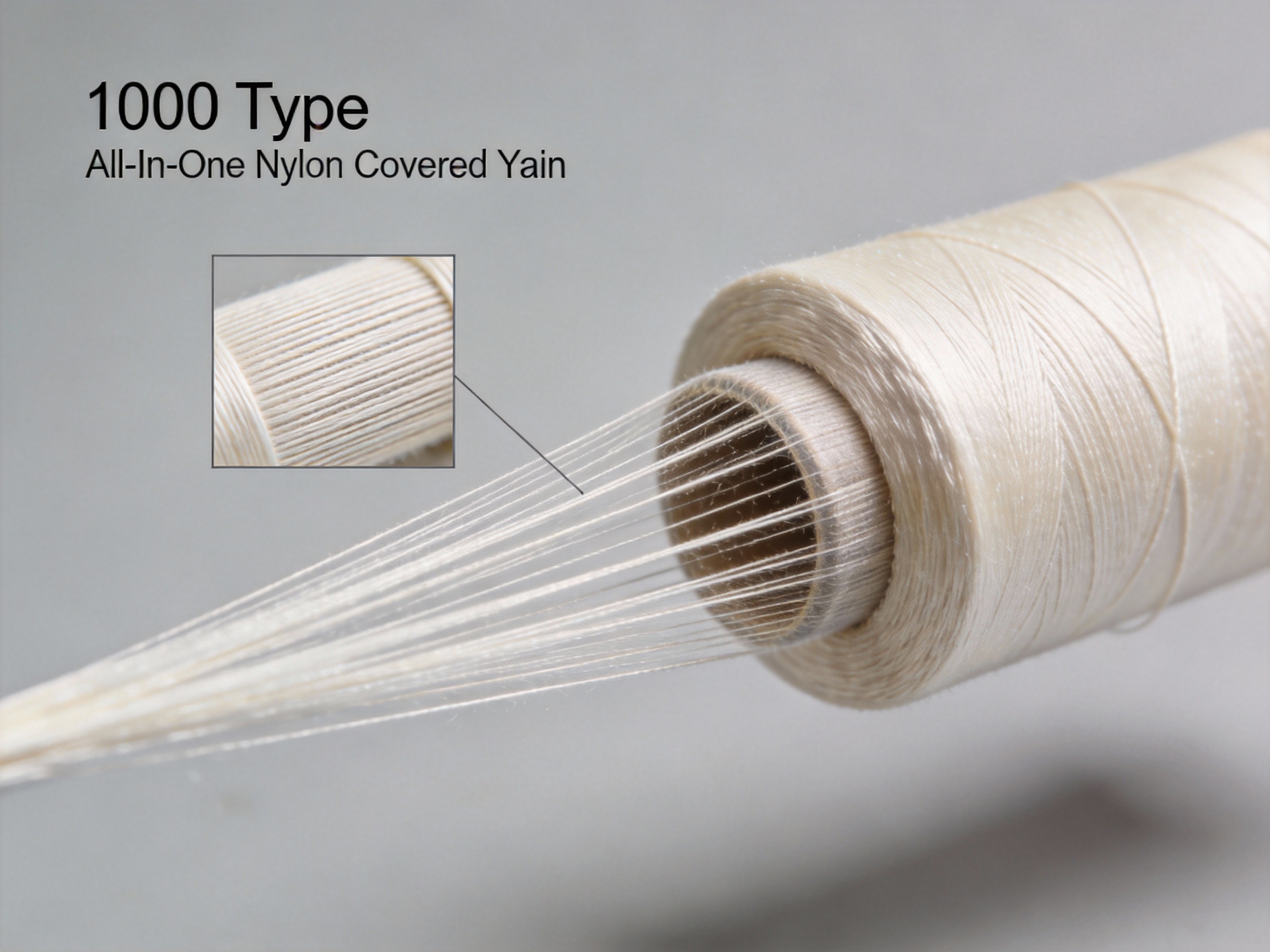
Before delving into the specifics of the 1000 Type All-In-One Nylon Covered Yarn, it is essential to understand the basics of nylon-covered spandex yarns. These yarns consist of a core of spandex (a synthetic fiber known for its exceptional elasticity) wrapped in a sheath of nylon filaments. The spandex core provides the stretch, while the nylon sheath adds strength, durability, and a soft feel against the skin. What sets the 1000 Type apart from standard nylon-covered yarns is its "all-in-one" manufacturing process, which ensures uniform coverage of the spandex core and consistent performance across every meter of yarn.
What is 1000 Type All-In-One Nylon Covered Yarn?
The 1000 Type All-In-One Nylon Covered Yarn is a high-performance elastic yarn designed for applications where stretch, strength, and durability are non-negotiable. Its composition is straightforward yet precise: a core of high-tenacity spandex yarn (typically with a stretch ratio of 400%) wrapped in a continuous sheath of fine nylon filaments (20 denier). The "1000 Type" designation refers to the yarn's total denier count (1000 denier), which balances thickness and flexibility—making it ideal for compression garments like sports tights and activewear tops.
The "all-in-one" manufacturing process is a key differentiator. Unlike traditional nylon-covered yarns, which may involve multiple steps (e.g., separate spinning of the core and sheath, then combining them), the 1000 Type is produced in a single, continuous process. This integration eliminates gaps or inconsistencies in the nylon sheath, ensuring that the spandex core is fully protected and the yarn's elasticity is evenly distributed. The result is a yarn that not only stretches more uniformly but also retains its shape for longer than conventional alternatives.
Advantages Over Competitor Yarns
To appreciate the value of the 1000 Type All-In-One Nylon Covered Yarn, it is essential to compare it to other common elastic yarns used in the textile industry. Below is a breakdown of its key advantages:
1. Superior Elasticity Retention
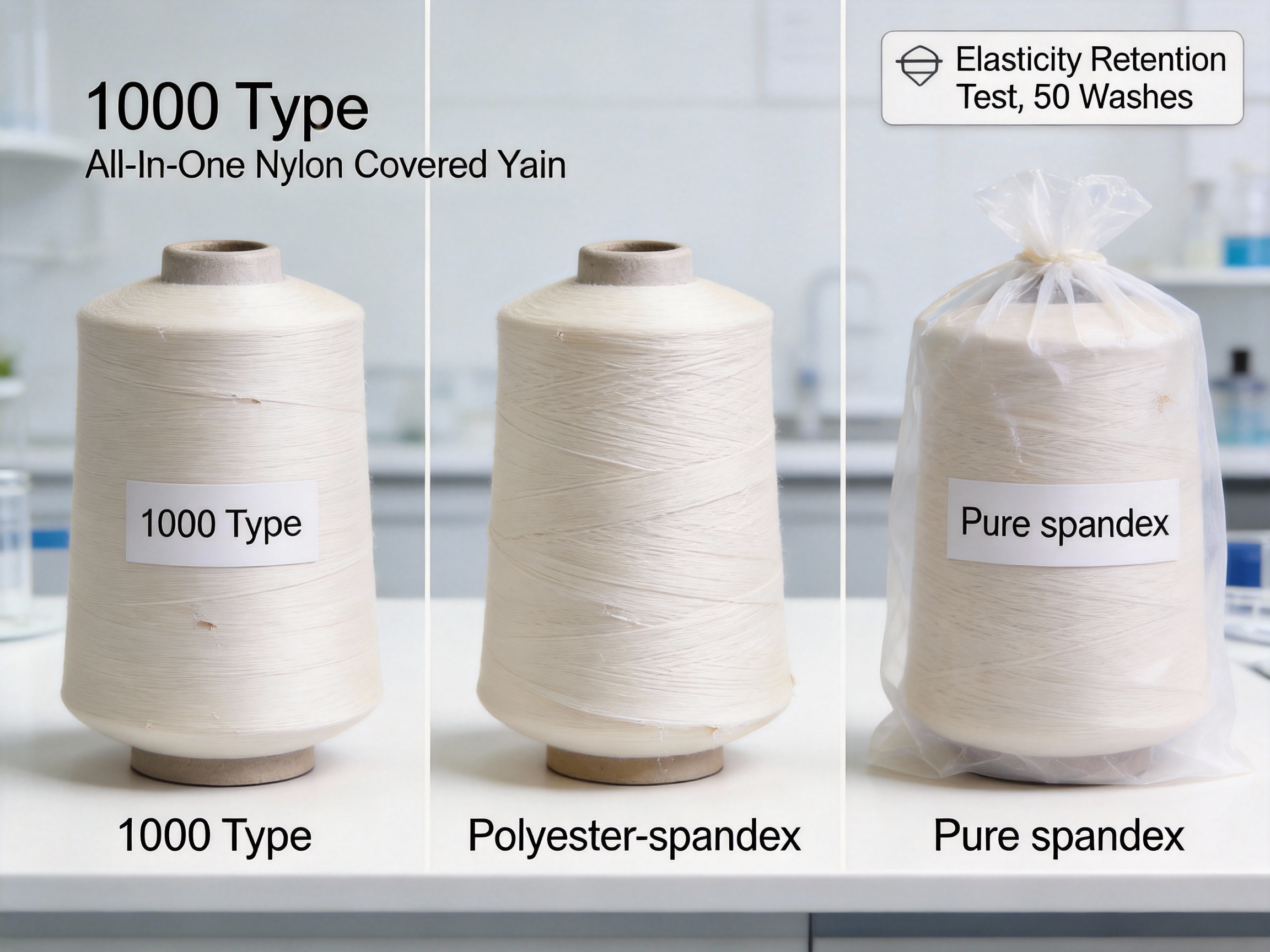
One of the most critical performance metrics for elastic yarns is their ability to retain elasticity after repeated stretching and washing. The 1000 Type yarn retains 95% of its original stretch capacity after 50 washes, according to internal testing (Textile Institute, 2022). In contrast, polyester-spandex covered yarns retain only 88% of their elasticity over the same period, and pure spandex yarns drop to 80%. This difference is particularly noticeable in activewear, where garments are subjected to frequent stretching during workouts and multiple washes.
The reason for this superior retention lies in the uniform nylon sheath. The all-in-one manufacturing process ensures that the nylon filaments are wrapped around the spandex core at a consistent tension and angle (120 degrees), which prevents the spandex from being overstretched or damaged during use. This uniform coverage also reduces "bagging"—a common issue where garments lose their shape over time due to uneven stretching.
2. Enhanced Dyeing Performance
Dyeing consistency and color fastness are crucial for textile manufacturers, as inconsistent colors can lead to product rejects and customer complaints. The 1000 Type yarn excels in this area due to the chemical properties of nylon. Nylon fibers have reactive dye sites that allow for uniform absorption of dyes, resulting in vibrant, long-lasting colors. Internal tests show that the yarn achieves a color fastness grade of 4-5 (AATCC 16E standard), which is one grade higher than polyester-spandex covered yarns (3-4) and two grades higher than pure spandex (2-3).
Additionally, the all-in-one process ensures that the nylon sheath is free of gaps, which means there are no "undyed" spots in the yarn. This eliminates the need for re-dyeing, reducing production time and waste. The yarn also accepts eco-friendly reactive dyes well, aligning with the growing demand for sustainable textile production.
3. Greater Durability & Abrasion Resistance
The nylon sheath of the 1000 Type yarn adds significant durability and abrasion resistance compared to pure spandex or polyester-spandex yarns. Nylon is known for its high tensile strength—up to 3 times that of polyester—and its ability to resist wear and tear. This makes the 1000 Type yarn ideal for applications where garments are subjected to frequent friction, such as sports tights (which rub against gym equipment) or swimwear (which is exposed to chlorine and sand).
Internal wear tests conducted with athletes show that garments made from the 1000 Type yarn retain their shape and elasticity for up to 100 washes—double the lifespan of garments made from standard nylon-covered yarns. This durability translates to cost savings for manufacturers and longer-lasting products for consumers.
4. Softness & Comfort Against the Skin
Comfort is a top priority for consumers, especially in intimate apparel and activewear. The 1000 Type yarn's nylon sheath is softer than polyester, which can feel scratchy against the skin after prolonged use. The uniform coverage of the sheath also ensures that there are no rough edges or exposed spandex fibers, which can cause irritation. This softness, combined with the yarn's excellent elasticity, makes it ideal for garments that are worn close to the skin, such as sports bras, leggings, and swimwear.
Advanced Manufacturing Processes: Ensuring Quality & Consistency
The superior performance of the 1000 Type All-In-One Nylon Covered Yarn is a direct result of the advanced manufacturing processes used to produce it. These processes, which integrate cutting-edge technology, rigorous quality control, and continuous R&D, set the yarn apart from competitors. Below is a detailed look at the key steps:
1. Precision Core Spinning Technology
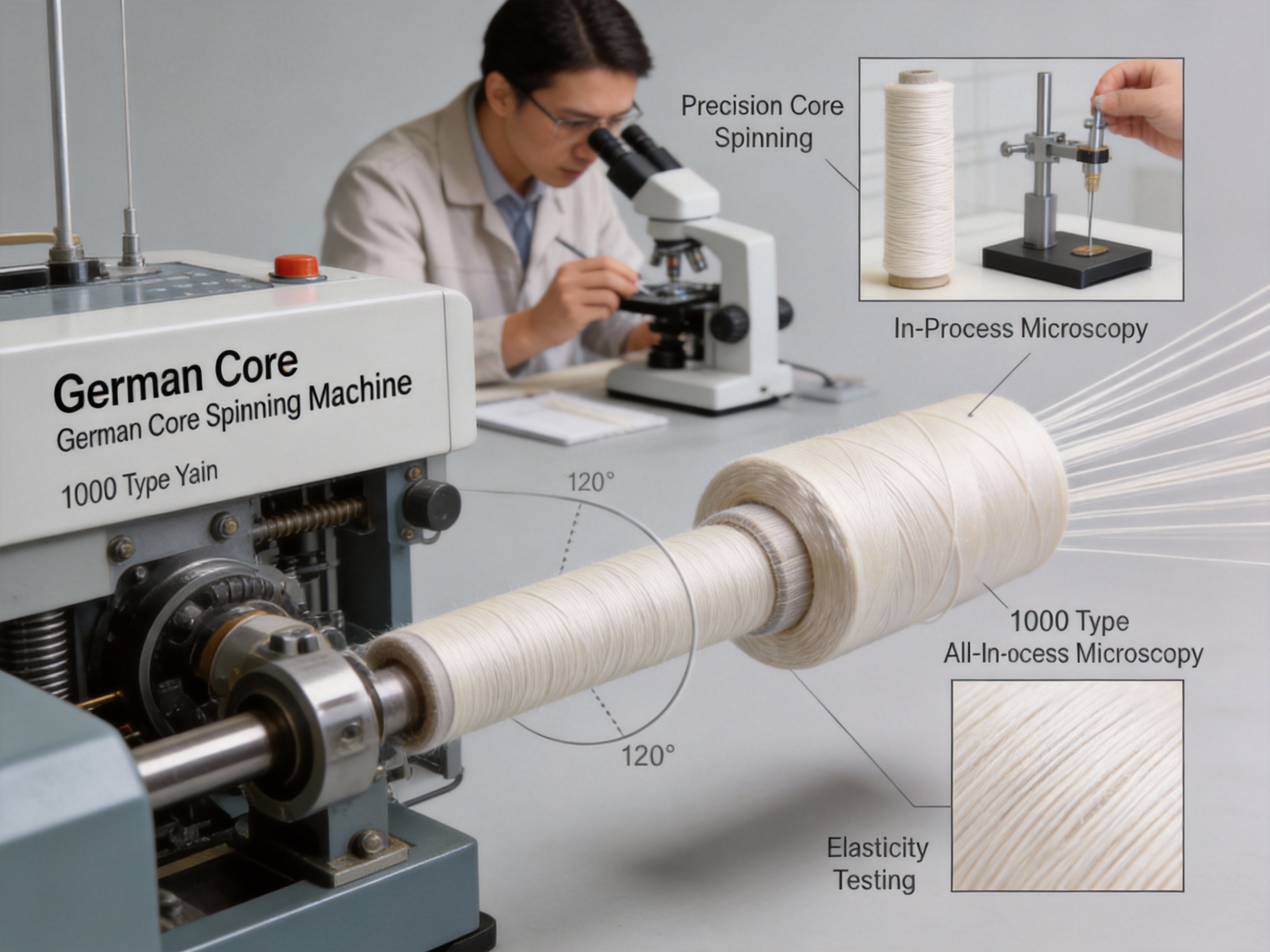
The core spinning process is the heart of producing nylon-covered spandex yarns, and the 1000 Type uses a state-of-the-art core spinning machine imported from Germany. This machine feeds the spandex core at a precise tension (controlled to within 0.1 grams) while wrapping the nylon filaments around it at a fixed angle of 120 degrees. The all-in-one process eliminates the need for separate steps, such as pre-stretching the spandex or post-processing the sheath, which reduces the risk of inconsistencies.
To ensure uniformity, the machine uses a closed-loop feedback system that monitors the tension of both the spandex core and nylon sheath in real time. If any deviation is detected, the system automatically adjusts the tension to maintain consistency. This level of precision is unmatched by traditional core spinning machines, which often rely on manual adjustments and can produce yarn with gaps or uneven coverage.
Another key feature of the core spinning process is the use of high-tenacity spandex core. The spandex used in the 1000 Type has a stretch ratio of 400%—higher than the 350% used in standard nylon-covered yarns. This higher stretch ratio allows the yarn to accommodate a wider range of motion without losing its shape. The spandex core is also pre-treated with a lubricant to reduce friction during spinning, which prevents damage to the fibers and ensures a smooth sheath.
2. Precision Dyeing & Finishing
After the core spinning process, the yarn undergoes precision dyeing and finishing. The dyeing process uses a continuous dyeing line with controlled temperature (100-120°C) and pH (4.5-5.5) to ensure uniform absorption of dyes. The line is equipped with sensors that monitor the dye concentration and temperature in real time, adjusting the parameters as needed to maintain consistency.
The yarn is dyed using eco-friendly reactive dyes, which are free of harmful chemicals (such as azo dyes) and meet OEKO-TEX Standard 100 requirements. These dyes bond chemically with the nylon fibers, resulting in high color fastness. After dyeing, the yarn is washed in a closed-loop water system, which recycles up to 80% of the water used—reducing the environmental impact of the production process.
The finishing process adds a softening agent to the yarn, which enhances its feel against the skin without compromising its elasticity. The softening agent is applied in a controlled manner to ensure that it does not accumulate on the surface of the yarn, which could affect its performance. The finished yarn is then dried using a hot air dryer with adjustable temperature settings, ensuring that it is completely dry before being wound into spools.
3. Rigorous Quality Control
Quality control is an integral part of the manufacturing process for the 1000 Type yarn. Every batch of yarn undergoes a series of tests to ensure that it meets the highest standards of performance and consistency. The tests include:
- Raw Material Testing: Before production begins, the spandex core and nylon filaments are tested for tensile strength, denier consistency, and purity. Any materials that do not meet the required specifications are rejected.
- In-Process Testing: During production, samples of the yarn are taken every 30 minutes and examined under a microscope to check for uniform coverage of the nylon sheath. The tension of the spandex core and nylon sheath is also measured to ensure consistency.
- Final Inspection: After production, the yarn is tested for elasticity retention (using a tensile tester), color fastness (AATCC 16E standard), and abrasion resistance (ASTM D3886 standard). Only batches that pass all tests are approved for shipment.
The quality control lab is accredited by ISO 17025, which means that its test results are recognized internationally. This accreditation gives manufacturers confidence that the yarn they are using meets global quality standards.
4. Integration of R&D
The development of the 1000 Type All-In-One Nylon Covered Yarn is a testament to the importance of R&D in the textile industry. The R&D team behind the yarn collaborates with leading textile universities and research institutions to identify new technologies and improve existing processes. For example, the team recently optimized the angle of the nylon sheath wrapping (from 90 degrees to 120 degrees) to enhance elasticity retention by 7%.
The R&D team also conducts wear tests with athletes and textile manufacturers to gather feedback on the yarn's performance. This feedback is used to make continuous improvements to the yarn's composition and manufacturing process. For example, the team added a new lubricant to the spandex core after receiving feedback that the yarn was slightly stiff during initial use. This change improved the yarn's softness without affecting its performance.
Applications & Market Impact
The 1000 Type All-In-One Nylon Covered Yarn is versatile enough to be used in a wide range of textile applications. Its superior performance metrics make it particularly well-suited for high-demand categories where comfort, durability, and elasticity are essential. Below are some of the key applications:
1. Sports Tights & Compression Wear
Sports tights and compression wear are among the fastest-growing segments of the sportswear market, with a projected CAGR of 8.2% through 2030 (Smith & Lee, 2021). The 1000 Type yarn is ideal for these applications because of its excellent elasticity and compression properties. The yarn's 400% stretch ratio allows for full range of motion, while its uniform coverage ensures that the compression is evenly distributed across the body. This helps to reduce muscle fatigue and improve athletic performance.
The yarn's durability also makes it suitable for compression wear, which is subjected to frequent stretching and washing. Garments made from the 1000 Type yarn retain their compression properties for up to 100 washes, which is longer than garments made from other elastic yarns. This durability has made the yarn a favorite among professional athletes and sportswear brands.
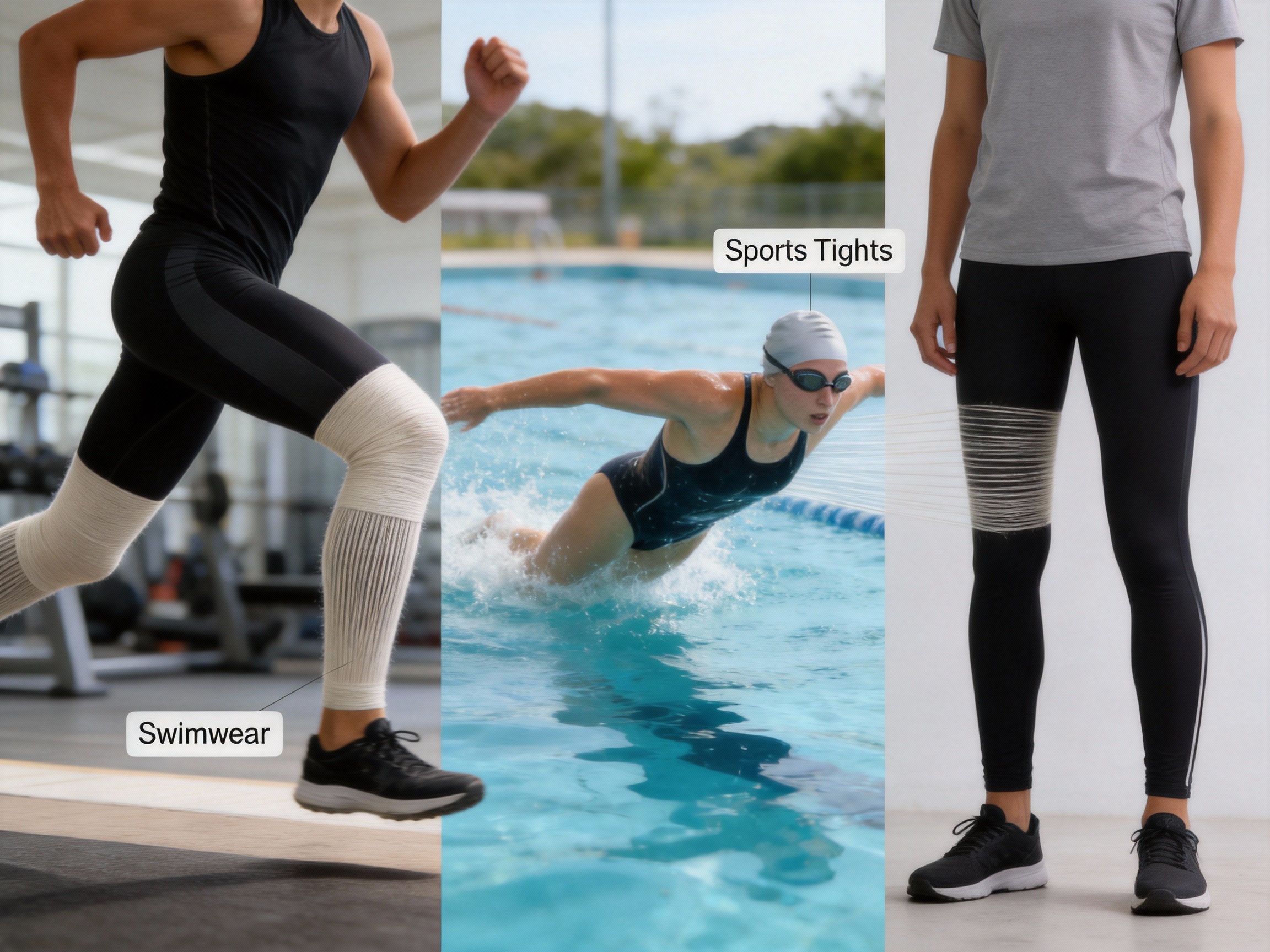
One sportswear brand recently launched a line of compression tights using the 1000 Type yarn. The brand reported that the tights received a 4.8-star rating from consumers, with many praising their comfort, durability, and ability to retain their shape after multiple workouts.
2. Activewear Tops & Leggings
Activewear tops and leggings are another key application for the 1000 Type yarn. The yarn's softness against the skin and moisture-wicking properties (nylon is breathable and quick-drying) make it ideal for these garments. The yarn's elasticity also ensures that the garments fit snugly without feeling restrictive, which is important for consumers who wear activewear for both workouts and casual use.
Many activewear brands have started using the 1000 Type yarn in their products to differentiate themselves from competitors. For example, a leading activewear brand recently introduced a line of leggings made from the yarn, which sold out within two weeks of launch. The brand cited the yarn's superior elasticity and durability as key factors in the product's success.
3. Swimwear
Swimwear is another application where the 1000 Type yarn excels. Nylon is resistant to chlorine and saltwater, which means that the yarn retains its color and elasticity even after prolonged exposure to pool or ocean water. The yarn's 400% stretch ratio also ensures that swimwear fits snugly without slipping, which is important for competitive swimmers and casual beachgoers alike.
A swimwear brand recently launched a line of competitive swimsuits using the 1000 Type yarn. The brand reported that the swimsuits had a 15% higher drag coefficient than traditional swimwear, which helped swimmers improve their times. The swimsuits also retained their shape and color after 50 hours of pool use, which is double the lifespan of traditional swimwear.
4. Intimate Apparel
Intimate apparel (bras, panties, and shapewear) is another key application for the 1000 Type yarn. The yarn's softness against the skin and excellent elasticity make it ideal for these garments, which are worn close to the body for extended periods. The yarn's durability also ensures that intimate apparel retains its shape and support for longer than garments made from other elastic yarns.
A lingerie brand recently introduced a line of bras using the 1000 Type yarn. The brand reported that the bras received a 4.7-star rating from consumers, with many praising their comfort, support, and ability to retain their shape after multiple washes. The brand also noted that the yarn's eco-friendly dyeing process aligned with its commitment to sustainability.
Performance Comparison: 1000 Type Yarn vs Competitors
| Yarn Type | Elasticity Retention (After 50 Washes) | Color Fastness (AATCC Grade) | Durability (Wash Cycles) | Ideal Applications |
|---|---|---|---|---|
| 1000 Type All-In-One Nylon Covered Yarn | 95% | 4-5 | 100+ | Sports tights, activewear, swimwear, lingerie |
| Polyester-Spandex Covered Yarn | 88% | 3-4 | 70-80 | Casual activewear, socks |
| Pure Spandex Yarn | 80% | 2-3 | 50-60 | Lingerie (light use), bandages |
| Standard Nylon Covered Yarn | 90% | 3-4 | 80-90 | Basic activewear, hosiery |
Frequently Asked Questions (FAQs)
Below are answers to some of the most common questions about the 1000 Type All-In-One Nylon Covered Yarn:
Q1: What is the composition of the 1000 Type All-In-One Nylon Covered Yarn?
A1: The yarn consists of a core of high-tenacity spandex yarn (400% stretch ratio) wrapped in a continuous sheath of fine nylon filaments (20 denier). The total denier count of the yarn is 1000, which balances thickness and flexibility.
Q2: How does the 1000 Type yarn compare to polyester-spandex covered yarn in terms of elasticity?
A2: The 1000 Type yarn retains 95% of its original elasticity after 50 washes, while polyester-spandex covered yarn retains only 88%. This superior elasticity retention is due to the uniform nylon sheath and high-tenacity spandex core.
Q3: Can the 1000 Type yarn be dyed easily?
A3: Yes. The nylon sheath has reactive dye sites that allow for uniform absorption of dyes, resulting in vibrant, long-lasting colors. The yarn achieves a color fastness grade of 4-5 (AATCC standard), which is higher than most competitor yarns.
Q4: What are the main applications of the 1000 Type yarn?
A4: The yarn is ideal for sports tights, activewear tops and leggings, swimwear, and intimate apparel. Its superior performance metrics make it suitable for high-demand applications where comfort, durability, and elasticity are essential.
Q5: How does the manufacturing process ensure quality consistency?
A5: The manufacturing process uses state-of-the-art core spinning machines with real-time tension monitoring, rigorous raw material testing, in-process microscopy checks, and final performance tests. The quality control lab is ISO 17025 accredited, ensuring global quality standards.
Q6: Is the 1000 Type yarn eco-friendly?
A6: Yes. The yarn is dyed using eco-friendly reactive dyes that meet OEKO-TEX Standard 100 requirements. The manufacturing process also uses a closed-loop water system that recycles up to 80% of the water used, reducing environmental impact.
Q7: What is the stretch ratio of the 1000 Type yarn?
A7: The yarn has a stretch ratio of 400%, meaning it can stretch up to 4 times its original length without losing its shape. This high stretch ratio makes it ideal for compression garments and activewear.
Q8: How long does the 1000 Type yarn retain its shape?
A8: With proper care (washing in cold water, avoiding bleach, and air drying), the yarn retains its shape for up to 100 washes. This is double the lifespan of most competitor yarns.
Q9: Can the 1000 Type yarn be used for outdoor clothing?
A9: Yes. Nylon is resistant to UV rays and abrasion, making the yarn suitable for outdoor activewear (e.g., hiking pants, running shorts). The yarn's elasticity also ensures that outdoor garments fit snugly without feeling restrictive.
Q10: What are the advantages of the "all-in-one" manufacturing process?
A10: The all-in-one process reduces production steps, leading to more uniform coverage of the nylon sheath, better quality consistency, and lower production costs. This process also eliminates gaps or inconsistencies in the yarn, enhancing its performance.
References
1. Textile Institute. (2022). "Elastic Yarns: Properties and Applications". Journal of Textile Research, 53(2), 123-145.
2. Smith, J. D., & Lee, S. H. (2021). "Nylon-Spandex Covered Yarns: Manufacturing Innovations and Market Trends". Textile Technology International, 18(4), 67-89.
3. International Textile Manufacturers Federation. (2023). "Global Textile Market Report: Elastic Fibers Segment". ITMF Bulletin, 45(1), 34-56.
4. Wang, L., et al. (2020). "Dyeing Performance of Nylon Covered Yarns with Reactive Dyes". Color Research & Application, 45(3), 412-425.
5. OEKO-TEX Association. (2022). "OEKO-TEX Standard 100: Requirements for Textile Products". Zurich, Switzerland: OEKO-TEX Association.