
TR Rome Fabric: A Practical Guide to Performance, Manufacturing Quality, and Apparel Applications
Introduction to TR Rome Fabric
TR Rome fabric is a knitted textile made primarily from polyester and rayon. The name “TR” commonly refers to a polyester-rayon blend, while “Rome” describes the characteristic knitted construction associated with a stable, smooth, and comparatively substantial hand feel. This type of fabric is widely used in men’s and women’s clothing because it combines an attractive appearance with practical performance, comfortable wear, and efficient production potential.
Unlike many lightweight single-jersey fabrics, TR Rome fabric is designed to provide greater body and dimensional stability. Its surface can appear clean and refined, making it suitable for garments that require a more structured silhouette. At the same time, its knitted construction provides a degree of flexibility that supports everyday movement. This balance between structure and comfort is one of the main reasons the fabric is selected for trousers, jackets, dresses, skirts, uniforms, workwear, casual fashion, and coordinated apparel collections.
The product supplied by Hangzhou Jinfeng Textile Co., Ltd. is categorized as NTR knitted fabric and is presented for men’s and women’s clothing applications. Its composition and construction make it suitable for customers seeking a commercially practical textile that can be dyed and finished in multiple colors and patterns. It is also positioned as a cost-effective alternative to more expensive suiting and fashion fabrics, especially when buyers need a fabric that offers consistent appearance, reasonable durability, and broad application potential.
TR Rome fabric is not defined by a single appearance or end use. Its final characteristics can vary according to fiber ratio, yarn specification, knitting parameters, dyeing method, finishing recipe, fabric weight, width, and quality-control standards. For this reason, selecting a reliable manufacturer is essential. The manufacturing process must control the fabric from yarn preparation through knitting, dyeing, finishing, inspection, packing, and delivery.
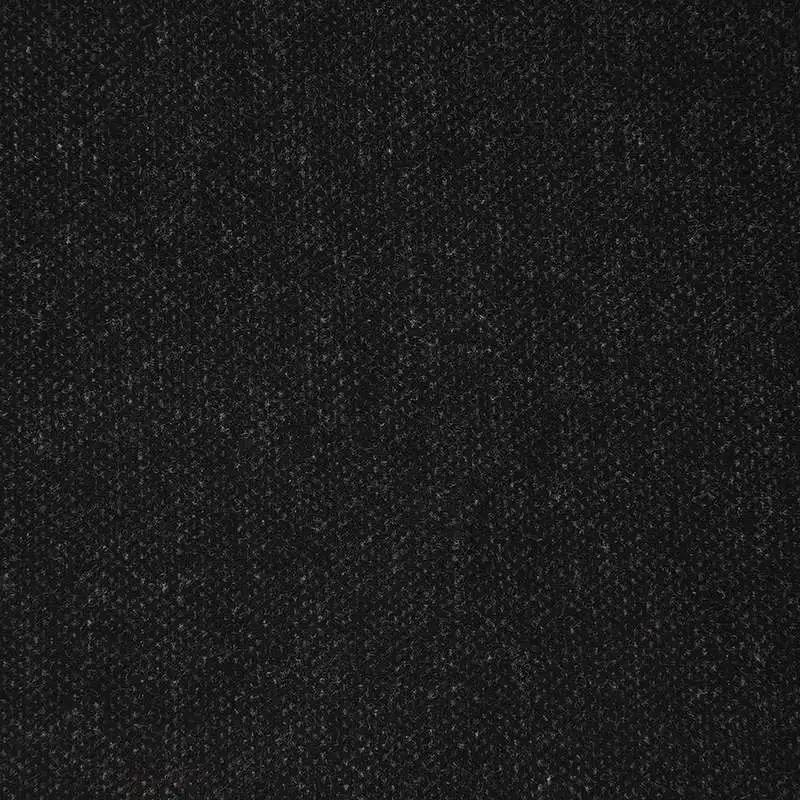
TR Rome Fabric(Men's and women's clothing fabrics)
What Is Polyester Rayon Rome Fabric?
Polyester rayon Rome fabric is a blended knitted material in which polyester contributes strength, resilience, dimensional stability, and easy-care performance, while rayon contributes softness, drape, moisture absorption, and a more natural hand feel. The combination creates a fabric that can provide benefits associated with both synthetic and regenerated-cellulosic fibers.
Polyester is valued in apparel production because it has good resistance to abrasion, repeated washing, and ordinary wear. It also helps the fabric retain its shape and reduces the likelihood of excessive stretching or deformation when the material is correctly knitted and finished. Polyester fibers can be engineered into different yarn forms and specifications, allowing manufacturers to adjust the fabric’s surface, weight, elasticity, and visual effect.
Rayon, sometimes called viscose rayon, is known for its smooth touch and fluid drape. Compared with a fabric made entirely from polyester, the addition of rayon can make the material feel less harsh and more comfortable against the skin. Rayon also accepts dyes effectively, supporting rich and even coloration. In a blended construction, rayon can improve the appearance and hand feel of the textile without eliminating the practical advantages provided by polyester.
The Rome knitted structure is important because it influences the fabric’s behavior. A well-developed structure can provide a smooth face, stable width, a firm yet comfortable handle, and improved resistance to curling compared with certain lighter knitted constructions. The fabric can therefore be used for garments that need a clean outline rather than a loose or overly fluid appearance.
The exact product specification should always be confirmed through a technical data sheet or sample approval. Buyers may need information about fiber content, fabric weight, usable width, stretch percentage, recovery, colorfastness, shrinkage, pilling resistance, washing performance, and finishing treatment. These details help ensure that the selected fabric is suitable for the intended garment and production method.
Key Advantages of TR Rome Fabric
Balanced Comfort and Structure
One of the most important advantages of TR Rome fabric is its balance between comfort and structure. A fabric that is too soft may fail to support the shape of a garment, while a fabric that is too firm may restrict movement or feel uncomfortable. TR Rome fabric is designed to occupy a useful middle ground. It can provide enough body for polished apparel while retaining the flexibility expected from a knitted material.
This balance is particularly beneficial for trousers, dresses, fitted jackets, skirts, and office clothing. The fabric can follow the body without appearing excessively clingy, and it can help garments maintain a neat appearance during regular use. For fashion manufacturers, this means one fabric platform can support a range of silhouettes and product categories.
Durability and Wear Resistance
Polyester contributes to the fabric’s durability. When properly knitted and finished, TR Rome fabric can withstand the friction and repeated handling associated with everyday clothing. This is valuable for garments that are worn frequently, including uniforms, commuter clothing, travel apparel, and basic fashion collections.
Durability does not mean that the fabric is immune to damage. Garment performance still depends on sewing quality, laundering instructions, garment design, and the quality of the raw materials. However, compared with delicate fashion fabrics, a well-made polyester-rayon knitted fabric can offer a practical service life and good value for manufacturers and end users.
Lightweight Performance Without Excessive Bulk
TR Rome fabric can offer a useful combination of coverage and manageable weight. It may provide a substantial appearance without becoming excessively heavy, which helps improve comfort in daily wear. The fabric is suitable for garments that need a stable appearance but should remain easy to pack, transport, and wear.
The final weight can vary according to the customer’s specification. Lightweight versions may be suitable for dresses, tops, and transitional-season garments, while heavier versions can be selected for trousers, structured skirts, jackets, and uniforms. This flexibility allows the manufacturer to serve different market segments with related fabric constructions.
Reduced Heat Retention Compared With Heavier Materials
The supplied product information highlights the fabric’s lack of excessive heat retention. In practical terms, the fabric can be selected when users need a material that feels less heavy and less insulating than dense outerwear textiles. Its knitted structure and selected blend can support comfortable wear across a variety of indoor and seasonal environments.
Thermal comfort depends on more than fiber content. Fabric weight, air permeability, garment looseness, finishing, color, and climate all influence how warm a garment feels. Nevertheless, TR Rome fabric can be a useful option for customers seeking a polished appearance without the bulk commonly associated with heavier woven suiting materials.
Good Dyeing and Printing Potential
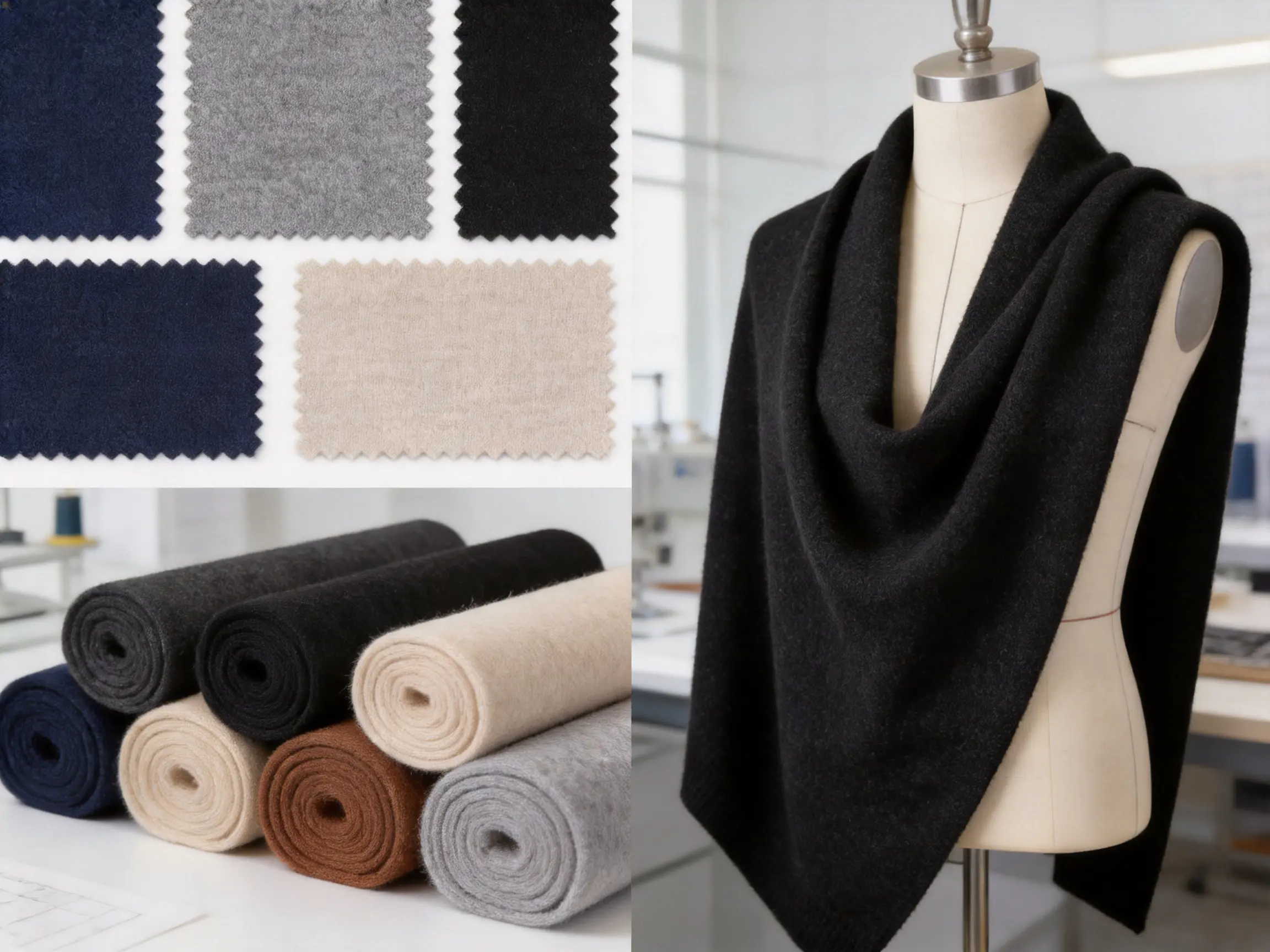
TR Rome fabric can be dyed in many colors and can be developed with different pattern effects. Polyester and rayon have different dye affinities, so professional dye-house control is important. A suitable process must account for the behavior of both components to achieve a balanced and attractive result.
Available color development may include black, navy, charcoal, gray, brown, beige, white, seasonal tones, and custom colors. Depending on the construction and finishing method, the fabric may also be used for printed designs, tonal effects, stripes, checks, or other visual treatments. This expands its usefulness for fashion brands and garment manufacturers working across multiple collections.
Broad Apparel Compatibility
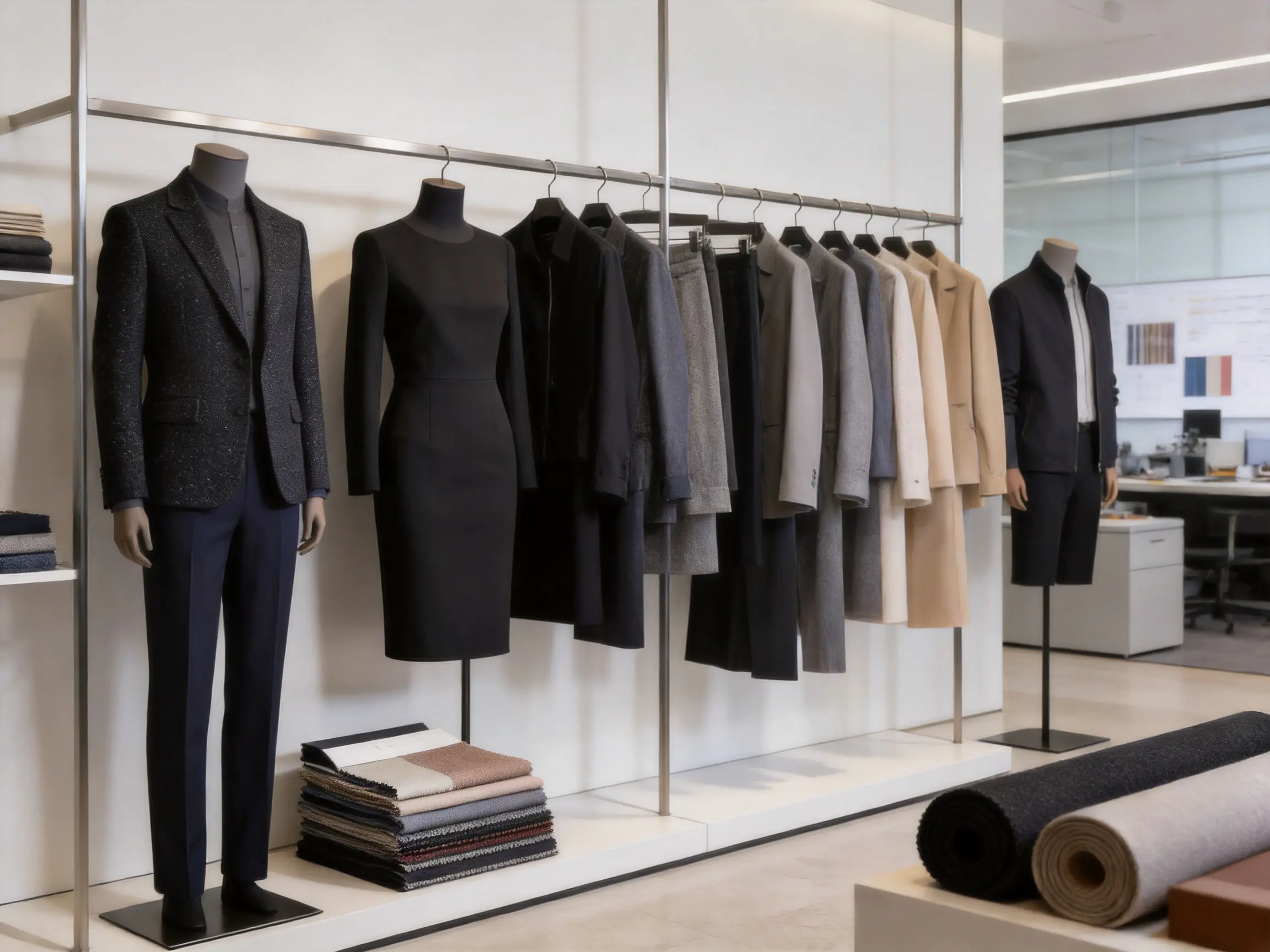
TR Rome fabric can be used for men’s and women’s clothing, giving manufacturers a broad customer base. Its clean surface and stable handle are compatible with office wear, casual clothing, uniforms, contemporary fashion, and coordinated separates.
Typical applications include men’s trousers, women’s trousers, pencil skirts, dresses, jackets, waistcoats, uniforms, workwear, casual blazers, fashion sets, children’s garments, and travel clothing. The best application depends on the fabric weight, stretch, drape, color, and finishing specification.
Cost-Effective Material Selection
Cost is a major consideration in commercial textile production. TR Rome fabric can provide a practical price-performance balance because polyester is widely available and efficient to process, while rayon improves comfort and appearance. The blend can reduce the need to choose a more expensive specialty fiber when the garment requires durability, attractive drape, and broad color availability.
Cost-effectiveness should be evaluated across the entire production cycle rather than by fabric price alone. Consistent quality, low defect rates, reliable shade matching, predictable shrinkage, efficient cutting, and stable delivery schedules all influence the final cost of a garment. A supplier with integrated production and finishing capabilities can help reduce uncertainty in these areas.
Comparison With Other Common Apparel Fabrics
TR Rome fabric competes with a variety of knitted and woven materials. Its advantages become clearer when its performance is considered alongside common alternatives.
| Fabric Type | Main Strengths | Potential Limitations | Typical Position of TR Rome Fabric |
|---|---|---|---|
| Polyester Rayon Rome Fabric | Balanced structure, comfort, durability, color versatility, and cost efficiency | Requires controlled processing because polyester and rayon behave differently during dyeing | Suitable for polished knitted apparel and versatile fashion programs |
| 100% Polyester Knitted Fabric | High durability, easy care, shape retention, and broad availability | May feel less natural or less absorbent than a blended fabric | TR Rome fabric can provide a softer hand feel and improved drape through rayon content |
| 100% Rayon Knitted Fabric | Soft touch, fluid drape, and comfortable skin feel | May have lower dimensional stability and greater sensitivity to care conditions | TR Rome fabric can offer better resilience and shape retention through polyester |
| Cotton Knitted Fabric | Natural hand feel, breathability, and consumer familiarity | May wrinkle, shrink, or lose shape more readily depending on construction | TR Rome fabric can offer a cleaner, more structured appearance and easier maintenance |
| Woven Suiting Fabric | Tailored appearance, strong structure, and formal styling potential | Limited stretch and potentially heavier construction | TR Rome fabric offers knitted flexibility and comfort for less restrictive garments |
| Lightweight Single Jersey | Softness, flexibility, and low weight | May curl, cling, or lack sufficient body for structured garments | TR Rome fabric generally offers more stability and a stronger silhouette |
This comparison does not mean TR Rome fabric is the best choice for every garment. Lightweight summer T-shirts may be better served by cotton jersey, while formal tailored suits may require a specialized woven suiting material. The strength of TR Rome fabric lies in its versatility. It can support garments that require a combination of presentable appearance, movement comfort, manageable care, and commercial affordability.
Manufacturing Process for Consistent TR Rome Fabric
Raw Material Selection
Manufacturing quality begins with raw material selection. Polyester and rayon yarns must be chosen according to the required fabric performance. Important considerations include fiber fineness, yarn count, tenacity, elongation, moisture content, uniformity, and compatibility with the intended knitting and dyeing process.
For blended fabric, the ratio between polyester and rayon must be controlled accurately. Even small variations can influence color development, shrinkage, hand feel, strength, and finished width. A professional manufacturer therefore establishes purchasing standards for each yarn type and checks incoming materials before production.
Drawn textured yarn, or DTY polyester yarn, can also be relevant to the wider product range of a textile manufacturer. DTY is produced by texturing partially oriented yarn to create bulk, stretch behavior, and a more fabric-friendly surface. Depending on the construction, textured polyester yarn may support softness, coverage, elasticity, and visual effects in knitted fabrics.
Yarn Preparation and Conditioning
Before knitting, yarns are prepared for stable processing. This may involve winding, inspection, joining, tension control, and conditioning. Yarn packages must be suitable for the selected knitting machines, and the feeding tension must remain consistent throughout production.
Yarn conditioning is important because moisture and temperature can affect yarn behavior. If yarn tension varies, the finished fabric may show horizontal lines, uneven loops, barré effects, width variation, or inconsistent weight. Proper preparation helps the knitting process run smoothly and reduces avoidable defects.
Knitting and Loop Formation
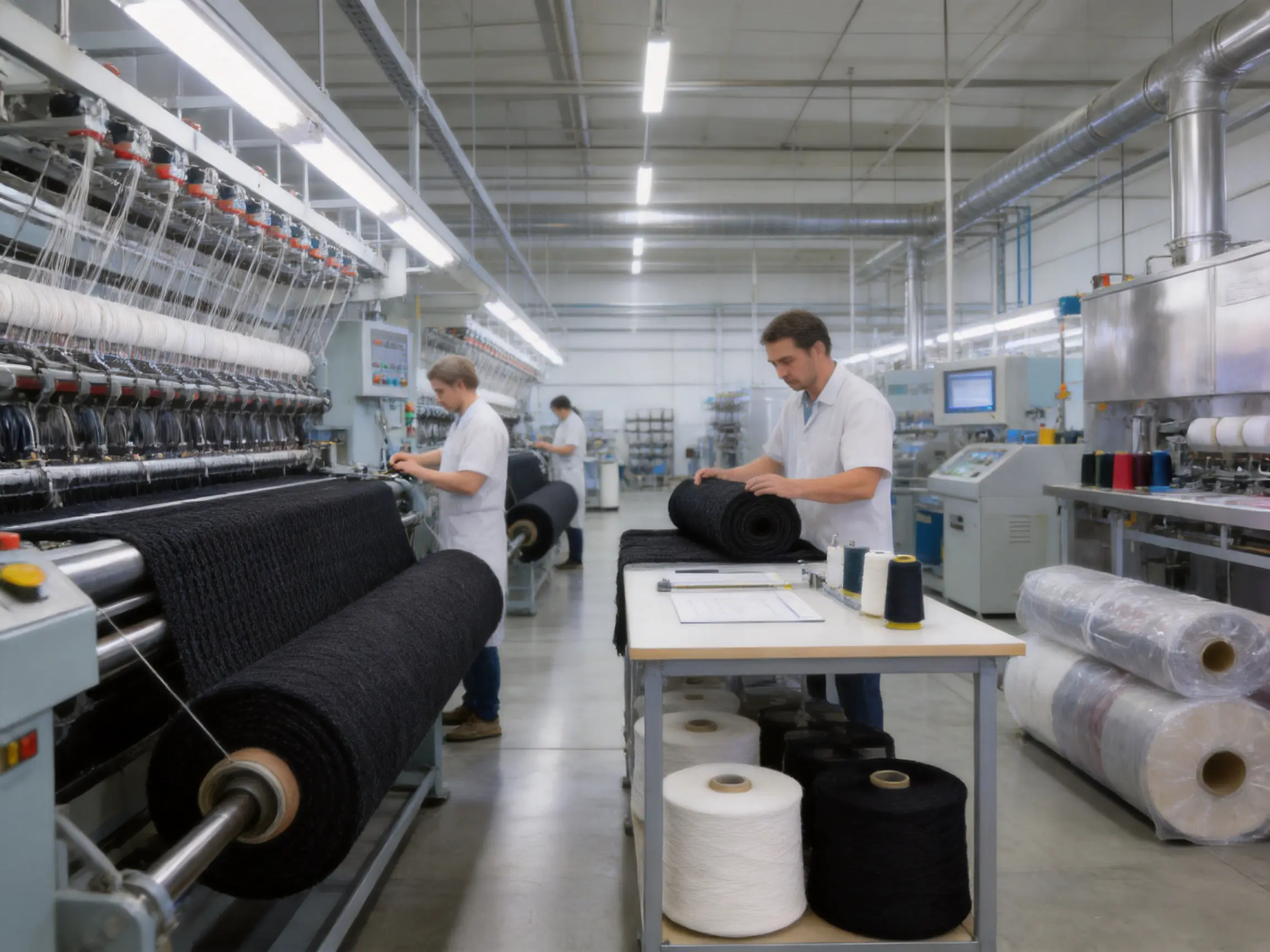
The knitted structure is formed by interlocking loops. Machine gauge, cylinder and dial settings, yarn feed, stitch length, take-down tension, and machine speed all influence the final result. To produce a stable Rome-style construction, these parameters must be developed through technical sampling and then maintained during bulk production.
Machine operators and technicians monitor the knitting process for broken needles, dropped stitches, holes, oil marks, uneven tension, and surface irregularities. Modern production management may combine experienced operators with standardized machine settings and inspection records. This approach helps achieve repeatability between batches.
Knitting tension is especially important for fabrics that will later undergo dyeing and finishing. Excessive tension can cause width instability or distortion after relaxation. Insufficient control can produce loose areas, uneven density, or inconsistent hand feel. A well-managed knitting stage creates a reliable foundation for later processing.
Grey Fabric Inspection
After knitting, the grey fabric is inspected before dyeing. This stage may identify knitting faults, contamination, holes, needle lines, uneven loop formation, and width problems. Defects discovered early are easier and less expensive to correct than defects found after dyeing and finishing.
Fabric rolls can be labeled and tracked by batch, machine, date, yarn lot, and production order. Traceability supports shade management and makes it easier to investigate any quality issue. It also helps the manufacturer reproduce a previously approved specification for repeat customers.
Scouring and Pretreatment
Before dyeing, the fabric may undergo scouring or other pretreatment processes. These treatments remove oils, processing residues, loose impurities, and substances that could interfere with even dye penetration. Pretreatment must be controlled carefully because overly aggressive conditions can damage the rayon component or alter the fabric’s dimensional behavior.
The preparation recipe depends on fiber composition, fabric weight, color target, and equipment. A manufacturer with experience in polyester-rayon blends can select a process that prepares both fiber types while protecting the knitted structure.
Dyeing
Dyeing blended polyester-rayon fabric requires technical precision because the two fibers generally require different dyeing conditions. Polyester is commonly associated with disperse dyes, while rayon is commonly colored with dyes suited to cellulosic fibers. A two-stage or carefully developed combined process may be used to achieve an even and attractive shade.
Temperature, pH, time, liquor ratio, dye concentration, auxiliaries, and rinsing must be monitored. Poor control can lead to shade variation, uneven coloration, streaks, poor fastness, or a color difference between the polyester and rayon components. Laboratory dips and production records help establish a repeatable recipe before bulk dyeing.
Color matching is another important part of production. Buyers may provide a physical standard, a color card, or an approved laboratory sample. The manufacturer compares the dyed sample against the standard under suitable lighting and may evaluate color under multiple light sources to reduce metamerism risk.
Finishing and Dimensional Stabilization
Finishing determines many of the fabric’s final characteristics. Potential processes include washing, softening, compacting, heat setting, stentering, brushing, calendaring, or other surface treatments. The exact process depends on the required hand feel, width, shrinkage, surface appearance, and garment application.
Heat setting can help stabilize polyester and control width, but excessive heat may affect the rayon component or alter the desired hand feel. Compaction can reduce residual shrinkage and improve dimensional stability. Softening can enhance comfort, while excessive softener may reduce structure or affect sewing performance.
The goal is not simply to make the fabric feel soft. A high-quality finishing process must create a balanced result: a pleasant handle, controlled width, acceptable shrinkage, stable appearance, adequate recovery, and suitability for cutting and sewing. Different customers may request different finishing profiles depending on the target garment.
Final Inspection and Packing
Final inspection confirms that the fabric meets the approved specification. Common inspection points include color, surface appearance, width, weight, holes, stains, knitting faults, shade variation, skew, bowing, shrinkage, and hand feel. Inspection systems may use a point-based method or customer-specific standards.
Fabric rolls should be packed to protect them from moisture, dust, compression, and handling damage. Labels can identify product name, color, lot number, roll length, width, weight, and production date. Proper packaging supports warehouse control and helps garment factories organize materials efficiently.
Manufacturing Strengths of Hangzhou Jinfeng Textile Co., Ltd.
Hangzhou Jinfeng Textile Co., Ltd. operates in Jingjiang Street Industrial Park, Xiaoshan District, Hangzhou City, Zhejiang Province. According to the provided company information, the enterprise covers approximately 32.6 acres and has a plant area of about 18,000 square meters. This scale provides a substantial base for production, processing, post-dyeing, finishing, and sales activities.
The company’s product scope includes blended fabrics such as polyester and spandex materials, NTR knitted fabric, NR knitted fabric, knitted jacquard fabric, polyester rayon fabric, and slight intermingled draw textured yarn. Its involvement in both fabric and DTY polyester yarn production gives it a broader understanding of textile materials and processing requirements.
Integrated Production and Sales Capability
An integrated production model can improve communication between product development, manufacturing, quality control, and customer service. When a supplier has direct knowledge of yarn, knitting, dyeing, and finishing, it can respond more effectively to requests concerning fabric weight, stretch, color, hand feel, and performance.
Integration can also support faster technical feedback. If a customer needs a different level of firmness, a particular color effect, improved shrinkage control, or a modified surface appearance, the manufacturer can evaluate the request through its own production and development channels rather than relying entirely on unrelated subcontractors.
Research, Development, and Customization
Apparel customers rarely require only a generic fabric. They may need a particular composition, weight, width, color, stretch level, finish, or end-use performance. The company’s stated focus on research and development supports the creation and adjustment of textile products according to market needs.
Customization may involve developing a new laboratory sample, adjusting yarn selection, modifying knitting parameters, changing dyeing recipes, or applying a different finishing treatment. Effective customization requires technical communication between the supplier and the buyer. Clear specifications and approved samples are essential before bulk production begins.
Experience With Blended Fabrics
Blended fabrics require more than basic knitting knowledge because each component can respond differently to heat, moisture, chemicals, tension, and dyeing conditions. Experience with polyester, rayon, spandex, and related materials helps a manufacturer understand these interactions.
For TR Rome fabric, this experience can support better control of color, dimensional stability, surface appearance, and hand feel. It can also help the manufacturer advise buyers on suitable garment applications and care-label recommendations.
Export-Oriented Service
The company is described as a self-employed export company integrating research and development, production, and sales. Export-oriented service requires attention to documentation, packaging, shipping coordination, product identification, and communication across different time zones and markets.
International buyers also expect consistency between sample approval and bulk shipment. Batch records, inspection procedures, and clear order communication are important tools for meeting these expectations. A supplier that understands export procedures can help reduce delays and misunderstandings during procurement.
Business Philosophy and Customer Cooperation
The company states a business philosophy centered on cooperation and mutual benefit. In textile sourcing, this philosophy can be reflected through responsive communication, realistic production planning, transparent quality discussions, and a willingness to support long-term development.
Long-term cooperation is especially valuable for fabric buyers because repeated orders often require shade continuity and specification consistency. A supplier that maintains production records and understands a customer’s previous approvals can make repeat purchasing more efficient.
Quality-Control Priorities for TR Rome Fabric
Fiber Composition
Fiber composition should be confirmed according to the agreed specification. This is important for labeling, performance expectations, customs documentation, and consumer information. Testing may be conducted through recognized laboratory methods, depending on the buyer’s requirements.
Fabric Weight and Width
Fabric weight affects garment coverage, drape, cost, and seasonal suitability. Width affects cutting efficiency and material consumption. Both should be measured under standardized conditions because knitted fabrics can relax or change dimensions depending on how they are stored and handled.
Dimensional Stability
Dimensional stability is essential for knitted apparel. Excessive shrinkage or distortion may cause problems during cutting, sewing, washing, and final garment inspection. Testing should consider lengthwise and widthwise change after the relevant care treatment.
Colorfastness
Colorfastness can be evaluated against washing, rubbing, perspiration, light, and other relevant conditions. The required standard depends on the end use and destination market. Dark colors often require particular attention because loose dye or surface transfer may be more noticeable.
Pilling and Surface Appearance
Pilling resistance is important for garments that experience repeated rubbing. Yarn quality, fiber length, knitting structure, finishing, and laundering all influence pilling behavior. A suitable test can help buyers compare different fabric lots before placing a large order.
Stretch and Recovery
Although TR Rome fabric is not necessarily an elastane fabric, knitted construction can provide some natural extensibility. If the product contains spandex or is engineered for greater stretch, stretch and recovery should be specified and tested. Consistent recovery helps garments retain their shape after movement and wear.
Handle and Appearance
Hand feel is often evaluated through both objective development and human inspection. Buyers may look for softness, firmness, smoothness, fullness, drape, and surface cleanliness. Because hand feel is partly subjective, an approved standard sample is highly useful for production control.
Apparel Applications
Men’s Clothing
TR Rome fabric is suitable for men’s trousers, casual blazers, office separates, waistcoats, uniforms, and coordinated sets. Its stable knitted body can create a neat appearance, while its flexibility supports comfort during sitting, walking, and commuting.
For trousers, fabric weight and recovery are important. A fabric that is too light may show unwanted cling, while one that is too heavy may reduce comfort. For jackets and blazers, structure and surface appearance become more important. The manufacturer can help select a specification according to the garment pattern and construction method.
Women’s Clothing
Women’s applications may include dresses, skirts, trousers, fitted jackets, workwear, fashion sets, and casual office garments. The blend can support a smooth appearance and attractive drape while maintaining enough body for structured designs.
TR Rome fabric can also be used for garments that transition between formal and casual settings. A simple dress or skirt can appear polished with the right color and finishing, while a more relaxed design can emphasize comfort and movement.
Uniforms and Workwear
Uniforms need to balance presentable appearance, durability, comfort, and care practicality. TR Rome fabric can be considered for hospitality clothing, office uniforms, service garments, educational apparel, and other applications where staff members need to look coordinated throughout the working day.
For workwear, buyers should evaluate abrasion resistance, washing performance, colorfastness, seam behavior, and seasonal comfort. The fabric specification should be chosen according to the actual working environment rather than appearance alone.
Fashion Collections
Fashion brands can use TR Rome fabric as a base for seasonal color programs and coordinated collections. The material can be developed in solid shades, custom colors, and selected printed or patterned effects. Its broad application range enables designers to use related fabric qualities across different garment categories.
Designers should consider how the fabric behaves at seams, hems, darts, waistbands, and neckline edges. A stable knitted fabric may simplify construction compared with a very fluid jersey, but pattern and sewing tests are still necessary.
Guidance for Buyers and Garment Manufacturers
Buyers should begin by defining the intended garment. The required specifications for a fitted dress may differ from those for trousers, uniforms, or a structured jacket. Important questions include the desired season, garment weight, stretch level, color range, care method, target price, and expected order quantity.
A physical sample should be reviewed before bulk ordering. The buyer can check the surface, handle, drape, opacity, stretch, recovery, color, and sewing behavior. If the fabric will be washed after garment production, testing should be conducted on both fabric and finished garments where possible.
Buyers should also confirm whether the requested fabric is available from stock or must be produced to order. Stock fabric may offer faster delivery, while custom production can provide a more exact composition, color, weight, or finish. Production lead time may depend on yarn availability, knitting capacity, dyeing schedules, finishing requirements, and order quantity.
Color approval should be documented clearly. A color name alone may not be sufficient because different buyers can interpret names such as “navy,” “beige,” or “gray” differently. A physical standard, recognized color reference, or approved laboratory dip provides better control.
Packaging and transportation requirements should also be discussed. Knitted fabrics should be protected from moisture and excessive compression. Storage conditions at the garment factory can influence creasing, relaxation, and dimensional behavior, so rolls should be handled according to the supplier’s recommendations.
Environmental and Disposal Considerations
The product information indicates that TR fabric does not contain harmful chemicals when disposed of. Buyers should interpret this statement in the context of the actual fiber content, dyes, auxiliaries, and applicable regulations. A responsible evaluation should consider the full textile life cycle, including raw materials, manufacturing, use, washing, recycling, and disposal.
Polyester is a synthetic fiber and rayon is a regenerated cellulosic fiber. Their environmental profiles differ, and blended textiles can be more difficult to recycle mechanically than single-fiber fabrics. Responsible manufacturing therefore depends on controlled chemical management, wastewater treatment, energy efficiency, reduced production waste, and compliance with relevant environmental standards.
Manufacturers and buyers can support better outcomes by requesting appropriate chemical-management information, testing finished fabrics when required, reducing unnecessary sampling waste, optimizing cutting layouts, and selecting durable fabrics that remain useful for longer periods. Durability itself can be an important sustainability factor because garments that remain wearable for longer may reduce replacement demand.
End-of-life handling depends on local infrastructure and the exact composition of the fabric. Buyers should not make broad environmental claims without supporting test reports or certification. Clear, accurate communication is preferable to unsupported claims about biodegradability, recyclability, or complete environmental safety.
Care and Garment Performance
Care instructions should be developed after testing the finished garment. Polyester-rayon blends may respond differently depending on the ratio, knitting structure, dyeing method, and finishing treatment. Recommended care may include machine washing under controlled conditions, gentle washing, low-temperature ironing, or professional cleaning.
High heat should be avoided unless the care label and test results support it. Excessive heat can affect rayon, alter dimensions, damage surface treatments, or create unwanted shine. Garment manufacturers should test pressing, fusing, and finishing operations before bulk production.
Correct sewing conditions are also important. Needle size, thread type, stitch density, seam allowance, differential feed, and pressing temperature can influence the finished appearance. Because knitted fabrics can stretch during sewing, factories may need appropriate machine settings and handling methods.
Why Choose a Specialized Supplier?
A specialized textile supplier can offer more than a finished roll of fabric. It can provide technical knowledge about yarn selection, knitting construction, dyeing, finishing, inspection, and application suitability. This support is valuable when a buyer is developing a new garment or adapting a fabric for a different market.
Hangzhou Jinfeng Textile Co., Ltd. combines blended fabric production, post-dyeing, finishing, DTY polyester yarn production, processing, sales, research and development, and export activity. This combination gives the company a broad platform for serving customers that need either standard products or customized textile solutions.
The company’s location in Hangzhou’s Xiaoshan textile manufacturing area also places it within an established industrial environment. Access to textile resources, processing experience, equipment, and supporting services can help a manufacturer coordinate production efficiently.
For customers purchasing TR Rome fabric, the main value of a specialized supplier is the ability to connect product development with practical manufacturing. The supplier can help determine whether the fabric should be lighter or heavier, softer or firmer, more elastic or more stable, and whether a specific finish is suitable for the intended garment.
Frequently Asked Questions
What does TR mean in TR Rome fabric?
TR generally refers to a polyester-rayon blend. The polyester component contributes durability, resilience, and shape retention, while rayon contributes softness, drape, and a comfortable hand feel. The exact blend ratio should be confirmed with the supplier’s technical specification.
What is Rome fabric?
Rome fabric is a knitted fabric construction known for a relatively stable, smooth, and substantial handle. It is often selected for garments that need more structure than lightweight jersey while retaining knitted flexibility and comfort.
Is TR Rome fabric suitable for men’s and women’s clothing?
Yes. It can be used for men’s trousers, jackets, uniforms, and coordinated separates, as well as women’s dresses, skirts, trousers, jackets, and fashion sets. The best application depends on fabric weight, stretch, color, finishing, and garment design.
Is TR Rome fabric durable?
Polyester can provide good resistance to ordinary wear and abrasion, while the knitted structure can support practical everyday use. Actual durability depends on yarn quality, fabric construction, finishing, garment manufacturing, and care conditions.
Can TR Rome fabric be dyed in custom colors?
It can generally be developed in a wide range of colors, including custom shades. Because polyester and rayon respond differently to dyes, professional process control and laboratory color approval are important for consistent results.
Can the fabric be printed?
Selected TR Rome constructions may be suitable for printing or other pattern effects. Print suitability depends on surface smoothness, fabric composition, weight, finishing, and the selected printing process. A production trial is recommended before bulk orders.
Is TR Rome fabric lightweight?
It can be produced in different weights. Many versions offer substantial coverage without excessive bulk, but the exact weight must be confirmed with the supplier. Lightweight and heavier versions may be developed for different seasons and garments.
Does TR Rome fabric retain heat?
The supplied product information describes the fabric as not retaining excessive heat. Its thermal comfort will also depend on weight, air permeability, garment fit, color, and climate. Buyers should test the selected specification for the intended end use.
Is TR Rome fabric environmentally friendly?
Environmental performance depends on the full composition and manufacturing process. Buyers should request relevant information about chemical management, wastewater treatment, energy use, waste handling, and applicable certifications. Broad environmental claims should be supported by evidence.
What information should be requested before purchase?
Buyers should request fiber composition, fabric weight, usable width, color options, stretch and recovery, shrinkage, pilling performance, colorfastness, finishing details, minimum order quantity, sample availability, production lead time, packing method, and inspection standards.
Can the supplier make customized TR Rome fabric?
Customization may be possible depending on the requested composition, weight, color, width, stretch, surface treatment, and order quantity. Buyers should provide a clear technical brief and approve a sample before bulk production.
Why is sample approval important?
Sample approval allows the buyer to evaluate appearance, hand feel, drape, stretch, color, shrinkage, and sewing performance. It also creates a reference standard for bulk production and reduces the risk of misunderstanding between buyer and supplier.
Conclusion
TR Rome fabric is a versatile polyester-rayon knitted textile developed for customers who need a balance of comfort, structure, durability, appearance, and cost efficiency. Its knitted construction supports flexibility and everyday movement, while its polyester component contributes resilience and shape retention. Rayon adds softness, drape, and favorable dye absorption, helping the fabric serve both practical and fashion-oriented applications.
The fabric can be used for men’s and women’s clothing, including trousers, dresses, skirts, jackets, uniforms, workwear, and coordinated apparel. Its ability to accept different colors and potential pattern treatments makes it suitable for commercial collections with changing seasonal requirements.
Its performance depends heavily on manufacturing control. Raw material selection, yarn preparation, knitting tension, pretreatment, blended-fiber dyeing, finishing, dimensional stabilization, inspection, and packing must all be managed carefully. Consistency is particularly important because polyester and rayon have different processing behaviors.
Hangzhou Jinfeng Textile Co., Ltd. offers a manufacturing platform that includes blended fabric production, post-dyeing, finishing, DTY polyester yarn production, research and development, sales, and export service. Its stated production area, textile experience, and integrated business structure support the development of standard and customized textile products.
For buyers, the best purchasing decision comes from matching the fabric specification to the intended garment. A clear technical brief, laboratory sample, physical approval, performance testing, and documented quality standard can help ensure that the final TR Rome fabric meets both manufacturing requirements and market expectations.
References
Textile Institute. Textile Terms and Definitions. Reference material concerning fiber names, yarn terminology, knitted constructions, and textile testing concepts.
ASTM International. Standard Test Methods for Textiles. Reference material concerning fabric weight, dimensional change, colorfastness, pilling, and physical performance evaluation.
International Organization for Standardization. Textile Testing Standards. Reference material concerning fiber composition, colorfastness, shrinkage, and knitted fabric evaluation.
Industry reference materials on polyester and rayon fiber properties, blended-yarn processing, and fabric finishing.
Manufacturer-provided product and company information for TR Rome fabric, blended fabrics, knitted fabrics, and DTY polyester yarn.
