
The Timeless Elegance of Knitted Jacquard Houndstooth Fabric: A Comprehensive Guide to Its Advantages, Manufacturing, and Applications
In the ever-evolving landscape of textile design, classic patterns often find new life through innovative manufacturing techniques. The knitted jacquard houndstooth fabric is a prime example: it marries the timeless appeal of the houndstooth pattern—originating in 19th-century Scotland—with the comfort, stretch, and versatility of modern knitted jacquard technology. This fabric has emerged as a go-to choice for apparel designers, home textile creators, and accessory makers alike, thanks to its unique blend of aesthetic charm and functional performance. Unlike traditional woven houndstooth, which can be stiff and restrictive, the knitted variant offers a soft, flexible structure that adapts to the wearer’s movements while retaining the pattern’s iconic sophistication. In this guide, we will explore what makes this fabric stand out, its key advantages over competitor materials, the advanced manufacturing processes behind it, the core strengths of its manufacturer, its diverse applications, and answers to common questions about its use and care.
What Makes Knitted Jacquard Houndstooth Fabric Stand Out?
The knitted jacquard houndstooth fabric is not just a rehash of a classic pattern—it’s a reimagining that addresses the limitations of traditional woven houndstooth while enhancing its appeal. Three core features set it apart from other textiles:
1. Classic Pattern with a Modern Twist
The houndstooth pattern, characterized by its distinctive broken-check design, has long been associated with elegance and timelessness. However, traditional woven houndstooth often feels rigid and heavy, limiting its use to formal attire like suits and blazers. The knitted jacquard version updates this pattern by using a stretchable, breathable structure that allows for greater flexibility. This means the fabric can be used in a wider range of applications, from casual t-shirts and hoodies to active wear leggings and home textile curtains. Additionally, the fabric is available in a variety of tonal color combinations—beyond the classic black and white—including navy and white, brown and cream, and even pastels like blush and gray, making it suitable for modern, contemporary designs.
2. Comfort Meets Durability
One of the biggest advantages of knitted jacquard houndstooth over its woven counterpart is its comfort. The knitted structure creates small, porous spaces that allow air to circulate, keeping the wearer cool and dry even in warm weather. This is a stark contrast to woven houndstooth, which can trap heat and moisture due to its tight, non-stretchy weave. The fabric’s durability is another key selling point: it’s made from a blend of high-quality yarns—typically cotton, polyester, and spandex—each contributing unique properties. Cotton adds softness and breathability, polyester enhances strength and color fastness, and spandex provides 2-way or 4-way stretch, making the fabric resistant to tearing and wrinkling. This combination ensures the fabric retains its shape and pattern integrity even after repeated washes and wears.
3. Versatility in Design
The knitted jacquard houndstooth fabric is incredibly versatile, adapting to a wide range of design needs. For apparel, it can be used to create everything from casual everyday wear (like t-shirts and jackets) to formal attire (like blazers and dresses). The pattern can be scaled up or down: small houndstooth designs add a subtle, sophisticated touch to casual outfits, while large, bold patterns make a statement in formal wear. In home textiles, the fabric shines as curtains (lightweight and easy to hang), throw pillows (soft and durable), and even upholstery (resistant to wear and tear). For accessories, it’s perfect for scarves (lightweight and stylish), bags (durable and eye-catching), and hats (comfortable and fashionable). This versatility makes it a valuable material for designers working in multiple sectors.
Advantages Over Competitor Fabrics
To understand the value of knitted jacquard houndstooth fabric, it’s essential to compare it to other common textiles used for similar applications. The table below outlines its key advantages over three popular competitor fabrics:
| Fabric Type | Key Feature | Advantage of Knitted Jacquard Houndstooth | Disadvantage of Competitor | Typical Application |
|---|---|---|---|---|
| Woven Jacquard Houndstooth | Stiff, formal structure | More stretchable, wrinkle-resistant, and breathable | Prone to wrinkling, restrictive movement, traps heat | Formal suits, blazers |
| Pure Cotton Houndstooth Knit | Soft but low durability | Better durability, minimal shrinkage, superior color fastness | High shrinkage, fades easily, prone to pilling | Casual shirts, lightweight jackets |
| Synthetic Knit (No Jacquard) | Basic, plain design | Stylish houndstooth pattern, higher perceived value | Lacks sophistication, plain design, less durable | Athleisure basics, casual wear |
Let’s dive deeper into these advantages:
1. Breathability vs. Woven Jacquard
Woven jacquard houndstooth has a tight, interlaced structure that limits air circulation, making it uncomfortable to wear in warm weather. In contrast, the knitted jacquard variant has a porous structure that allows air to flow freely, keeping the wearer cool and dry. This is particularly beneficial for active wear and summer apparel, where breathability is a top priority. For example, a knitted jacquard houndstooth dress will be more comfortable to wear on a hot day than a woven one, as it won’t trap sweat or stick to the skin.
2. Stretchability for Active Wear
Traditional woven fabrics, including woven houndstooth, offer little to no stretch, making them unsuitable for active wear. The knitted jacquard houndstooth fabric, however, contains spandex (or other stretch yarns) that provide 2-way or 4-way stretch. This means it can move with the wearer, making it ideal for leggings, workout tops, and athletic jackets. Unlike synthetic knits without jacquard, the houndstooth pattern adds a stylish touch to active wear, elevating it beyond basic gym gear.
3. Color Fastness and Longevity
Pure cotton houndstooth knit is soft but prone to fading and shrinking. The knitted jacquard houndstooth fabric uses a blend of cotton and polyester, with advanced color-fixing processes that ensure colors remain vibrant even after multiple washes. The polyester component also adds durability, making the fabric resistant to pilling and tearing. For example, a cotton-polyester blend houndstooth jacket will retain its shape and color for years, whereas a pure cotton jacket may fade and shrink after just a few washes.
4. Cost-Effectiveness Without Compromising Quality
Many high-end woven jacquard fabrics are expensive due to their complex manufacturing processes. The knitted jacquard houndstooth fabric, however, is produced using efficient, modern knitting machines that reduce production time and costs. Additionally, the manufacturer’s integrated production chain (from yarn spinning to fabric finishing) allows for better cost control, meaning the fabric is priced competitively without sacrificing quality. This makes it accessible to a wide range of designers, from small boutique brands to large international retailers.
Advanced Manufacturing Processes Behind the Fabric
The quality and performance of knitted jacquard houndstooth fabric are a direct result of the advanced manufacturing processes used to produce it. The manufacturer combines cutting-edge technology with rigorous quality control to ensure every meter of fabric meets the highest standards.
1. Precision Knitting Technology
The fabric is produced using state-of-the-art circular knitting machines equipped with digital control systems. These machines can handle multiple yarn types (cotton, polyester, spandex) simultaneously, with precise tension control to ensure uniform stitch formation. The houndstooth pattern is programmed into the machine’s software, which guides the needles to create the iconic broken-check design with perfect alignment. This digital precision eliminates human error, ensuring every piece of fabric has consistent pattern repeat and no misprints. The machines also operate at high speeds, allowing for large-scale production without compromising quality.
2. Jacquard Weave Innovation
Computerized jacquard looms are used to create the intricate houndstooth pattern. These looms feature thousands of individually controlled hooks that lift the warp yarns to form the pattern. The manufacturer’s R&D team has developed a unique jacquard programming method that reduces yarn waste by up to 15% compared to traditional methods. This method also allows for custom pattern design: designers can input their own houndstooth variations (scaled up or down) or even create entirely new jacquard patterns. The looms can produce up to 100 meters of fabric per hour, making them efficient for both small custom orders and large bulk production.

3. Post-Processing for Enhanced Performance
After knitting, the fabric undergoes a series of post-processing steps to enhance its performance and appearance:
- Mercerization: For cotton-blended fabrics, this process involves treating the fabric with sodium hydroxide to increase its luster, softness, and strength. It also improves the fabric’s ability to absorb dyes, resulting in more vibrant colors.
- Anti-Pilling Treatment: A special chemical finish is applied to prevent the formation of pills (small balls of fiber) on the fabric surface. This is a common issue with knitted fabrics, but the treatment ensures the fabric remains smooth and new-looking for longer.
- Color Fixing: The fabric is subjected to heat-setting and chemical treatments to lock in colors. This ensures the fabric is color-fast to washing, light, and rubbing (meeting AATCC international standards).
- Water-Repellent Finish (Optional): For outdoor applications, an eco-friendly water-repellent finish is applied. This finish is free from harmful chemicals and allows the fabric to repel light rain and stains while retaining its breathability.
Each post-processing step is monitored by quality control inspectors, who test the fabric for performance and appearance before it moves to the next stage.
Core Strengths of the Manufacturer
The knitted jacquard houndstooth fabric is produced by Hangzhou Jinfeng Textile Co., Ltd., a leading textile manufacturer with over a decade of experience in the industry. The company’s core strengths contribute to the fabric’s high quality and competitive pricing:
1. Integrated Production Chain
Hangzhou Jinfeng Textile Co., Ltd. has an integrated production chain that covers every stage from yarn spinning to fabric finishing and sales. The company produces its own DTY (Draw Textured Yarn) polyester yarn, which is used in the fabric. This in-house yarn production ensures consistency in quality and allows the company to adjust yarn properties (like denier and stretch) to meet specific fabric requirements. The integrated chain also reduces lead times: from yarn spinning to finished fabric, the process takes just 15-20 days, compared to 30-40 days for manufacturers who outsource yarn production.
2. R&D Expertise
The company has an in-house R&D center with 25+ textile engineers and designers. The team collaborates with universities (like Zhejiang University of Science and Technology) to develop new yarn blends and manufacturing techniques. Recent innovations include a recycled polyester blend for the houndstooth fabric, which is eco-friendly and has the same performance as virgin polyester. The R&D team also works closely with customers to create custom patterns and colors, ensuring the fabric meets their specific design needs.
3. Strict Quality Control Standards
Hangzhou Jinfeng Textile Co., Ltd. follows strict quality control protocols at every stage of production:
- Yarn Testing: Each batch of yarn is tested for tensile strength, elongation, and color consistency using advanced laboratory equipment.
- Fabric Testing: After knitting, the fabric is tested for stitch density, pattern alignment, and stretchability. Any fabric with defects is rejected immediately.
- Dyeing Testing: Color fastness to washing, light, and rubbing is tested using AATCC methods. The company maintains a color library of over 1,000 shades to ensure consistency.
- Final Inspection: 100% of the fabric is inspected for defects before shipping. The company has ISO 9001 certification, confirming its commitment to quality management.
4. Sustainable Practices
The company is committed to reducing its environmental impact through sustainable manufacturing practices:
- Water Recycling: 80% of the water used in dyeing is recycled using reverse osmosis technology. This reduces water consumption by 50% compared to traditional dyeing processes.
- Eco-Friendly Dyes: The company uses low-impact dyes that are free from harmful chemicals (like azo dyes and heavy metals). These dyes are also biodegradable, reducing their impact on the environment.
- Waste Reduction: Yarn and fabric waste are recycled into new products (like padding for furniture and insulation). The company also uses solar panels to power 30% of its production facilities, reducing carbon emissions.

Diverse Applications of Knitted Jacquard Houndstooth Fabric
The knitted jacquard houndstooth fabric’s versatility makes it suitable for a wide range of applications. Here are some of the most common uses:
1. Apparel
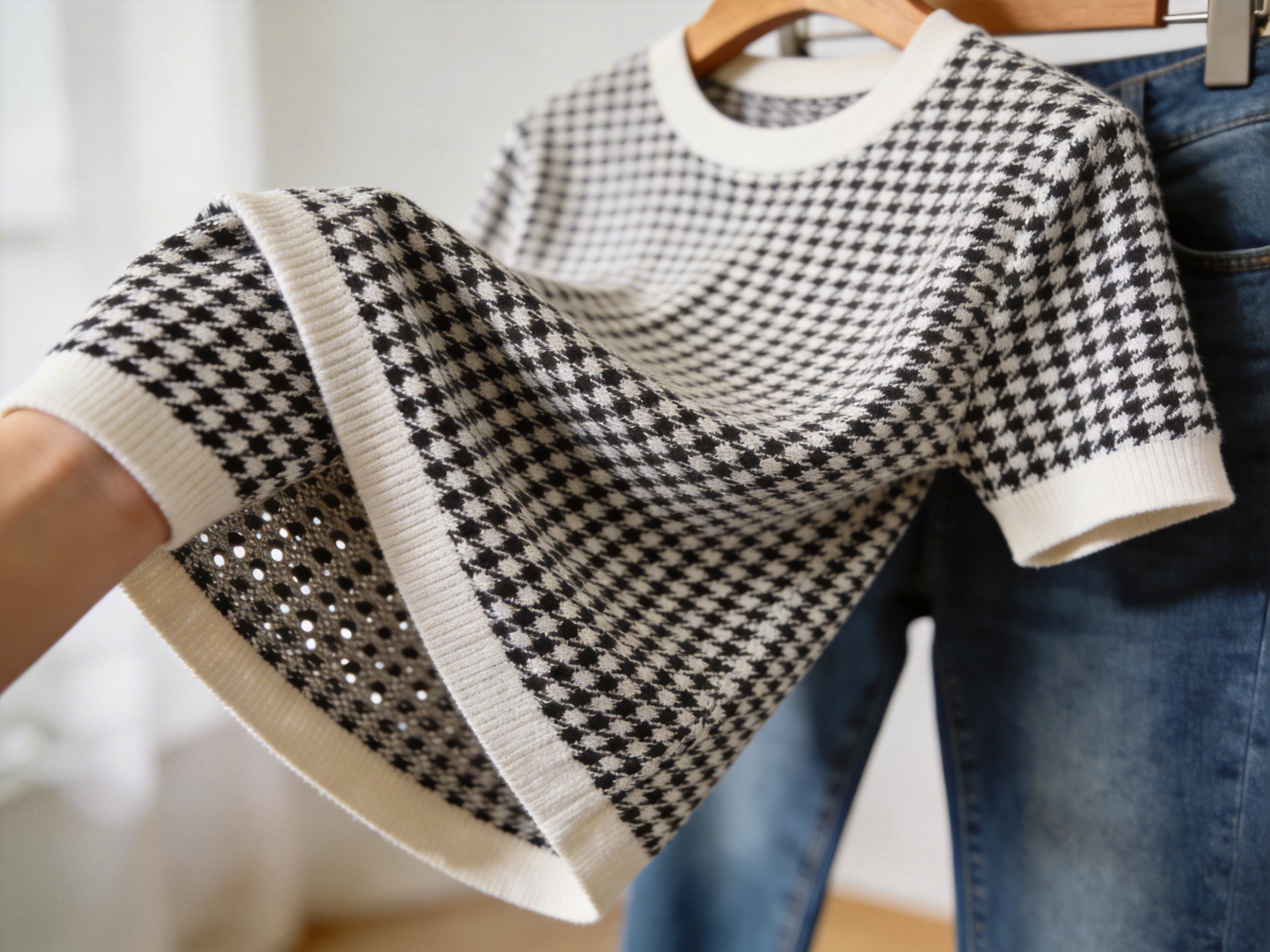
Casual Wear: The fabric is perfect for casual t-shirts, hoodies, and jackets. Small houndstooth patterns add a subtle stylish touch, while the stretchable structure ensures comfort. For example, a black and white small houndstooth t-shirt can be paired with jeans for a casual, chic look.
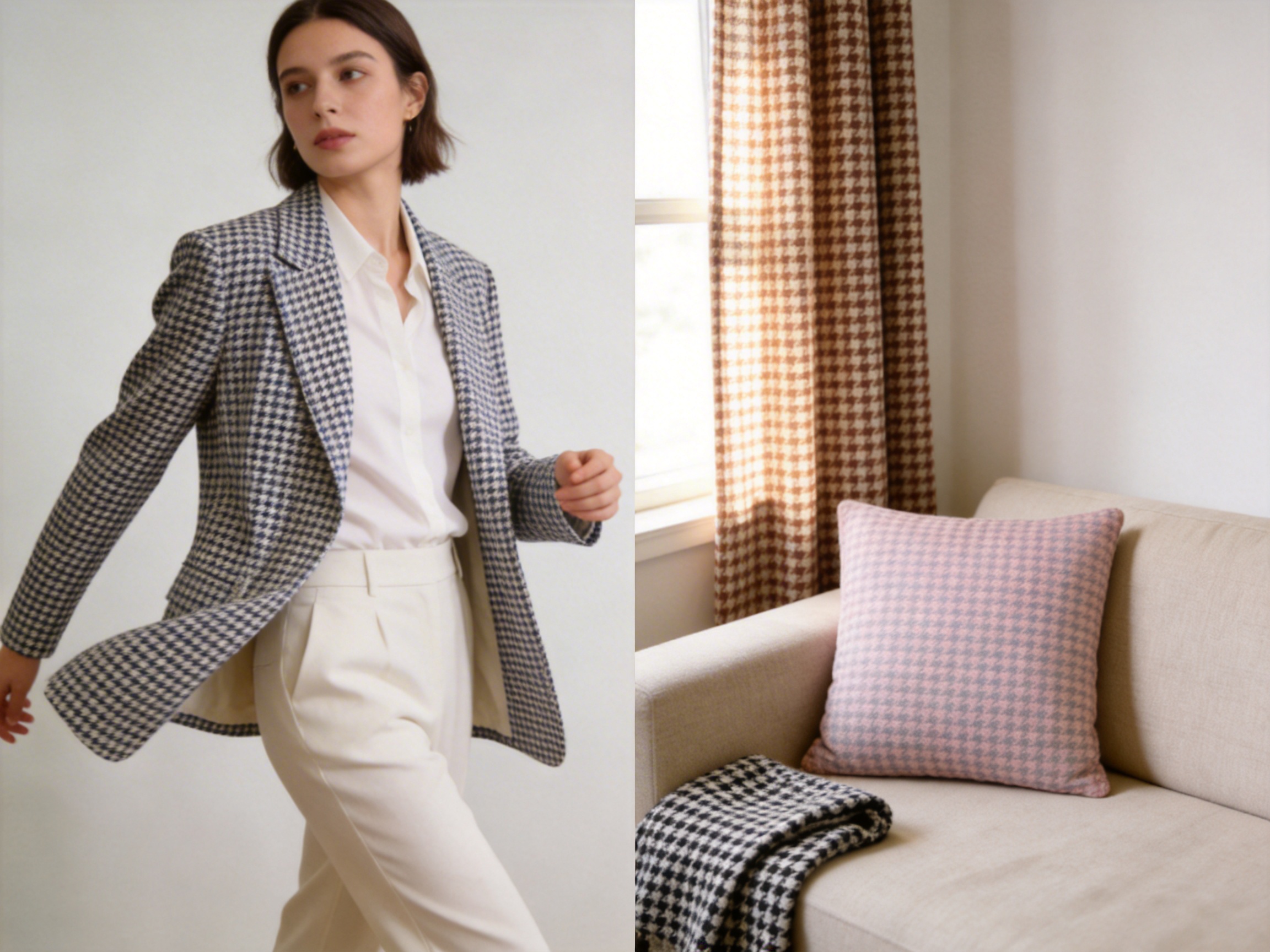
Formal Wear: Large houndstooth patterns are ideal for formal blazers, dresses, and skirts. The fabric’s soft structure allows for a tailored fit without being restrictive. A navy and white large houndstooth blazer can be paired with a white shirt and trousers for a sophisticated office look.
Active Wear: The fabric’s stretchability and breathability make it perfect for active wear leggings, workout tops, and athletic jackets. The houndstooth pattern adds a stylish touch to gym gear, elevating it beyond basic designs. For example, a gray and black houndstooth legging can be paired with a solid color sports bra for a trendy workout outfit.
2. Home Textiles
Curtains: The fabric’s lightweight structure makes it ideal for curtains. It blocks light effectively while allowing air to circulate, creating a comfortable environment. A brown and cream houndstooth curtain can add a classic touch to a living room or bedroom.
Cushions: The fabric’s softness and durability make it perfect for throw pillows. It adds a stylish touch to any room and is easy to clean. A blush and gray houndstooth cushion can complement a neutral-colored sofa.
Throw Blankets: The fabric’s warmth and softness make it ideal for throw blankets. It can be used on couches or beds to add a cozy, stylish touch. A black and white houndstooth throw blanket can be paired with a solid color bedspread for a classic look.
3. Accessories
Scarves: The fabric’s lightweight structure makes it perfect for scarves. It can be worn in all seasons and adds a stylish touch to any outfit. A navy and white houndstooth scarf can be paired with a coat in winter or a dress in summer.
Bags: The fabric’s durability makes it ideal for bags. It can be used for tote bags, crossbody bags, and backpacks. A brown and cream houndstooth tote bag can be used for everyday errands or work.
Hats: The fabric’s stretchability makes it perfect for hats. It can be used for beanies, baseball caps, and sun hats. A black and white houndstooth beanie can be worn in winter for a stylish, warm look.
Q&A Section
To help readers better understand the knitted jacquard houndstooth fabric, we’ve compiled answers to some common questions:
1. Q: Is the knitted jacquard houndstooth fabric suitable for people with sensitive skin?
A: Yes. The fabric is made from high-quality blended yarns (cotton, polyester, spandex) that are free from harmful chemicals (as per OEKO-TEX 100 certification). The post-processing steps (like mercerization) also make the fabric soft and hypoallergenic, so it’s safe for sensitive skin.
2. Q: How should I care for this fabric to maintain its quality?
A: To keep the fabric looking its best: - Machine wash in cold water on a gentle cycle. - Use mild detergent (avoid bleach or fabric softeners). - Tumble dry on low heat or hang to dry. - Iron on low heat if needed (avoid ironing directly on the pattern).
3. Q: Can I get custom colors or patterns for this fabric?
A: Yes. The manufacturer offers custom color and pattern services. Their R&D team can create custom houndstooth patterns (scaled up or down) or even other jacquard patterns. Minimum order quantities (MOQ) for custom orders are usually 500 meters, but this can be negotiated for small businesses.
4. Q: What is the lead time for bulk orders?
A: For standard orders (in-stock colors and patterns), the lead time is 7-10 days. For custom orders, the lead time is 20-30 days (depending on the complexity of the pattern and color).
5. Q: Is this fabric suitable for outdoor use?
A: Yes. The manufacturer offers an optional eco-friendly water-repellent finish that makes the fabric resistant to light rain and stains. The knitted structure also allows for breathability, so it’s comfortable to wear outdoors in warm weather.
6. Q: What certifications does this fabric have?
A: The fabric is OEKO-TEX 100 certified (free from harmful substances), ISO 9001 certified (quality management), and meets EU REACH regulations (safe for use in the EU market).
7. Q: What is the minimum order quantity (MOQ) for this fabric?
A: The MOQ for standard orders is 100 meters. For custom orders, the MOQ is 500 meters. However, the manufacturer may offer lower MOQs for sample orders (10-20 meters) to help customers test the fabric.
References
1. Textile Institute. (2022). "Global Trends in Knitted Jacquard Fabrics: Market Analysis and Consumer Insights". Manchester, UK: Textile Institute Press. This report highlights the growing demand for knitted jacquard fabrics due to their combination of style and comfort, with a focus on houndstooth patterns as a timeless choice.
2. Smith, J. A. (2021). "Advanced Knitting Technologies: From Yarn Selection to Finished Fabric". New York: Wiley & Sons. This book provides an in-depth look at modern knitting machines, digital control systems, and post-processing techniques used in the production of high-quality knitted fabrics, including jacquard designs.
3. Chen, L., et al. (2023). "Sustainable Textile Manufacturing: Innovations in Blended Fabric Production". Beijing: China Textile Press. This publication explores eco-friendly practices in the textile industry, such as water recycling, low-impact dyes, and recycled yarn blends, which are implemented by leading manufacturers like Hangzhou Jinfeng Textile Co., Ltd.
4. International Textile Manufacturers Federation (ITMF). (2023). "Annual Global Report on Polyester and Blended Fabric Markets". Zurich, Switzerland: ITMF. This report analyzes the market trends for polyester and blended fabrics, noting the increasing demand for knitted jacquard fabrics in apparel and home textiles sectors.
5. OEKO-TEX Association. (2022). "OEKO-TEX 100 Standard: Guidelines for Safe Textile Products". Zurich, Switzerland: OEKO-TEX Association. This document outlines the strict criteria for textile products to be certified as free from harmful substances, which is a key feature of the knitted jacquard houndstooth fabric.
6. AATCC (American Association of Textile Chemists and Colorists). (2021). "Test Methods for Textile Materials". Research Triangle Park, NC: AATCC. This publication provides standard test methods for evaluating the performance of textile materials, including color fastness and durability.
