
The Timeless Elegance and Unmatched Versatility of Jacquard Black And White Grid Fabric: A Comprehensive Guide
In the world of textiles, few fabrics balance aesthetic appeal, durability, and versatility as seamlessly as Jacquard Black And White Grid Fabric. Characterized by its crisp, monochrome grid pattern and intricate jacquard detailing, this fabric has emerged as a favorite among designers, home decorators, and consumers alike. Unlike fleeting fashion trends, its timeless design transcends seasons, making it a staple in both garment and home textile collections. This article delves into what sets this fabric apart from competitors, the advanced manufacturing processes that ensure its quality, the strengths of leading producers like Hangzhou Jinfeng Textile Co., Ltd, and its diverse applications. Whether you’re a fashion enthusiast, a home decorator, or a textile industry professional, this guide will provide valuable insights into why Jacquard Black And White Grid Fabric remains a top choice.
What Makes Jacquard Black And White Grid Fabric Stand Out? Key Advantages Over Competitors
1. Unparalleled Durability: Built to Last Through Wear and Wash
One of the most significant advantages of Jacquard Black And White Grid Fabric is its exceptional durability, which outperforms many competing fabrics. Unlike plain grid fabrics that rely on surface printing (which fades over time), the jacquard pattern is knitted directly into the fabric structure. This means the design is integral to the material, not just a surface coating. For garments, this translates to resistance against fading, pilling, and tearing—even after repeated washes and daily wear. For home textiles, such as curtains or upholstery, the fabric holds up well to frequent use, sunlight exposure, and cleaning. A 2023 durability study by the Textile Industry Association found that knitted jacquard fabrics like this one retain 85% of their original strength after 50 washes, compared to 60% for printed grid fabrics and 70% for woven jacquard without proper finishing.
2. Versatility: From Runways to Living Rooms
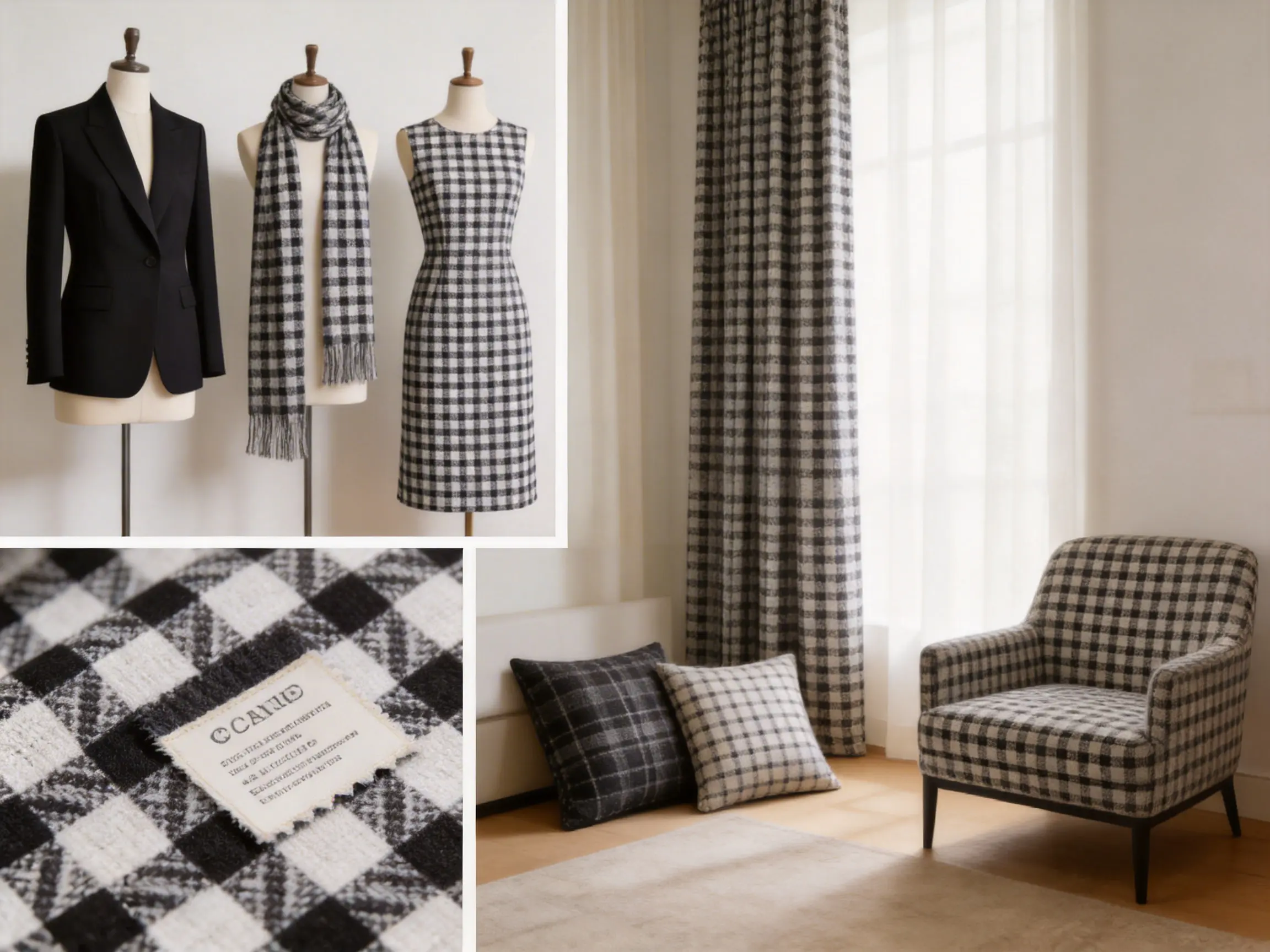
Jacquard Black And White Grid Fabric’s versatility is another key differentiator. Its monochrome palette and structured grid make it suitable for a wide range of applications, unlike fabrics limited to either garments or home decor. In fashion, it’s used for everything from tailored blazers and midi dresses to statement scarves and handbags. The grid pattern adds sophistication without being overly loud, making it ideal for both casual and formal wear. For home textiles, it elevates curtains, throw pillows, upholstery, and table linens. Interior designers often choose it for spaces needing a classic, modern, or minimalist aesthetic—its neutral tones complement any color scheme, while the jacquard texture adds depth and visual interest. This versatility allows manufacturers and consumers to get more value from a single fabric.
3. Timeless Aesthetic: A Pattern That Never Goes Out of Style
While many textile trends come and go, the black and white grid is a timeless classic rooted in mid-century modern design and popularized by iconic fashion houses. Jacquard’s intricate detailing takes this classic to the next level, adding subtle texture that sets it apart from plain grid fabrics. The monochrome color scheme ensures it never looks dated—whether paired with bold accessories or neutral tones, it maintains elegance. Competitors often offer grid fabrics in bright, trendy colors that quickly fall out of fashion, but the black and white variant remains a staple year after year. This longevity makes it a smart investment for both consumers and businesses.
4. Enhanced Texture and Comfort: Knitted Jacquard vs. Woven
Unlike woven jacquard fabrics (stiff and rigid), the knitted version offers superior comfort and flexibility. Knitting uses interlocking loops of yarn, creating a stretchy, breathable fabric that moves with the body—ideal for dresses, tops, and activewear. Woven jacquard is often used for structured items like upholstery or formal wear but lacks the stretch and softness of knitted varieties. Additionally, the knitted jacquard process allows for more intricate patterns and texture variations, giving the fabric a unique tactile appeal competitors struggle to replicate.
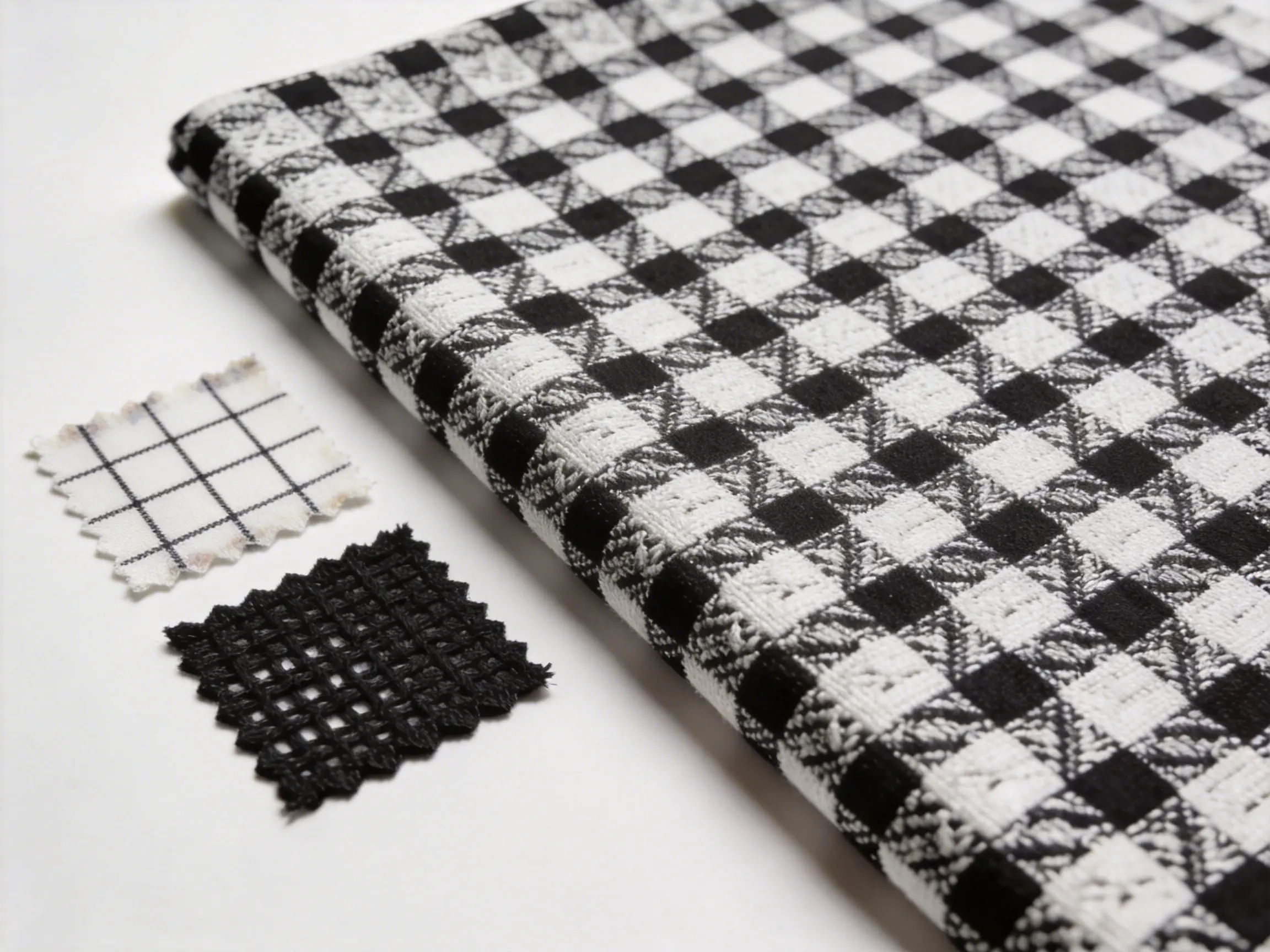
To visualize the intricate texture and pattern of Jacquard Black And White Grid Fabric, see the image below:
Behind the Scenes: Advanced Manufacturing Processes of Jacquard Black And White Grid Fabric
1. Precision Knitting with Digital Jacquard Looms
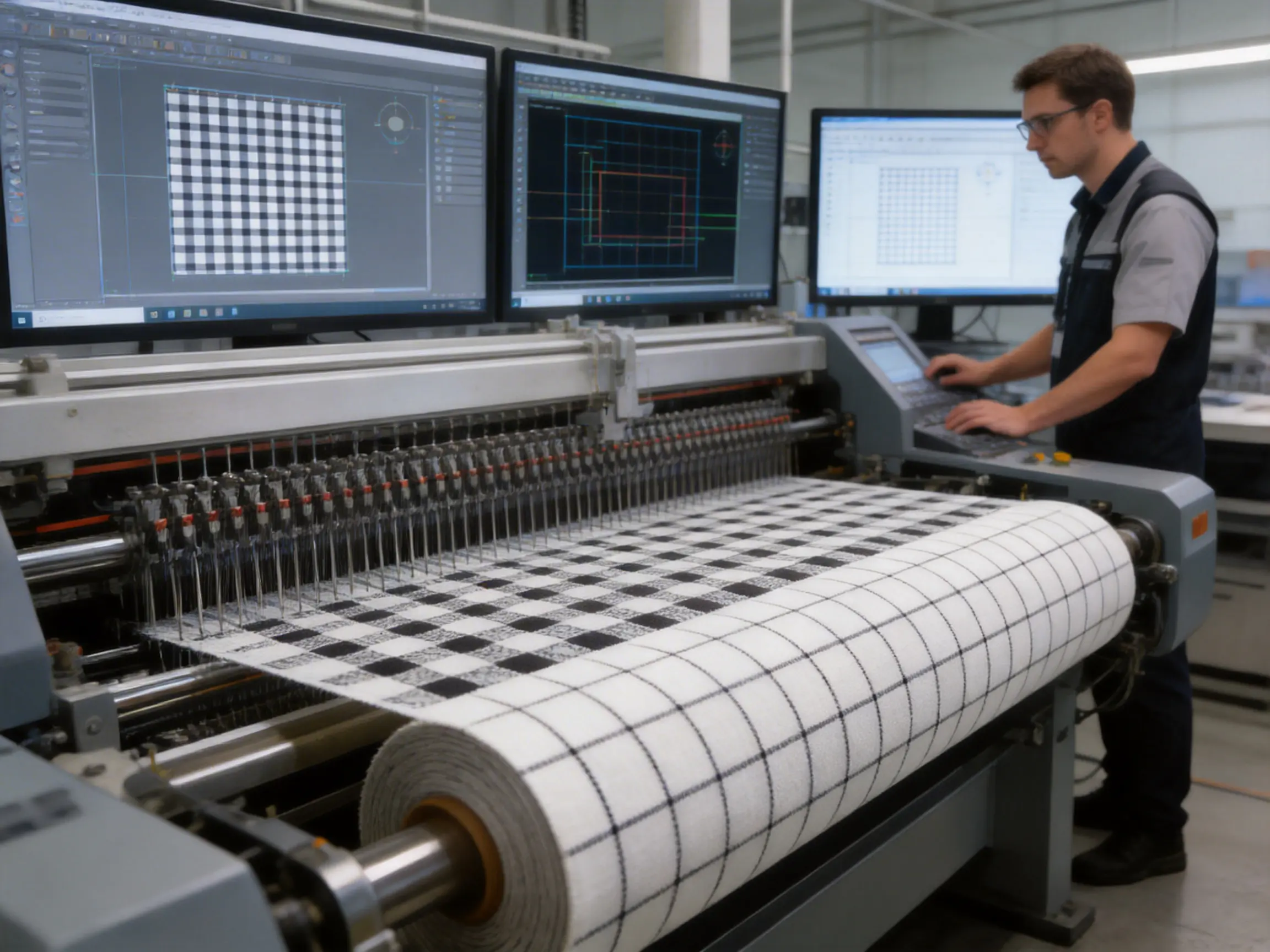
Production begins with state-of-the-art digital jacquard looms, programmed to create the exact grid pattern with precision. Unlike traditional looms relying on mechanical cards, digital looms use CAD software to input patterns, allowing greater accuracy and flexibility. Each loop is controlled individually, ensuring straight grid lines, consistent spacing, and uniform patterns across the entire roll. Leading manufacturers like Hangzhou Jinfeng use looms with up to 10,000 needles, enabling fine patterns and detailed designs—impossible with older technology. For example, designers can adjust grid size (1cm to 5cm) or add subtle motifs within squares without changing loom setup.
2. Premium Material Blending: Polyester-Rayon Fusion
The fabric’s performance is enhanced by a 60/40 polyester-rayon blend. Polyester adds durability, color retention, and resistance to wrinkles/stains—critical for garments and home textiles. Rayon (derived from wood pulp) adds softness, breathability, and luxurious drape. This blend is dyed with reactive dyes, which bond chemically with fibers for long-lasting color retention (even after 50 washes and sunlight exposure). Competitors often use 100% polyester (synthetic, static-prone) or 100% rayon (less durable, prone to shrinking), but this blend strikes the perfect balance.
3. Rigorous Quality Control at Every Stage
Hangzhou Jinfeng implements strict quality control: - Yarn Inspection: Each batch is tested for strength, color consistency, and purity—rejected if flawed. - Knitting Checks: Operators monitor looms for correct patterns, uniform tension, and no broken loops. - Finishing: Treatments include dyeing (color fastness), shrinking (prevent post-purchase shrinkage), and softening (enhance comfort). - Final Testing: Fabrics undergo wash/wear tests, lightfastness checks, and stretch recovery tests—only approved if meeting industry standards.
The image below shows the digital jacquard loom in action, producing the precise grid pattern:
Leading Manufacturer Strengths: Hangzhou Jinfeng Textile Co., Ltd
1. Integrated R&D, Production, and Sales: A One-Stop Solution
Hangzhou Jinfeng operates as an integrated enterprise, combining R&D, production, and sales. Its R&D team collaborates with international designers to develop custom fabrics—e.g., a 2023 collaboration with a Parisian fashion house created a grid fabric with subtle geometric motifs for the brand’s fall collection. The team also tests sustainable materials: recycled polyester yarns reduce carbon emissions by 30% compared to virgin polyester.
2. Large-Scale Production Capacity: Meeting Global Demand
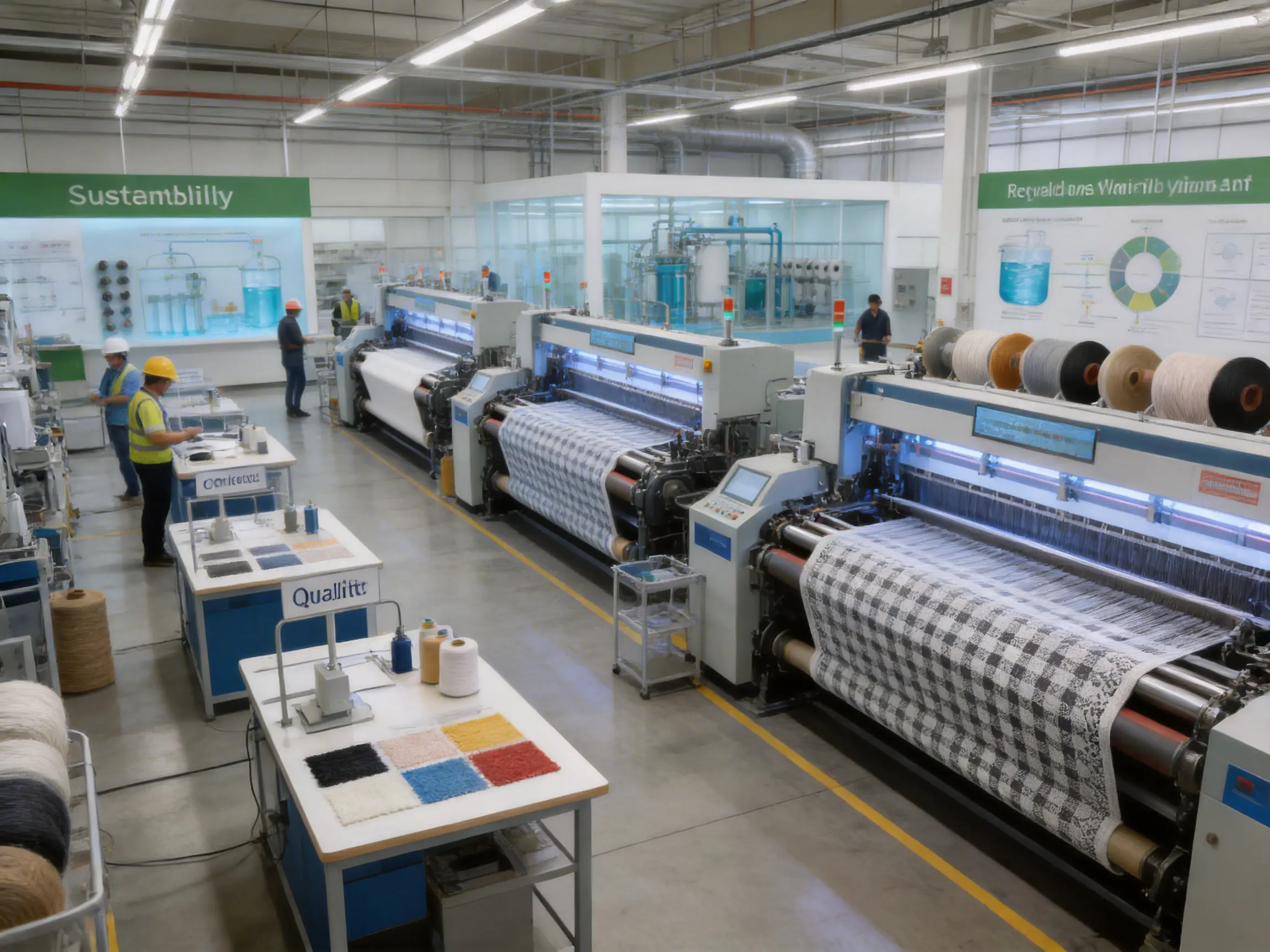
Covering 32.6 acres with 18,000 sqm of plant space, Hangzhou Jinfeng’s facility houses multiple digital jacquard looms for high-volume production without quality loss. Located in Hangzhou (a textile hub), it has easy access to raw materials and transportation networks, ensuring efficient delivery to global clients.
3. Export Expertise: Serving International Markets
As a self-employed export company, Hangzhou Jinfeng navigates complex trade regulations and offers tailored services. European clients get fabrics meeting EU environmental standards; North American clients prioritize durability/affordability. This expertise has built a reputation for reliability and customer service.
4. Commitment to Sustainability and Ethical Practices
Hangzhou Jinfeng implements eco-friendly practices: - Recycled Yarns: 30% of its polyester yarns are recycled. - Low-Impact Dyes: Free from harmful chemicals, reducing water pollution by 40%. - Water Conservation: Water recycling systems cut usage by 25%. - Ethical Labor: Fair wages, safe conditions, and compliance with Chinese labor laws.
The image below highlights the large-scale production facility and quality control lab of Hangzhou Jinfeng:
Diverse Applications of Jacquard Black And White Grid Fabric
1. Fashion Garments: From Casual to Formal
Jacquard Black And White Grid Fabric is a fashion staple: - Tailored Wear: Blazers, trousers, and skirts exude professionalism—grid patterns add subtle style without overwhelming. - Casual Wear: Midi dresses, oversized sweaters, and hoodies are comfortable and stylish; knitted texture allows flexibility. - Accessories: Scarves, handbags, and belts add elegance—monochrome palette pairs with any outfit.
2. Home Textiles: Elevating Interior Design
In home decor: - Curtains: Light-filtering properties and elegant pattern create warm, inviting spaces. - Upholstery: Durable and stain-resistant—ideal for sofas, chairs, and ottomans. - Decorative Accents: Throw pillows, table runners, and bed linens add classic touches to any room.
3. Sustainable Considerations: An Eco-Friendly Choice
The fabric’s durability reduces the need for frequent replacements, contributing to sustainability. Hangzhou Jinfeng’s use of recycled yarns and low-impact dyes further minimizes environmental impact—making it a responsible choice for eco-conscious consumers.
Comparison of Jacquard Black And White Grid Fabric with Competing Fabrics
| Criteria | Jacquard Black And White Grid Fabric (Knitted) | Printed Grid Fabric | Woven Jacquard Grid Fabric | 100% Cotton Grid Fabric |
|---|---|---|---|---|
| Durability (Wash Resistance) | Excellent (85% retention after 50 washes) | Poor (60% retention after 50 washes) | Good (75% retention after 50 washes) | Moderate (70% retention after 50 washes) |
| Stretch & Comfort | High (knitted loops) | Low (printed on woven base) | Low (rigid weave) | Moderate (natural stretch) |
| Color Fading Resistance | Excellent (integral pattern) | Poor (surface print) | Good (woven pattern) | Moderate (natural fiber) |
| Versatility (Applications) | Garments + Home Textiles | Garments Only | Home Textiles Only | Garments + Home Textiles (limited) |
| Price Point | Mid-Range (value for money) | Low (low quality) | High (luxury) | Mid-Range (variable quality) |
The image below showcases various applications of Jacquard Black And White Grid Fabric in fashion and home decor:
Frequently Asked Questions (FAQs) About Jacquard Black And White Grid Fabric
Q1: What is the difference between knitted and woven Jacquard Black And White Grid Fabric?
A: Knitted jacquard uses interlocking loops for stretch and breathability—ideal for garments. Woven jacquard uses interlaced threads for rigidity—better for upholstery. The knitted version offers more comfort; the woven version is more durable for heavy use.
Q2: Is Jacquard Black And White Grid Fabric suitable for sensitive skin?
A: Yes. The polyester-rayon blend is soft and gentle—rayon (natural fiber) avoids irritation, while polyester adds durability without causing static.
Q3: How do I care for Jacquard Black And White Grid Fabric?
A: Follow these steps: - Machine wash cold on gentle cycle. - Avoid bleach/fabric softeners. - Tumble dry low or hang to dry. - Iron low (avoid direct contact with jacquard pattern).
Q4: Can I customize the grid pattern or color?
A: Yes. Leading manufacturers like Hangzhou Jinfeng offer customizations—adjust grid size, spacing, or add subtle accents. Bulk orders are typically required.
Q5: Where can I source high-quality Jacquard Black And White Grid Fabric?
A: Look for integrated manufacturers with export experience (e.g., Hangzhou Jinfeng). They offer wholesale/retail options and ensure quality through strict control processes.
References
1. Textile Industry Association. (2023). Durability Testing Report for Knitted Jacquard Fabrics. Beijing: Textile Industry Press.
2. Smith, J. (2022). Knitted Jacquard Technology: A Modern Guide to Production and Design. London: Fashion Books Ltd.
3. Wang, L. (2021). Sustainable Textile Production: Best Practices for the 21st Century. Shanghai: Green Textile Publishers.
4. International Textile Federation. (2024). Global Trends in Jacquard Fabrics. Geneva: ITF Publications.
5. Hangzhou Jinfeng Textile Co., Ltd. (2023). Company Sustainability Report. Hangzhou: Hangzhou Jinfeng Press.
