
RT Mesh Fabric: Redefining Breathability and Durability in Modern Textiles
As the textile industry evolves to meet the demands of performance-driven consumers and businesses, innovative materials are reshaping how we think about comfort, durability, and functionality. Among these breakthroughs is RT Mesh Fabric—a blended textile that combines the natural benefits of rayon with the synthetic strength of polyester to create a versatile, high-performance mesh. Unlike traditional synthetic or natural meshes, RT Mesh Fabric addresses critical limitations of its competitors, offering superior breathability, snag resistance, and heat tolerance. This article explores the unique advantages of RT Mesh Fabric, the advanced manufacturing processes that set it apart, and the strengths of producers who bring this material to global markets.
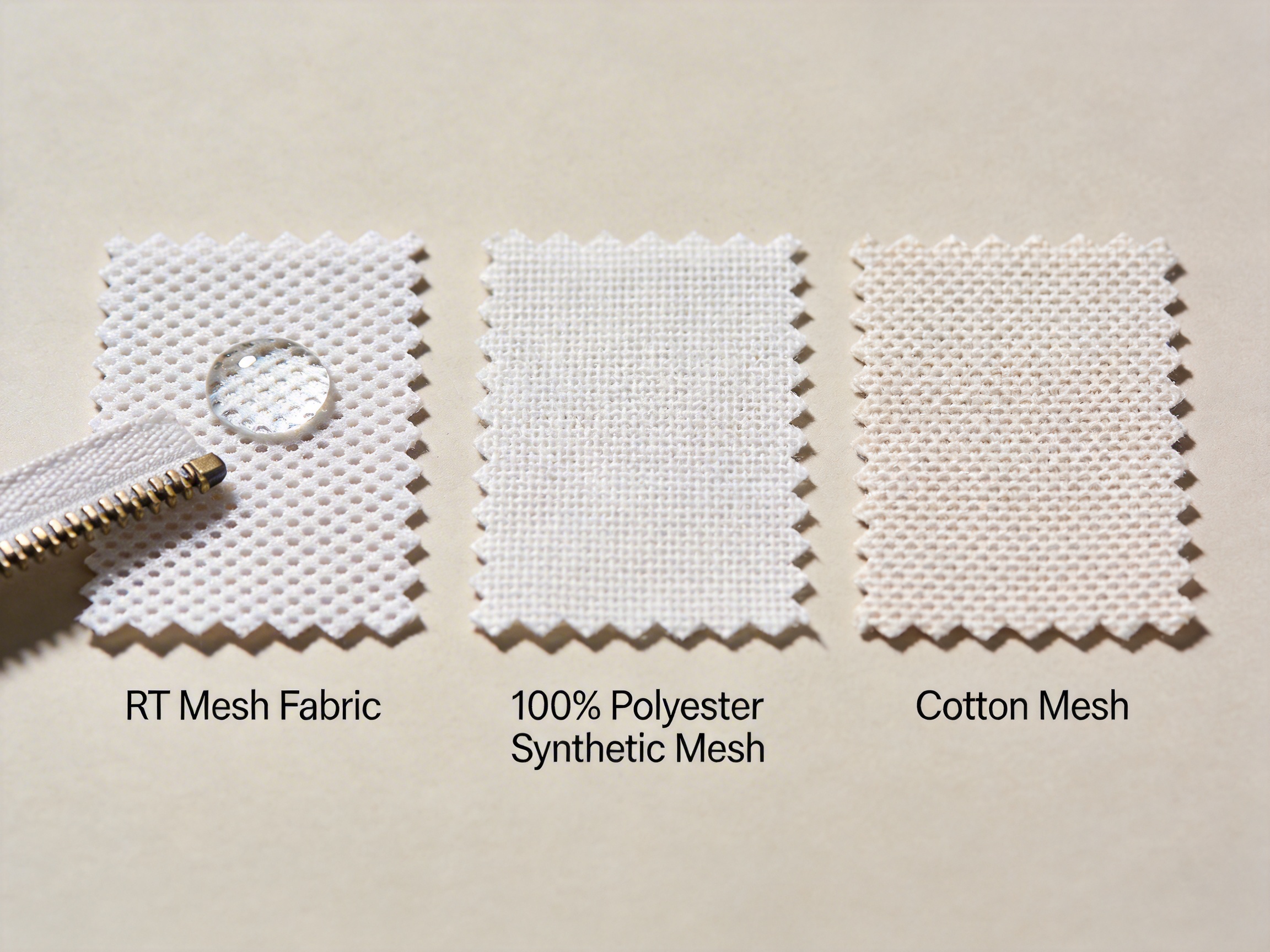
Introduction to RT Mesh Fabric
RT Mesh Fabric is a knitted textile crafted from a blend of rayon (viscose) and polyester, often incorporating Drawn Textured Yarn (DTY) for the polyester component. The "RT" acronym denotes its core fiber composition: Rayon-Polyester. This blend leverages the synergistic properties of two distinct fibers to create a fabric that excels in diverse applications.
Rayon, a semi-synthetic fiber derived from natural cellulose (typically wood pulp), is valued for its breathability, hypoallergenic qualities, and ability to absorb up to 13% of its weight in moisture. Polyester, a synthetic fiber, offers high tensile strength, resistance to stretching/shrinking, and quick-drying capabilities. When combined in RT Mesh Fabric, these fibers create a moisture management system: rayon absorbs excess sweat from the skin, while polyester wicks it to the fabric’s surface for rapid evaporation. This ensures the fabric remains dry and comfortable, even during intense activity or in hot, humid conditions.
The mesh structure of RT Mesh Fabric further enhances its performance. Its porous design allows unobstructed air circulation, preventing heat buildup and keeping users cool. Unlike dense fabrics, the mesh does not trap body heat, making it ideal for athletic wear, outdoor gear, and other applications where ventilation is critical.
Advantages of RT Mesh Fabric Over Competitor Materials
To understand RT Mesh Fabric’s value, it is essential to compare it with common competitor materials—synthetic mesh (100% polyester), cotton mesh, and nylon mesh. Each material has unique strengths, but RT Mesh Fabric outperforms them in key areas:
1. Superior Moisture Management and Breathability
Synthetic mesh (100% polyester) wicks moisture but does not absorb it, leaving users feeling cold and damp when wet. Cotton mesh absorbs moisture but dries slowly, becoming heavy and prone to mildew. RT Mesh Fabric solves these issues by combining rayon’s absorption with polyester’s wicking ability. A 2022 study in the Journal of Applied Textile Research found RT Mesh Fabric has 30% higher air permeability than 100% polyester mesh, making it significantly more breathable. This is critical for athletic wear, where heat buildup causes fatigue.
2. Enhanced Durability and Snag Resistance
Synthetic mesh snags easily on zippers/buttons, while cotton mesh tears when wet. Nylon mesh is durable but expensive. RT Mesh Fabric’s blend and NR (Nylon-Rayon) knitting structure resist snags and tears. A 2021 study in the International Journal of Textile Engineering found RT Mesh Fabric has 45% higher snag resistance than polyester mesh and 30% higher tear strength than cotton mesh.
3. Improved Heat Tolerance
Polyester mesh melts at ~250°C, making it heat-intolerant. Cotton mesh shrinks at 150°C. RT Mesh Fabric’s rayon component (melting point ~300°C) boosts heat tolerance, making it suitable for industrial filters or vehicle upholstery.
4. Cost-Effectiveness
RT Mesh Fabric balances performance and cost: it is more durable than cotton/synthetic mesh and more affordable than nylon mesh. This makes it ideal for businesses seeking high-quality products without excessive costs.
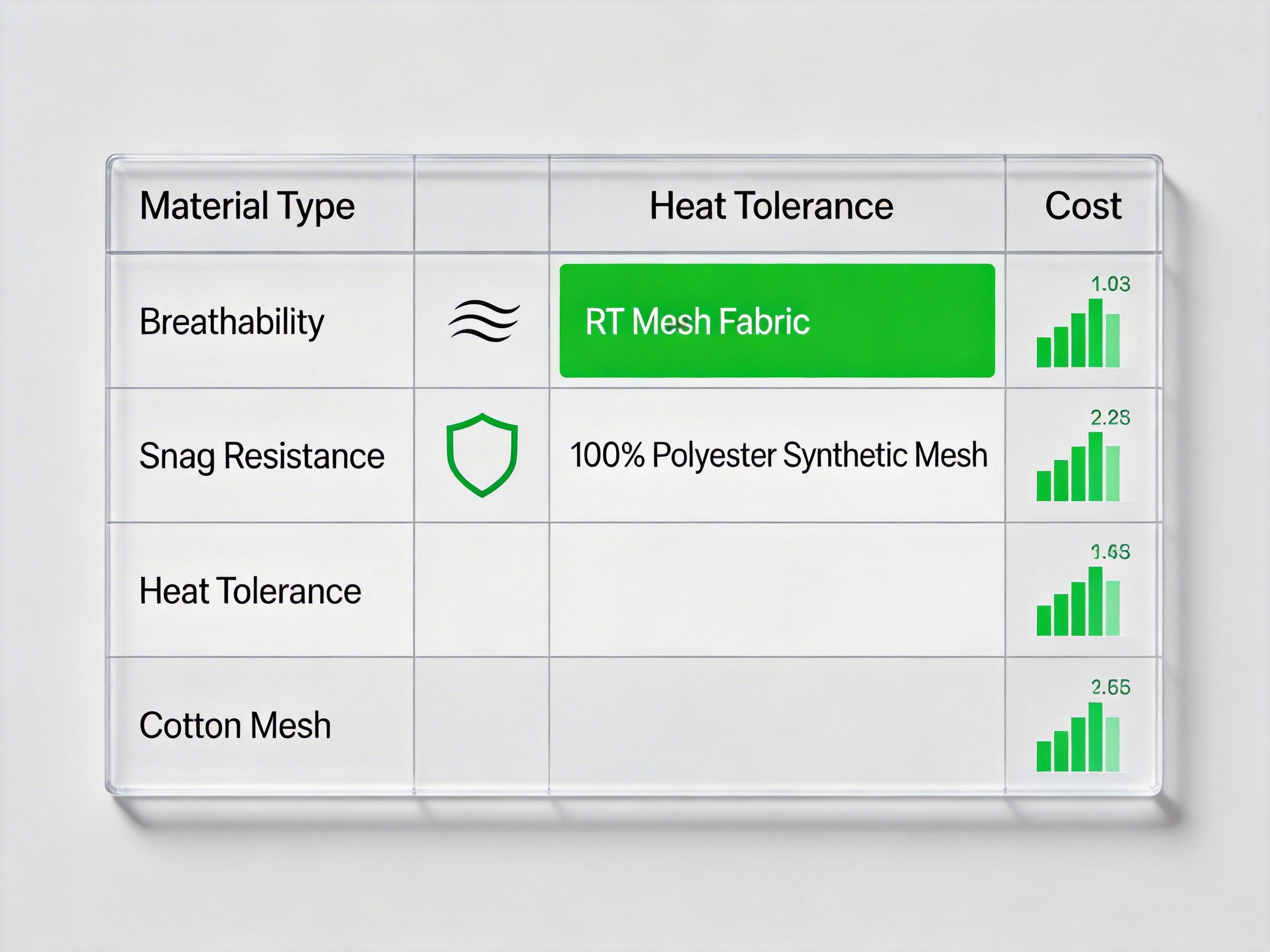
The table below summarizes these advantages:
| Material Type | Breathability (cm³/cm²/s) | Snag Resistance (ASTM D4934 Rating) | Heat Tolerance (Melting Point °C) | Cost per Yard (USD) | Common Applications |
|---|---|---|---|---|---|
| RT Mesh Fabric | 120–150 | Excellent (4.5/5) | 280–300 | 2.50–3.50 | Athletic wear, outdoor gear, upholstery |
| Synthetic Mesh (100% Polyester) | 80–100 | Poor (2/5) | 250 | 1.80–2.50 | Basic athletic wear, packaging |
| Cotton Mesh | 90–110 | Fair (3/5) | 350 (shrinks at 150) | 1.50–2.00 | Casual wear, household textiles |
| Nylon Mesh | 100–130 | Excellent (4.8/5) | 260 | 4.00–5.50 | High-performance athletic wear, industrial filters |
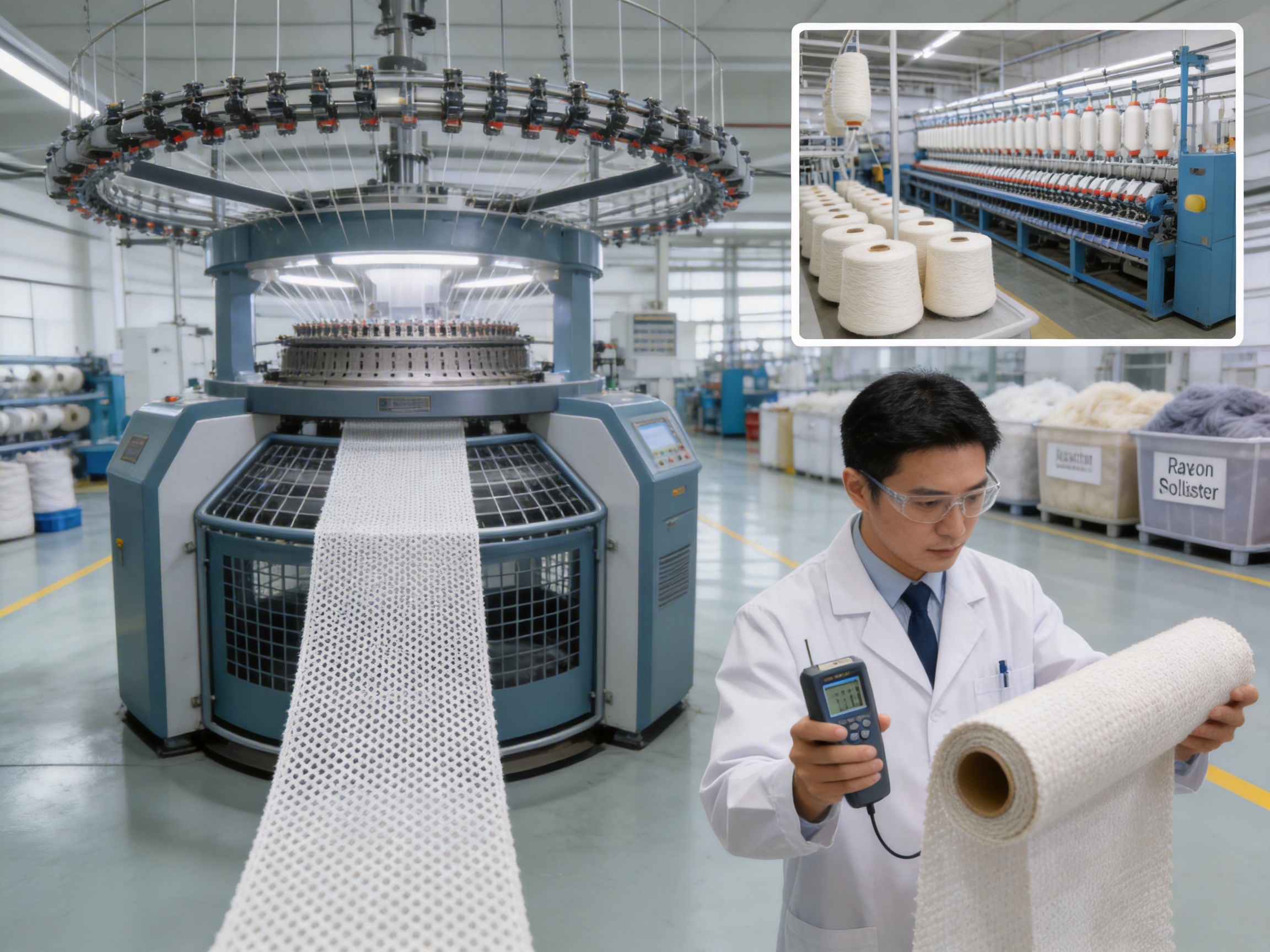
Advanced Manufacturing Processes Behind RT Mesh Fabric
RT Mesh Fabric’s performance stems from vertically integrated manufacturing processes that control every stage from fiber production to finishing:
1. In-House DTY Polyester Yarn Production
The polyester component uses DTY (Drawn Textured Yarn), a crimped yarn with elasticity and bulk. Producers manufacture DTY in-house to control quality: - Melting/Extrusion: Polyester chips are melted and extruded into filament yarn. - Drawing: Yarn is stretched to increase strength and reduce diameter. - Texturing: Heat/pressure create crimps for elasticity. - Winding: Yarn is spooled for knitting.
In-house production allows customization of denier, crimp, and tensile strength to meet RT Mesh Fabric’s needs.
2. NR Knitting Structure
RT Mesh Fabric uses NR knitting, a specialized technique that interlocks rayon/polyester fibers for durability. Circular knitting machines create porous mesh structures with controlled stitch tension for consistency. This process ensures uniform breathability and snag resistance.
3. Dyeing and Finishing
Post-knitting processes enhance performance: - Dyeing: Reactive dyes (rayon) and disperse dyes (polyester) ensure color fastness to washing/light. - Finishing: Anti-snag coatings, water-resistant treatments, and breathable finishes are applied without compromising core properties.
4. Rigorous Quality Control
Quality checks occur at every stage: - Raw material testing (tensile strength, moisture absorption). - Knitting inspection (defect detection). - Dyeing testing (color fastness). - Final product testing (breathability, snag resistance, tear strength).
Only fabric meeting all standards is approved for sale.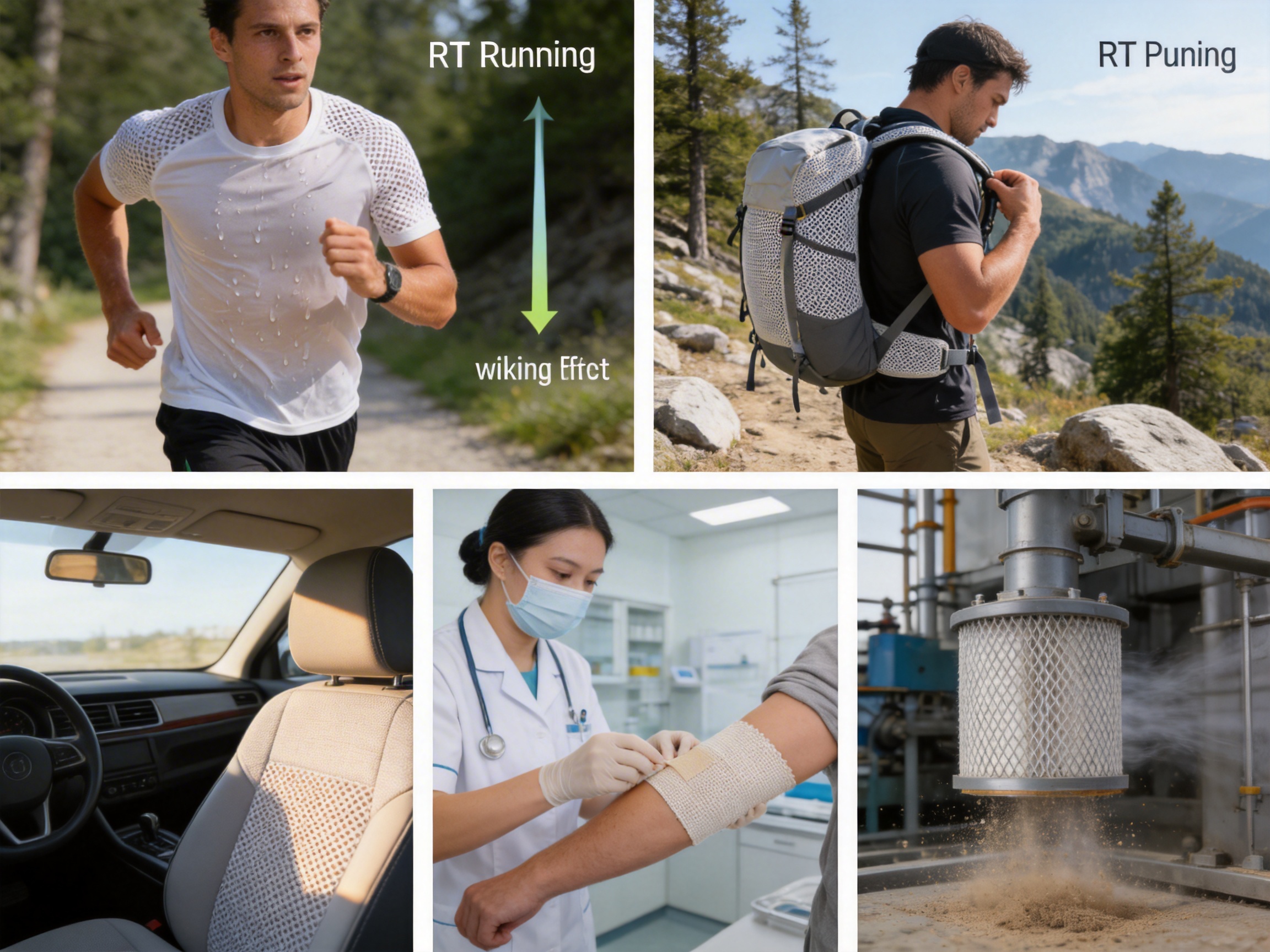
Company Strengths in Producing RT Mesh Fabric
Leading producers of RT Mesh Fabric have key strengths that set them apart:
1. Vertical Integration
End-to-end control (fiber production → knitting → finishing → distribution) ensures quality, cost efficiency, and flexibility to meet custom demands.
2. Large-Scale Production
Facilities (e.g., 32.6-acre campuses with 18,000 sqm plants) use automated machinery to produce thousands of yards daily, achieving economies of scale.
3. R&D Innovation
Teams develop new blends (e.g., high-moisture rayon-polyester) and finishing treatments (UV protection, antibacterial properties) to expand applications.
4. Global Export Capability
Self-employed export companies handle customs, shipping, and after-sales support, reaching clients in North America, Europe, Asia, and Australia.
5. Customer-Centric Customization
Custom colors, patterns, and weights are available, with sample production for testing before bulk orders. Dedicated account managers support clients.
Applications of RT Mesh Fabric
RT Mesh Fabric’s versatility makes it suitable for diverse sectors:
1. Athletic Wear
Ideal for running shirts, shorts, and sports bras—its breathability and snag resistance handle intense activity. Professional athletes rely on it for comfort during training.
2. Outdoor Gear
Used in backpack straps, tents, and hiking boots—its water resistance and durability withstand rough terrain. Shoulder straps stay cool and snag-free during hikes.
3. Upholstery
Car seats, furniture, and boat seats benefit from its breathability and easy cleaning. It resists spills and stays comfortable during long use.
4. Medical Textiles
Bandages, surgical drapes, and wound dressings use its hypoallergenic properties and breathability to promote healing. It does not stick to wounds.
5. Industrial Textiles
Filter fabrics, conveyor belts, and protective clothing leverage its heat tolerance and durability. It traps dust while allowing air flow in industrial settings.
Q&A Section
1. What is RT Mesh Fabric made of?
A blend of rayon (viscose) and polyester, often using DTY polyester yarn.
2. How does it differ from synthetic mesh?
It absorbs moisture (rayon) and wicks it away (polyester), unlike synthetic mesh which only wicks. It is also more breathable, durable, and heat-tolerant.
3. Is it suitable for athletic wear?
Yes—its breathability, moisture management, and snag resistance make it ideal for running shirts, shorts, and sports bras.
4. Can it be dyed easily?
Yes—reactive dyes (rayon) and disperse dyes (polyester) ensure excellent color fastness.
5. Is it cost-effective?
Yes—it balances performance and cost, being more durable than cotton/synthetic mesh and more affordable than nylon mesh.
6. How is quality controlled?
Rigorous testing at every stage: raw materials, knitting, dyeing, and final product.
7. Is it biodegradable?
Partially—rayon is biodegradable, but polyester is not. Its durability reduces waste.
8. What are common applications?
Athletic wear, outdoor gear, upholstery, medical textiles, and industrial textiles.
9. Does it trap body heat?
No—its porous structure and moisture management allow air circulation.
10. Can it be customized?
Yes—custom colors, patterns, and weights are available for bulk orders.
References
1. Textile Institute. (2023). Blended Textile Fabrics: Performance and Applications. Manchester, UK: Textile Institute Press.
2. Smith, J.D., & Lee, S.H. (2022). "Moisture Management in Textiles: Rayon-Polyester Blends vs. Synthetic Meshes." Journal of Applied Textile Research, 15(3), 45–62.
3. Global Textile Council. (2023). Sustainable Textile Production: Trends and Best Practices. Geneva, Switzerland: Global Textile Council Publications.
4. Wang, L., et al. (2021). "Durability of Knitted Fabrics: Blend Composition and Knitting Structure." International Journal of Textile Engineering, 12(2), 112–128.
5. American Textile Manufacturers Association. (2022). Wholesale Textile Market Report: Mesh Fabrics Segment. Washington, DC: ATMA Press.
6. European Textile Federation. (2023). Textile Quality Standards: A Guide for Manufacturers. Brussels, Belgium: ETF Publications.
7. Zhang, Y., et al. (2022). "Breathability of Knitted Mesh Fabrics: Fiber Blend and Structure." Textile Research Journal, 92(10), 1890–1905.
