
RT Mesh Fabric: Breathable Knitted Performance for Modern Textile Applications
RT Mesh Fabric is a versatile NR knitted fabric developed for applications that require airflow, lightness, flexibility, and visual texture. Its open construction allows air to circulate through the textile, making it suitable for apparel, sportswear, linings, casual fashion, accessories, and other products where comfort and breathability are important. Compared with dense woven or compact knitted materials, mesh fabric offers a distinctly lighter and more ventilated structure.
The value of RT Mesh Fabric is not limited to its open appearance. Its performance depends on the quality of the yarn, the accuracy of the knitting process, the stability of the fabric structure, and the care applied during finishing. A well-produced mesh fabric should balance breathability with usable strength, dimensional consistency, color quality, handle, and appearance. These factors distinguish a professionally manufactured knitted mesh from a low-cost material that may stretch excessively, snag easily, or lose its form after use.
Hangzhou Jinfeng Textile Co., Ltd. manufactures and supplies knitted fabrics, blended fabrics, and drawn textured yarn products. Its operations include production and processing, post-dyeing, finishing, sales, and DTY polyester yarn production and processing. Based in Xiaoshan District, Hangzhou, the company combines fabric manufacturing with yarn-related capabilities, allowing it to coordinate important stages of textile development and production.
This article explains the structure, advantages, applications, manufacturing considerations, quality factors, and practical limitations of RT Mesh Fabric. It also examines how a vertically coordinated textile supplier can create advantages in consistency, customization, production control, and customer service.

RT Mesh Fabric
What Is RT Mesh Fabric?
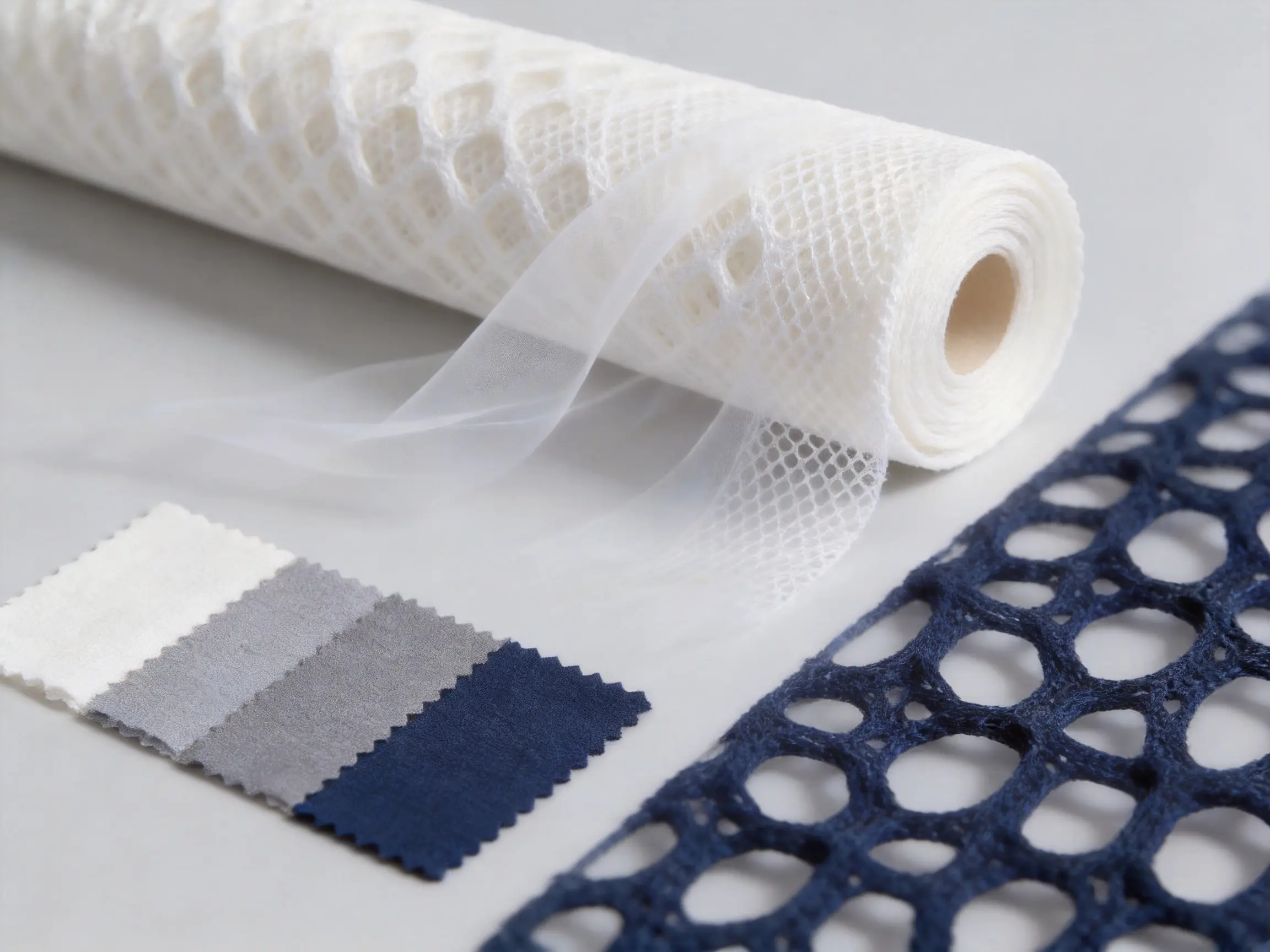
RT Mesh Fabric is an open-structure knitted textile classified as NR knitted fabric. The term “mesh” describes the visible network of openings or spaces formed during knitting. These openings may be regular or textured, depending on the stitch design, yarn selection, machine settings, and finishing method. The result is a fabric that has a lighter visual and physical character than many solid-surface textiles.
Because RT Mesh Fabric is knitted rather than woven, its performance is created through interconnected loops. Knitted loops can provide natural flexibility and a degree of stretch, allowing the fabric to follow body movement and adapt to curved surfaces. This makes the material useful in garments that need comfort and mobility rather than a rigid, structured drape.
The open construction also reduces the amount of material occupying the surface area. This can contribute to lower weight, faster moisture evaporation, and improved ventilation. In warm conditions, the fabric can help reduce the feeling of trapped heat. In sports and active clothing, this airflow can support a more comfortable wearing experience when combined with suitable garment design and fabric placement.
Mesh is not a single standardized fabric type. Its qualities vary significantly according to fiber composition, yarn size, loop density, aperture dimensions, knitting pattern, dyeing method, and finishing treatment. Therefore, buyers should evaluate a specific RT Mesh Fabric according to its technical specification rather than assuming that every mesh textile has the same properties.
Core Advantages of RT Mesh Fabric
Breathability and Air Circulation
The primary advantage of RT Mesh Fabric is breathability. The open areas in the knitted structure allow air to pass more readily than through a tightly constructed fabric. This can help reduce heat accumulation between the textile and the skin, especially when the fabric is used in warm climates, active garments, sports panels, summer fashion, and ventilated linings.
Breathability is influenced by more than the number of visible openings. Yarn type, aperture size, fabric thickness, finishing chemicals, garment construction, and the area of the body covered all affect the final result. A balanced mesh structure should provide adequate airflow without becoming too unstable or fragile for its intended use.
Lightweight Construction
Mesh fabrics are often selected when a product needs to remain light. A lower fabric weight can improve comfort in clothing and reduce bulk in layered products. Lightweight construction may also support easier packing, faster drying, and more economical material usage, although actual cost depends on the fiber content, production requirements, finishing, and quality level.
For garment manufacturers, lightweight mesh can be used as a complete outer fabric or as a targeted performance panel. In the second application, it may be positioned on areas where ventilation is most valuable, such as the back, underarm, side panel, shoulder, or lower-leg region.
Flexibility and Movement Comfort
As a knitted fabric, RT Mesh Fabric can offer a softer and more flexible hand than many woven alternatives. The looped construction allows a degree of movement in multiple directions. This characteristic is useful for sportswear, casual clothing, dancewear, and fitted products that must accommodate body motion.
Flexibility can also simplify product design. Designers may be able to reduce the number of ventilation panels or use the fabric in curved sections without creating a stiff appearance. However, the degree of stretch and recovery should be tested before production, because mesh structures can vary widely in elasticity and dimensional stability.
Distinctive Visual Texture
The open knitted pattern gives RT Mesh Fabric a recognizable visual identity. It can create a technical, sporty, contemporary, or lightweight fashion appearance depending on the stitch pattern and color. The surface can also be combined with solid fabrics, prints, embroidery, bonding, or layered materials to create contrast.
This design flexibility gives mesh an advantage over plain compact fabrics when the product requires visible texture or a sense of ventilation. It can be used to create panels, overlays, inserts, decorative sections, and semi-transparent effects. The final appearance should be judged after dyeing and finishing because these processes can influence the definition of the openings and the hand feel.
Wide Application Potential
RT Mesh Fabric can be considered for a wide range of applications, including athletic tops, training garments, breathable casualwear, lightweight jackets, fashion overlays, active accessories, garment linings, and selected household or industrial textile products. The correct application depends on the fabric’s composition, weight, stretch, strength, colorfastness, and finishing.
Its adaptability is an important competitive advantage. A supplier that can provide different colors, constructions, widths, and finishing options can help customers use the same general fabric concept across multiple product lines while maintaining a consistent visual language.
Comparison with Other Fabric Options
RT Mesh Fabric competes with several categories of textiles, including solid knitted fabrics, woven polyester fabrics, cotton-based materials, synthetic netting, and other openwork structures. Its advantages are strongest when airflow, low weight, visual openness, and movement comfort are priorities.
| Fabric Type | Typical Strength | Potential Limitation | When RT Mesh Fabric May Be Preferred |
|---|---|---|---|
| RT Mesh Fabric | Airflow, light weight, flexibility, visible texture | May require careful handling because of open construction | Sportswear, breathable panels, lightweight fashion, ventilated products |
| Dense knitted fabric | Coverage, softness, body, and surface continuity | Less ventilation and potentially greater heat retention | When opacity, warmth, or a solid surface is required |
| Woven polyester | Dimensional stability, smooth appearance, and structured drape | Usually less flexible and less open than mesh | Structured garments, uniforms, and firm product surfaces |
| Cotton-based fabric | Natural hand feel and moisture absorption | May dry more slowly and require additional stability control | Natural-fiber comfort and casual applications |
| Synthetic netting | Very open construction and strong ventilation | Can feel coarse, unstable, or less comfortable against skin | Technical separation layers and highly ventilated structures |
Compared with a dense knitted fabric, RT Mesh Fabric generally provides better ventilation and a lighter appearance. Compared with a rigid woven fabric, it can offer greater flexibility and comfort. Compared with very open synthetic netting, a knitted mesh may provide a more wearable hand and a more integrated textile appearance.
These comparisons should not be interpreted as universal performance claims. A fabric’s actual advantages depend on the specification. For example, a tightly constructed mesh may have better coverage and durability than an extremely open mesh, while a fine mesh may provide a softer hand but require more careful handling. Product selection should always be based on testing and application requirements.
Fiber Content and Yarn Selection
The cost, performance, and appearance of mesh fabric depend substantially on fiber content and quality. Polyester is widely used in technical and commercial knitted fabrics because it can provide useful strength, dimensional performance, color possibilities, and processing versatility. Other fibers or blends may be selected to modify softness, moisture behavior, elasticity, drape, or appearance.
Yarn quality is especially important in an open knitted structure. A yarn with inconsistent thickness can affect loop formation and create visible irregularities in the mesh pattern. Weak or poorly prepared yarn may increase the risk of breakage during knitting. Surface characteristics can also affect snagging, pilling, dye uptake, and the final hand.
Hangzhou Jinfeng Textile Co., Ltd. includes DTY polyester yarn production, processing, and sales among its business capabilities. Drawn textured yarn can provide bulk, flexibility, and a textured surface suitable for selected knitted fabric constructions. The relationship between yarn properties and fabric structure allows manufacturers to consider the final textile rather than treating yarn as an isolated input.
When choosing a specification, buyers should consider fiber composition, yarn count, filament or staple structure, texturing, color, tensile behavior, elongation, recovery, and compatibility with dyeing and finishing. These factors affect both production efficiency and finished-product quality.
Manufacturing Process for RT Mesh Fabric
Product Development and Specification Planning
Manufacturing begins with a clear product specification. The supplier and customer should define the intended use, target weight, width, color, openness, stretch behavior, hand feel, and required performance. The fabric may need to meet additional requirements related to colorfastness, dimensional change, abrasion, seam performance, or chemical compliance.
At this stage, the supplier can recommend an appropriate yarn and knitted construction. A product intended for a sports garment may require a different balance of ventilation and coverage than a decorative fashion mesh. Defining the application early helps prevent the selection of an attractive but unsuitable construction.
Yarn Preparation
Yarn preparation supports stable knitting. The yarn must be suitable for the selected machine, gauge, stitch pattern, and production speed. Proper winding, tension control, and storage help reduce interruptions and fabric defects. For textured polyester yarn, consistency in bulk and surface character is important because variations may be visible in the open pattern.
A manufacturer with experience in DTY polyester yarn production can better understand how texturing affects knitted behavior. This knowledge may help with yarn selection, process adjustment, and coordination between yarn and fabric production. It also supports more informed troubleshooting when a fabric does not achieve the expected appearance or handle.
Knitting
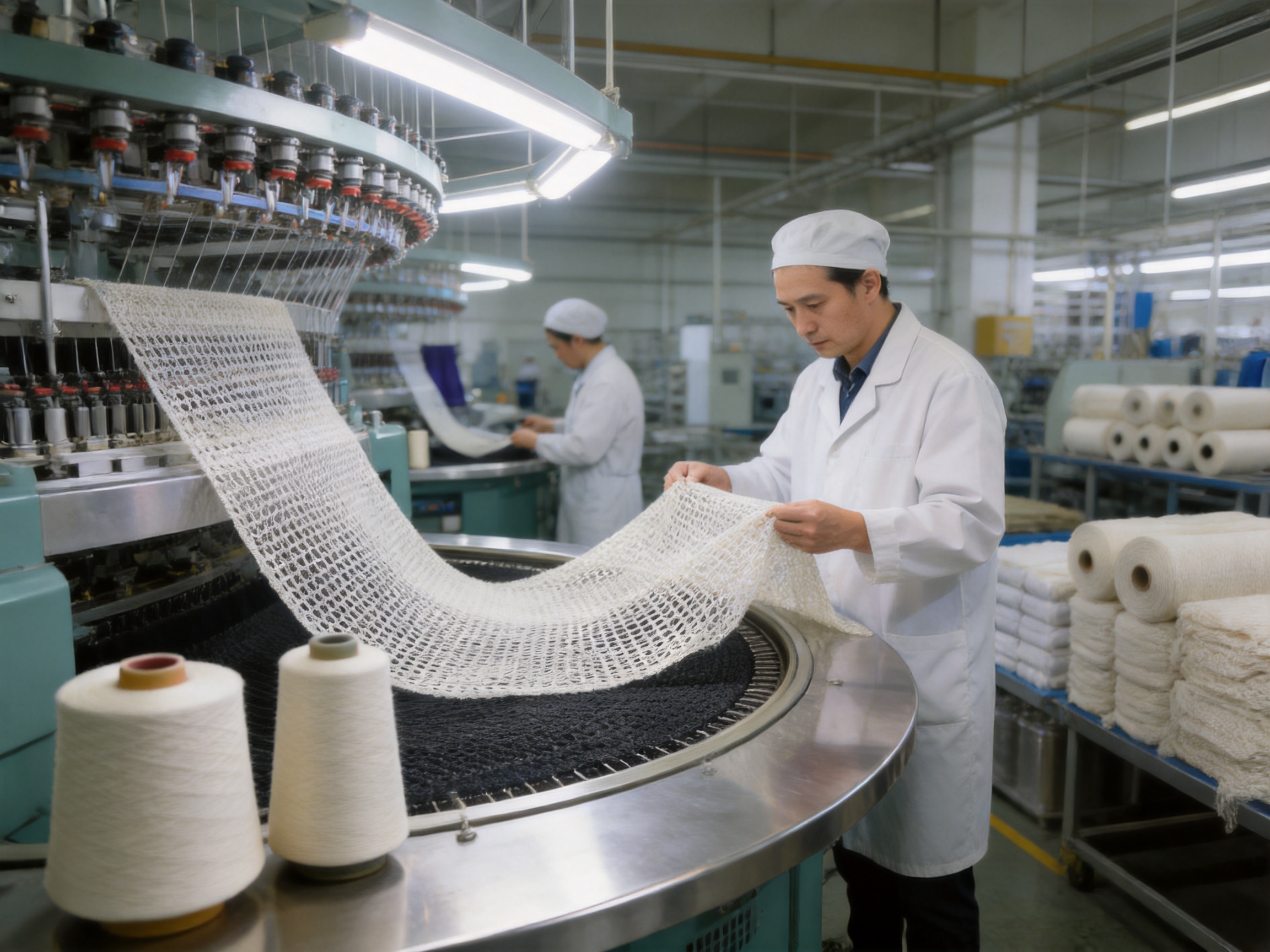
The knitting stage creates the mesh geometry. Machine settings determine loop size, stitch density, pattern repeat, openness, and fabric width. Tension must be controlled carefully because excessive tension can distort the structure, while insufficient control can lead to uneven loops, curling, or unstable dimensions.
Open structures require attention to needle condition, yarn feeding, machine cleanliness, and production speed. A small irregularity may become more visible in mesh than in a dense fabric because the eye can easily detect a missing loop, enlarged opening, or uneven pattern. Consistent operation is therefore essential.
During knitting, manufacturers may inspect the fabric for broken yarns, holes outside the intended design, streaks, uneven density, contamination, and width variation. Early detection reduces waste and prevents defective material from moving into later stages.
Post-Dyeing
Post-dyeing gives the fabric its required color and contributes to the final appearance and hand. Dyeing parameters must be chosen according to the fiber content and fabric construction. Open knitted structures can respond differently from dense fabrics because the material has a high surface-to-volume relationship and may be sensitive to tension, agitation, and heat.
Controlled dyeing helps achieve shade consistency across production lots. It also helps preserve the intended aperture shape and fabric dimensions. Excessive mechanical or thermal stress may distort a mesh structure, while insufficient processing may lead to uneven color or inadequate fastness.
Finishing
Finishing can influence softness, width, dimensional stability, surface appearance, and handling performance. Depending on the customer’s requirements, finishing may include processes designed to control shrinkage, improve hand feel, stabilize the structure, or prepare the fabric for garment manufacturing.
Finishing should support the purpose of the mesh rather than close its openings or make the fabric unnecessarily stiff. The right balance preserves breathability while providing a practical level of stability. A professional supplier evaluates the finished textile as a complete product, not simply as a knitted roll.
Inspection and Packing
Final inspection may include visual examination, width measurement, weight verification, color assessment, dimensional testing, and application-specific performance checks. The inspection standard should be agreed upon before mass production so that both supplier and customer have a shared understanding of acceptable quality.
Roll packing is also important. Mesh fabric can be vulnerable to deformation, snagging, and pressure marks if it is packed or transported carelessly. Suitable wrapping, labeling, roll protection, and storage conditions help preserve the fabric until it reaches the cutting room or production facility.
Manufacturing Strengths of an Integrated Textile Supplier
Hangzhou Jinfeng Textile Co., Ltd. operates as an export-oriented company integrating research and development, production, processing, and sales. Its facilities include a plant area of approximately 18,000 square meters, supporting the production and handling of blended fabrics and yarn-related products. A dedicated operating base can provide the space needed for fabric processing, finishing, inspection, warehousing, and order coordination.
One of the company’s strengths is its involvement in several connected textile activities. It produces and processes DTY polyester yarn and manufactures blended fabrics such as polyester and spandex materials. This range of capabilities can support customers who need coordinated yarn and fabric development rather than a disconnected supply chain.
Integrated capabilities may reduce communication gaps between material selection, knitting, dyeing, finishing, and delivery. When a customer requests a change in hand feel, stretch, color, or surface appearance, a supplier familiar with both yarn and fabric behavior may be able to identify the relevant production variable more efficiently.
The company also provides post-dyeing and finishing services. This is important because a knitted fabric’s final performance is not determined solely at the knitting machine. Dyeing and finishing affect color, stability, handle, and appearance. Managing these stages with appropriate technical coordination can help produce a more consistent final textile.
Research and development is another relevant strength. Mesh fabric applications continue to evolve, and customers may require a particular combination of openness, coverage, softness, stretch, weight, or color. Development work can involve adjusting yarn selection, knitting parameters, dyeing conditions, and finishing treatment to create a fabric that meets the product’s purpose.
Quality Control Considerations
Dimensional Stability
Dimensional stability is important for knitted mesh because the open loop structure may respond to moisture, heat, tension, and laundering. A fabric that changes significantly in width or length can create problems during cutting, sewing, and final garment fitting.
Manufacturers should evaluate dimensional change after relevant treatments and communicate expected tolerances. Customers should also test the fabric using the same washing, drying, pressing, or bonding conditions expected in production.
Color Consistency
Color consistency is essential when mesh fabric is used in large panels or combined with other materials. Differences between production lots can be more visible when the fabric has an open surface that reflects light through both yarn and openings.
Laboratory dips, approved standards, controlled dyeing, and lot tracking can help manage shade variation. Buyers should specify whether the fabric will be matched to another material, a seasonal color standard, or a particular visual effect.
Strength and Snag Resistance
The open structure of mesh is a major functional advantage, but it also creates a practical vulnerability. The fabric may be more exposed to sharp edges, rough surfaces, zipper pulls, buttons, hooks, and accessories. If a loop is pulled, the opening can enlarge or the fabric can run, depending on the construction.
For this reason, RT Mesh Fabric should be evaluated for the intended environment. A fashion overlay may require a different durability level from a sports garment used during repeated movement. Garment design can also reduce risk by covering vulnerable edges, selecting smooth hardware, and placing mesh away from high-friction zones.
Heat Sensitivity
Synthetic mesh fabrics can be sensitive to excessive heat. High temperatures during ironing, heat pressing, drying, or certain finishing operations may alter the fabric’s dimensions, surface, or hand. Production teams should follow recommended temperature and dwell-time conditions and conduct trials before applying heat to finished products.
Care labeling should be based on actual testing. Appropriate washing and drying instructions can help preserve the shape and appearance of the fabric throughout its service life.
Surface Appearance
Visual inspection should examine the regularity of the mesh openings, surface cleanliness, pattern alignment, color uniformity, and presence of broken or distorted loops. Because the fabric is visually open, small defects may be noticeable to the end user.
Inspection criteria should distinguish between acceptable construction variation and defects that affect function or appearance. Clear standards help avoid disagreement during delivery and support repeat purchasing.
Advantages over Low-Quality Competitors
RT Mesh Fabric can offer meaningful advantages over lower-quality mesh when it is manufactured with suitable materials and controlled processes. The first advantage is structural consistency. Regular openings and stable dimensions improve cutting efficiency, sewing accuracy, and finished-product appearance.
The second advantage is balanced performance. Very inexpensive mesh may emphasize low price while sacrificing handle, recovery, color consistency, or resistance to everyday handling. A better-developed fabric seeks an appropriate balance between openness and usability. It should provide airflow without becoming unnecessarily unstable for the target product.
The third advantage is process coordination. When the supplier manages yarn, fabric, dyeing, finishing, and sales activities, it may be easier to trace a problem to its source. This can be particularly valuable for customized fabrics, repeat orders, and products that require precise color or construction matching.
The fourth advantage is development support. Buyers often need more than a standard catalog fabric. They may need a different weight, aperture, color, width, hand, or blend. A manufacturer with production and development experience can help translate the product concept into a workable textile specification.
The fifth advantage is supply continuity. Consistent production records, material knowledge, and customer communication can support repeat orders. For apparel brands and garment factories, continuity is important because changing the fabric source may alter fit, color, cutting yield, sewing behavior, and consumer perception.
Applications in Apparel and Product Design
Sportswear
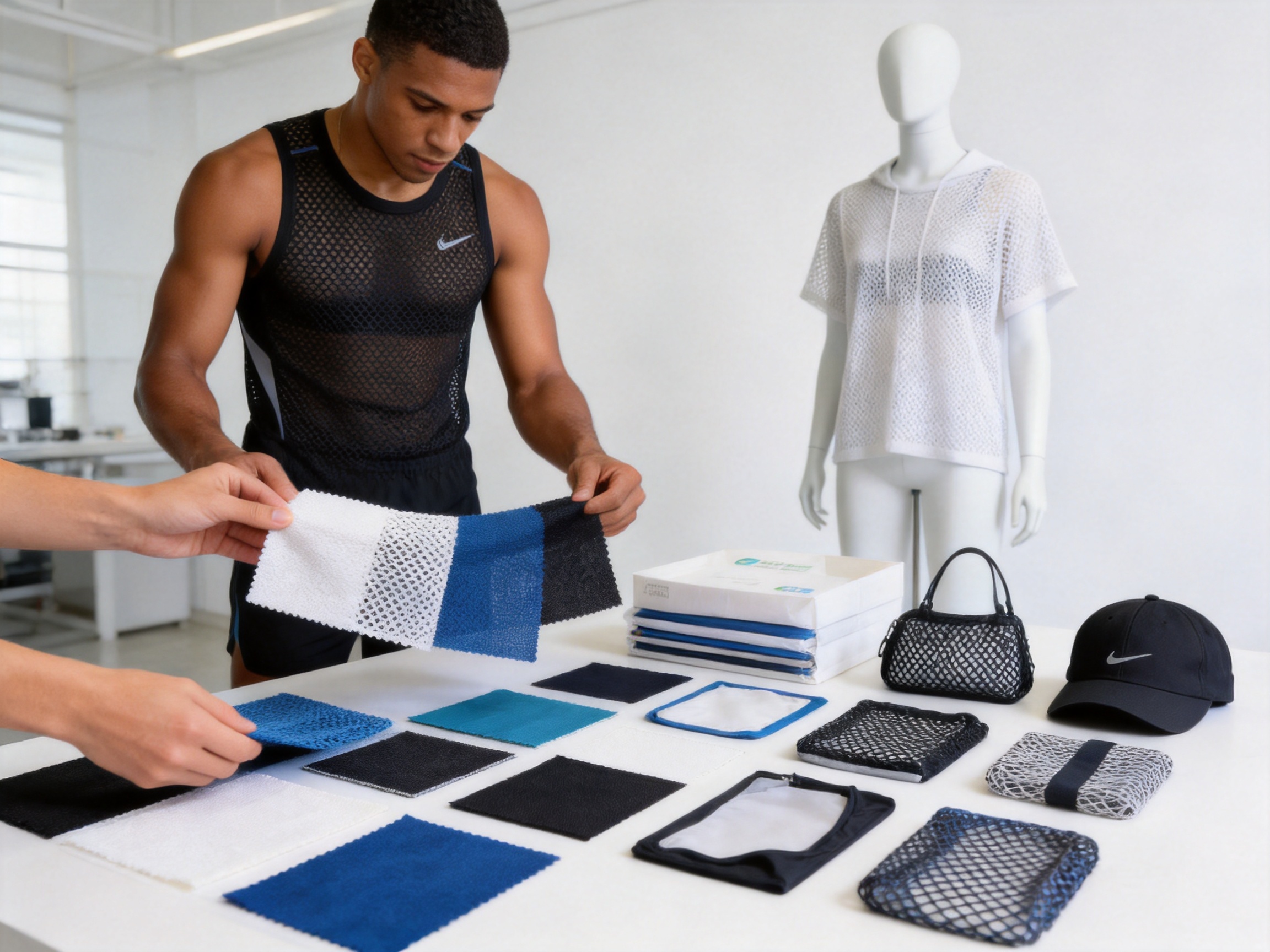
Sportswear is one of the most natural applications for RT Mesh Fabric. Ventilation can be incorporated into shirts, training tops, shorts, jackets, and sports accessories. The fabric may be used throughout a garment or selectively in areas where heat and moisture are most likely to accumulate.
Designers should consider opacity, stretch, seam construction, and contact with the skin. A lining or layered structure may be needed when the mesh is too open for the intended level of coverage. The selected fabric should also be tested under movement, repeated washing, and contact with equipment.
Casualwear and Summer Clothing
RT Mesh Fabric can bring lightness and texture to casual garments. It may be incorporated into shirts, tops, skirts, lightweight outerwear, and fashion overlays. Its open appearance can create a relaxed summer aesthetic while reducing the visual heaviness of the garment.
For direct skin contact, softness and seam comfort are important. For semi-transparent designs, the relationship between the mesh and underlying lining should be evaluated under different lighting conditions.
Garment Panels and Inserts
Using mesh as a panel or insert allows designers to control ventilation and create visual contrast without making the entire garment open. This approach can improve product versatility and simplify coverage management. Mesh can be paired with solid knitted fabrics, woven fabrics, stretch materials, or printed panels.
Panel placement should account for stress, abrasion, and seam direction. Reinforced seams or suitable stitch settings may be required where the mesh joins a heavier fabric.
Linings and Layered Products
In selected products, mesh can act as a lightweight lining or separation layer. Its open structure may help prevent a garment from feeling overly heavy while supporting airflow between layers. The suitability of this application depends on the required coverage, abrasion level, and compatibility with the outer fabric.
Accessories and Other Uses
Mesh fabric may also be considered for bags, caps, lightweight accessories, decorative components, and selected household or industrial products. Each application requires separate evaluation because the forces applied to an accessory can differ significantly from those applied to clothing.
Design and Processing Recommendations
Designers should request a sample before approving a large order. The sample should be assessed for color, weight, width, stretch, recovery, openness, hand feel, and appearance after the expected care process. A small sample can reveal whether the fabric behaves as anticipated during cutting and sewing.
Cutting tables should be clean and free from sharp edges. Operators should avoid dragging the mesh across rough surfaces. If the material has directional stretch or a visible pattern repeat, the cutting plan should account for grain, alignment, and panel matching.
Needles and thread should be selected according to the fabric weight and construction. Excessive needle size or unsuitable stitch density may damage the loops or create puckering. Trial sewing can help determine the correct seam allowance, thread tension, and machine settings.
Garment accessories should be checked for sharp corners and rough surfaces. Zippers, buttons, hooks, labels, and trims can catch in open mesh. Smooth components and carefully finished edges can reduce snagging during production and wear.
Heat should be controlled during pressing and bonding. Synthetic fibers may deform if exposed to unsuitable temperature or pressure. The production team should establish safe settings through testing rather than relying only on general assumptions about synthetic fabrics.
Purchasing and Supplier Evaluation
When evaluating an RT Mesh Fabric supplier, buyers should review more than the quoted price. Important questions include the available fiber composition, fabric width, weight tolerance, color range, minimum order quantity, sample policy, production lead time, finishing options, and repeat-order capability.
Buyers should also ask how the supplier controls fabric inspection and manages shade continuity. If the product will be sold in several markets, documentation regarding composition, care, testing, and compliance may be necessary.
A supplier’s ability to communicate clearly is especially important for customized mesh. Technical terms such as openness, stretch, weight, and softness may be interpreted differently by different parties. Physical samples, measurement records, and approved standards help create a common reference.
Hangzhou Jinfeng Textile Co., Ltd. serves domestic and overseas customers and operates with a cooperation-oriented business philosophy. Its location in Jingjiang Street Industrial Park, Xiaoshan District, Hangzhou, places its production activities within an established textile manufacturing region. Customers seeking knitted fabrics, blended fabrics, and DTY polyester yarn can benefit from discussing the complete material requirement with one experienced supplier.
Sustainability and Responsible Production Considerations
Material efficiency is one sustainability consideration associated with lightweight fabrics. A lighter textile may require less raw material per unit of product, although the total environmental impact depends on fiber source, dyeing, finishing, energy consumption, product lifespan, and end-of-life treatment.
Durability is also relevant. A fabric that remains attractive and functional for a longer period may reduce the need for replacement. For mesh, responsible design means matching the construction to the use. An extremely open fabric should not be selected for a product that will face severe abrasion if a more stable construction is required.
Efficient production planning can help reduce waste through accurate sampling, controlled cutting, process monitoring, and proper handling. Suppliers and buyers can work together by confirming specifications early, consolidating compatible orders, and avoiding unnecessary reprocessing caused by unclear requirements.
Customers should request appropriate information about fiber content, processing, and compliance when required by their market. Responsible textile sourcing depends on transparent communication and documented quality expectations throughout the supply chain.
Q&A: Common Questions about RT Mesh Fabric
What is RT Mesh Fabric used for?
RT Mesh Fabric is used for sportswear, breathable casualwear, garment panels, inserts, lightweight overlays, selected linings, accessories, and other products that benefit from airflow and a flexible open structure. The specific use should be matched to the fabric’s weight, strength, stretch, coverage, and finishing.
Is RT Mesh Fabric breathable?
Yes. Its open knitted construction is designed to allow air circulation more easily than many dense fabrics. The actual level of breathability depends on the aperture size, yarn, thickness, finishing, and how the fabric is used in the finished product.
Is mesh fabric easy to damage?
Mesh can be more vulnerable to snagging and tearing than a compact fabric because it contains openings and interconnected loops. Zipper pulls, buttons, hooks, rough surfaces, and sharp accessories can catch the structure. Proper design, careful handling, and application-specific testing are important.
Can RT Mesh Fabric be used next to the skin?
It can be used next to the skin when the selected construction has a suitable hand feel, surface quality, and comfort level. Some mesh fabrics may feel textured or open, so sampling and wear trials are recommended before approving a direct-contact application.
Is synthetic mesh heat-resistant?
Synthetic mesh should not automatically be considered heat-resistant. Excessive heat may affect its dimensions, surface, or hand. Pressing, drying, heat bonding, and ironing conditions should be established through testing and followed during production and care.
How does fiber content affect price?
Fiber content affects raw material cost, processing requirements, performance, and finishing options. Yarn quality, fabric weight, construction complexity, color, order quantity, and finishing also influence the final price. A lower price does not necessarily represent better value if the fabric creates defects or performance problems.
What makes a mesh fabric high quality?
High-quality mesh generally combines consistent openings, stable width and dimensions, even color, suitable strength, a controlled hand feel, reliable processing, and performance appropriate to the intended application. Quality should be verified through samples, inspection, and relevant testing.
Can the fabric be customized?
Customization may be possible in areas such as fiber composition, yarn selection, weight, width, color, knitting pattern, openness, and finishing. The available options depend on equipment, order quantity, and technical requirements. Customers should provide a clear target specification and approve development samples before bulk production.
Why is an integrated supplier useful?
An integrated supplier can coordinate yarn production, knitting, dyeing, finishing, inspection, and sales communication. This may improve traceability, reduce communication gaps, and support more efficient adjustments when a customer needs a specific combination of appearance and performance.
How should RT Mesh Fabric be stored?
The fabric should be stored in a clean, dry environment away from sharp surfaces, excessive heat, direct sunlight, moisture, and heavy pressure. Rolls should be protected during handling and transportation to reduce snagging, distortion, and contamination.
Conclusion
RT Mesh Fabric is a practical NR knitted fabric for products that require ventilation, lightness, flexibility, and a distinctive open texture. Its advantages are particularly relevant to sportswear, casual clothing, garment inserts, breathable panels, and lightweight layered designs. At the same time, its open construction requires careful consideration of snagging, heat exposure, dimensional stability, and application-specific durability.
The quality of RT Mesh Fabric depends on the entire manufacturing chain. Yarn selection, knitting control, post-dyeing, finishing, inspection, and packing all contribute to the final result. A supplier that manages several of these stages can offer advantages in consistency, development support, process coordination, and repeat-order reliability.
Hangzhou Jinfeng Textile Co., Ltd. combines blended fabric production and processing with DTY polyester yarn production, post-dyeing, finishing, sales, research and development, and export service. Its manufacturing base and integrated textile capabilities provide a foundation for supplying mesh and related fabric products to customers in different markets.
For buyers, the best approach is to select RT Mesh Fabric according to the complete product requirement rather than appearance alone. By confirming fiber content, openness, weight, stretch, color, stability, strength, care conditions, and finishing expectations in advance, customers can achieve a more reliable balance between comfort, appearance, performance, and cost.
References
1. Textile Institute, Textile Terms and Definitions, reference material on textile structures, yarns, and fabric production.
2. A. R. Horrocks and S. C. Anand, Handbook of Technical Textiles, reference material on synthetic fibers and performance textiles.
3. J. E. Booth, Principles of Textile Testing, reference material on fabric inspection and physical performance evaluation.
4. Textile Research Journal, technical studies concerning knitted fabric structure, dimensional stability, and textile performance.
5. International Organization for Standardization, general textile test methods for fiber composition, colorfastness, dimensional change, and fabric properties.
6. Manufacturer-provided product and company information concerning RT Mesh Fabric, NR knitted fabric, DTY polyester yarn, blended fabrics, production, dyeing, finishing, and textile supply services.
