
Nylon Covered Yarn for Durable, Flexible, and High-Performance Textiles
Nylon Covered Yarn is a versatile stretch yarn designed for applications that require durability, elastic recovery, smooth hand feel, dimensional stability, and reliable performance in repeated use. As textile markets continue to demand lighter, stronger, more comfortable, and more functional materials, Nylon Covered Yarn has become an important choice for apparel, industrial textiles, canvas, braids, socks, sportswear, elastic fabrics, and other hard-wearing products.
This yarn combines the toughness and abrasion resistance of nylon with the functional benefits of covered-yarn construction. Depending on the intended application, Nylon Covered Yarn may be engineered with nylon 6, nylon 6.6, high-strength multifilament nylon, UV-protected nylon FDY, or draw textured yarn structures. It can also be combined with natural fibers or elastic cores to improve strength, stretch, shape retention, surface smoothness, and service life.
Compared with ordinary yarns, Nylon Covered Yarn offers a balanced combination of stretchability, wear resistance, light weight, and processability. In markets where customers evaluate not only price but also production efficiency, fabric performance, dyeing stability, and end-use durability, a well-manufactured covered yarn provides measurable value. It helps fabrics maintain their original shape, supports long-lasting comfort, and reduces the risk of premature breakage, deformation, or surface damage.
Understanding Nylon Covered Yarn
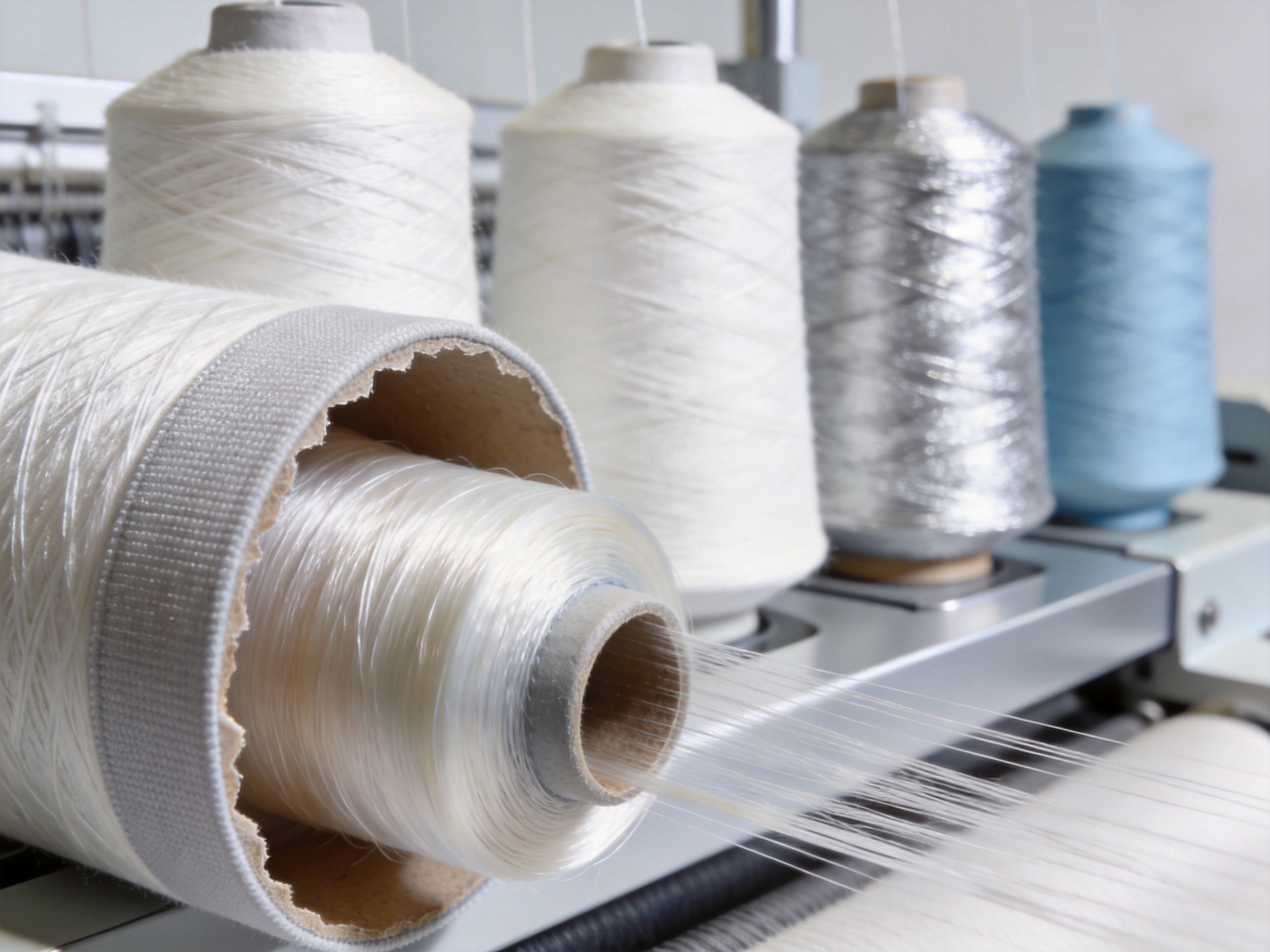
Nylon Covered Yarn is typically produced by wrapping or covering a core yarn with nylon filament. The core may be elastic, such as spandex, or may be another functional yarn selected for strength, flexibility, or recovery. The outer nylon layer protects the core, improves abrasion resistance, enhances dyeing behavior, and creates a smooth surface suitable for knitting, weaving, and other textile processes.
The value of the product lies in its structure. A simple yarn may provide one main property, such as strength or softness, but a covered yarn can integrate several properties in a controlled way. The core may deliver elasticity, while the nylon covering contributes surface durability and resistance to friction. This construction is especially useful in products that are stretched, rubbed, washed, worn, and used repeatedly.
Nylon itself is known for excellent tensile strength, resilience, abrasion resistance, and flexibility. It has been used in a wide range of applications, from hosiery and sportswear to tire cord fabrics, fishing nets, canvas, and industrial braids. When nylon is converted into a covered yarn, these properties can be directed toward specific textile requirements, including stable loop formation in knitting, uniform fabric appearance, consistent elongation, and improved product life.
In the context of Slight Intermingled Draw Textured Yarn, Nylon Covered Yarn can also benefit from controlled intermingling and texturing technologies. Slight intermingling helps improve yarn coherence without making the yarn overly compact. Draw texturing gives filament yarn improved bulk, elasticity, and softness. These processes make the yarn easier to handle during downstream production while also improving fabric comfort and appearance.
Key Advantages Over Conventional and Competing Yarns
The first major advantage of Nylon Covered Yarn is durability. Nylon has excellent resistance to abrasion, which means it can withstand repeated rubbing and mechanical stress better than many conventional fibers. This is important for socks, workwear, sportswear, elastic bands, protective textiles, upholstery components, bags, canvas products, and industrial textiles. A yarn that resists abrasion helps the final fabric retain its function and appearance for a longer time.
The second advantage is stretch and recovery. When Nylon Covered Yarn is produced with an elastic core, it can stretch comfortably and return close to its original dimension. This makes it highly suitable for clothing that must fit the body without restricting movement. It is especially valuable in socks, leggings, activewear, compression garments, waistbands, cuffs, gloves, and close-fitting knitted products.
The third advantage is shape retention. Natural fibers may feel comfortable, but they can lose shape over time when used alone in demanding applications. Adding nylon to a natural fiber yarn or using Nylon Covered Yarn in the fabric structure helps the final product maintain form, reduce bagging, and resist deformation. For example, a wool and nylon blend can greatly improve sock durability compared with 100% wool yarn while preserving comfort and warmth.
The fourth advantage is production stability. High-quality Nylon Covered Yarn can run smoothly on knitting and weaving machines. Stable yarn tension, uniform covering, consistent denier, and controlled intermingling reduce breakage, needle damage, fabric defects, and production interruptions. For manufacturers, this means higher efficiency, less waste, and better delivery reliability.
The fifth advantage is adaptability. Nylon Covered Yarn can be customized for different applications by adjusting yarn count, filament type, twist level, covering direction, elasticity, intermingling intensity, and finishing requirements. This flexibility allows fabric producers to create materials for fashion, sports, outdoor use, industrial protection, home textiles, and technical applications.
The sixth advantage is balanced cost-performance value. Some competing yarns may be lower in price, but they may lack the same combination of strength, elasticity, and long-term stability. Other high-performance yarns may be very strong but too expensive or too difficult to process for general textile production. Nylon Covered Yarn occupies an important middle position: it offers strong practical performance while remaining suitable for large-scale commercial manufacturing.
Performance in Apparel Applications
In apparel, comfort and durability must work together. A garment that stretches well but loses shape quickly will not satisfy consumers. A fabric that is strong but stiff will not deliver wearing comfort. Nylon Covered Yarn helps solve this problem by combining flexibility, smoothness, strength, and recovery in one yarn structure.
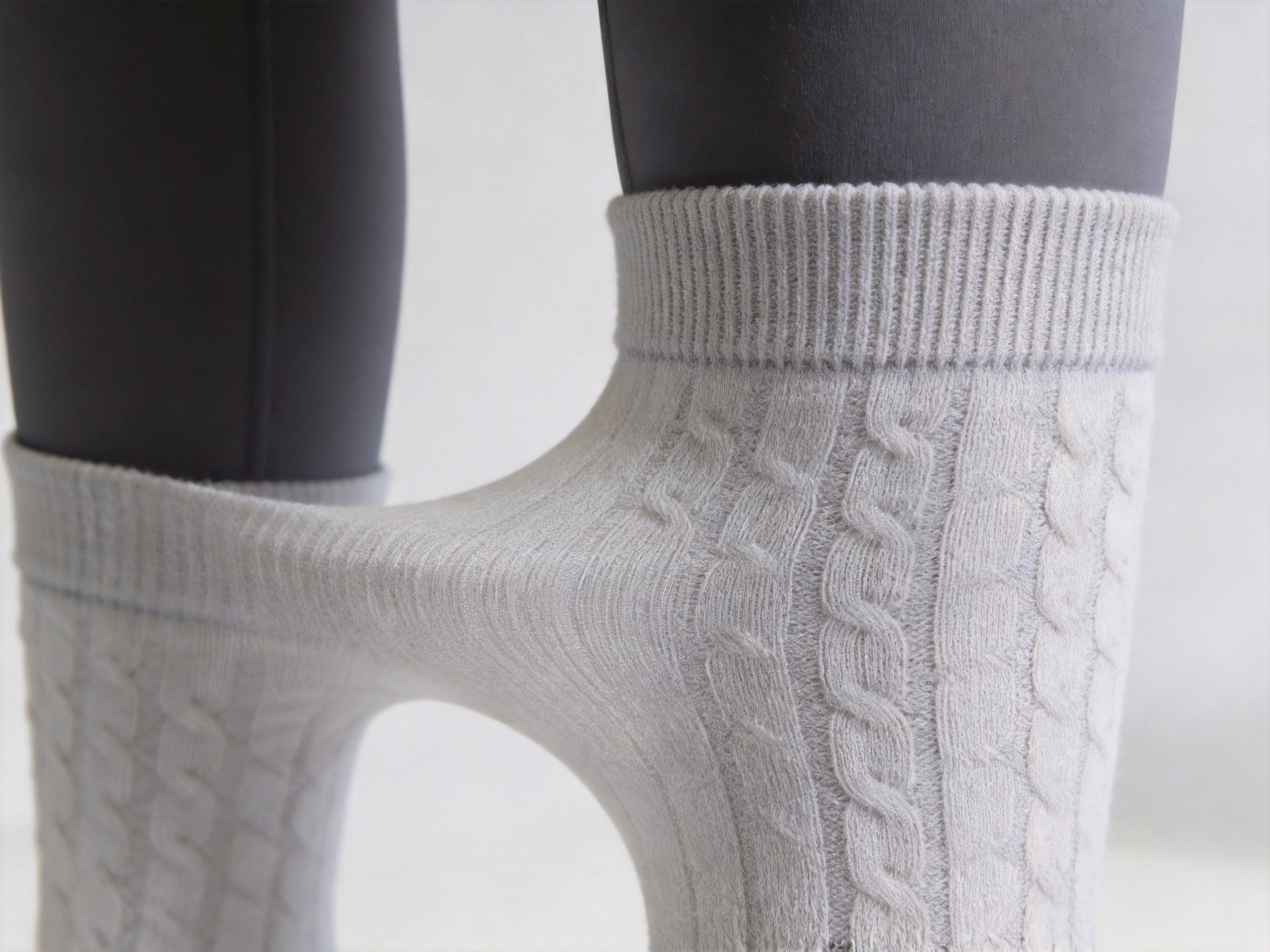
Socks are a classic example. When nylon is added to wool, cotton, or other natural fibers, the resulting yarn can significantly improve durability. A wool and nylon blend may last much longer than pure wool because nylon reinforces the structure and resists abrasion at the heel, toe, and sole areas. In many sock yarn constructions, a relatively small percentage of nylon can greatly extend service life while maintaining the warmth and softness of the natural fiber.
Sportswear also benefits from Nylon Covered Yarn. Running, cycling, fitness, yoga, and outdoor garments require freedom of movement, moisture management, shape retention, and resistance to repeated washing. A covered yarn with stable elasticity allows fabrics to conform to the body while returning to shape after stretching. The nylon surface also supports a smooth fabric touch and improves resistance to friction during active use.
Underwear and intimate apparel require fine, soft, skin-friendly, and elastic materials. Nylon Covered Yarn can be engineered for soft hand feel and controlled stretch, helping garments fit comfortably without excessive pressure. Uniform covering also reduces the risk of rough surface points and improves the visual quality of fine knitted fabrics.
Fashion fabrics can use Nylon Covered Yarn to create stretch jacquards, textured surfaces, body-hugging silhouettes, and refined fabric structures. In knitted jacquard fabrics, yarn consistency is especially important because uneven yarn can cause visible pattern defects. A stable covered yarn improves pattern clarity, loop regularity, and fabric recovery.
Performance in Industrial and Technical Uses
Nylon Covered Yarn is not limited to clothing. Its strength and resilience also make it useful in industrial settings. Nylon 6.6 and high-strength multifilament nylon yarns are used in demanding applications such as tire cord fabrics and fishing nets because they provide tensile strength, toughness, and fatigue resistance. While covered yarn structures differ according to end use, the underlying advantages of nylon remain important: durability, flexibility, and resistance to mechanical stress.
Fishing nets require yarns that can withstand tension, knot stress, water exposure, and repeated handling. Nylon has long been valued in this field because of its toughness and relatively light weight. High-strength nylon multifilament yarns can provide the required resistance to breakage while maintaining flexibility for net construction and use.
Tire cord fabrics require highly controlled yarn performance. Although tire cord yarns are specialized products, the same manufacturing discipline used in precise nylon yarn production is relevant to covered yarn quality. Uniform filament properties, stable drawing, controlled orientation, and strict quality inspection are essential for producing yarns that perform reliably under stress.
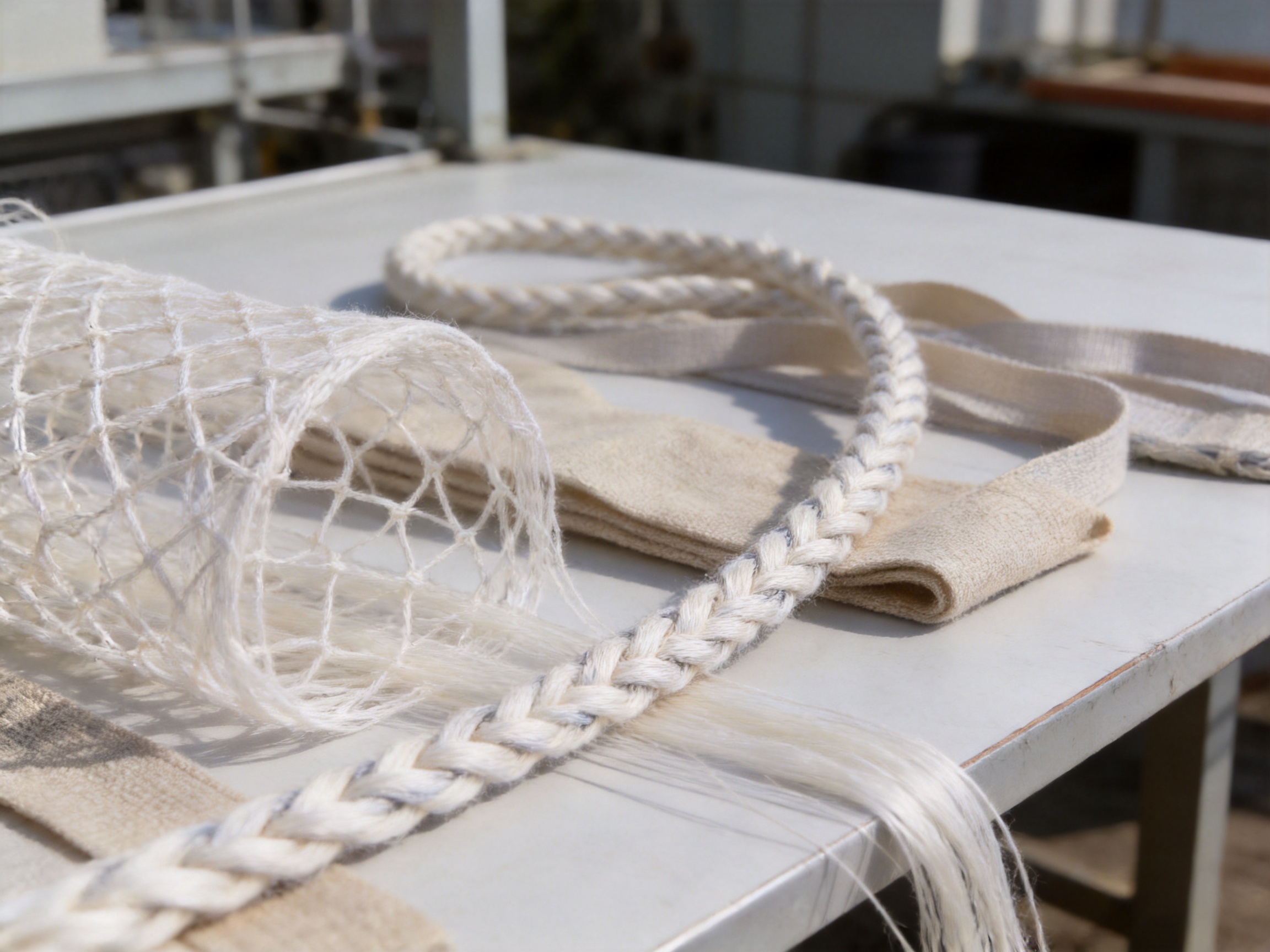
Canvas and braid applications can benefit from UV-protected nylon FDY. Outdoor products are exposed to sunlight, friction, bending, and changing environmental conditions. UV protection helps reduce degradation from sunlight, while nylon’s inherent strength contributes to long-term usability. When used in braids, cords, straps, and reinforced fabric structures, nylon yarns offer dependable mechanical performance.
Elastic industrial fabrics, medical support textiles, protective sleeves, and technical knitted products may also use Nylon Covered Yarn. In these applications, yarn uniformity is not merely a cosmetic issue; it affects compression, fit, performance, and safety. High-quality covered yarn enables more predictable fabric behavior.
Why Slight Intermingling Matters
Slight intermingling is a controlled process that uses air jets to create periodic entanglement points along filament yarn. The goal is not to heavily knot or compact the yarn, but to improve filament cohesion enough for stable downstream processing. This is particularly important for draw textured yarn and filament yarns used in high-speed knitting or weaving.
Without sufficient intermingling, filaments may separate, snag, or create processing instability. With excessive intermingling, the yarn may become too compact, lose softness, or show uneven dyeing and fabric appearance. Slight intermingling provides a balanced solution by improving handling while preserving flexibility and texture.
In Nylon Covered Yarn production, controlled intermingling can support better yarn path stability, reduce filament spreading, and improve winding quality. It also helps the yarn maintain a consistent structure during transportation, storage, and machine feeding. This is important for customers who require smooth production and predictable fabric results.
For fabric manufacturers, yarn coherence affects machine performance. A yarn that feeds smoothly through guides, needles, and tension devices reduces machine stops and fabric defects. Slight intermingled yarns can help improve efficiency in knitting, weaving, and further processing, especially when used in modern high-speed textile equipment.
Draw Texturing and Its Contribution to Fabric Quality
Draw texturing is a key process for transforming flat filament yarn into yarn with improved bulk, elasticity, and textile-like hand feel. In this process, partially oriented yarn or similar filament material is drawn and texturized under controlled temperature, tension, and mechanical conditions. The result is a yarn with better stretch, softness, and covering power.
Draw textured yarn is widely used because it gives fabrics a more comfortable and natural feel compared with flat filament yarn. It can improve opacity, warmth, elasticity, and surface texture. In Nylon Covered Yarn applications, draw texturing supports the overall goal of creating yarns that are strong but not harsh, elastic but not unstable, and durable but still comfortable.
Process control is essential. Temperature must be stable, drawing ratios must be accurate, and winding tension must be consistent. If these parameters fluctuate, the yarn may show uneven elongation, dyeing variation, broken filaments, or inconsistent bulk. Advanced manufacturers use carefully managed process settings and quality monitoring to ensure that each batch meets customer requirements.
When draw texturing is combined with slight intermingling, the result can be a yarn that offers both desirable textile properties and reliable processability. This balance is one of the reasons Slight Intermingled Draw Textured Yarn is valuable for knitted fabrics, blended fabrics, and high-performance textile products.
Manufacturing Strengths and Integrated Production Capability
Hangzhou Jinfeng Textile Co., Ltd. is located in Jingjiang Street Industrial Park, Xiaoshan District, Hangzhou, Zhejiang Province. The company operates on an area of 32.6 acres with a plant area of approximately 18,000 square meters. This scale supports integrated production, processing, post-dyeing, finishing, and sales of blended fabrics and DTY polyester yarn products.
The company’s strength lies in its combination of manufacturing capacity and textile experience. By integrating research and development, production, processing, dyeing, finishing, and sales, the company can better control quality from raw material selection to finished product delivery. This is important for Nylon Covered Yarn and related yarns because small variations in yarn structure can influence fabric quality, machine performance, and customer satisfaction.
Advanced manufacturing begins with raw material control. Nylon filament quality must be evaluated for denier uniformity, tenacity, elongation, filament integrity, and dyeing behavior. If the raw yarn is inconsistent, covering and texturing processes cannot fully correct the problem. A disciplined manufacturer therefore pays close attention to supplier selection, incoming inspection, and batch traceability.
The next step is process preparation. Machine settings are adjusted according to product specifications, including yarn count, covering density, twist direction, tension, speed, temperature, and intermingling level. Experienced technicians understand that covered yarn performance depends on the relationship between these factors. A yarn intended for socks may require different elasticity and surface characteristics from a yarn intended for industrial braid or canvas.
During production, stable tension control is essential. If tension is too high, the elastic core may be overstretched, causing poor recovery or uneven shrinkage. If tension is too low, the covering may become loose and unstable. Advanced equipment and skilled operators help maintain consistent tension so that the final yarn performs predictably.
Winding quality is another important manufacturing strength. A well-wound package supports smooth unwinding in customer production. Poor winding can cause sloughing, tangling, yarn breaks, and uneven tension during knitting or weaving. A professional manufacturer controls winding density, package shape, traverse movement, and surface build to ensure reliable downstream use.
Post-processing, dyeing, and finishing capabilities add further value. For blended fabrics and yarn-related products, dyeing consistency is critical. Nylon and polyester-based materials require careful control of temperature, time, pH, auxiliaries, and finishing chemistry. Integrated dyeing and finishing knowledge allows the manufacturer to better understand how yarn characteristics affect finished fabrics.
Quality Control from Yarn to Fabric
Quality control for Nylon Covered Yarn should be systematic rather than occasional. It begins before production and continues through every stage of manufacturing. Key inspections may include yarn count testing, tensile strength, elongation, elastic recovery, twist level, covering uniformity, oil content, intermingling points, evenness, package quality, and visual appearance.
For covered yarns, elastic recovery is especially important. A yarn may stretch easily, but if it does not recover properly, the fabric may become loose or distorted. Testing recovery under controlled conditions helps ensure that the yarn will perform in real garments and technical products.
Abrasion resistance is also important. Since one of nylon’s major advantages is durability, testing and evaluation help confirm that the product meets application requirements. For socks, cuffs, sportswear, and industrial textiles, abrasion performance can determine how long the final product remains usable.
Dyeing consistency is another major quality factor. Uneven dye uptake can create streaks, shade differences, or visible defects in fabric. Control of raw material, texturing, intermingling, finishing oil, and heat history helps reduce dyeing variation. A company with experience in post-dyeing and finishing is better positioned to understand and manage these issues.
In addition to laboratory testing, practical machine trials are valuable. Yarn may be evaluated on knitting or weaving equipment to check feeding behavior, breakage rate, fabric appearance, loop stability, and elasticity. This practical approach helps align product specifications with real production conditions.
Comparison of Nylon Covered Yarn with Other Yarn Options
| Yarn Type | Main Strength | Common Limitation | Advantage of Nylon Covered Yarn |
|---|---|---|---|
| Pure natural fiber yarn | Comfort, warmth, natural feel | Lower abrasion resistance and weaker shape retention | Adds durability, resilience, and improved fabric life |
| Ordinary synthetic filament yarn | Strength and low maintenance | May lack comfort, elasticity, or fabric softness | Combines nylon strength with controlled stretch and better hand feel |
| Low-grade covered yarn | Lower initial cost | Uneven covering, poor recovery, higher breakage risk | Offers stable structure, smoother processing, and more consistent quality |
| Heavy industrial yarn | High mechanical strength | May be too stiff or costly for apparel | Provides balanced performance for apparel and selected technical uses |
| Uncovered elastic yarn | High stretch | Surface vulnerability and difficult processing | Nylon covering protects the core and improves machine performance |
Applications Across Product Categories
Nylon Covered Yarn can support a wide range of textile categories, including polyester rayon fabric, knitted jacquard fabric, NTR knitted fabric, NR knitted fabric, and Slight Intermingled Draw Textured Yarn applications. Its adaptability comes from its ability to combine with different fibers and fabric structures.
In polyester rayon fabric, nylon-based yarns may be used to increase durability, support stretch, or improve structural stability. Polyester rayon blends are often selected for drape, comfort, and appearance. The addition of a functional nylon covered yarn can enhance performance without sacrificing the desired textile character.
In knitted jacquard fabric, yarn uniformity is essential. Jacquard patterns rely on precise loop formation and consistent yarn behavior. Nylon Covered Yarn can help maintain pattern clarity while adding elasticity and resilience. This is valuable in fashion fabrics, sportswear panels, decorative knits, and fitted garments.
NTR and NR knitted fabrics can also benefit from controlled stretch and durability. When fabrics are designed for comfort and repeated wear, yarn selection strongly affects the final result. Nylon Covered Yarn can improve recovery, reduce deformation, and support a smoother surface.
In Slight Intermingled Draw Textured Yarn applications, Nylon Covered Yarn benefits from processing technologies that improve yarn coherence and fabric performance. The combination of texturing, intermingling, and covering creates a yarn that is suitable for demanding knitting and weaving operations.
Durability and Long-Term Value
Customers increasingly evaluate textiles by total value rather than only initial cost. A cheaper yarn that causes machine stops, fabric defects, customer complaints, or short product life can become more expensive in the long run. Nylon Covered Yarn offers long-term value because it supports durable end products and efficient manufacturing.
In apparel, durability contributes to consumer satisfaction. Garments that retain shape, resist wear, and survive repeated washing are more likely to be repurchased. In industrial applications, durability can affect safety, productivity, and replacement costs. In outdoor products, resistance to sunlight, abrasion, and mechanical stress helps extend service life.
Nylon’s contribution to natural fiber blends is especially important. Natural fibers offer comfort, but they often require reinforcement for high-wear products. A blend such as wool with nylon can provide the warmth and feel of wool while greatly improving wear resistance. This practical balance is one reason nylon remains widely used in premium sock yarns and performance apparel.
For manufacturers, long-term value also includes production reliability. High-quality Nylon Covered Yarn can reduce waste, improve machine efficiency, and support consistent fabric quality. When yarn packages unwind smoothly and yarn properties remain stable from batch to batch, production planning becomes easier and delivery schedules become more reliable.
Comfort, Appearance, and Fabric Hand Feel
Durability alone is not enough for modern textile products. Consumers expect fabrics to feel comfortable, look attractive, and move naturally with the body. Nylon Covered Yarn can support these expectations through smooth surface properties, controlled elasticity, and compatibility with textured yarn structures.
A smooth nylon covering can reduce surface roughness and improve the touch of the fabric. In fine-gauge knitting, this can contribute to a cleaner surface and more refined appearance. In sportswear and intimate apparel, smoothness helps reduce irritation during movement.
Elastic recovery improves wearing comfort by allowing garments to stretch where needed and return to shape afterward. This reduces sagging at knees, elbows, cuffs, waistbands, and other high-movement areas. It also helps garments maintain a better fit over time.
Draw textured components can add bulk and softness, making synthetic yarns feel more textile-like. This is important because consumers often prefer fabrics that feel soft, warm, and flexible rather than flat or plastic-like. By combining texturing and covered-yarn construction, manufacturers can create fabrics with both performance and comfort.
Customization for Different Markets
One of the strongest advantages of Nylon Covered Yarn is its customizability. Different markets require different balances of strength, stretch, softness, dyeability, and cost. A professional manufacturer can adjust product specifications to match customer requirements.
For socks, the yarn may be designed for high abrasion resistance, stable elasticity, and comfort. For sportswear, it may emphasize recovery, smooth touch, and moisture-related fabric performance. For industrial braid, it may prioritize tensile strength, dimensional stability, and resistance to friction. For canvas or outdoor applications, UV-protected nylon FDY may be selected to improve sunlight resistance.
Customization may include the choice of nylon 6 or nylon 6.6, filament count, denier, elastic core type, covering turns, twist direction, package form, oiling level, color requirements, and finishing specifications. Each parameter affects yarn behavior and final fabric performance.
The ability to discuss technical requirements with customers is a major strength. Instead of offering only standard products, an integrated textile company can help customers select yarns according to fabric structure, machine type, dyeing method, finishing process, and end-use expectations.
Advanced Processing for Consistent Results
Advanced manufacturing is not defined only by equipment; it also depends on process knowledge, operator training, quality systems, and continuous improvement. In Nylon Covered Yarn production, consistency is the key measure of manufacturing strength.
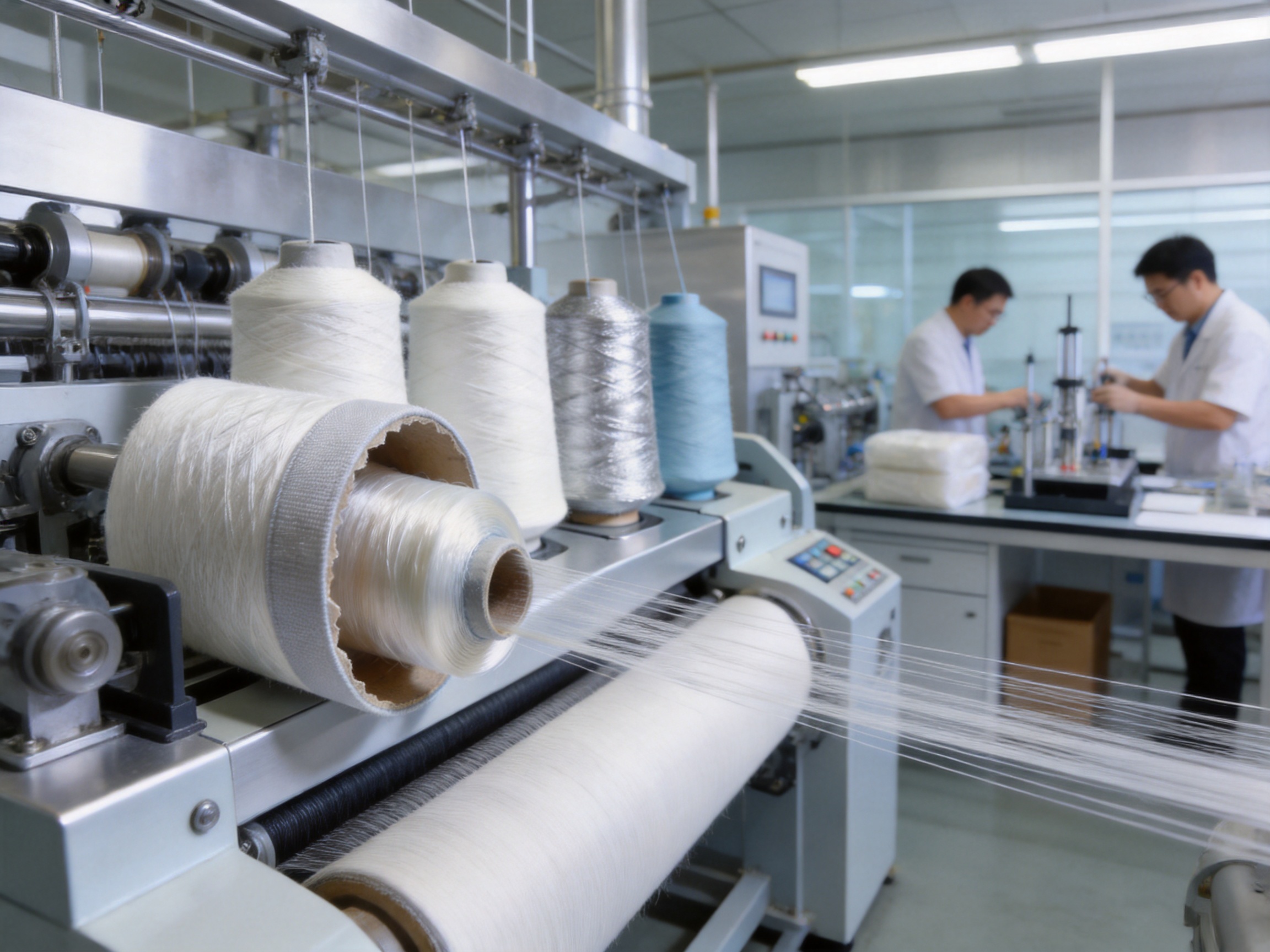
Modern yarn production requires precise control of tension, temperature, speed, twist, intermingling air pressure, and winding conditions. These parameters must be adjusted according to yarn type and monitored throughout production. Small deviations can create visible fabric defects or performance problems.
Experienced technicians understand how yarn behaves under stress. They can identify early signs of instability, such as uneven package formation, abnormal tension variation, filament damage, or inconsistent elasticity. Preventing problems during production is more effective than discovering defects after shipment.
Integrated production also supports faster feedback. When a company has experience in yarn processing, fabric production, dyeing, finishing, and sales, it can connect customer feedback with technical adjustments. If a fabric shows streaking, poor recovery, or processing difficulty, the manufacturer can analyze the cause from multiple perspectives and improve the product more efficiently.
This integrated approach is a competitive advantage over suppliers that only trade yarn or only perform one processing step. Customers benefit from more reliable technical support, better quality control, and more practical product recommendations.
Sustainability and Responsible Production Considerations
Textile sustainability includes material efficiency, product durability, waste reduction, energy management, responsible dyeing, and long service life. Nylon is a synthetic fiber, but when used correctly, it can contribute to sustainability by extending the life of textile products and reducing replacement frequency.
A durable sock, garment, bag, net, or technical textile that lasts longer may reduce the overall consumption of materials. If nylon reinforcement helps a product remain functional for significantly more use cycles, the environmental impact per use can be improved.
Manufacturing efficiency also matters. Stable yarn reduces waste in knitting and weaving. Fewer yarn breaks, fewer rejected fabric rolls, and fewer dyeing defects all contribute to more responsible production. Quality consistency is therefore not only an economic advantage but also a sustainability factor.
Dyeing and finishing control are important in blended fabrics and synthetic materials. Responsible manufacturers pay attention to chemical selection, process optimization, water use, and quality stability. Better first-pass success in dyeing and finishing reduces reprocessing and waste.
As markets continue to demand more transparent and responsible textile supply chains, companies with integrated production and quality management capabilities are better prepared to support customer requirements for efficiency, durability, and responsible manufacturing.
How Customers Benefit from Working with an Integrated Textile Manufacturer
Customers choosing Nylon Covered Yarn need more than a product list. They need reliable specifications, stable supply, technical support, and practical understanding of fabric performance. An integrated textile manufacturer can provide these benefits by connecting yarn engineering with fabric and finishing knowledge.
Hangzhou Jinfeng Textile Co., Ltd. combines production, processing, post-dyeing, finishing, and sales capabilities. This structure allows the company to serve customers who require DTY polyester yarn, blended fabrics, knitted fabrics, and related textile products. Its export-oriented business model also supports communication with customers in different markets.
The company’s business philosophy emphasizes cooperation and win-win relationships. In practical terms, this means working with customers to understand their fabric goals, production challenges, cost targets, and performance requirements. A yarn supplier that listens carefully and responds technically can help customers reduce development time and avoid unsuitable material choices.
For buyers, the advantages include product consistency, manufacturing experience, flexible customization, and support for both yarn and fabric applications. For fabric producers, the advantages include fewer production interruptions, more stable dyeing and finishing results, and improved end-product performance.
Selection Guidelines for Nylon Covered Yarn
When selecting Nylon Covered Yarn, customers should begin with the final application. A yarn for socks is not the same as a yarn for industrial braid, and a yarn for jacquard fashion fabric may require different visual and elastic characteristics from a yarn for canvas reinforcement.
The first factor is yarn count or denier. Finer yarns are suitable for lightweight and fine-gauge fabrics, while heavier yarns may be better for strong or technical textiles. The second factor is elasticity. Customers should define required elongation, recovery, and compression behavior according to garment or fabric design.
The third factor is covering quality. Uniform covering improves appearance, protects the core, and supports stable processing. The fourth factor is nylon type. Nylon 6, nylon 6.6, high-strength multifilament nylon, and UV-protected nylon FDY each serve different needs.
The fifth factor is dyeing and finishing compatibility. Customers should consider whether the yarn will be piece dyed, yarn dyed, printed, heat set, brushed, compacted, or finished with special chemicals. The yarn must remain stable through these processes.
The sixth factor is machine compatibility. High-speed circular knitting, warp knitting, weaving, braiding, and covering machines impose different demands on yarn package quality and tension behavior. A suitable supplier should be able to discuss these practical requirements.
Q&A: Common Questions About Nylon Covered Yarn
What is Nylon Covered Yarn?
Nylon Covered Yarn is a yarn structure in which nylon filament covers or wraps around a core yarn. The core may provide elasticity, strength, or other functions, while the nylon covering improves abrasion resistance, smoothness, durability, and processing stability.
Why is nylon used in covered yarn?
Nylon is used because it offers excellent abrasion resistance, tensile strength, flexibility, resilience, and durability. These properties help fabrics last longer, recover better after stretching, and withstand repeated wear.
What are the main applications of Nylon Covered Yarn?
Common applications include socks, sportswear, underwear, knitted jacquard fabrics, elastic fabrics, cuffs, waistbands, gloves, canvas, braids, fishing nets, outdoor textiles, and selected industrial fabrics.
How does Nylon Covered Yarn improve natural fiber products?
It reinforces natural fibers such as wool or cotton by adding strength and abrasion resistance. For example, adding nylon to wool sock yarn can greatly improve durability while keeping much of the comfort and warmth of wool.
What is the benefit of slight intermingling?
Slight intermingling improves filament cohesion and processing stability without making the yarn overly stiff or compact. It helps reduce filament separation, yarn breaks, and handling problems during knitting or weaving.
How does draw texturing affect yarn performance?
Draw texturing improves bulk, softness, elasticity, and textile-like hand feel. It helps filament yarns become more comfortable and suitable for fabrics that require stretch, coverage, and pleasant touch.
Why is uniform covering important?
Uniform covering ensures consistent appearance, stable elasticity, better protection of the core yarn, and smoother processing. Uneven covering can cause fabric defects, poor recovery, and machine problems.
Can Nylon Covered Yarn be customized?
Yes. It can be customized by adjusting denier, filament type, nylon grade, elastic core, covering density, twist direction, intermingling level, package form, and finishing requirements.
Is Nylon Covered Yarn suitable for industrial use?
Yes. Nylon yarns are widely used in industrial and technical applications because of their strength, toughness, and abrasion resistance. Specific covered yarn structures can be designed for industrial textiles, braids, nets, and reinforced fabrics.
What makes an integrated manufacturer valuable for this product?
An integrated manufacturer can control raw material selection, yarn processing, dyeing, finishing, and quality testing. This leads to more stable quality, better technical support, and improved alignment between yarn properties and final fabric performance.
Conclusion
Nylon Covered Yarn is a high-value textile material for manufacturers who need durability, stretch, recovery, smoothness, and reliable processing. Its advantages come from the combination of nylon’s inherent toughness and the engineered structure of covered yarn. Whether used in socks, activewear, knitted jacquard fabric, outdoor products, industrial braids, fishing nets, or blended textile systems, it provides a practical balance of performance and cost-efficiency.
Compared with ordinary yarns and low-grade alternatives, high-quality Nylon Covered Yarn offers better abrasion resistance, improved shape retention, more stable elasticity, smoother machine operation, and longer service life in final products. These advantages help customers reduce production problems, improve fabric quality, and deliver products that satisfy end users.
Advanced manufacturing processes such as draw texturing, slight intermingling, precision covering, stable tension control, controlled winding, dyeing expertise, and systematic quality inspection are essential to achieving consistent yarn performance. Hangzhou Jinfeng Textile Co., Ltd. supports these requirements through its integrated production capabilities, manufacturing scale, textile experience, and commitment to cooperation with customers at home and abroad.
As textile markets continue to evolve toward performance, comfort, durability, and responsible production, Nylon Covered Yarn will remain an important material for both apparel and technical textile innovation. Choosing the right supplier and the right yarn specification can help manufacturers build stronger fabrics, more comfortable garments, and more reliable textile products.
References
1. Hearle, J. W. S. High-Performance Fibres. Woodhead Publishing.
2. Morton, W. E., and Hearle, J. W. S. Physical Properties of Textile Fibres. Woodhead Publishing.
3. McIntyre, J. E. Synthetic Fibres: Nylon, Polyester, Acrylic, Polyolefin. Woodhead Publishing.
4. Wilson, J. Handbook of Textile Design: Principles, Processes and Practice. Woodhead Publishing.
5. Saville, B. P. Physical Testing of Textiles. Woodhead Publishing.
