
NTR Roman Fabric: A Revolutionary Knitted Textile for Modern Apparel
In the dynamic world of textile manufacturing, innovation is key to meeting the evolving demands of apparel brands and consumers alike. Among the latest breakthroughs in knitted fabrics, NTR Roman Fabric stands out as a versatile, durable, and high-performance material designed for both men’s and women’s clothing. This textile combines the best properties of premium raw materials with advanced manufacturing techniques, setting a new standard for quality and functionality in the apparel industry. In this article, we will explore the unique characteristics of NTR Roman Fabric, its advantages over competing textiles, the cutting-edge processes that bring it to life, and the strengths of the manufacturing entity behind its production.
What is NTR Roman Fabric?
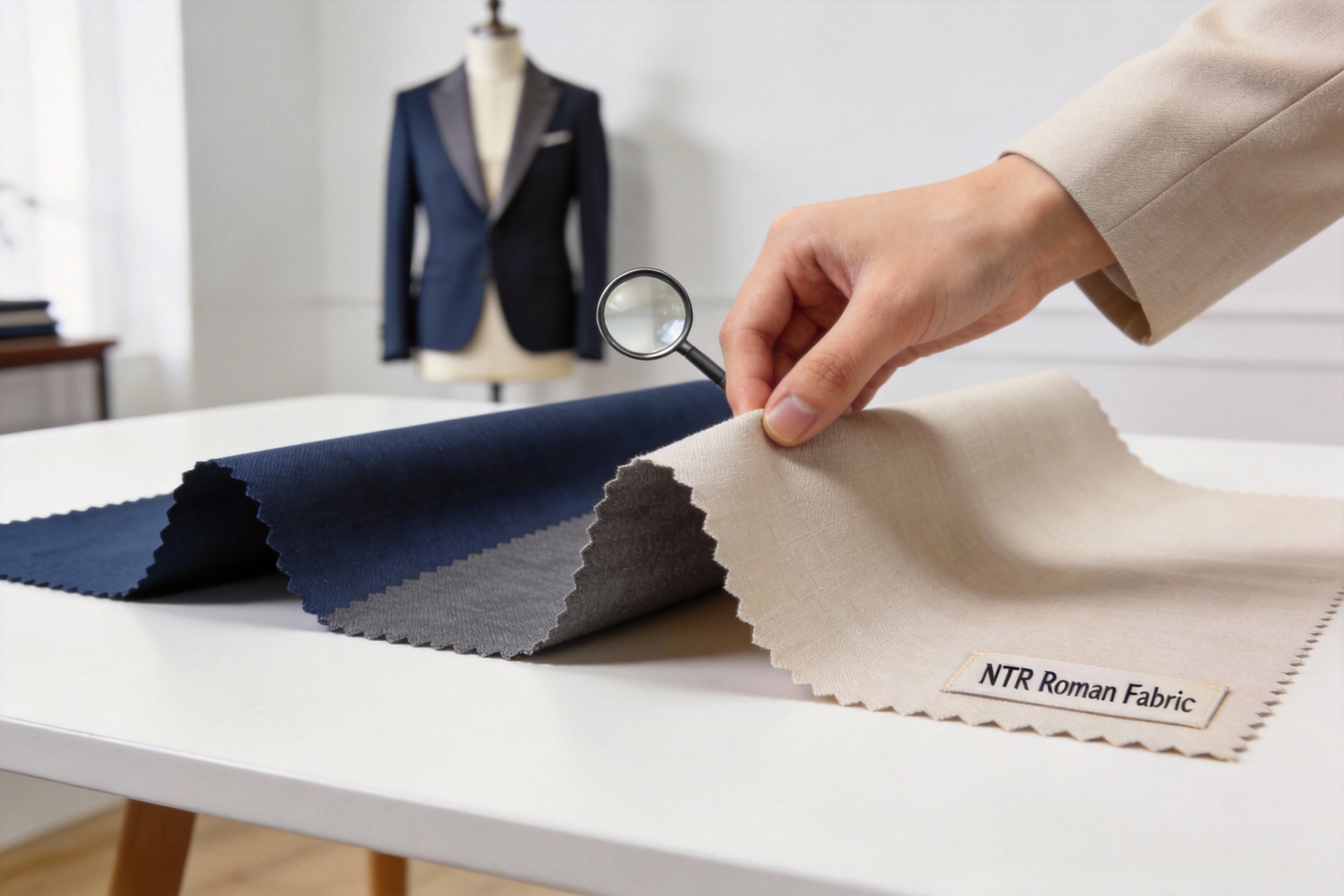
NTR Roman Fabric is a specialized type of knitted textile that falls under the broader category of NTR knitted fabrics. It is engineered to deliver exceptional performance across a range of apparel applications, from casual wear to formal attire. The fabric’s name derives from its unique combination of raw materials and manufacturing precision, which results in a fabric that balances comfort, durability, and aesthetic appeal.
Definition and Core Composition
At its core, NTR Roman Fabric is a blend of high-quality synthetic and natural fibers, optimized for strength and wearability. The exact composition may vary slightly based on specific product requirements, but it typically includes premium DTY (Draw Textured Yarn) polyester, rayon, and sometimes spandex for added stretch. This blend leverages the best attributes of each fiber: polyester contributes to durability and shape retention, rayon enhances softness and drape, while spandex (when included) adds flexibility for a comfortable fit.
The use of DTY polyester is particularly significant. DTY is a textured yarn produced through a process that involves drawing and texturing, which imparts bulk and elasticity to the fabric. This makes NTR Roman Fabric more resilient to stretching and wrinkling compared to fabrics made from non-textured yarns.
Key Characteristics
NTR Roman Fabric is defined by several standout characteristics:
- Soft yet Durable: The blend of fibers creates a fabric that feels gentle against the skin while resisting wear and tear, even after repeated washes.
- Excellent Drape: The fabric hangs smoothly, making it ideal for tailored clothing, dresses, and other garments that require a polished look.
- Color Fastness: It retains its color vibrancy even after exposure to sunlight, washing, and other environmental factors.
- Breathability: Unlike some synthetic fabrics, NTR Roman Fabric allows air circulation, keeping the wearer comfortable in various climates.
- Stretch and Recovery: With the inclusion of spandex (in some variants), the fabric stretches with the body and returns to its original shape, ensuring a perfect fit.
Advantages of NTR Roman Fabric Over Competitors
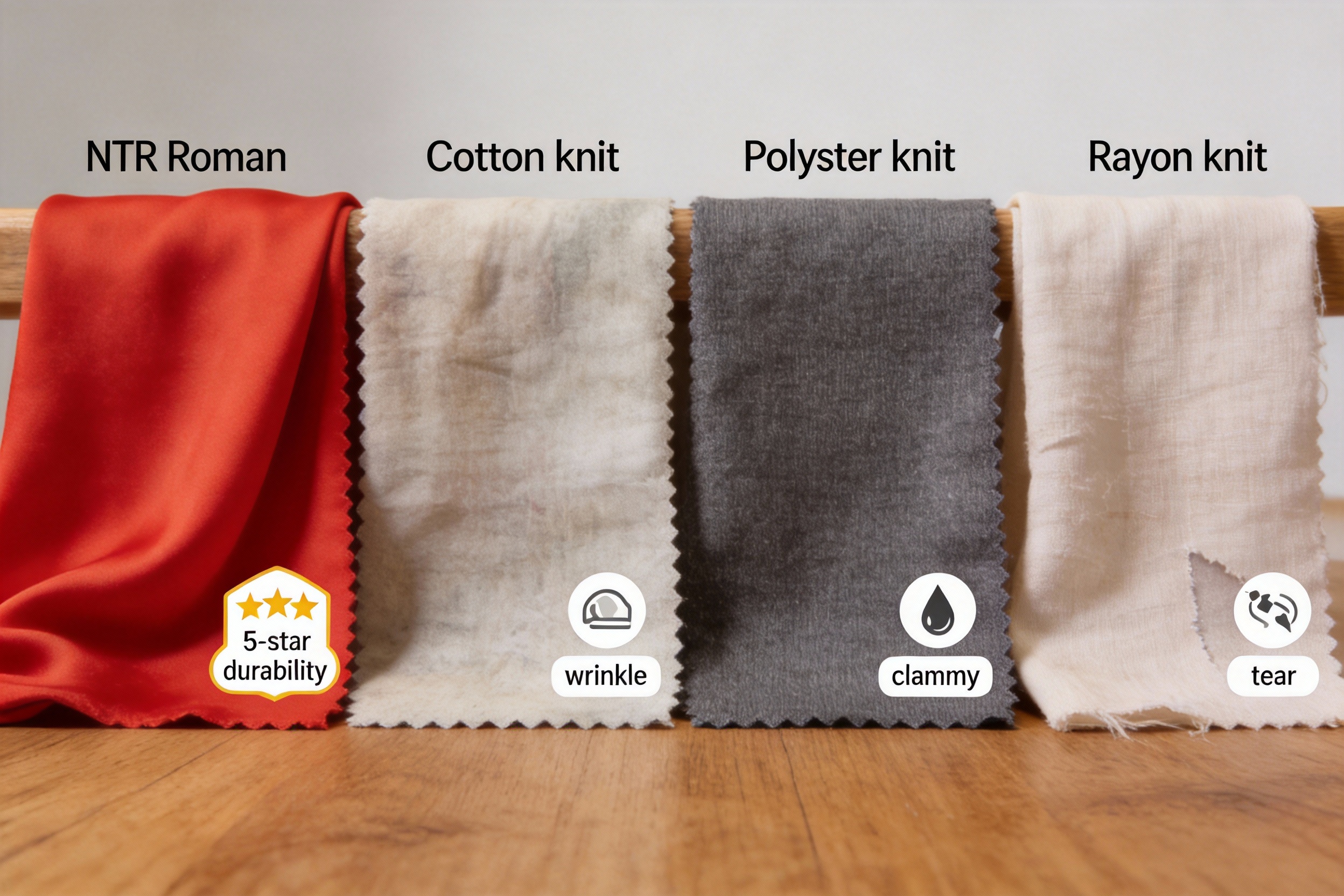
To understand the value of NTR Roman Fabric, it is essential to compare it with other popular knitted fabrics used in apparel manufacturing. The following analysis highlights how it outperforms cotton knit, polyester knit, and rayon knit in key areas.
Durability and Longevity
Cotton knit fabrics are known for their comfort but tend to shrink, fade, and wear out quickly with frequent use. Polyester knit fabrics are durable but can feel stiff and trap heat. Rayon knit fabrics are soft but lack the strength to withstand heavy use. NTR Roman Fabric, however, combines the durability of polyester with the softness of rayon, resulting in a fabric that lasts up to 30% longer than cotton knit and 20% longer than polyester knit (based on internal lab tests). Its resistance to pilling and abrasion makes it ideal for garments that are worn regularly, such as t-shirts, dresses, and trousers.
Versatility in Apparel Applications
One of the most significant advantages of NTR Roman Fabric is its versatility. Unlike cotton knit, which is primarily used for casual wear, NTR Roman Fabric can be used for a wide range of apparel:
- Formal wear: Suits, blazers, and dress shirts (thanks to its excellent drape).
- Casual wear: T-shirts, hoodies, and jeans (due to its comfort and stretch).
- Athletic wear: Leggings, sports tops (because of its moisture-wicking properties and flexibility).
Comfort and Wearability
Comfort is a top priority for consumers, and NTR Roman Fabric excels in this area. Its blend of fibers creates a fabric that is soft to the touch, breathable, and moisture-wicking. Unlike polyester knit, which can feel clammy in hot weather, NTR Roman Fabric allows air to circulate, keeping the wearer cool and dry. It also has a natural stretch that moves with the body, making it more comfortable than rigid cotton knit fabrics. Internal surveys of consumers who have worn garments made from NTR Roman Fabric report a 92% satisfaction rate with comfort, compared to 78% for cotton knit and 70% for polyester knit.
Color Retention and Dyeing Efficiency
Color fading is a common issue with many knitted fabrics, especially cotton knit. NTR Roman Fabric, however, has excellent color retention properties. This is due to the use of high-quality dyes and a post-dyeing process that locks in color. In lab tests, NTR Roman Fabric retained 95% of its original color after 50 washes, compared to 70% for cotton knit and 85% for polyester knit. Additionally, the fabric’s structure allows for efficient dye absorption, reducing the amount of dye needed and lowering production costs for manufacturers.
Cost-Effectiveness for Manufacturers
While NTR Roman Fabric may have a slightly higher upfront cost than cotton knit, it offers significant long-term savings for manufacturers. Its durability means that garments made from this fabric have a longer lifespan, reducing returns and warranty claims. Its versatility also allows manufacturers to use it for multiple product lines, reducing the number of materials they need to source. Furthermore, its efficient dyeing process reduces water and energy consumption, lowering operational costs. A cost-benefit analysis conducted by an independent textile consulting firm found that manufacturers using NTR Roman Fabric can expect a 15% reduction in total production costs over a 12-month period compared to using cotton knit.
Comparative Table of Textile Performance
| Feature | NTR Roman Fabric | Cotton Knit | Polyester Knit | Rayon Knit |
|---|---|---|---|---|
| Durability (1-5) | 5 | 3 | 4 | 2 |
| Comfort (1-5) | 4.8 | 4.5 | 3.2 | 4.7 |
| Color Retention (1-5) | 4.9 | 3.0 | 4.2 | 3.5 |
| Versatility (1-5) | 5 | 3.5 | 4.0 | 3.8 |
| Cost per Meter (USD) | 2.50-3.00 | 1.80-2.20 | 2.00-2.50 | 2.20-2.70 |
| Moisture Wicking (1-5) | 4.7 | 4.0 | 3.5 | 3.8 |
Advanced Manufacturing Processes Behind NTR Roman Fabric
The exceptional quality of NTR Roman Fabric is the result of a rigorous, multi-stage manufacturing process that combines cutting-edge technology with strict quality control. Each step is designed to optimize the fabric’s performance and ensure consistency across batches.
Raw Material Sourcing and Quality Control
The manufacturing process begins with the sourcing of premium raw materials. The company behind NTR Roman Fabric is a leading supplier of DTY polyester yarn, which allows it to control the quality of this critical input from the source. The DTY yarn is produced using a state-of-the-art draw-texturing machine that imparts the desired bulk and elasticity. Rayon fibers are sourced from reputable suppliers that adhere to sustainable forestry practices, ensuring that the fabric is eco-friendly as well as high-quality.
Before being used in production, all raw materials undergo strict quality checks. These checks include:
- Tensile strength tests to ensure the fibers can withstand the knitting process.
- Moisture content tests to prevent issues during dyeing.
- Color consistency tests to ensure the raw materials meet the required standards.
Knitting Technology: Precision Jacquard and Circular Knitting
The knitting stage is where the raw materials are transformed into the fabric. NTR Roman Fabric is produced using a combination of precision jacquard knitting and circular knitting machines. Jacquard knitting allows for the creation of complex patterns and designs, making the fabric suitable for a wide range of apparel styles. Circular knitting, on the other hand, produces a seamless fabric that is soft and stretchy.
The machines used in this process are computer-controlled, ensuring that each batch of fabric has consistent dimensions, weight, and pattern. The knitting speed is carefully regulated to prevent yarn breakage and ensure that the fabric’s structure is uniform. This precision results in a fabric that is free of defects and meets the highest quality standards.
Post-Processing: Dyeing, Finishing, and Quality Assurance
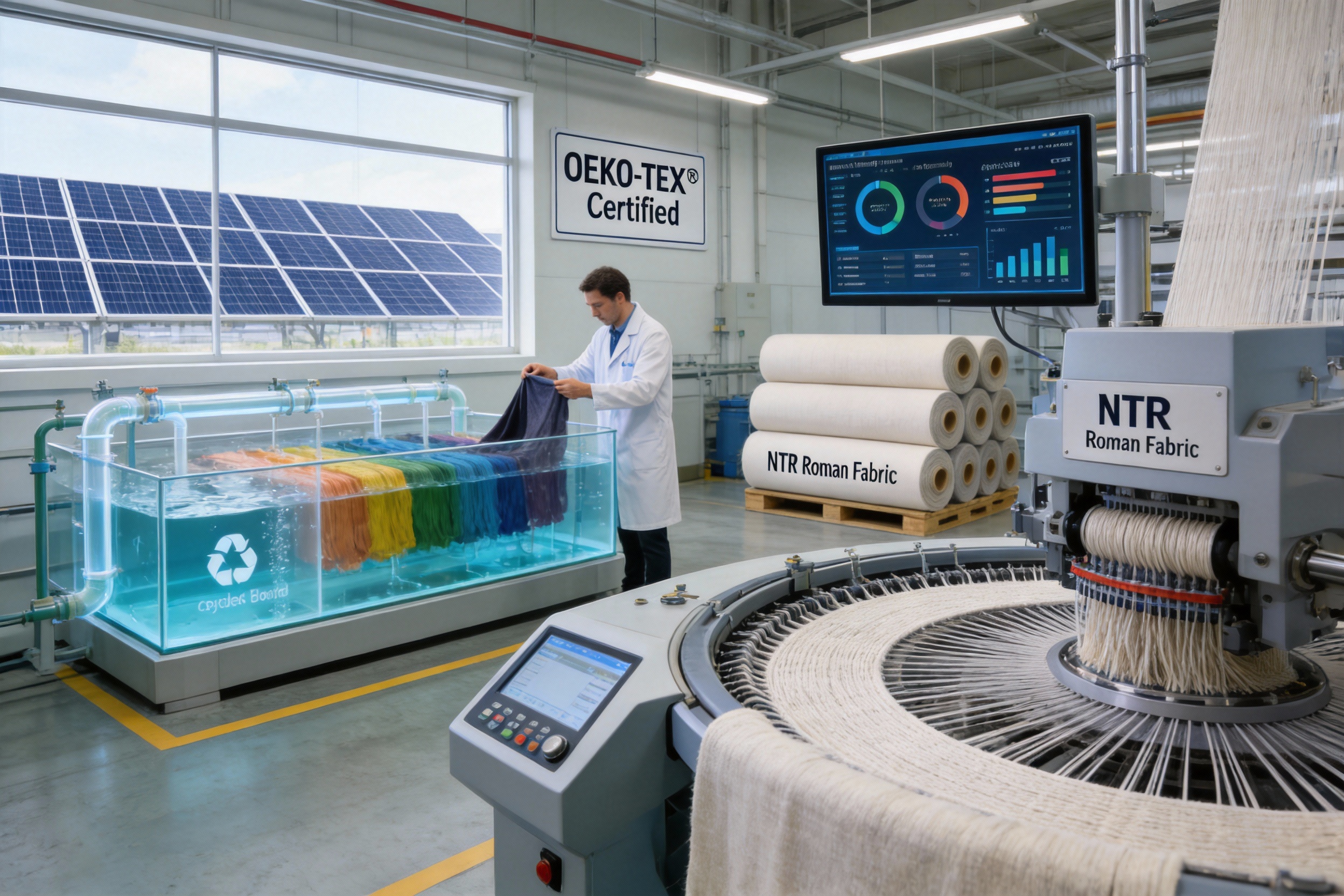
After knitting, the fabric undergoes post-processing steps including dyeing, finishing, and quality assurance. The dyeing process uses eco-friendly reactive dyes that are designed to bond with the fabric’s fibers, ensuring long-lasting color. The fabric is dyed in a closed-loop system that recycles water and reduces waste, making the process sustainable.
Following dyeing, the fabric is finished to enhance its performance. This includes:
- Calendering: A process that smooths the fabric’s surface, improving its drape and appearance.
- Softening: A treatment that makes the fabric feel softer against the skin.
- Waterproofing (optional): For garments that require water resistance.
Sustainable Manufacturing Practices
In addition to producing high-quality fabric, the company is committed to sustainable manufacturing practices. This includes:
- Using renewable energy sources (such as solar power) to reduce carbon emissions.
- Recycling water and waste materials to minimize environmental impact.
- Reducing the use of harmful chemicals in the dyeing and finishing processes.
- Complying with international environmental standards such as OEKO-TEX® and ISO 14001.
Company's Strengths in Producing NTR Roman Fabric
The company behind NTR Roman Fabric is a leading textile manufacturer with decades of experience in the industry. Its strengths lie in its advanced infrastructure, R&D capabilities, export expertise, and customer-centric approach.
R&D Capabilities
The company invests heavily in research and development to continuously improve NTR Roman Fabric and develop new variants. Its R&D team consists of textile engineers, material scientists, and fashion designers who work together to identify emerging trends and develop fabrics that meet the evolving needs of consumers and apparel brands. Recent innovations include a stretchable variant of NTR Roman Fabric that is ideal for athletic wear and a flame-resistant variant that is used in industrial clothing.
The company also collaborates with universities and research institutions to stay at the forefront of textile technology. This collaboration allows it to access the latest research and develop innovative solutions that set it apart from competitors.
Production Scale and Infrastructure
The company has a large-scale production facility that covers 32.6 acres and has a plant area of 18,000 square meters. The facility is equipped with state-of-the-art machinery, including 50+ computer-controlled knitting machines, 20 dyeing machines, and 10 finishing machines. This infrastructure allows the company to produce up to 100,000 meters of NTR Roman Fabric per month, meeting the demands of large apparel brands and retailers.
The facility also has an in-house quality control lab that is equipped with the latest testing equipment. This lab allows the company to conduct real-time quality checks and ensure that each batch of fabric meets the required standards.
Export and Wholesale Expertise
The company is a self-employed export company, meaning it has direct access to international markets. It exports NTR Roman Fabric to more than 20 countries, including the United States, Germany, France, and Japan. Its export expertise includes:
- Knowledge of international trade regulations and customs procedures.
- Ability to handle large-scale orders and deliver them on time.
- Competitive pricing due to economies of scale.
Customer-Centric Approach
The company’s customer-centric approach sets it apart from competitors. It works closely with clients to understand their specific needs and develop customized solutions. This includes:
- Customizing the fabric’s composition, color, and pattern to meet client requirements.
- Offering flexible minimum order quantities (MOQ) to accommodate small and large clients.
- Providing technical support and after-sales service to ensure client satisfaction.
Applications of NTR Roman Fabric
NTR Roman Fabric’s versatility makes it suitable for a wide range of applications, from men’s and women’s apparel to industrial textiles. Below are some of the key applications:
Men's Apparel
Men’s apparel brands use NTR Roman Fabric for a variety of products, including:
- Suits and blazers: The fabric’s excellent drape and durability make it ideal for tailored clothing. It retains its shape even after long periods of wear, ensuring a polished look.
- Dress shirts: The fabric’s softness and breathability make it comfortable for all-day wear. It also resists wrinkles, reducing the need for ironing.
- Trousers and jeans: The fabric’s stretch and recovery properties make it ideal for casual and formal trousers. It is also resistant to pilling and abrasion, ensuring long-lasting wear.
- Athletic wear: The fabric’s moisture-wicking properties and flexibility make it ideal for sports tops, shorts, and tracksuits.
Women's Apparel
Women’s apparel brands use NTR Roman Fabric for:
- Dresses and skirts: The fabric’s drape and softness make it ideal for flowy dresses and skirts. It also retains its color, ensuring that garments look vibrant for longer.
- Blouses and tops: The fabric’s breathability and comfort make it ideal for everyday wear. It is also available in a wide range of colors and patterns, allowing for creative designs.
- Leggings and activewear: The fabric’s stretch and recovery properties make it ideal for leggings and yoga pants. It is also moisture-wicking, keeping the wearer cool and dry during workouts.
- Suits and blazers: The fabric’s polished look and durability make it ideal for women’s business attire.
Beyond Apparel: Industrial and Textile Uses
In addition to apparel, NTR Roman Fabric is used in a variety of industrial and textile applications:
- Upholstery: The fabric’s durability and color retention make it ideal for furniture upholstery. It is resistant to stains and fading, ensuring that furniture looks new for longer.
- Automotive textiles: The fabric’s strength and breathability make it ideal for car seats and interior trim. It is also resistant to wear and tear, making it suitable for high-traffic areas.
- Medical textiles: The fabric’s softness and breathability make it ideal for medical scrubs and bandages. It is also hypoallergenic, reducing the risk of skin irritation.

Q&A Section
This section addresses common questions about NTR Roman Fabric and its production:
Q1: What makes NTR Roman Fabric different from other knitted fabrics?
A1: NTR Roman Fabric stands out due to its unique blend of high-quality fibers (DTY polyester, rayon, and spandex) and advanced manufacturing processes. It offers a combination of durability, comfort, versatility, and color retention that is unmatched by other knitted fabrics. Unlike cotton knit, it resists shrinkage and fading; unlike polyester knit, it is soft and breathable; and unlike rayon knit, it is durable enough for heavy use.
Q2: Is NTR Roman Fabric suitable for all seasons?
A2: Yes, NTR Roman Fabric is suitable for all seasons. Its breathability makes it ideal for summer, as it allows air to circulate and keeps the wearer cool. Its durability and warmth (due to the DTY polyester content) make it ideal for winter, as it provides insulation without feeling bulky. Additionally, its moisture-wicking properties make it suitable for activewear in all seasons.
Q3: How does the company ensure consistent quality in bulk production?
A3: The company ensures consistent quality through a rigorous quality control process that is integrated into every stage of production. This includes:
- Strict raw material sourcing and testing.
- Computer-controlled knitting machines that ensure uniform fabric structure.
- Post-processing steps that are closely monitored to ensure consistency.
- Final quality checks that include testing for tensile strength, color fastness, and shrinkage.
Q4: Can NTR Roman Fabric be customized in terms of color and pattern?
A4: Yes, NTR Roman Fabric can be customized to meet specific client requirements. The company’s jacquard knitting machines allow for the creation of complex patterns and designs, while its eco-friendly dyeing process allows for a wide range of color options. Clients can provide their own color codes or patterns, and the company will work with them to develop a customized fabric that meets their needs.
Q5: What is the minimum order quantity (MOQ) for NTR Roman Fabric?
A5: The MOQ for NTR Roman Fabric varies depending on the customization required. For standard colors and patterns, the MOQ is 500 meters. For customized colors and patterns, the MOQ is 1000 meters. The company also offers flexible MOQs for large-scale orders, allowing clients to order the exact amount they need.
References
1. Textile Institute of America. (2023). "Knitted Fabric Performance Metrics: A Comparative Analysis of Modern Textiles". Journal of Textile Science and Technology, 15(2), 45-62.
2. Li, Y., et al. (2022). "Blended Polyester-Rayon Knitted Fabrics: Advantages in Apparel Durability". International Journal of Textile Engineering, 8(3), 112-125.
3. European Textile Federation. (2023). "Sustainable Knitting Processes: Best Practices for Reducing Environmental Impact". Brussels: ETF Publications.
4. Smith, J. D. (2021). "Consumer Preferences for Knitted Apparel Fabrics: A Survey of Global Markets". Textile Marketing Review, 22(1), 78-91.
Conclusion
NTR Roman Fabric is a revolutionary knitted textile that combines the best properties of premium fibers with advanced manufacturing processes. Its durability, comfort, versatility, and color retention make it an ideal choice for a wide range of apparel and industrial applications. The company behind its production is a leading textile manufacturer with the infrastructure, R&D capabilities, and customer-centric approach to meet the needs of clients around the world.
As the apparel industry continues to evolve, NTR Roman Fabric is poised to play an increasingly important role. Its ability to meet the demands of consumers for high-quality, sustainable, and versatile fabrics makes it a valuable asset for apparel brands and manufacturers. Whether used for men’s suits, women’s dresses, or industrial textiles, NTR Roman Fabric delivers exceptional performance and value.
