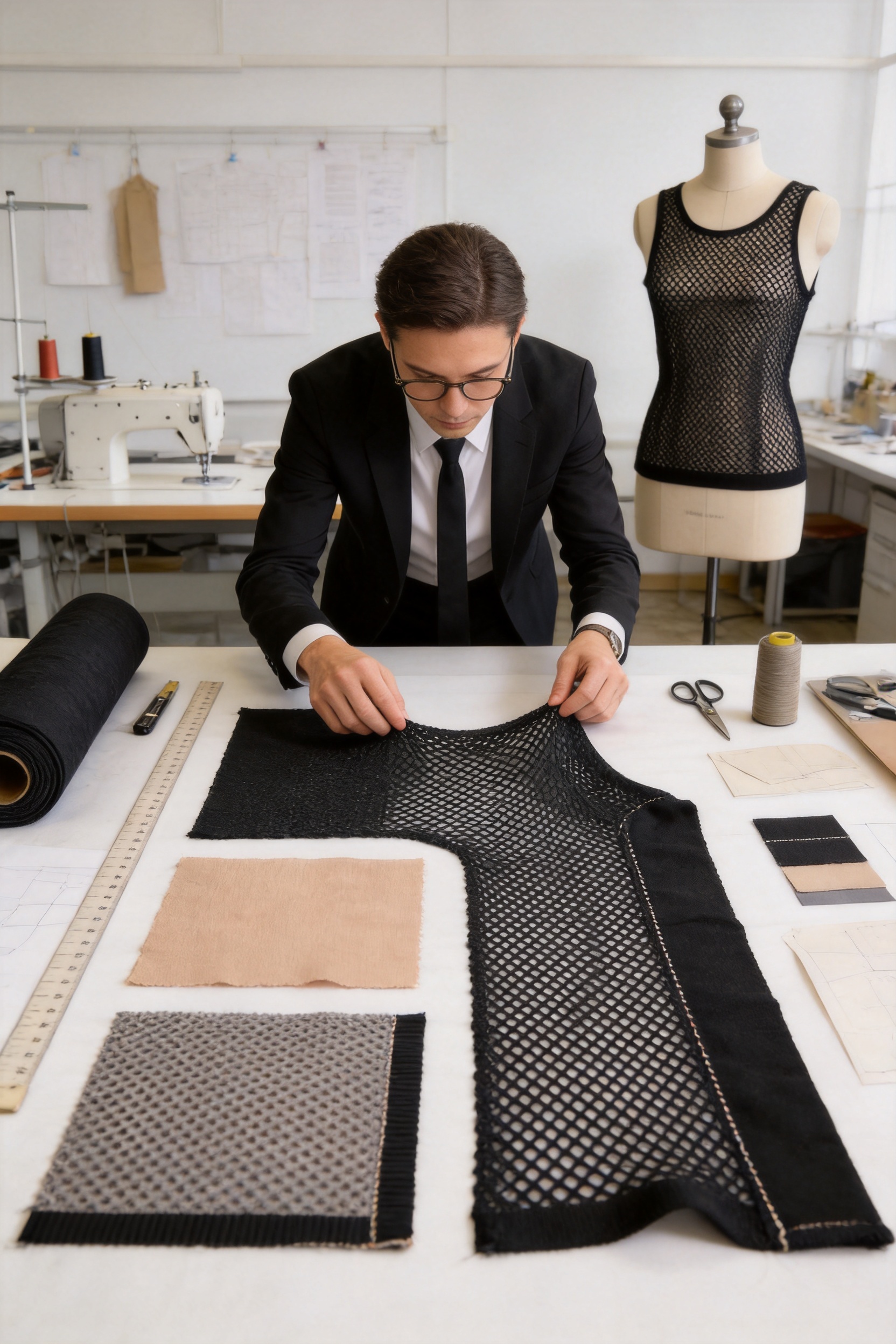
NR Mesh Fabric: A Versatile Knitted Material for Comfortable, Stylish Apparel
Introduction to NR Mesh Fabric
NR mesh fabric is a versatile knitted textile designed for apparel manufacturers, fashion brands, wholesalers, and sewing professionals who need a combination of comfort, flexibility, visual appeal, and practical performance. As part of the NR knitted fabric category, it can be used across a wide range of garments, from fashionable dresses and blouses to skirts, cardigans, baby clothes, overlays, and layered fashion pieces.
The structure of a knitted fabric gives NR mesh fabric qualities that are difficult to achieve with many traditional woven materials. Its looped construction allows the fabric to stretch and recover naturally, making it suitable for garments that require movement and ease. Depending on the selected construction, weight, color, and finishing treatment, NR mesh fabric can provide a soft hand feel, a light drape, a subtle sheen, a sheer appearance, or a more substantial surface for everyday clothing.
Modern apparel production requires fabrics that offer more than attractive appearance. Buyers also need dependable quality, stable supply, efficient sewing performance, consistent coloration, and compatibility with contemporary garment designs. NR mesh fabric responds to these requirements by combining a flexible knitted structure with broad styling possibilities. It can be produced in many colors and patterns, making it easier for designers to coordinate seasonal collections and create distinctive products.
Hangzhou Jinfeng Textile Co., Ltd. manufactures and supplies knitted fabrics, blended fabrics, polyester yarn, and related textile products. With facilities covering approximately 32.6 acres and a plant area of about 18,000 square meters, the company integrates production and processing, post-dyeing, finishing, research and development, and sales. This integrated structure supports greater control over the path from yarn and fabric production to final delivery.
For customers looking for a practical, attractive, and adaptable material, NR mesh fabric offers a strong balance between fashion value and manufacturing convenience. Its applications are not limited to a single clothing category. It can support elegant formalwear, relaxed daily clothing, light layering products, children’s garments, and decorative fashion designs.
NR Mesh Fabric
What Makes NR Mesh Fabric Different?
NR mesh fabric is defined by its knitted construction and open or semi-open visual character. The surface may feature a mesh-like texture, patterned knit, lace-inspired appearance, or other decorative structures. The exact appearance depends on the knitting method, yarn selection, density, pattern arrangement, color, and finishing process.
Unlike many woven fabrics, knitted materials are formed by interlocking yarn loops. These loops create flexibility in multiple directions and allow the fabric to follow the movement of the body. This quality is especially valuable for apparel that must provide comfort during sitting, walking, stretching, or daily activities.
The open texture of mesh fabric can also create visual depth. Designers may use it as a main fabric, an overlay, a decorative panel, or a component in a layered garment. When placed over a lining or a contrasting base fabric, the mesh surface can produce a dimensional effect without requiring complicated embroidery or additional decorative materials.
NR mesh fabric may also be selected for garments that need a limited sheen. A controlled, subtle luster can improve the appearance of dresses, blouses, skirts, and cardigans without making the garment look excessively glossy. This balance between texture and shine gives designers greater freedom when developing products for different markets.
Another important feature is ease of sewing. A fabric that can be cut, stitched, gathered, and layered efficiently helps reduce production difficulties. NR mesh fabric is described as an easy-to-sew material, making it suitable for professional clothing manufacturers as well as smaller sewing operations. With the correct needle, thread, stitch length, and handling method, manufacturers can achieve clean seams and attractive finished garments.
Knitted Flexibility
The looped construction of knitted fabric allows it to stretch more readily than many standard woven materials. This flexibility can improve garment comfort and reduce the feeling of restriction. It is particularly useful in close-fitting dresses, blouses, skirts, cardigans, and children’s clothing, where movement and comfort are important.
Stretch performance can vary according to fabric construction and fiber composition. Buyers should therefore confirm the required widthwise and lengthwise stretch before placing an order. Factors such as fabric weight, knitting density, yarn type, and finishing treatment all influence the final result.
Mesh-Like Visual Appeal
The mesh effect adds texture and lightness to a garment. It can make a design appear more breathable and visually delicate, while also supporting layering and decorative applications. In fashion collections, mesh fabrics are frequently used to create contrast between opaque and transparent surfaces, matte and slightly lustrous areas, or smooth and textured panels.
Color and Pattern Versatility
NR mesh fabric is available in a variety of colors and patterns. This allows manufacturers to create products for different seasons, customer groups, and price levels. Neutral shades can be used for commercial basics, while bright colors and distinctive patterns can support fashion-forward collections.
Pattern flexibility is particularly valuable for companies that produce multiple styles from one fabric category. A single base construction may be developed in different colors, surface effects, or decorative arrangements. This makes it possible to maintain production familiarity while refreshing the appearance of each collection.
Material Composition and Fabric Performance
NR mesh fabric belongs to a product range that includes polyester, rayon, spandex, and other blended textile materials. The exact composition should be confirmed for each specification, because fiber content has a direct effect on stretch, drape, recovery, softness, durability, color behavior, and care requirements.
Polyester is widely used in apparel because it offers good dimensional stability, strength, color retention, and resistance to everyday wear. When knitted into a mesh or patterned structure, polyester can provide a durable foundation that maintains its visual character through repeated handling and use.
Rayon can contribute softness, fluid drape, and a comfortable hand feel. Rayon-containing blends are often chosen when a manufacturer wants a more natural and graceful surface appearance. The balance between polyester and rayon can be adjusted according to the desired end use, production requirements, and market positioning.
Spandex may be incorporated when additional elasticity and recovery are required. Stretch fibers can help the fabric return to its original shape after movement, although the final performance depends on the percentage used and the knitting structure. For close-fitting garments, stretch recovery is especially important because it helps maintain the intended silhouette.
Buyers should evaluate the fabric according to the complete performance profile rather than focusing on one fiber alone. A suitable fabric should provide the required stretch, drape, appearance, sewing behavior, and durability for the intended garment. Hangzhou Jinfeng Textile Co., Ltd. works with blended fabrics such as polyester and spandex and also provides polyester yarn production and processing, supporting a broad range of textile development requirements.
| Performance Factor | Value for Apparel Production | Recommended Evaluation |
|---|---|---|
| Stretch | Improves comfort and supports body movement | Measure widthwise and lengthwise extension |
| Recovery | Helps garments retain their shape after wear | Test repeated extension and relaxation |
| Hand feel | Influences perceived quality and wearing comfort | Assess softness, smoothness, and surface feel |
| Drape | Determines how the fabric hangs on the body | Review samples in the intended garment style |
| Color stability | Supports consistent appearance during production and use | Check shade consistency and colorfastness |
| Sewability | Helps improve cutting and stitching efficiency | Conduct sample sewing with the planned equipment |
| Surface design | Adds fashion value and supports product differentiation | Inspect pattern definition and visual uniformity |
Advantages Over Less Specialized Fabrics
NR mesh fabric offers several advantages compared with ordinary flat knitted fabrics and less flexible woven alternatives. These advantages do not mean that one fabric is suitable for every application. Instead, they show why a mesh-based knitted structure can be a valuable option when the garment requires movement, texture, layering, or decorative appeal.
Comfort and Freedom of Movement
The natural flexibility of knitted construction can make garments more comfortable during everyday wear. Dresses and skirts can follow body movement, while blouses and cardigans can provide a relaxed fit without appearing shapeless. This comfort is valuable in both casual and fashion-oriented products.
Efficient Styling
NR mesh fabric can create an attractive design effect without requiring extensive additional decoration. Its surface texture, open structure, and pattern options may reduce the need for heavy embellishment. Designers can use the material as an overlay or panel to achieve a sophisticated appearance with relatively simple garment construction.
Broad Garment Compatibility
Many fabrics are strongly associated with one product category. NR mesh fabric is more adaptable. It can be used for dresses, blouses, skirts, cardigans, baby clothing, fashion overlays, and other apparel. This broad compatibility is an advantage for manufacturers that produce several garment types or regularly change their product range.
Lightweight Layering Potential
Mesh and lace-inspired knitted surfaces are well suited to layering. They can be worn over a lining, a solid-color base, or another contrasting fabric. This creates visual depth and allows the same fabric to be used in both transparent and more covered designs.
Design Customization
Availability in multiple colors and patterns helps customers create products that reflect their brand identity and target market. A manufacturer can request soft neutral tones for a timeless collection, lively colors for seasonal fashion, or coordinated shades for a complete apparel program.
Production Practicality
Easy sewing is a significant advantage for commercial clothing production. Fabrics that are difficult to control during cutting or stitching may increase waste, labor time, and quality problems. When NR mesh fabric is handled with suitable production settings, its knitted flexibility can support efficient assembly and comfortable finished garments.
Applications in Apparel Manufacturing
Dresses
NR mesh fabric is suitable for both casual and occasion dresses. Its flexibility can support fitted silhouettes, while its surface texture can add interest to loose or flowing styles. A mesh overlay can create an elegant outer layer, and a patterned knit can serve as the primary fabric for a more distinctive design.
For dresses, designers should consider opacity, lining requirements, stretch recovery, seam placement, and hem treatment. A lightweight mesh may require a lining or underlayer, while a denser construction may be appropriate as a complete garment material. The choice depends on the intended look and the customer’s expectations.
Blouses and Tops
Blouses made from NR mesh fabric can provide a soft, fluid appearance while maintaining a fashionable surface texture. The material can be used for full garments, sleeves, yokes, decorative inserts, or layered panels. Its stretch can make pullover styles easier to wear, while its visual openness can add lightness to a simple design.
Manufacturers should pay attention to neckline stability, sleeve openings, and seam reinforcement. If the fabric has a pronounced open structure, narrow edges may require careful finishing to prevent distortion during sewing and handling.
Skirts
Mesh knitted fabric can be used in pencil skirts, flared skirts, layered skirts, and decorative overskirts. Its ability to drape and move can create attractive motion when the wearer walks. For structured silhouettes, the fabric may be paired with a lining or stabilizing layer.
Pattern placement is important for skirts, especially when the design includes a repeating motif. Careful cutting can help maintain visual alignment across side seams and panels. Buyers should also confirm whether the fabric has directional stretch or a directional pattern.
Cardigans and Lightweight Outer Layers
NR mesh fabric can be used in lightweight cardigans and open-front garments. The open structure gives these products a relaxed appearance, while the knitted construction can provide comfortable movement. These garments are useful for transitional seasons and indoor layering.
Baby Clothes
Selected NR knitted fabrics may be used for baby clothing when the fabric meets the necessary requirements for softness, comfort, construction, and product safety. Baby garments should be designed with particular attention to skin contact, seam comfort, secure components, appropriate weight, and easy care.
Before using any fabric for infant products, manufacturers should conduct their own testing and confirm compliance with the regulations applicable to the destination market. The fabric’s softness, colorfastness, chemical safety, and construction should be verified through appropriate procedures.
Overlays and Decorative Panels
One of the most attractive applications for NR mesh fabric is the overlay. A transparent or semi-transparent layer can be placed over a solid base to create contrast, depth, and movement. Decorative panels can also be positioned on sleeves, shoulders, bodices, or skirt sections.
Because the mesh surface already contributes to the design, overlays can produce an elevated appearance without complex construction. This can help brands develop stylish garments while maintaining manageable production processes.
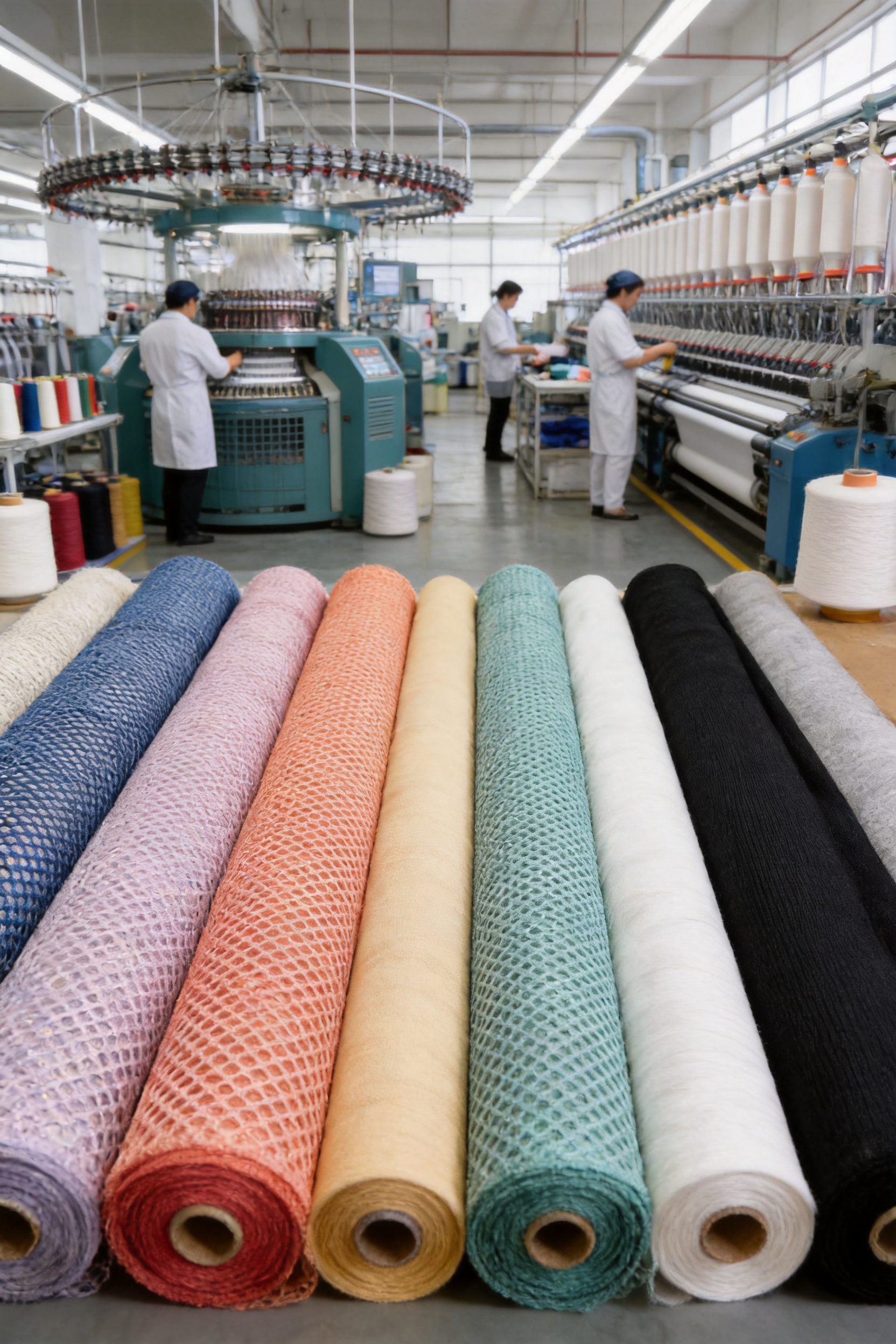
Manufacturing Process and Quality Control
The quality of NR mesh fabric depends on a series of connected processes. Yarn selection, knitting, dyeing, finishing, inspection, and packing must work together. A weakness in one stage can affect the final appearance or performance, so an integrated production approach provides important advantages.
Yarn Selection and Preparation
The manufacturing process begins with the selection of suitable yarn. Yarn type, count, strength, twist, color, and composition influence the appearance and behavior of the final fabric. Polyester yarn is especially important in blended textile production because consistent yarn quality supports uniform knitting and stable coloration.
Yarn preparation may include winding, checking, and organizing packages for efficient use on knitting equipment. Proper preparation helps reduce interruptions and supports consistent tension during fabric formation.
Knitting and Structure Formation
During knitting, yarns are formed into interlocking loops. The selected machine settings determine fabric density, width, elasticity, surface texture, and pattern definition. For mesh or lace-inspired effects, the structure must be carefully controlled so that open areas and decorative details remain consistent throughout the roll.
Knitting tension is particularly important. Excessive tension may reduce elasticity or cause unwanted distortion, while insufficient control can lead to uneven loops and irregular width. Experienced operators and appropriate machine settings help maintain stable production conditions.
Greige Fabric Inspection
After knitting, the greige fabric should be inspected for visible defects, width variation, broken yarns, uneven loops, holes, stains, and pattern irregularities. Early inspection allows problems to be identified before dyeing or finishing, when correction may be more difficult or costly.
Dyeing and Color Development
Post-dyeing is an important part of the company’s textile production capabilities. Dyeing must be matched to the fiber composition and fabric construction. The objective is to achieve the requested shade while preserving the fabric’s hand feel, stretch, surface clarity, and dimensional stability.
Color consistency is essential for commercial apparel production. Buyers often need multiple rolls or repeat orders to match an approved standard. Careful control of dyeing conditions, chemical dosage, temperature, time, and fabric handling supports more reliable results.
Patterned or textured mesh fabrics may require additional attention during dyeing because open areas and dense areas can absorb color differently. The fabric must be processed in a way that maintains even coloration without damaging the knitted structure.
Finishing
Finishing can influence softness, width, drape, surface appearance, stretch, and dimensional stability. Depending on the specification, finishing may be used to improve the hand feel, stabilize the fabric, control shrinkage, or enhance the visual effect.
A suitable finishing process should preserve the character of the fabric rather than hide it. For NR mesh fabric, the open texture and knitted flexibility are important selling points. Finishing therefore needs to achieve a balance between stability and softness.
Final Inspection and Packing
Final inspection may include checking the fabric width, weight, shade, surface appearance, pattern continuity, stretch, recovery, and general cleanliness. Rolls should be packed to protect them from moisture, dust, pressure, and unnecessary creasing during storage and transportation.
Clear identification of roll numbers, color names, specifications, and batch information supports traceability. This is especially useful when customers order multiple colors or require repeat production.
Integrated Manufacturing Strengths
Hangzhou Jinfeng Textile Co., Ltd. combines research and development, production, processing, post-dyeing, finishing, and sales. This integrated structure is a significant strength for buyers who prefer to communicate with one textile partner instead of coordinating separate suppliers for yarn, fabric production, dyeing, and finishing.
The company is located in Jingjiang Street Industrial Park, Xiaoshan District, Hangzhou City, Zhejiang Province. Its approximately 32.6-acre site and approximately 18,000-square-meter plant provide a substantial operating base for textile manufacturing and processing.
Integrated production can improve communication between departments. Technical requirements discussed during product development can be transferred more directly to knitting and finishing teams. If a customer needs a particular hand feel, shade, stretch level, or pattern effect, the production team can evaluate the requirement across multiple stages rather than treating each process as an isolated service.
The company also produces, processes, and sells DTY polyester yarn. Drawn textured yarn is widely used in knitted and woven textile applications because its texture and elasticity can contribute to fabric fullness, softness, and comfort. Having experience with polyester yarn gives the manufacturer a stronger foundation for understanding how yarn properties affect the performance of finished fabric.
In addition to NR knitted fabric, the company’s product categories include polyester rayon fabric, knitted jacquard fabric, NTR knitted fabric, and slightly intermingled drawn textured yarn. This broader product range allows customers to compare different textile solutions and develop coordinated collections from one supplier.
Research and development is another important capability. Textile buyers increasingly require customized solutions rather than standard materials alone. Development work may involve adjusting composition, weight, color, pattern, surface appearance, stretch, or finishing. A supplier with experience across yarn and fabric production is better positioned to evaluate these requirements in a practical way.
Advantages of Supplier Integration
Working with an integrated textile manufacturer can provide several commercial benefits:
First, communication can be more efficient. Technical information does not need to pass through multiple unrelated companies, reducing the risk of misunderstanding.
Second, production coordination can be improved. Yarn preparation, knitting, dyeing, and finishing can be scheduled with greater awareness of one another.
Third, quality responsibility is easier to define. When several stages are handled within one organization, the supplier can investigate problems across the entire process.
Fourth, product development may be faster. Adjustments can be evaluated by teams familiar with the available machinery, materials, and finishing options.
Fifth, customers can source multiple related products from one company. This may simplify purchasing, documentation, sampling, and long-term cooperation.
Why NR Mesh Fabric Can Compete in the Market
Competition in the textile market depends on more than price. Garment manufacturers need materials that support attractive designs, stable production, and dependable delivery. NR mesh fabric can compete effectively because it offers a combination of aesthetic flexibility and practical functionality.
Its broad application range allows a supplier to serve multiple market segments. A fabric that can be used for dresses, blouses, skirts, cardigans, baby clothing, and overlays has greater commercial adaptability than a material limited to one specific product.
The variety of available colors and patterns also supports rapid fashion development. Brands can use one fabric category across several collections while changing the visual direction through color and pattern selection.
Its knitted construction provides comfort and stretch, qualities that remain important in modern apparel. Consumers expect clothing to look attractive while allowing natural movement. Fabrics that feel restrictive or uncomfortable may be rejected even when the design is appealing.
NR mesh fabric also supports value-added design. A simple garment can appear more sophisticated when it includes a textured sleeve, a mesh yoke, a lace-inspired overlay, or a patterned outer layer. This helps brands create visible differentiation without relying entirely on expensive trims.
Compared with some delicate decorative fabrics, a well-developed knitted mesh may offer easier sewing and more practical handling. Compared with basic jersey, it may provide greater surface interest. Compared with rigid woven fabric, it may provide improved flexibility. These combined strengths make it a useful middle ground for many apparel programs.
Design and Development Considerations
Successful use of NR mesh fabric begins with clear product planning. Designers and buyers should determine whether the material will be used as a main fabric, lining layer, overlay, insert, sleeve, or decorative panel. The intended application affects the required weight, opacity, stretch, color, and finishing.
Weight and Opacity
Lightweight mesh may be appropriate for overlays and summer garments, while heavier constructions may be more suitable for skirts, cardigans, or structured fashion pieces. If the fabric is transparent or semi-transparent, a lining may be required. The lining should be selected to complement the stretch and drape of the outer layer.
Pattern Direction
Some knitted patterns have a clear vertical or horizontal direction. Cutting layouts should account for this direction to maintain a consistent appearance. Directional patterns may also affect fabric consumption, particularly when matching motifs across seams.
Stretch and Recovery
Garment patterns should be developed according to the measured stretch and recovery of the selected fabric. Excessive negative ease can place unnecessary stress on seams, while insufficient ease may cause the garment to lose its intended shape. Sample testing is recommended before bulk production.
Seam and Edge Finishing
Because NR mesh fabric may have an open or flexible structure, seam and edge treatment should be selected carefully. Overlock stitching, cover stitching, narrow hems, binding, elastic insertion, or other techniques may be used depending on the garment design. The goal is to preserve comfort while preventing unwanted unraveling, curling, or distortion.
Care Instructions
Care instructions should reflect the actual fiber composition and finishing treatment. A garment manufacturer should test washing, drying, ironing, and dimensional stability before printing care labels. Clear care guidance helps consumers maintain the appearance and performance of the finished product.
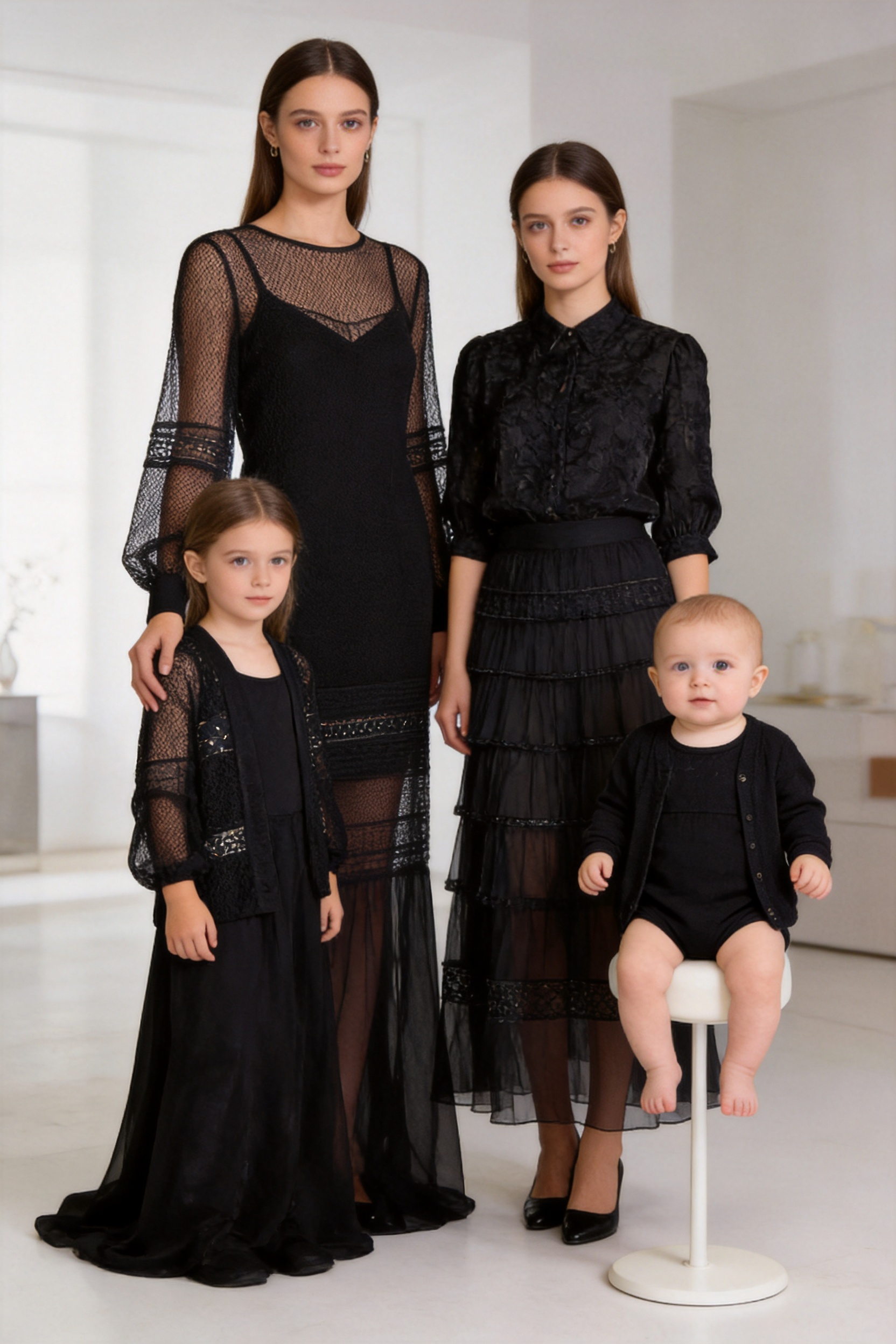
Quality Evaluation for Buyers
Before approving NR mesh fabric for bulk production, buyers should request a representative sample and evaluate it under practical conditions. Laboratory testing and garment trials can reveal information that is not visible from a small swatch alone.
Visual inspection should cover the uniformity of the mesh structure, pattern clarity, surface cleanliness, color evenness, and presence of defects. The buyer should view the fabric under suitable lighting and compare it with the approved standard.
Physical evaluation should include width, weight, stretch, recovery, shrinkage, and drape. If the fabric will be used in close-fitting garments, stretch recovery deserves particular attention. If it will be used as an overlay, opacity and pattern continuity may be more important.
Sewing tests should be performed with the intended machinery and production settings. The test should include straight seams, curved seams, hems, gathers, and any special construction planned for the garment. This helps identify whether the fabric requires a different needle, thread, presser-foot pressure, or stitch length.
Colorfastness testing is important for apparel that may be washed frequently or worn next to the skin. Depending on the market, buyers may also need to test rubbing, perspiration, washing, light exposure, and transfer to other materials.
For children’s and baby clothing, the evaluation should be more comprehensive. In addition to ordinary textile performance, manufacturers should confirm that the finished product complies with applicable safety requirements in the destination country.
Environmental and Operational Responsibility
Responsible textile production requires attention to material efficiency, water use, energy use, chemical management, waste reduction, and product durability. A fabric that remains attractive and functional for a longer period can contribute to more responsible consumption by reducing the need for frequent replacement.
Manufacturers can also improve efficiency through careful production planning. Accurate yarn preparation, controlled knitting, stable dyeing, and appropriate finishing reduce the risk of rework and material waste. Consistent processes are valuable not only for quality but also for operational responsibility.
Buyers should discuss the specific environmental requirements of their projects with the supplier. These may include recycled fibers, restricted substances, wastewater management, packaging preferences, or certifications required by a particular market. Requirements should be confirmed before sampling and incorporated into the technical specification.
Because NR mesh fabric can be used in several garment types, one successful material development may support multiple products. This versatility can reduce the need to source many unrelated fabrics and may simplify inventory planning. However, responsible sourcing still requires accurate forecasting and appropriate order quantities.
Ordering and Cooperation Process
A practical cooperation process begins with a clear inquiry. Buyers should provide the intended garment type, target composition, preferred color, desired weight, width, stretch requirement, pattern preference, estimated quantity, and destination market.
Samples should then be reviewed for appearance, hand feel, construction, and sewing performance. If adjustments are required, the buyer and supplier can discuss changes to yarn selection, knitting structure, dyeing, or finishing.
Once the specification is approved, the buyer should confirm the final standard. Important details include color reference, roll width, acceptable tolerance, packaging method, testing requirements, order quantity, delivery schedule, and documentation.
For repeat orders, retaining an approved sample and clear technical records is useful. It helps both sides compare later production with the original standard. Consistency is especially important when the same fabric is used in multiple collections or when garments are produced in different factories.
Hangzhou Jinfeng Textile Co., Ltd. can support textile customers through its production, processing, post-dyeing, finishing, and sales capabilities. The company’s self-operated export business structure is designed to serve customers in domestic and international markets. Its stated business philosophy emphasizes cooperation, mutual benefit, and dedicated customer service.
Frequently Asked Questions
What is NR mesh fabric?
NR mesh fabric is a knitted fabric with a mesh-like or open-textured appearance. It can be produced in different colors, patterns, weights, and compositions and may be used for dresses, blouses, skirts, cardigans, baby clothes, overlays, and decorative apparel components.
Is NR mesh fabric easy to sew?
It is generally considered an easy-to-sew fabric when suitable production techniques are used. Because knitted mesh can be flexible or open in structure, manufacturers should select appropriate needles, threads, stitch settings, and edge-finishing methods.
Can NR mesh fabric stretch?
Yes, knitted construction normally provides flexibility, although the exact stretch depends on the fiber composition, knitting structure, fabric weight, and finishing. Buyers should request measured stretch and recovery data for the specific quality they plan to purchase.
What garments can be made from NR mesh fabric?
Common applications include dresses, blouses, skirts, cardigans, baby clothes, overlays, sleeves, yokes, decorative panels, and layered fashion garments. The fabric can be used as a main material or combined with lining and other fabrics.
Does NR mesh fabric require a lining?
Not always. The requirement depends on the fabric’s opacity, pattern, garment design, and desired level of coverage. Lightweight or open mesh may need a lining or underlayer, while denser constructions may be suitable as a complete garment fabric.
Can the fabric be produced in custom colors?
NR mesh fabric is available in a variety of colors, and custom color development may be possible depending on the order quantity, fiber content, dyeing method, and production schedule. Buyers should provide an approved color standard for accurate development.
Can patterns be customized?
Pattern options may be developed according to the knitting structure and production capabilities. Customers should discuss the desired motif, repeat size, direction, density, and surface effect during the sampling stage.
What fibers may be used in NR mesh fabric?
The product range includes polyester, rayon, spandex, and other blended textile materials. The exact composition should be confirmed for each product specification because fiber content affects comfort, stretch, appearance, care, and performance.
What is the role of DTY polyester yarn in textile production?
Drawn textured yarn, commonly known as DTY polyester yarn, can contribute texture, fullness, softness, and flexibility to textile products. Its performance depends on the yarn specification and the way it is incorporated into the fabric.
What should buyers test before bulk production?
Buyers should evaluate appearance, color, width, weight, stretch, recovery, shrinkage, drape, sewability, surface defects, and colorfastness. A garment trial is also recommended to confirm that the fabric performs as expected in the final product.
Can NR mesh fabric be used for baby clothing?
Selected qualities may be considered for baby clothing, provided that the fabric and finished garment meet applicable safety, softness, colorfastness, and chemical requirements. Additional testing should be completed before commercial production.
What information should be included in a quotation request?
A quotation request should include composition, fabric type, color, width, weight, quantity, intended use, pattern requirements, packaging, testing standards, and delivery destination. Providing complete information helps the supplier prepare a more accurate response.
Conclusion
NR mesh fabric is a practical and design-oriented knitted material for modern apparel production. Its combination of stretch, comfort, texture, color variety, pattern flexibility, and easy sewing makes it suitable for a broad range of garments and fashion applications.
Compared with basic knitted fabrics, NR mesh fabric can provide stronger visual interest and more opportunities for overlays, panels, and layered designs. Compared with rigid woven fabrics, its knitted construction can offer greater flexibility and freedom of movement. Compared with highly specialized decorative materials, it can provide a more practical balance between appearance and production efficiency.
The quality of the finished fabric depends on coordinated control of yarn selection, knitting, dyeing, finishing, inspection, and packing. Hangzhou Jinfeng Textile Co., Ltd. has an integrated textile manufacturing structure that covers blended fabric production and processing, post-dyeing, finishing, DTY polyester yarn production, research and development, and sales. Its production base in Hangzhou supports the company’s ability to serve domestic and international textile customers.
For buyers, the most effective approach is to define the intended application clearly, evaluate samples carefully, confirm the technical specification, and conduct sewing and performance testing before bulk production. With proper development and quality control, NR mesh fabric can support comfortable garments, attractive fashion collections, efficient manufacturing, and long-term product differentiation.
References
International Organization for Standardization. Textile Testing Principles and General Quality Evaluation Practices.
American Association of Textile Chemists and Colorists. Colorfastness and Performance Testing Methods for Textile Materials.
Textile Institute. Textile Terms, Fiber Properties, and Fabric Construction Principles.
Research and development materials concerning knitted fabric structures, polyester yarn processing, blended textiles, dyeing, and finishing operations.
Supplier-provided product information for NR knitted fabric, NR mesh fabric, blended fabrics, and drawn textured polyester yarn.
Technical guidance for apparel pattern development, stretch fabric sewing, garment construction, and textile quality inspection.