
NR Bamboo Fabric: Sustainable Comfort, Reliable Performance, and Modern Textile Manufacturing

NR bamboo fabric is a regenerated cellulose textile designed for consumers and manufacturers who want a soft, comfortable, versatile material with a lower dependence on conventional petroleum-based fibers. Produced through a viscose rayon process, this fabric transforms cellulose derived from bamboo into a usable textile fiber. The result is a smooth, breathable, and adaptable fabric suitable for garments, household textiles, intimate apparel, socks, T-shirts, and many other applications.
As the textile industry responds to growing demand for responsible materials, bamboo-based fabrics have become an important part of the discussion. However, responsible sourcing and accurate product communication are essential. Bamboo viscose is not the same as mechanically processed bamboo fiber. It is a regenerated cellulose fiber made through a chemical manufacturing route. When the process is properly managed, the material can provide a valuable balance of comfort, appearance, durability, and production flexibility.
NR bamboo fabric is particularly attractive because it combines the natural origin of bamboo cellulose with the practical performance expected from a modern textile. It can be engineered for different weights, constructions, finishes, colors, and end uses. It can also be incorporated into blended fabric programs, allowing manufacturers to balance softness, strength, stretch, recovery, cost, and appearance according to the requirements of a specific product.
The product is supplied by Hangzhou Jinfeng Textile Co., Ltd., a textile manufacturer and export-oriented enterprise located in Xiaoshan District, Hangzhou, Zhejiang Province. The company operates production, processing, post-dyeing, finishing, research and development, and sales activities. Its broader capabilities include blended fabrics containing polyester and spandex, as well as the production, processing, and sale of drawn textured polyester yarn. These complementary capabilities support a more coordinated approach to fabric development and supply.
Understanding NR Bamboo Fabric
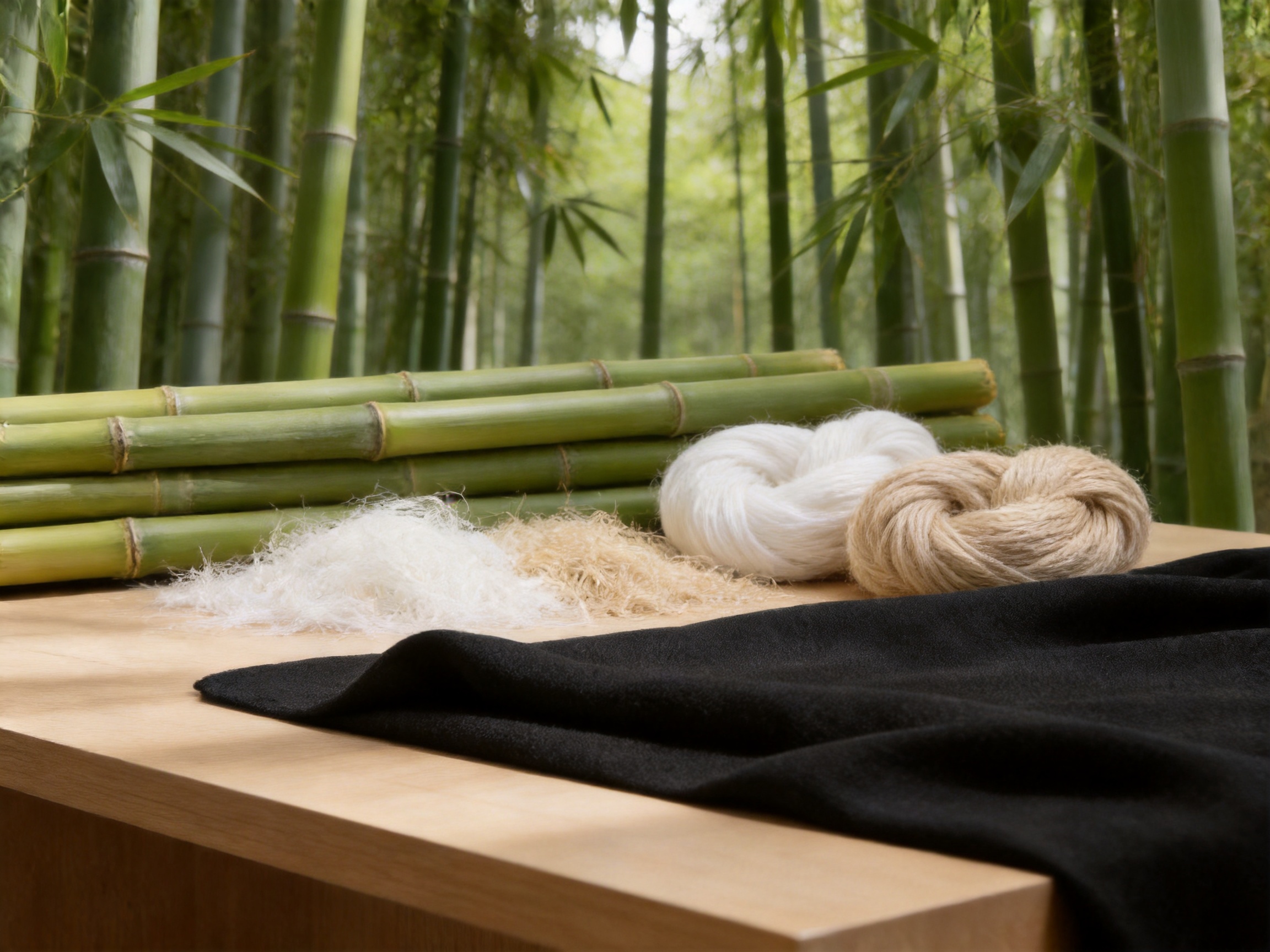
NR bamboo fabric is made from regenerated cellulose obtained from bamboo. Bamboo is first processed to extract cellulose, and the cellulose is then converted into a viscous solution. This solution is filtered, conditioned, and extruded through fine spinnerets to form filaments. After regeneration, washing, drying, and other fiber treatments, the resulting material can be spun or processed into fabric.
The word “bamboo” describes the original plant source of the cellulose rather than the final fiber structure. In finished form, bamboo viscose behaves more like other regenerated cellulose fibers than like raw bamboo. Its principal appeal comes from the combination of a plant-based origin, a smooth hand, good moisture interaction, and flexible textile performance.
The “NR” designation identifies the product category used by the manufacturer. Within the company’s range, NR knitted fabric represents a group of knitted materials developed for comfort-oriented and apparel-related applications. NR bamboo fabric can therefore be evaluated not only as a fiber-origin product but also as part of a broader knitting, dyeing, finishing, and fabric development system.
Compared with many ordinary synthetic fabrics, bamboo viscose can feel cooler, softer, and less harsh against the skin. Compared with untreated natural fibers, it can offer a more uniform surface and consistent drape. Compared with lower-grade regenerated fabrics, a carefully produced version can deliver improved appearance retention, more dependable coloration, and better suitability for commercial garment production.
Why Bamboo-Based Cellulose Is Important
Bamboo grows rapidly and can produce substantial biomass without requiring the same agricultural cycle as many conventional fiber crops. It is therefore an appealing source of cellulose for manufacturers seeking alternative raw materials. Its fast growth and broad availability have contributed to the popularity of bamboo-derived textile products in apparel, home textiles, and personal-care markets.
However, the environmental profile of bamboo fabric depends on the full manufacturing system. Bamboo viscose requires chemicals to dissolve and regenerate the cellulose. It would be inaccurate to describe it as a fiber made without chemicals. The more responsible position is to evaluate how the raw material is sourced, how the process is controlled, how chemicals are handled and recovered, how wastewater is treated, and how efficiently energy and water are used.
This distinction gives buyers a more realistic basis for comparison. NR bamboo fabric can be a responsible material choice when produced under controlled conditions and selected for a product that benefits from its performance. Its advantages should be considered together with manufacturing transparency, process management, product durability, and the expected service life of the finished garment or textile.
A long-lasting textile can reduce the frequency of replacement and lower the material consumption associated with short-lived products. Softness and comfort may also encourage consumers to continue wearing and caring for a garment for a longer period. In this way, product performance is part of sustainability. A fabric’s environmental value is not determined only by its original plant source.
Key Performance Advantages
Soft Hand and Skin Comfort
One of the most important advantages of NR bamboo fabric is its soft hand. The regenerated cellulose fiber can be processed into a smooth yarn and knitted or woven into a surface that feels gentle against the body. This makes it suitable for underwear, T-shirts, sleepwear, baby-related products, base layers, and other garments in which comfort is a primary purchasing factor.
The softness of the fabric is not limited to the first touch. With suitable yarn selection, fabric construction, dyeing, and finishing, the material can maintain a pleasant hand after repeated laundering. This gives manufacturers an opportunity to create products that feel premium without relying exclusively on expensive specialty fibers.
Breathability and Moisture Interaction
Regenerated cellulose fibers can absorb and release moisture more readily than many ordinary hydrophobic synthetic fibers. NR bamboo fabric can therefore provide a comfortable wearing experience in applications where perspiration management and air movement are important. Knitted constructions can further enhance flexibility and ventilation through their loop structure.
The fabric should not be presented as a substitute for technical moisture-management textiles in every performance environment. High-intensity sportswear may require engineered synthetic yarns, special cross-sections, or advanced finishing systems. Nevertheless, for everyday clothing, underwear, socks, casual tops, and household textiles, the moisture interaction of bamboo viscose can provide a useful comfort advantage over less absorbent materials.
Smooth Appearance
The fine and even nature of regenerated cellulose fibers can support a clean, smooth fabric appearance. When the knitting parameters, dyeing conditions, and finishing treatments are properly controlled, NR bamboo fabric can achieve a refined surface with attractive drape. This is valuable for garments that depend on softness and visual simplicity rather than a stiff or heavily structured appearance.
The surface can also be adapted through construction and finishing. A lightweight single-knit fabric may be used for close-to-body apparel, while a heavier interlock or specialized structure may be selected for greater coverage and stability. This flexibility allows the same material family to serve different market segments.
Drape and Flexibility
Bamboo viscose is known for its fluid drape. It can follow the movement of the body without creating an excessively rigid silhouette. This quality is useful for T-shirts, dresses, loungewear, underwear, sleepwear, scarves, and soft home products. In knitted form, the combination of fiber softness and looped construction can create a fabric that bends, stretches, and recovers comfortably during use.
Where additional stretch is needed, NR bamboo fabric can be developed in combination with elastane or other suitable fibers. A bamboo and spandex blend can offer improved fit, recovery, and shape retention while maintaining a soft touch. The final blend ratio should be selected according to the garment design, testing requirements, care instructions, and target price.
Color and Finishing Versatility
Regenerated cellulose fabrics can be dyed in a broad range of colors when suitable dye classes and process conditions are used. This supports both basic commercial shades and more specialized seasonal palettes. Post-dyeing and finishing capabilities are especially important because they influence shade consistency, surface feel, dimensional stability, and the final visual quality of the fabric.
A manufacturer with integrated production and finishing experience can coordinate these stages more effectively than a supply chain in which every operation is handled by an unrelated party. Better coordination can reduce communication errors, support more consistent bulk production, and make it easier to adjust the material during sampling and product development.
Suitability for Everyday and Intimate Apparel
NR bamboo fabric is commonly considered for underwear, socks, T-shirts, base layers, and intimate garments because of its softness and moisture interaction. It can provide a comfortable alternative to rougher or less absorbent fabrics. Its smooth surface can also reduce the sensation of friction when used in close-fitting garments.
Marketing claims about antibacterial performance require particular care. Bamboo itself may be associated with natural antibacterial characteristics, but those characteristics do not automatically remain after bamboo is converted into viscose and then made into a garment. The antibacterial properties of the original plant may disappear during processing. Unless a finished fabric has been separately tested and treated, it should not be promoted as inherently antibacterial.
This limitation does not reduce the fabric’s value. Comfort, softness, breathability, moisture interaction, and drape remain strong reasons to consider the material. Accurate claims build greater trust with buyers and help manufacturers develop products that meet consumer expectations without overstating performance.
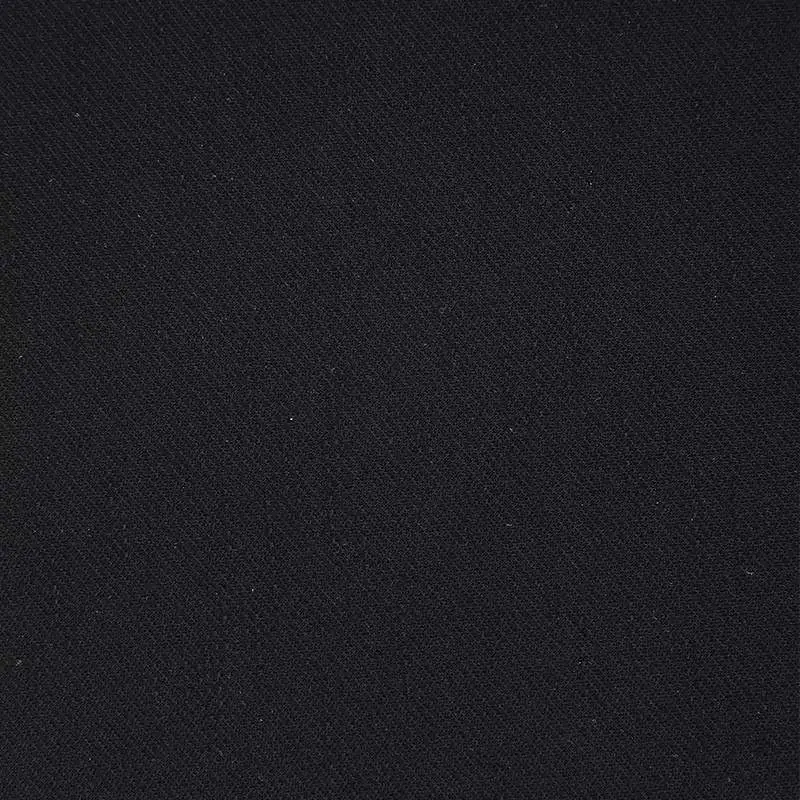
NR Bamboo Fabric
NR Bamboo Fabric Compared with Competing Materials
Every textile material involves trade-offs. The best choice depends on the intended use, target price, required durability, appearance, care conditions, and sustainability objectives. NR bamboo fabric competes with cotton, polyester, conventional viscose, modal, lyocell, and blended constructions. Its advantages are most meaningful when matched to the correct product category.
| Material | Typical Strengths | Possible Limitations | Where NR Bamboo Fabric Can Compete |
|---|---|---|---|
| NR bamboo fabric | Soft hand, breathable comfort, smooth drape, plant-based cellulose origin, versatile apparel use | Requires chemical regeneration; may need careful dimensional and wet-strength control | Underwear, T-shirts, socks, sleepwear, casual garments, and household textiles |
| Cotton | Familiar natural fiber, comfortable hand, broad supply base, good durability in many constructions | Can require substantial agricultural water and may feel less fluid or less smooth depending on quality | Products seeking a softer, more fluid, or alternative cellulose experience |
| Polyester | High strength, quick drying, abrasion resistance, broad technical versatility | Lower moisture absorbency and a more synthetic hand in some constructions | Products prioritizing natural-feeling comfort and moisture interaction |
| Conventional viscose | Softness, drape, good dyeability, established manufacturing knowledge | Environmental profile depends strongly on feedstock and chemical management | Products seeking bamboo-derived cellulose positioning and soft apparel performance |
| Modal | Softness, smoothness, and good comfort in close-to-body garments | May have higher material cost or more limited sourcing options | Programs requiring a cost-conscious regenerated cellulose alternative |
| Lyocell | Soft hand, good performance, and a solvent recovery system in many production routes | Can carry a higher price and may require different processing expertise | Programs balancing bamboo positioning, price, and everyday comfort |
Against cotton, NR bamboo fabric can offer a smoother and more fluid hand, particularly in lightweight knitted constructions. Cotton remains highly competitive in durability, familiarity, and market acceptance, but bamboo fabric can provide differentiation in products positioned around softness and modern comfort.
Against polyester, NR bamboo fabric generally offers a more natural and absorbent touch. Polyester can remain the better choice where rapid drying, high abrasion resistance, or technical sports performance is the primary requirement. Blending the two materials may create a practical compromise, combining the comfort of regenerated cellulose with the strength and dimensional support of polyester.
Against conventional viscose, bamboo-based fabric can provide an alternative raw-material story while preserving many of the familiar benefits of regenerated cellulose. The actual superiority depends on responsible sourcing, process controls, testing, and product quality rather than on the word “bamboo” alone.
Against premium regenerated fibers such as modal or lyocell, NR bamboo fabric can be attractive for buyers seeking a balance between comfort, product positioning, and commercial practicality. The most suitable material should be chosen through sampling and testing instead of relying only on general fiber descriptions.
Knitted Construction and Product Development
The performance of NR bamboo fabric is influenced not only by the fiber but also by the construction. Knitting creates a flexible structure made from interlocking loops. This structure can provide stretch, softness, and comfort, making it well suited to garments that must move with the wearer.
Different knitted constructions can be selected for different purposes. Single jersey is commonly used for lightweight T-shirts, underwear, and casual tops. Rib structures can provide enhanced elasticity and are useful for cuffs, necklines, fitted garments, and close-to-body products. Interlock constructions can deliver greater thickness, smoothness, and stability. More specialized structures can be developed when the buyer requires a particular texture, weight, or appearance.
Fabric weight is another important variable. Lightweight fabric may be appropriate for summer garments, base layers, and breathable underwear. Medium-weight fabric can provide better coverage and versatility for T-shirts and casual apparel. Heavier constructions may be selected for sleepwear, lounge garments, blankets, or home textile products.
Loop density, yarn count, machine gauge, finishing tension, and relaxation conditions all contribute to the final result. A soft fiber can still produce an unsatisfactory fabric if the construction is too loose, the finishing is poorly controlled, or the fabric is not properly stabilized. For this reason, product development should consider fiber, yarn, knitting, dyeing, finishing, and garment-making as one connected system.
Manufacturers should also evaluate spirality, shrinkage, pilling, bursting strength, seam performance, colorfastness, and laundering behavior. These tests help determine whether a fabric is suitable for the intended market and care instructions. Testing at the development stage can prevent costly changes after garments have already been produced.
Manufacturing Process and Quality Considerations
Raw Material Preparation
The manufacturing process begins with the preparation of bamboo-derived cellulose. Consistency at this stage is important because variations in cellulose quality can influence fiber fineness, strength, moisture behavior, dye uptake, and fabric appearance. Raw material inspection and controlled preparation help establish a more stable production foundation.
In a responsible manufacturing system, material inputs should be documented and managed according to defined specifications. Suppliers and buyers should discuss the expected composition, applicable certifications, restricted substances requirements, and intended end use before bulk production begins.
Viscose Regeneration
During viscose production, cellulose is converted into a solution that can be filtered and extruded. The solution passes through spinnerets, where it enters a regeneration bath and forms continuous filaments. These filaments are then washed to remove residual process materials and may be cut into staple fibers or retained as filaments according to the intended yarn system.
The quality of this stage affects the uniformity of the final textile. Filtration, temperature, concentration, spinning conditions, washing, and drying must be controlled to support consistent fiber properties. Proper chemical handling and wastewater management are also essential parts of a responsible viscose operation.
Yarn Formation and Knitting
After fiber preparation, the material can be spun into yarn and supplied to knitting operations. Yarn evenness, twist, strength, hairiness, and contamination control influence fabric quality. For knitted fabrics, yarn compatibility with the selected machine and structure is especially important.
Knitting parameters determine the fabric’s weight, stretch, width, surface, and stability. Operators must manage machine settings and production tension to reduce defects. Regular inspection can identify dropped stitches, barre, holes, oil contamination, uneven loops, and other issues before the material proceeds to later stages.
Dyeing and Post-Dyeing
Dyeing gives the fabric its commercial color and can strongly influence hand feel and dimensional behavior. Regenerated cellulose requires suitable dye selection and controlled preparation. Factors such as pH, temperature, time, liquor ratio, salt or auxiliary use, washing, and neutralization must be managed carefully.
Post-dyeing treatment can improve the appearance and handle of the material. It may include washing, softening, calendaring, compacting, heat setting where applicable, or other finishing operations. The selected treatment should support the product’s purpose without creating unacceptable changes in absorbency, strength, colorfastness, or environmental performance.
Finishing and Inspection
Finishing is the stage at which many of the fabric’s final characteristics are established. Width, weight, softness, surface smoothness, shrinkage, and hand can all be adjusted within the limits of the material and construction. Careful finishing helps ensure that the fabric is easier to cut, sew, and convert into finished products.
Inspection should be conducted against agreed standards. A practical quality program may include four-point fabric grading, shade evaluation, roll measurement, weight verification, width checks, dimensional stability tests, and performance testing. Samples from different production stages can also be retained for comparison and traceability.
Manufacturing Strengths of the Supplier
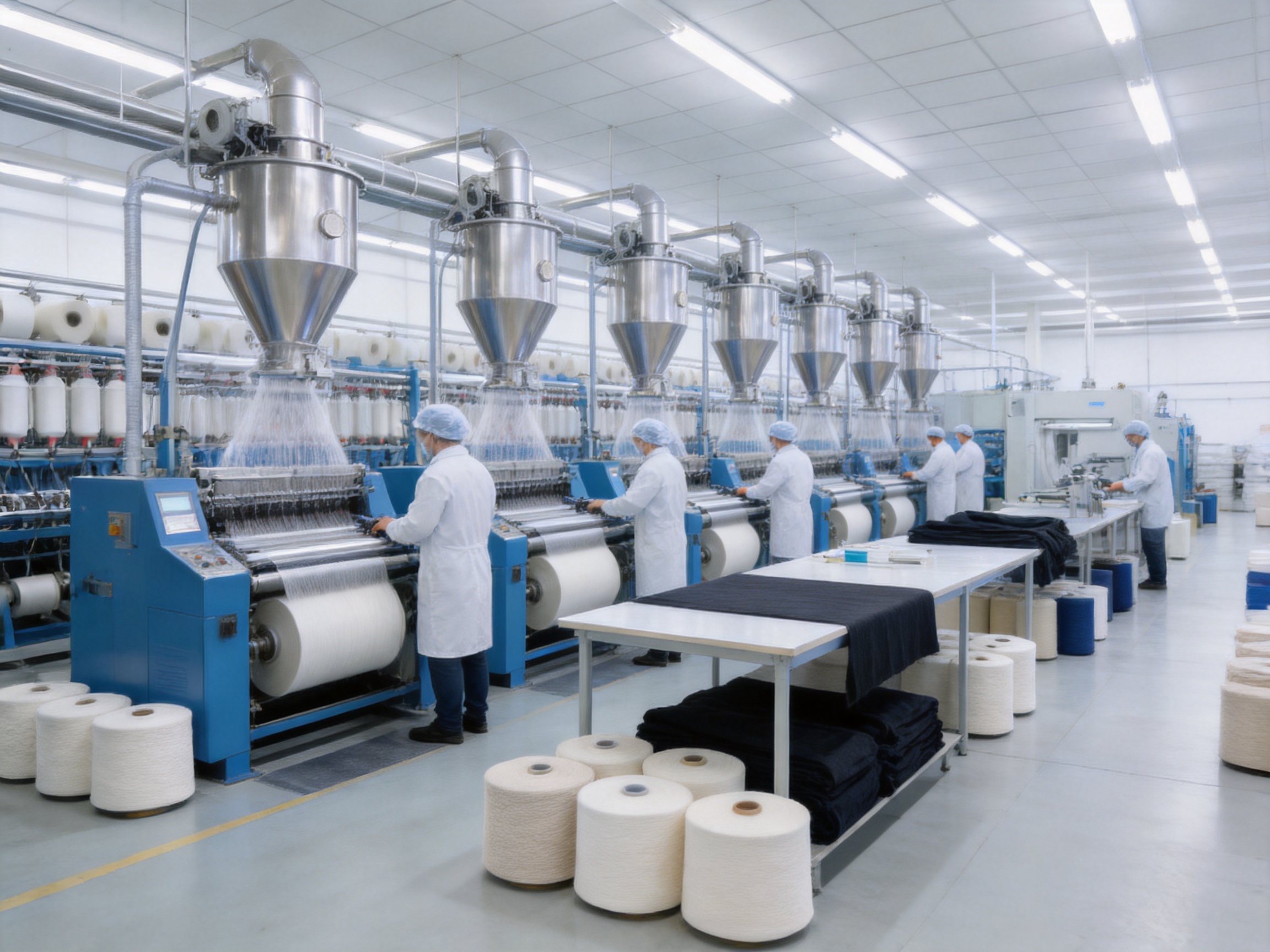
Hangzhou Jinfeng Textile Co., Ltd. is located in Jingjiang Street Industrial Park, Xiaoshan District, Hangzhou City, Zhejiang Province. The company covers approximately 32.6 acres and has a plant area of about 18,000 square meters. This physical scale provides a substantial base for production coordination, equipment organization, quality management, warehousing, and order fulfillment.
The company integrates research and development, production, processing, post-dyeing, finishing, and sales. This integrated structure is a meaningful advantage for buyers because textile quality is affected by the relationship between each stage. A company that understands both fabric development and finishing can respond more effectively when a customer needs a change in weight, softness, color, stretch, drape, or construction.
Its product capabilities include blended fabrics made from polyester, spandex, and related materials, as well as drawn textured polyester yarn production, processing, and sales. These capabilities provide useful support for customers developing blended textile products. For example, a buyer may wish to combine the comfort of bamboo-derived cellulose with the strength, stretch, or shape retention of other fibers.
The company’s experience in DTY polyester yarn is also relevant to broader fabric development. Drawn textured yarn is commonly used to add bulk, elasticity, coverage, and a more textile-like appearance to polyester constructions. Although NR bamboo fabric has its own material identity, access to complementary yarn and blended-fabric knowledge can help buyers compare options and develop coordinated product ranges.
In-house or closely coordinated post-dyeing and finishing capabilities can shorten the distance between technical decisions and final fabric output. This is valuable when a customer needs several rounds of sampling. Instead of treating development, dyeing, and finishing as disconnected tasks, the supplier can use its broader operational experience to address the complete fabric specification.
The company also operates as a self-managed export enterprise. Export experience requires attention to communication, packing, documentation, shipment planning, inspection standards, and customer service. For international buyers, these capabilities can reduce administrative friction and support more predictable order management.
Business cooperation is guided by a principle of cooperation and mutual benefit. In practical terms, this approach can support long-term relationships based on consistent quality, transparent communication, realistic lead times, and technical problem-solving. These factors are often as important as the fabric itself when buyers are building a continuing supply program.
Advantages Over Less Specialized Suppliers
Buyers may find bamboo fabric from many sources, but not every supplier offers the same level of process coordination. A specialist textile company can provide value in several areas.
First, a supplier with experience in both knitted and blended textiles can help customers select a construction rather than simply sell a generic fabric. The right recommendation may involve adjusting the yarn count, blend ratio, machine structure, weight, finishing route, or color process. This development-oriented approach can produce a more suitable final product.
Second, integrated post-dyeing and finishing knowledge can improve consistency. A fabric that looks acceptable in greige form may change significantly after dyeing and finishing. Experience with these stages helps the supplier anticipate potential problems, including shrinkage, skew, shade variation, excessive surface roughness, or loss of elasticity.
Third, a company with a substantial plant area and multiple textile capabilities can support a wider product portfolio. Customers may begin with NR bamboo fabric and later request polyester blends, spandex fabrics, knitted jacquard, NTR knitted fabric, NR knitted fabric, or DTY polyester yarn. A broader manufacturing base makes it easier to coordinate related orders and explore new constructions.
Fourth, research and development experience allows the supplier to approach new requests systematically. Instead of treating every inquiry as a standard product purchase, the development process can examine the customer’s intended end use, required performance, target price, design, color, care method, and production volume.
Finally, export integration can support overseas buyers who require dependable communication and commercial coordination. A competitive fabric supplier must provide more than a low initial price. It must help customers control quality, manage risk, and bring products to market efficiently.
Applications of NR Bamboo Fabric
Underwear and Intimate Apparel
Underwear requires softness, flexibility, breathability, and dependable laundering performance. NR bamboo fabric can meet these needs when it is knitted with an appropriate structure and finished for dimensional stability. A small percentage of elastane may be added when improved stretch and recovery are required.
For intimate apparel, the fabric’s smooth touch is often more important than a highly technical appearance. The material can be used in briefs, undershirts, camisoles, bralettes, sleep shorts, and other products designed for close skin contact. Manufacturers should confirm pilling, seam slippage, shrinkage, colorfastness, and repeated-wash performance before moving to bulk production.
Socks
Socks benefit from materials that combine comfort, moisture interaction, stretch, and shape retention. NR bamboo fabric may be used in sock programs either as a primary material or as part of a blend. Elastane can improve fit, while polyester or polyamide may be considered when additional abrasion resistance is necessary.
The correct composition depends on the intended use. Everyday lifestyle socks may prioritize softness and natural-feeling comfort. Work socks may require greater durability. Athletic socks may need faster drying and engineered ventilation. NR bamboo fabric is best positioned where comfort and a smooth hand are central requirements.
T-Shirts and Casual Wear
Bamboo-based knitted fabric can provide a soft and fluid alternative for T-shirts, long-sleeve tops, tank tops, dresses, and casual garments. It can be dyed in a wide range of colors and developed in different weights. The fabric’s drape can create a relaxed silhouette, while a more stable construction can provide a structured everyday shirt.
Designers should account for possible shrinkage and growth during pattern development. Pre-production testing and appropriate finishing can reduce dimensional changes. The garment manufacturer should also use cutting and sewing practices suitable for soft knitted fabrics.
Sleepwear and Lounge Products
Sleepwear and lounge garments are especially suitable for comfort-focused fibers. The smooth hand and breathable feel of NR bamboo fabric can contribute to a relaxed wearing experience. Lightweight and medium-weight constructions can be selected according to climate, season, and garment design.
These products may also benefit from low-irritation finishing and carefully controlled seams. Since consumers often wash sleepwear frequently, laundering durability should be tested before product claims are finalized.
Household Textiles
NR bamboo fabric can be used for a variety of household products, including soft blankets, lightweight throws, pillow covers, bedding components, washable liners, and decorative textile articles. The appropriate construction will depend on required coverage, weight, warmth, abrasion resistance, and care conditions.
For household applications, buyers may prioritize colorfastness, dimensional stability, surface pilling, and resistance to repeated washing. A denser structure may be appropriate for products that need greater durability, while a lighter structure can provide breathability and drape.
Baby and Child-Related Products
Soft regenerated cellulose fabrics are sometimes considered for baby clothing and child-related products. If NR bamboo fabric is used in these applications, the finished product should be evaluated carefully for fiber safety, colorfastness, restricted substances, seam quality, shrinkage, and care performance. Product suitability should be based on testing and applicable market requirements rather than on general assumptions about bamboo.
Sustainability and Responsible Product Communication
The environmental conversation around bamboo fabric should be specific and balanced. Bamboo is a rapidly growing plant and can serve as a renewable cellulose source. This is a meaningful advantage compared with materials derived entirely from finite fossil resources. Nevertheless, converting bamboo cellulose into viscose requires chemical processing, energy, water, and industrial equipment.
A responsible product description should explain that NR bamboo fabric is made through a viscose rayon process. It should avoid claiming that the fabric is completely chemical-free or that the antibacterial properties of raw bamboo necessarily remain in the finished garment. Transparent communication is beneficial to manufacturers, retailers, and consumers because it reduces the risk of misleading claims.
Important sustainability questions include the origin of the bamboo, the management of processing chemicals, the treatment of wastewater, the efficiency of the production line, the use of recycled or recovered inputs, the durability of the finished fabric, and the product’s expected service life. Buyers can request relevant documentation and certifications where necessary.
Durability is a central part of responsible textile selection. A fabric that retains its softness, appearance, and fit through repeated use may provide greater value than a fabric that has a stronger environmental story but performs poorly in real-world conditions. NR bamboo fabric should therefore be developed to meet the practical needs of the end product.
Blending can also influence sustainability and end-of-life considerations. A bamboo and spandex fabric may offer better fit and longer wear, but fiber blends can be more difficult to recycle through some systems. Buyers should balance performance requirements with the intended disposal, reuse, or recycling pathway.
Packaging, shipment efficiency, production planning, and inventory management also affect the overall environmental impact of a textile program. Coordinating fabric development and related materials through an experienced supplier can help reduce unnecessary sampling, rejected goods, and repeated transportation.
Recommended Quality Testing
Before approving NR bamboo fabric for commercial production, buyers should agree on a written specification and test plan. The specification should identify fiber composition, fabric construction, width, weight, color, finishing, acceptable tolerances, packaging, and care instructions.
Dimensional stability testing is important because regenerated cellulose fabrics can respond to washing, moisture, heat, and tension. The test should reproduce the expected consumer care method. Both lengthwise and widthwise changes should be measured, and the results should be compared with the garment pattern and fit requirements.
Colorfastness testing should cover washing, rubbing, perspiration, water, and light where relevant. Close-to-body products may require particularly careful testing because they are exposed to perspiration and frequent laundering. Dark and saturated shades often deserve additional attention.
Strength testing should reflect the fabric’s intended use. Tensile strength, tear strength, bursting strength, seam slippage, and abrasion resistance may be relevant depending on the construction. Socks, active products, and household textiles may require more demanding abrasion or repeated-wash testing than lightweight casual garments.
Pilling resistance is another important consideration. Soft fabrics can be judged negatively if surface pills develop quickly. Yarn selection, fiber properties, fabric construction, finishing, and garment friction all influence pilling performance. Testing should be conducted using a recognized method suitable for the target market.
Handle and appearance should also be assessed. Instrumental testing can provide useful data, but visual and tactile evaluation by trained personnel remains important for fabrics sold on comfort and softness. Bulk approval should include a reference standard or approved sample to reduce disagreement between supplier and buyer.
How to Select the Right Specification
The correct NR bamboo fabric specification begins with the end product. A buyer developing underwear may require a lightweight, soft, stretchable structure. A T-shirt brand may prefer medium weight, smooth appearance, and good color range. A household textile buyer may need higher coverage, improved abrasion resistance, and greater dimensional stability.
Climate and market also influence the choice. Warm-weather products may benefit from lighter weights and open structures. Cooler-season products may require a denser construction or a brushed finish. Products sold in markets with strict care expectations should undergo laundering simulations before final approval.
The desired balance between softness and durability must be discussed openly. Extremely soft finishing may influence strength, absorbency, pilling, or wash behavior. Similarly, a denser construction may improve coverage but reduce airflow. A technically experienced supplier can help identify a practical balance instead of optimizing one characteristic at the expense of all others.
Color planning should be completed early. Certain shades may require additional development time, and different colors can behave differently during dyeing and finishing. Buyers should approve laboratory dips, define acceptable shade tolerances, and confirm whether the same standard will apply to repeat orders.
Order quantity and production schedule should also be considered. Sampling, color development, knitting, dyeing, finishing, inspection, and packing each require time. Early communication helps the supplier plan capacity and prevents avoidable delays.
Commercial Benefits for Brands and Garment Manufacturers
NR bamboo fabric gives brands an opportunity to build product stories around comfort, regenerated cellulose, and alternative plant-derived raw materials. These qualities can help distinguish everyday apparel in a crowded market. The fabric’s ability to serve underwear, socks, T-shirts, and home textiles also supports product-line expansion.
Its versatility can reduce the need to search for a completely different material for every category. A brand may use a lightweight bamboo fabric for underwear, a medium-weight version for T-shirts, and a blended construction for stretch garments. Consistent sourcing can simplify development and strengthen the visual and tactile identity of a collection.
For garment manufacturers, the material can provide an efficient route to soft, comfortable products. When the fabric is supplied in stable widths and consistent weights, cutting and sewing operations become easier to plan. Reliable dye lots and finishing standards can also reduce production interruptions.
The supplier’s broader capability in polyester, spandex, blended fabrics, and DTY polyester yarn gives buyers additional options when a single fiber cannot satisfy every requirement. A coordinated blended-fabric program can help manufacturers address strength, stretch, recovery, color, cost, and comfort within one supply relationship.
Price should be evaluated together with total value. A very low fabric price may create hidden costs through inconsistent shade, excessive shrinkage, rejected rolls, delayed shipments, poor sewing performance, or customer returns. A supplier that supports development, testing, finishing, and export coordination may offer better overall commercial value even when the initial quotation is not the lowest available.
Production Collaboration from Sample to Bulk Order
A successful project normally begins with a technical discussion. The buyer should provide the intended product, target market, expected composition, preferred construction, color requirements, weight range, stretch expectations, finishing preferences, care method, and estimated order quantity.
The supplier can then recommend a suitable sample or develop a new construction. Initial samples should be assessed for hand, appearance, width, weight, stretch, recovery, and general suitability. If the fabric is intended for a garment, a prototype should be made because fabric performance can change during cutting, sewing, pressing, and washing.
After sample approval, the buyer and supplier should confirm the bulk specification in writing. This document should include tolerances and testing requirements rather than relying only on a physical swatch. Clear documentation protects both parties and makes repeat orders easier to manage.
Laboratory color approval should be followed by a production shade standard. Bulk dyeing should be inspected against the approved reference. Where possible, rolls from different production stages should be compared to identify variations early.
Before shipment, the buyer may arrange internal or third-party inspection according to the agreed quality plan. Inspection should cover roll length, width, weight, appearance, color, defects, packing, and documentation. Maintaining records supports traceability and helps resolve any future questions.
After delivery, feedback should be shared promptly. Information about garment performance, laundering, consumer response, or production behavior can help the supplier improve future lots. Long-term cooperation is strongest when both sides treat quality as a continuing process rather than a one-time inspection.
Care and Product Longevity
Correct care instructions can help preserve the comfort and appearance of NR bamboo fabric. The recommended method depends on the exact construction, dye, finishing, and blend composition. In general, excessive heat, harsh bleaching, and aggressive mechanical treatment should be avoided unless the fabric has been specifically engineered for those conditions.
Washing instructions should be developed through testing rather than copied from a generic fiber guide. A bamboo and spandex fabric may require different care from a bamboo and polyester blend. Garment construction, print, trims, elastic, and color also influence the final care label.
Drying conditions can affect shrinkage and shape. Air drying or low-temperature drying may be preferable for many comfort garments, but the correct instruction should reflect verified test results. Clear care information helps consumers achieve longer product life and reduces avoidable complaints.
Long-term softness, color retention, and shape stability are important indicators of product quality. Buyers should consider these characteristics during development because consumer satisfaction depends on performance after use, not only on the fabric’s condition when it leaves the factory.
Frequently Asked Questions
What is NR bamboo fabric?
NR bamboo fabric is a textile made from bamboo-derived regenerated cellulose. The cellulose is converted into fiber through a viscose rayon process and then processed into yarn and fabric. It is commonly used in knitted apparel and household textiles.
Is NR bamboo fabric made from raw bamboo?
No. The fabric is not made by simply weaving or knitting untreated bamboo strips. Bamboo is processed to obtain cellulose, and that cellulose is regenerated into textile fiber. The final material therefore has the characteristics of a regenerated cellulose fiber.
Is NR bamboo fabric chemical-free?
No. The viscose rayon process uses chemicals to dissolve and regenerate cellulose. A responsible description should recognize this fact and focus on process control, chemical management, wastewater treatment, material sourcing, durability, and verified environmental practices.
Is NR bamboo fabric naturally antibacterial?
Raw bamboo may be associated with antibacterial properties, but those properties do not necessarily remain after the material is converted into viscose and made into fabric. The finished fabric should not be marketed as antibacterial unless an appropriate test confirms that claim.
Is bamboo fabric suitable for underwear?
Yes, it can be suitable for underwear because it offers a soft hand, smooth surface, flexibility, and moisture interaction. The exact fabric should still be tested for shrinkage, pilling, colorfastness, strength, seam performance, and repeated laundering.
Can NR bamboo fabric be blended with spandex?
Yes. Adding spandex can improve stretch and recovery, which is useful for fitted garments, underwear, socks, and sports-inspired casualwear. The blend ratio should be selected according to the required fit, recovery, durability, and care performance.
How does it compare with cotton?
NR bamboo fabric can feel smoother and drape more fluidly than many cotton fabrics. Cotton may offer advantages in familiarity, durability, and supply availability. The better choice depends on the product’s required comfort, strength, appearance, price, and environmental objectives.
How does it compare with polyester?
NR bamboo fabric generally provides a more absorbent and natural-feeling touch, while polyester often offers higher strength, faster drying, and greater abrasion resistance. A blend can combine selected advantages of both materials.
Can the fabric be dyed in custom colors?
Yes. Regenerated cellulose fabrics can be developed in many colors using suitable dyeing processes. Buyers should approve laboratory dips, define shade tolerances, and evaluate bulk colorfastness before production.
What knitted constructions are available?
Possible constructions include lightweight jersey, rib, interlock, and other customized knitted structures. The best construction depends on the intended garment, required weight, stretch, coverage, drape, and dimensional stability.
What tests should be completed before bulk production?
Important tests may include composition verification, fabric weight, width, dimensional stability, colorfastness, pilling, bursting strength, tensile strength, abrasion resistance, seam performance, stretch, and recovery. The final test plan should reflect the intended end use.
What manufacturing capabilities support this product?
The supplier combines research and development, fabric production, processing, post-dyeing, finishing, sales, and export operations. It also produces and processes blended fabrics and drawn textured polyester yarn, providing additional options for customers developing coordinated textile programs.
How should buyers evaluate sustainability claims?
Buyers should examine the complete production system, including bamboo sourcing, viscose processing, chemical management, wastewater treatment, energy and water use, durability, certifications, and end-of-life considerations. Claims should be specific, documented, and appropriate to the finished product.
Can the supplier support customized development?
The company’s research and development, processing, dyeing, finishing, and blended-fabric capabilities support customized development discussions. Buyers should provide detailed requirements so that construction, weight, composition, color, and finishing can be evaluated together.
Conclusion
NR bamboo fabric is a practical regenerated cellulose textile for buyers seeking softness, breathable comfort, smooth drape, and a plant-derived raw-material story. Its strongest applications include underwear, socks, T-shirts, sleepwear, casual clothing, intimate apparel, and selected household textiles.
The material should be promoted accurately. It is produced through a chemical viscose rayon process, and the antibacterial properties associated with raw bamboo should not automatically be attributed to the finished fabric. A realistic assessment recognizes both the benefits and the limitations of the material.
Its competitiveness comes from the combination of comfort, versatility, dyeing potential, knitted-fabric adaptability, and suitability for blended constructions. When supported by appropriate testing and finishing, NR bamboo fabric can provide a strong alternative to conventional cotton, polyester, and other regenerated cellulose materials in selected product categories.
The manufacturing capabilities of Hangzhou Jinfeng Textile Co., Ltd. add value through integrated research and development, production, processing, post-dyeing, finishing, blended-fabric expertise, DTY polyester yarn experience, and export coordination. Its production base in Hangzhou and its broad textile operations provide a foundation for customized development and stable commercial supply.
For brands and garment manufacturers, the best results will come from treating NR bamboo fabric as part of a complete product-development system. Clear specifications, realistic sustainability communication, thorough testing, controlled dyeing and finishing, and continuing supplier cooperation can turn the material’s natural comfort and technical flexibility into reliable finished products.
References
1. Textile Exchange. Preferred Fiber and Materials Market Reports and guidance on responsible fiber sourcing.
2. International Organization for Standardization. Standards for textile fiber composition, colorfastness, dimensional change, and performance testing.
3. Federal Trade Commission. Consumer guidance regarding environmental marketing claims for bamboo-derived rayon and viscose products.
4. United Nations Environment Programme. Reports concerning sustainable production, resource efficiency, and environmental management in the textile sector.
5. Woodings, C. Regenerated Cellulosic Fibres. Woodhead Publishing reference literature on viscose, modal, lyocell, and related fiber technologies.
6. Kadolph, S. J. Textiles. General textile science references covering fiber properties, yarn formation, fabric construction, dyeing, finishing, and care.
7. International Organization for Standardization. ISO methods for textile testing, including pilling, abrasion, strength, colorfastness, and dimensional stability.
