Linen Roman Fabric for Refined, Durable Window Coverings
Modern window coverings are expected to do far more than block light. They must complement interior design, contribute to thermal comfort, operate smoothly, resist daily wear, and maintain a clean appearance over time. Linen Roman fabric is an elegant solution for these demands because it combines the natural, relaxed character associated with linen with the engineering flexibility of contemporary textile manufacturing. As a fabric for Roman shades, it can soften daylight, add structure to a room, and create neat horizontal folds that feel refined without being heavy or overly formal.
This article focuses on Linen Roman fabric in the NR knitted fabric category, emphasizing its practical advantages, decorative value, and suitability for residential and commercial window treatments. It also explains how a manufacturer with integrated capabilities in yarn production, knitting, dyeing, finishing, quality control, and export service can provide a more consistent and competitive product than suppliers that rely on fragmented outsourcing. For buyers, designers, curtain makers, and distributors, understanding the relationship between fabric structure, raw materials, finishing technology, and shade performance is essential when selecting a dependable Roman shade textile.
Understanding Linen Roman Fabric
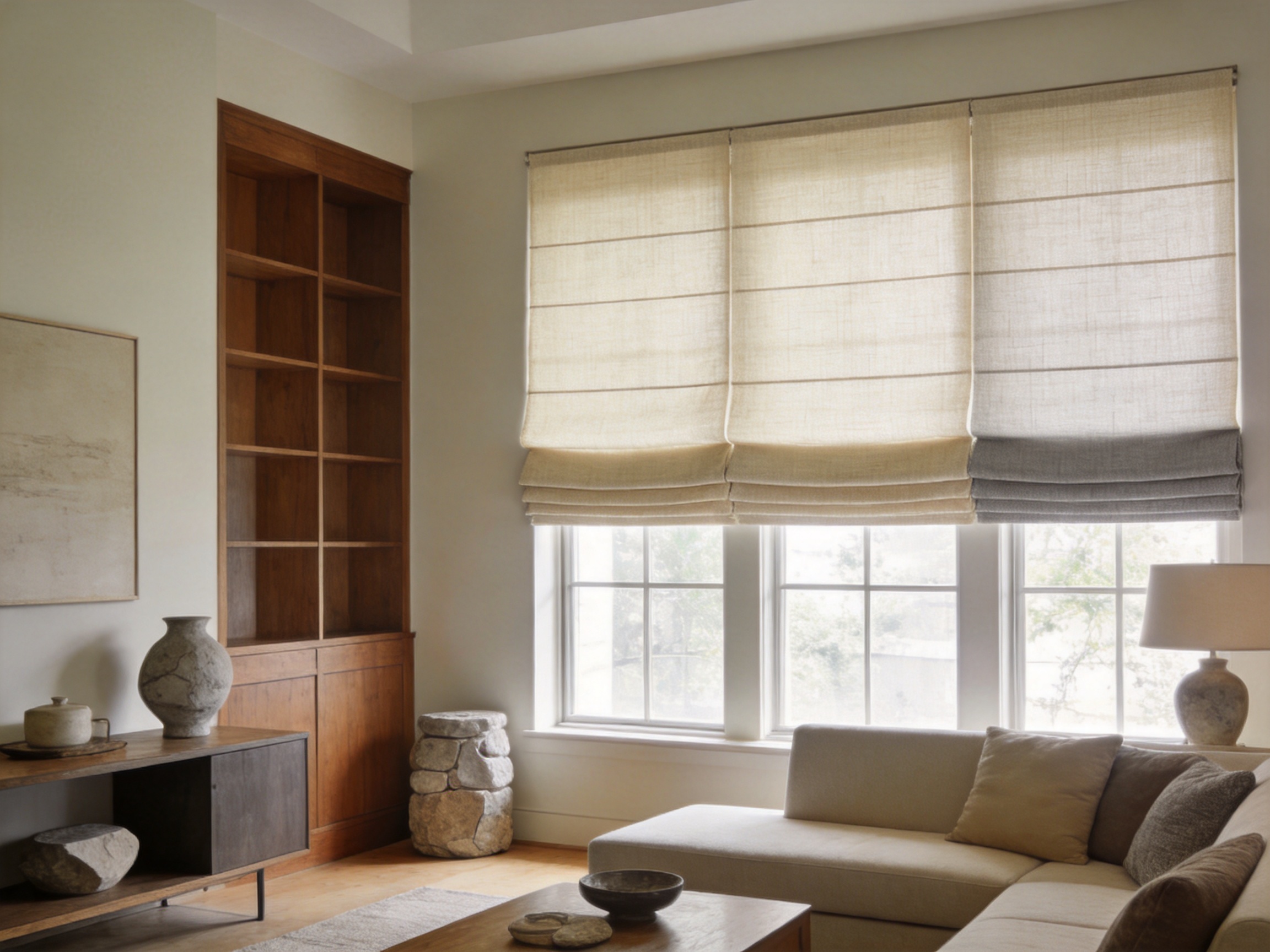
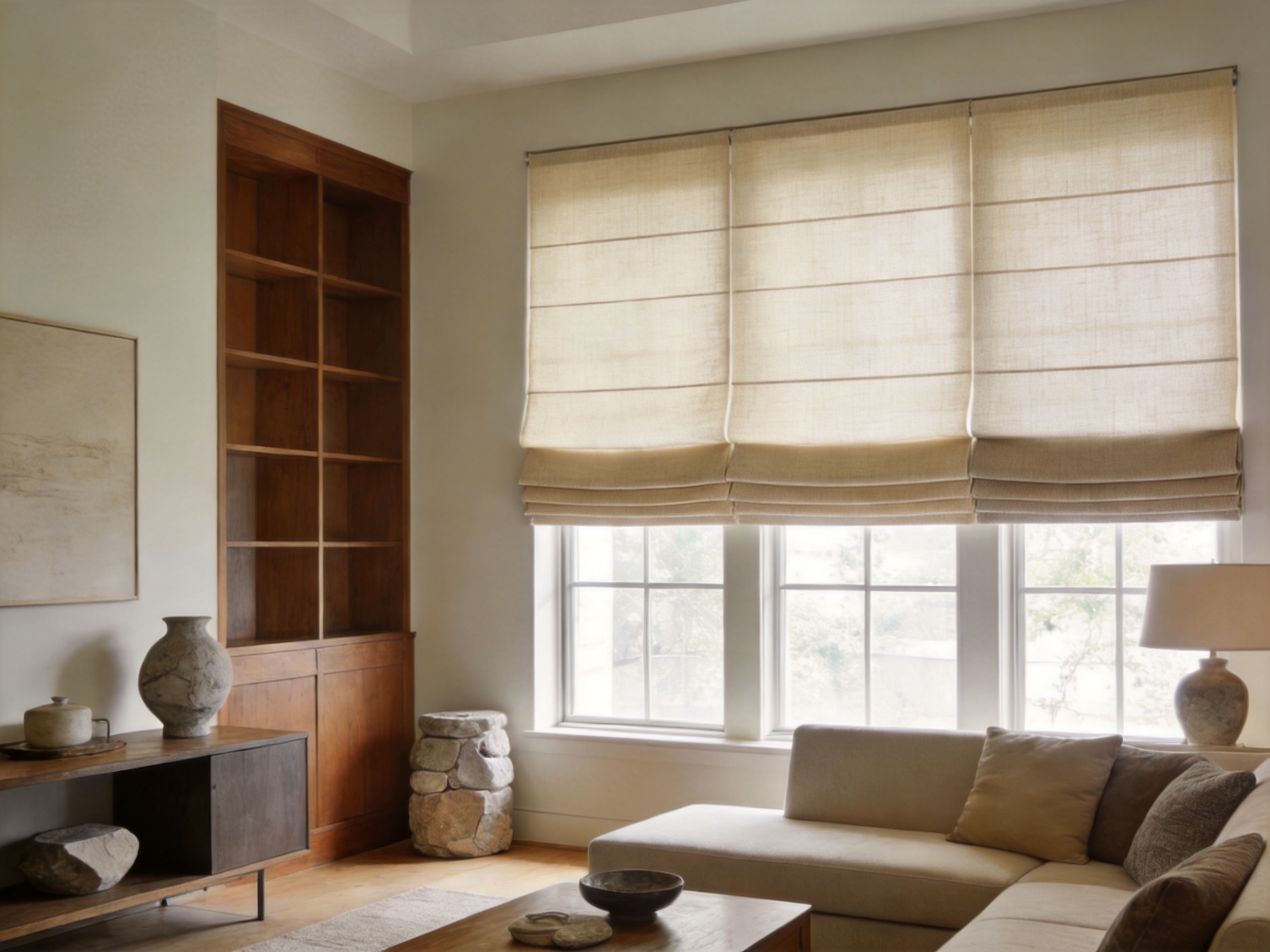
Linen Roman fabric is designed for Roman shades, a window covering style that rises in soft horizontal folds when lifted and hangs in a flat or gently structured panel when lowered. Unlike ordinary drapery fabric, Roman shade fabric must perform in two states: it must look attractive when fully extended, and it must fold evenly when raised. The material therefore needs a balanced combination of body, flexibility, dimensional stability, and surface beauty.
Traditional linen is valued for its breathable texture, natural slub effect, matte appearance, and timeless elegance. However, pure linen can wrinkle heavily, shrink unpredictably, and vary in hand feel from batch to batch. A modern Linen Roman fabric may use blended textile engineering to preserve the visual charm of linen while improving stability, durability, and processing efficiency. In the NR knitted fabric category, the fabric can be engineered to provide a smoother hand, better fold recovery, and more adaptable finishing performance than conventional woven linen alone.
The term NR knitted fabric can refer to a knitted textile category designed with controlled texture, balanced elasticity, and surface softness. For Roman shades, a knitted construction can provide a distinctive drape and tactile comfort. Compared with rigid woven fabrics, a well-designed knitted Roman fabric may fold more gracefully, reduce harsh creasing, and create a softer visual transition between the shade and the surrounding interior elements.
In practical use, Linen Roman fabric is often selected for living rooms, bedrooms, home offices, boutique hotels, restaurants, villas, and other interiors where the window treatment must feel warm and architectural at the same time. It can be paired with lining materials for privacy and light control, or used in a more translucent style where gentle daylight diffusion is desired.
Why Fabric Choice Matters for Roman Shades
The performance of a Roman shade depends heavily on the fabric. A fabric that is too thin may not form stable folds, while a fabric that is too heavy may strain the lifting mechanism and create bulky overlapping layers. A fabric that stretches too much may lose alignment, and a fabric that lacks flexibility may crease sharply or hang stiffly. Linen Roman fabric addresses these issues by targeting a medium-weight, balanced construction suitable for repeated raising and lowering.
Roman shade fabric must also coordinate with the interior environment. Window coverings are visually large surfaces, often covering an entire window wall or forming a strong vertical element within a room. Texture, color, opacity, and fold behavior all influence the atmosphere. Linen Roman fabric offers a softer appearance than many synthetic plain fabrics, but it can be more stable and easier to maintain than delicate natural-only materials.
In spaces with formal furniture, linen-look Roman shades add sophistication without excessive shine. In casual interiors, they introduce relaxed texture and warmth. In minimalist rooms, the subtle surface structure prevents the window covering from looking flat or industrial. This versatility is one of the main reasons Linen Roman fabric remains attractive to designers and homeowners.
Core Advantages Over Ordinary Roman Shade Fabrics
Linen Roman fabric offers several advantages compared with many ordinary window covering textiles. First, it delivers a natural visual texture. Many low-cost Roman shade fabrics are overly smooth, glossy, or artificial in appearance. Linen Roman fabric provides a more organic surface, which helps the shade blend with wood, stone, cotton upholstery, leather, and other common interior materials.
Second, it can provide improved fold aesthetics. A Roman shade is judged not only by the panel but also by the way it stacks. Medium-weight Linen Roman fabric can form clean folds without collapsing, creating an elegant layered effect. If the fabric is too flimsy, the folds may look messy; if it is too rigid, the folds may appear bulky. A balanced linen-style knitted fabric offers a practical middle ground.
Third, Linen Roman fabric can be more comfortable in daily use. The fabric’s moderate body supports smooth operation. Lighter engineered blends may be easier to raise and lower than heavy upholstery-like textiles. This matters in homes and hotels where shades are adjusted every day. Reduced operating resistance can also help extend the service life of shade hardware.
Fourth, it supports broad color coordination. Linen-inspired surfaces look appealing in neutral palettes such as ivory, beige, sand, gray, taupe, and flax. They also accept deeper tones for dramatic interiors. When manufactured with controlled dyeing and finishing processes, color consistency can be maintained across batches, an important requirement for project orders involving multiple windows or rooms.
Fifth, Linen Roman fabric can deliver better durability than fragile decorative fabrics. Through yarn selection, knitting control, dyeing, and finishing, the fabric can be engineered to resist deformation, improve hand feel, and maintain appearance under regular indoor use. This makes it suitable not only for private homes but also for commercial spaces that require reliable textiles.
Material Engineering and Blended Fabric Benefits
The beauty of Linen Roman fabric lies in combining natural-style aesthetics with modern textile performance. Materials such as linen, cotton, rayon, polyester, and spandex can each contribute different features. Linen provides texture and breathable visual character. Cotton can add softness and familiarity. Rayon can improve drape and smoothness. Polyester can improve strength, shape retention, wrinkle resistance, and processing stability. Spandex, when used appropriately, can contribute controlled elasticity and recovery.
For window coverings, pure material identity is often less important than total performance. A shade fabric must remain stable, attractive, and easy to fabricate. Blended fabric manufacturing allows a supplier to tune the product for practical requirements. For example, polyester-rich blends may improve durability and resistance to deformation, while rayon components may enhance softness and drape. Linen-like surface effects can be created through fiber selection, yarn texture, knitting method, and finishing treatment.
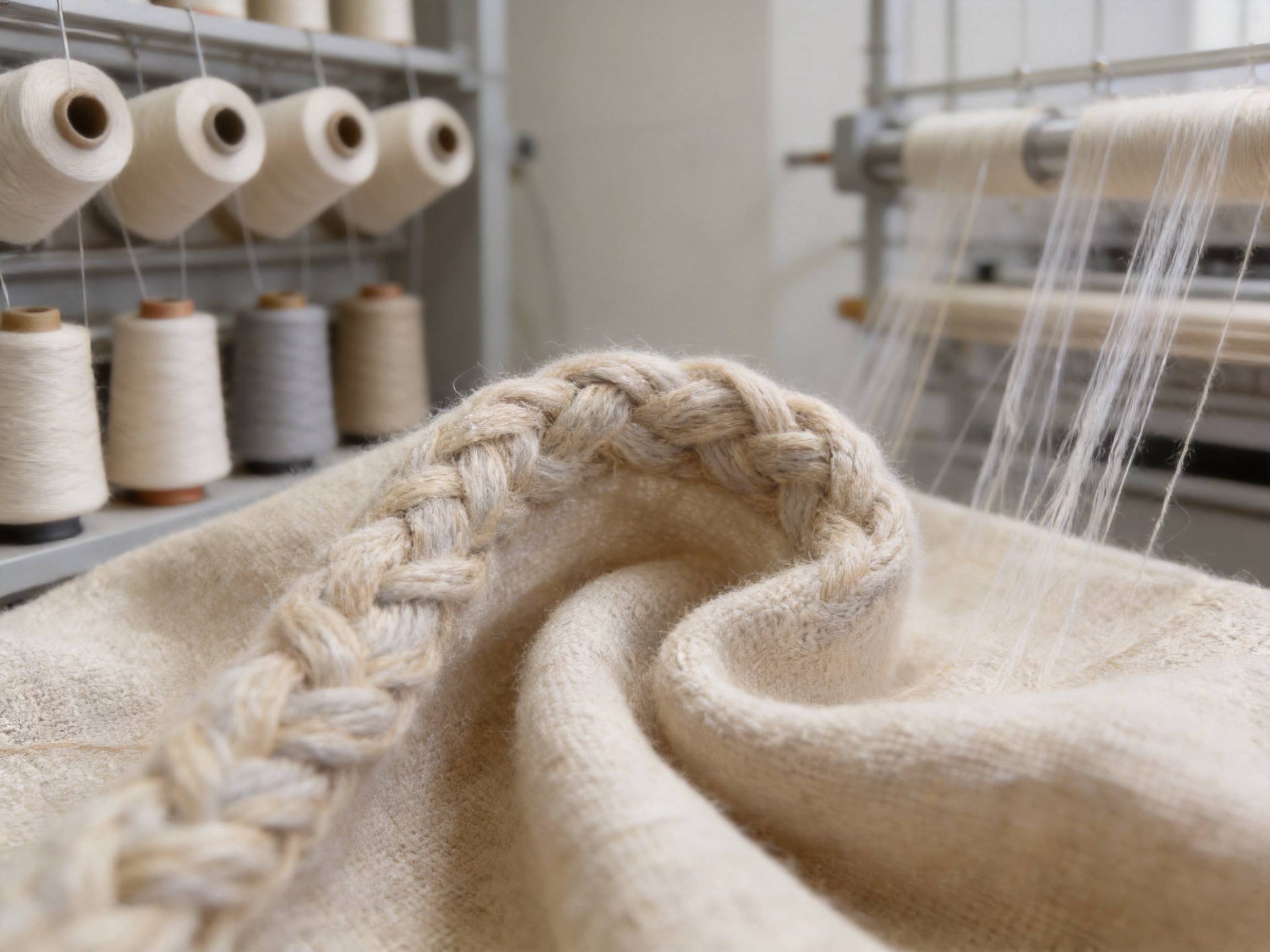
The availability of DTY polyester yarn is a significant advantage in manufacturing. Drawn Textured Yarn, often called DTY, is widely used because it combines strength, bulk, elasticity, and processability. When integrated into suitable fabric structures, DTY polyester yarn can help create a fuller hand feel, improve resilience, and support stable finishing. A supplier that produces or processes DTY polyester yarn internally can better control yarn quality, which directly affects fabric consistency.
In Roman shade fabric, yarn uniformity is critical. Uneven yarns can cause streaks, irregular dye absorption, surface defects, or inconsistent folding. Carefully controlled yarn production and texturing help minimize these risks. This is one area where an integrated manufacturer can distinguish itself from competitors that purchase yarn from multiple external sources without full traceability.
NR Knitted Fabric Structure for Window Coverings
NR knitted fabric for Linen Roman applications can offer an appealing combination of softness, stability, and decorative texture. Knitting allows yarn loops to interconnect, producing a fabric that can be flexible and comfortable. When designed for window coverings rather than apparel, the construction must be controlled to reduce excessive stretch and improve dimensional stability. This requires careful yarn selection, machine settings, tension control, and finishing.
Compared with many ordinary woven shade fabrics, a knitted Roman fabric may feel less rigid and more tactile. It can create a relaxed fold line rather than a hard crease. This characteristic is especially useful in interiors where the shade is intended to soften architectural lines. The fabric can also coordinate with knitted jacquard styles and blended textile collections, allowing suppliers and designers to develop matching or complementary product ranges.
However, knitted fabric for Roman shades must be manufactured with expertise. If the structure is too loose, it may sag. If it is too elastic, shade alignment may shift. If the finishing is inadequate, shrinkage or curling may occur. Advanced production processes are therefore essential. A reliable manufacturer must control each stage, from yarn preparation to knitting density, dyeing tension, finishing temperature, inspection, and packaging.
Hangzhou Jinfeng Textile Co., Ltd. operates with capabilities covering production and processing, post-dyeing, finishing, and sales of blended fabrics such as polyester and spandex, along with DTY polyester yarn production, processing, and sales. This integrated foundation supports the development of knitted and blended products with better control over texture, color, stability, and delivery.
Manufacturing Strengths Behind Reliable Linen Roman Fabric
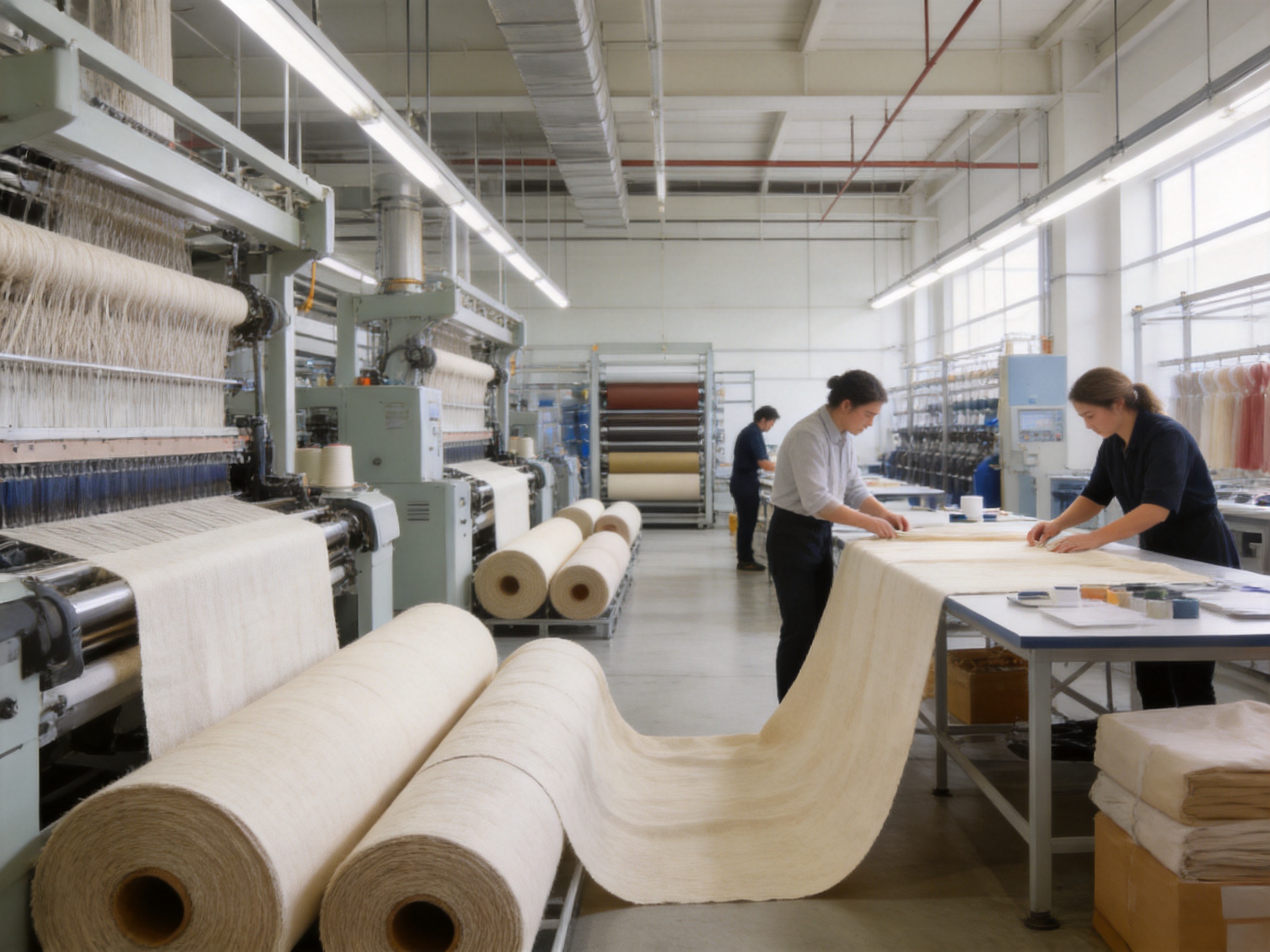
The quality of a finished Roman shade fabric is determined long before the fabric reaches the cutting table. It begins with raw material selection and continues through yarn preparation, knitting, dyeing, finishing, inspection, and packaging. Manufacturers with a complete production chain can identify problems earlier, adjust specifications more quickly, and deliver more consistent products.
Hangzhou Jinfeng Textile Co., Ltd. is located in Jingjiang Street Industrial Park, Xiaoshan District, Hangzhou, Zhejiang Province. The company covers an area of 32.6 acres and has a plant area of 18,000 square meters. This production scale provides a strong foundation for textile manufacturing, processing, and order fulfillment. The company integrates research and development, production, sales, and export service, allowing it to respond to customers at home and abroad.
One important manufacturing strength is yarn control. Because yarn characteristics influence fabric hand, weight, texture, and durability, the ability to produce and process DTY polyester yarn helps ensure material stability. Controlled DTY yarn contributes to consistent fabric appearance and supports the needs of blended textile development.
Another strength is the combination of knitting and finishing knowledge. For Linen Roman fabric, the surface must be attractive, but the fabric must also behave correctly during shade assembly and daily use. Finishing processes can improve touch, width stability, dimensional control, color fastness, and overall presentation. A skilled finishing team can adjust the fabric to meet market expectations, whether the buyer prefers a crisp linen-like panel or a softer, more relaxed shade effect.
Post-dyeing and finishing also allow broader color customization. Interior textile buyers often require specific colors to coordinate with seasonal collections, upholstery lines, or project palettes. A manufacturer with dyeing and finishing experience can better support sample development, lab dip evaluation, and production shade control.
Advanced Process Flow
A dependable Linen Roman fabric production system usually follows a structured process. First, raw materials are selected according to desired texture, strength, and cost target. Second, yarn is produced or prepared with attention to count, bulk, twist, and uniformity. Third, the fabric is knitted under controlled machine parameters, including tension, stitch density, and width management. Fourth, the greige fabric is inspected before dyeing or finishing to identify construction defects.
After greige inspection, dyeing is conducted according to the required color and fiber composition. Dyeing must balance depth, uniformity, and fastness. Poor dyeing can produce streaks, shade variation, or unstable color under light exposure. For Roman shade fabric, color uniformity is particularly important because the fabric hangs as a large flat surface where defects are easily visible.
Finishing comes next. Depending on the product requirements, finishing may include softening, heat setting, stabilizing, brushing, calendaring, washing, or other treatments. The goal is to deliver a fabric with the correct hand feel, width, weight, surface texture, and dimensional behavior. For knitted Roman fabric, controlled heat setting and stabilization are especially important because they reduce unwanted stretch and help the fabric maintain shape.
Final inspection verifies appearance, width, weight, color, hand feel, and defect level. Rolls are then packaged to protect the fabric during storage and transport. Export orders may require labeling, documentation, and shipment coordination. As a self-operated export company, an integrated manufacturer can support communication, sample confirmation, production scheduling, and after-sales service more efficiently.
Performance Comparison Table
| Feature | Linen Roman Fabric | Ordinary Low-Cost Shade Fabric | Heavy Upholstery-Style Fabric |
|---|---|---|---|
| Visual texture | Natural linen-like surface with refined softness | Often flat, synthetic, or overly glossy | Rich but sometimes too dense for shades |
| Fold behavior | Balanced body supports clean Roman folds | May collapse or wrinkle unevenly | May create bulky overlapping folds |
| Operating comfort | Moderate weight can raise and lower smoothly | Light but may lack structure | Can strain shade hardware |
| Interior compatibility | Works with formal, casual, and minimalist rooms | Limited decorative depth | Best only in heavier design schemes |
| Manufacturing adaptability | Can be engineered through blended yarns, knitting, dyeing, and finishing | Often limited by basic specifications | Less flexible for light window applications |
| Durability potential | Enhanced through polyester, rayon, and finishing technology | Variable and often inconsistent | Strong but not always suitable for repeated folding |
Design Value in Residential Interiors
In residential interiors, Linen Roman fabric offers a balance of privacy, softness, and style. Homeowners often want window coverings that feel welcoming rather than institutional. Linen texture helps achieve this effect. It diffuses visual harshness and adds quiet detail without dominating the room.
In living rooms, Linen Roman shades can frame windows with understated elegance. They can coordinate with linen sofas, cotton cushions, wood furniture, neutral rugs, and natural stone. In bedrooms, the fabric can create a calm, restful impression, especially when paired with lining for enhanced privacy and light control. In dining rooms, Roman shades made from linen-style fabric can look tailored and refined, complementing both traditional and contemporary furniture.
Color selection is a major advantage. Natural tones create a classic effect, while gray and charcoal versions support modern interiors. Warm beige, oatmeal, and flax shades can soften sunlight and make a space feel comfortable. Darker colors can add contrast and drama, especially in rooms with light walls and minimalist furniture.
The texture of Linen Roman fabric also helps hide minor dust or handling marks better than very flat, glossy fabrics. While regular maintenance is still necessary, the natural-looking surface can maintain an attractive appearance under normal indoor conditions.
Commercial and Hospitality Applications
Hotels, serviced apartments, restaurants, offices, and boutique retail spaces require window coverings that look premium while performing reliably. Linen Roman fabric is well suited to these environments because it can deliver a refined design impression without the fragility often associated with delicate natural fabrics.
In hotels, Roman shades made from linen-style fabric can create a warm and relaxing atmosphere in guest rooms. They can be paired with blackout lining where necessary. In restaurants, the fabric can help create intimacy and soften daylight during service hours. In offices and meeting rooms, neutral Linen Roman shades can reduce glare while maintaining a professional appearance.
Commercial buyers value consistency. Multiple windows in the same project must match in color, width, and texture. Integrated manufacturing helps reduce variation. A supplier with controlled yarn, knitting, dyeing, and finishing processes can better support project-scale orders, repeat production, and coordinated delivery schedules.
Another commercial advantage is customization. Different markets may require different weights, colors, textures, or finishing effects. A manufacturer with research and development capability can adapt the fabric to meet regional preferences, project specifications, and cost targets.
Quality Control Priorities
Quality control for Linen Roman fabric must be practical and strict. Since Roman shades hang in large panels, visible defects can significantly reduce product value. Inspection should focus on color uniformity, surface defects, holes, stains, yarn irregularities, width variation, weight consistency, hand feel, and dimensional stability.
Fabric skew and bow are also important. If the fabric structure is not aligned, the finished shade may hang unevenly. This is especially noticeable when the shade is raised because folds may not stack parallel to the window frame. Proper knitting control, finishing tension, and inspection help prevent these issues.
Shrinkage control is another priority. Window covering fabric may be exposed to changes in humidity and temperature. Excessive shrinkage can distort the shade or affect fit. Heat setting and stabilization can improve dimensional reliability, particularly in blended and knitted fabrics.
Color fastness must be considered because window coverings are exposed to light. While all textiles can be affected by long-term sunlight, suitable dyeing and finishing choices can improve resistance and maintain a more stable appearance. For customers, understanding the intended use environment helps in selecting the right fabric, lining, and maintenance plan.
How Linen Roman Fabric Supports Smooth Fabrication
Roman shade manufacturers and sewing workshops need fabric that cuts cleanly, handles predictably, and forms accurate panels. Linen Roman fabric with controlled width and stable structure can improve workshop efficiency. If fabric stretches, curls, or distorts during cutting, labor costs increase and finished quality becomes harder to guarantee.
A balanced NR knitted construction can support smoother handling when properly finished. The fabric should be flexible enough to fold but stable enough to maintain straight edges. This is achieved through precise manufacturing rather than chance. Proper tension control during knitting and finishing helps create a fabric that is easier for shade makers to process.
For lined Roman shades, compatibility with lining materials is important. The face fabric and lining should work together without excessive puckering or mismatch. Medium-weight Linen Roman fabric can be paired with different linings depending on requirements for privacy, insulation, or blackout performance. This adaptability makes it useful for both decorative and functional shade systems.
Sustainability and Responsible Textile Value
Textile buyers increasingly consider sustainability, durability, and responsible manufacturing. A long-lasting window covering fabric can reduce replacement frequency, which is an important part of practical sustainability. Linen Roman fabric designed for durability, stable appearance, and reliable performance contributes to longer product life.
Blended fabrics can be engineered to reduce waste during fabrication by improving cutting stability and reducing defects. Controlled manufacturing also minimizes rejected rolls and inconsistent batches. Integrated production allows better process management, which can support more efficient resource use.
In addition, the timeless design of linen-style fabric helps prevent premature style obsolescence. Highly fashionable patterns may become outdated quickly, but refined linen textures remain relevant across design trends. A neutral Linen Roman shade can serve through multiple furniture updates and interior refreshes.
Company Capability and Customer Service Strength
Hangzhou Jinfeng Textile Co., Ltd. operates as a textile enterprise integrating research and development, production, and sales. Its business scope includes blended fabrics such as polyester and spandex, DTY polyester yarn production and processing, dyeing, finishing, and export-oriented service. This broad capability is valuable for Linen Roman fabric buyers because it supports product development from yarn to finished fabric.
The company’s location in Hangzhou, Zhejiang Province, places it within one of China’s important textile regions, with access to industrial resources, skilled labor, and logistics channels. Its plant area of 18,000 square meters provides capacity for manufacturing and processing. For international buyers, cooperation with a self-operated export company can simplify communication and order management.
The company emphasizes cooperation and win-win business philosophy. In practical terms, this means supporting customers with product selection, sample development, production coordination, quality follow-up, and long-term supply relationships. For Roman shade fabric buyers, supplier reliability is as important as fabric appearance. A beautiful sample is not enough; the supplier must repeat quality in bulk production and deliver according to agreed schedules.
Competitive Advantages for Buyers
For distributors, curtain workrooms, wholesalers, and project contractors, Linen Roman fabric from an integrated manufacturer offers several competitive advantages. The first is consistency. When yarn, fabric formation, dyeing, and finishing are controlled under one manufacturing system, the final fabric is more likely to meet approved standards.
The second advantage is development speed. If a customer needs a new color, adjusted weight, softer hand, or different texture, the manufacturer can coordinate internally rather than relying entirely on external partners. This can shorten sampling time and improve problem-solving.
The third advantage is cost-performance. Advanced manufacturing does not only mean high price; it means controlling waste, improving efficiency, and delivering stable quality. A fabric that performs well in cutting, sewing, installation, and use can reduce hidden costs for buyers.
The fourth advantage is market adaptability. Linen Roman fabric can be positioned for multiple market segments: affordable residential shades, mid-range decorative window treatments, hotel projects, or premium interior collections. Through material and finishing adjustments, the fabric can be customized for different business needs.
Selection Guidelines for Designers and Buyers
When choosing Linen Roman fabric, buyers should first consider weight. A medium-weight fabric is usually suitable for Roman shades because it balances structure and operating ease. Very light fabrics may need additional lining or interlining, while very heavy fabrics may be difficult to operate.
Second, consider opacity and lining requirements. If privacy is important, select a fabric and lining combination that meets the desired coverage. For bedrooms, blackout lining may be preferred. For living spaces, a light-filtering effect may be more suitable.
Third, review texture and color under real lighting. Linen-style fabrics can look different in daylight, warm artificial light, and cool artificial light. Buyers should evaluate samples near the window where the shade will be installed.
Fourth, confirm dimensional stability. Ask about shrinkage, width, and finishing specifications. Fabric that appears beautiful but changes shape during fabrication or use can create problems.
Fifth, confirm order consistency. For large projects, request production samples, color standards, and clear batch control. This is especially important when multiple rooms or buildings require matching shades.
Care and Maintenance Considerations
Window covering fabrics should be maintained gently. Regular dust removal with a soft brush attachment or light vacuuming can help preserve appearance. Spot cleaning should be done carefully according to the fabric composition and finishing. Harsh rubbing may damage surface texture, especially on linen-like fabrics.
Direct exposure to strong sunlight over long periods can affect many textile colors. Lining can help protect the face fabric and improve light control. In humid environments, good ventilation helps maintain fabric condition. Roman shades should be operated smoothly and not forced, especially if they are large or lined.
For commercial projects, maintenance instructions should be communicated to housekeeping or facility teams. Proper care helps extend service life and preserve the intended design effect.
Q&A Section
Q1: What makes Linen Roman fabric suitable for Roman shades?
Linen Roman fabric is suitable because it offers a balanced combination of natural-looking texture, moderate body, flexibility, and fold stability. It can hang attractively when lowered and form orderly horizontal folds when raised.
Q2: Is Linen Roman fabric better than ordinary curtain fabric for Roman shades?
Yes, when properly engineered. Ordinary curtain fabric may drape well but lack the stability needed for Roman shade folds. Linen Roman fabric is designed with window covering performance in mind, making it more suitable for repeated lifting, lowering, and folding.
Q3: Why is a blended structure useful?
Blended textile engineering can combine the appearance of linen with the durability, wrinkle resistance, strength, and processing stability of fibers such as polyester, rayon, cotton, or spandex. This helps create a fabric that looks natural but performs more reliably.
Q4: What role does DTY polyester yarn play?
DTY polyester yarn can contribute bulk, resilience, strength, and stable texture. When used correctly, it helps improve the hand feel and durability of blended fabrics. Internal DTY yarn production and processing also support better quality control.
Q5: Can Linen Roman fabric be used in hotels and commercial interiors?
Yes. Its refined texture, adaptable color range, and practical performance make it suitable for hotels, restaurants, offices, serviced apartments, and boutique commercial spaces. Project buyers should confirm specifications such as width, color consistency, lining compatibility, and dimensional stability.
Q6: How should buyers evaluate samples?
Buyers should check texture, color, weight, opacity, fold behavior, hand feel, shrinkage information, and compatibility with lining. Samples should be viewed under actual lighting conditions and tested in a small shade mock-up if possible.
Q7: Why choose an integrated manufacturer?
An integrated manufacturer can control yarn, knitting, dyeing, finishing, inspection, and export service more effectively. This improves consistency, speeds development, supports customization, and reduces quality risks compared with fragmented sourcing.
Future Development of Linen Roman Fabric
The market for Roman shade fabric continues to evolve. Consumers want window coverings that look natural but are easier to maintain. Designers want texture without excessive weight. Commercial buyers want consistent quality, reliable delivery, and customization. Linen Roman fabric answers these needs by combining timeless aesthetics with modern textile engineering.
Future development may focus on improved light control, enhanced dimensional stability, softer hand feel, greater color depth, and more sustainable production practices. New blended yarns and finishing technologies may also expand design possibilities. Manufacturers with research and development capability will be better positioned to respond to these market shifts.
For buyers, the key is to select fabric not only by appearance but by total performance. A good Roman shade textile must satisfy design, fabrication, operation, and long-term use. Linen Roman fabric, especially when produced by a manufacturer with integrated textile expertise, offers a strong solution for these combined requirements.
Conclusion
Linen Roman fabric is a refined and practical choice for window coverings. It brings the calm, natural elegance associated with linen while benefiting from modern blended fabric engineering, knitting control, dyeing, and finishing. As an NR knitted fabric product, it can provide a soft yet structured character that supports attractive Roman shade folds and comfortable daily operation.
Compared with ordinary low-cost shade fabrics, Linen Roman fabric offers richer texture, better design compatibility, improved fold behavior, and stronger potential for customization. Compared with heavy upholstery-style materials, it is more suitable for smooth Roman shade operation and balanced interior use. Its value is especially clear when produced through an integrated manufacturing system that controls yarn, fabric formation, color, finishing, and inspection.
Hangzhou Jinfeng Textile Co., Ltd. brings manufacturing strengths in DTY polyester yarn, blended fabrics, dyeing, finishing, research and development, production, sales, and export service. With its production base in Hangzhou and its commitment to cooperation and win-win service, the company is positioned to support customers seeking reliable Linen Roman fabric for residential, commercial, and project applications.
For designers, distributors, workrooms, and project buyers, Linen Roman fabric offers more than visual appeal. It is a textile solution shaped by material science, manufacturing discipline, and market understanding. When selected carefully and produced with advanced processes, it can transform windows into elegant design features while delivering the durability and usability required in modern interiors.
References
1. Kadolph, S. J. Textiles. Pearson Education.
2. Collier, B. J., and Epps, H. H. Textile Testing and Analysis. Pearson Prentice Hall.
3. Saville, B. P. Physical Testing of Textiles. Woodhead Publishing.
4. Cook, J. G. Handbook of Textile Fibres: Natural Fibres and Man-Made Fibres. Woodhead Publishing.
5. Tortora, P. G., and Merkel, R. S. Fairchild’s Dictionary of Textiles. Fairchild Books.
6. Goswami, B. C., Martindale, J. G., and Scardino, F. L. Textile Yarns: Technology, Structure, and Applications. Wiley.
