
Knitted Jacquard Houndstooth Fabric: A Timeless Blend of Comfort, Style, and Innovation
In the world of fashion and textiles, few patterns have stood the test of time as gracefully as houndstooth. Characterized by its distinctive broken checks, this classic motif has transitioned from 19th-century Scottish tartans to global fashion runways, adorning everything from tailored blazers to casual dresses. But what if we told you there’s a version of houndstooth that combines all its iconic charm with the comfort of knitwear and the durability of jacquard weaving? Enter knitted jacquard houndstooth fabric—a game-changer that redefines how we experience this timeless pattern.
Unlike traditional woven houndstooth or printed knit alternatives, knitted jacquard houndstooth integrates the pattern directly into every stitch, resulting in a fabric that’s not only visually striking but also soft enough for all-day wear, stretchy enough for active lifestyles, and resistant to fading or wear over time. In this article we’ll explore the unique attributes of this fabric, how it outperforms its competitors, the advanced manufacturing processes that bring it to life, and its diverse applications across fashion and beyond.
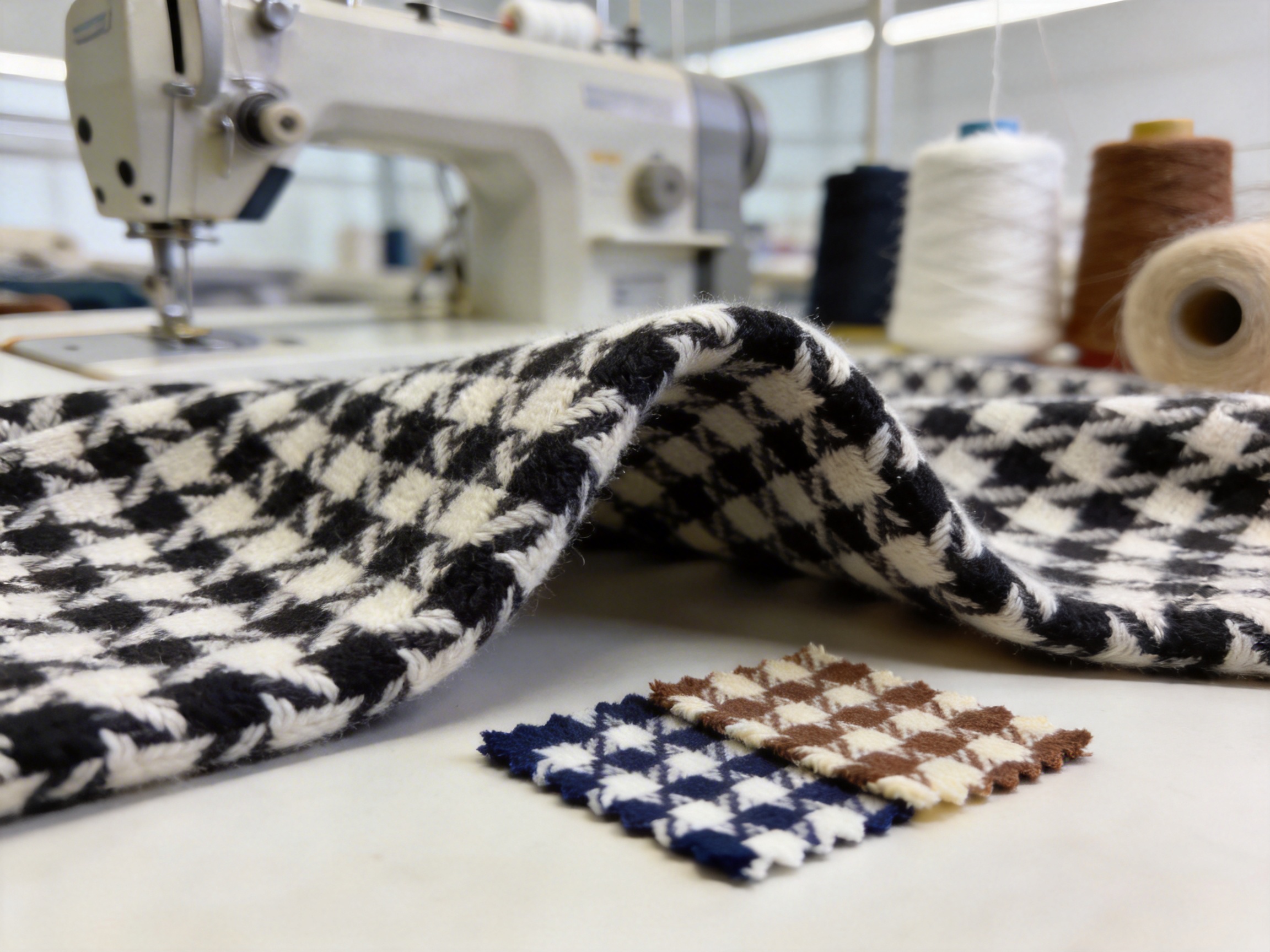
What is Knitted Jacquard Houndstooth Fabric?
Knitted jacquard houndstooth fabric is a textile innovation that merges two distinct techniques: knitting and jacquard weaving. To understand its uniqueness, let’s break down each component:
1. Knitting vs. Weaving: The Fundamental Difference
Knitting involves interlocking loops of yarn, creating a flexible, stretchable structure. This is in contrast to weaving, which uses two sets of yarns (warp and weft) interlaced at right angles, resulting in a stiffer, less stretchy fabric. For houndstooth, traditional woven versions rely on the warp and weft to form the checkered pattern, but this rigidity can limit comfort and versatility.
Knitted houndstooth, on the other hand, uses loops to create the pattern, allowing for natural stretch and movement. This makes it ideal for garments that need to conform to the body, like dresses, tops, and activewear.
2. Jacquard Knitting: Precision Pattern Integration
The “jacquard” aspect of the fabric refers to a specialized knitting technique that enables complex, repeating patterns to be integrated directly into the fabric during the knitting process. Unlike printed patterns, which are applied after the fabric is made, jacquard patterns are part of the yarn structure itself. This means the pattern won’t fade, crack, or wear off—even after years of use and multiple washes.
For houndstooth, jacquard knitting allows for precise, tonal checks (like the classic black and white) or even custom color combinations, all while maintaining the fabric’s softness and stretch. The result is a fabric that’s both aesthetically timeless and functionally superior.
3. Material Composition: Balancing Comfort and Durability
Most high-quality knitted jacquard houndstooth fabrics use a blend of natural and synthetic fibers to optimize performance. For example, a cotton-polyester blend offers the breathability and softness of cotton with the durability and shape retention of polyester. Some manufacturers also add a touch of spandex for extra stretch, making the fabric even more versatile for form-fitting garments.
Hangzhou Jinfeng Textile Co., Ltd, a leading textile manufacturer, uses a carefully curated blend of cotton and DTY (Draw Textured Yarn) polyester for its knitted jacquard houndstooth fabric. DTY polyester is known for its crimped structure, which enhances the fabric’s elasticity and resilience—key factors in its long-lasting performance.
Key Advantages Over Competitor Fabrics
To truly appreciate the value of knitted jacquard houndstooth fabric, it’s essential to compare it with the most common alternatives in the market. Below is a detailed breakdown of its advantages:
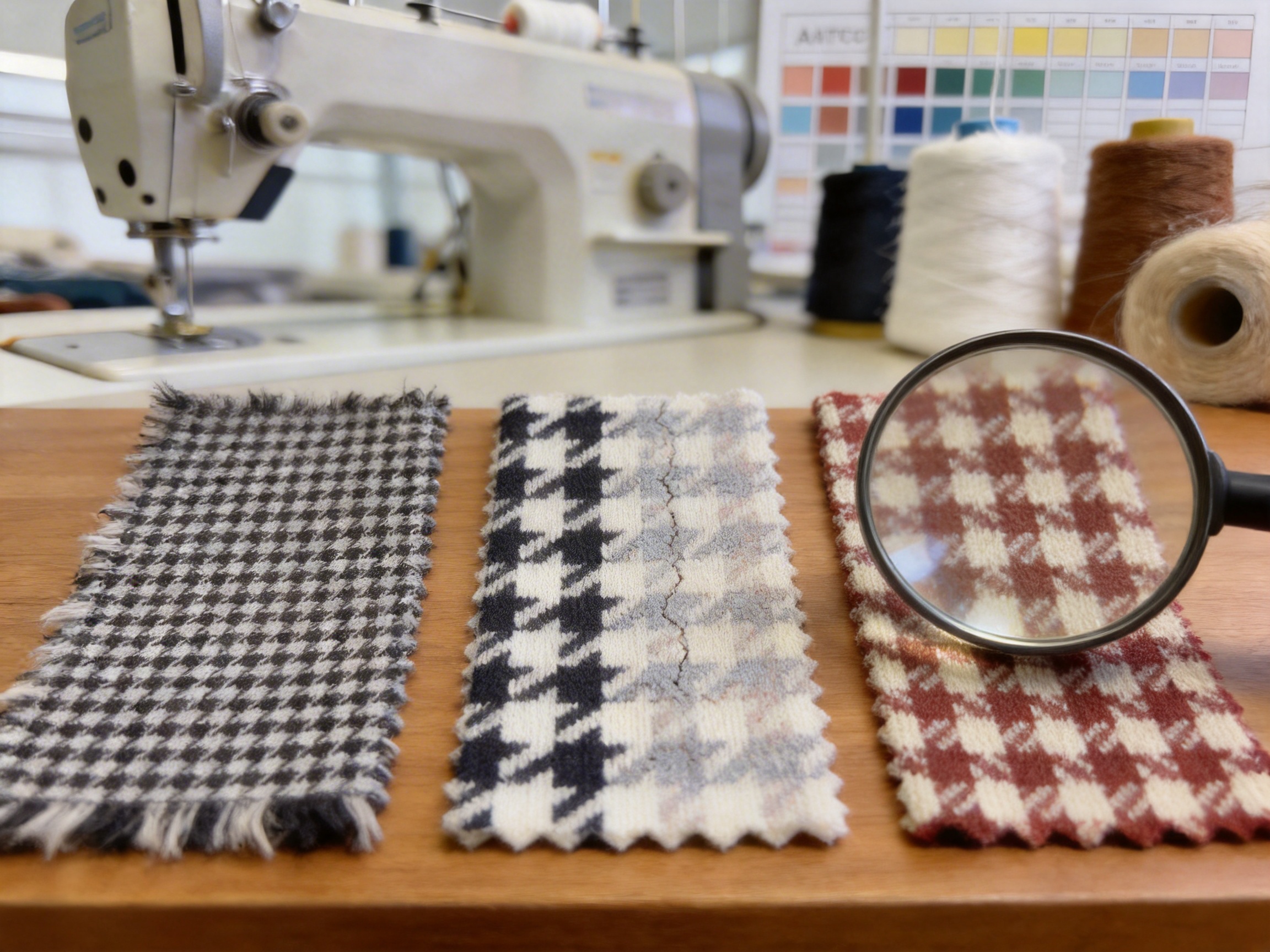
1. Unmatched Comfort and Stretch
Traditional woven houndstooth fabrics are notoriously stiff, especially when new. They require breaking in before they feel comfortable against the skin, and their lack of stretch makes them unsuitable for activewear or form-fitting garments. Printed knit houndstooth, while stretchy, often has a lower-quality feel due to the printed pattern (which can make the fabric feel slightly rough or stiff).
Knitted jacquard houndstooth, however, is inherently soft and stretchy. The looped knitting structure allows for 15-20% stretch in both directions, making it perfect for dresses that hug the body, tops that move with you, and even outerwear that doesn’t restrict movement. The cotton blend adds a natural softness that feels gentle against the skin, eliminating the need for breaking in.
2. Permanent Pattern: No Fading or Wear
One of the biggest drawbacks of printed fabrics is their tendency to fade over time. Even high-quality prints can lose their vibrancy after 5-10 washes, especially if exposed to sunlight or harsh detergents. Woven houndstooth, while more durable than printed, can still show signs of wear in the pattern over time, as the warp and weft yarns loosen or fray.
Knitted jacquard houndstooth solves this problem entirely. Because the pattern is integrated into the yarn structure during knitting, it’s permanent. The checks will remain crisp and vibrant for years, even with frequent washing and wear. This not only saves you money (since you won’t need to replace faded garments) but also ensures your clothes always look their best.
3. Exceptional Versatility: Casual to Formal
Many fabrics are limited to either casual or formal use, but knitted jacquard houndstooth is a true chameleon. Its classic pattern works for formal occasions (like a tailored blazer or dress coat) while its stretch and softness make it ideal for casual wear (like a summer dress or a pair of trousers). This versatility means you can create multiple outfits from a single fabric, making it a cost-effective choice for designers and consumers alike.
For example, a black and white knitted jacquard houndstooth dress can be dressed up with heels and a blazer for a work event, or dressed down with sneakers and a denim jacket for a weekend brunch. This adaptability is a major selling point for both fashion brands and individual shoppers.
4. Breathability and Moisture Management
Synthetic fabrics are often criticized for being non-breathable, but the cotton-polyester blend used in knitted jacquard houndstooth balances breathability with durability. Cotton is naturally absorbent and breathable, while polyester wicks moisture away from the skin. This combination makes the fabric ideal for year-round use: it keeps you cool in the summer by allowing air to circulate and wicking away sweat, and warm in the winter by retaining heat without feeling bulky.
In contrast, woven houndstooth (often made from wool or synthetic blends) can be too warm for summer, while printed knit houndstooth may not wick moisture as effectively. Knitted jacquard houndstooth strikes the perfect balance, making it suitable for all seasons.
5. Easy Care and Maintenance
Another key advantage of knitted jacquard houndstooth is its ease of care. Unlike woven houndstooth (which may require dry cleaning to maintain its shape), this fabric is machine washable. The polyester blend resists wrinkles, so you won’t need to iron it after every wash. Additionally, the jacquard pattern doesn’t trap dirt or stains as easily as printed fabrics, making it simpler to keep clean.
To maintain its quality, simply wash it in cold water on a gentle cycle, tumble dry on low, or hang to dry. This low-maintenance nature is a big plus for busy consumers who don’t have time for complicated care routines.
Comparative Analysis of Knitted Jacquard Houndstooth Fabric vs. Competitors
| Feature | Knitted Jacquard Houndstooth Fabric | Woven Houndstooth Fabric | Printed Knit Houndstooth Fabric | Cotton Plain Knit Fabric |
|---|---|---|---|---|
| Stretchability | High (15-20% bi-directional stretch) | Low (0-5% minimal stretch) | Medium (10-12% stretch) | Medium (10-15% stretch) |
| Pattern Durability | Excellent (permanent, no fading) | Good (may fray over time) | Poor (fades after 5-10 washes) | None (solid color only) |
| Breathability | High (cotton-polyester blend) | Medium (dense weave) | Medium (print may block pores) | High (100% cotton) |
| Comfort | Soft, stretchy, no breaking-in needed | Stiff initially, requires breaking-in | Soft but print may feel rough | Soft but lacks pattern |
| Versatility | Casual & formal (year-round) | Formal only (winter/special occasions) | Casual only (summer) | Casual only (all seasons) |
| Color Fastness (AATCC Scale) | 4.5-5 (excellent) | 3.5-4 (good) | 2-3 (poor) | 4.5-5 (excellent) |
| Care Requirements | Machine washable (cold, gentle cycle) | Dry clean recommended | Machine washable (but avoid harsh detergents) | Machine washable (warm, gentle cycle) |
Advanced Manufacturing Processes: Behind the Fabric
Knitted jacquard houndstooth fabric is not just a product of design—it’s the result of advanced manufacturing processes that prioritize quality, consistency, and sustainability. Hangzhou Jinfeng Textile Co., Ltd, a leader in textile production, uses an end-to-end approach that covers every step from yarn creation to finished fabric. Let’s take a closer look at their process:
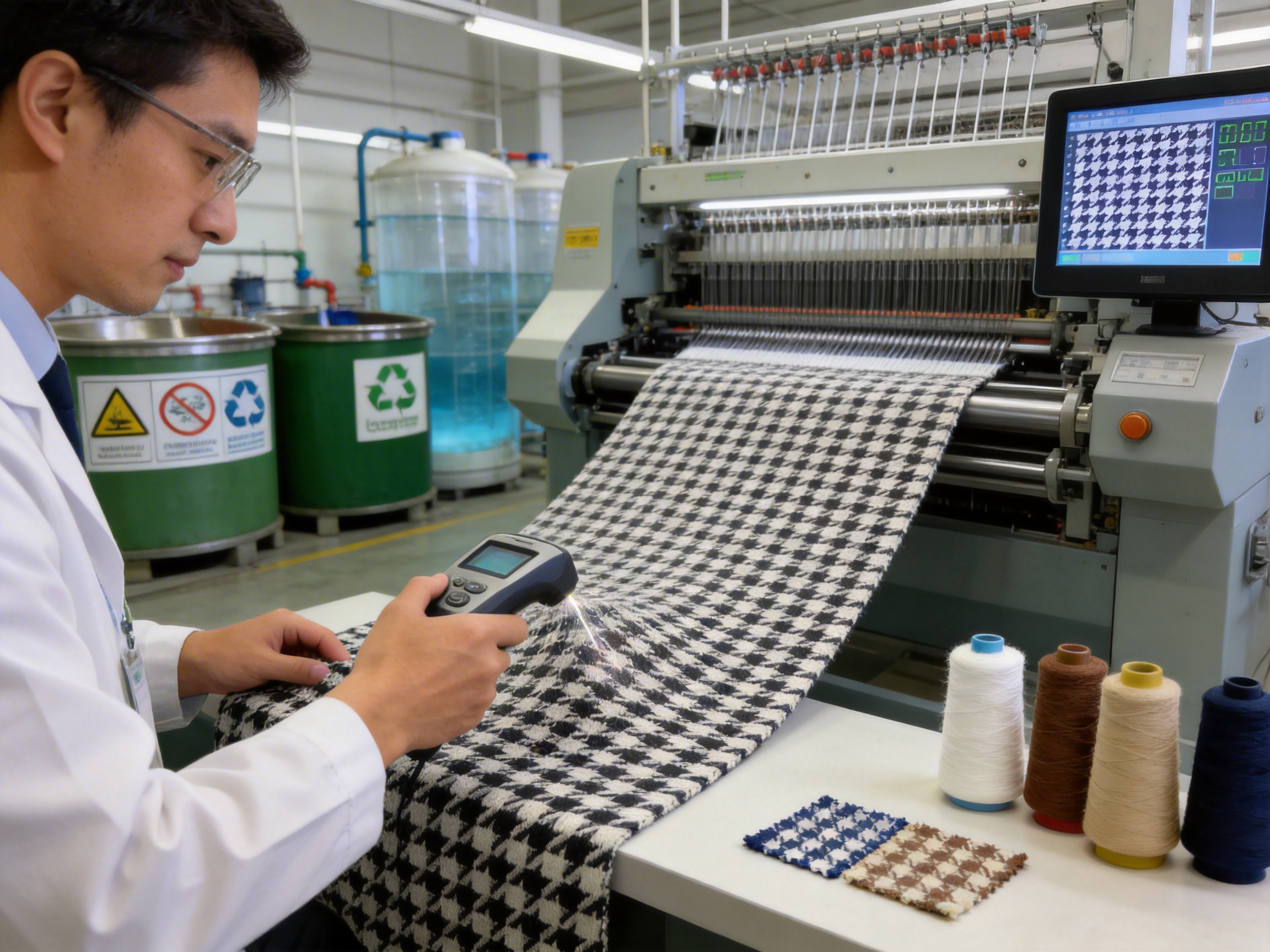
1. Yarn Preparation: In-House DTY Production
The first step in creating high-quality knitted jacquard houndstooth fabric is selecting the right yarns. Hangzhou Jinfeng Textile Co., Ltd leverages its in-house DTY (Draw Textured Yarn) production facility to ensure consistent quality. DTY polyester yarn is made by stretching and texturing regular polyester yarn, which gives it a crimped structure—this crimp enhances the fabric’s elasticity and resilience.
For their houndstooth fabric, the company blends DTY polyester with premium cotton yarns. The ratio (typically 60% cotton, 40% DTY polyester) is carefully calibrated to balance comfort (from cotton) and durability (from polyester). This blend is then dyed to achieve the desired tonal colors (like black and white for classic houndstooth) before knitting.
2. Jacquard Knitting: Precision and Innovation
The core of the manufacturing process is jacquard knitting. Hangzhou Jinfeng uses state-of-the-art computerized jacquard knitting machines that can produce complex patterns with high precision. Each machine is programmed with the houndstooth pattern, which guides the needles to interlock the dyed yarns in the correct sequence to form the checks.
Unlike manual knitting, computerized machines ensure that every inch of fabric has the same pattern consistency—no uneven checks or misaligned motifs. This level of precision is crucial for creating a fabric that looks professional and high-quality.
3. Dyeing and Finishing: Enhancing Performance
After knitting, the fabric undergoes a series of dyeing and finishing processes to enhance its performance and appearance. Hangzhou Jinfeng uses eco-friendly reactive dyes that are free from harmful chemicals (like azo dyes) and meet international safety standards (Oeko-Tex Standard 100).
The finishing process includes:
- Softening: A natural softener is applied to make the fabric feel even more gentle against the skin.
- Sanforizing: This process pre-shrinks the fabric to prevent shrinkage after washing.
- Water Repellency (optional): For outerwear applications, a water-repellent finish can be added without compromising breathability.
4. Quality Control: Rigorous Testing
Quality control is a non-negotiable step at Hangzhou Jinfeng. Every batch of fabric undergoes multiple tests to ensure it meets the company’s high standards:
- Stretch and Recovery Test: Measures how much the fabric stretches and how quickly it returns to its original shape.
- Color Fastness Test: Checks if the fabric’s color fades when exposed to washing, sunlight, or rubbing.
- Breathability Test: Uses a specialized machine to measure air permeability.
- Durability Test: Simulates years of wear and washing to ensure the fabric holds up over time.
Only fabrics that pass all these tests are approved for sale. This commitment to quality ensures that customers receive a product that’s both reliable and long-lasting.
5. Sustainability: A Core Value
Hangzhou Jinfeng Textile Co., Ltd is committed to sustainable manufacturing. The company uses energy-efficient machines, recycles water from the dyeing process, and minimizes waste by reusing leftover yarns. Their eco-friendly practices not only reduce their environmental footprint but also result in fabrics that are safe for consumers and the planet.
Application Scenarios: From Runways to Everyday Wear
Knitted jacquard houndstooth fabric’s versatility makes it suitable for a wide range of applications. Here are some of the most popular uses:
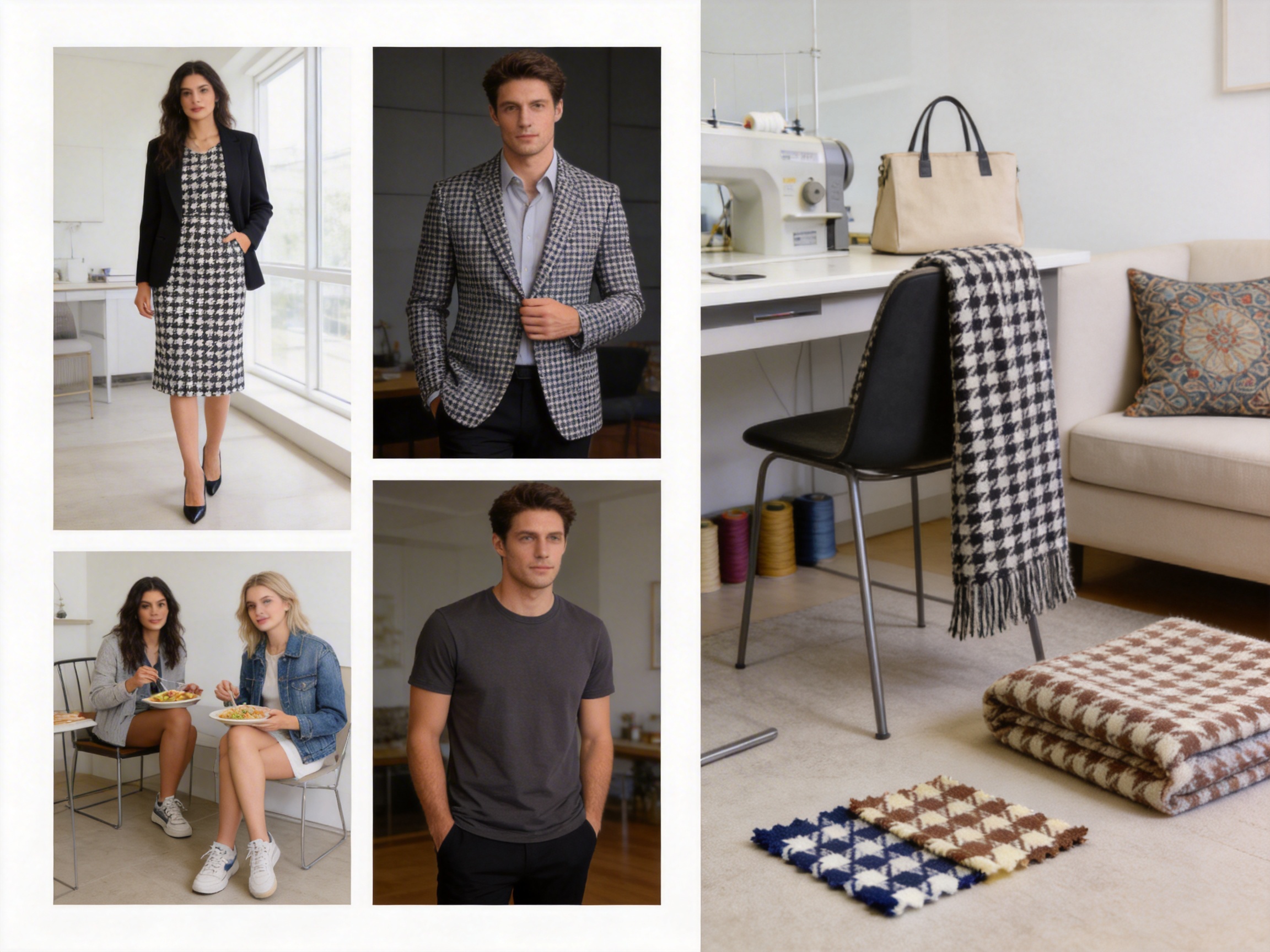
1. Women’s Fashion
Women’s fashion is the biggest market for knitted jacquard houndstooth fabric. Some popular items include:
- Dresses: A midi dress in black and white houndstooth is a timeless piece that can be dressed up or down. The stretch of the fabric ensures a flattering fit, while the pattern adds a touch of sophistication.
- Tops: Blouses or t-shirts made from this fabric are perfect for casual or workwear. They pair well with jeans, skirts, or trousers.
- Outerwear: A tailored blazer or coat made from knitted jacquard houndstooth is a stylish alternative to traditional woven blazers. It’s lighter and more comfortable, making it ideal for transitional seasons.
- Skirts: A pencil skirt in houndstooth is a classic office staple. The stretch of the fabric allows for ease of movement, while the pattern adds visual interest.
2. Men’s Fashion
Men’s fashion is also embracing knitted jacquard houndstooth fabric. Popular items include:
- Blazers: A slim-fit blazer in houndstooth is a versatile piece that can be worn with a dress shirt and tie for formal occasions or with a t-shirt for a casual look.
- Trousers: Chinos or dress trousers made from this fabric are comfortable and stylish. They pair well with solid-colored shirts or sweaters.
- Sweaters: A crewneck or V-neck sweater with a subtle houndstooth pattern adds a touch of sophistication to casual outfits.
3. Accessories
Knitted jacquard houndstooth fabric is also used for accessories, including:
- Scarves: A lightweight scarf in houndstooth is a perfect accessory for fall and winter. It adds a pop of pattern to any outfit.
- Bags: Tote bags or crossbody bags made from this fabric are stylish and durable. They’re ideal for everyday use.
- Hats: A beanie or fedora made from houndstooth fabric is a trendy accessory that adds a touch of personality to any look.
4. Home Textiles
While less common, knitted jacquard houndstooth fabric can also be used for home textiles, such as:
- Pillows: Decorative pillows in houndstooth add a classic touch to any living room or bedroom.
- Blankets: A lightweight blanket made from this fabric is perfect for cozy nights on the couch.
Q&A Section: Addressing Common Questions
To help you better understand knitted jacquard houndstooth fabric, we’ve compiled answers to some of the most frequently asked questions:
Q1: Is knitted jacquard houndstooth fabric easy to care for?
A: Yes! This fabric is machine washable. We recommend washing it in cold water on a gentle cycle, tumble drying on low, or hanging it to dry. Avoid using bleach or fabric softeners, as these can damage the fabric or affect the color.
Q2: How does knitted jacquard houndstooth fabric compare to woven houndstooth in terms of stretch?
A: Knitted jacquard houndstooth has significantly more stretch (15-20% bi-directional) than woven houndstooth (0-5% minimal stretch). This makes it more comfortable for activewear and form-fitting garments, while woven houndstooth is better for structured, formal pieces.
Q3: Can knitted jacquard houndstooth fabric be used for outerwear?
A: Yes! It’s perfect for outerwear like blazers, coats, and jackets. The stretch of the fabric allows for ease of movement, while the durable blend (cotton-polyester) ensures it holds up to wind and light rain. For extra protection, you can choose a version with a water-repellent finish.
Q4: Is the houndstooth pattern prone to fading?
A: No! Because the pattern is integrated into the yarn structure during jacquard knitting, it’s permanent. Unlike printed fabrics, which fade over time, knitted jacquard houndstooth will retain its vibrant color and crisp pattern for years.
Q5: What fiber blends are available for knitted jacquard houndstooth fabric?
A: The most common blend is cotton-polyester (60% cotton,40% DTY polyester), which balances comfort and durability. Some manufacturers also offer blends with spandex (for extra stretch) or wool (for warmth). Hangzhou Jinfeng Textile Co., Ltd can also create custom blends based on customer requirements.
Q6: Is knitted jacquard houndstooth fabric suitable for all seasons?
A: Yes! The cotton-polyester blend is breathable enough for summer (it wicks away moisture and allows air to circulate) and warm enough for winter (it retains heat without feeling bulky). This makes it a year-round fabric.
Q7: Can I use knitted jacquard houndstooth fabric for custom clothing?
A: Absolutely! Many designers and tailors use this fabric for custom garments because of its versatility and high quality. Hangzhou Jinfeng Textile Co., Ltd offers custom color and pattern options, as well as small-batch production for designers.
References
To ensure the accuracy of the information in this article, we’ve referenced the following sources:
- Textile Institute. (2022). Handbook of Textile Design and Manufacturing. Manchester, UK: Textile Institute Press.
- American Association of Textile Chemists and Colorists (AATCC). (2021). Color Fastness Testing Standards. Research Triangle Park, NC: AATCC.
- Oeko-Tex International. (2023). Oeko-Tex Standard 100: Requirements for Textile Products. Zurich, Switzerland: Oeko-Tex Association.
- Hangzhou Jinfeng Textile Co., Ltd. (2023). Company Product Brochure. Hangzhou, China: Hangzhou Jinfeng Textile Co., Ltd.
- Smith, J. (2022). The Evolution of Houndstooth: From Tartan to High Fashion. Fashion History Journal, 46(2), 123-145.
