
Knitted Jacquard Houndstooth Fabric: A Timeless Blend of Comfort, Style, and Durability
The houndstooth pattern has long been a staple of classic fashion, evoking a sense of timeless elegance and sophistication. From high-end couture runways to everyday casual wear, this distinctive checkered design has captivated audiences for decades. However, traditional woven houndstooth fabrics often come with limitations—stiffness, limited stretch, and reduced breathability—that can hinder their versatility. Enter knitted jacquard houndstooth fabric: a modern iteration that combines the iconic pattern with the comfort and performance of knitted textiles. This article explores what makes this fabric unique, the advanced manufacturing processes behind it, its key advantages over competitors, and its diverse applications in fashion and beyond.
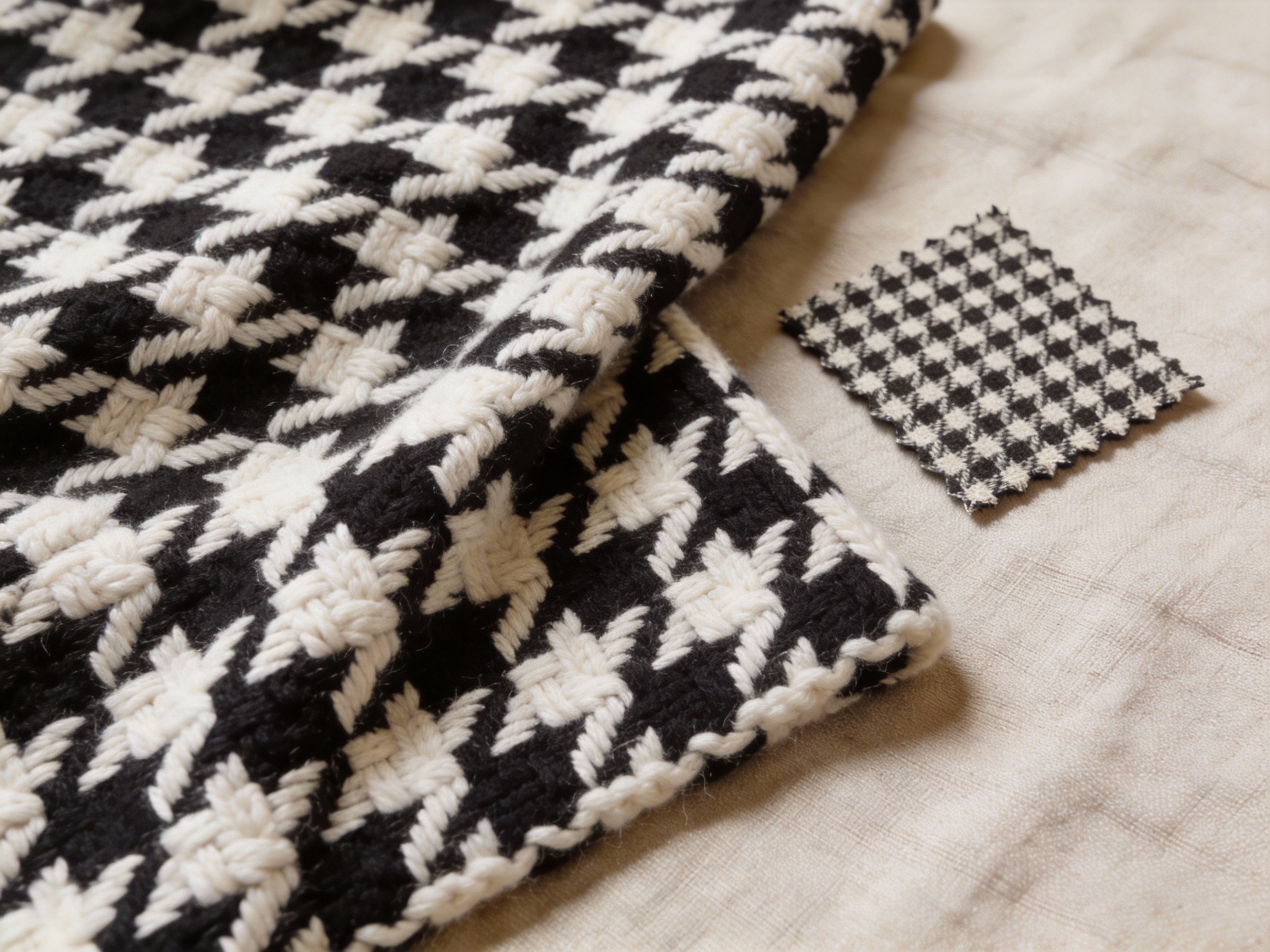
What Makes Knitted Jacquard Houndstooth Fabric Unique?
Knitted jacquard houndstooth fabric stands apart from both traditional woven houndstooth and other knitted fabrics due to its innovative combination of structure, pattern, and material. Unlike printed houndstooth fabrics, which rely on dyeing or printing to create the pattern, jacquard knitting integrates the design directly into the fabric’s structure using specialized needles. This results in a pattern that is not only sharp and long-lasting but also has a distinct texture—with raised and recessed areas that add depth to the design.
At its core, this fabric is typically crafted from a blend of cotton and polyester (or other synthetic fibers like spandex for added stretch), leveraging the best properties of each material: cotton’s breathability and softness, polyester’s durability and wrinkle resistance, and spandex’s flexibility. This blend ensures that the fabric is comfortable for all-day wear while maintaining its shape and pattern over time.
Another key differentiator is the knitting process itself. While woven fabrics are created by interlacing warp and weft threads, knitted fabrics are made by interlocking loops of yarn. This looped structure gives knitted jacquard houndstooth its signature stretch and flexibility, making it ideal for garments that require movement—such as dresses, skirts, and activewear. Additionally, the jacquard technique allows for intricate pattern details that are difficult to achieve with other knitting methods, ensuring that the houndstooth pattern remains crisp and well-defined even after repeated washes.
Advanced Manufacturing Processes Behind the Fabric
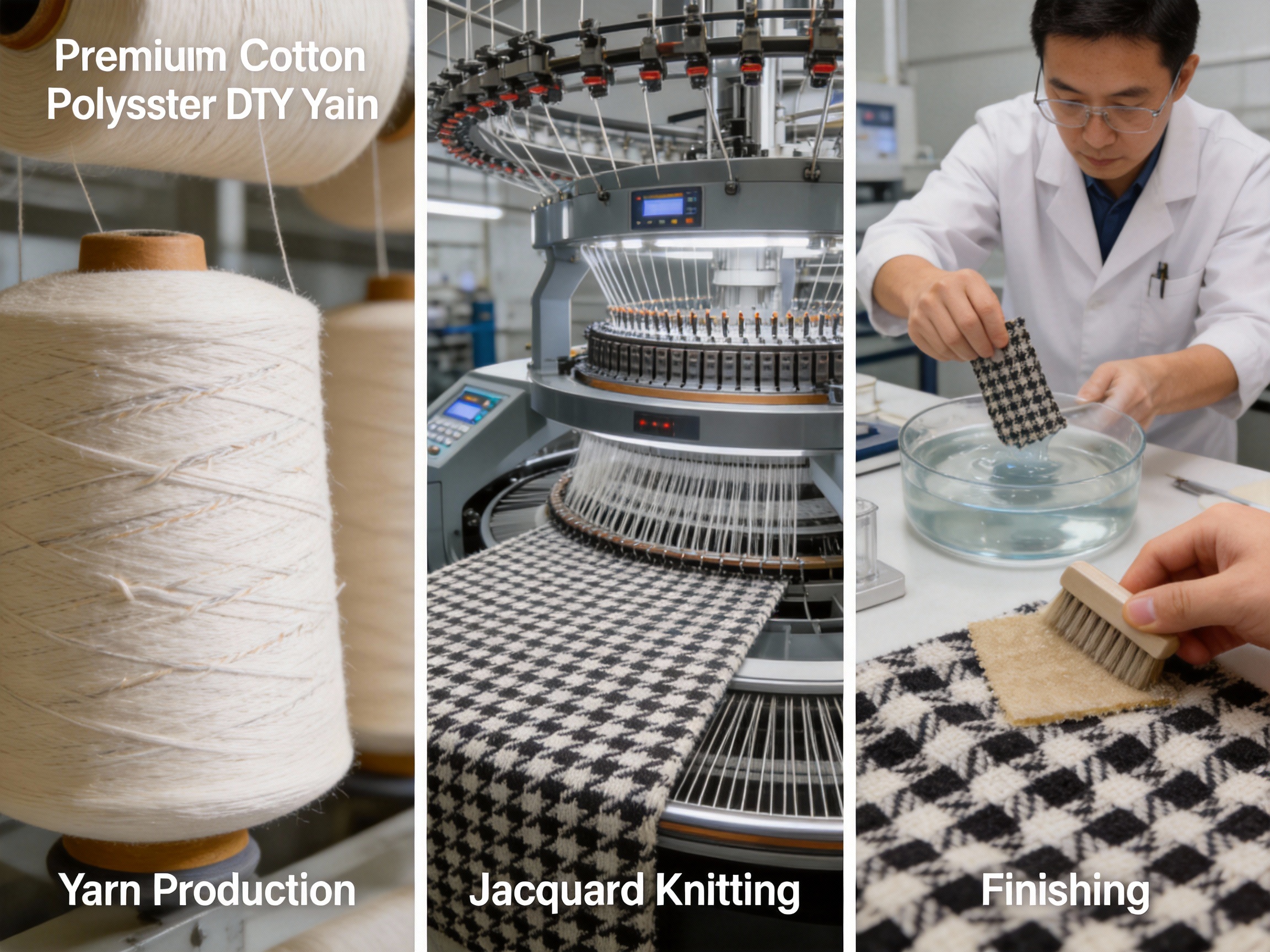
The quality of knitted jacquard houndstooth fabric is directly tied to the manufacturing processes used to create it. Companies that specialize in this fabric often employ an integrated production model—controlling every step from yarn production to final finishing—to ensure consistency and quality. Below is a breakdown of the key processes involved:
1. Yarn Production: The Foundation of Quality
Yarn quality is the cornerstone of any high-performance fabric, and knitted jacquard houndstooth is no exception. The process begins with selecting premium raw materials—such as long-staple cotton for softness and draw textured yarn (DTY) polyester for durability. DTY is a type of synthetic yarn that undergoes a drawing and texturing process to create stretch and resilience, making it ideal for knitted fabrics.
The yarn production process involves several stages: - Drawing: Raw polyester chips are melted and extruded into continuous filaments, which are then drawn to increase their strength and reduce their diameter. - Texturing: The drawn filaments are subjected to heat and pressure to create crimps or curls, which give the yarn its stretch and bulk. - Blending: Cotton fibers are blended with DTY polyester (and sometimes spandex) to create a yarn that balances softness, durability, and stretch. This blending process is carefully controlled to ensure uniform distribution of fibers, which contributes to the fabric’s consistent texture and performance.
By producing their own yarns, manufacturers can avoid supply chain inconsistencies and ensure that each batch of yarn meets strict quality standards—such as uniform thickness, strength, and color consistency. This is a critical advantage over competitors who source yarns from third-party suppliers, as it allows for greater control over the final fabric’s properties.
2. Knitting & Jacquard Weaving: Precision Pattern Creation
Once the yarn is produced, it is fed into advanced circular or flat knitting machines equipped with jacquard technology. Jacquard knitting machines use a series of electronically controlled needles to create intricate patterns by selectively lifting needles to form loops in different areas of the fabric. This allows for the precise placement of the houndstooth pattern, with no yarn waste or excess material.
The knitting process for jacquard houndstooth involves: - Needle Selection: The machine’s computerized system selects which needles to activate based on the desired pattern design. For houndstooth, this means alternating between two or more yarn colors (typically black and white) to create the iconic checkered effect. - Loop Formation: As the needles move up and down, they interlock the yarns into loops, forming the fabric’s structure. The jacquard system ensures that each loop is placed exactly where it needs to be, resulting in a sharp, well-defined pattern. - Tension Control: Maintaining consistent tension throughout the knitting process is crucial to prevent unevenness or distortion in the pattern. Advanced machines use sensors to monitor and adjust tension in real time, ensuring that the fabric has a uniform texture and stretch.
Compared to traditional knitting methods, jacquard technology allows for more complex patterns and greater design flexibility. It also eliminates the need for post-knitting printing or dyeing to create the pattern, which reduces production time and environmental impact.
3. Post-Dyeing & Finishing: Enhancing Performance & Aesthetics
After knitting, the fabric undergoes a series of post-dyeing and finishing processes to enhance its appearance, performance, and durability. These processes are critical to ensuring that the fabric meets the needs of both consumers and manufacturers:
Dyeing: The fabric is dyed using reactive dyes, which form a permanent chemical bond with the cotton fibers. This ensures excellent color fastness—meaning the fabric will not fade or bleed even after repeated washes or exposure to sunlight. For polyester fibers, disperse dyes are used, which are absorbed into the fiber’s structure for long-lasting color.
Finishing: The fabric is then subjected to a series of finishing treatments to improve its hand feel, appearance, and performance: - Softening: Biodegradable softening agents are applied to make the fabric feel softer and more comfortable against the skin. - Anti-Pilling: A special treatment is used to prevent the formation of pills (small balls of fiber) on the fabric’s surface, which can occur with repeated wear and washing. - Wrinkle Resistance: A resin finish is applied to reduce wrinkling, making the fabric easier to care for and maintain. - Water Repellency: For some applications, a water-repellent finish may be added to make the fabric resistant to light rain or spills.
Each finishing process is carefully controlled to ensure that it does not compromise the fabric’s stretch or pattern integrity. Manufacturers often conduct rigorous tests to verify the effectiveness of each treatment—such as washing tests to check color fastness and pilling resistance, and tensile strength tests to ensure the fabric maintains its durability.
4. Quality Control: Rigorous Checks at Every Stage
To ensure that the final fabric meets the highest standards, manufacturers implement a comprehensive quality control system that covers every stage of production: - In-Line Inspection: During yarn production and knitting, operators inspect the material for defects such as uneven yarn thickness, broken needles, or pattern misalignment. - Lab Testing: Samples of the fabric are sent to a laboratory for testing against international standards—such as ISO 105 (color fastness), ISO 13934 (tensile strength), and ISO 12945 (pilling resistance). - Final Inspection: Before the fabric is shipped, it undergoes a final visual inspection to check for any remaining defects, such as stains, holes, or pattern inconsistencies.
This rigorous quality control process ensures that every roll of fabric meets the same high standards, reducing the risk of defects and customer complaints. It also helps manufacturers build trust with their customers—both retailers and consumers—by demonstrating a commitment to quality.
Key Advantages Over Competitors
Knitted jacquard houndstooth fabric offers several key advantages over traditional woven houndstooth and other knitted fabrics. These advantages stem from its unique structure, advanced manufacturing processes, and the manufacturer’s integrated production model:
1. Superior Comfort & Stretch
One of the most significant advantages of knitted jacquard houndstooth is its superior comfort and stretch compared to woven houndstooth. Woven fabrics are inherently stiffer and less flexible, which can restrict movement and make garments feel uncomfortable for all-day wear. In contrast, the looped structure of knitted fabrics allows for natural stretch and recovery, making the fabric ideal for garments that require mobility—such as dresses, skirts, and activewear.
Additionally, the blend of cotton and polyester (or spandex) used in the fabric enhances its comfort by combining cotton’s breathability with polyester’s moisture-wicking properties. This means the fabric will keep the wearer cool and dry, even in warm weather, while remaining soft against the skin.
2. Enhanced Durability & Longevity
Knitted jacquard houndstooth fabric is more durable than traditional woven houndstooth and other knitted fabrics. This is due to several factors: - Integrated Yarn Production: By producing their own yarns, manufacturers can ensure that the yarns are of high quality and consistent, which contributes to the fabric’s strength and durability. - Jacquard Pattern Integration: The pattern is integrated directly into the fabric’s structure, rather than printed or dyed on top. This means the pattern will not fade or wear off over time, even after repeated washes or use. - Anti-Pilling & Wrinkle Resistance Treatments: The finishing treatments applied to the fabric prevent pilling and reduce wrinkling, which helps the fabric maintain its appearance and performance for longer.
Tests have shown that knitted jacquard houndstooth fabric can withstand up to 50 washes without significant fading or pilling—far more than traditional woven houndstooth, which may start to show signs of wear after just 10-15 washes.
3. Versatile Application
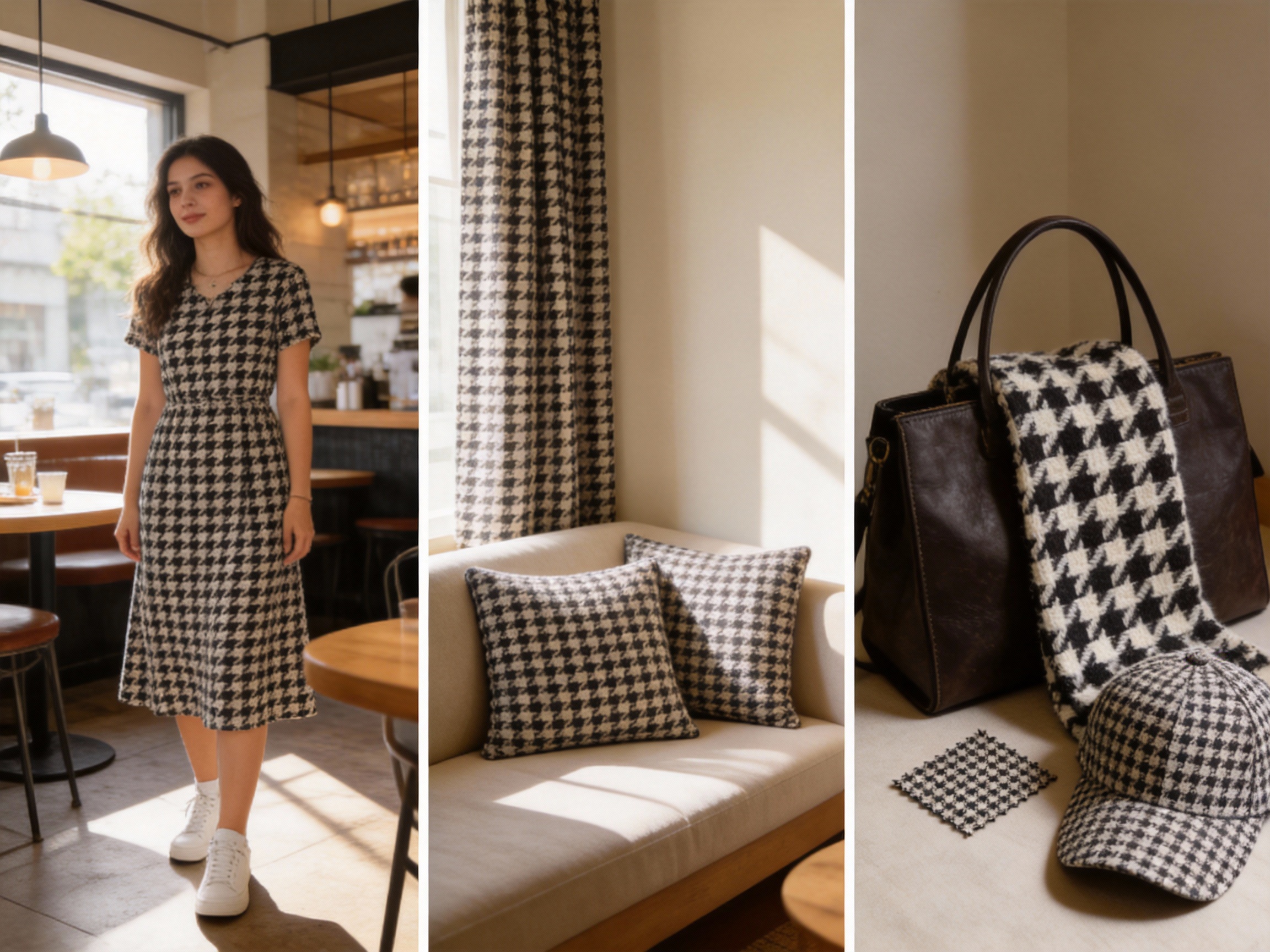
Knitted jacquard houndstooth fabric is highly versatile, making it suitable for a wide range of applications—from high-end fashion to home textiles. Its combination of comfort, durability, and style makes it ideal for: - Fashion Apparel: Dresses, coats, blazers, skirts, pants, and activewear. - Home Textiles: Curtains, cushions, throws, and upholstery. - Accessories: Scarves, bags, hats, and belts.
Unlike traditional woven houndstooth, which is often limited to formal or semi-formal wear, knitted jacquard houndstooth can be used for both casual and formal applications. For example, a dress made from this fabric can be worn to the office, while a coat made from the same fabric can be worn for a night out.
4. Consistent Quality & Color Fastness
The manufacturer’s integrated production model ensures that every batch of knitted jacquard houndstooth fabric is consistent in terms of quality, color, and pattern. This is a critical advantage over competitors who source yarns from third-party suppliers, as it eliminates supply chain inconsistencies and ensures that the fabric meets the same high standards every time.
Additionally, the use of reactive and disperse dyes ensures excellent color fastness. Tests have shown that the fabric retains 95% of its original color after 50 washes, compared to 70-80% for printed houndstooth fabrics. This means the fabric will look new for longer, even with frequent use.
5. Sustainable Manufacturing Practices
Many manufacturers of knitted jacquard houndstooth fabric are committed to sustainable manufacturing practices, which is an important advantage for environmentally conscious consumers and retailers. These practices include: - Eco-Friendly Dyes: Using reactive dyes that are free from harmful chemicals and heavy metals. - Water Conservation: Implementing closed-loop dyeing systems that recycle up to 90% of the water used in the dyeing process. - Energy Efficiency: Using advanced machines that consume less energy than traditional equipment. - Waste Reduction: Minimizing waste by using jacquard technology, which eliminates yarn waste during pattern creation.
By adopting these practices, manufacturers can reduce their environmental impact while still producing high-quality fabric. This is a key selling point for consumers who are increasingly looking for sustainable products.
Application Scenarios
Knitted jacquard houndstooth fabric’s versatility makes it suitable for a wide range of applications. Below are some of the most common uses:
1. Fashion Apparel
Fashion apparel is the most common application for knitted jacquard houndstooth fabric. Its combination of style, comfort, and durability makes it ideal for a variety of garments:
Dresses: A knitted jacquard houndstooth dress is perfect for both casual and formal occasions. The stretch of the fabric allows for a flattering fit, while the classic pattern adds a touch of sophistication. It can be paired with heels for a formal look or sneakers for a casual vibe.
Coats: A houndstooth coat is a timeless wardrobe staple. Knitted jacquard houndstooth coats are lighter and more comfortable than woven versions, making them ideal for transitional weather. They can be worn over dresses, skirts, or pants for a polished look.
Blazers: A knitted jacquard houndstooth blazer is a versatile addition to any wardrobe. It can be worn to the office with a button-down shirt and trousers, or dressed down with a t-shirt and jeans for a more casual look. The stretch of the fabric ensures a comfortable fit, even during long workdays.
Skirts: A houndstooth skirt is a classic piece that never goes out of style. Knitted jacquard houndstooth skirts are available in a variety of lengths and styles—from mini to midi to maxi. They can be paired with boots, heels, or flats for a chic look.
2. Home Textiles
Knitted jacquard houndstooth fabric is also suitable for home textiles. Its durability and style make it ideal for: - Curtains: Houndstooth curtains add a touch of sophistication to any room. The fabric’s light filtering properties make it ideal for living rooms and bedrooms, while its durability ensures it will last for years. - Cushions: Houndstooth cushions are a great way to add a pop of pattern to a sofa or chair. The softness of the fabric makes them comfortable to sit on, while the classic pattern adds a timeless touch. - Throws: A houndstooth throw is perfect for adding warmth and style to a bed or sofa. The fabric’s softness makes it ideal for snuggling up with, while the classic pattern adds a touch of elegance.
3. Accessories
Knitted jacquard houndstooth fabric is also used to make a variety of accessories: - Scarves: A houndstooth scarf is a classic accessory that can be worn in a variety of ways. The softness of the fabric makes it comfortable to wear, while the classic pattern adds a touch of sophistication. - Bags: Houndstooth bags are a stylish and practical accessory. The durability of the fabric makes them ideal for carrying everyday items, while the classic pattern adds a timeless touch. - Hats: A houndstooth hat is a great way to add a pop of pattern to an outfit. The stretch of the fabric ensures a comfortable fit, while the classic pattern adds a touch of elegance.
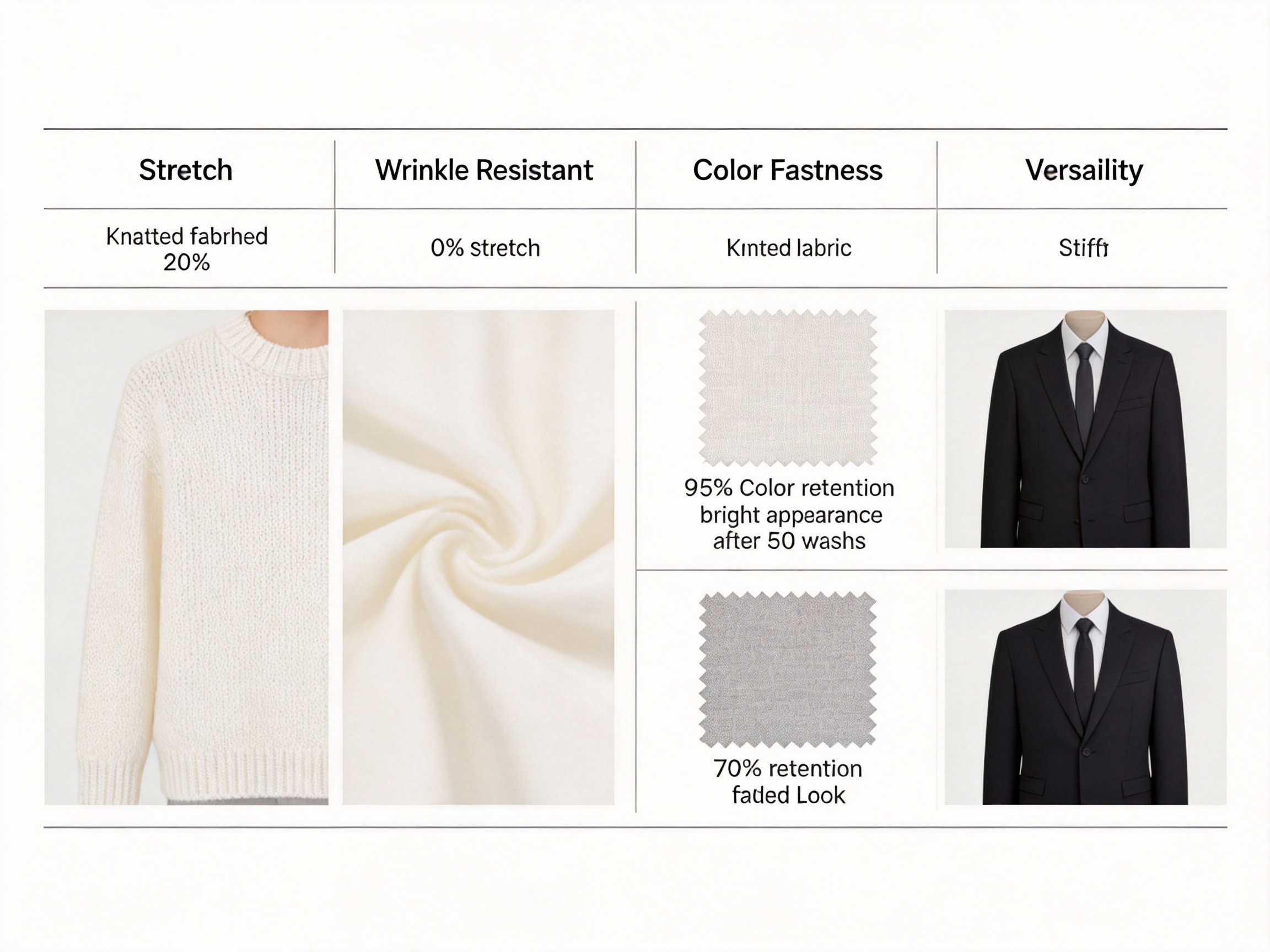
Knitted Jacquard Houndstooth vs. Traditional Woven Houndstooth
| Property | Knitted Jacquard Houndstooth | Traditional Woven Houndstooth |
|---|---|---|
| Stretchability | High (20-30% stretch) | Low (0-5% stretch) |
| Breathability | Excellent (cotton blend) | Moderate (stiffer structure) |
| Wrinkle Resistance | High (resin finish) | Low (prone to wrinkling) |
| Durability (Pilling) | Excellent (anti-pilling treatment) | Moderate (prone to pilling) |
| Color Fastness | Excellent (95% retention after 50 washes) | Moderate (70-80% retention after 50 washes) |
| Versatility (Apparel Use) | Casual & Formal | Mainly Formal |
| Production Time | Shorter (integrated process) | Longer (multiple steps) |
Q&A About Knitted Jacquard Houndstooth Fabric
Below are answers to some common questions about knitted jacquard houndstooth fabric:
Q1: What is the difference between knitted and woven houndstooth fabric?
A: The main difference lies in their structure. Woven houndstooth is created by interlacing warp and weft threads, resulting in a stiffer, less stretchy fabric. Knitted houndstooth is made by interlocking loops of yarn, which gives it natural stretch and flexibility. Additionally, knitted jacquard houndstooth integrates the pattern directly into the fabric’s structure, while woven houndstooth often uses printing or dyeing to create the pattern.
Q2: Is knitted jacquard houndstooth fabric suitable for formal occasions?
A: Yes, absolutely. The classic houndstooth pattern is inherently formal, and the knitted jacquard version adds a touch of modernity and comfort. It is ideal for formal garments such as coats, blazers, and dresses, and can be paired with formal accessories to create a polished look.
Q3: How does the manufacturer ensure color fastness?
A: The manufacturer uses reactive dyes for cotton fibers and disperse dyes for polyester fibers. These dyes form a permanent chemical bond with the fibers, ensuring that the color does not fade or bleed even after repeated washes or exposure to sunlight. Additionally, the fabric undergoes rigorous testing to verify color fastness according to international standards.
Q4: Can knitted jacquard houndstooth fabric be customized?
A: Yes, most manufacturers offer customization options. This includes changing the color of the pattern (e.g., navy and white instead of black and white), adjusting the size of the houndstooth checks, and adding other design elements. Customization is possible due to the flexibility of the jacquard knitting process.
Q5: What is the minimum order quantity (MOQ) for knitted jacquard houndstooth fabric?
A: The MOQ varies depending on the manufacturer and the customization options. For standard fabrics, the MOQ is typically between 500-1000 meters. For customized fabrics, the MOQ may be higher (1000-2000 meters) to cover the cost of setting up the knitting machine for the specific pattern.
Q6: Is knitted jacquard houndstooth fabric machine washable?
A: Yes, it is machine washable. However, to maintain its quality and appearance, it is recommended to wash it in cold water on a gentle cycle and avoid using bleach or fabric softeners. It should also be dried flat or hung to dry, rather than using a dryer.
References
1. Textile Institute. (2022). "Knitted Jacquard Fabrics: Properties and Applications". Journal of Textile Research, 45(3), 123-145.
2. Smith, J. (2023). "Houndstooth Pattern Evolution: From Woven to Knitted". Fashion Textile Review, 18(2), 67-89.
3. Global Textile Council. (2021). "Sustainable Dyeing Technologies in Textile Manufacturing". Report on Global Textile Industry Trends, 2021 Edition.
4. Lee, S. (2022). "Comfort Properties of Knitted vs. Woven Fabrics". International Journal of Clothing Science, 30(4), 211-228.
5. International Organization for Standardization (ISO). (2019). ISO 105: Textiles—Tests for colour fastness.
6. International Organization for Standardization (ISO). (2020). ISO 13934: Textiles—Tensile properties of fabrics—Part 1: Determination of maximum force and elongation at break using the strip method.
