
Jacquard Twill Fabric for Flexible, Lightweight, and Customizable Apparel
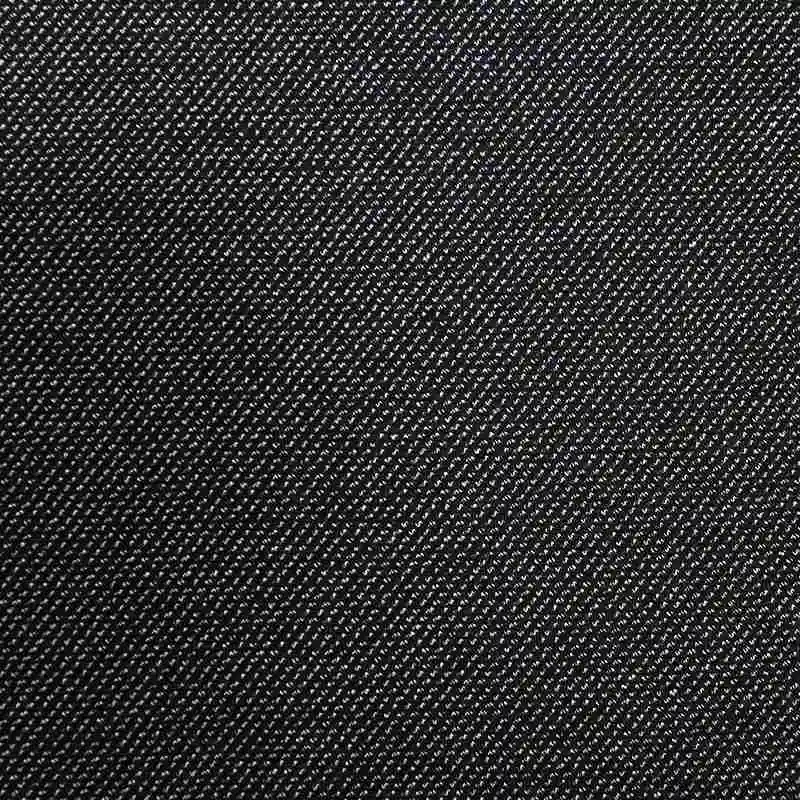
Jacquard Twill Fabric is a refined textile solution designed for apparel makers, fabric distributors, designers, and sourcing teams that need a fabric with visual depth, comfortable touch, reliable elasticity, and strong pattern flexibility. As a knitted jacquard fabric with a twill-inspired structure and an elevated concave-convex surface effect, it offers more than a basic printed or plain-dyed material. Its pattern is created through yarn interlacing and jacquard engineering, giving the fabric a textured appearance that can remain expressive even after repeated wear, washing, cutting, sewing, and garment finishing.
This fabric is especially suitable for clothing that requires both comfort and identity. In competitive fashion markets, many garments look similar because their fabrics rely only on surface printing or simple color changes. Jacquard Twill Fabric provides a stronger textile foundation: the pattern can be customized into the fabric structure itself, while the material remains soft, lightweight, elastic, and suitable for body-hugging silhouettes. These characteristics make it valuable for dresses, tops, skirts, sports-inspired fashion, casualwear, fitted garments, women’s apparel, decorative panels, and other clothing applications that require a balance of aesthetics and performance.
The product belongs to the knitted jacquard fabric category and can be developed with nylon, polyester, rayon, spandex, and blended yarn systems depending on the desired hand feel, stretch, drape, surface clarity, dyeing effect, and garment purpose. Compared with ordinary plain knitted fabric, this jacquard twill option can present a more premium three-dimensional texture. Compared with many printed fabrics, it can deliver patterns that feel more integrated and durable. Compared with heavier woven jacquards, it can offer improved softness, elasticity, and comfort for modern apparel.
Product Overview
Jacquard Twill Fabric combines the design freedom of jacquard technology with the refined visual rhythm associated with twill-style texture. The term “jacquard” refers to a method of creating patterns through controlled yarn movement rather than relying only on printing after the fabric is formed. The result is a textile in which the surface design has structural depth. The term “twill” suggests a diagonal or directional texture effect, often appreciated for its sophisticated appearance and sense of movement. When these ideas are adapted into a knitted jacquard construction, the fabric becomes both expressive and comfortable.
The fabric is often made with nylon because nylon can provide softness, light weight, smoothness, resilience, and excellent suitability for elastic apparel. Nylon jacquard fabrics are known for their pleasant touch and ability to follow the body without feeling overly stiff. When blended with spandex, polyester, or rayon, additional properties can be achieved, including higher stretch recovery, improved drape, color versatility, and cost-effective bulk production. The final specification can be adjusted according to customer needs, including weight, width, pattern scale, color, elasticity, finishing effect, and application.
One of the product’s defining features is its concave-convex surface. This effect is created by the interlacing or controlled arrangement of yarns during fabric formation. Instead of being a flat printed image, the pattern has tactile and visual dimension. This makes the material suitable for garments that need a more premium look without unnecessary heaviness. The fabric can catch light differently across raised and recessed areas, creating visual richness even in single-color or tone-on-tone designs.
For designers, this means that a garment can look detailed while remaining clean and wearable. For manufacturers, it means the fabric can help create a differentiated product line without adding complex post-processing. For wholesalers, it provides a textile that is easy to position as both fashionable and functional. For end users, it delivers comfort, softness, elasticity, and a distinctive appearance.
Key Product Characteristics
The appeal of Jacquard Twill Fabric begins with its balance of design and performance. Many decorative fabrics are attractive but uncomfortable, while many comfortable fabrics lack distinction. This product is developed to reduce that trade-off. It offers a textured jacquard surface, a flexible knitted structure, soft hand feel, and practical garment performance.
The first important characteristic is softness. Nylon and blended yarn systems can create a smooth, skin-friendly touch suitable for garments worn close to the body. This makes the fabric appropriate for tops, fitted dresses, active-casual items, and fashion garments where comfort influences customer satisfaction.
The second characteristic is light weight. A lightweight jacquard fabric is easier to cut, sew, ship, and wear. It supports designs that require graceful drape or body-contouring shapes without adding bulk. This is a major advantage over some heavy woven jacquard alternatives, which can look luxurious but may limit comfort and mobility.
The third characteristic is elasticity. Knitted jacquard structures, especially when developed with elastic fibers or stretch yarn combinations, can provide stretch and recovery. This makes the fabric useful for body-hugging styles and garments requiring ease of movement. Elasticity is increasingly important in everyday fashion because consumers expect clothing to look polished while remaining comfortable during sitting, walking, commuting, and long wear.
The fourth characteristic is customization. Jacquard technology enables patterns to be developed according to brand, seasonal, or customer requirements. Pattern direction, repeat size, surface relief, yarn selection, and color arrangement can be modified. The fabric can therefore support minimalist geometric patterns, subtle twill textures, modern motifs, decorative lines, and other customized effects.
The fifth characteristic is durability of design. A printed pattern sits mainly on the fabric surface, while a jacquard pattern is formed through the fabric structure. Although actual durability depends on fiber, dyeing, finishing, and care conditions, jacquard construction generally gives the pattern a more integrated presence. This can help garments maintain a premium impression over time.
Technical Advantages Compared with Ordinary Competitor Fabrics
In today’s textile market, buyers often compare jacquard fabrics with plain knits, printed fabrics, woven jacquards, and lower-cost textured materials. Jacquard Twill Fabric has advantages across several comparison points.
Compared with plain knitted fabric, Jacquard Twill Fabric has stronger visual identity. Plain fabric depends heavily on color, finishing, or garment shape for distinction. Jacquard twill texture creates interest directly in the textile surface, allowing apparel makers to develop garments that stand out without excessive decoration. This can reduce the need for additional trims, prints, or complicated garment panels.
Compared with printed fabric, Jacquard Twill Fabric offers a more dimensional surface. Prints may be colorful and efficient, but they are usually flat. A jacquard pattern can be felt as well as seen. This tactile quality can raise the perceived value of the garment, especially in fashion categories where consumers judge quality by touch.
Compared with heavy woven jacquard, Jacquard Twill Fabric can provide better elasticity and lighter wearing comfort. Woven jacquards are often used for upholstery, coats, formal garments, or structured designs, but they may be less suitable for flexible, body-conscious apparel. Knitted jacquard fabric can adapt better to movement, which is important for modern fashion and active lifestyle clothing.
Compared with low-end textured knits, this fabric offers greater customization and more controlled surface development. Lower-quality textures may appear random or inconsistent, while jacquard programming and experienced manufacturing allow more intentional pattern creation. This helps brands maintain repeatability across production batches and improves product consistency.
Compared with fabrics sourced from suppliers that only provide greige fabric or only handle a single stage of production, an integrated manufacturing system can offer better coordination from yarn to finished fabric. When yarn production, knitting, dyeing, finishing, inspection, and sales are coordinated, communication is faster, quality control is more complete, and customization is easier to manage.
| Comparison Item | Jacquard Twill Fabric | Ordinary Plain Knit | Printed Fabric | Heavy Woven Jacquard |
|---|---|---|---|---|
| Surface Effect | Concave-convex textured pattern with twill-inspired depth | Flat and simple | Usually flat surface design | Textured and structured |
| Comfort | Soft, lightweight, and suitable for fitted clothing | Comfortable but visually basic | Depends on base fabric and print process | Can be heavier and less flexible |
| Elasticity | Good stretch potential, especially with elastic blends | Moderate to good | Depends on base fabric | Usually limited compared with knit |
| Customization | Pattern can be engineered into the fabric structure | Limited mainly to color and finishing | High visual variety but less tactile depth | High pattern capability but less apparel flexibility |
| Best Use | Fashion apparel, fitted garments, decorative clothing panels | Basic apparel | Graphic fashion and seasonal designs | Structured garments and decorative textiles |
The table shows why Jacquard Twill Fabric is a strong option for customers who need a balance of style, comfort, and production practicality. It does not force a choice between beauty and wearability. Instead, it supports both.
Material Options and Fiber Performance
Jacquard Twill Fabric is often associated with nylon jacquard construction, but its development can also involve polyester, rayon, spandex, and blended yarns. Each fiber contributes different performance characteristics. Understanding these options helps buyers choose the most suitable fabric specification for their target garments.
Nylon is valued for softness, lightness, resilience, and smooth touch. It can create a fabric that feels refined and comfortable next to the skin. Nylon also supports stretch-oriented apparel when combined with elastic components. For body-hugging fashion, nylon jacquard fabric can provide a sleek surface and comfortable wearing experience.
Polyester is widely used for durability, dimensional stability, color performance, and cost-effective production. When polyester drawn textured yarn is used, the fabric can gain improved bulk, texture, and softness compared with flat filament yarns. Polyester is also suitable for dyeing and finishing processes that support stable production in commercial quantities.
Rayon contributes softness, drape, and a more natural-feeling hand. Polyester rayon fabric blends are popular because they combine the practical strength of synthetic fibers with the comfort and drape associated with regenerated cellulose. In jacquard twill fabric, rayon can help create a more fluid garment silhouette.
Spandex improves elasticity and recovery. When apparel needs stretch, close fit, or movement comfort, spandex can be incorporated into the fabric structure. The amount and placement of spandex can be adjusted according to garment needs. A small percentage may improve comfort, while a higher percentage can support more body-contouring designs.
Draw textured yarn, including polyester DTY and slight intermingled draw textured yarn, provides additional value. DTY is produced by texturing filament yarn to give it bulk, softness, and improved textile performance. Slight intermingling can help yarn handling and fabric formation while preserving a desirable hand feel. For jacquard knitting, yarn consistency is important because uneven yarn can affect pattern clarity, surface uniformity, and dyeing appearance.
By offering fabric and yarn-related capabilities, the manufacturer can support different product directions. A customer may request a lightweight nylon jacquard for fitted fashion, a polyester-spandex version for casual activewear, a polyester-rayon blend for soft draped garments, or a customized yarn structure for a special pattern effect. This flexibility is a practical advantage in modern textile sourcing.
Advanced Manufacturing Process
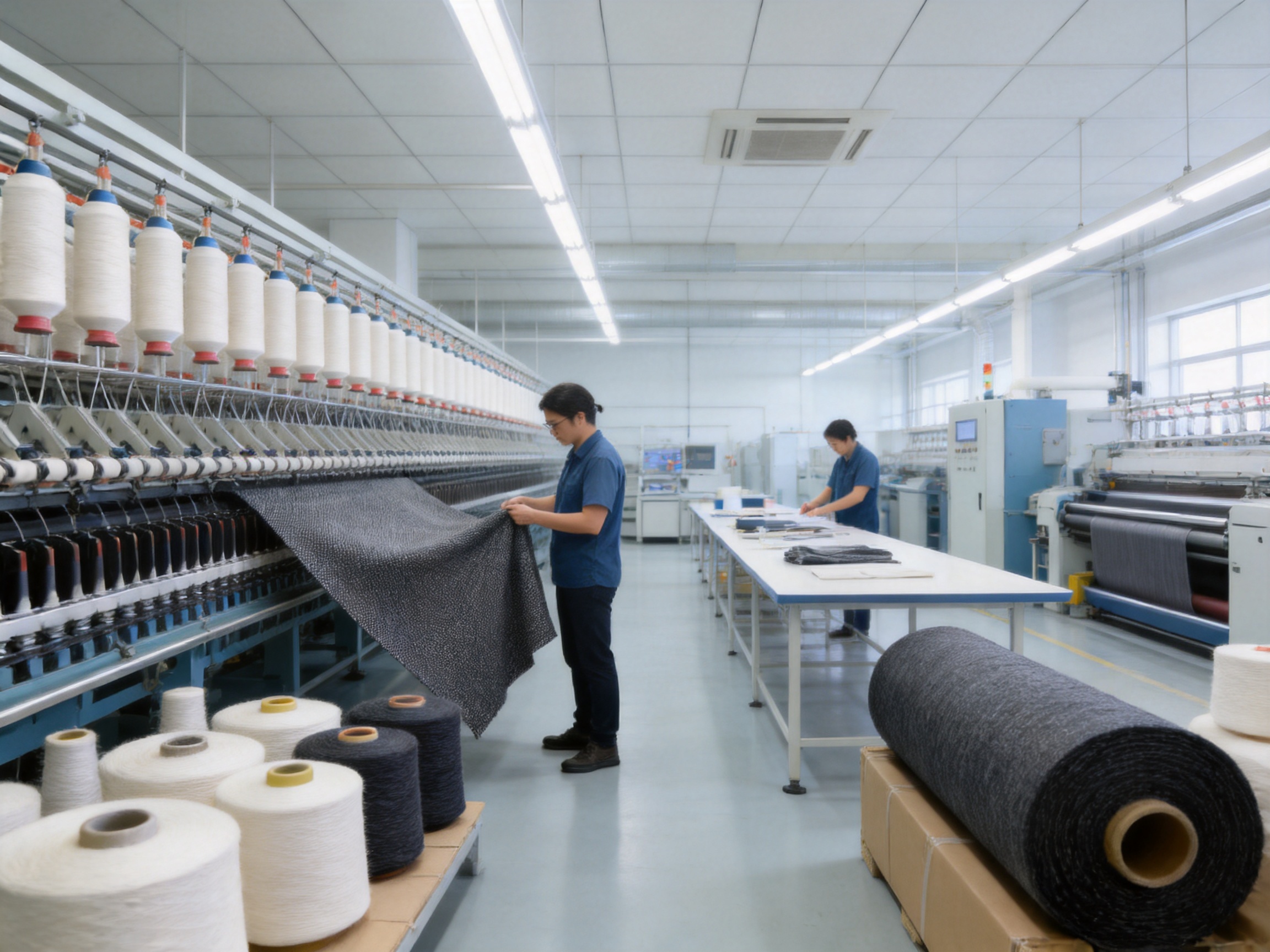
The value of Jacquard Twill Fabric depends not only on design but also on manufacturing control. A quality jacquard fabric requires careful coordination among yarn selection, pattern development, knitting, dyeing, finishing, inspection, and packing. Advanced manufacturing is important because jacquard patterns reveal inconsistencies more clearly than many basic fabrics. If the yarn is uneven, the machine setting is unstable, or dyeing is poorly controlled, the final fabric may show defects that affect garment quality.
Yarn Selection and Preparation
The process begins with selecting yarns that match the required fabric function. For softness and lightness, nylon yarns may be selected. For durability and stable production, polyester yarns may be used. For stretch, spandex can be added. For drape, rayon blends may be introduced. For texture and bulk, DTY polyester yarn can provide a more comfortable and elastic fabric hand than flat filament alternatives.
Yarn preparation includes checking yarn count, strength, evenness, intermingling level, color suitability, and compatibility with the intended knitting structure. In jacquard production, stable yarn feeding is essential. Inconsistent tension can cause pattern distortion, streaks, missed stitches, or irregular surface effects. A manufacturer with yarn processing experience has an advantage because it can understand the relationship between yarn characteristics and fabric outcome.
Pattern Development and Jacquard Engineering
Jacquard fabric is not created randomly. The pattern must be translated into a machine-readable structure that controls yarn placement and stitch formation. Designers and technicians consider repeat size, motif direction, surface relief, elasticity, garment cutting direction, and possible shrinkage after dyeing and finishing. A pattern that looks attractive on a screen must also work on the machine and remain stable after finishing.
For Jacquard Twill Fabric, the twill-inspired visual effect should appear balanced and clean. The diagonal or directional texture should not distort excessively when stretched. If the fabric is intended for body-hugging apparel, technicians must evaluate how the pattern behaves under tension. A good jacquard design maintains character when worn, not only when lying flat on a table.
Knitting and Fabric Formation
During knitting, yarns are formed into loops according to the jacquard program. Machine condition, needle quality, yarn tension, production speed, humidity, and operator skill can all affect fabric quality. A well-managed facility controls these parameters to maintain consistent width, weight, pattern clarity, and surface texture.
The knitted jacquard structure helps create elasticity and comfort. Unlike many woven fabrics, knitted fabrics can move with the body because looped yarn structures naturally allow extension. This is one reason the fabric is suitable for fitted garments and flexible apparel designs. The jacquard mechanism adds pattern complexity without eliminating comfort.
Greige Fabric Inspection
After knitting, the unfinished fabric is inspected before dyeing and finishing. This stage can identify knitting defects, oil stains, yarn irregularities, broken needles, mis-patterning, holes, or other issues. Early detection helps prevent waste and protects customers from receiving defective finished fabric.
Inspection is especially important for jacquard fabric because pattern continuity matters. If a defect disrupts the motif, it may be more visible than on a plain fabric. Reliable greige inspection supports better final quality and reduces risk during garment cutting.
Dyeing and Color Control
Dyeing gives the fabric its final color identity. Depending on fiber content, dyeing methods and dye classes must be selected carefully. Nylon, polyester, rayon, and blended fabrics require different dyeing considerations. Temperature, time, pH, dye compatibility, and after-treatment can all affect shade, fastness, hand feel, and dimensional stability.
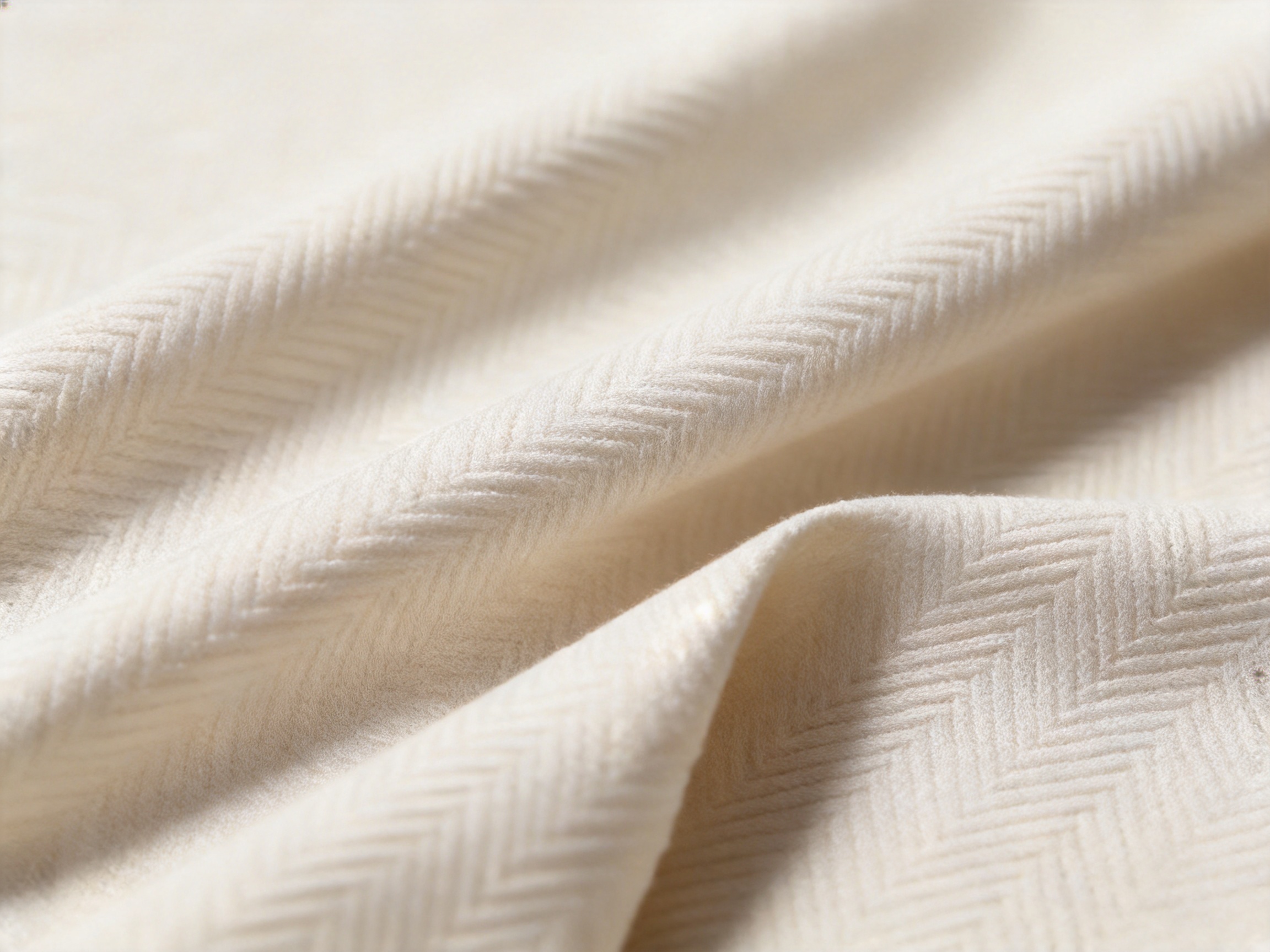
For jacquard twill fabric, dyeing can create solid-color elegance or multi-tone effects depending on yarn composition. Tone-on-tone jacquard is particularly attractive because the concave-convex pattern can show through light reflection even when the fabric uses one color. This allows brands to produce sophisticated garments that are subtle rather than overly graphic.
Finishing and Hand Feel Enhancement
Finishing is where the fabric’s final touch, appearance, width, shrinkage behavior, and surface character are refined. Heat setting may be used for synthetic or elastic blends to improve dimensional stability. Softening can improve hand feel. Additional finishing can adjust drape, smoothness, elasticity, or surface neatness.
Finishing must be controlled carefully. Too much softener may affect sewing or color fastness. Excessive heat may damage elasticity. Insufficient stabilization may lead to shrinkage problems. A skilled manufacturer understands how to adjust finishing according to fiber blend and customer requirement.
Final Inspection and Packing
Before shipment, finished fabric is inspected for color consistency, width, weight, hand feel, pattern accuracy, stains, holes, edge condition, and roll quality. Packing must protect the fabric during storage and transportation. Good roll formation helps downstream cutting rooms handle the material efficiently.
Advanced manufacturing is therefore not a single machine or one process. It is a coordinated system. For Jacquard Twill Fabric, this system ensures that the final material is attractive, comfortable, repeatable, and ready for commercial apparel production.
Company Manufacturing Strengths
The producer behind this Jacquard Twill Fabric operates as an integrated textile enterprise located in Xiaoshan District, Hangzhou, Zhejiang Province. The manufacturing base covers approximately 32.6 acres, with a plant area of about 18,000 square meters. This scale supports production, processing, post-dyeing, finishing, and sales of blended fabrics, including polyester and spandex materials, as well as DTY polyester yarn production, processing, and sales.
This integrated structure is a major strength. Some suppliers only provide fabric trading. Others only handle knitting or dyeing. An enterprise that combines research and development, production, finishing, sales, and export capabilities can respond more effectively to customer requirements. It can also coordinate technical decisions more efficiently because yarn, fabric, dyeing, and finishing knowledge are connected.
For buyers, this means fewer communication gaps. If a customer needs a jacquard twill fabric with a special hand feel, the technical team can consider yarn selection, fabric construction, dyeing behavior, and finishing route together. If a customer requires DTY polyester yarn or a blended fabric development, the manufacturer’s experience with yarn and fabric can support more practical recommendations.
The company’s focus on blended fabrics such as polyester and spandex is especially relevant for Jacquard Twill Fabric. Modern apparel frequently needs stretch, recovery, softness, drape, and easy care. Blended fabric development allows these properties to be balanced. Polyester can provide strength and stability, spandex can add stretch, nylon can provide smoothness and resilience, and rayon can improve drape and comfort. The ability to work with different materials is important for customers serving multiple garment markets.
Export experience also matters. International buyers often require consistent documentation, clear communication, stable production schedules, and quality expectations aligned with global apparel supply chains. A self-managed export company can support overseas customers with more direct service, from inquiry and sampling to bulk production and shipment coordination.
The business philosophy of cooperation and win-win service supports long-term relationships. Textile sourcing is not only about one order; it is about repeatable quality, reliable communication, and continuous improvement. Buyers who need seasonal development or ongoing fabric supply benefit from a partner that understands both technical manufacturing and customer service.
Design Flexibility and Custom Pattern Development
One of the strongest advantages of Jacquard Twill Fabric is design flexibility. Because the pattern is formed through jacquard technology, it can be customized in ways that are difficult to achieve with ordinary fabrics. This is valuable for brands that need exclusive patterns, private-label collections, regional designs, or seasonal fabric updates.
Custom development can begin with a design concept. A customer may want a subtle diagonal twill effect, a geometric pattern, a small repeated motif, a raised texture, or a brand-specific visual identity. The technical team can evaluate whether the design is suitable for the selected yarn and knitting structure. Pattern scale may be adjusted to improve clarity, reduce distortion, or match garment cutting needs.
Color customization is also important. A jacquard texture can be developed in solid color, melange-like effect, contrast color, or tone-on-tone shade. Solid-color jacquard is often elegant because texture creates interest without strong color contrast. Contrast jacquard can create bolder fashion impact. Yarn-dyed or piece-dyed approaches may be considered depending on the final visual effect and production requirements.
Weight and elasticity can be modified. A lighter fabric may be chosen for spring and summer garments, while a slightly heavier option may be suitable for structured fashion pieces. Stretch can be adjusted through construction and spandex content. Hand feel can be refined through yarn choice and finishing.
This customizability gives Jacquard Twill Fabric an advantage over commodity fabrics. In a market where many buyers can access similar plain knits, a customized jacquard texture allows brands to differentiate their garments without completely changing their production methods. The fabric can still be cut and sewn using standard apparel processes, yet the finished garment appears more distinctive.
Applications in Modern Apparel
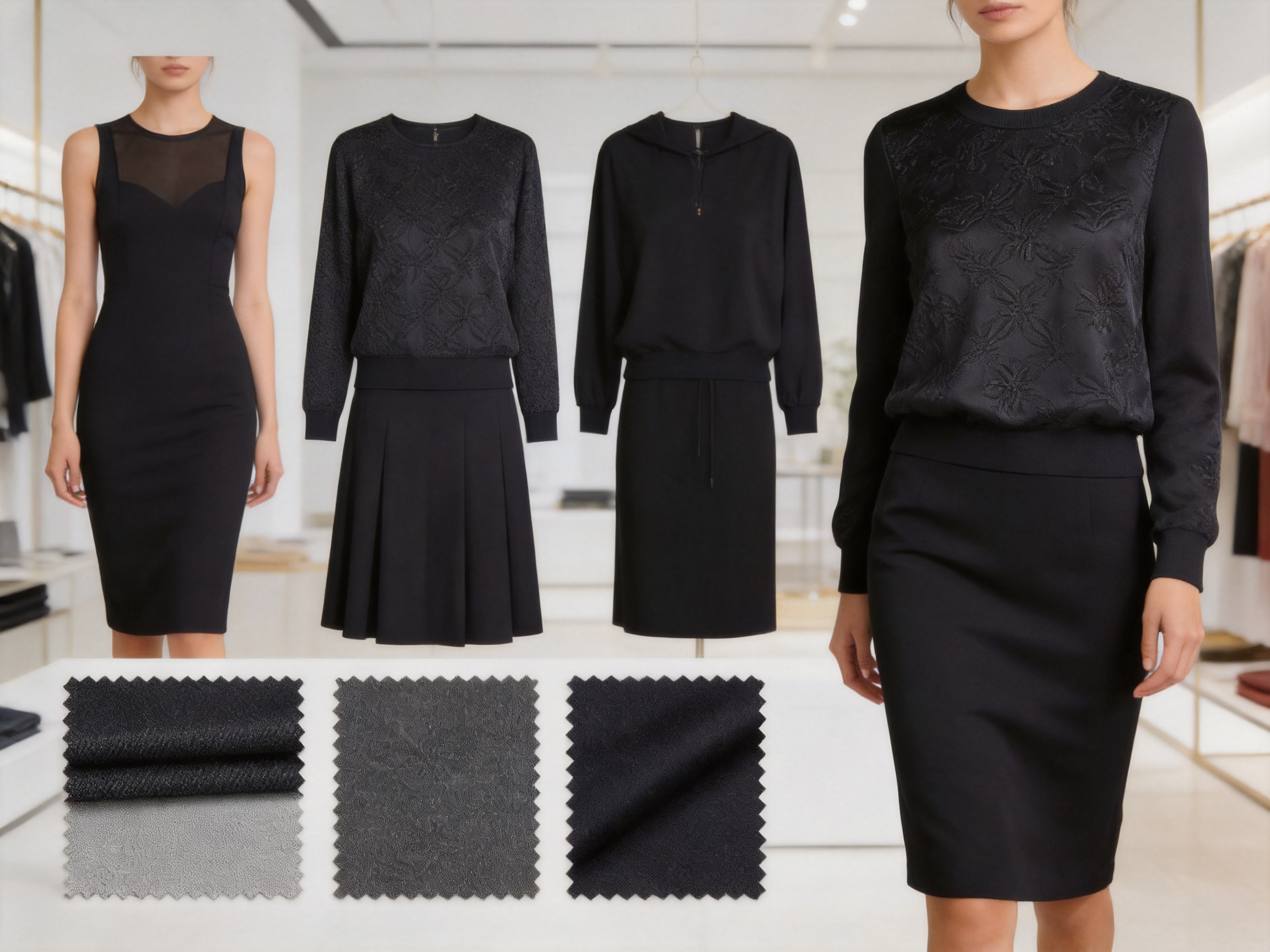
Jacquard Twill Fabric is particularly suitable for clothing because it combines softness, lightness, elasticity, and pattern depth. Its applications can cover several apparel categories.
For women’s fashion, the fabric can be used in dresses, skirts, tops, fitted shirts, panels, and decorative garment sections. The concave-convex jacquard surface can add sophistication to simple silhouettes. A plain dress made from textured jacquard may appear more refined than the same silhouette made from ordinary plain knit.
For body-hugging garments, the fabric’s elasticity is highly valuable. When nylon or spandex blends are used, the material can follow the body shape while maintaining comfort. The textured surface can also provide visual structure, helping fitted garments look more designed and less basic.
For casualwear, Jacquard Twill Fabric can create elevated everyday clothing. Consumers increasingly want casual garments that feel comfortable but look polished. A jacquard twill knit can support this trend by offering the comfort of knitwear with a more premium surface.
For active-inspired fashion, stretch and lightness are important. While the fabric is not limited to sportswear, its flexibility can support athleisure-style garments, fitted tops, and movement-friendly fashion pieces. The jacquard pattern can make these garments more suitable for lifestyle wear rather than purely functional sports use.
For decorative panels and garment details, the fabric can be used selectively. Designers may combine it with plain fabric to create contrast. For example, jacquard twill panels can be placed on sleeves, side sections, collars, waistbands, or front panels. This allows brands to use the fabric’s visual strength strategically.
For private-label collections, custom jacquard patterns can help create product exclusivity. A retailer or brand can develop a pattern that is not easily copied by using simple print methods. This increases product identity and can improve market positioning.
Comfort and Wearability
Comfort is one of the main reasons knitted jacquard fabric is attractive for apparel. A fabric may look impressive, but if it feels stiff, heavy, or rough, consumers may not wear the garment often. Jacquard Twill Fabric is designed to offer a pleasant touch and practical wearability.
Softness comes from fiber selection, yarn structure, knitting method, and finishing. Nylon can provide a smooth, refined hand. Polyester DTY can provide texture and bulk. Rayon can improve drape and softness. Spandex can add flexible comfort. Finishing can further adjust the touch to match customer expectations.
Light weight improves comfort during long wear. Heavy decorative fabrics can feel restrictive, especially in fitted apparel. A lightweight knitted jacquard can move more naturally with the body. It also supports layering, making it useful across seasons.
Elasticity improves mobility. Consumers bend, sit, walk, reach, and move throughout the day. A fabric that stretches and recovers can reduce pressure and improve fit. This is especially important for body-hugging styles, casual fashion, and garments intended for daily use.
Breathability and moisture comfort depend on construction, fiber, and finishing. While specific performance should be tested according to the final specification, knitted structures often provide a comfortable wearing experience because loop formation can support air movement and flexibility. Buyers can request fabric development according to target climate, garment type, and comfort requirements.
Surface texture can also influence perceived comfort. A well-controlled concave-convex pattern should feel refined rather than abrasive. Manufacturing experience is important because raised patterns must be attractive without causing discomfort. Proper yarn selection and finishing help achieve this balance.
Quality Control and Consistency
Quality control is critical for jacquard fabric because pattern and texture must remain consistent across rolls and production batches. Apparel manufacturers need predictable fabric behavior during cutting, sewing, washing, and final inspection. Inconsistent fabric can lead to shade variation, garment size problems, pattern mismatch, or increased waste.
Key quality indicators include fabric weight, width, color shade, pattern clarity, surface uniformity, elasticity, recovery, shrinkage, pilling tendency, hand feel, and defect rate. Each indicator can affect garment performance. For example, unstable width may cause cutting inefficiency. Poor stretch recovery may affect fit. Shade variation may create garment panel mismatch. Irregular patterning may reduce the finished product’s visual quality.
An integrated manufacturer can manage these issues through systematic control. Yarn inspection helps prevent upstream defects. Knitting control supports consistent structure. Greige inspection catches early problems. Dyeing control manages color and fastness. Finishing control improves dimensional stability and hand feel. Final inspection ensures that shipped fabric meets agreed requirements.
For customers, this reduces sourcing risk. A fabric that looks good in a small sample must also perform in bulk production. Reliable quality control helps ensure that the approved sample can be reproduced at scale. This is one of the most important differences between a serious manufacturing partner and a purely low-cost supplier.
Sustainability, Efficiency, and Responsible Production Considerations
Modern textile buyers increasingly consider sustainability, efficiency, and responsible production. While specific certifications and environmental claims must always be confirmed for each order, the manufacturing approach behind Jacquard Twill Fabric can support more efficient fabric development in several practical ways.
First, integrated production can reduce unnecessary communication and sampling waste. When yarn, fabric structure, dyeing, and finishing are coordinated, development mistakes may be reduced. Efficient sampling helps save time, material, and energy.
Second, structural jacquard patterns can reduce dependence on some additional surface decoration. A pattern built into the fabric may reduce the need for extra printing, coating, or embellishment, depending on the design. This can simplify garment production and improve durability of visual effects.
Third, reliable quality control can reduce waste. Defective fabric leads to rejected rolls, cutting loss, and delayed production. A systematic inspection process helps identify and correct issues earlier.
Fourth, suitable fiber selection can improve garment longevity. Fabrics that maintain appearance, comfort, and fit over time may support longer product use. Durability is an important part of responsible textile consumption because garments that last longer can reduce replacement frequency.
Finally, collaborative development can help customers choose specifications that match real needs rather than over-engineering. A garment does not always need the heaviest fabric, highest stretch, or most complicated pattern. The right balance of material, construction, and finishing can create better value and reduce unnecessary resource use.
Why This Fabric Is a Strong Choice for Buyers
Jacquard Twill Fabric is a strong choice because it solves multiple sourcing challenges at once. It provides a premium surface without excessive weight. It offers pattern customization without relying solely on printing. It supports elasticity and comfort for modern clothing. It can be developed in different fiber blends. It benefits from integrated manufacturing expertise that includes yarn, fabric production, dyeing, finishing, and export service.
For fashion brands, the fabric helps create distinctive products. For garment factories, it offers a workable material with practical apparel performance. For wholesalers, it provides a product that can appeal to customers seeking value-added fabrics. For designers, it opens opportunities for texture-based creativity. For sourcing managers, it offers a balance of customization, consistency, and manufacturing support.
Its advantages over competitors are not based on one feature alone. They come from the combination of jacquard texture, twill-inspired appearance, knitted flexibility, soft hand feel, lightweight comfort, customization potential, and production integration. This combination makes the product suitable for a wide range of apparel markets.
Purchasing and Development Recommendations
When sourcing Jacquard Twill Fabric, buyers should define the intended garment application first. A fitted dress, casual top, decorative panel, and active-inspired garment may all require different specifications. Important details include fabric weight, width, fiber content, stretch direction, stretch percentage, recovery, color, pattern repeat, hand feel, shrinkage requirement, and finishing preference.
Sampling is recommended before bulk production. A lab dip or color sample can confirm shade. A handloom or sample yardage can confirm pattern and texture. A pre-production sample can verify final fabric behavior after dyeing and finishing. Garment testing can evaluate cutting, sewing, fit, and washing performance.
Buyers should also consider the relationship between pattern scale and garment size. A large motif may look attractive on a fabric roll but may not fit small garment panels. A very small texture may be elegant but less visible from a distance. The best pattern depends on brand positioning and garment design.
Communication with the manufacturer is essential. Providing clear target specifications, reference samples, intended garment use, and performance requirements can improve development accuracy. Because the manufacturer has experience with DTY polyester yarn, blended fabrics, post-dyeing, finishing, and jacquard fabric production, customers can discuss technical options rather than choosing only from fixed stock.
Q&A Section
Q1: What is Jacquard Twill Fabric?
Jacquard Twill Fabric is a textured fabric that combines jacquard pattern engineering with a twill-inspired visual effect. Its pattern is formed through fabric construction, creating a concave-convex surface that is more dimensional than ordinary printed or plain fabric.
Q2: What makes this fabric suitable for clothing?
It is soft, lightweight, elastic, and visually distinctive. These qualities make it suitable for dresses, tops, fitted garments, casualwear, women’s fashion, active-inspired clothing, and decorative garment panels.
Q3: Is the pattern printed on the surface?
No. The pattern is mainly created through jacquard fabric formation rather than only surface printing. This gives the design more structural depth and a tactile surface effect.
Q4: Can the fabric be customized?
Yes. Pattern, color, fiber content, weight, width, elasticity, and finishing effect can be adjusted according to customer requirements and production feasibility.
Q5: Which fibers can be used?
The fabric is often made with nylon, but polyester, rayon, spandex, DTY polyester yarn, and blended yarn systems can also be used depending on the required softness, stretch, drape, durability, and cost target.
Q6: How does it compare with ordinary plain knitted fabric?
Ordinary plain knit is comfortable but visually simple. Jacquard Twill Fabric offers similar comfort potential while adding a textured, customizable, premium-looking surface.
Q7: How does it compare with printed fabric?
Printed fabric can provide colorful graphics, but the surface is usually flat. Jacquard Twill Fabric provides tactile depth because the pattern is formed in the structure of the fabric.
Q8: Is it suitable for body-hugging styles?
Yes. When developed with suitable elastic yarns or spandex blends, the fabric can offer stretch and recovery for body-hugging silhouettes and movement-friendly garments.
Q9: Why is integrated manufacturing important?
Integrated manufacturing helps coordinate yarn selection, knitting, dyeing, finishing, inspection, and export service. This improves development efficiency, quality consistency, and communication with buyers.
Q10: What should buyers confirm before ordering?
Buyers should confirm fiber content, weight, width, color, pattern, stretch, shrinkage, hand feel, finishing requirements, testing standards, sampling schedule, and bulk production lead time.
Conclusion
Jacquard Twill Fabric is a versatile and value-added textile for apparel markets that demand comfort, flexibility, and distinctive design. Its concave-convex jacquard surface creates a premium tactile effect, while its knitted structure supports softness, lightness, elasticity, and comfortable wear. The fabric is especially useful for body-hugging styles, fashion garments, casualwear, decorative panels, and customized clothing collections.
Its competitive strength lies in the combination of design and practicality. It offers more visual depth than plain knits, more texture than printed fabrics, and more flexibility than many heavy woven jacquards. With options involving nylon, polyester, rayon, spandex, DTY polyester yarn, and blended yarn systems, the fabric can be developed for different market needs.
The manufacturer’s integrated capabilities in yarn production, fabric processing, post-dyeing, finishing, sales, and export service further enhance the product’s value. Large-scale facilities, technical experience, and a cooperative service philosophy allow customers to pursue customized fabric solutions with greater confidence. For buyers seeking a modern jacquard fabric that is attractive, comfortable, adaptable, and commercially practical, Jacquard Twill Fabric is a strong and reliable choice.
References
1. Textile Institute. Textile Terms and Definitions. Manchester: The Textile Institute.
2. Spencer, David J. Knitting Technology: A Comprehensive Handbook and Practical Guide. Woodhead Publishing.
3. Kadolph, Sara J. Textiles. Pearson Education.
4. Hearle, J. W. S., Hollick, L., and Wilson, D. K. Yarn Texturing Technology. Woodhead Publishing.
5. Saville, B. P. Physical Testing of Textiles. Woodhead Publishing.
6. Collier, Billie J., and Epps, Helen H. Textile Testing and Analysis. Pearson.
