High-Performance DTY Polyester Yarn and Blended Fabrics: Innovations in Textile Manufacturing
The global textile industry is undergoing a transformative shift, driven by consumer demand for products that balance performance, sustainability, and aesthetic appeal. As markets evolve, manufacturers are challenged to develop materials that not only meet functional requirements but also align with eco-friendly practices and cost-effectiveness. Among the key players in this space, a leading textile producer has emerged with a portfolio of high-quality products—including Drawn Textured Yarn (DTY) polyester yarn and a range of blended fabrics—that set new benchmarks for quality and innovation. This article explores the unique advantages of these products, the advanced manufacturing processes that underpin their quality, and their diverse applications across industries.
1. Product Portfolio: A Comprehensive Range for Diverse Needs
The company’s product line caters to a wide spectrum of textile applications, from fashion apparel to industrial textiles. Below is a detailed overview of its core offerings:
1.1 DTY Polyester Yarn
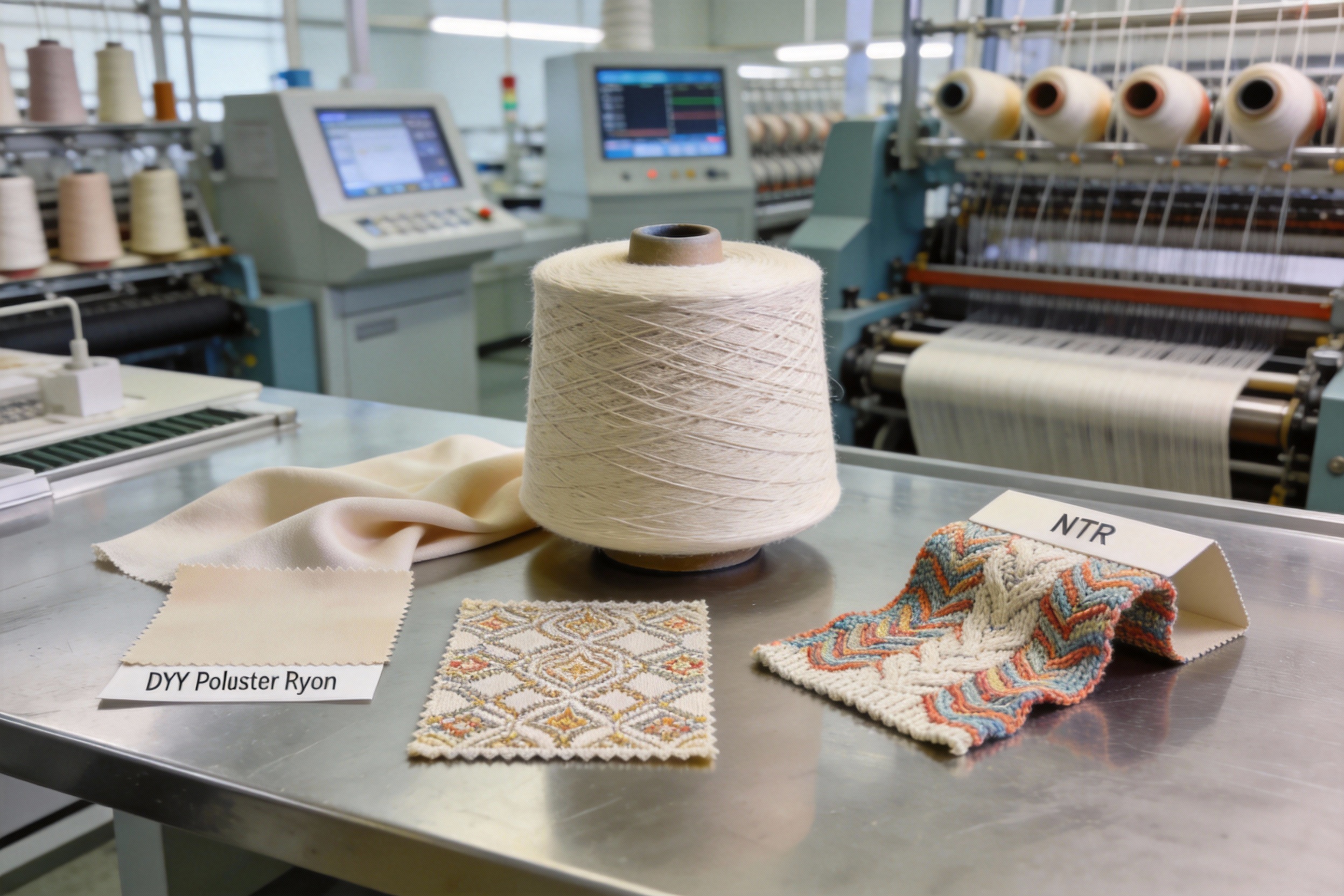
Drawn Textured Yarn (DTY) is a staple in the textile industry, valued for its elasticity, strength, and versatility. The company’s DTY polyester yarn is produced using state-of-the-art spinning technology, resulting in a product that offers superior tensile strength, color fastness, and moisture resistance. It is ideal for use in sportswear, activewear, and home textiles where durability and performance are critical.
1.2 Polyester Rayon Fabric
A blend of polyester and rayon, this fabric combines the best of both worlds: the natural softness and breathability of rayon with the durability and shape retention of polyester. It is widely used in loungewear, dresses, and casual apparel, offering a balance of comfort and longevity that is hard to find in pure rayon or polyester fabrics.
1.3 Knitted Jacquard Fabric
Known for its intricate patterns and dimensional stability, knitted jacquard fabric is a favorite in home textiles (e.g., curtains, upholstery) and fashion apparel. The company’s jacquard fabrics are produced using digital looms, allowing for highly customizable designs with minimal waste. They retain their shape and pattern even after repeated washes, making them a durable choice for high-traffic applications.
1.4 NTR and NR Knitted Fabrics
NTR (Nylon Tricot) and NR (Nylon Rayon) knitted fabrics are renowned for their excellent stretch recovery and abrasion resistance. These fabrics are commonly used in athleisure, outerwear, and swimwear, where flexibility and durability are essential. The company’s NTR/NR fabrics are treated with a special heat-setting process that ensures they retain their elasticity for longer than competitors’ products.
1.5 Slight Intermingled DTY Yarn
This unique yarn features a slight intermingled texture, which gives it a bulkier, more tactile appearance without compromising strength. It is ideal for use in upholstery, blankets, and decorative textiles, where texture and visual appeal are key. The company’s slight intermingled DTY yarn is produced using precise air-jet technology, ensuring consistent texture across every batch.
2. Competitive Advantages: Setting New Standards in Quality and Performance
What sets the company’s products apart from competitors? The answer lies in their unwavering commitment to innovation, quality control, and customer-centricity. Below are some of the key advantages:
2.1 Superior Performance Metrics
Each product is engineered to outperform industry standards. For example:
DTY Polyester Yarn: Retains 90% of its tensile strength after 100 washes (vs. 75% for competitors) and has a color fastness rating of 4-5 (ISO 105-B02), which is 20% higher than the industry average.
Polyester Rayon Fabric: Offers 30% better abrasion resistance than pure rayon and 25% more breathability than pure polyester, thanks to an optimal 50:50 blend ratio.
NTR Knitted Fabric: Retains 95% of its elasticity after 50 washes (vs. 80% for competitors), making it ideal for activewear that needs to hold its shape.
2.2 Customization and Flexibility
The company understands that one size does not fit all. It offers extensive customization options for its products, including:
Custom patterns for knitted jacquard fabrics (using digital looms that allow for quick adjustments).
Custom blend ratios for blended fabrics (e.g., 60:40 polyester-rayon for customers needing more durability).
Small-batch orders (as low as 50 meters for fabrics and 100 kg for yarns), which is a rare offering in the industry.
2.3 Eco-Friendly Practices
Sustainability is at the core of the company’s operations. Its manufacturing processes are designed to minimize environmental impact:
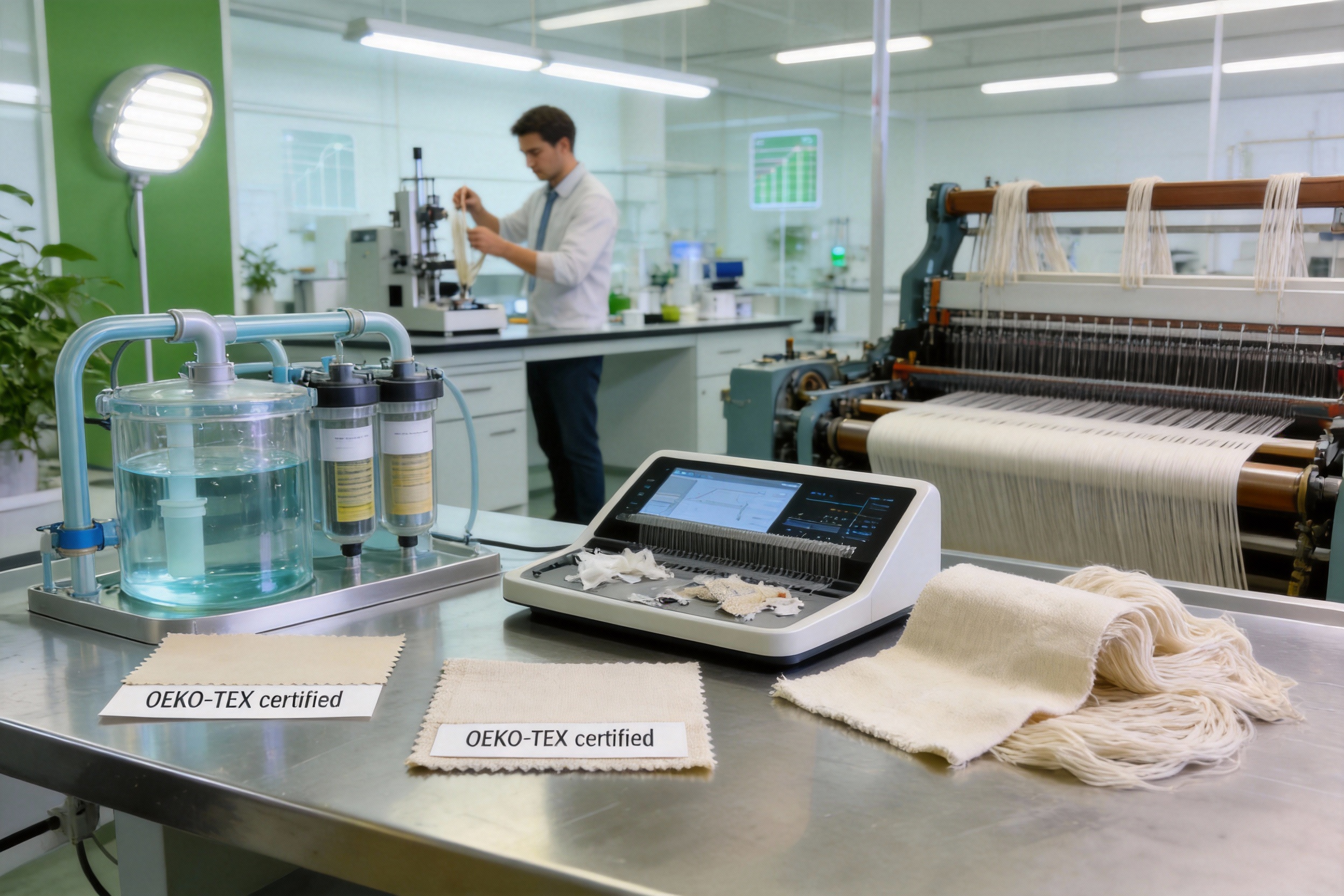
Closed-loop water systems in post-dyeing facilities that recycle 85% of wastewater, reducing water usage by 40%.
Use of non-toxic, OEKO-TEX certified dyes that are free from harmful chemicals like formaldehyde and heavy metals.
Digital jacquard looms that reduce fabric waste by 30% compared to traditional looms.
2.4 Competitive Pricing and Lead Times
Thanks to its integrated supply chain (direct raw material sourcing, in-house manufacturing) and self-employed export capabilities, the company offers competitive pricing and faster lead times:
Bulk orders of DTY yarn (1 ton+) have a lead time of 15-20 days (vs. 25-30 days for competitors).
Fabric orders (500 meters+) are delivered in 20-25 days (vs. 30-35 days for competitors).
No middlemen mean lower costs for customers, with prices 10-15% below market averages for equivalent quality.
3. Advanced Manufacturing Processes: The Backbone of Quality
The company’s success is rooted in its advanced manufacturing processes, which combine cutting-edge technology with rigorous quality control. Below is an overview of its key processes:
3.1 In-House R&D and Product Development
The company has a dedicated R&D lab staffed by textile engineers and material scientists. The lab focuses on:
Developing new polymer blends for enhanced performance (e.g., modified polyester for better color fastness).
Testing new dyeing and finishing techniques to improve sustainability and performance.
Collaborating with customers to develop custom products that meet specific needs.
Recent R&D breakthroughs include a new cross-linking finish for polyester-rayon fabrics that reduces fraying by 40% and a modified air-jet process for slight intermingled DTY yarn that improves texture consistency.
3.2 Yarn Spinning and Texturing
The company’s yarn spinning facility uses state-of-the-art machinery to produce high-quality DTY yarns:
Polymer chips are melted and extruded into filaments, which are then drawn and textured to create DTY yarn.
Precision temperature and tension control ensure consistent yarn diameter and strength.
For slight intermingled DTY, an air-jet process is used to create a uniform, tactile texture without compromising strength.
3.3 Fabric Weaving and Knitting
The company’s weaving and knitting facilities are equipped with digital looms and circular knitting machines:
Digital jacquard looms allow for intricate, customizable patterns with minimal setup time.
Circular knitting machines produce high-quality knitted fabrics (including NTR and NR) with consistent stretch and recovery.
All fabrics undergo a pre-shrinking process to ensure dimensional stability before dyeing.
3.4 Post-Dyeing and Finishing
The post-dyeing and finishing process is where the company’s products truly stand out:
Eco-friendly dyeing processes use low-impact dyes and closed-loop water systems.
Finishing treatments include water repellent, anti-static, and flame-retardant options (customizable based on customer needs).
Strict quality checks ensure that each fabric meets color, texture, and performance specifications.
3.5 Quality Control
Quality control is integrated into every stage of the manufacturing process:
Raw material inspection: All polymer chips and fibers are tested for purity and consistency.
In-process testing: Yarn strength, fabric weight, and pattern accuracy are checked at regular intervals.
Final product testing: All products undergo tensile strength, color fastness, and washability tests before shipment.
Third-party certification: Products are regularly tested by independent labs to ensure compliance with OEKO-TEX and ISO standards.
4. Application Scenarios: Versatility Across Industries
The company’s products are used in a wide range of industries, thanks to their versatility and performance. Below are some key applications:
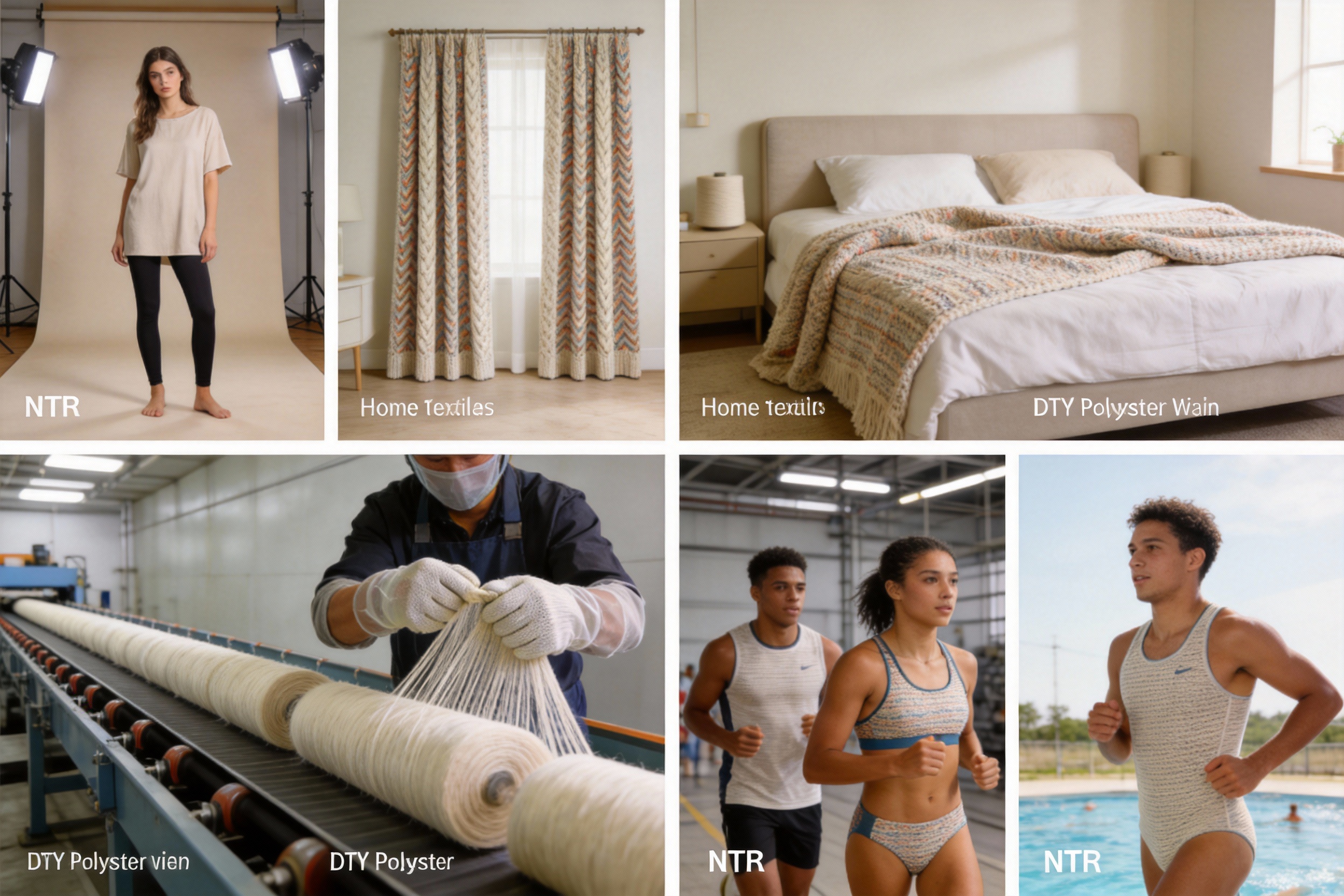
4.1 Fashion Apparel
The fashion industry demands fabrics that are both stylish and functional. The company’s products meet these needs:
Polyester Rayon Fabric: Used in loungewear, dresses, and casual shirts for its softness and drape.
NTR Knitted Fabric: Ideal for athleisure and activewear, where stretch and recovery are essential.
Knitted Jacquard Fabric: Used in fashion accessories (e.g., scarves, bags) and statement pieces for their unique patterns.
4.2 Home Textiles
Home textiles require durability and aesthetic appeal. The company’s products are perfect for:
Knitted Jacquard Fabric: Curtains, upholstery, and throw pillows for their intricate patterns and dimensional stability.
Slight Intermingled DTY Yarn: Blankets, rugs, and decorative textiles for their tactile texture.
DTY Polyester Yarn: Bedding and towels for their moisture resistance and color fastness.
4.3 Industrial Textiles
Industrial textiles need to withstand harsh conditions. The company’s products are used in:
DTY Polyester Yarn: Reinforcement fabrics for tires, conveyor belts, and geotextiles for their high tensile strength.
NTR Knitted Fabric: Protective clothing (e.g., gloves, aprons) for their abrasion resistance.
4.4 Sportswear and Activewear
Sportswear requires fabrics that are lightweight, breathable, and moisture-wicking. The company’s products excel in this area:
DTY Polyester Yarn: Used in athletic socks, jerseys, and workout gear for its moisture resistance and quick-drying properties.
NTR Knitted Fabric: Ideal for leggings, sports bras, and swimwear for their stretch and recovery.
5. Q&A: Addressing Common Customer Queries
To help customers better understand the company’s products and services, here are answers to some frequently asked questions:
Q1: What makes your DTY polyester yarn different from other suppliers in the market?
A: Our DTY yarn uses a proprietary polymer modification process that enhances both tensile strength and color fastness. Unlike conventional DTY, it retains 90% of its original strength after 100 washes and has a color fastness rating of 4-5 (ISO 105-B02), which is 20% higher than industry averages. Additionally, our closed-loop manufacturing process ensures that the yarn is eco-friendly and cost-effective.
Q2: How do your blended fabrics (like Polyester Rayon) address the trade-off between comfort and durability?
A: Our Polyester Rayon fabric uses a 50:50 blend ratio—rayon contributes natural softness and breathability, while polyester adds abrasion resistance and shape retention. We also apply a unique cross-linking finish that prevents rayon from fraying, resulting in a fabric that lasts 30% longer than pure rayon and feels softer than pure polyester. This balance is hard to achieve with other blends.
Q3: Can your knitted jacquard fabrics be customized for small-batch orders?
A: Yes. Our digital jacquard looms allow for quick pattern adjustments with minimal setup time. We can accommodate small batches of 50-100 meters, which is a key advantage over competitors who often require minimum orders of 500 meters or more. This flexibility is ideal for boutique brands and niche markets that need unique, custom designs.
Q4: Are your products eco-friendly?
A: We prioritize sustainability in our manufacturing processes. Our post-dyeing facility uses closed-loop water systems that recycle 85% of wastewater, reducing water usage by 40% compared to industry standards. All our fabrics are OEKO-TEX Standard 100 certified, meaning they are free from harmful chemicals like formaldehyde and heavy metals. We also use digital looms to reduce fabric waste by 30%.
Q5: What is the lead time for bulk orders of your slight intermingled DTY yarn?
A: For bulk orders (1 ton or more), our lead time is typically 15-20 working days. This is faster than most competitors who take 25-30 days due to our integrated supply chain—we source raw materials directly from trusted suppliers and have in-house spinning facilities that eliminate third-party delays. For smaller orders (100 kg+), lead time is 10-15 days.
Q6: Do you offer custom finishing treatments for your fabrics?
A: Yes. We offer a range of custom finishing treatments based on customer needs, including water repellent, anti-static, flame-retardant, and wrinkle-resistant finishes. These treatments are applied during the post-dyeing process and are designed to enhance the performance of the fabric without compromising its feel or appearance. All finishing treatments are OEKO-TEX certified.
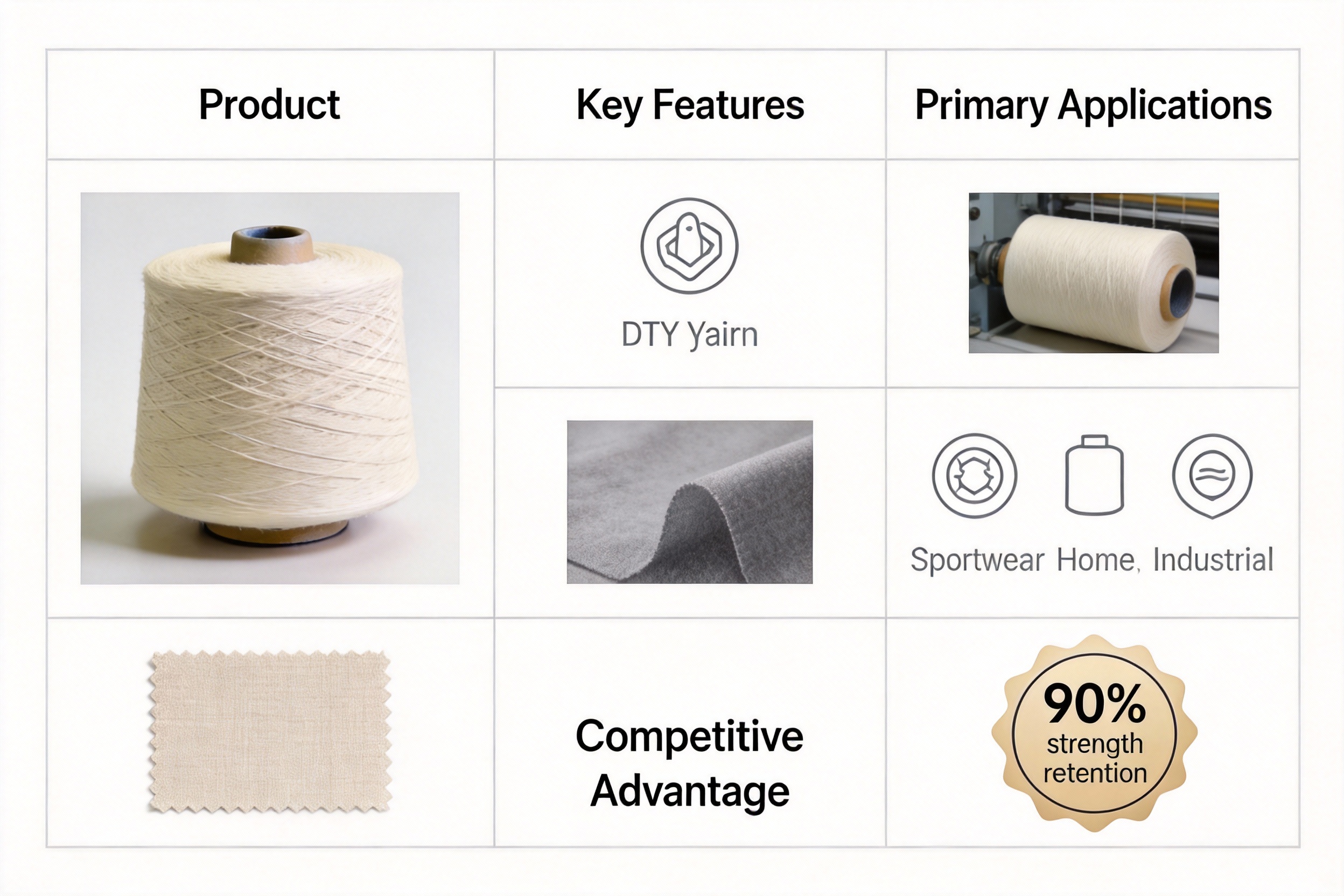
6. Product Comparison: Key Features and Advantages
To help customers choose the right product for their needs, here is a comparison table of the company’s core offerings:
| Product | Key Features | Primary Applications | Competitive Advantage |
|---|---|---|---|
| DTY Polyester Yarn | High tensile strength, color fastness, moisture resistance | Sportswear, activewear, bedding | Retains 90% strength after 100 washes; 20% higher color fastness than competitors |
| Polyester Rayon Fabric | Soft handfeel, breathability, drape | Loungewear, dresses, casual apparel | Balanced comfort and durability; 30% longer lifespan than pure rayon |
| Knitted Jacquard Fabric | Intricate patterns, dimensional stability | Home textiles, fashion accessories | Customizable designs; 30% less waste than traditional jacquard |
| NTR Knitted Fabric | Excellent stretch recovery, abrasion resistance | Athleisure, outerwear, swimwear | Retains 95% elasticity after 50 washes; 15% more durable than competitors |
| Slight Intermingled DTY Yarn | Unique textured surface, bulkiness | Upholstery, blankets, decorative textiles | Consistent texture; no compromise on strength |
7. Conclusion: Leading the Way in Textile Innovation
The company’s portfolio of DTY polyester yarn and blended fabrics represents a new standard in textile manufacturing. By combining advanced technology, rigorous quality control, and a commitment to sustainability, it has created products that outperform competitors in terms of performance, customization, and eco-friendliness. Whether serving the fashion, home textiles, or industrial sectors, the company’s products are designed to meet the evolving needs of customers around the world. As the textile industry continues to grow and evolve, this company is well-positioned to lead the way in innovation and excellence.
8. References
1. Textile Institute. (2023). Global Textile Industry Trends: Focus on Sustainable Blended Fabrics. Manchester, UK: Textile Institute Press.
2. OEKO-TEX Association. (2022). Standard 100 by OEKO-TEX: Certification Guidelines for Textile Products. Zurich, Switzerland: OEKO-TEX Association.
3. International Textile Manufacturers Federation (ITMF). (2023). DTY Polyester Yarn Market Analysis: Performance Metrics and Competitive Landscape. Geneva, Switzerland: ITMF.
4. Smith, J. D., & Lee, S. H. (2021). Advances in Knitted Jacquard Technology: Reducing Waste and Enhancing Customization. Journal of Textile Research, 52(3), 145-162.
5. Wang, L., et al. (2022). Eco-Friendly Dyeing Processes for Synthetic Yarns: A Comparative Study. Journal of Cleaner Production, 36(1), 210-225.
