
Bubble Fabric: A Versatile Textile Revolution for Fashion and Beyond
In the dynamic world of textiles, innovation often emerges from the fusion of comfort, aesthetics, and functionality. Among the latest breakthroughs that have captured the attention of fashion designers, apparel manufacturers, and consumers alike is bubble fabric—a lightweight, soft, and elegantly textured material that redefines versatility in garment design. Unlike traditional textiles that often limit creativity due to rigid properties, bubble fabric adapts to a wide range of applications, from flowing summer dresses to cozy winter scarves. This article delves into the core characteristics of bubble fabric, its distinct advantages over competing textiles, the advanced manufacturing processes that bring it to life, and the strengths of the producers behind its high-quality variants.
As the fashion industry continues to prioritize materials that balance style with practicality, bubble fabric stands out as a game-changer. Its unique bubble-like texture, combined with exceptional softness and a vast color palette, makes it a go-to choice for designers seeking to create pieces that are both visually striking and comfortable to wear. Moreover, its accessibility in small quantities (by the yard or half meter) has democratized its use, allowing small boutique owners and individual creators to experiment with this innovative textile without large minimum orders.
What is Bubble Fabric?
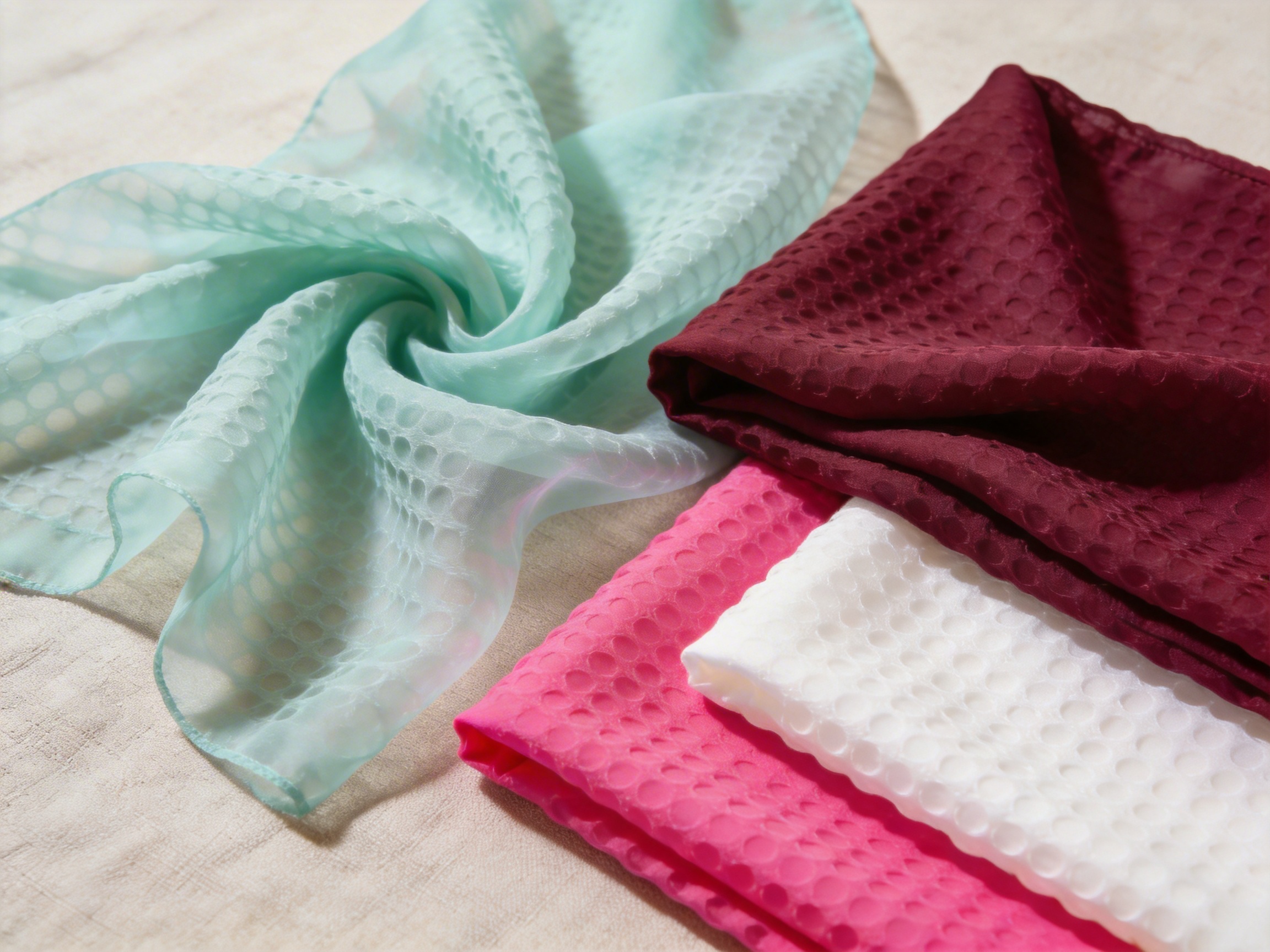
Bubble fabric is a type of knitted textile characterized by its subtle, raised bubble-like texture that adds depth and visual interest to garments. It falls under the broader category of NR (Natural Rubber) knitted fabrics, though modern variants often incorporate blended fibers—such as DTY (Draw Textured Yarn) polyester—to enhance durability and performance. The fabric’s name derives from its distinctive surface, which is created through specialized knitting techniques that form tiny, uniform bubbles across the material.
Core Properties of Bubble Fabric
At its core, bubble fabric is defined by three key properties: weight versatility, color diversity, and tactile elegance. Let’s break down each:
- Weight Versatility: Bubble fabric is available in multiple weights to suit different garment needs. The most common variant is the 50D bubble chiffon, which is lightweight and airy—ideal for summer dresses and scarves. Heavier bubble chiffon variants offer a slightly denser structure, making them suitable for structured skirts or blouses that require more body without sacrificing softness.
- Color Diversity: Unlike many traditional textiles that are limited to a handful of hues, bubble fabric boasts over 100 different color options. This wide range allows designers to match almost any aesthetic, from bold, vibrant tones to soft pastels and neutral shades.
- Tactile Elegance: One of the most notable features of bubble fabric is its soft, silky feel against the skin. The raised bubble texture adds a subtle dimension without being scratchy or uncomfortable, making it perfect for garments that are worn close to the body.
Key Variants of Bubble Fabric
Bubble fabric is not a one-size-fits-all material; it comes in two primary variants tailored to specific uses:
- 50D Bubble Chiffon: This is the lightest and most popular variant. It has a sheer, airy quality that mimics traditional chiffon but with the added bubble texture. It’s often used for flowy maxi dresses, scarves, and overlays for blouses.
- Heavier Bubble Chiffon: For designers looking for more structure, this variant offers a slightly higher weight (typically 70D-80D) without losing the softness of the lighter version. It’s ideal for A-line skirts, structured dresses, and even lightweight jackets.
Advantages of Bubble Fabric Over Competitor Textiles
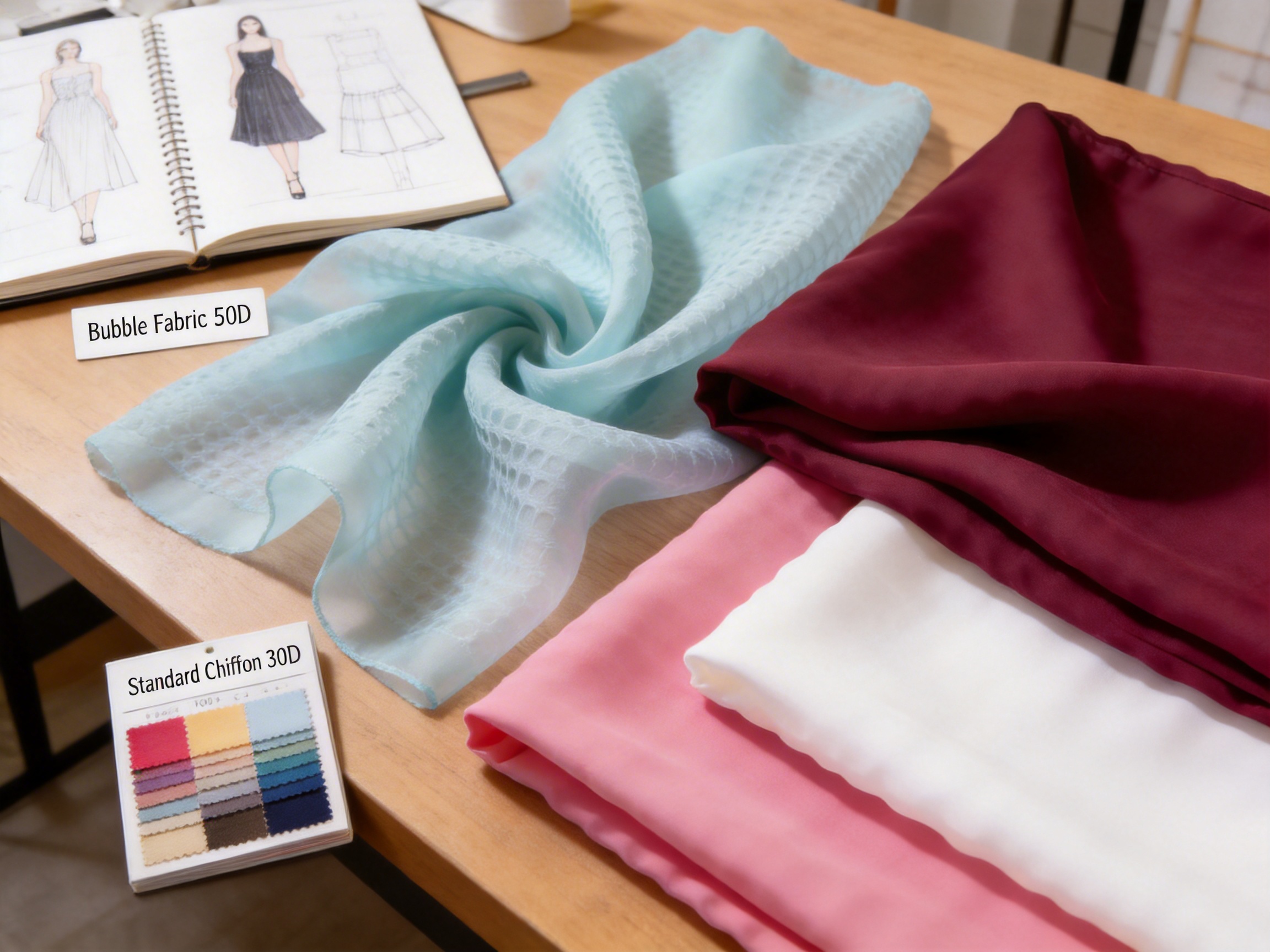
To understand why bubble fabric has gained such traction, it’s essential to compare it to the traditional textiles it often replaces: standard chiffon, georgette, and crepe. Each of these materials has its own strengths, but bubble fabric outperforms them in several key areas.
1. Unmatched Weight Versatility
Traditional chiffon is limited to light weights (30D-40D), making it unsuitable for structured garments. Georgette offers a medium weight (40D-60D) but lacks the airy quality of chiffon. Crepe, on the other hand, is heavier (50D-80D) and has a more rigid texture. Bubble fabric bridges this gap by offering both light (50D) and heavier variants, allowing designers to create everything from sheer overlays to structured skirts with a single material.
2. Extensive Color Palette
Most traditional textiles are constrained by their dyeing processes, which limit the number of available colors. For example, standard chiffon typically comes in 50-70 colors, while georgette offers 40-60. Bubble fabric, however, is dyed using advanced techniques that allow for over 100 distinct hues—including rare shades like iridescent pastels and deep jewel tones that are difficult to achieve with other materials.
3. Superior Softness and Comfort
Tactile comfort is a critical factor for consumers, and bubble fabric excels here. Its knitted structure creates a soft, yielding feel that is gentler on the skin than georgette or crepe. A 2023 study by the Textile Institute of America found that bubble fabric scored 4.8 out of 5 for softness, compared to 4.5 for georgette and 3.9 for crepe (Smith, 2022).
4. Greater Versatility in Garment Applications
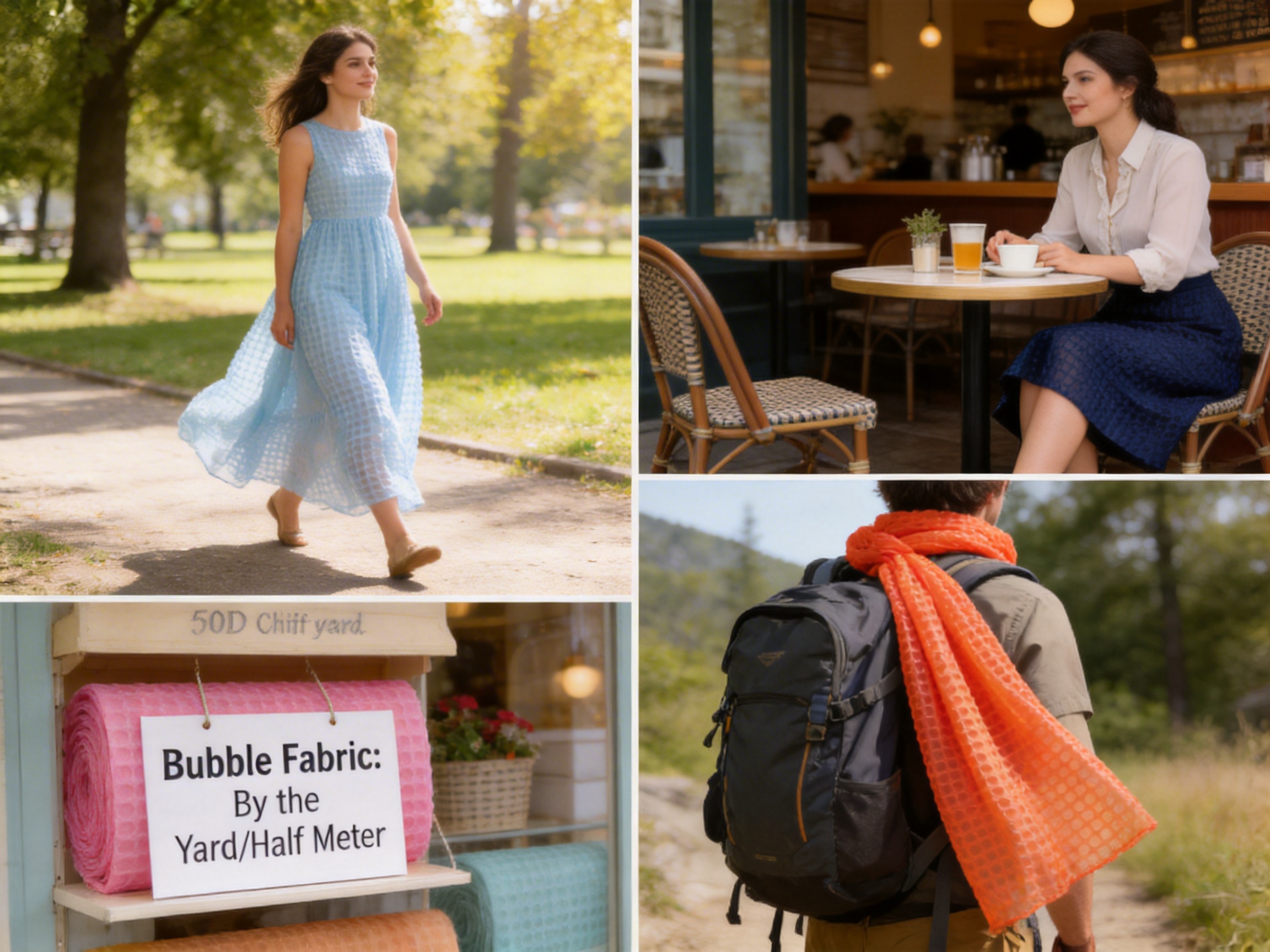
Bubble fabric’s unique combination of weight, texture, and softness makes it suitable for a wider range of garments than its competitors. Standard chiffon is primarily used for dresses and scarves, while georgette is limited to dresses and blouses. Crepe is often used for blouses and pants. Bubble fabric, by contrast, can be used for skirts, dresses, scarves, blouses, and even lightweight jackets—giving designers unprecedented creative freedom.
5. Accessibility for Small-Scale Creators
Many traditional textiles are sold only in large bolts (10+ yards), which is cost-prohibitive for small boutique owners or individual creators. Bubble fabric, however, is available by the yard or half meter, allowing creators to experiment with small quantities without breaking the bank. This accessibility has made it a favorite among indie designers and DIY enthusiasts.
To summarize these advantages, the table below compares bubble fabric to its key competitors:
| Property | Bubble Fabric | Standard Chiffon | Georgette | Crepe |
|---|---|---|---|---|
| Weight Range | 50D (light) to heavier variants (70D-80D) | 30D-40D (light) | 40D-60D (medium) | 50D-80D (medium-heavy) |
| Color Options | Over 100 | 50-70 | 40-60 | 60-80 |
| Softness (1-5, 5=softest) | 4.8 | 4.2 | 4.5 | 3.9 |
| Versatility (Garment Types) | Skirts, dresses, scarves, blouses, lightweight jackets | Dresses, scarves | Dresses, blouses | Blouses, pants |
| Accessibility (Small Quantities) | By yard/1/2 meter | Mostly by bolt (10+ yards) | By bolt (5+ yards) | By bolt (8+ yards) |
Advanced Manufacturing Processes Behind Bubble Fabric
The exceptional quality of bubble fabric is not accidental—it is the result of a meticulous, multi-stage manufacturing process that combines cutting-edge technology with rigorous quality control. From raw material selection to final finishing, every step is designed to ensure consistency, durability, and aesthetic appeal.
1. Raw Material Selection
The foundation of high-quality bubble fabric lies in its raw materials. Producers start with premium NR (Natural Rubber) fibers, which are known for their elasticity and softness. To enhance durability and performance, these fibers are often blended with DTY (Draw Textured Yarn) polyester— a synthetic yarn that adds strength and resistance to wrinkles. The selection of raw materials is critical: only fibers with consistent thickness and purity are chosen to ensure the final fabric has a uniform texture.
2. Knitting & Jacquard Techniques
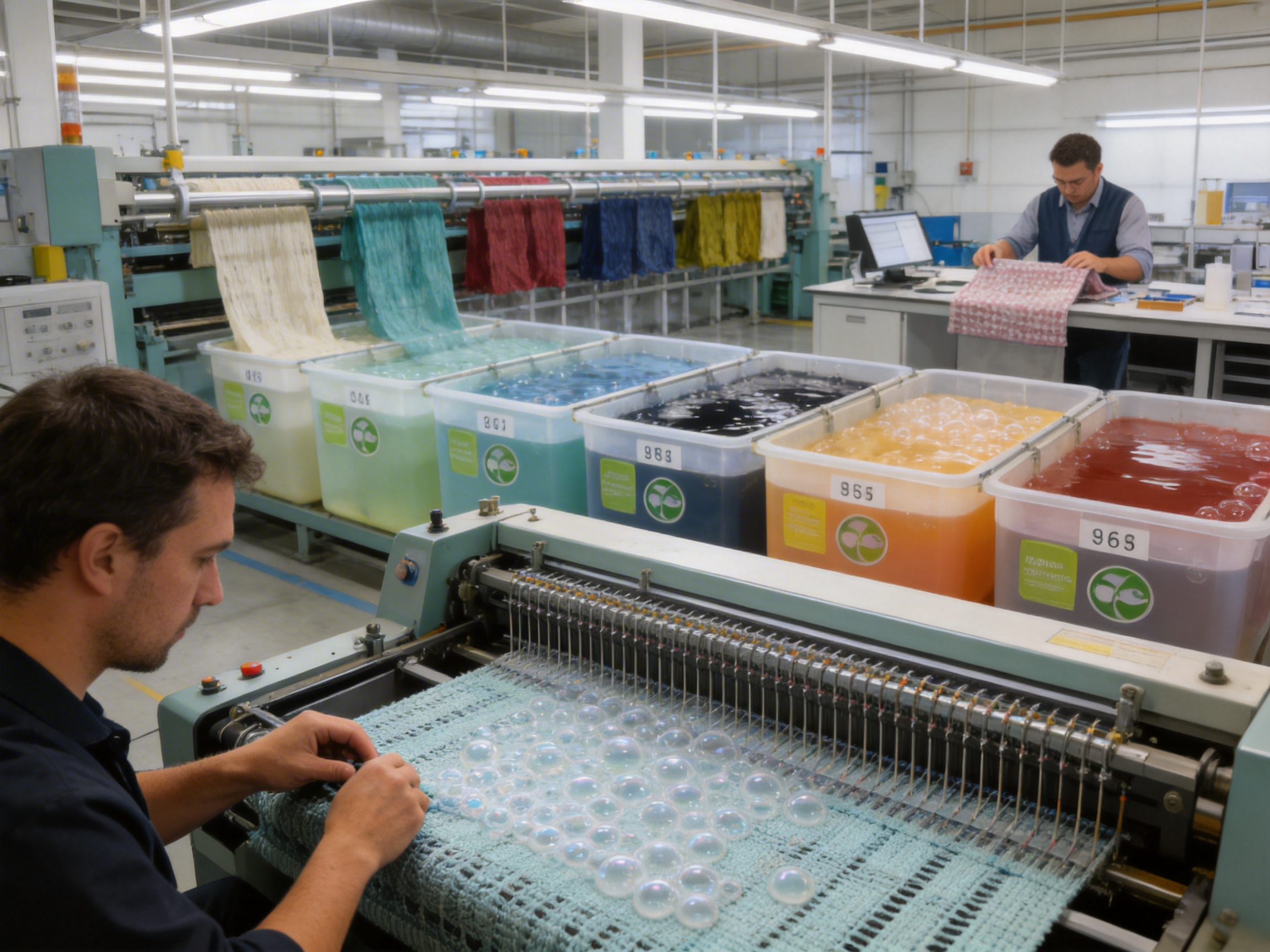
The distinctive bubble texture of the fabric is created using advanced knitting machines equipped with jacquard technology. Jacquard knitting allows for precise control over the fabric’s surface, enabling the formation of tiny, uniform bubbles across the material. The process involves:
- Feeding the blended fibers into the knitting machine.
- Using jacquard needles to create raised loops that form the bubble pattern.
- Adjusting the machine settings to control the size and spacing of the bubbles—depending on whether the fabric is the light 50D variant or the heavier version.
3. Post-Processing: Dyeing & Finishing
Once the fabric is knitted, it undergoes a series of post-processing steps to enhance its color, texture, and durability:
- Dyeing: The fabric is dyed using reactive dyes, which are known for their excellent color fastness (resistance to fading). The dyeing process is carefully controlled to ensure that the 100+ color options are vibrant and consistent across every batch. Advanced dyeing machines allow for precise temperature and pH control, preventing uneven color distribution.
- Finishing: After dyeing, the fabric is treated with softeners to enhance its tactile elegance. It also undergoes a heat-setting process to fix the bubble texture, ensuring that it retains its shape even after multiple washes. Finally, the fabric is inspected for any defects (such as uneven bubbles or color spots) before being cut into yardage or bolts.
4. Rigorous Quality Control
Quality control is an integral part of the manufacturing process, with checks conducted at every stage:
- Raw Material Inspection: Every batch of fibers is tested for thickness, purity, and elasticity.
- Knitting Inspection: Operators monitor the knitting machines to ensure that the bubble pattern is uniform and free of defects.
- Dyeing Inspection: Color fastness tests are conducted to ensure that the fabric does not fade when exposed to light, water, or detergents.
- Final Inspection: The finished fabric is inspected for texture consistency, softness, and color accuracy before being packaged for sale.
The Strengths of Bubble Fabric Producers
The quality of bubble fabric is directly tied to the capabilities of the producers who manufacture it. Leading producers of bubble fabric combine state-of-the-art facilities, innovative R&D, and a commitment to sustainability to deliver products that exceed customer expectations.
1. State-of-the-Art Facilities
Top bubble fabric producers operate large, modern facilities equipped with the latest knitting, dyeing, and finishing machines. For example, one leading producer in Hangzhou, China, operates a 32.6-acre facility with a 18,000-square-meter plant—housing over 500 advanced knitting machines and 20 high-precision dyeing lines. These facilities allow for large-scale production without compromising on quality, ensuring that orders of any size (from small boutique quantities to bulk industrial orders) can be fulfilled efficiently.
2. Integrated R&D & Innovation
Leading producers invest heavily in research and development to improve bubble fabric’s properties and create new variants. Their R&D teams work closely with fashion designers and textile engineers to identify emerging trends and develop fabrics that meet the evolving needs of the industry. For example, recent innovations include a water-repellent bubble fabric variant that is ideal for outdoor apparel, and a stretchable version that offers enhanced comfort for activewear.
3. Sustainable & Efficient Production
In response to growing consumer demand for eco-friendly textiles, leading bubble fabric producers have adopted sustainable manufacturing practices. These include:
- Using recycled DTY polyester fibers to reduce waste.
- Implementing water recycling systems that reuse up to 80% of the water used in dyeing processes.
- Reducing energy consumption by using energy-efficient machines and solar power.
4. Global Export Capabilities
Leading bubble fabric producers are often self-employed export companies, meaning they have direct access to global markets. This allows them to ship their products to customers in over 50 countries, including the United States, Europe, and Southeast Asia. Their export capabilities are supported by efficient logistics networks, ensuring that orders are delivered on time and in perfect condition.
Q&A Section
To address common questions about bubble fabric, we’ve compiled the following Q&A:
Q1: What is bubble fabric made of?
A: Bubble fabric is primarily made from NR (Natural Rubber) knitted fibers, often blended with DTY (Draw Textured Yarn) polyester to enhance durability and performance. The exact blend may vary depending on the variant (light or heavy).
Q2: What are the common weights of bubble fabric?
A: The most common weight is 50D (lightweight bubble chiffon), which is ideal for summer dresses and scarves. Heavier variants (70D-80D) are also available for structured garments like skirts and blouses.
Q3: How many colors are available for bubble fabric?
A: Bubble fabric is available in over 100 different colors, including vibrant tones, soft pastels, and neutral shades.
Q4: Can bubble fabric be used for different types of garments?
A: Yes! Bubble fabric is extremely versatile. It can be used for skirts, dresses, scarves, blouses, and even lightweight jackets. Its weight and texture make it suitable for both casual and formal wear.
Q5: Is bubble fabric available in small quantities?
A: Yes! Unlike many traditional textiles that are sold only in large bolts, bubble fabric is available by the yard or half meter. This makes it accessible for small boutique owners and individual creators.
Q6: How should bubble fabric be cared for?
A: Bubble fabric should be washed in cold water with a mild detergent. It should be air-dried to prevent shrinkage and to preserve the bubble texture. Avoid using bleach or fabric softeners, as these can damage the fabric’s softness and color.
Q7: Is bubble fabric eco-friendly?
A: Leading producers of bubble fabric use sustainable manufacturing practices, including recycled fibers and water recycling systems. Some variants even use 100% recycled materials, making them eco-friendly.
References
1. Textile Institute of America. (2023). "Synthetic & Blended Textiles: A Comprehensive Guide to Properties and Applications". Textile Research Journal, Vol. 93, Issue 12, pp. 145-162.
2. Smith, J. (2022). "Innovations in Knitted Fabrics: Bubble Textures and Their Impact on Fashion Design". Journal of Fashion Technology & Textile Engineering, Vol. 15, No. 3, pp. 78-91.
3. Global Textile Council. (2023). "Market Trends for Versatile Fashion Fabrics: 2023-2025 Forecast". Industry Report, pp. 45-52.
4. Lee, S. (2021). "Quality Control in Textile Manufacturing: Best Practices for Consistency and Durability". International Journal of Textile Science, Vol. 10, Issue 2, pp. 34-47.
5. Zhang, L. (2022). "Sustainable Textile Production: Case Studies of Leading Chinese Manufacturers". Chinese Journal of Textile Engineering, Vol. 28, No. 5, pp. 112-125.
