
Black Slight Intermingled DTY: A Practical Guide to Consistent Polyester Textured Yarn Performance
Introduction
Black Slight Intermingled Draw Textured Yarn, commonly known as black slight intermingled DTY, is a polyester yarn designed to combine the practical advantages of textured yarn with a controlled level of filament interlacing. It is used in textile manufacturing where producers need a dependable balance of softness, bulk, elasticity, surface appearance, process stability, and visual uniformity.
Unlike a fully smooth filament yarn, textured yarn has been processed to develop a more suitable structure for knitting and weaving. The texturing process gives the yarn additional volume and a more natural hand feel while helping it perform effectively in fabrics. Intermingling adds carefully controlled network points along the yarn length. These network points help hold individual filaments together and can improve handling during downstream textile production.
The word “slight” is important. Slight intermingling is not the same as heavy intermingling. A light or medium level of network formation is selected when the manufacturer wants improved filament cohesion without creating excessive visible network spots or an overly rigid yarn structure. This makes black slight intermingled DTY suitable for applications that require a relatively smooth and consistent fabric appearance.
Hangzhou Jinfeng Textile Co., Ltd. produces and supplies polyester DTY yarn as part of its broader textile manufacturing and processing operations. Its capabilities include production, processing, post-dyeing, finishing, and sales of blended fabrics, as well as the manufacture and sale of DTY polyester yarn. The company’s integrated operating model allows customers to communicate with a supplier familiar with both yarn production and fabric requirements.
This article explains the structure, production principles, advantages, quality considerations, applications, and purchasing factors associated with black slight intermingled DTY. It also examines how controlled air pressure, texturing speed, manufacturing management, and downstream textile knowledge influence the final performance of the yarn.
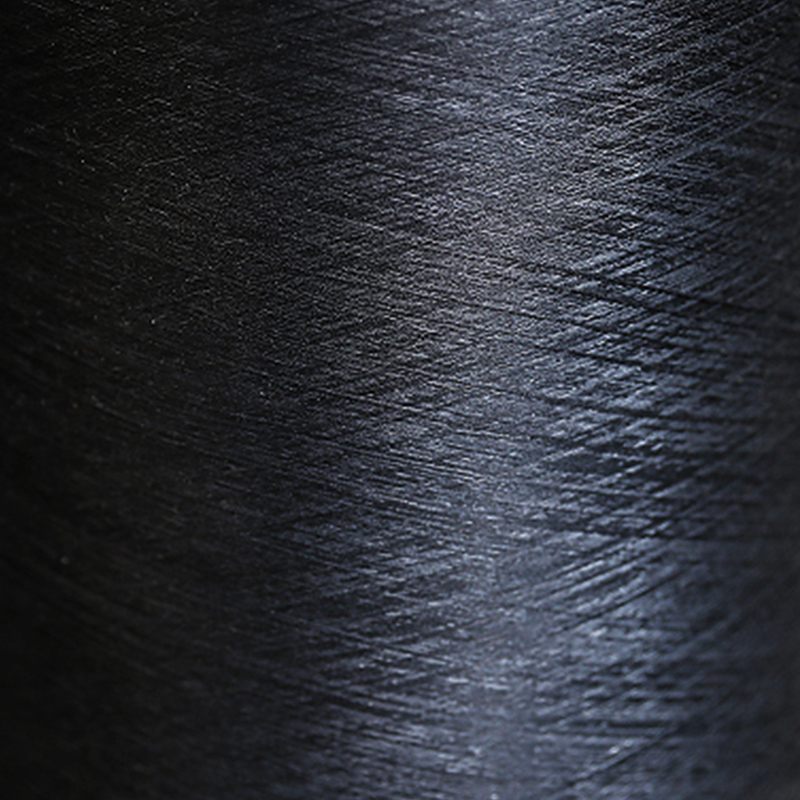
Black Slight Intermingled DTY
Understanding Black Slight Intermingled DTY
What is DTY?
DTY stands for Drawn Textured Yarn. It is generally produced from polyester filament yarn through a drawing and texturing process. Drawing helps orient the polymer filaments and establish the desired yarn characteristics. Texturing then modifies the filament arrangement to create additional bulk, flexibility, and a more textile-like appearance.
DTY is widely used because it can provide a practical alternative to completely flat filament yarn in many textile constructions. The textured structure may improve softness, coverage, visual depth, and fabric comfort. Depending on the yarn specification and processing conditions, DTY can be used for knitted fabrics, woven fabrics, apparel materials, home textiles, decorative textiles, and other applications.
DTY should not be understood as a single fixed product specification. It is a broad yarn category that includes different colors, luster levels, filament counts, deniers, stretch properties, intermingling levels, and winding formats. A buyer should therefore confirm the exact technical specification before placing an order.
What does slight intermingling mean?
Intermingling is a process used to create localized connection points between the individual filaments in a multifilament yarn. Air is commonly used to disturb and entangle the filaments at controlled intervals. These points are often called networks or intermingling spots.
In slight intermingled DTY, the number and strength of these network points are kept at a relatively light level. This provides a degree of filament cohesion while preserving a more open and flexible yarn structure. The aim is to create a controlled compromise between yarn integrity and surface smoothness.
The network quantity is commonly discussed in terms of networks per meter. The number of networks per meter is influenced by air pressure and the operating speed of the texturing machine. Higher air pressure can generally create more pronounced intermingling, while production speed can affect the time available for air interaction and the final distribution of network points.
These relationships must be managed carefully. If the intermingling is too light, the filaments may separate more easily during certain downstream operations. If the intermingling is too heavy, network spots may become more visible on the fabric surface, and the yarn may feel less smooth or less flexible than required for a particular application.
Why black is a useful yarn color
Black polyester DTY is valued for its strong visual depth, versatility, and ability to support a wide range of textile designs. Black yarn can be used in basic fabrics, fashion materials, sportswear, uniforms, accessories, home textiles, and decorative products. It can also help reduce the visibility of minor surface contamination compared with very light shades, although proper quality control remains essential for every color.
Black yarn places particular importance on color consistency. Differences in shade, depth, luster, or surface reflection can become noticeable when multiple lots are knitted or woven together. For this reason, color control, lot management, proper winding, and careful handling are important parts of supply reliability.
Product Characteristics
Controlled filament cohesion
The main functional feature of slight intermingled DTY is controlled filament cohesion. The network points help individual filaments remain associated with one another during winding, transportation, knitting, weaving, and other handling stages. This can support smoother processing and reduce the tendency of filaments to spread excessively.
At the same time, the slight network level avoids the unnecessarily tight structure that may occur when a yarn is heavily intermingled. This is valuable for fabric producers seeking a balanced hand feel and a relatively clean surface appearance.
Textured bulk and textile-like handle
Drawing and texturing give the yarn a more developed structure than a flat filament yarn. The textured form can contribute to fabric volume, softness, coverage, and visual richness. Depending on the selected yarn specification and fabric construction, the result may be a comfortable material with a pleasant hand and improved body.
Textured polyester yarn is also valued for its adaptability. It can be incorporated into different knitting and weaving systems, provided that the yarn specification is matched to the machine, fabric structure, and finishing process. Buyers should consider factors such as yarn count, filament composition, elongation, shrinkage behavior, winding package, and intermingling level when selecting the product.
Dark, versatile appearance
Black slight intermingled DTY offers a stable foundation for dark-colored fabric production. It may be used on its own or combined with other yarns to create color contrast, surface effects, or blended constructions. Its dark appearance can support minimalist products, formal garments, activewear, uniforms, and interior textile designs.
Because the yarn is black, manufacturers can reduce or eliminate some downstream dyeing requirements in applications where the supplied shade meets the buyer’s needs. This may help simplify production planning. However, the suitability of pre-colored yarn depends on the customer’s color standard, end use, and finishing process.
Adaptability to different fabric constructions
Black slight intermingled DTY can be considered for a wide variety of textile constructions. It may be suitable for knitted jacquard fabrics, polyester and rayon blends, NTR knitted fabrics, NR knitted fabrics, and other products where a textured polyester component is required.
The final fabric performance does not come from the yarn alone. It is also determined by the knitting or weaving machine, fabric density, stitch or weave design, combination with other fibers, dyeing conditions, finishing chemicals, heat-setting, and quality control procedures. For this reason, sampling and trial production are recommended before large-scale orders.
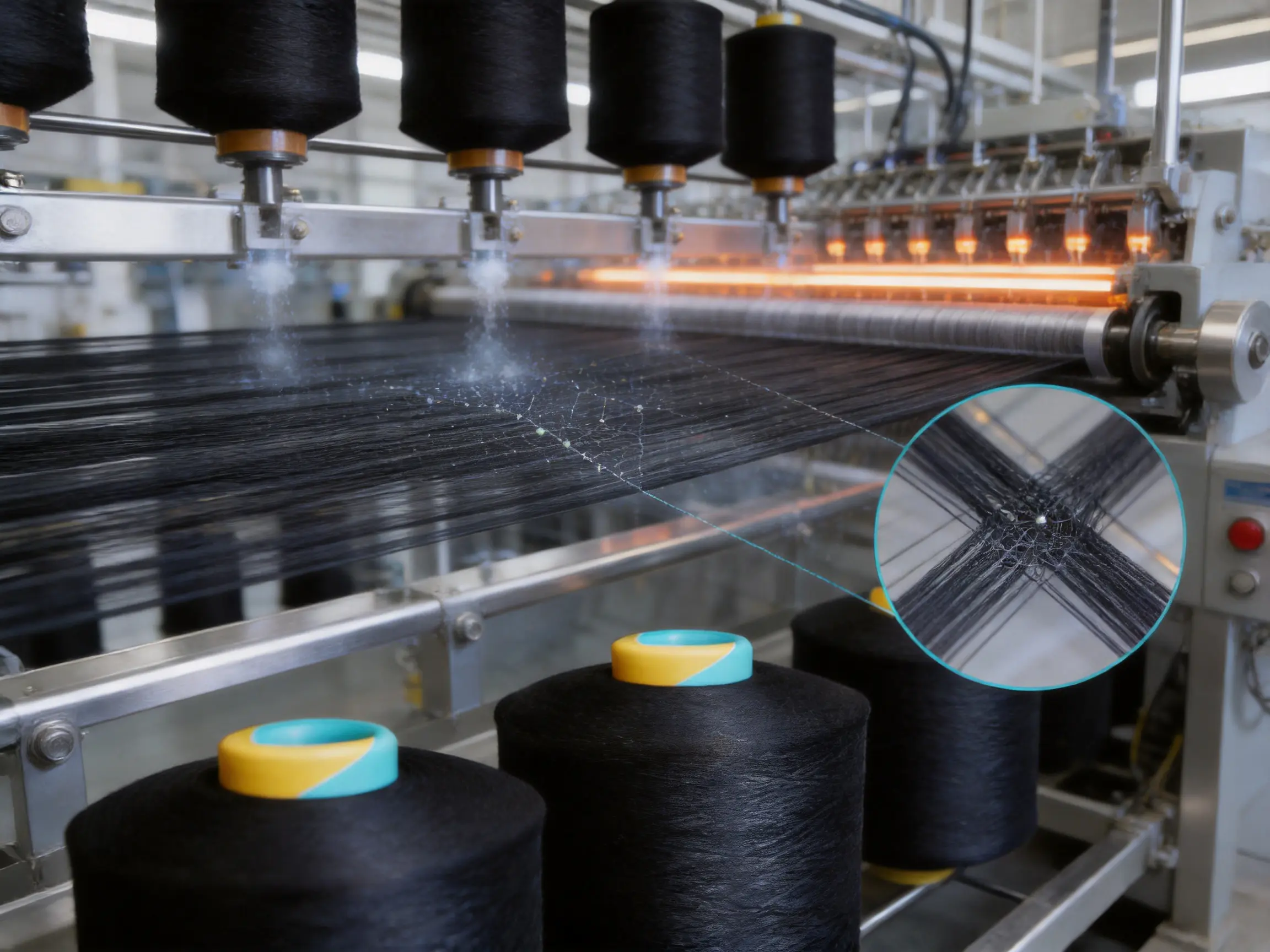
How the Manufacturing Process Influences Performance
Preparation of the filament yarn
DTY production begins with the preparation of suitable polyester filament yarn. The raw material must be compatible with the intended drawing and texturing conditions. The quality of the incoming filament affects the uniformity, strength, luster, elongation, and surface behavior of the final textured yarn.
Consistent raw material preparation helps establish a stable base for later processing. Variations at this stage may appear as differences in yarn tension, thickness, dye uptake, filament behavior, or fabric appearance. A disciplined production system therefore needs to monitor materials before they enter the main texturing process.
Drawing and orientation
During drawing, the filament yarn is stretched under controlled conditions. This changes the molecular orientation and helps establish the desired physical balance between strength, elongation, and stability. The drawing ratio and operating conditions must be selected according to the yarn specification.
Excessive or insufficient drawing can negatively affect yarn performance. Poorly controlled drawing may lead to uneven elongation, unstable shrinkage, irregular tension, or inconsistent fabric results. Reliable equipment operation and process monitoring are therefore essential to maintaining a uniform product.
Texturing
Texturing modifies the straight filament arrangement and creates a more voluminous, flexible, and textile-like structure. The texturing machine controls important variables such as feed rate, heating conditions, yarn speed, tension, and cooling behavior.
Stable texturing conditions are especially important for black yarn because differences in surface structure may affect the way light is reflected. A small variation in crimp or bulk can produce visible differences in luster or fabric shading. Uniform texturing supports a more consistent appearance across packages and production lots.
Air-jet intermingling
After or during the texturing process, the yarn may pass through an air-intermingling section. Controlled air pressure causes the filaments to move, cross, and form network points. The number of network points per meter is influenced by air pressure and machine speed, as well as by the yarn structure and equipment setup.
For slight intermingled DTY, the objective is not to produce the maximum possible number of networks. The objective is to achieve a controlled and repeatable level that improves filament cohesion while limiting excessive network spots. This requires careful adjustment rather than simply increasing pressure.
Machine speed also affects the intermingling result. At different speeds, the yarn may spend different amounts of time in the air-jet zone. This can influence the number, distribution, and strength of network points. A manufacturer must therefore evaluate air pressure and speed together rather than treating either variable in isolation.
The relationship between pressure and speed is one of the most important process considerations for this product. A setting that performs well for one denier or filament specification may not produce the same result for another. Process recipes should be adapted to the yarn construction and confirmed through testing.
Winding and package formation
Once the yarn has been textured and intermingled, it is wound into packages for storage, transportation, and downstream use. Winding quality affects unwinding behavior and can influence the efficiency of knitting and weaving operations.
Uniform package formation helps reduce tension fluctuations during unwinding. Poorly formed packages may cause snarling, sloughing, uneven tension, or interruptions on the customer’s machine. For this reason, package density, edge formation, winding tension, and package appearance should be monitored as part of the finished product inspection.
Inspection and lot control
Finished yarn should be checked against the agreed specification. Depending on the customer’s requirements, inspection may include appearance, package condition, linear density, strength, elongation, shrinkage, intermingling level, color consistency, oil content, and winding performance.
Lot control is equally important. A customer may use several packages together in one fabric order, so packages supplied under the same lot should show consistent characteristics. Clear identification and organized storage help reduce the possibility of mixing products with different colors, specifications, or process histories.
Key Advantages Compared with Less Suitable Alternatives
Balanced intermingling compared with heavy intermingling
Heavy intermingling can create a large number of pronounced network spots. These spots may support strong filament cohesion, but they can also influence surface appearance and hand feel. On some fabrics, an overly heavy network may become visible as irregular points or contribute to a less smooth surface.
Slight intermingling offers a more moderate approach. It seeks to provide sufficient cohesion for practical processing while keeping the yarn more flexible and visually restrained. This can be advantageous when the fabric producer wants a clean, smooth, or refined appearance rather than a highly pronounced network structure.
The correct level still depends on the end use. A buyer requiring maximum cohesion for a demanding process may need a different intermingling specification. The advantage of slight intermingling is its suitability for applications where moderate cohesion and surface quality must be balanced.
Textured structure compared with flat filament yarn
Flat filament yarn has a smooth, straight structure that can be useful in certain technical and decorative applications. However, it may not provide the same bulk, softness, coverage, or textile-like handle as a textured yarn.
DTY introduces a developed structure that can improve the tactile and visual qualities of many fabrics. It may help create a fuller hand, more comfortable surface, and more attractive fabric body. For apparel and home textile applications, these characteristics can be important in product design and consumer acceptance.
Polyester performance compared with less durable fiber choices
Polyester is widely used because it offers a practical combination of durability, dimensional stability, processability, and cost efficiency. It is suitable for many applications where the textile must withstand repeated handling, washing, or use.
Black polyester DTY can provide a consistent synthetic fiber platform for fabrics that require strength and dependable processing. It may also be blended with rayon, spandex, or other fibers to balance durability with softness, drape, stretch, or moisture-related properties.
Polyester is not automatically the best choice for every application. Natural fibers or specialty fibers may be selected for specific comfort, sustainability, moisture management, or technical reasons. The advantage of DTY lies in its ability to provide a practical and adaptable solution for a broad range of commercial textile products.
Integrated textile knowledge compared with single-stage supply
A yarn supplier that also understands fabric production can provide useful support when customers are deciding how a yarn will perform in actual textile constructions. Yarn behavior is closely connected with knitting, weaving, dyeing, finishing, and fabric inspection.
Hangzhou Jinfeng Textile Co., Ltd. is involved in both DTY polyester yarn and blended fabric operations. This integrated experience can help connect yarn specifications with downstream fabric requirements. It also supports communication about practical issues such as hand feel, surface appearance, fabric construction, post-dyeing, and finishing.
| Comparison factor | Black slight intermingled DTY | Heavily intermingled DTY | Flat filament yarn |
|---|---|---|---|
| Filament cohesion | Moderate and controlled | High and more pronounced | Generally dependent on the original filament structure |
| Surface appearance | Relatively smooth with limited network visibility | Network spots may be more noticeable | Smooth and flat, with less textured visual depth |
| Hand feel | Textured, flexible, and balanced | Potentially firmer or more compact | Typically smoother and less bulky |
| Fabric volume | Generally higher than flat filament yarn | Can be high, depending on texturing conditions | Generally lower than textured yarn |
| Typical selection reason | Balance between cohesion, softness, and appearance | Need for stronger filament integration | Need for a smooth, flat filament effect |
This comparison is a general guide rather than a substitute for technical testing. Actual results depend on yarn denier, filament count, machine settings, fabric design, and finishing conditions.
Manufacturing Strengths and Company Capabilities
Dedicated textile manufacturing environment
Hangzhou Jinfeng Textile Co., Ltd. is located in Jingjiang Street Industrial Park, Xiaoshan District, Hangzhou City, Zhejiang Province. The company covers approximately 32.6 acres and has a plant area of approximately 18,000 square meters. This provides a substantial operating environment for production, processing, management, storage, and related textile activities.
A dedicated manufacturing site can support closer coordination between production departments. It may also make it easier to organize raw material handling, process scheduling, equipment maintenance, product inspection, packaging, and order preparation. These factors contribute to stable delivery and better operational visibility.
Experience across yarn and fabric operations
The company produces, processes, and sells DTY polyester yarn while also working with blended fabrics such as polyester and spandex materials. Its capabilities include post-dyeing and finishing, as well as fabric production and sales.
This range of activities is valuable because textile quality is determined by the interaction of several stages. A yarn that appears acceptable in isolation may behave differently when knitted, woven, dyed, heat-set, or finished. Experience across these processes helps a supplier identify practical requirements earlier and communicate more effectively with customers.
Research, development, production, and sales
The company operates as an export-oriented business integrating research and development, production, and sales. An integrated structure can shorten communication between customer requirements and manufacturing decisions. It can also support the development of product variations for customers that need specific intermingling levels, colors, package formats, or fabric results.
For black slight intermingled DTY, this may include discussions about network level, surface appearance, package size, color depth, downstream knitting behavior, and compatibility with blended constructions. While each requirement must be confirmed technically, a supplier with integrated functions is better positioned to coordinate these conversations.
Customer-oriented cooperation
The company’s stated business principle emphasizes cooperation and mutual benefit. In practical terms, this means that product supply should be supported by clear communication, accurate specifications, realistic lead times, and responsive handling of technical questions.
Long-term textile supply relationships depend on more than a single successful shipment. Customers need stable quality between lots, timely updates, proper documentation, and a willingness to investigate unexpected results. Cooperation is especially important when a yarn is being introduced into a new fabric design or production line.
Location and logistics considerations
Hangzhou is an important textile and manufacturing center with access to industrial infrastructure and supply-chain resources. A location in Xiaoshan District can support connections with fabric producers, textile processors, logistics services, and related manufacturing businesses.
For international buyers, logistics planning should still be based on the specific order size, packaging requirements, destination, shipping method, and delivery schedule. The supplier and buyer should confirm export documents, labeling, inspection requirements, and packaging protection before shipment.
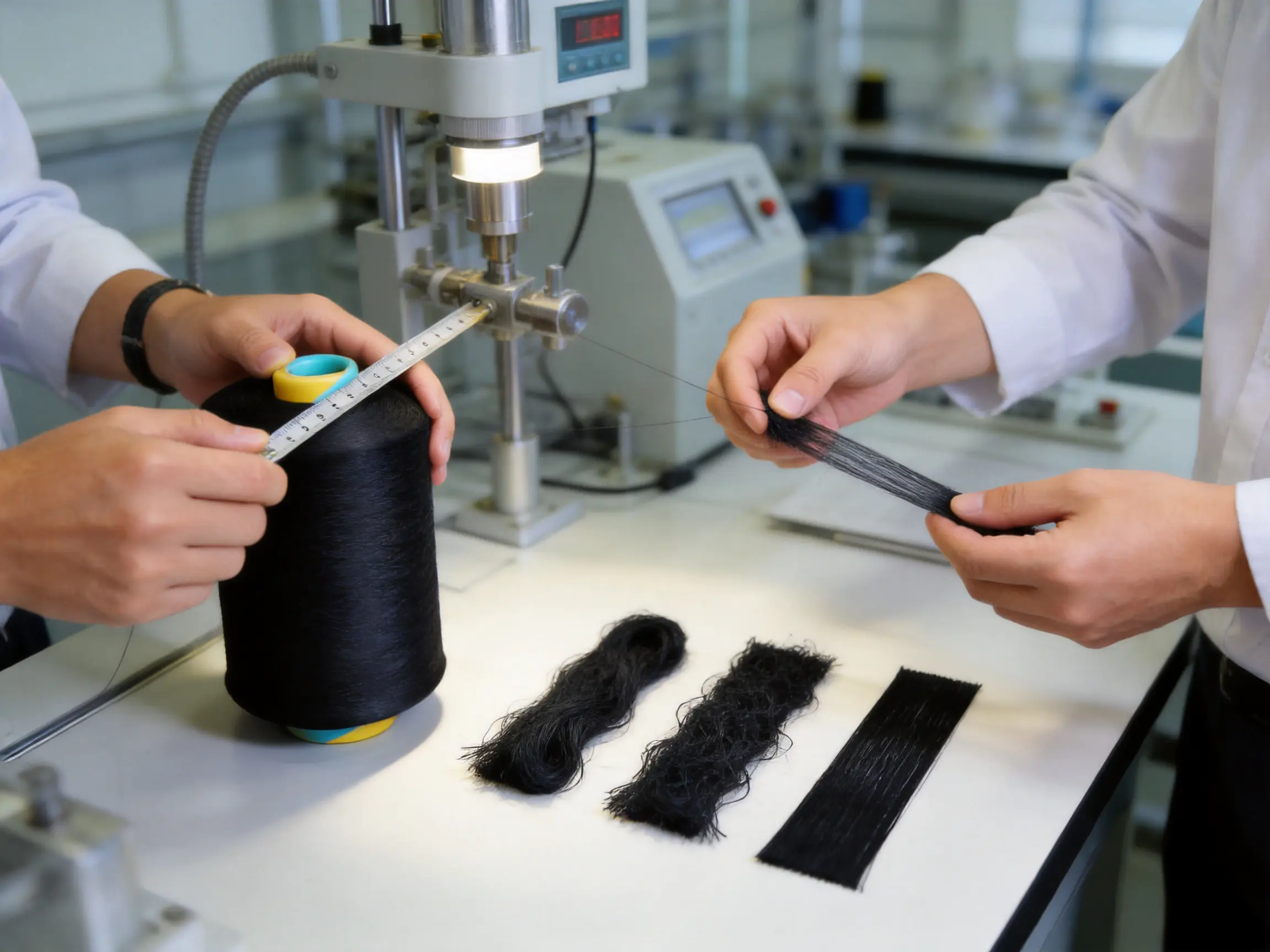
Applications of Black Slight Intermingled DTY
Knitted fabrics
Black slight intermingled DTY can be used in knitted fabric production where a soft, flexible, and moderately cohesive yarn is required. Knitted constructions often benefit from the bulk and stretch-related behavior associated with textured filament yarns.
Potential applications include apparel fabrics, casualwear, sportswear, lining materials, fashion fabrics, and basic black textile products. The exact suitability depends on the yarn specification and the knitting machine. Trial knitting is recommended to confirm tension, loop formation, surface appearance, and fabric recovery.
Knitted jacquard fabrics
Knitted jacquard fabrics use programmed stitch structures to create patterns, textures, and visual contrast. Black DTY can serve as a foundation color or as one part of a multicolor design. Its textured structure may contribute to a fuller pattern appearance and a more dimensional surface.
When used in jacquard production, buyers should pay attention to color matching, yarn tension, pattern definition, and the interaction between the black yarn and other colors. Consistent package behavior is important because variation in yarn tension can affect pattern clarity and fabric uniformity.
Polyester and rayon blends
Combining polyester DTY with rayon can create a fabric that balances durability with a softer, more natural hand. Polyester may contribute strength and dimensional stability, while rayon can add drape and a distinctive surface feel.
The blending ratio, yarn arrangement, fabric construction, dyeing process, and finishing treatment all influence the final result. Black slight intermingled DTY can be used as the polyester component when the product design requires a dark base and a textured synthetic filament structure.
Polyester and spandex constructions
Polyester and spandex fabrics are widely used where stretch and recovery are important. The polyester DTY component can provide structure, color, durability, and a comfortable textured surface, while spandex contributes elastic performance.
Production settings must be selected carefully because spandex requires appropriate tension control and finishing conditions. The yarn supplier and fabric producer should discuss the intended stretch level, fabric weight, heat-setting conditions, and end-use requirements.
Home textiles and decorative products
Black DTY may also be used in selected home textile products, decorative fabrics, cushion covers, interior accessories, and other applications where a dark, durable, textured yarn is desirable. Its use in home textiles depends on the required abrasion resistance, dimensional stability, care instructions, and finishing performance.
For decorative applications, the visual interaction between luster and texture may be especially important. Slight intermingling can help maintain a relatively controlled surface while preserving the visual depth associated with textured polyester.
Quality Factors Buyers Should Evaluate
Intermingling level
The buyer should specify whether the requirement is light, medium, or heavy intermingling and, where possible, define the acceptable network range. The number of networks per meter should be controlled consistently rather than described only with general terms.
Because air pressure and machine speed affect network formation, the supplier should maintain a stable process recipe and verify the result. The buyer may request a sample for visual and processing evaluation before confirming a large order.
Color consistency
Black yarn should be evaluated for shade depth, uniformity, luster, and lot-to-lot consistency. The customer should provide a recognized color standard or an approved physical sample where exact color matching is important.
Color may appear different under various lighting conditions. Evaluation under controlled lighting can reduce disagreement between supplier and buyer. It is also useful to assess the yarn after knitting or weaving because fabric construction can change the visual effect.
Yarn evenness and physical properties
Yarn evenness affects the uniformity of the final fabric. Buyers may evaluate linear density, strength, elongation, shrinkage, crimp, and other physical properties according to the intended application. The appropriate tolerance should be agreed before production.
Evenness is particularly important in dark fabrics, where irregularities may appear as streaks, bars, or uneven reflection. A stable production process helps reduce these risks, but the final fabric producer must also maintain proper machine settings.
Winding quality
Package shape and winding tension directly influence downstream efficiency. Customers should inspect package edges, density, yarn tail management, labeling, and unwinding behavior. Packages should be protected from moisture, contamination, crushing, and excessive heat during storage and transportation.
Compatibility with downstream equipment
A yarn that performs well on one knitting or weaving machine may require adjustments on another. Machine gauge, speed, needle or heddle configuration, tension settings, yarn path, and fabric design all affect performance.
Customers should conduct a controlled trial using the actual equipment and intended fabric construction. This approach helps identify potential issues before full-scale production and allows the supplier to adjust the yarn specification if necessary.
Recommended Purchasing and Application Process
Define the end use first
The best yarn specification begins with the final product. The buyer should identify whether the yarn will be used for apparel, sportswear, home textiles, jacquard fabric, blended fabric, or another application. Requirements for softness, strength, luster, stretch, coverage, and abrasion resistance may differ significantly.
Confirm technical parameters
Before quotation or order confirmation, the buyer should request a technical data sheet covering the yarn count, filament number, color, luster, intermingling level, winding format, package weight, tolerances, and applicable test methods.
If any parameter is not fixed, the supplier should explain the available choices. This is especially important for slight intermingled DTY because different network levels can produce different processing and fabric results.
Review samples
Sample evaluation should include both yarn inspection and fabric trial. The buyer can inspect the yarn package, surface appearance, color, and network distribution, then knit or weave a small quantity to assess fabric hand, appearance, coverage, and processing behavior.
For blended fabrics, testing should include the complete fiber combination and finishing route. A yarn may behave differently when combined with rayon, spandex, or another polyester yarn.
Establish quality agreement
A clear quality agreement should define the accepted specification, inspection method, sample approval procedure, packaging standards, labeling requirements, and response process for nonconforming products. This reduces uncertainty and supports repeat orders.
Plan storage and handling
Polyester yarn packages should be stored in a clean, dry environment away from direct sunlight, excessive heat, oil, dust, and sharp objects. Packages should remain in protective packaging until they are needed for production.
Careful handling prevents avoidable problems such as crushed edges, contamination, moisture exposure, and package deformation. Good storage practices are particularly important when the yarn will remain in inventory for an extended period.
Sustainability and Responsible Textile Planning
Polyester production should be considered within a broader resource and lifecycle strategy. Responsible textile planning includes reducing process waste, improving production efficiency, managing energy and water consumption, and selecting appropriate fabric constructions for the intended service life.
DTY can contribute to efficient textile production when its specification is matched correctly to the end use. Stable yarn quality may reduce knitting interruptions, fabric defects, and material waste. Proper intermingling can also support smoother processing and more consistent fabric output.
However, sustainability claims should be based on verified data. Buyers seeking recycled polyester, certified materials, reduced-impact dyeing, or specific environmental standards should discuss these requirements directly with the supplier and request appropriate documentation.
Long-lasting fabrics can also support more responsible consumption by reducing the frequency of replacement. Polyester’s durability and versatility make it useful in products designed for repeated use, provided that the material is selected and processed appropriately.
Why Supplier Communication Matters
Technical communication is one of the most important factors in successful DTY purchasing. Terms such as “slight intermingled,” “black,” “textured,” and “high quality” may have different interpretations unless they are supported by measurable specifications.
A professional supplier should be able to discuss the relationship between air pressure, machine speed, network formation, package winding, and fabric appearance. The customer should also communicate the knitting or weaving conditions, expected fabric characteristics, and any special finishing requirements.
Hangzhou Jinfeng Textile Co., Ltd. provides a contact point for buyers seeking DTY polyester yarn and blended fabric products. The company’s involvement in production, processing, post-dyeing, finishing, research and development, and sales allows it to address both yarn and fabric-related discussions.
For export customers, effective communication should also cover quotation terms, minimum order quantity, sample policy, production lead time, inspection arrangements, packaging, shipping documents, and after-sales support. Clear information at the beginning of a project reduces delays and helps both sides plan accurately.
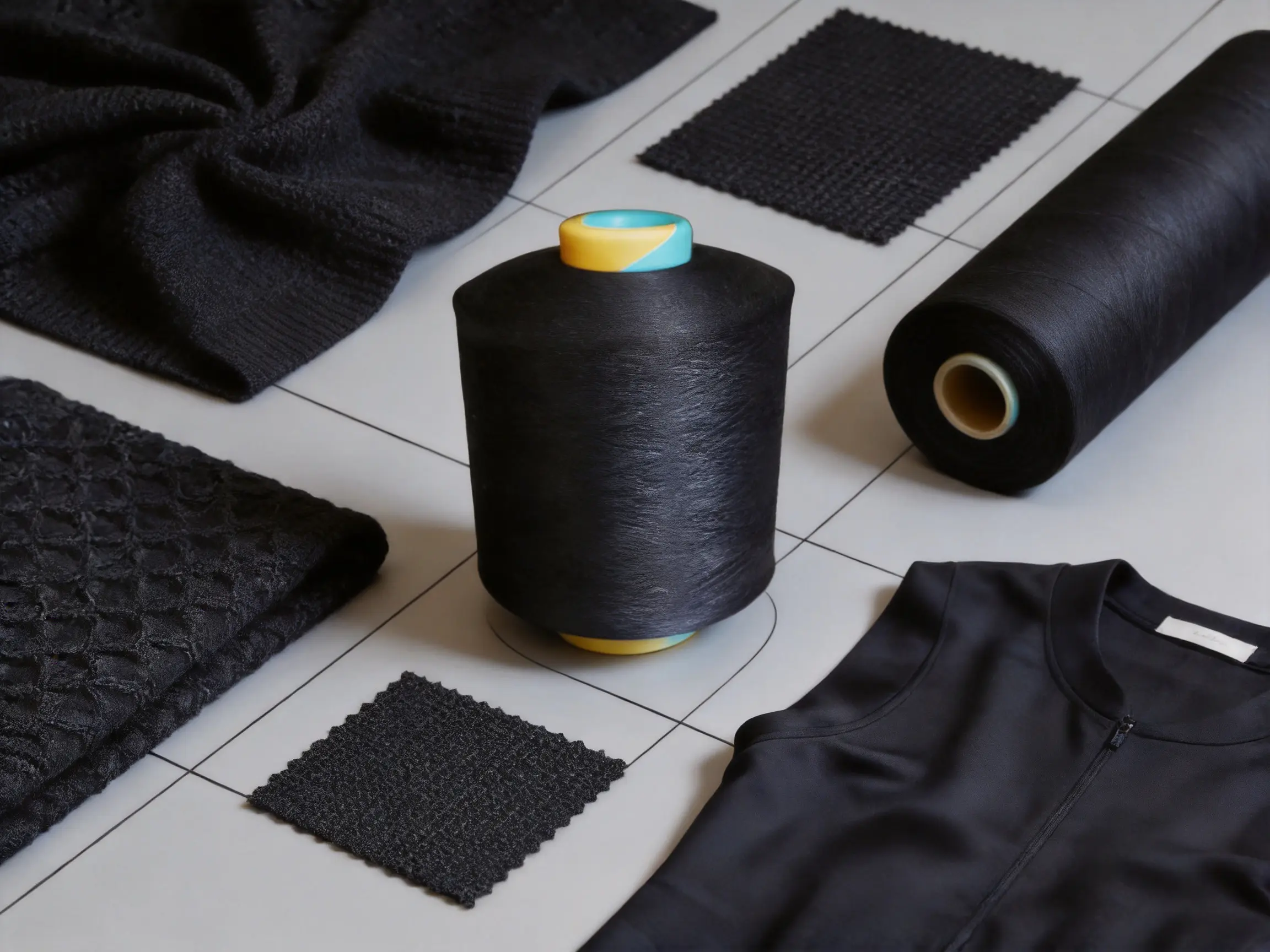
Frequently Asked Questions
What is black slight intermingled DTY?
Black slight intermingled DTY is a black polyester drawn textured yarn with a controlled, relatively light level of filament interlacing. It combines the textured structure of DTY with moderate network points that help improve filament cohesion while maintaining a comparatively smooth and flexible yarn character.
How are network points formed?
Network points are generally formed when compressed air causes the individual filaments to move and cross at controlled intervals. The number of networks per meter is affected by air pressure, texturing machine speed, yarn construction, and other process conditions.
What happens if the yarn is heavily intermingled?
Heavy intermingling can produce stronger and more numerous network points. This may improve filament cohesion, but it can also create visible network spots on the fabric surface or make the yarn feel more compact. The suitable level depends on the intended application and downstream process.
Is black slight intermingled DTY suitable for knitted fabric?
It can be suitable for many knitted fabric applications, including selected apparel, sportswear, jacquard, and blended fabric constructions. The buyer should confirm the yarn specification and conduct a knitting trial because machine settings and fabric design influence the final result.
Can it be used with rayon?
Yes, polyester DTY may be combined with rayon in blended fabric constructions. The correct blend ratio, yarn arrangement, fabric structure, dyeing method, and finishing process should be established through sampling and technical evaluation.
Can it be used with spandex?
It may be used as the polyester component in polyester and spandex fabrics. The fabric producer must control tension, stretch, heat-setting, and finishing conditions to achieve the required elastic performance and dimensional stability.
Does the product require dyeing?
Because the product is black, it may be supplied in a shade suitable for direct use in some applications. Whether additional dyeing is required depends on the customer’s color standard, fabric design, and finishing process. Color approval should be completed before mass production.
What information should be provided when requesting a quotation?
The buyer should provide the intended application, yarn count or denier, filament number, color requirement, luster, intermingling level, package format, estimated quantity, delivery destination, and any required certifications or inspection standards.
Why is machine speed important in intermingling?
Machine speed affects the time the yarn spends in the intermingling area and can influence the number and distribution of network points. It must be controlled together with air pressure to achieve a stable slight intermingling effect.
What are the main advantages over flat filament yarn?
Compared with flat filament yarn, DTY generally offers greater texture, bulk, flexibility, and textile-like hand feel. It may also provide better fabric coverage and a richer surface appearance, depending on the yarn specification and fabric construction.
What are the main advantages over heavily intermingled yarn?
Compared with heavily intermingled yarn, slight intermingled DTY may provide a more balanced combination of filament cohesion, softness, flexibility, and surface smoothness. It is appropriate when the customer wants controlled cohesion without excessive visible network spots.
Where is the manufacturer located?
Hangzhou Jinfeng Textile Co., Ltd. is located at 1279 Shenda Road, Jingjiang Branch, Xiaoshan District, Hangzhou, Zhejiang Province. The company operates in Jingjiang Street Industrial Park and serves domestic and international customers.
What company capabilities support this product?
The company is involved in DTY polyester yarn production, processing, and sales, as well as blended fabric production, post-dyeing, finishing, and related textile operations. It integrates research and development, production, and sales in an export-oriented business structure.
Conclusion
Black slight intermingled DTY is a versatile polyester yarn for textile manufacturers seeking a practical balance between textured bulk, filament cohesion, surface quality, and processing stability. Its controlled network structure distinguishes it from both flat filament yarn and heavily intermingled yarn.
The performance of this product depends heavily on manufacturing control. Air pressure and machine speed influence the number of networks per meter, while drawing, texturing, cooling, winding, and inspection determine the broader yarn quality. A carefully managed process helps reduce irregularities and supports more consistent fabric production.
The product can be considered for knitted fabrics, knitted jacquards, polyester-rayon blends, polyester-spandex constructions, apparel materials, home textiles, and other dark-colored textile products. Nevertheless, each application should be confirmed through technical discussion and sample testing.
Hangzhou Jinfeng Textile Co., Ltd. combines DTY polyester yarn production with blended fabric processing, post-dyeing, finishing, research and development, and sales. Its manufacturing site, integrated textile experience, and customer-oriented approach provide a foundation for supplying black slight intermingled DTY to buyers who require reliable coordination from yarn selection to fabric production.
For the best result, buyers should define the final application, confirm measurable yarn specifications, review samples, establish quality tolerances, and conduct a controlled production trial. When these steps are followed, black slight intermingled DTY can serve as a dependable material for attractive, functional, and commercially adaptable textile products.
References
1. Textile Institute, Textile Terms and Definitions, technical terminology relating to yarns, fibers, and fabric construction.
2. A. R. Bunsell, Handbook of Textile Fibre Structure, general principles of filament structure and textile performance.
3. W. E. Morton and J. W. S. Hearle, Physical Properties of Textile Fibres, principles of fiber behavior, yarn structure, and textile testing.
4. Textile Research Journal, studies concerning yarn texturing, filament cohesion, intermingling, and fabric performance.
5. International Organization for Standardization, relevant standards for textile yarn testing, color evaluation, linear density, strength, elongation, and package inspection.
