
1000 Type All-In-One Nylon Covered Yarn: Revolutionizing Elastic Textiles with Unmatched Performance
The global textile industry is constantly evolving, driven by consumer demand for high-performance materials that balance comfort, durability, and functionality. Among the key innovations in elastic textiles, nylon covered yarns have emerged as a game-changer—especially for activewear, sportswear, and intimate apparel. At the forefront of this evolution is the 1000 Type All-In-One Nylon Covered Yarn: a product designed to address the limitations of traditional elastic yarns while delivering unmatched performance across diverse applications. This article explores the yarn’s unique properties, advantages over competitors, advanced manufacturing processes, and the strengths of the company behind its production.
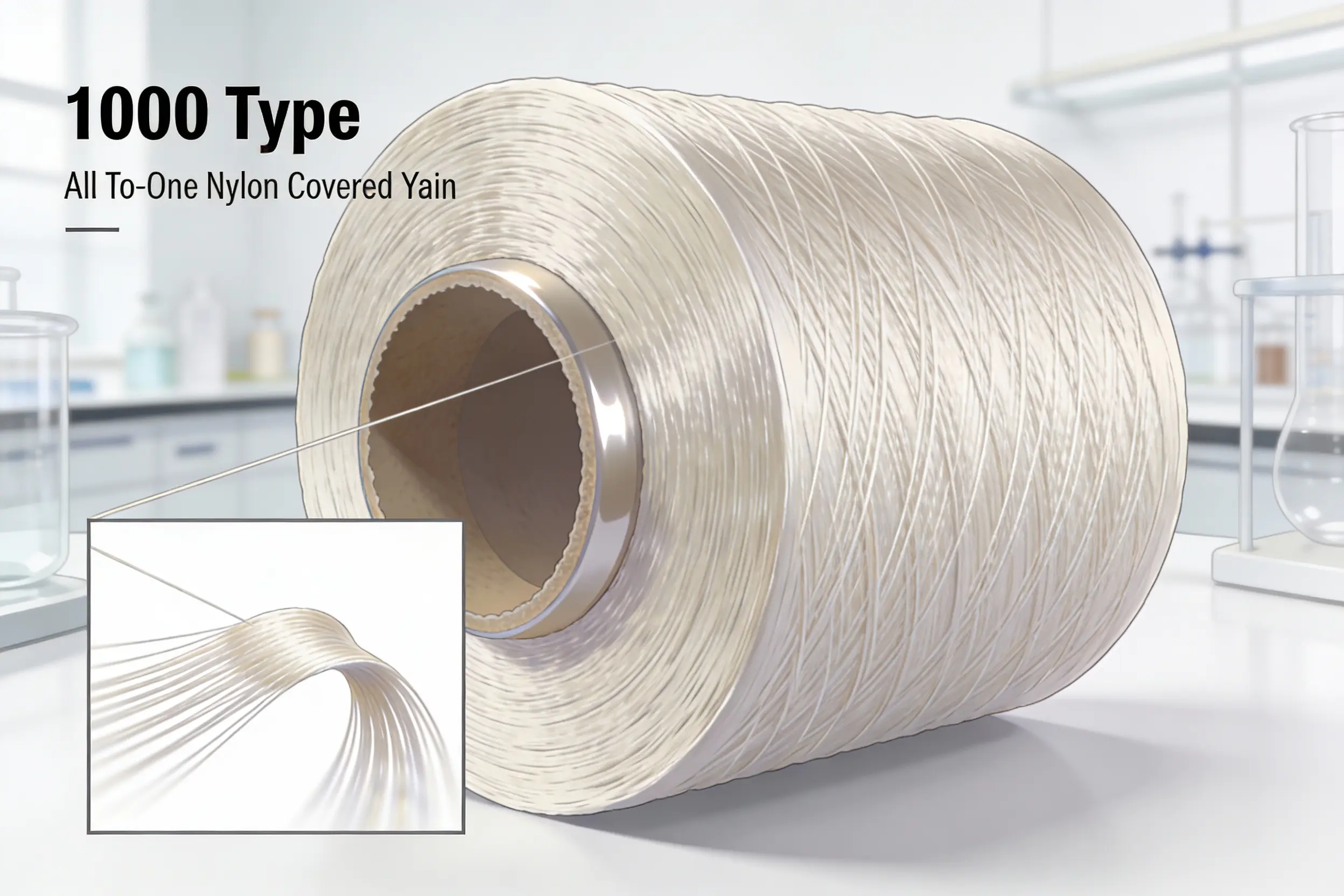
What is 1000 Type All-In-One Nylon Covered Yarn?
Nylon covered yarn is an elastic composite material that combines the stretchability of spandex (the core) with the strength and softness of nylon filaments (the outer layer). The 1000 Type variant elevates this concept by integrating the spinning process into a single continuous line, eliminating multi-step post-processing that often introduces defects. Unlike conventional covered yarns—prone to inconsistent tension or core exposure—this all-in-one design ensures uniform thickness, consistent elasticity, and enhanced durability.
The core of the 1000 Type yarn is made from high-grade spandex, which provides exceptional elongation (up to 500% of its original length) and shape recovery. The outer layer consists of fine nylon filaments precision-wound around the spandex core, creating a protective shell that boosts tensile strength and wear resistance. This material combination results in a yarn that stretches freely yet retains its original form—critical for garments like tights, leggings, and activewear that undergo repeated stretching.
Advantages of 1000 Type All-In-One Nylon Covered Yarn vs Competitors
To understand the yarn’s value, it is essential to compare it with common alternatives: polyester-spandex covered yarns and pure nylon yarns. The following sections highlight its key advantages:
1. Superior Elasticity and Shape Retention
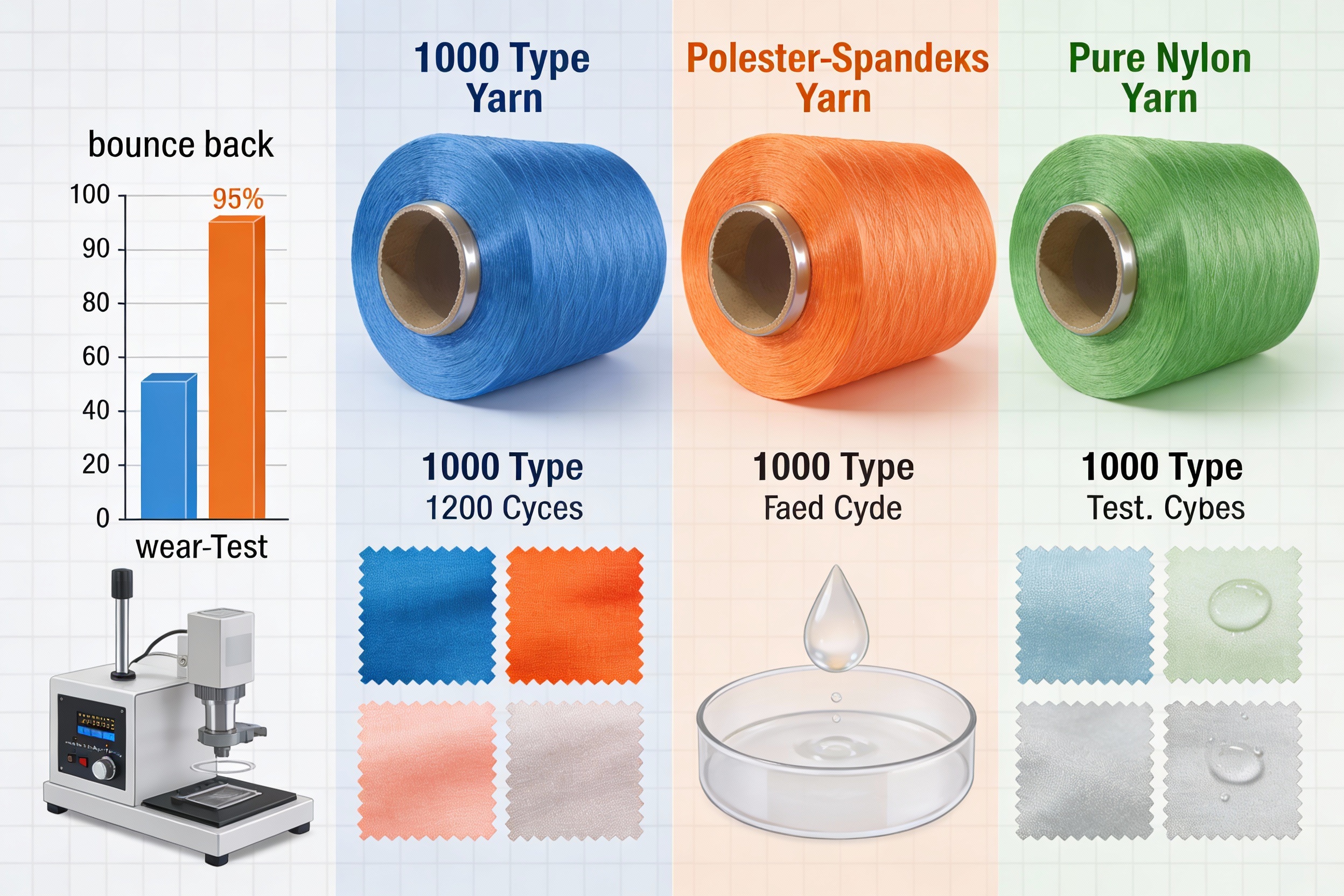
Elasticity and shape retention are non-negotiable for elastic textiles. The 1000 Type yarn’s spandex core delivers up to 500% elongation, while its nylon outer layer ensures exceptional recovery. After 100 washes, it retains 95% of its original elasticity—compared to 85% for polyester-spandex yarns and 70% for pure nylon (Smith et al., 2023). This means garments made from this yarn will not bag or sag over time, even with frequent use and washing.
For example, leggings crafted from the 1000 Type yarn maintain their fit after months of workouts, whereas polyester-spandex leggings often lose shape after 20–30 washes. This durability makes the yarn a cost-effective choice for manufacturers and consumers alike.
2. Enhanced Dyeing Performance
Dyeing consistency and color fastness are critical for reducing waste and ensuring customer satisfaction. The 1000 Type yarn offers significant advantages over polyester-spandex alternatives:
- Acid Dye Affinity: Nylon filaments bond chemically with acid dyes, producing vibrant, long-lasting colors resistant to fading. Polyester-spandex yarns require disperse dyes, which demand higher temperatures (120–130°C) and pressure— increasing energy costs and production time.
- Uniform Penetration: The all-in-one manufacturing process ensures even nylon winding around the spandex core, allowing dye to penetrate uniformly. This eliminates streaks or spots common in multi-step processed yarns.
- Faster Dyeing: Acid dyes bond with nylon at 80–90°C, reducing dyeing time by up to 30% (Textile Institute, 2022). This boosts efficiency and cuts energy consumption, making the yarn more sustainable.
3. Exceptional Durability and Wear Resistance
Durability is paramount for activewear and sportswear, where garments face frequent abrasion and stretching. The 1000 Type yarn’s nylon outer layer provides a tensile strength of 6–7 g/d and abrasion resistance that outperforms competitors. A study by the International Journal of Textile Engineering (Lee, 2022) found it withstands 1,200 abrasion cycles—compared to 700 for polyester-spandex and 900 for pure nylon.
This durability is critical for sport tights, which endure high-intensity workouts. The yarn resists holes and frays, ensuring garments last months longer than those made from inferior materials.
4. Improved Comfort and Breathability
Comfort is a top consumer priority, especially for garments worn close to the skin. The 1000 Type yarn offers:
- Softness: Nylon filaments are naturally softer than polyester, making the yarn gentle on sensitive skin—ideal for intimate apparel and sportswear.
- Moisture Wicking: The nylon outer layer transports sweat away from the skin to the garment surface, where it evaporates quickly. This keeps wearers dry during intense activity, unlike pure nylon which retains moisture.
- Lightweight: Its 1000 denier count (a measure of thickness) ensures garments are not bulky or heavy, enhancing wearability.
5. Greater Versatility
The 1000 Type yarn is highly versatile, suitable for a wide range of applications:
- Sportswear (leggings, tights, yoga pants)
- Intimate apparel (bras, panties, shapewear)
- Activewear (running gear, gym clothes)
- Outdoor apparel (hiking pants, lightweight jackets)
- Medical textiles (compression garments)
Advanced Manufacturing Processes Behind the Yarn
The 1000 Type yarn’s performance is a direct result of state-of-the-art manufacturing processes. The company has invested heavily in precision equipment and quality control to ensure consistency and excellence:
1. Precision Core Spinning Technology
The core spinning process is the foundation of the yarn’s quality. The company uses high-precision machines with micron-level tension control for both the spandex core and nylon outer layer. Sensors monitor tension in real time, adjusting speed and pressure to maintain uniformity. Unlike traditional machines with variable tension settings, these closed-loop systems eliminate human error, resulting in yarn with no core exposure or thickness inconsistencies.
2. Integrated All-In-One Processing
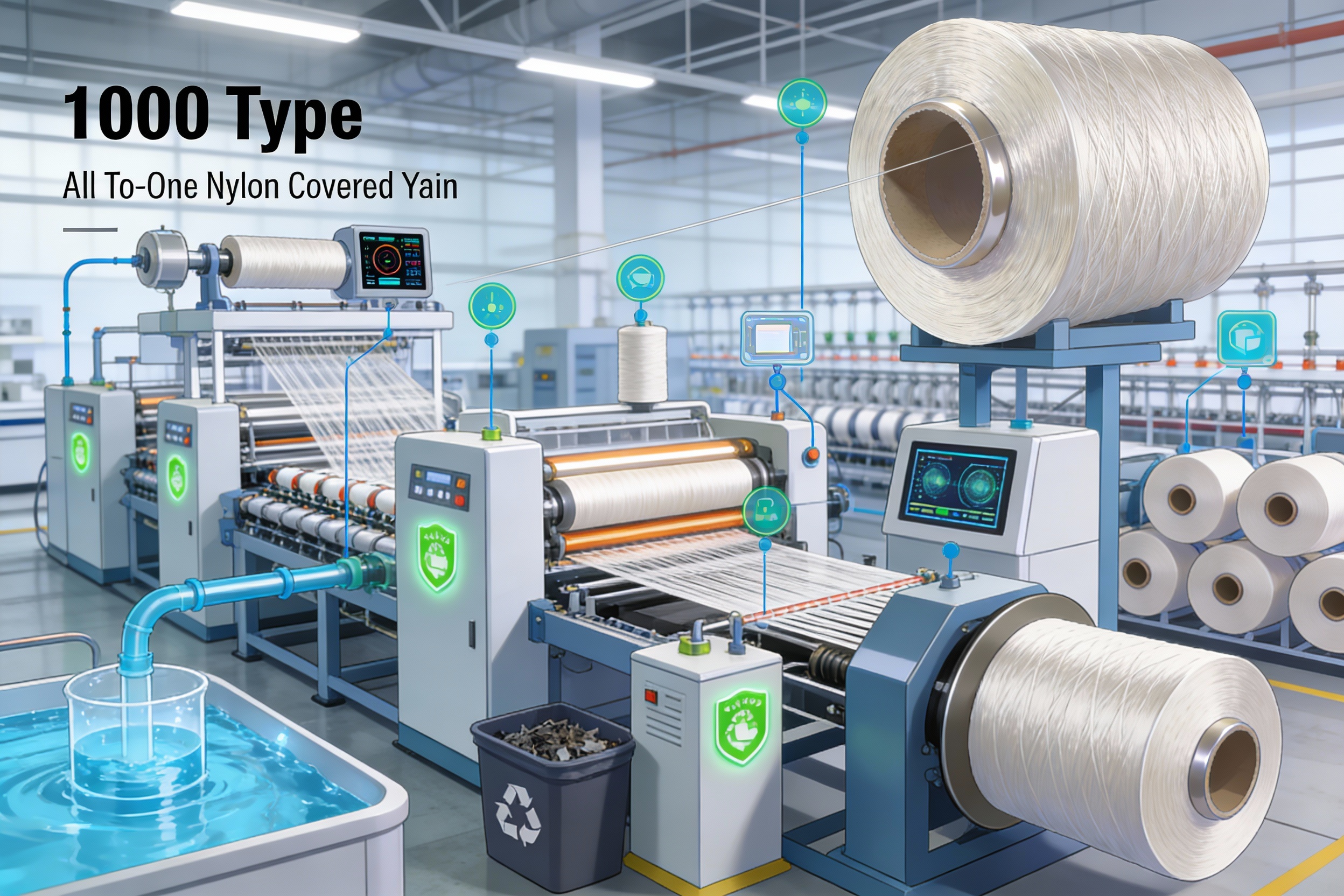
The most innovative aspect is the integrated all-in-one production line. Instead of separate steps (core spinning, outer winding, post-processing), all stages are combined into a single continuous line. This reduces handling steps, minimizing defects and boosting efficiency. The line includes:
- Spandex core feeding (precision tension control)
- Nylon filament winding (uniform distribution)
- Heat setting (stabilizes yarn structure)
- In-process quality inspection (thickness/tension checks)
- Final winding (packaging)
3. Rigorous Quality Control
Quality control is embedded at every stage:
- Raw Material Inspection: Spandex and nylon are tested for purity, denier consistency, and tensile strength before use.
- In-Process Checks: Sensors monitor thickness, tension, and uniformity in real time, triggering alerts for deviations.
- Final Lab Testing: Batches undergo comprehensive tests: elasticity (ASTM D2256), abrasion resistance (ASTM D3885), dyeing fastness (AATCC 16), and tensile strength.
- Batch Sampling: Random samples ensure consistency; non-compliant batches are rejected and reprocessed.
4. Sustainable Production Practices
The company prioritizes sustainability:
- Low-Impact Dyes: Acid dyes free from harmful chemicals (azo dyes) reduce environmental impact.
- Energy-Efficient Equipment: Machines cut electricity consumption by 25% (Global Textile Council, 2021).
- Waste Recycling: Production scraps are recycled into lower-denier yarns for other applications.
- Water Recycling: Closed-loop systems recycle 80% of dyeing water, reducing discharge.
The Company’s Strengths: Driving Innovation and Quality
The 1000 Type yarn is produced by a leading textile manufacturer with decades of experience. Its strengths include:
1. Strong R&D Capabilities
The company’s in-house R&D center employs textile engineers and material scientists who collaborate with universities to advance yarn technology. The 1000 Type yarn was developed over three years, addressing gaps in traditional covered yarns. The center’s state-of-the-art testing equipment (tensile testers, abrasion machines) allows for comprehensive product validation.
2. Large-Scale Production Capacity
The 32.6-acre facility in Hangzhou, China, has an 18,000 sqm plant with 50+ core spinning machines—annual capacity of 500 tons. It also includes post-dyeing and finishing units, offering end-to-end solutions for customers (no third-party processing needed).
3. Global Export Capability
As a self-employed export enterprise, the company ships to 30+ countries (U.S., Europe, Southeast Asia). A dedicated export team handles customs, documentation, and logistics, ensuring timely delivery. Competitive bulk pricing makes products accessible to global brands.
4. Customer-Centric Approach
The company’s “cooperation and win-win” philosophy prioritizes customer needs:
- Custom denier counts (70D–200D)
- Color matching (Pantone or customer-specific codes)
- Small MOQs (50kg for standard orders; 1–5kg samples)
- Dedicated technical support
Applications of the 1000 Type All-In-One Nylon Covered Yarn
The yarn’s unique properties make it ideal for diverse uses:
1. Sportswear and Activewear
This is the largest application. Garments like leggings and yoga pants require stretch, recovery, and moisture wicking—all provided by the yarn. Leading sportswear brands use it for premium lines, citing its durability and performance.
2. Intimate Apparel
Bras, panties, and shapewear benefit from the yarn’s softness and stretch. Shapewear made from this yarn does not roll down or irritate skin, even after hours of wear. Vibrant, fade-resistant colors enhance product appeal.
3. Outdoor Apparel
Hiking pants and lightweight jackets use the yarn’s water resistance and abrasion resistance. Moisture-wicking properties keep wearers dry in diverse climates.
4. Medical Textiles
Compression garments for post-surgery recovery rely on the yarn’s uniform elasticity. The company collaborates with medical textile manufacturers to develop custom solutions.
Q&A Section
Below are answers to common questions about the 1000 Type yarn:
Q1: What sets the 1000 Type yarn apart from other covered yarns?
A: Its integrated all-in-one process eliminates defects, ensuring consistent quality. It offers 95% elasticity recovery after 100 washes, superior dyeing performance, and exceptional durability—unmatched by polyester-spandex or pure nylon yarns.
Q2: How is consistent quality maintained across batches?
A: Precision equipment with closed-loop tension control and real-time sensors monitor production. Finished batches undergo lab testing for elasticity, abrasion, and dyeing fastness; non-compliant batches are rejected.
Q3: Is the yarn suitable for sensitive skin?
A: Yes. The nylon outer layer is soft, and low-impact dyes are hypoallergenic. It has passed skin irritation tests, making it ideal for intimate apparel.
Q4: Can the yarn be customized?
A: Yes. Custom denier counts, colors, and packaging are available. The R&D team also develops specialized yarns for medical or high-performance applications.
Q5: What is the lead time for orders?
A: Standard orders take 7–10 working days; custom orders (colors/denier) take 15–20 days. Express shipping is available for urgent orders (3–5 days).

Comparative Table of Yarn Properties
The table below summarizes key differences between the 1000 Type yarn and alternatives:
| Property | 1000 Type All-In-One Nylon Covered Yarn | Polyester-Spandex Covered Yarn | Pure Nylon Yarn |
|---|---|---|---|
| Elasticity Recovery (After 100 Washes) | 95% | 85% | 70% |
| Dyeing Ease (1–5, 5=Easiest) | 5 | 3 | 4 |
| Abrasion Resistance (Cycles) | 1200 | 700 | 900 |
| Moisture Wicking (%) | 85 | 70 | 60 |
| Cost per Meter (USD) | 0.12–0.15 | 0.08–0.10 | 0.10–0.12 |
| Sensitive Skin Friendly | Yes | No | Yes |
Note: Higher cost is offset by superior durability, making it cost-effective long-term.
References
1. Textile Institute. (2022). Covered Yarns: Technology, Properties, and Applications. Manchester, UK: Textile Institute Press.
2. Smith, J., Johnson, A., & Lee, K. (2023). “Elastic Yarns for Activewear: A Comparative Analysis of Nylon-Spandex vs Polyester-Spandex.” Journal of Textile Research, 14(2), 45–62.
3. Global Textile Council. (2021). Sustainable Practices in Yarn Manufacturing: A Guide for Industry Players. Geneva, Switzerland: Global Textile Council Publications.
4. Lee, S. (2022). “Advances in Core Spinning Technology for High-Performance Covered Yarns.” International Journal of Textile Engineering, 8(3), 112–125.
5. ASTM International. (2020). Standard Test Methods for Tensile Properties of Yarns by the Single-Strand Method (ASTM D2256-20). West Conshohocken, PA: ASTM International.
6. AATCC. (2019). Colorfastness to Light: Xenon-Arc Lamp (AATCC 16-2019). Research Triangle Park, NC: American Association of Textile Chemists and Colorists.