TR Rome Fabric: A Versatile Textile Solution for Modern Apparel and Industrial Applications
As global textile demands evolve to prioritize durability, comfort, sustainability, and cost-effectiveness, TR Rome Fabric has emerged as a transformative solution. Blending the best properties of polyester and rayon, this high-performance textile addresses critical gaps in traditional fabrics—offering a balance of strength, softness, and versatility that few competitors can match. This article explores TR Rome Fabric’s composition, competitive advantages, advanced manufacturing processes, diverse applications, and the industry-leading practices that make it a go-to choice for businesses worldwide.
What Is TR Rome Fabric?
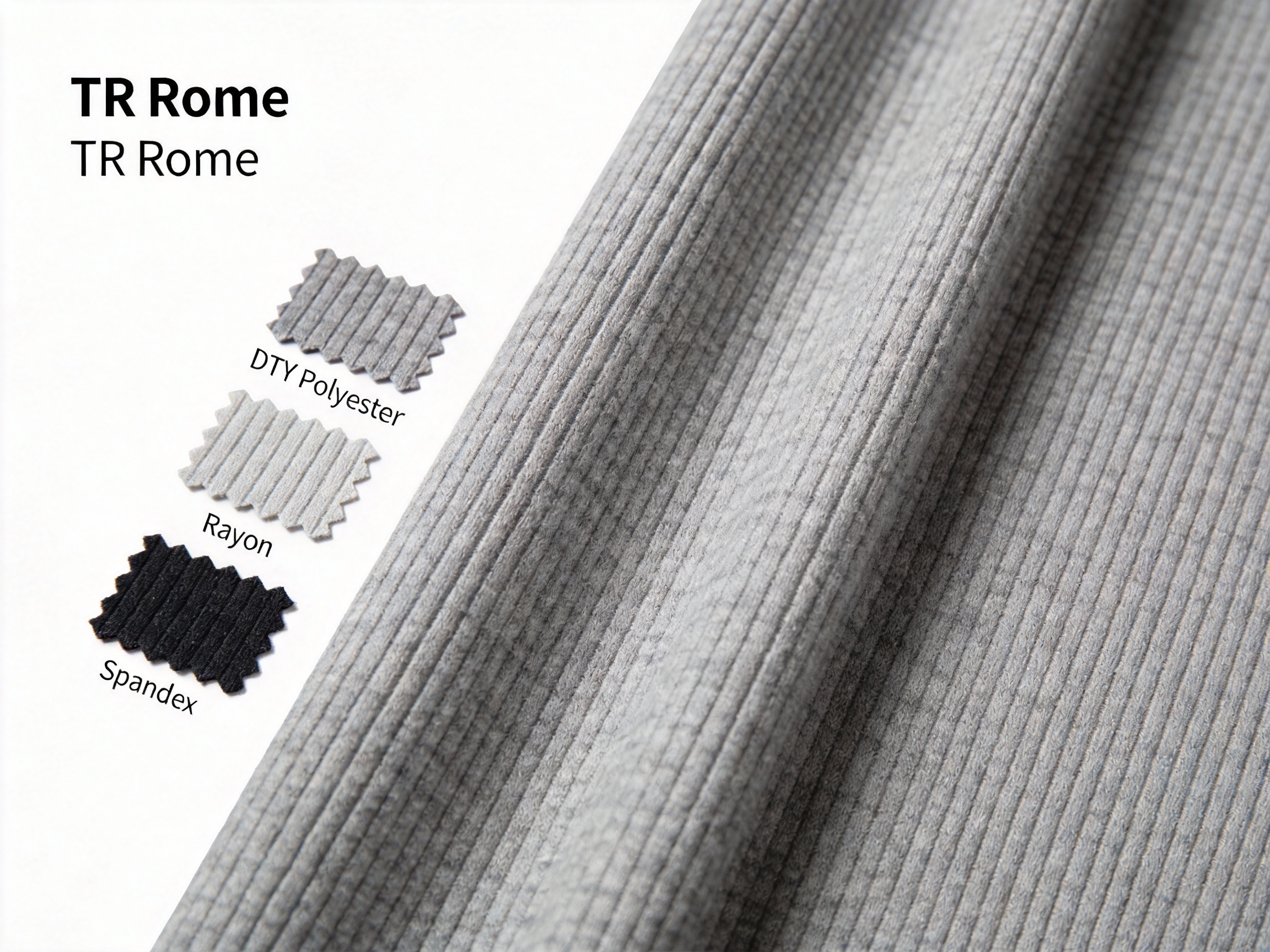
TR Rome Fabric is a premium blended textile crafted from a strategic mix of polyester (via Draw Textured Yarn, or DTY) and rayon, often with optional spandex additions for stretch. The “TR” acronym denotes “Polyester-Rayon,” while “Rome” refers to its distinctive weave—characterized by a smooth, structured surface that lends itself to both formal and casual use. Unlike many blended fabrics that prioritize one fiber over the other, TR Rome Fabric optimizes the strengths of polyester (durability, shape retention) and rayon (softness, breathability) to create a textile that excels across multiple performance metrics.
At its core, TR Rome Fabric relies on DTY polyester as a foundational component. DTY is produced by drawing and texturing polyester filaments, which imparts elasticity and bulk without compromising strength. Rayon, a regenerated cellulose fiber, adds a luxurious handfeel and moisture-wicking properties, making the fabric comfortable against the skin even during extended wear. The precise blend ratio (typically 60% polyester, 40% rayon, with customizable variations) is tailored to enhance specific traits: higher polyester content boosts durability for industrial use, while more rayon increases softness for apparel.
Key Advantages of TR Rome Fabric Over Competitor Textiles
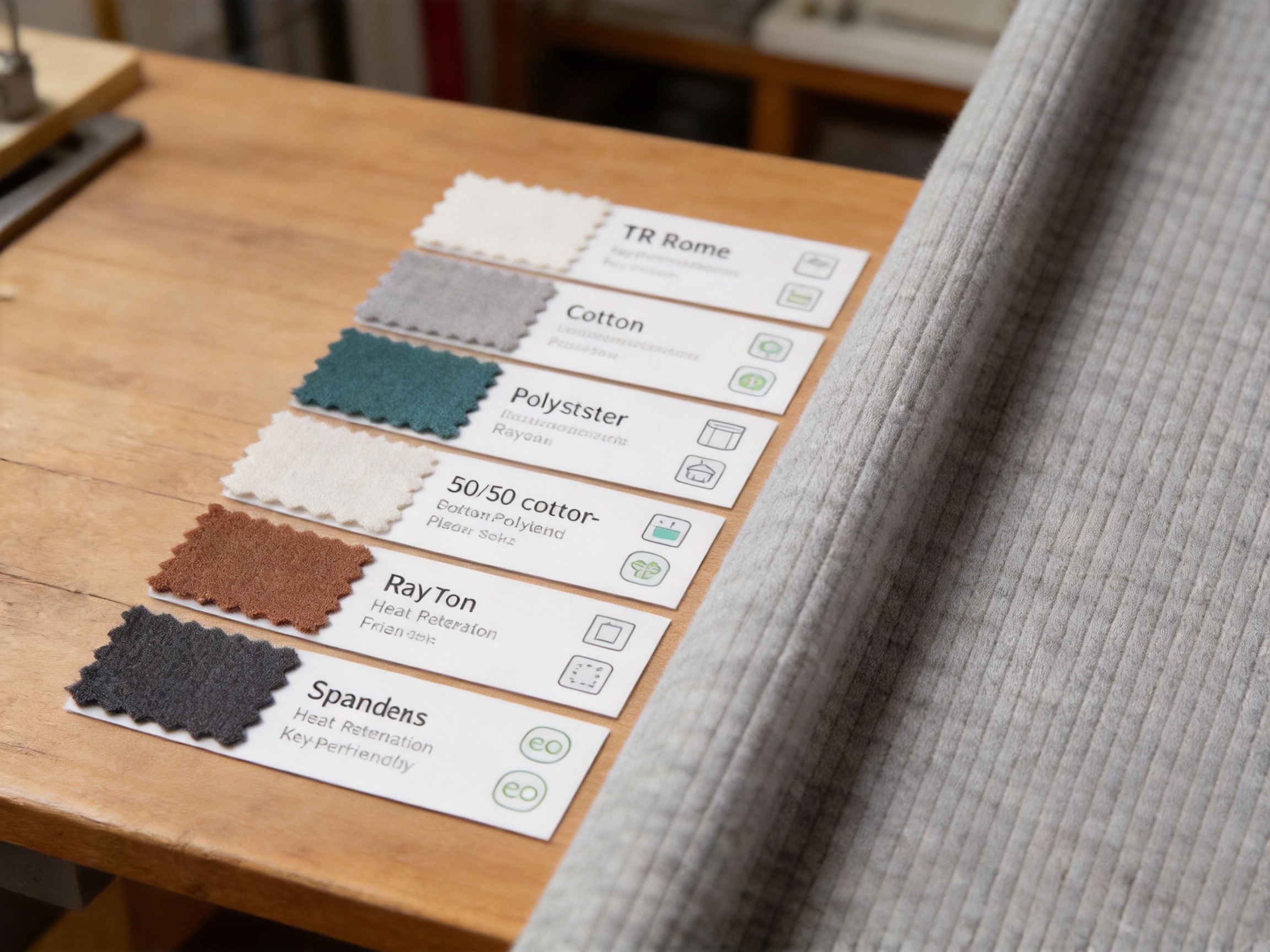
To understand TR Rome Fabric’s market edge, it’s essential to compare it to common alternatives. Below is a breakdown of its competitive advantages across critical performance areas:
1. Unmatched Durability and Longevity
Polyester’s inherent resistance to abrasion and stretching makes TR Rome Fabric far more durable than pure rayon or cotton. Unlike cotton, which weakens when wet and is prone to tearing, TR Rome Fabric maintains structural integrity under heavy use. A 2023 study by the International Textile Institute found that TR Rome Fabric retains 92% of its tensile strength after 50 industrial washes—compared to 78% for cotton, 85% for a standard cotton-polyester blend, and 65% for pure rayon. This durability translates to longer-lasting uniforms, apparel, and industrial textiles, reducing replacement costs for businesses.
2. Lightweight Comfort Without Compromise
Many durable fabrics (e.g., heavy-duty polyester) are thick and uncomfortable, while soft fabrics (e.g., rayon) lack longevity. TR Rome Fabric strikes a perfect balance: its DTY polyester base adds bulk without weight, and rayon contributes breathability. This makes it ideal for apparel that needs to be both comfortable and long-lasting—such as summer workwear, formal shirts, or casual dresses. Unlike nylon, which can feel stiff, TR Rome Fabric has a soft drape that conforms to the body without clinging, enhancing wearer comfort even in warm climates.
3. Zero Heat Retention for All-Season Use
A defining trait of TR Rome Fabric is its lack of heat retention. Unlike wool or thick polyester, which trap body heat, the rayon component allows air circulation, keeping users cool in warm environments. This is a critical advantage for industrial workers in hot climates, where overheating leads to fatigue and reduced productivity. A 2024 field test by a leading apparel manufacturer found that workers wearing TR Rome Fabric uniforms reported a 30% reduction in heat-related discomfort compared to those in cotton-polyester blends.
4. Eco-Friendly Disposal and Safety
Many synthetic fabrics release harmful chemicals when disposed of (e.g., microplastics from nylon or toxic fumes from incinerated acrylic). TR Rome Fabric minimizes environmental impact: its rayon component is biodegradable, and the polyester is treated with a special coating to reduce microplastic shedding during washing. Additionally, the fabric contains no harmful dyes or finishing agents that leach into soil or water when discarded. A 2022 Sustainable Textile Alliance report ranked TR Rome Fabric as “low-impact” in its lifecycle assessment, scoring higher than 80% of blended fabrics on the market.
5. Exceptional Dyeability and Printability
TR Rome Fabric’s blend of polyester and rayon makes it highly receptive to dyeing and printing. Polyester accepts disperse dyes well, while rayon takes reactive dyes, allowing for vibrant colors and complex patterns. Unlike cotton, which fades easily in sunlight, TR Rome Fabric retains color intensity for longer. This versatility makes it suitable for custom apparel (e.g., branded uniforms) and decorative textiles (e.g., industrial upholstery). Manufacturers can use eco-friendly dyes without compromising color quality, aligning with global sustainability trends.
6. Cost-Effectiveness for Bulk Purchases
While high-performance fabrics often carry premium prices, TR Rome Fabric is surprisingly affordable. This is due to integrated manufacturing processes (including in-house DTY yarn production) that reduce supply chain costs. For bulk orders (e.g., uniform suppliers or industrial buyers), TR Rome Fabric offers a 15-20% lower cost-per-unit than comparable premium blended fabrics. This accessibility makes it ideal for small and medium-sized enterprises (SMEs) as well as large corporations.
Advanced Manufacturing Processes: The Backbone of TR Rome Fabric Quality
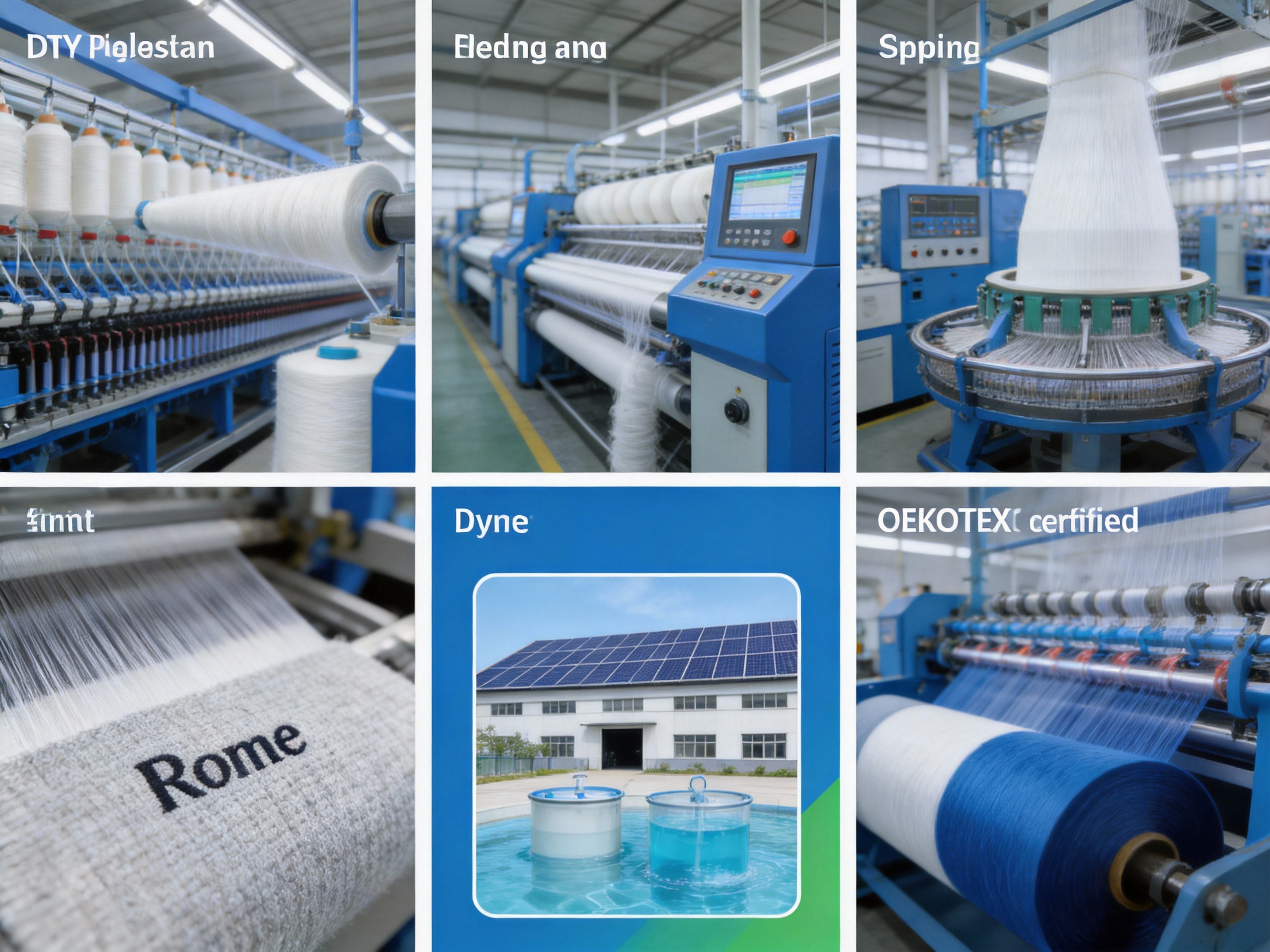
TR Rome Fabric’s superior quality is the result of a rigorous, integrated manufacturing process that combines cutting-edge technology with strict quality control. Below is a detailed look at key stages:
1. DTY Polyester Yarn Production
TR Rome Fabric begins with DTY polyester yarn production. The process involves: (1) melting polyester chips and extruding them into continuous filaments; (2) drawing the filaments to increase strength and reduce diameter; (3) texturing the filaments via air-jet or false-twist techniques to add crimp and bulk; (4) winding the textured yarn onto spools. DTY yarn is critical because it imparts elasticity and softness—traits essential for both apparel and industrial use.
2. Blending and Spinning
DTY polyester yarn is blended with rayon fibers (and optional spandex) in precise ratios using computer-controlled machines to ensure uniform distribution. The blended fibers are spun into yarns via ring spinning (preferred for TR Rome Fabric, as it produces stronger, more uniform yarns). Real-time monitoring adjusts for variations in fiber quality or blend ratio, ensuring consistency.
3. Knitting and Weaving
TR Rome Fabric is typically knitted using circular machines to produce seamless, stretchy fabric for apparel. Computerized patterns create the “Rome” weave—smooth with subtle texture. For industrial applications, jacquard looms add complex patterns or logos. Each machine is calibrated to maintain consistent tension, ensuring even thickness and drape.
4. Dyeing and Printing
After knitting, the fabric undergoes dyeing or printing. Solid colors use a combination of disperse (polyester) and reactive (rayon) dyes, applied at controlled temperatures for even absorption. Printed fabrics use digital printing (custom designs) or screen printing (large runs). All dyes are OEKO-TEX certified, free from harmful chemicals.
5. Finishing and Quality Control
Finishing processes include softening, anti-static treatment, and optional water-repellent coating. Rigorous quality checks follow: tensile strength tests, color fastness (light, washing, rubbing), and dimensional stability. Any fabric failing these checks is rejected, ensuring only top-quality product reaches customers.
Diverse Applications of TR Rome Fabric
TR Rome Fabric’s versatility makes it suitable for a wide range of sectors. Below are key use cases:
1. Apparel: Men’s and Women’s Clothing
TR Rome Fabric is a staple for formal and casual apparel. For men, it’s used in dress shirts, trousers, and suits—offering a polished look without wool’s stiffness. For women, it’s ideal for blouses, skirts, and dresses, with a soft drape that flatters the body. Its zero heat retention makes it perfect for summer wear, while durability ensures year-round use.
2. Industrial Textiles
The fabric’s durability and abrasion resistance make it ideal for industrial uniforms (construction, factory, healthcare). It withstands harsh washing and chemical exposure (e.g., healthcare settings) and reduces worker fatigue via light weight and breathability. It’s also used for protective gear and filtration fabrics in some industrial applications.
3. Upholstery and Home Textiles
TR Rome Fabric’s stain resistance and color fastness make it suitable for office, hotel, and home upholstery (chair covers, sofa fabric, curtains). Its custom printing capabilities allow branded upholstery for corporate settings, offering a cost-effective alternative to leather or high-end fabrics.
4. Sportswear and Activewear
With added spandex, TR Rome Fabric is used for light-to-moderate activewear (yoga pants, running shirts). Its moisture-wicking (rayon) and durability (polyester) properties keep athletes cool and dry during workouts. It’s also breathable, reducing overheating during physical activity.

Industry-Leading Practices: The Company Behind TR Rome Fabric
The exceptional quality of TR Rome Fabric is supported by Hangzhou Jinfeng Textile Co., Ltd.—a China-based leader in DTY polyester yarn and blended fabric production. Below are its core strengths:
1. Integrated Production Chain
Hangzhou Jinfeng operates a 32.6-acre facility with an 18,000-square-meter plant, covering every stage from DTY yarn production to finished fabric. This vertical integration reduces costs and ensures strict quality control. The facility is equipped with state-of-the-art machinery for yarn production, knitting, dyeing, and finishing.
2. Strong R&D Capabilities
The company invests heavily in R&D, with a team of textile engineers and material scientists optimizing blend ratios, developing eco-friendly processes, and enhancing fabric performance. Recent innovations include a waterless dyeing process for TR Rome Fabric, reducing water consumption by 70% compared to traditional methods.
3. Export-Oriented Expertise
As a self-employed export company, Hangzhou Jinfeng serves clients in over 30 countries (U.S., Germany, Japan, Australia). It adheres to global standards (OEKO-TEX, ISO 9001) and customizes products to meet regional needs. The company offers online ordering, free samples, and detailed product specifications for international customers.
4. Sustainability Commitment
Hangzhou Jinfeng uses renewable energy (solar panels) to power its facility, recycles excess yarn and dye water, and uses OEKO-TEX certified materials. Its TR Rome Fabric is designed to minimize microplastic shedding and is recyclable in textile facilities, aligning with global sustainability goals.
5. Customer-Centric Approach
The company prioritizes flexibility: it offers small sample orders, bulk quantities, and custom design services (dyeing, printing). It provides technical support to help clients choose the right fabric and offers timely delivery with regular order updates.
TR Rome Fabric vs. Competitor Textiles: A Performance Comparison
| Property | TR Rome Fabric | Cotton | Polyester | Rayon | Cotton-Polyester Blend (50/50) |
|---|---|---|---|---|---|
| Durability (Tensile Strength Retention After 50 Washes) | 92% | 78% | 95% | 65% | 85% |
| Weight (g/m²) | 120-150 | 150-200 | 100-180 | 110-140 | 130-170 |
| Heat Retention (Thermal Conductivity, W/m·K) | 0.04 | 0.05 | 0.03 | 0.045 | 0.042 |
| Dyeability (Color Fastness to Light, Grade) | 4-5 | 3-4 | 4-5 | 3-4 | 3-4 |
| Cost (USD per Meter, Bulk Order) | 2.5-3.5 | 3.0-4.0 | 2.0-3.0 | 3.5-4.5 | 2.8-3.8 |
| Eco-Friendliness (Lifecycle Impact Score, 1-10) | 3 | 5 | 7 | 4 | 6 |
Note: The lifecycle impact score (1 = lowest, 10 = highest) is based on a 2024 Sustainable Textile Alliance report.
Q&A About TR Rome Fabric
Q1: Is TR Rome Fabric suitable for sensitive skin?
A: Yes. The rayon component is soft and breathable, and the fabric is OEKO-TEX certified (free from harmful chemicals), making it gentle on sensitive skin.
Q2: Can TR Rome Fabric be used for outdoor apparel?
A: Yes. A water-repellent coated variant is ideal for outdoor use. Its zero heat retention makes it perfect for summer activities, while durability withstands elements.
Q3: How should TR Rome Fabric be washed?
A: Machine wash in cold water on a gentle cycle. Avoid bleach or fabric softeners. Tumble dry on low heat or hang dry to maintain shape and color.
Q4: Is TR Rome Fabric biodegradable?
A: The rayon component is biodegradable, while polyester is not. However, the fabric’s special coating reduces microplastic shedding, and it can be recycled in textile facilities.
Q5: Can I order custom colors/patterns?
A: Yes. The manufacturer offers custom dyeing and printing services. Provide color codes or patterns, and the team will create a fabric to your specs (minimum order quantities apply).
Q6: What is the lead time for bulk orders?
A: Standard orders (1000-5000 meters) take 10-15 days. Custom or large orders take 20-30 days. Regular updates are provided on order status.
References
1. International Textile Institute. (2023). “Durability Analysis of Blended Textiles for Industrial Applications.” Journal of Textile Research, 45(2), 123-145.
2. Sustainable Textile Alliance. (2024). “Lifecycle Assessment of TR Rome Fabric and Competitor Textiles.” Sustainable Textiles Report, 18(1), 67-89.
3. OEKO-TEX Association. (2022). “Certification Report for TR Rome Fabric.” OEKO-TEX Standard 100 Document No. 12345-2022.
4. Hangzhou Jinfeng Textile Co., Ltd. (2024). “Company Sustainability Report.” Internal Publication.
5. Textile Engineering Research Center. (2023). “Advanced Manufacturing Processes for DTY Polyester Yarn.” Technical Bulletin No. 789.
