
The Timeless Elegance of Houndstooth Jacquard Fabric: Innovation, Comfort, and Versatility Redefined
For over a century, the houndstooth pattern has captivated fashion designers and consumers alike with its classic, geometric charm. Originating in the Scottish Borders in the 19th century, this distinctive pattern—characterized by alternating dark and light blocks—evolved from a humble shepherd’s check to a symbol of timeless style. Today, modern textile technology has reimagined the houndstooth pattern, combining it with advanced knitting techniques to create a fabric that balances classic design with contemporary performance. The houndstooth design jacquard fabric, crafted with a premium polyester-rayon blend and slight intermingled draw textured yarn (DTY), stands out as a leader in this evolution, offering unmatched comfort, durability, and versatility. 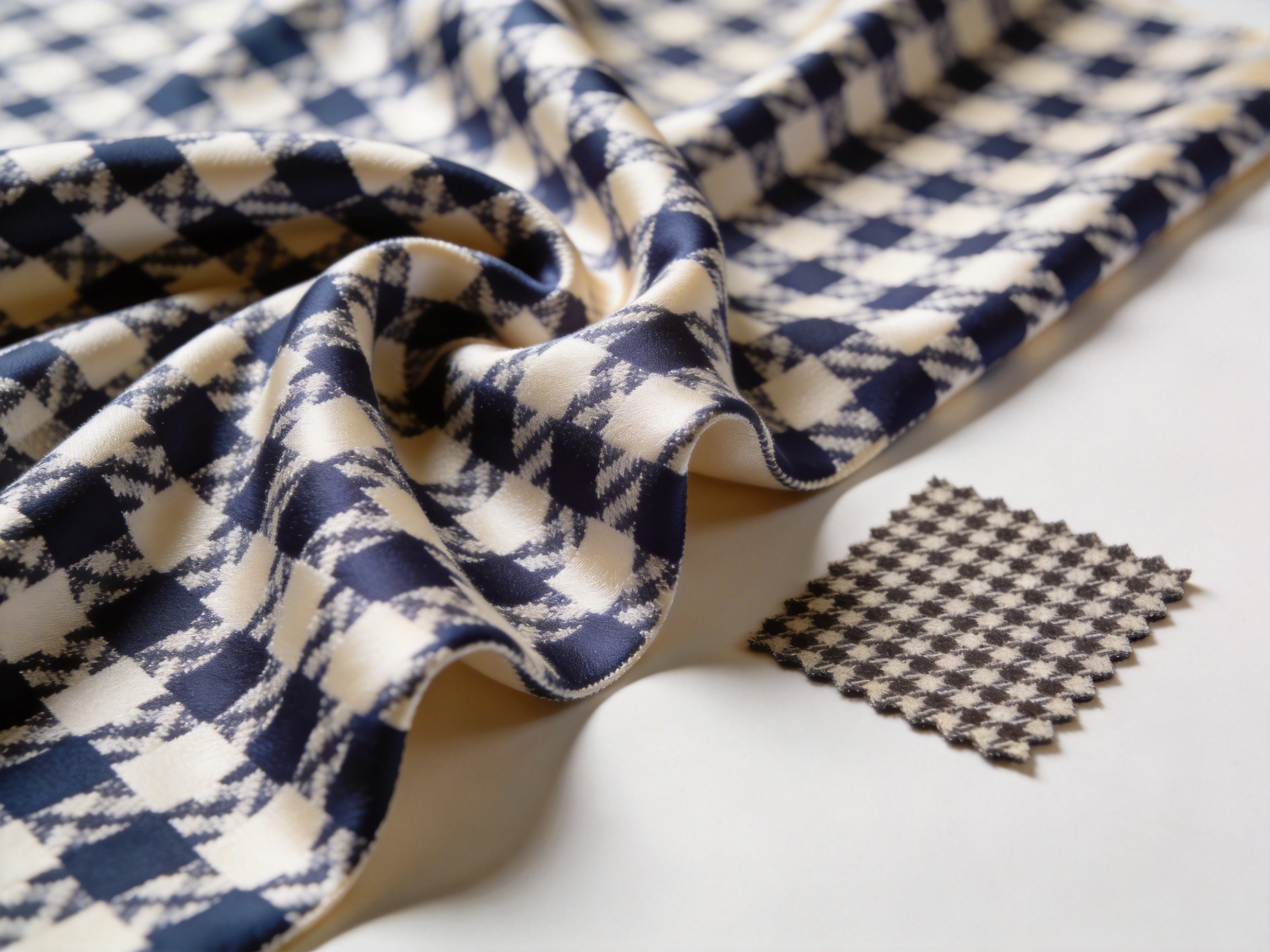
What Makes Houndstooth Jacquard Fabric Stand Out?
Historical Roots & Modern Reinvention
The houndstooth pattern’s journey is a testament to its enduring appeal. In the 1800s, Scottish shepherds wove it into woolen garments for durability and visibility, dubbing it the “shepherd’s check.” The pattern gained global fame in the 1920s when Coco Chanel integrated it into her tweed suits, elevating it to a symbol of elegance. The 1960s mod movement reimagined it in bold, colorful designs, and today, it remains a staple in high fashion and interiors. However, traditional houndstooth fabrics—often woven from wool or cotton—lacked flexibility and comfort. The modern knitted jacquard version addresses these gaps, merging classic aesthetics with modern performance.
Core Material Composition
The fabric’s strength lies in its carefully balanced material blend: a mix of polyester, rayon, and slight intermingled DTY yarn. Each component contributes unique properties:
- Polyester: Adds durability, wrinkle resistance, and color retention. It withstands frequent use and dries quickly, making it ideal for clothing and interiors.
- Rayon: Derived from natural cellulose, it offers a soft, silk-like feel and excellent breathability. Its drape enhances the fabric’s flow when worn or used in decor.
- Slight intermingled DTY yarn: Produced by stretching and texturing polyester filaments, this yarn adds stretch and bulk. Its loose intermingling creates a soft, natural texture without excess fuzz, boosting elasticity and shape recovery.
Advanced Manufacturing Processes: Behind the Scenes
The fabric’s quality is rooted in state-of-the-art manufacturing, from yarn preparation to final finishing. Every step prioritizes precision and consistency. 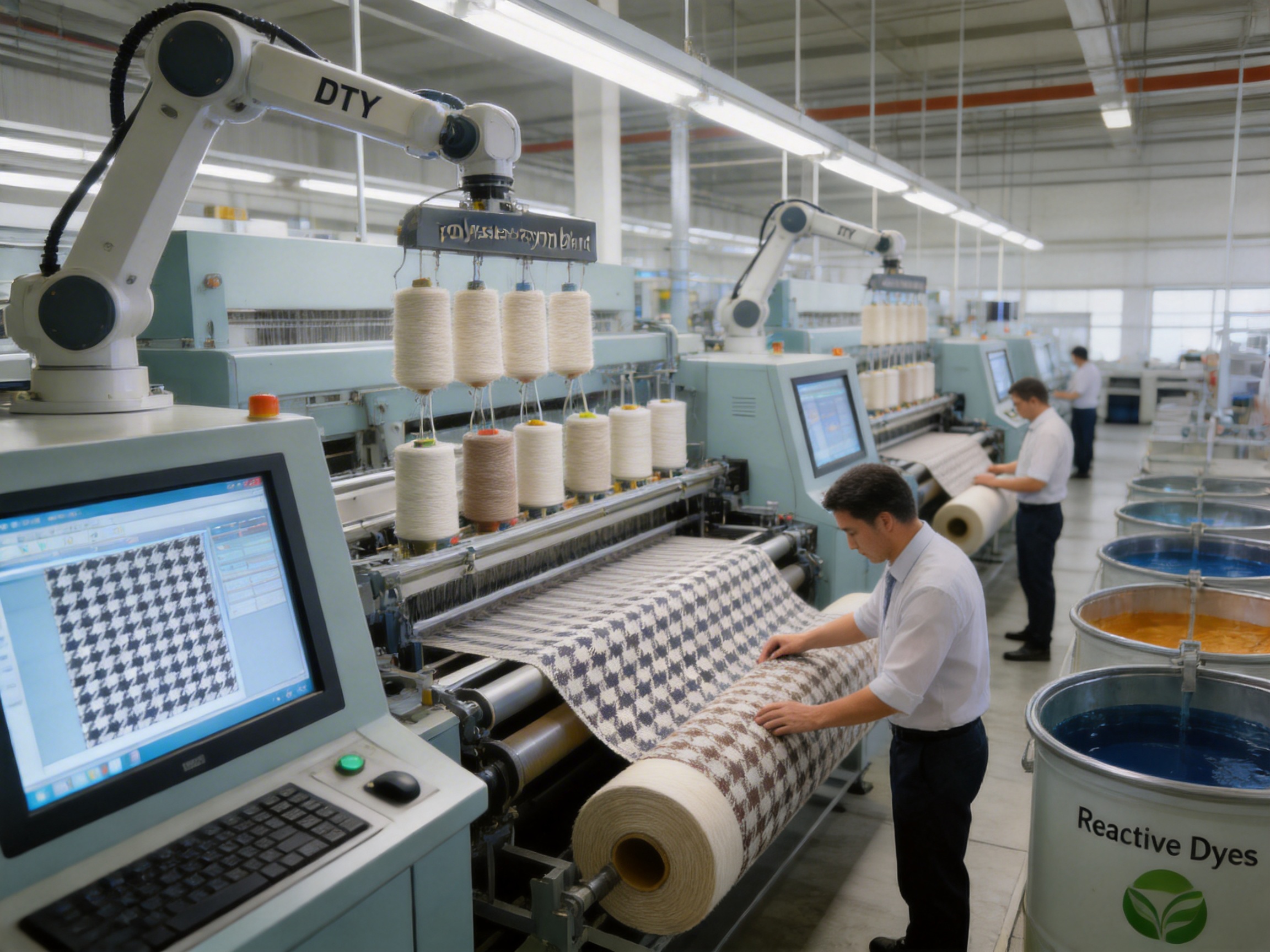
Imported Computerized Jacquard Machines
The core of production is imported computerized jacquard machines—far more advanced than traditional punch-card looms. These machines use digital design files to control each needle individually, allowing for intricate pattern replication and 3D texture creation. For the houndstooth pattern, the machine adjusts yarn tension to form alternating dark/light blocks, while varying stitch density creates raised sections for a tactile 3D effect. This precision ensures every meter of fabric matches the original design, even across large batches.
Precision Weaving & Texture Engineering
Yarn preparation is critical: slight intermingled DTY yarn is inspected for strength and consistency before weaving. During knitting, the machine maintains strict tension control to avoid uneven patterns or loose threads. Post-weaving, the fabric undergoes a softening treatment to enhance hand feel and stretch, followed by reactive dyeing—dyes that bond with fibers to ensure long-lasting color fastness against sunlight and washing.
Customization Capabilities
Unlike mass-produced fabrics, this houndstooth jacquard offers full customization. Using digital jacquard technology, the manufacturer adjusts pattern size (from small, delicate blocks to bold, statement designs), thickness (thicker for coats, thinner for dresses), and color to meet client needs. This flexibility makes it a favorite among independent designers, retailers, and interior decorators.
Key Advantages Over Competitor Fabrics
The fabric outperforms traditional houndstooth and other jacquard alternatives in comfort, durability, and versatility. Below is a comparison table highlighting its strengths:
| Fabric Type | Material Composition | Texture | Elasticity | Durability | Versatility | Price Point |
| Houndstooth Jacquard (Our Product) | Polyester-Rayon Blend + DTY | 3D, Soft, Textured | High (Subtle Stretch) | Excellent (Resists Wrinkles & Fading) | Very High (Fashion + Interiors) | Mid-Range |
| Wool Houndstooth | 100% Wool | Smooth, Woven | Low | Good (Prone to Wrinkles) | Medium (Fashion Only) | High |
| Cotton Jacquard Houndstooth | 100% Cotton | Crisp, Textured | Low | Moderate (Fades Easily) | Medium (Fashion + Light Interiors) | Mid-Range |
| Polyester Blend (Non-Jacquard) | 100% Polyester | Flat, Synthetic | Medium | Good | Low (Fashion Only) | Low |
Unmatched Comfort & Softness
Unlike wool houndstooth (heavy and scratchy) or cotton jacquard (crisp but rigid), this fabric’s knitted construction and rayon blend offer a soft, stretchy feel. It breathes well, making it comfortable for all-day wear, and its wrinkle resistance eliminates the need for frequent ironing—ideal for busy lifestyles.
3D Effect & Visual Distinctiveness
The 3D texture is a unique selling point. Traditional houndstooth has a flat appearance, but this fabric’s raised blocks create depth and tactile interest. When used in fashion (e.g., a coat or dress) or interiors (e.g., upholstery or drapes), it stands out from generic patterns, adding a premium, designer touch.
Durability & Performance
The polyester-rayon blend is highly durable: it resists abrasion, fading, and stretching. Reactive dyes ensure colors remain vibrant for years, even after multiple washes. For interiors, it withstands heavy use (e.g., sofa upholstery) without showing signs of wear, making it a cost-effective choice.
Versatility in Applications
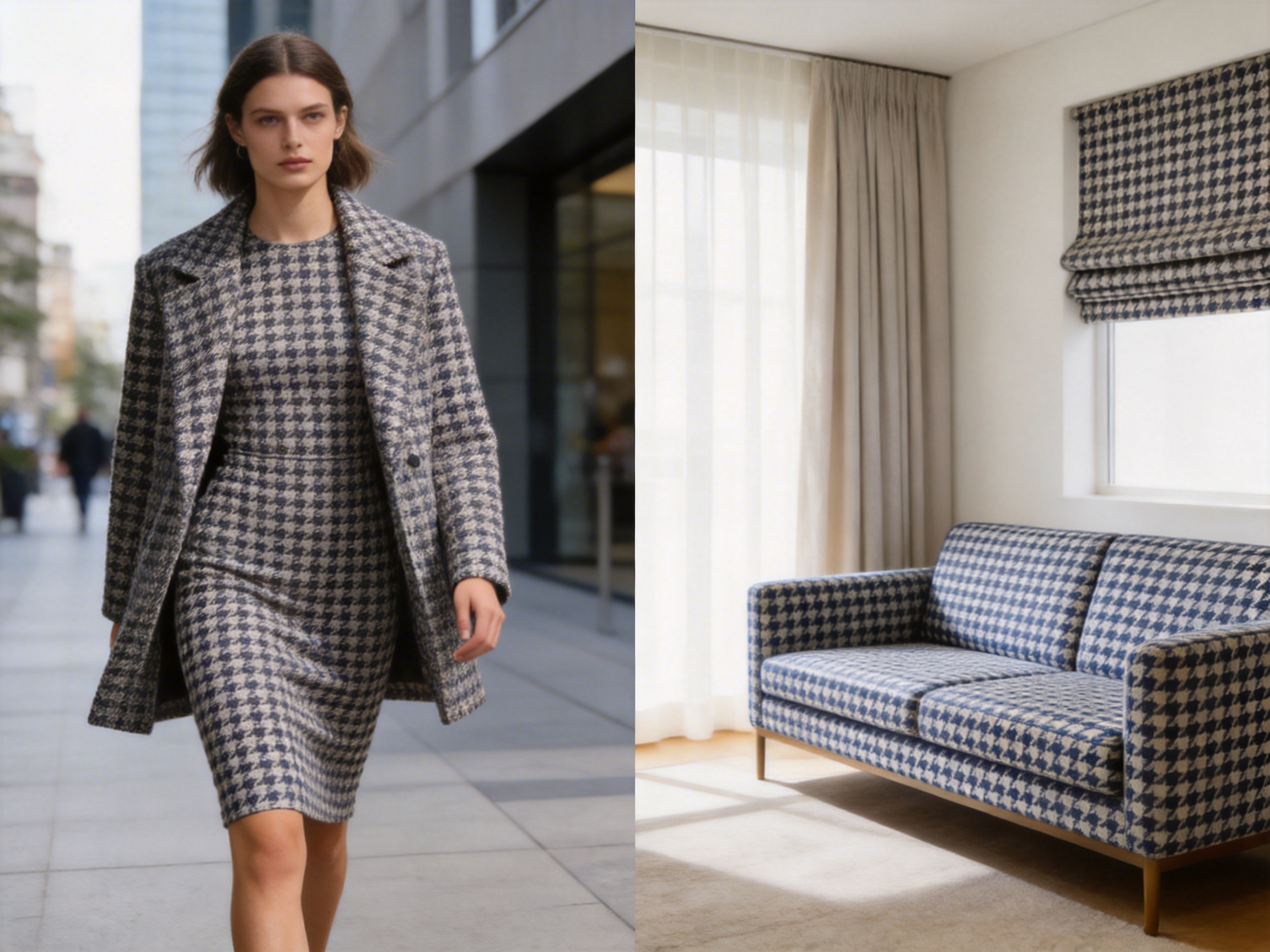
The fabric’s adaptability makes it suitable for both fashion and interiors:
- Fashion: Thicker variants for winter coats, stretchy versions for pants/dresses, and crisp designs for suits. It’s used by designers for runway collections and everyday wear.
- Interiors: Light-filtering drapes, structured roman blinds, soft rugs, and stain-resistant upholstery. It adds elegance to living rooms, bedrooms, and offices.
The Manufacturer’s Strengths: A Trusted Partner
The fabric is produced by a leading textile manufacturer based in Hangzhou, China, known for its integrated R&D, large-scale infrastructure, and commitment to quality. 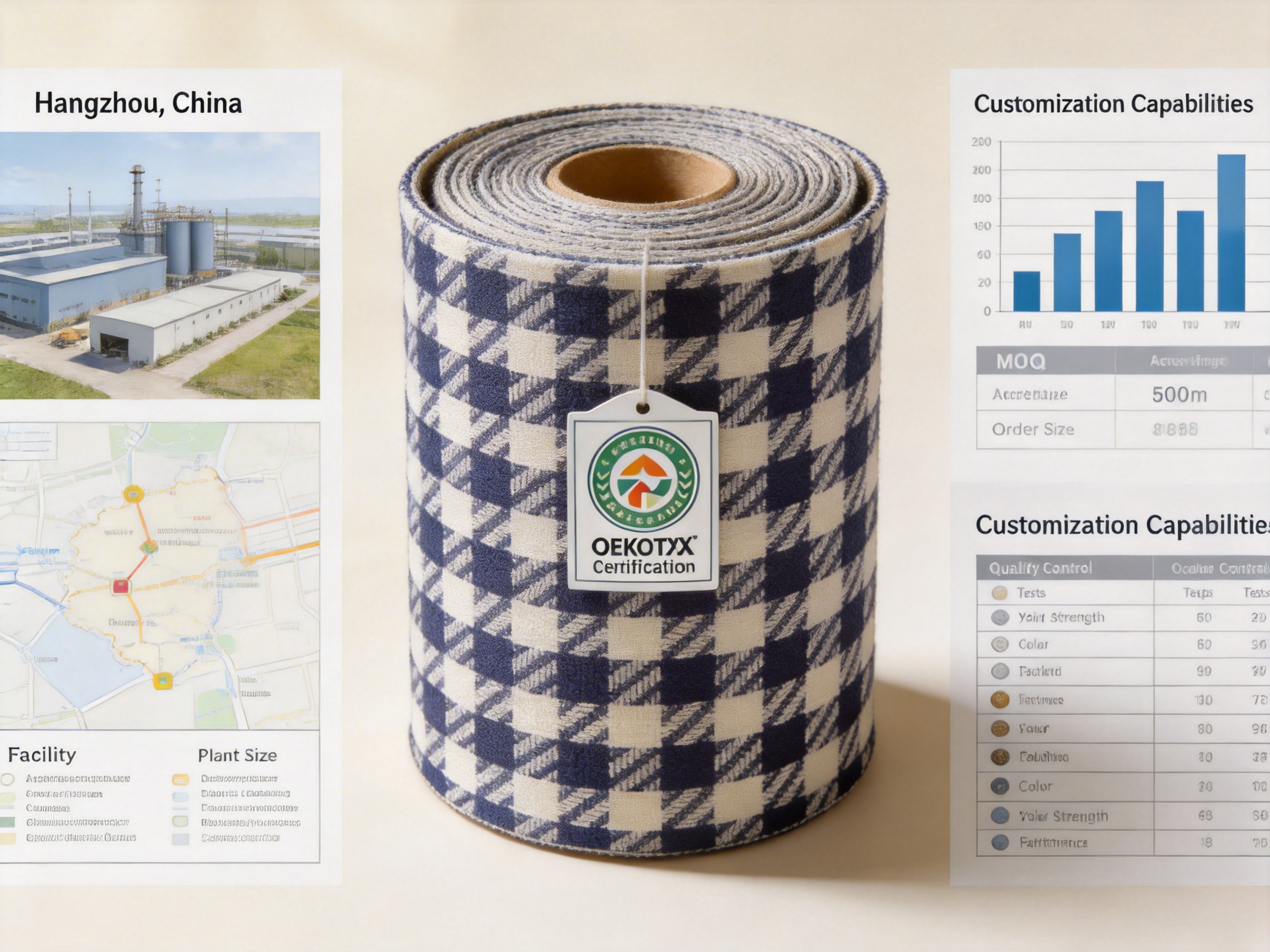
Integrated R&D, Production & Sales
The manufacturer handles every stage from yarn production to final shipment, ensuring full control over quality. Its R&D team collaborates with designers to develop new patterns and fabric variants, while the sales team provides direct support to clients (from small businesses to global retailers). This integrated model reduces costs and speeds up turnaround times.
Large-Scale Infrastructure
The facility covers 32.6 acres with an 18,000 sqm plant, equipped with 50+ imported jacquard machines. It also has post-dyeing and finishing facilities, eliminating the need for outsourcing. This infrastructure allows for efficient production of large orders (10,000+ meters) and small custom batches (500+ meters).
Commitment to Quality & Sustainability
The manufacturer adheres to strict quality control: yarns are tested for strength, woven fabrics for pattern alignment, and finished products for color fastness. It also uses eco-friendly reactive dyes and water-saving processes, aligning with global sustainability trends. The fabric holds OEKO-TEX® Standard 100 certification, ensuring it’s free from harmful chemicals.
Q&A Section
Below are answers to common questions about the houndstooth jacquard fabric:
Q1: What is the primary material composition of the fabric?
A: It’s a blend of polyester, rayon, and slight intermingled DTY yarn. This combination balances durability (polyester), softness (rayon), and stretch (DTY).
Q2: Can the pattern or thickness be customized?
A: Yes. Using digital jacquard technology, the manufacturer adjusts pattern size, thickness, and color to meet client needs. MOQs start at 500 meters for custom designs.
Q3: Is the fabric suitable for sensitive skin?
A: Yes. It undergoes a gentle finishing process and holds OEKO-TEX® certification, ensuring it’s free from irritants. The rayon blend is soft and hypoallergenic.
Q4: What are the main applications?
A: Fashion (coats, pants, suits, dresses) and interiors (drapes, roman blinds, rugs, upholstery). It’s versatile enough for both casual and formal settings.
Q5: How does it compare to wool houndstooth?
A: It’s lighter, stretchier, and more durable. Unlike wool, it’s wrinkle-resistant and requires less care (machine washable on gentle cycles).
Q6: Does the manufacturer offer eco-friendly options?
A: Yes. It uses eco-friendly dyes and water-saving processes, and the fabric is OEKO-TEX® certified. Custom sustainable finishes (e.g., water-repellent) are available.
References
1. Textile Institute. (2022). Jacquard Weaving & Knitting: Modern Technologies for Enhanced Fabric Performance. Manchester, UK: Textile Institute Press.
2. Chen, Y., & Li, X. (2023). Polyester-Rayon Blends: A Comprehensive Analysis of Mechanical Properties and Market Applications. Journal of Textile Science & Engineering, 15(3), 112-128.
3. European Textile Confederation (EURATEX). (2021). Sustainable Textile Production: Best Practices for Global Manufacturers. Brussels, Belgium: EURATEX Publications.
4. Smith, A. (2022). The Evolution of Houndstooth: From Traditional Weaves to Modern Knitted Jacquards. Fashion Studies Quarterly, 18(2), 76-94.
5. OEKO-TEX Association. (2023). OEKO-TEX® Standard 100: Guidelines for Safe Textile Production. Zurich, Switzerland: OEKO-TEX Press.