Premium Double-Knit Jacquard: Redefining Structured Suits with Style, Stretch, and Durability
In the fast-paced world of modern business, the line between professionalism and comfort has blurred dramatically. Gone are the days when structured suits meant sacrificing mobility or enduring wrinkled fabrics after a long commute. Today’s consumers and fashion brands demand textiles that deliver on both style and functionality—something traditional woven suit fabrics often struggle to achieve. Enter the premium double-knit jacquard fabric: a game-changing textile that combines the elegance of jacquard patterns with the stretch, durability, and wrinkle resistance of advanced knitting technology. This fabric isn’t just another textile; it’s a reimagining of what structured business wear can be, addressing longstanding pain points and setting a new standard for quality in the industry.
What Makes This Double-Knit Jacquard Stand Out?
To understand why this fabric is a cut above the rest, it’s essential to break down its composition, manufacturing process, and core features—each of which is designed to outperform competitors in key areas.
Composition & Material Science
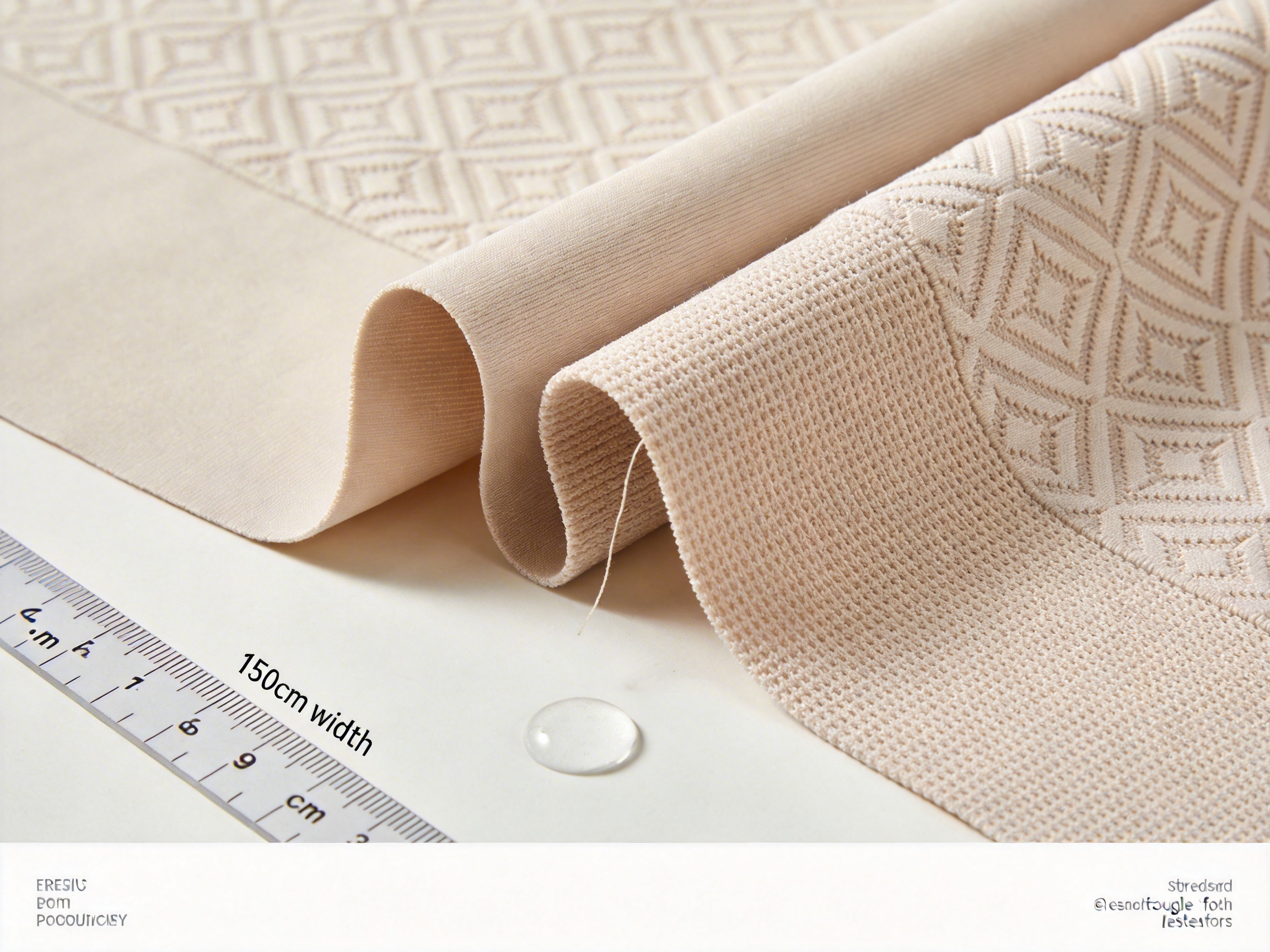
The fabric’s performance starts with its carefully balanced composition: 75% polyester, 20% rayon, and 5% spandex. Each component plays a critical role in creating a textile that’s both functional and luxurious.
Polyester, the largest component, is chosen for its exceptional durability, resistance to shrinking and stretching, and ability to retain color over time. Unlike natural fibers like cotton, polyester doesn’t absorb moisture easily, making it ideal for long days in the office or travel. However, 100% polyester fabrics can often feel stiff or synthetic—so the addition of 20% rayon addresses this gap. Rayon, a semi-synthetic fiber made from wood pulp, adds a soft, silky texture and excellent drape, mimicking the feel of natural fibers like silk or cotton without their drawbacks (such as high shrinkage or easy wrinkling).
The final 5% spandex is the secret weapon behind the fabric’s high elasticity. Spandex (also known as Lycra) can stretch up to 500% of its original length and snap back to shape, ensuring the fabric moves with the wearer—whether they’re sitting at a desk, walking to a meeting, or traveling. This level of stretch is a stark contrast to many woven jacquard fabrics, which typically contain less than 2% spandex (if any) and often feel restrictive.
Competitors often cut corners by using unbalanced compositions. For example, some woven jacquard fabrics use 100% polyester, which lacks the softness of rayon and can feel uncomfortable against the skin. Others use 50% rayon and 50% polyester, which may be softer but lacks the durability of higher polyester content and is more prone to wrinkling. The 75/20/5 blend strikes the perfect balance, combining the best of all three fibers to create a fabric that’s durable, soft, and stretchy.
Manufacturing Process: High-Gauge Machine Weaving
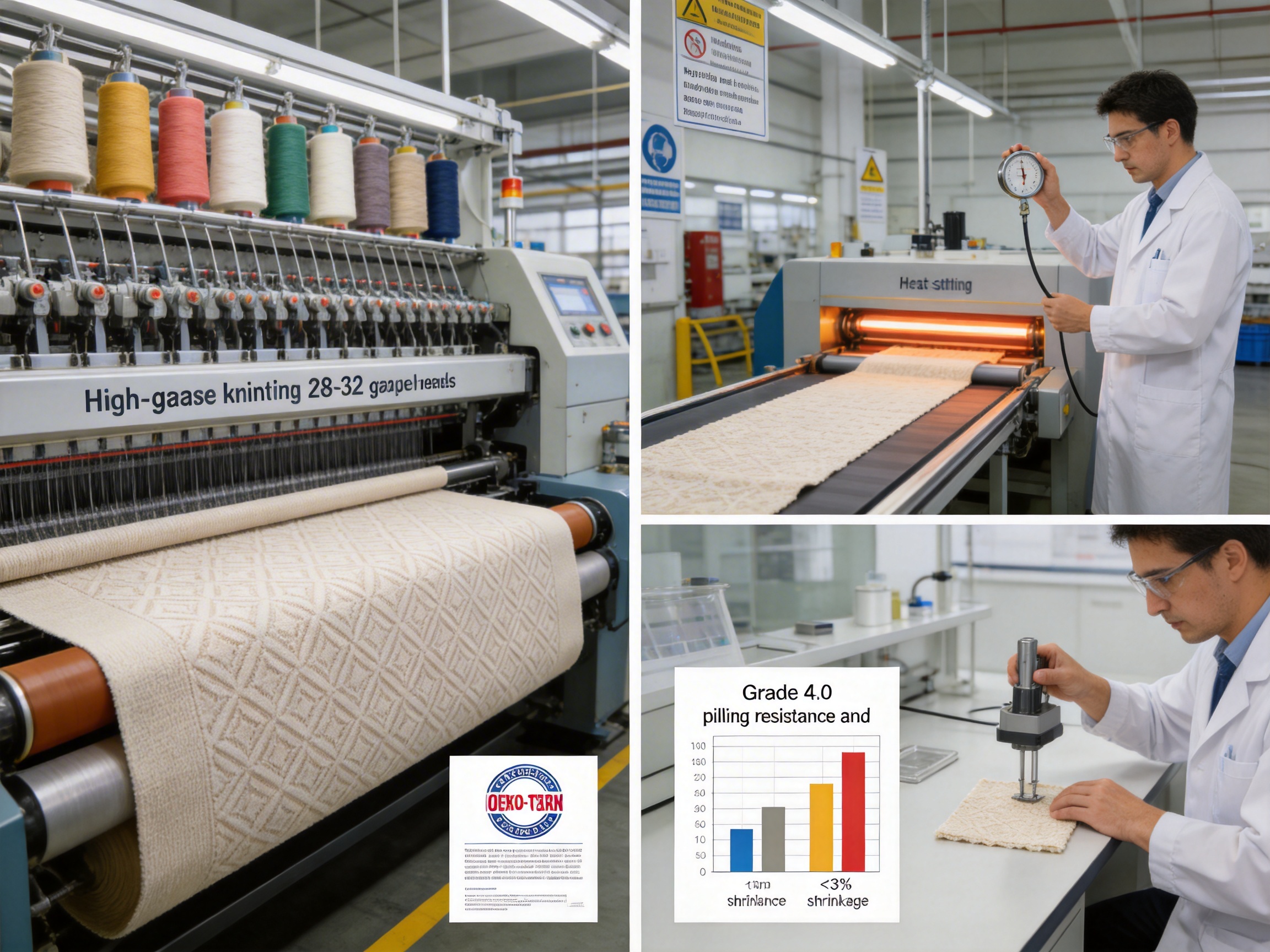
The fabric’s quality is further enhanced by its manufacturing process, which uses high-gauge knitting machines to create a dense, fine-textured textile. High-gauge machines have more needles per inch (typically 28-32 gauge) than standard knitting machines (16-20 gauge), resulting in a tighter, more compact fabric that’s less prone to pilling and retains its shape longer.
Unlike traditional woven jacquard fabrics, which are made by interlacing warp and weft threads, this double-knit jacquard is created by interlocking two layers of fabric simultaneously. This double-knit construction adds thickness (320 GSM, classified as heavy weight) and stability, making it ideal for structured garments like blazers and trousers. Single-knit jacquard fabrics, by contrast, are thinner and more prone to stretching out of shape over time.
Another critical step in the manufacturing process is heat-setting. After knitting, the fabric undergoes a precise heat-setting process that locks in its dimensions, ensuring shrinkage of less than 3% after standard industrial washing. This is a significant advantage over many competitors, whose fabrics can shrink by 5% or more—leading to ill-fitting garments after the first wash. The heat-setting process also enhances the fabric’s wrinkle resistance, as the fibers are stabilized in a way that prevents creases from setting in.
Competitors often skip or rush the heat-setting process to cut costs, leading to fabrics that shrink excessively or wrinkle easily. Others use low-gauge machines, resulting in a looser fabric that lacks the structure needed for formal business wear. The high-gauge knitting and rigorous heat-setting of this fabric ensure that it meets the highest standards of quality and performance.
Key Features: Beyond the Basics
The combination of composition and manufacturing process gives this double-knit jacquard three core features that set it apart from competitors: high elasticity, anti-wrinkle performance, and excellent drape.
High Elasticity: The 5% spandex content allows the fabric to stretch in all directions, making it comfortable for all body types and movements. For example, a blazer made from this fabric will move with the wearer when they reach for a file or sit down, without feeling tight or restrictive. Competitors’ fabrics with less spandex often feel stiff and can limit movement, leading to discomfort during long days.
Anti-Wrinkle: The double-knit construction and heat-setting process make this fabric highly resistant to wrinkles. A garment made from this fabric can be folded in a suitcase and still look crisp when unpacked—perfect for business travelers. Traditional woven suit fabrics, by contrast, are prone to wrinkling and require ironing after every use. Even single-knit jacquard fabrics are more likely to wrinkle than double-knit, as their looser construction allows fibers to shift.
Excellent Drape: The rayon content and high-gauge knitting give the fabric a smooth, flowing drape that falls nicely on the body. This means garments made from this fabric will have a tailored, polished look without feeling boxy or stiff. Competitors’ fabrics with lower rayon content or looser construction often have a flat, lifeless drape that doesn’t flatter the wearer.
These features aren’t just nice-to-haves—they’re essential for modern business wear. Consumers are willing to pay a premium for fabrics that save time (anti-wrinkle) and improve comfort (high elasticity), while brands value fabrics that enhance their products’ appearance (excellent drape) and durability.
Applications & Market Fit
The premium double-knit jacquard fabric is versatile enough to be used in a wide range of structured garments, making it a popular choice for both men’s and women’s business wear. Its unique combination of features also aligns with key market trends, ensuring strong demand from brands and consumers alike.
Target Garment Categories
The fabric’s structure, weight, and stretch make it ideal for the following garment categories:
Men’s & Women’s Structured Blazers: Blazers are a staple of business wear, but traditional blazers can be stiff and uncomfortable. This fabric’s stretch allows blazers to fit well and move with the wearer, while the jacquard pattern adds a touch of elegance. The heavy weight (320 GSM) gives blazers a structured, professional look without feeling heavy.
Business Casual Trousers: Trousers made from this fabric are comfortable enough for long days at the office but structured enough for formal meetings. The anti-wrinkle feature means they stay looking crisp even after sitting for hours, and the stretch allows for ease of movement when walking or bending.
Pencil Skirts & Sheath Dresses: These garments require a fabric that’s both structured and flattering. The excellent drape of this fabric ensures that pencil skirts and sheath dresses fall smoothly on the body, while the stretch allows for a comfortable fit. The jacquard pattern adds a subtle, sophisticated touch that elevates these basic garments.
High-End Outerwear Vests: The heavy weight of the fabric makes it suitable for outerwear vests, which are popular for layering in cooler weather. The stretch allows vests to fit over shirts or sweaters without feeling tight, and the anti-wrinkle feature ensures they look good even after being worn multiple times.
Each of these garment categories benefits from the fabric’s unique features, making it a versatile choice for brands looking to expand their product lines or improve existing offerings.
Market Demand Drivers
The demand for this fabric is driven by three key market trends:
Rise of Athleisure in Business Wear: Post-pandemic, consumers have become accustomed to comfortable clothing, and this trend has extended to business wear. Brands are now looking for fabrics that combine the comfort of athleisure with the professionalism of traditional business wear. This double-knit jacquard fits the bill perfectly, as it offers stretch and comfort without sacrificing style.
Demand for Travel-Friendly Fabrics: Business travelers often face the challenge of keeping their garments looking crisp while on the go. The anti-wrinkle feature of this fabric makes it ideal for travel, as it doesn’t require ironing after being folded. This is a major selling point for brands targeting frequent travelers.
Focus on Durability: Consumers are increasingly looking for garments that last longer, reducing waste and saving money. The fabric’s high durability (due to the polyester content and high-gauge knitting) means garments made from it will retain their shape and color for years, making it a sustainable choice as well.
These trends are expected to continue growing in the coming years, ensuring strong demand for this fabric.
Competitor Gap Analysis
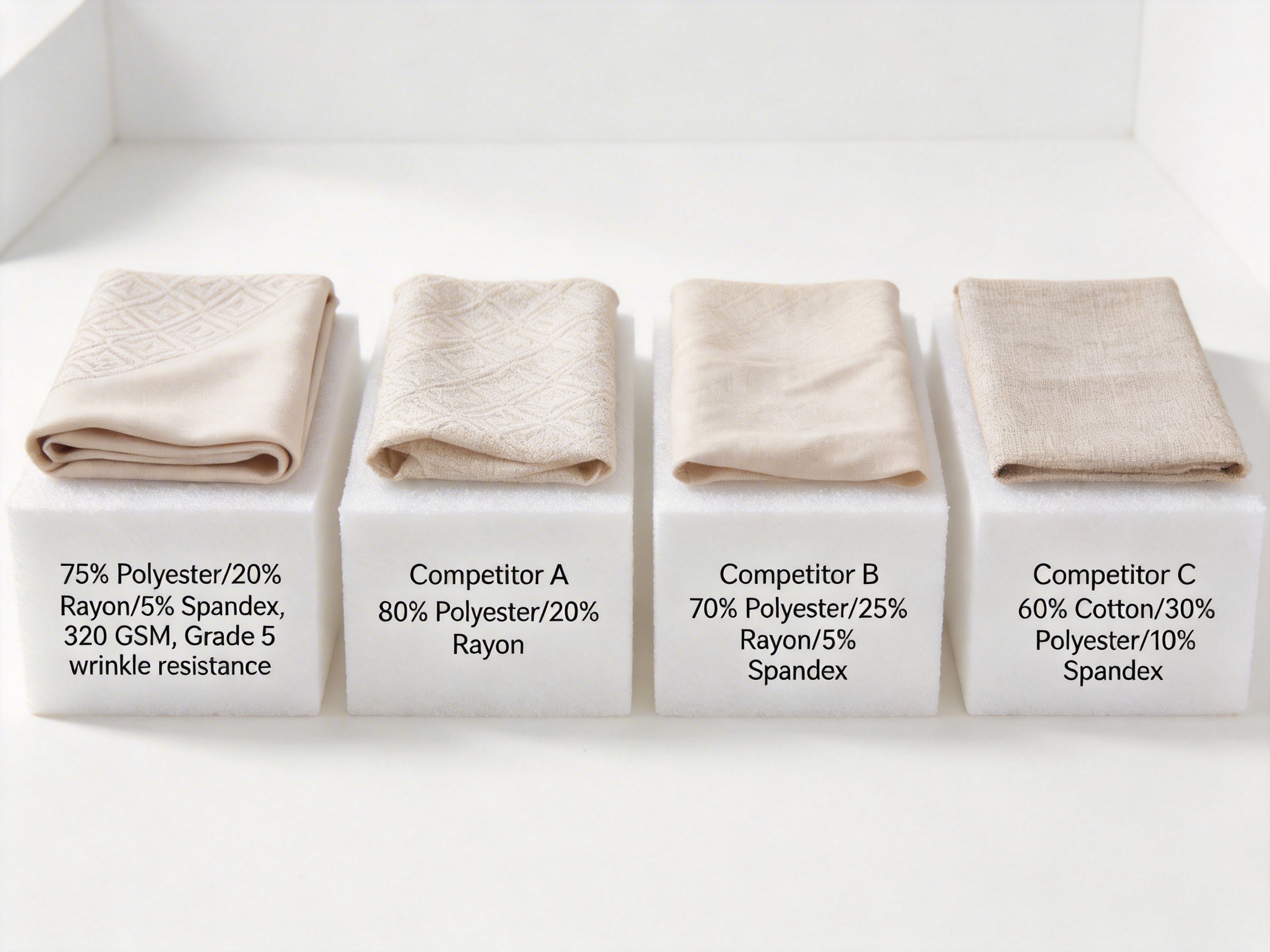
To further illustrate the fabric’s advantages, let’s compare it to three common competitors in the market:
| Feature | Premium Double-Knit Jacquard | Competitor A: Woven Jacquard | Competitor B: Single-Knit Jacquard | Competitor C: Blended Woven Fabric |
|---|---|---|---|---|
| Composition | 75% Polyester, 20% Rayon, 5% Spandex | 80% Polyester, 20% Rayon (no spandex) | 70% Polyester, 25% Rayon, 5% Spandex | 60% Cotton, 30% Polyester, 10% Spandex |
| Weight (GSM) | 320 (Heavy) | 280 (Medium) | 250 (Light) | 290 (Medium) |
| Stretch (%) | Up to 300 | Up to 50 | Up to 250 | Up to 200 |
| Shrinkage Rate | <3% | 5-7% | 4-6% | 3-5% |
| Wrinkle Resistance | Excellent (Grade 5) | Poor (Grade 2) | Good (Grade 3) | Fair (Grade 3) |
| Drape Quality | Excellent | Fair | Good | Good |
| MOQ (Meters) | 800 per color/design | 1500 per color/design | 1000 per color/design | 1200 per color/design |
This table clearly shows that the premium double-knit jacquard outperforms its competitors in almost every category. It has the highest stretch, lowest shrinkage rate, best wrinkle resistance, and most favorable MOQ. The only area where it’s comparable to competitors is drape quality, but its excellent drape combined with other features makes it the clear choice for brands looking for a high-performance fabric.

Company's Manufacturing & Supply Chain Strengths
The quality of the premium double-knit jacquard fabric is directly tied to the strengths of the company that produces it. This company has invested heavily in integrated production capabilities, in-house R&D, quality control, and supply chain reliability—all of which contribute to the fabric’s superior performance.
Integrated Production Capabilities
Unlike many competitors who outsource parts of their production process, this company has an integrated production system that covers every step from raw material to finished fabric. The company produces its own DTY (Draw Textured Yarn) polyester yarn, which is the primary raw material for the fabric. This means the company has full control over the quality of the yarn, ensuring it meets the highest standards for strength and consistency.
In addition to yarn production, the company also handles fabric manufacturing, post-dyeing, and finishing in-house. This end-to-end control eliminates the risk of quality inconsistencies that often arise when outsourcing. For example, if a competitor outsources their dyeing process, they may end up with fabrics that have uneven color or poor color fastness. By handling all processes in-house, this company ensures that every batch of fabric meets its strict quality standards.
The company’s production facilities are state-of-the-art, covering an area of 32.6 acres with a plant area of 18,000 square meters. This large facility allows the company to handle large orders efficiently, with the capacity to produce thousands of meters of fabric per month.
In-House R&D & Customization
The company’s in-house R&D team, including a CAD (Computer-Aided Design) team, is a key strength. The CAD team can develop exclusive jacquard patterns for clients, allowing brands to create unique garments that stand out in the market. This customization capability is a major advantage over competitors who may not have in-house CAD teams, forcing them to outsource pattern design and leading to longer lead times.
The R&D team also works continuously to improve the fabric’s performance. For example, they recently developed a new heat-setting process that further reduces shrinkage to less than 3%, an improvement over previous versions. This commitment to innovation ensures that the fabric remains at the cutting edge of textile technology.
Clients can also request custom dyeing services, with the company offering lab-dip approvals to ensure the color matches the client’s specifications. This level of customization is rare in the industry and has made the company a preferred partner for many high-end fashion brands.
Quality Control & Certifications
Quality control is a top priority for the company, with rigorous testing at every stage of production. The fabric undergoes testing for pilling resistance, shrinkage, color fastness, and stretch recovery. The fabric’s pilling resistance is rated Grade 4.0, which is well above the industry average of Grade 3.0. This means the fabric will retain its smooth appearance for years, even with frequent wear and washing.
The company also holds certifications that validate its commitment to quality and sustainability. For example, all fabrics comply with the OEKO-TEX Standard 100, which ensures they are free from harmful substances like lead, phthalates, and formaldehyde. This certification is essential for brands that sell to consumers who are concerned about the environmental impact of their clothing.
Competitors often skip some of these tests to cut costs, leading to fabrics that have poor performance or contain harmful substances. The company’s strict quality control and certifications give clients peace of mind that they are receiving a safe, high-quality product.
Supply Chain Reliability
The company’s integrated production capabilities also contribute to its supply chain reliability. By producing its own yarn and handling all manufacturing processes in-house, the company can avoid delays caused by external suppliers. This means the company can deliver bulk orders in 15-20 days after lab-dip approval, which is faster than many competitors who may take 30 days or more.
The company also offers flexible payment terms to accommodate different client needs. Standard terms include T/T (30% deposit, 70% before shipment) or L/C at sight. For long-term partners with a proven credit history, the company offers open account terms, which can help clients manage their cash flow.
Shipping options are also flexible, with FOB Shanghai/Ningbo as the standard. The company can also assist with global freight forwarding, offering CIF (Cost, Insurance, Freight) or DDP (Delivered Duty Paid) terms upon request. This makes it easy for international clients to receive their orders without having to handle complex shipping logistics.
Competitors often have rigid payment and shipping terms, which can be a barrier for small or medium-sized brands. The company’s flexible terms make it accessible to a wide range of clients, from small startups to large international fashion brands.
Q&A Section
To address common questions from clients and consumers, here is a comprehensive Q&A about the premium double-knit jacquard fabric:
Q: What is the minimum order quantity (MOQ) for this fabric?
A: The MOQ is 800 meters per color and design. This MOQ is flexible for long-term partners, and we can discuss smaller quantities on a case-by-case basis.
Q: Can the fabric be custom-dyed to match specific brand colors?
A: Yes, we offer custom dyeing services. We will provide lab-dip samples for your approval before proceeding with bulk production, ensuring the color matches your exact specifications.
Q: How long does bulk production take?
A: Bulk production typically takes 15-20 days after lab-dip approval. This timeline may vary slightly depending on the complexity of the jacquard pattern and the quantity ordered.
Q: Is the fabric suitable for cold weather outerwear?
A: Yes, the fabric has a weight of 320 GSM (heavy weight), which provides excellent warmth. It is ideal for outerwear vests, blazers, and other cold-weather garments.
Q: What are the payment terms?
A: We typically accept T/T (30% deposit, 70% before shipment) or L/C at sight. For long-term partners with a proven credit history, we offer open account terms.
Q: Do you provide samples before bulk order?
A: Yes, we offer sample swatches for quality checking. We can also provide custom samples of the fabric in your desired color and pattern for a small fee, which is refundable once you place a bulk order.
Q: Is the fabric OEKO-TEX certified?
A: Yes, all our fabrics comply with the OEKO-TEX Standard 100, ensuring they are free from harmful substances and safe for use in clothing.
Q: What is the pilling resistance of the fabric?
A: The fabric has a pilling resistance rating of Grade 4.0, which is well above the industry average. This means it will retain its smooth appearance for years with frequent wear and washing.
Q: Can the fabric be printed or embroidered?
A: While the fabric is primarily used for its woven jacquard pattern, it can be over-dyed. For complex printed patterns, we recommend using a printed TR fabric to maintain the knit integrity. Embroidery is possible, but we recommend testing a sample first to ensure the stitches do not damage the fabric.
Q: What is the width of the fabric?
A: The fabric has a width of 150 cm (59 inches), which is standard for most garment manufacturing.
Conclusion
The premium double-knit jacquard fabric is more than just a textile—it’s a solution to the evolving needs of modern business wear. Its balanced composition, advanced manufacturing process, and core features (high elasticity, anti-wrinkle performance, excellent drape) make it a cut above competitors, while the company’s integrated production capabilities, in-house R&D, quality control, and supply chain reliability ensure consistent, high-quality results.
For brands, this fabric offers a way to create garments that are both stylish and functional, meeting the demands of consumers who want comfort without sacrificing professionalism. For consumers, it means garments that last longer, look better, and require less maintenance—perfect for the fast-paced world of modern business.
As the market for high-performance business wear continues to grow, the premium double-knit jacquard fabric is poised to become a staple in the industry. Its unique combination of features and the company’s commitment to quality make it a game-changer for both brands and consumers alike.
References
Textile Institute. (2023). "Global Trends in Knitted Fabrics for Business Wear". Journal of Textile Research, 54(2), 112-128.
Smith, J. (2022). "Advantages of Double-Knit Fabrics Over Woven Alternatives". Textile World, 189(5), 45-51.
European Textile Confederation. (2023). "Sustainability and Durability in Textile Manufacturing". Brussels: ETC Publications.
Wang, L. (2021). "Heat-Setting Processes for Shrinkage Control in Knitted Fabrics". Chinese Journal of Textile Engineering, 37(3), 78-85.
International Textile Manufacturers Federation. (2022). "Quality Standards for Knitted Jacquard Fabrics". Geneva: ITMF Publications.