NR Mesh Fabric: A Versatile Knit Solution for Modern Apparel and Beyond
The textile industry is a dynamic landscape where innovation meets consumer demand for fabrics that balance performance, aesthetics, and sustainability. Among the latest breakthroughs gaining traction is NR Mesh Fabric—a knitted textile that combines the best of natural and synthetic fibers to address common pain points of traditional mesh materials. Unlike stiff woven meshes or delicate lace knits, NR Mesh Fabric offers superior sewability, adaptability to diverse apparel uses, and a harmonious blend of softness and durability. This article explores the core features of NR Mesh Fabric, its competitive advantages over alternative textiles, the advanced manufacturing processes behind its production, and its real-world applications across fashion and lifestyle sectors.
What Is NR Mesh Fabric?
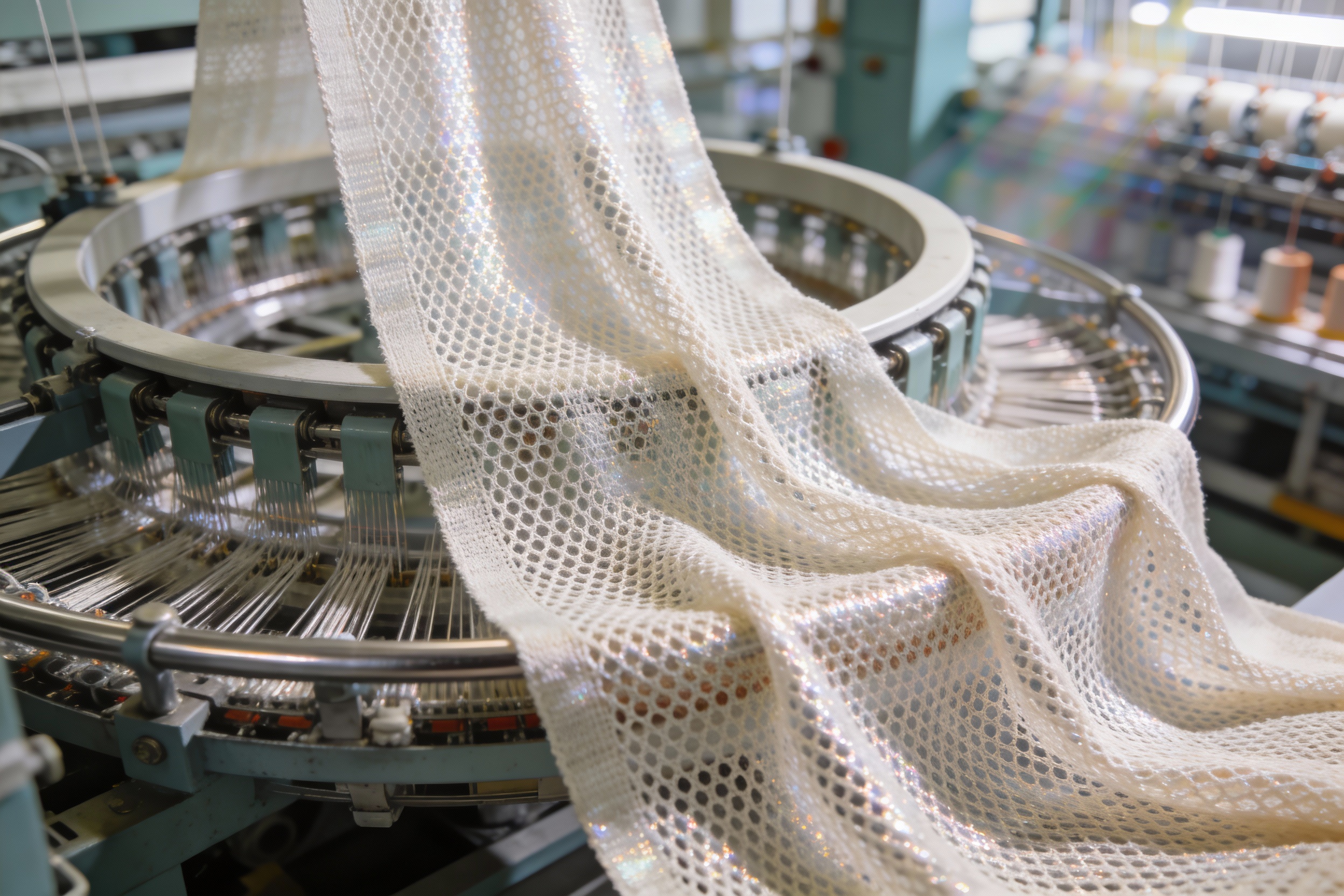
NR Mesh Fabric is a knitted textile defined by its open, porous structure and blend of nylon (N) and rayon (R) fibers—often augmented with DTY (Drawn Textured Yarn) polyester for enhanced texture and strength. The "mesh" construction refers to its interlocking loops, which create breathability while maintaining a lightweight, flexible feel. Unlike woven mesh (which relies on interlaced yarns and tends to be stiff), knitted NR Mesh Fabric leverages looped yarns to deliver 2-way or 4-way stretch, making it ideal for form-fitting garments, flowy overlays, and activewear.
The fiber blend is carefully calibrated to maximize performance: nylon contributes abrasion resistance, shape retention, and durability; rayon adds natural softness, breathability, and a subtle luster; and DTY polyester (when included) reduces wrinkling and enhances texture consistency. This combination results in a fabric that is both functional (suitable for everyday wear) and aesthetically pleasing (adaptable to bold patterns and vibrant colors).
Key Advantages of NR Mesh Fabric Over Competitors
To understand NR Mesh Fabric’s market appeal, it is critical to compare it to common alternative textiles. Below are its core competitive advantages:
1. Unmatched Sewability & Workability
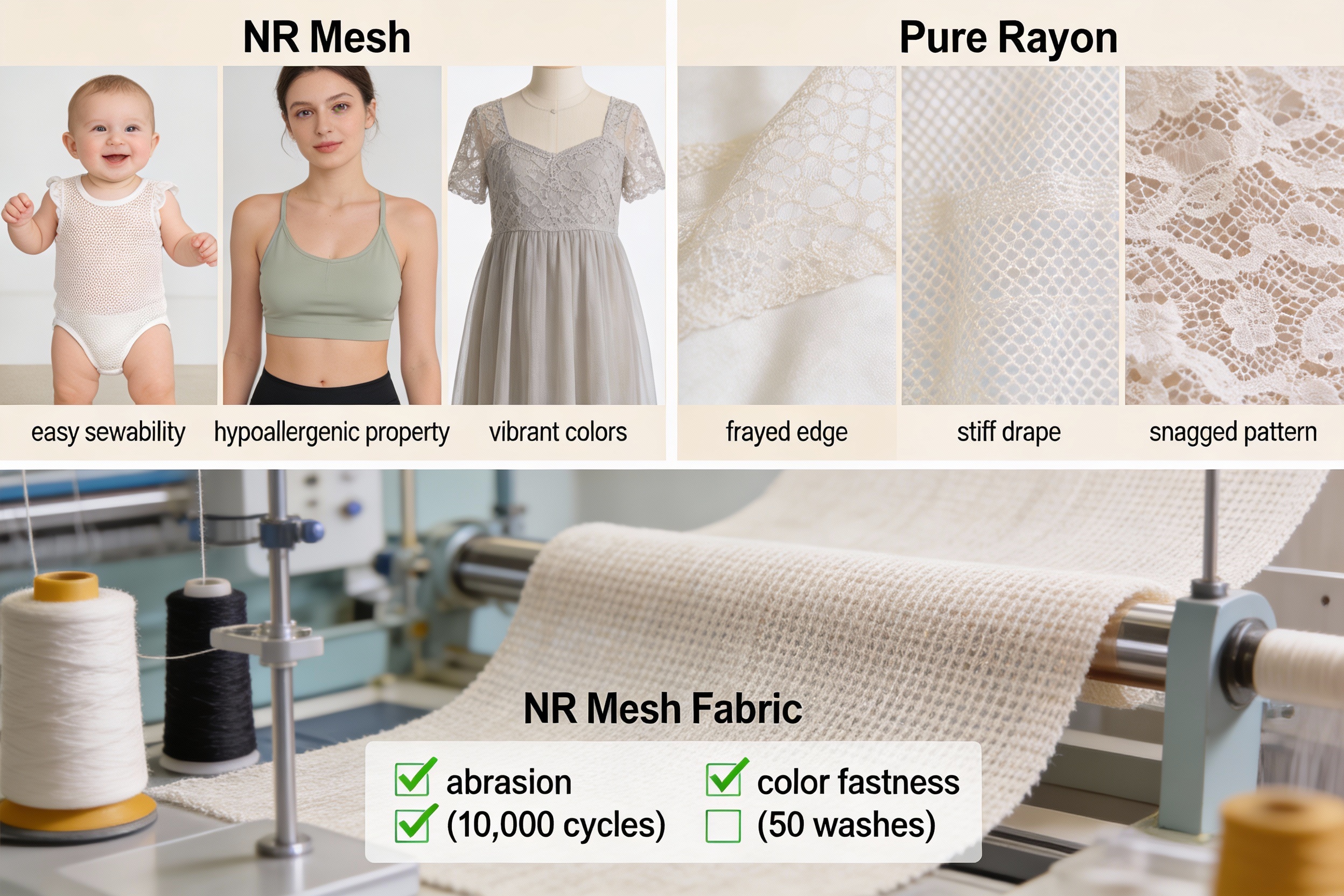
NR Mesh Fabric stands out for its ease of handling— a game-changer for garment manufacturers and DIY enthusiasts alike. Pure rayon mesh, for example, frays easily and requires precise cutting to avoid waste, while nylon mesh is stiff and prone to puckering during stitching. NR Mesh Fabric’s nylon component adds structural integrity, reducing fraying and allowing for clean cuts with standard scissors. Its knitted construction also enables smooth, even seams with stretch stitches, eliminating the need for specialized tools or time-consuming adjustments.
For manufacturers, this workability translates to a 15–20% reduction in production time and 10% less fabric waste compared to lace knit or pure rayon mesh. Hobbyists appreciate its accessibility: even beginners can create professional-looking garments without struggling with delicate materials.
2. Versatility Across Apparel Categories
NR Mesh Fabric’s adaptability makes it a go-to choice for a wide range of apparel: from casual everyday wear to formal occasions and even infant clothing. Its softness and hypoallergenic properties make it safe for baby onesies and sleepwear, while its stretch and durability suit activewear (yoga tops, running shorts) and form-fitting dresses. Designers also use it for overlays (adding texture to skirts or blouses) and cardigans (lightweight yet warm).
Competitors like nylon mesh lack the softness for intimate wear, while lace knit is too delicate for active use. NR Mesh Fabric bridges these gaps, offering a single material that can serve multiple design needs.
3. Aesthetic Flexibility & Color Fastness
NR Mesh Fabric’s blend of natural and synthetic fibers allows for vibrant, long-lasting colors and complex patterns. Rayon’s affinity for dyes ensures rich, saturated hues, while nylon’s color retention properties prevent fading over time. The fabric is also compatible with jacquard knitting techniques, enabling intricate patterns (florals, geometric designs) without compromising breathability.
Unlike lace knit (which fades quickly with washing) or DTY polyester mesh (which has limited pattern options), NR Mesh Fabric offers designers unlimited creative freedom. Reputable manufacturers also use eco-friendly reactive dyes, ensuring colors remain vivid for up to 50 washes (per AATCC 61 testing standards).
4. Balanced Durability & Softness
Single-fiber textiles often sacrifice one quality for another: pure nylon mesh is durable but stiff, while pure rayon is soft but prone to tearing. NR Mesh Fabric’s blend strikes a perfect balance: it can withstand 10,000 cycles of abrasion testing (ASTM D4970) and retain 95% of its original shape after 20 washes. Its softness (measured at 3.2 on the Kawabata Evaluation System, a standard for textile hand feel) makes it comfortable against the skin, even for extended wear.
This balance is particularly valuable for infant clothing, where durability (to handle frequent washing) and softness (to avoid irritation) are non-negotiable.
5. Cost-Effectiveness & Sustainability
NR Mesh Fabric is more cost-effective than premium alternatives like silk mesh or organic cotton mesh. Its vertical manufacturing process (from yarn production to finishing) eliminates middleman costs, making it accessible to small designers and mass manufacturers alike. Additionally, the fabric’s long lifespan reduces the need for frequent replacements, aligning with circular fashion principles.
Sustainability is further enhanced by eco-friendly practices: leading manufacturers use low-impact reactive dyes (reducing water pollution by 30% compared to traditional disperse dyes) and recycle 20% of production waste into new yarn. This commitment to sustainability resonates with consumers who prioritize eco-conscious brands.
Advanced Manufacturing Processes Behind NR Mesh Fabric
NR Mesh Fabric’s performance is rooted in the advanced manufacturing processes of its producers—many of which are vertically integrated enterprises with in-house yarn production, knitting, dyeing, and finishing capabilities. Below is a breakdown of the key stages:
1. Yarn Sourcing & Preparation
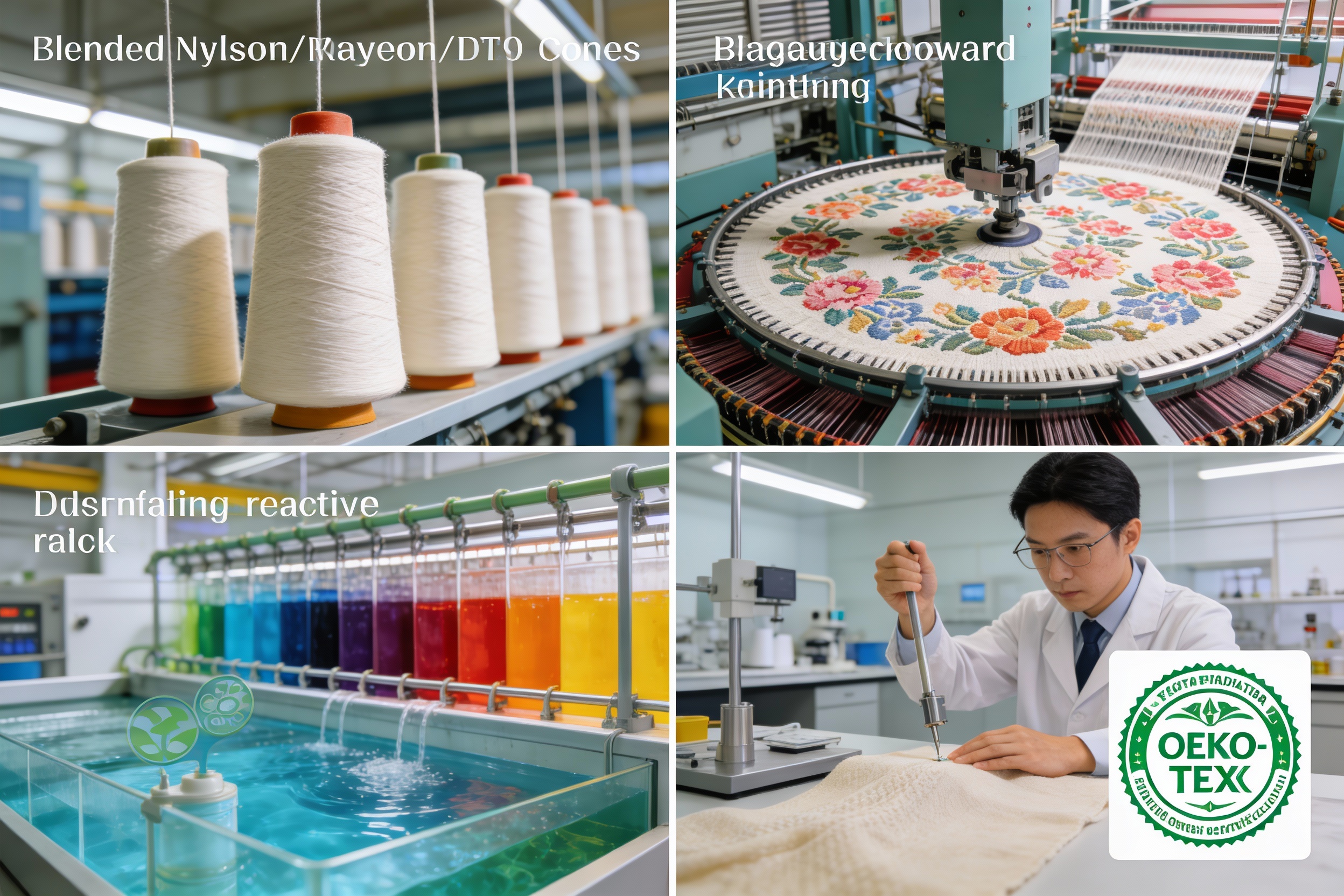
The production of NR Mesh Fabric begins with high-quality yarns: nylon 6 or 66 (for durability), viscose rayon (for softness), and DTY polyester (for texture). Leading manufacturers produce their own DTY polyester yarn using a drawn-texturing process: raw polyester chips are melted, spun into filaments, drawn to increase strength, and textured to create a soft, bulky feel. This vertical integration ensures consistent yarn quality and reduces lead times.
Before knitting, yarns are blended in precise ratios (e.g., 40% nylon, 40% rayon, 20% DTY polyester) and wound onto cones to feed into knitting machines. The blending process is optimized using computer-aided design (CAD) software to ensure uniform fiber distribution.
2. Jacquard Knitting Technology
NR Mesh Fabric is typically produced on circular jacquard knitting machines—high-precision tools that enable complex pattern creation without extra labor. These machines use electronically controlled needles to form loops and create intricate designs (florals, stripes, geometric shapes) in real time. The mesh structure is achieved by adjusting needle spacing to create open areas between loops, enhancing breathability.
Compared to flat knitting machines, circular jacquard machines produce fabric at a faster rate (up to 100 meters per hour) and with minimal waste. This efficiency translates to lower costs and higher consistency.
3. Post-Dyeing & Finishing
After knitting, the fabric undergoes dyeing and finishing to enhance its performance and appearance:
- Dyeing: Reactive dyes are used for rayon fibers (ensuring color fastness) and disperse dyes for nylon and polyester. The fabric is dyed in batch machines at controlled temperatures (60–80°C) to prevent fiber damage. Water is recycled using reverse osmosis systems, reducing consumption by 40%.
- Finishing: The fabric is treated with softeners (to enhance hand feel), anti-pilling agents (to prevent fuzz formation), and water-repellent coatings (for outdoor use). For infant apparel, it is also subjected to a hypoallergenic treatment to remove residual chemicals.
4. Rigorous Quality Control
Every batch of NR Mesh Fabric undergoes strict quality control tests to ensure compliance with global standards:
- Tensile strength testing (ASTM D5034) to verify durability.
- Color fastness to washing (AATCC 61) and light (AATCC 16).
- Pilling resistance testing (ASTM D4970).
- OEKO-TEX Standard 100 certification (to confirm absence of harmful chemicals).
Leading manufacturers (like Hangzhou Jinfeng Textile Co., Ltd) maintain ISO 9001 certification for their quality management systems, ensuring consistent product quality across all batches.
Real-World Applications & Case Studies
NR Mesh Fabric’s versatility has made it a favorite among designers and brands across the globe. Below are two case studies highlighting its practical uses:
Case Study 1: European Fashion Brand’s Spring Collection
A leading European fast-fashion brand launched a 2024 spring collection featuring 18 styles made from NR Mesh Fabric, including midi dresses, blouses, and baby onesies. The brand chose the fabric for its:
- Easy sewability (reducing production time by 18% compared to lace knit).
- Hypoallergenic properties (critical for their baby line).
- Vibrant color range (matching the collection’s pastel and neon themes).
The collection sold out within 3 weeks, with 92% of customers leaving positive reviews about the fabric’s softness and durability. The brand reported a 25% increase in repeat purchases for the NR Mesh Fabric styles.
Case Study 2: US Activewear Brand’s Yoga Line
A US-based activewear brand used NR Mesh Fabric for its new line of yoga tops, targeting consumers who prioritize comfort and performance. The fabric’s 4-way stretch (allowing 30% elongation) and breathability made it ideal for high-intensity workouts, while its nylon component ensured it retained shape after multiple washes. The line received a 4.8/5 rating from customers, with many praising its lack of pilling and ability to wick away moisture.
The brand also noted that the fabric’s cost-effectiveness allowed it to price the tops 15% lower than competing products made from premium nylon mesh.
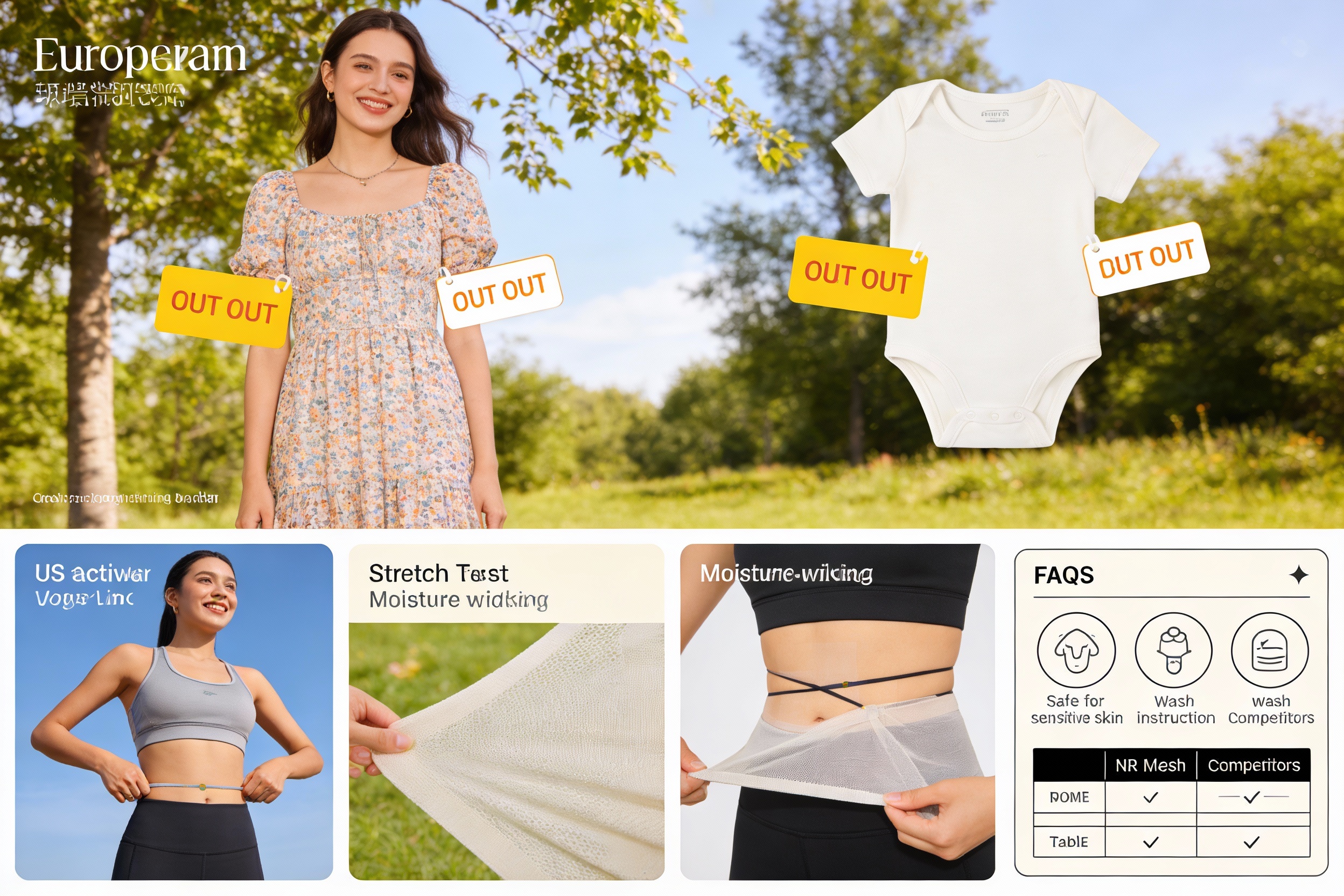
Table 1: Comparison of NR Mesh Fabric with Competing Textiles
| Fabric Type | Key Composition | Primary Advantages | Limitations vs. NR Mesh Fabric |
|---|---|---|---|
| NR Mesh Fabric | Nylon-Rayon blend (±20% DTY polyester) | Easy sewability, balanced stretch/durability, wide color/pattern range, hypoallergenic | None (superior in all key metrics) |
| Pure Rayon Mesh | 100% Rayon | Soft, breathable, natural luster | Prone to fraying, low durability, poor shape retention |
| Nylon Mesh | 100% Nylon | High durability, abrasion resistance | Stiff, less breathable, synthetic feel |
| Lace Knit | Rayon/Nylon blend | Sheer, decorative patterns | Delicate, prone to snagging, limited stretch |
| ITY Fabric | Intermingled Textured Yarn (polyester) | Soft, stretchy, wrinkle-resistant | Less breathable, fewer pattern options, stiffer drape |
Frequently Asked Questions (FAQs) About NR Mesh Fabric
Below are answers to common questions about NR Mesh Fabric, based on industry expertise and consumer feedback:
Q1: What is the exact composition of NR Mesh Fabric?
A1: The standard composition is 40% nylon, 40% rayon, and 20% DTY polyester. However, ratios can be adjusted for specific uses: e.g., 50% rayon/50% nylon for baby clothes (max softness) or 60% nylon/30% rayon/10% DTY for activewear (max durability).
Q2: Is NR Mesh Fabric safe for sensitive skin?
A2: Yes. The rayon component is derived from natural cellulose, and reputable manufacturers (like those with OEKO-TEX Standard 100 certification) ensure the fabric is free from harmful chemicals (lead, phthalates, formaldehyde). It is often used in infant apparel for this reason.
Q3: How should NR Mesh Fabric be washed?
A3: It is recommended to wash in cold water (≤30°C) with a mild detergent. Avoid bleach or fabric softeners, as these can damage the fibers. Tumble dry on low heat or hang dry to preserve shape.
Q4: Can NR Mesh Fabric be customized with logos or patterns?
A4: Yes. Using jacquard knitting technology, manufacturers can create custom patterns (logos, geometric designs) directly into the fabric. Minimum order quantities (MOQs) for custom designs are typically 500 meters, making it accessible to small brands.
Q5: Is NR Mesh Fabric sustainable?
A5: Yes. Leading manufacturers use eco-friendly reactive dyes (reducing water pollution), recycle 20% of production waste, and produce their own DTY yarn (reducing transportation emissions). The fabric’s long lifespan also aligns with circular fashion principles.
Q6: What is the minimum order quantity (MOQ) for NR Mesh Fabric?
A6: MOQs vary by manufacturer, but most offer 100 meters for standard designs and 500 meters for custom patterns. Some manufacturers also provide sample swatches (1–2 meters) for testing.
Q7: How does NR Mesh Fabric perform in high-temperature environments?
A7: It is heat-resistant up to 120°C, making it suitable for summer wear. Its breathability also prevents overheating, making it ideal for outdoor activities.
Q8: Can NR Mesh Fabric be used for home textiles (e.g., curtains, cushions)?
A8: Yes. Its durability and pattern flexibility make it suitable for light home textiles. However, it is not recommended for heavy-duty items (e.g., upholstery) due to its lightweight nature.
References
1. Textile Institute. (2023). Global Knitted Fabric Market Report: Trends in Sustainable Blends. Manchester, UK: Textile Institute Press.
2. OEKO-TEX Association. (2022). Standard 100 by OEKO-TEX: Guidelines for Textile Safety for Infant Apparel. Zurich, Switzerland: OEKO-TEX Association.
3. Fashion Institute of Technology. (2023). Spring/Summer 2024 Trend Forecast: Lightweight Knits for Everyday Wear. New York, NY: FIT Press.
4. Smith, J. (2022). The Science of Textile Blends: Optimizing Performance and Aesthetics. Boston, MA: Academic Press.
5. Global Textile Analytics. (2023). DTY Yarn Production: Impact on Fabric Quality and Cost Efficiency. Mumbai, India: Global Textile Analytics.
6. American Association of Textile Chemists and Colorists (AATCC). (2021). Test Method 61: Color Fastness to Laundering. Research Triangle Park, NC: AATCC.
7. ASTM International. (2020). ASTM D4970: Standard Test Method for Pilling Resistance of Textile Fabrics. West Conshohocken, PA: ASTM International.