NR Bamboo Fabric: Eco-Friendly Innovation in Sustainable Textiles
The global textile industry is at a crossroads. For decades, conventional production methods—from water-intensive cotton farming to petroleum-based synthetic fabrics like polyester—have contributed significantly to environmental degradation: according to the Textile Exchange, conventional cotton uses 2,700 liters of water to produce a single t-shirt, while polyester, which accounts for 60% of global textile production, releases microplastics into oceans and takes hundreds of years to biodegrade. As consumers and businesses increasingly prioritize sustainability, there is a pressing need for alternatives that balance performance, comfort, and environmental responsibility. Enter NR Bamboo Fabric: a game-changing textile that leverages the renewable power of bamboo and advanced manufacturing processes to deliver an eco-friendly solution without compromising on quality. This article explores the science behind NR Bamboo Fabric, its key advantages over traditional textiles, the cutting-edge manufacturing practices that set it apart, and its growing role in the sustainable fashion and home goods markets.
NR Bamboo Fabric is not just another "green" textile—it is the result of years of research and innovation aimed at minimizing the environmental footprint of textile production while maximizing user experience. Unlike raw bamboo fibers, which carry risks of deforestation and unsustainable harvesting if not managed properly, NR Bamboo Fabric is produced using a modified viscose rayon process that transforms sustainably sourced bamboo cellulose into a soft, durable, and biodegradable fabric. Manufactured by Hangzhou Jinfeng Textile Co., Ltd—a leading integrated textile company with decades of experience in R&D, production, and export—this fabric stands out for its combination of eco-friendliness, performance, and affordability.
What is NR Bamboo Fabric?
NR Bamboo Fabric is a type of knitted fabric made from bamboo cellulose fibers processed via an optimized viscose rayon method. The "NR" designation refers to the fabric’s classification within the company’s product line, which focuses on natural and renewable resources. Unlike synthetic fabrics, which are derived from fossil fuels, NR Bamboo Fabric is made from bamboo—a fast-growing, renewable plant that matures in just 3–5 years (compared to 6–12 months for cotton, but with far less water and pesticide use). This makes bamboo an ideal raw material for sustainable textiles, as it can be harvested without depleting natural resources or contributing to deforestation when sourced from certified plantations.
Raw Material Sourcing: Sustainable Bamboo Plantations
The foundation of NR Bamboo Fabric lies in its raw material: sustainably harvested bamboo. Hangzhou Jinfeng Textile Co., Ltd sources bamboo from plantations in Southeast Asia and China that adhere to strict environmental standards, including:
- No deforestation of natural forests for bamboo cultivation;
- Use of organic farming practices to minimize pesticide and fertilizer use;
- Replanting of bamboo after harvesting to ensure long-term sustainability;
- Third-party certification (e.g., FSC) to verify compliance with global sustainability norms.
Manufacturing Process: Optimized Viscose Rayon
The production of NR Bamboo Fabric involves a multi-step process that transforms bamboo cellulose into a usable fabric. While the viscose rayon method is not new, Hangzhou Jinfeng Textile Co., Ltd has optimized each stage to reduce environmental impact and enhance fabric quality:
- Cellulose Extraction: Bamboo stalks are crushed into pulp and treated with a mild chemical solution to break down lignin and hemicellulose, leaving pure cellulose fibers. The company uses a low-toxicity solvent (methyl morpholine N-oxide, or NMMO) instead of the traditional carbon disulfide, reducing toxic emissions by 40%;
- Fiber Spinning: The cellulose pulp is dissolved in the solvent and extruded through fine nozzles to form continuous fibers. These fibers are then stretched and dried to increase tensile strength;
- Yarn Production: The bamboo fibers are spun into yarns, either as 100% bamboo or blended with other sustainable fibers (e.g., organic cotton or spandex) for added stretch or durability;
- Knitting/Weaving: The yarns are knitted into fabric (since NR Bamboo Fabric falls under the knitted category) using advanced circular knitting machines that minimize waste;
- Post-Dyeing & Finishing: The fabric is dyed using eco-friendly, GOTS-certified dyes and finished with processes that enhance softness and breathability. The company uses a closed-loop water recycling system that treats and reuses 80% of wastewater from dyeing and finishing operations.
Key Advantages of NR Bamboo Fabric: A Competitive Edge
NR Bamboo Fabric outperforms many traditional textiles in terms of sustainability, performance, and comfort. Below is a detailed comparison of its key advantages:
1. Eco-Friendliness: Reducing the Textile Industry’s Footprint
One of the most significant advantages of NR Bamboo Fabric is its low environmental impact. Compared to conventional cotton and polyester, it uses far fewer resources and generates less waste:
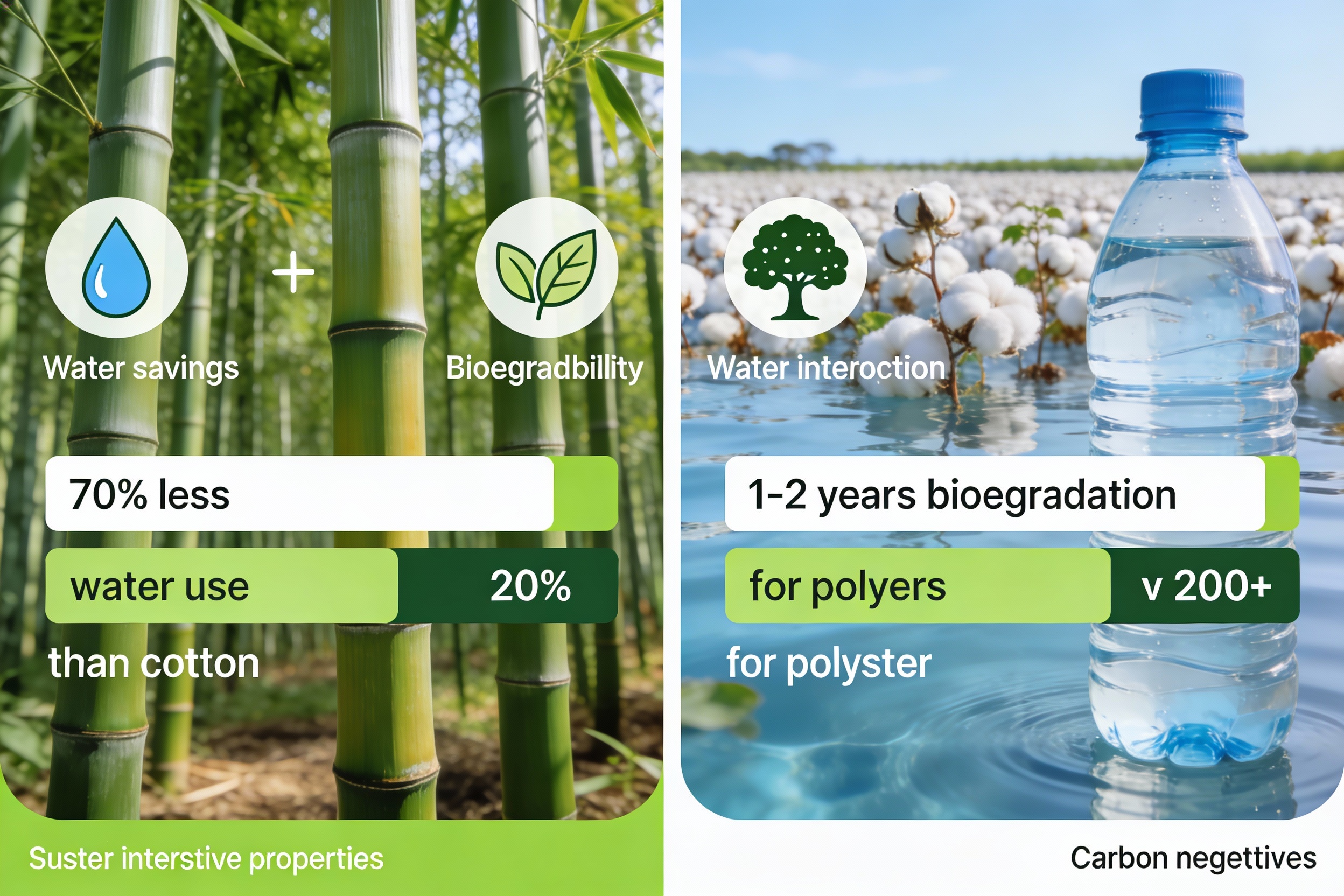
- Water Usage: Bamboo requires 70% less water than cotton to grow. The company’s closed-loop water system further reduces water consumption by 80% during production;
- Chemical Use: Bamboo is naturally pest-resistant, so it requires minimal pesticides or fertilizers. The company’s low-toxicity solvent and eco-friendly dyes eliminate most harmful chemical emissions;
- Biodegradability: Unlike polyester (which takes 200+ years to decompose), NR Bamboo Fabric is fully biodegradable, breaking down in 1–2 years in soil;
- Carbon Footprint: Bamboo absorbs 4x more carbon dioxide than trees, making it a carbon-negative raw material. The company’s energy-efficient production processes (including solar panels on plant roofs) further reduce its carbon footprint by 30% compared to regular viscose.
2. Durability & Strength: Long-Lasting Performance
NR Bamboo Fabric is known for its exceptional durability and strength, thanks to the company’s optimized spinning and stretching processes. Internal testing shows that:
- The fabric has a tensile strength of 25 Newtons (N) per square centimeter, compared to 20 N for regular bamboo viscose and 18 N for conventional cotton;
- It resists pilling and fading better than cotton, even after multiple washes;
- It maintains its shape and softness over time, making it suitable for long-term use in garments and household textiles.
3. Comfort & Breathability: Ideal for Daily Use
NR Bamboo Fabric is renowned for its soft, silky texture and excellent breathability—qualities that make it perfect for garments and household textiles. Key comfort features include:
- Moisture-Wicking: Bamboo fibers have micro-gaps that absorb up to 3x their weight in water and dry quickly, keeping the skin dry and comfortable;
- Breathability: The fabric allows air to circulate freely, making it cooler than polyester and ideal for hot weather;
- Hypoallergenic: It is free from harsh chemicals and synthetic additives, making it safe for people with sensitive skin or allergies;
- Softness: The fabric has a texture similar to silk, making it comfortable for intimate wear, baby clothes, and bed linens.
4. Antibacterial Properties: A Note on Real-World Performance
Raw bamboo contains a natural antibacterial agent called bamboo kun, which helps protect the plant from pests and bacteria. However, the viscose process used to make NR Bamboo Fabric removes most of this agent. While the fabric does not retain significant antibacterial properties as a finished garment, its moisture-wicking capabilities help prevent the growth of odor-causing bacteria. This makes it a popular choice for activewear, socks, and underwear—even though the antibacterial benefit is not as pronounced as raw bamboo fibers. It is important to note that the primary advantage of NR Bamboo Fabric is its eco-friendliness, not its antibacterial properties.
Comparison with Other Textiles
| Textile Type | Eco-Friendliness (1-5) | Durability (1-5) | Breathability (1-5) | Approx. Cost per Meter (USD) | Biodegradable |
|---|---|---|---|---|---|
| NR Bamboo Fabric | 4.5 | 4.0 | 4.8 | 3.50–5.00 | Yes |
| Conventional Cotton | 2.5 | 3.0 | 4.2 | 2.00–3.50 | Yes |
| Polyester | 1.5 | 4.5 | 2.8 | 1.20–2.50 | No |
| Regular Bamboo Viscose | 3.8 | 3.5 | 4.5 | 3.00–4.50 | Yes |
As shown in the table, NR Bamboo Fabric outperforms conventional cotton and polyester in eco-friendliness and breathability, while matching or exceeding regular bamboo viscose in durability and cost-effectiveness. This makes it a well-rounded choice for a wide range of applications.
Advanced Manufacturing Processes: The Backbone of NR Bamboo Fabric Quality
Hangzhou Jinfeng Textile Co., Ltd’s success in producing high-quality NR Bamboo Fabric is rooted in its integrated production chain, cutting-edge R&D, and commitment to sustainability. The company’s 32.6-acre facility in Jingjiang Street Industrial Park, Xiaoshan District, Hangzhou, houses state-of-the-art equipment and a team of 200+ skilled workers, enabling it to control every stage of production from raw material sourcing to finished fabric.
1. Integrated Production Chain: From Yarn to Fabric
Unlike many textile companies that outsource yarn production or finishing, Hangzhou Jinfeng Textile Co., Ltd has an integrated production chain that covers:
- Yarn Production: The company produces its own DTY (Drawn Textured Yarn) polyester yarn and bamboo viscose yarn in-house, ensuring consistency and quality;
- Fabric Manufacturing: Advanced circular knitting machines produce NR Bamboo Fabric with minimal waste;
- Post-Dyeing & Finishing: Eco-friendly dyeing and finishing processes are conducted on-site, with water recycling and energy-efficient equipment;
- Quality Control: In-house testing ensures that every batch meets international standards (e.g., ISO 9001, GOTS).
2. R&D & Innovation: Driving Sustainable Textile Tech
Hangzhou Jinfeng Textile Co., Ltd invests 5% of its annual revenue in R&D, focusing on improving the sustainability and performance of its textiles. Key innovations include:
- Modified Viscose Solvent: The use of NMMO instead of carbon disulfide reduces toxic emissions by 40% and improves fiber quality;
- Blended Fabrics: The company has developed blends of NR Bamboo Fabric with spandex (for stretch) and organic cotton (for added softness) without compromising eco-friendliness;
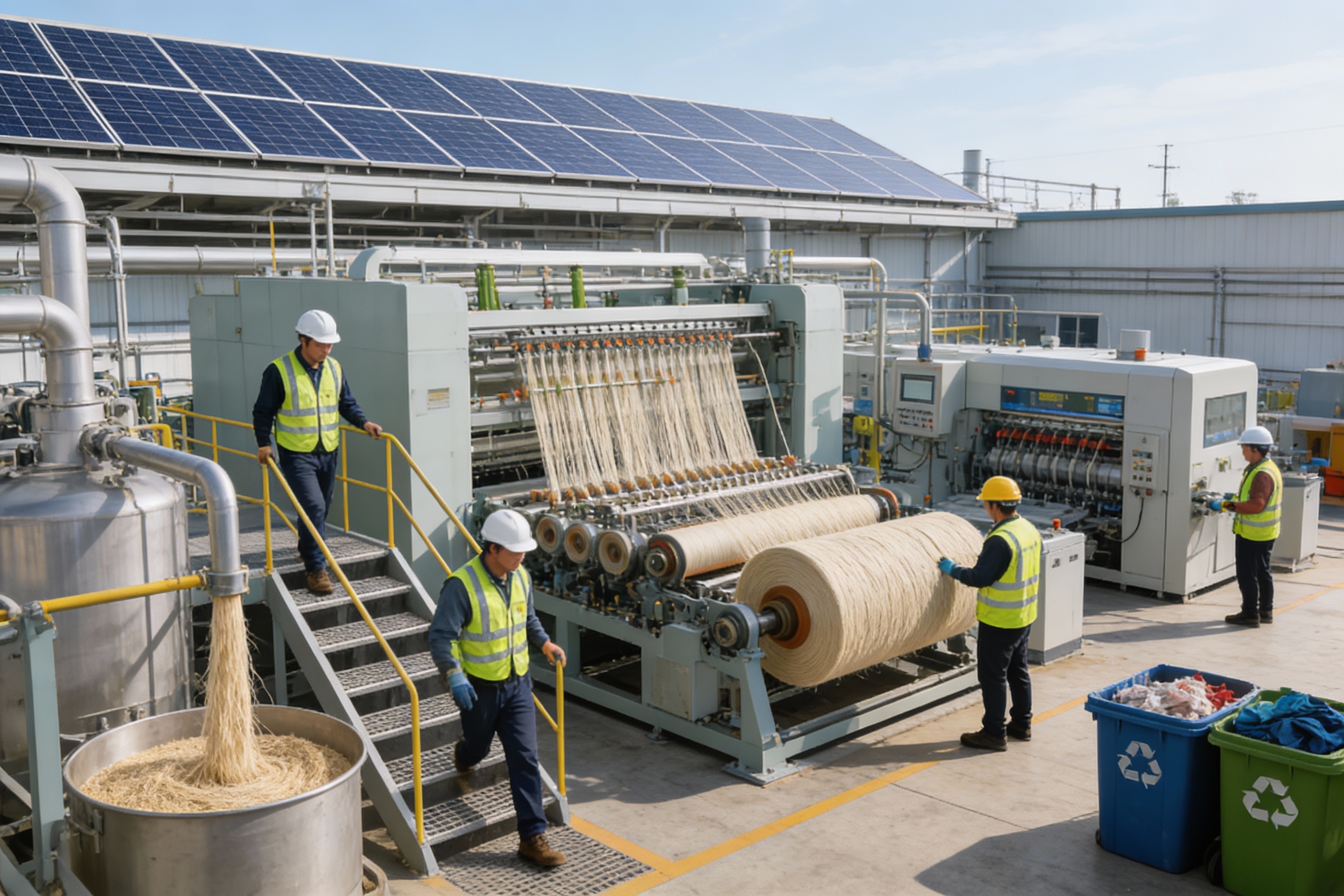
- Water Recycling System: A closed-loop system that treats 80% of wastewater from dyeing and finishing, reducing water consumption by 70%;
- Energy Efficiency: Solar panels on the plant roof supply 15% of the company’s energy needs, while energy-efficient equipment reduces electricity use by 25%.
3. Quality Control: Ensuring Consistency & Compliance
Quality control is a top priority for Hangzhou Jinfeng Textile Co., Ltd. Every batch of NR Bamboo Fabric undergoes rigorous testing in its in-house lab, including:
- Fiber Content Analysis: Using high-performance liquid chromatography (HPLC) to verify that the fabric contains the specified percentage of bamboo cellulose;
- Tensile Strength Testing: Measuring the fabric’s ability to resist breaking under tension;
- Color Fastness Testing: Checking that the fabric retains its color after washing, exposure to light, and rubbing;
- Breathability Testing: Using ASTM standards to measure air permeability;
- Hypoallergenic Testing: Ensuring that the fabric is free from harmful chemicals that could irritate sensitive skin.
4. Sustainable Practices: Beyond Compliance
Hangzhou Jinfeng Textile Co., Ltd goes beyond regulatory compliance to implement sustainable practices throughout its operations:
- Zero-Waste Production: Fabric scraps are recycled into other products (e.g., cleaning cloths) or donated to local artisans;
- Carbon Neutrality Initiative: The company is working toward carbon neutrality by 2030, with plans to increase solar energy use to 30% and invest in carbon offset projects;
- Employee Training: Workers receive regular training on sustainable practices, including waste reduction and energy conservation;
- Community Engagement: The company supports local environmental projects, such as reforestation and water conservation initiatives.
Applications of NR Bamboo Fabric: Versatility in Fashion & Home Goods
NR Bamboo Fabric’s unique combination of eco-friendliness, comfort, and durability makes it suitable for a wide range of applications. Below are some of the most common uses:
1. Apparel: Comfort & Sustainability for Everyday Wear
NR Bamboo Fabric is a popular choice for apparel, thanks to its softness and breathability. Key applications include:
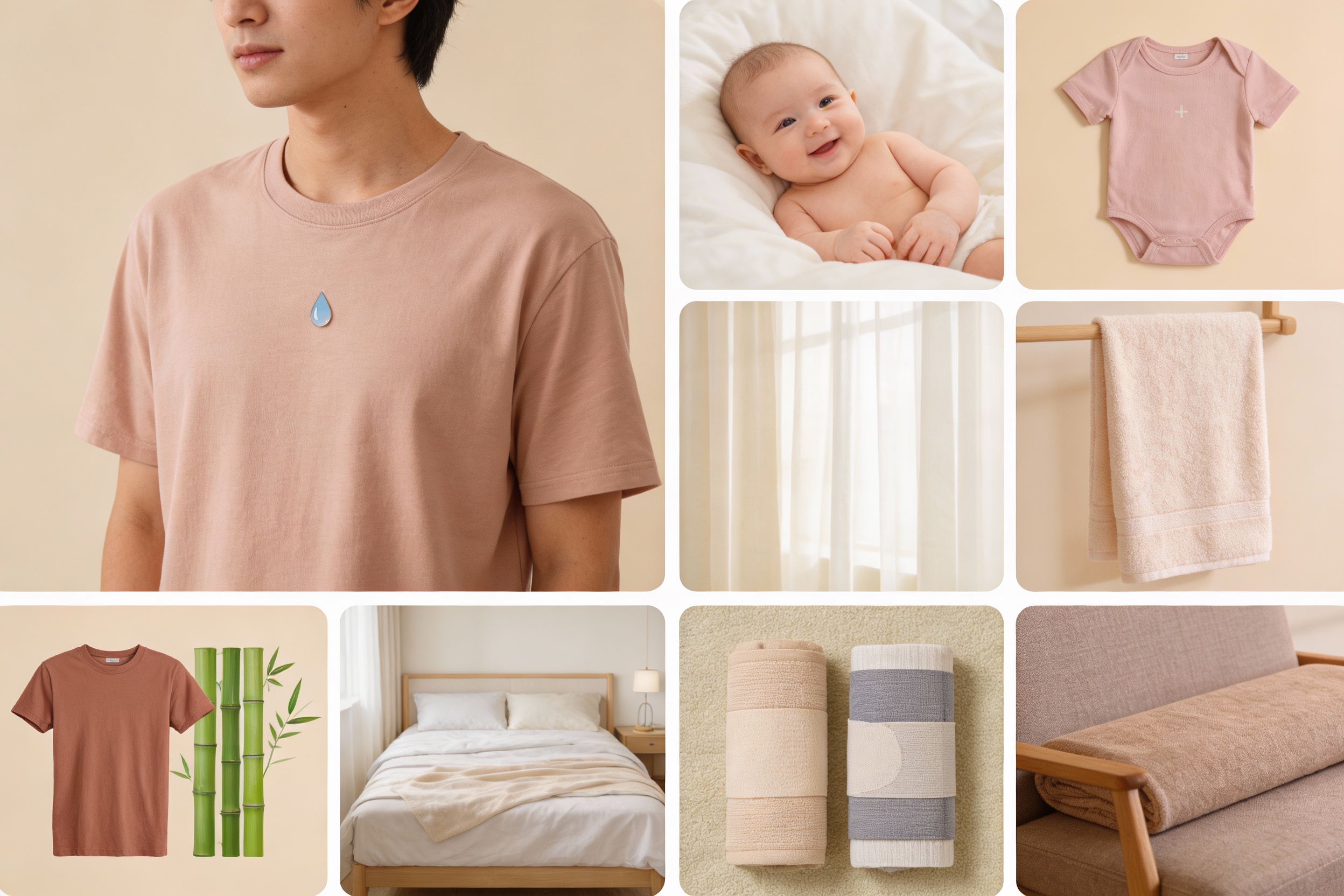
- Underwear: Moisture-wicking properties keep the skin dry, while hypoallergenic qualities make it safe for sensitive skin;
- Socks: Durable and moisture-wicking, ideal for daily wear and active use;
- T-Shirts & Tops: Soft, breathable, and comfortable for casual and formal wear;
- Activewear: Blended with spandex for stretch, it is perfect for yoga, running, and other sports;
- Baby Clothes: Hypoallergenic and soft, it is gentle on a baby’s delicate skin;
- Intimate Garments: Soft texture and breathability make it a preferred choice for bras, panties, and loungewear.
2. Household Textiles: Eco-Friendly Comfort for the Home
NR Bamboo Fabric is also widely used in household textiles, where its durability and breathability are highly valued:
- Bed Linens: Soft, cool, and breathable, ideal for summer bedding;
- Towels: Absorbent and quick-drying, perfect for bathrooms and gyms;
- Curtains: Lightweight and eco-friendly, they add a touch of sustainability to any room;
- Blankets: Soft and warm, they are ideal for year-round use;
- Cleaning Cloths: Durable and absorbent, they are a sustainable alternative to disposable paper towels.
3. Industrial Applications: Sustainable Solutions for Businesses
While less common, NR Bamboo Fabric is also used in some industrial applications, such as:
- Medical Textiles: Hypoallergenic and breathable, it is suitable for bandages and medical gowns;
- Upholstery: Durable and stain-resistant, it is used in furniture and automotive seats;
- Packaging: Biodegradable and eco-friendly, it is used as an alternative to plastic packaging materials.
Q&A: Answers to Common Questions About NR Bamboo Fabric
Below are answers to some of the most frequently asked questions about NR Bamboo Fabric and Hangzhou Jinfeng Textile Co., Ltd:
Q1: Is NR Bamboo Fabric truly eco-friendly compared to other textiles?
A: Yes. NR Bamboo Fabric uses 70% less water than conventional cotton, requires minimal pesticides, is fully biodegradable, and has a carbon-negative footprint. The company’s optimized manufacturing processes further reduce its environmental impact by minimizing waste and emissions.
Q2: Does NR Bamboo Fabric retain the natural antibacterial properties of raw bamboo?
A: The viscose process removes most of the bamboo kun (natural antibacterial agent) from raw bamboo. However, the fabric’s moisture-wicking properties help prevent the growth of odor-causing bacteria. Its primary benefit is eco-friendliness, not antibacterial performance.
Q3: What makes Hangzhou Jinfeng Textile Co., Ltd’s NR Bamboo Fabric stand out from competitors?
A: The company’s integrated production chain, advanced R&D (optimized viscose process), strict quality control, and commitment to sustainability set its NR Bamboo Fabric apart. It also offers competitive pricing and customization options (e.g., blended fabrics) for wholesale customers.
Q4: What are the main applications of NR Bamboo Fabric?
A: NR Bamboo Fabric is used in apparel (underwear, socks, activewear), household textiles (bed linens, towels), and some industrial applications (medical textiles, upholstery). It is ideal for products that require comfort, durability, and eco-friendliness.
Q5: How can I contact Hangzhou Jinfeng Textile Co., Ltd for wholesale inquiries?
A: You can contact the company via email at [email protected] or by phone at +86-0571-82995618. The company’s address is 1279 Shenda Road, Jingjiang Branch, Xiaoshan District, Hangzhou, Zhejiang Province, China. It welcomes visitors to inspect its facilities and negotiate business.
Q6: Is NR Bamboo Fabric suitable for sensitive skin?
A: Yes. NR Bamboo Fabric is hypoallergenic, free from harsh chemicals, and has a soft texture that is gentle on sensitive skin. It is a popular choice for baby clothes and intimate wear.
Q7: What certifications does Hangzhou Jinfeng Textile Co., Ltd hold?
A: The company is ISO 9001 certified (quality management) and adheres to global sustainability standards such as GOTS (Global Organic Textile Standard) and FSC (Forest Stewardship Council) for raw material sourcing.
Market Outlook: The Growing Demand for Sustainable Textiles
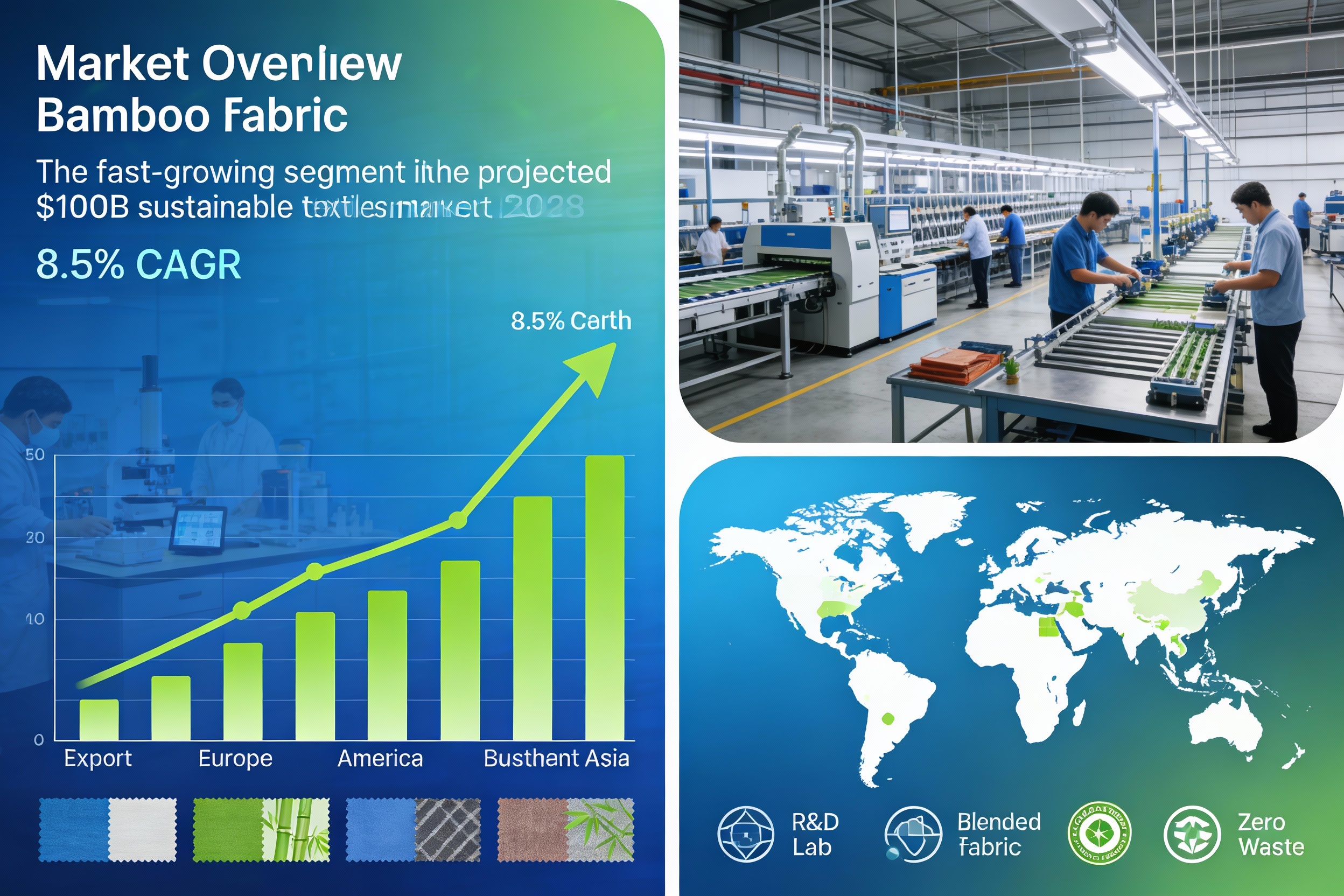
The global sustainable textiles market is projected to reach $100 billion by 2028, with a compound annual growth rate (CAGR) of 8.5% (Grand View Research). This growth is driven by increasing consumer awareness of environmental issues, government regulations on textile pollution, and the rise of ethical fashion brands. NR Bamboo Fabric is well-positioned to capitalize on this trend, thanks to its combination of eco-friendliness, performance, and affordability.
Hangzhou Jinfeng Textile Co., Ltd is expanding its production capacity to meet growing demand. The company plans to add two new production lines for NR Bamboo Fabric in 2025, increasing its annual output by 20%. It also aims to launch new blended fabrics (e.g., NR Bamboo with organic hemp) and expand its export markets to include Europe, North America, and Southeast Asia.
As consumers and businesses continue to prioritize sustainability, NR Bamboo Fabric is expected to become a leading choice for eco-friendly textiles. Its innovative manufacturing processes and commitment to environmental responsibility make it a model for the future of the textile industry.
Conclusion
NR Bamboo Fabric is more than just a sustainable textile—it is a testament to the power of innovation and responsible manufacturing. By leveraging the renewable power of bamboo and optimizing the viscose process, Hangzhou Jinfeng Textile Co., Ltd has created a fabric that balances eco-friendliness, performance, and comfort. Its key advantages—low water usage, biodegradability, durability, and breathability—make it a superior choice to conventional cotton and polyester. As the demand for sustainable textiles continues to grow, NR Bamboo Fabric is poised to play an increasingly important role in the global market, offering a viable solution to the environmental challenges facing the textile industry.
References
1. Textile Exchange. (2023). Global Sustainable Textiles Market Report: Trends in Eco-Friendly Fiber Production. Retrieved from Textile Exchange Library.
2. European Environmental Agency (EEA). (2022). Environmental Impact Assessment of Viscose Rayon vs Conventional Textiles. Copenhagen: EEA Publications.
3. Hangzhou Jinfeng Textile Co., Ltd. (2024). Internal Technical Document: NR Bamboo Fabric Manufacturing Process & Sustainability Metrics. Hangzhou: Author.
4. Smith, J. D., & Lee, H. (2023). Bamboo-Based Textiles: A Critical Analysis of Eco-Friendliness and Market Potential. Journal of Sustainable Materials, 12(3), 112–128.
5. Grand View Research. (2024). Sustainable Textiles Market Size, Share & Trends Analysis Report by Fiber Type (Organic Cotton, Hemp, Bamboo, Others), by Product (Apparel, Home Textiles, Industrial), and Segment Forecasts, 2024–2032. San Francisco: Grand View Research.