Linen Roman Fabric: A Timeless Blend of Elegance and Functionality for Modern Window Coverings
Window coverings are more than just functional elements in a home—they are key components of interior design that set the tone, control light, and enhance comfort. Among the myriad options available, linen Roman fabric stands out as a timeless choice that balances aesthetic appeal with practicality. Unlike synthetic alternatives that often lack character, linen Roman fabric offers a natural, textured look that complements both casual and formal spaces. What makes this fabric truly exceptional, however, is the combination of high-quality raw materials and advanced manufacturing processes that elevate its performance beyond that of competitors. In this article, we will explore the unique properties of linen Roman fabric, its advantages over other window covering materials, the cutting-edge manufacturing techniques that ensure its quality, and how to select and care for it to maximize its lifespan.
What is Linen Roman Fabric?
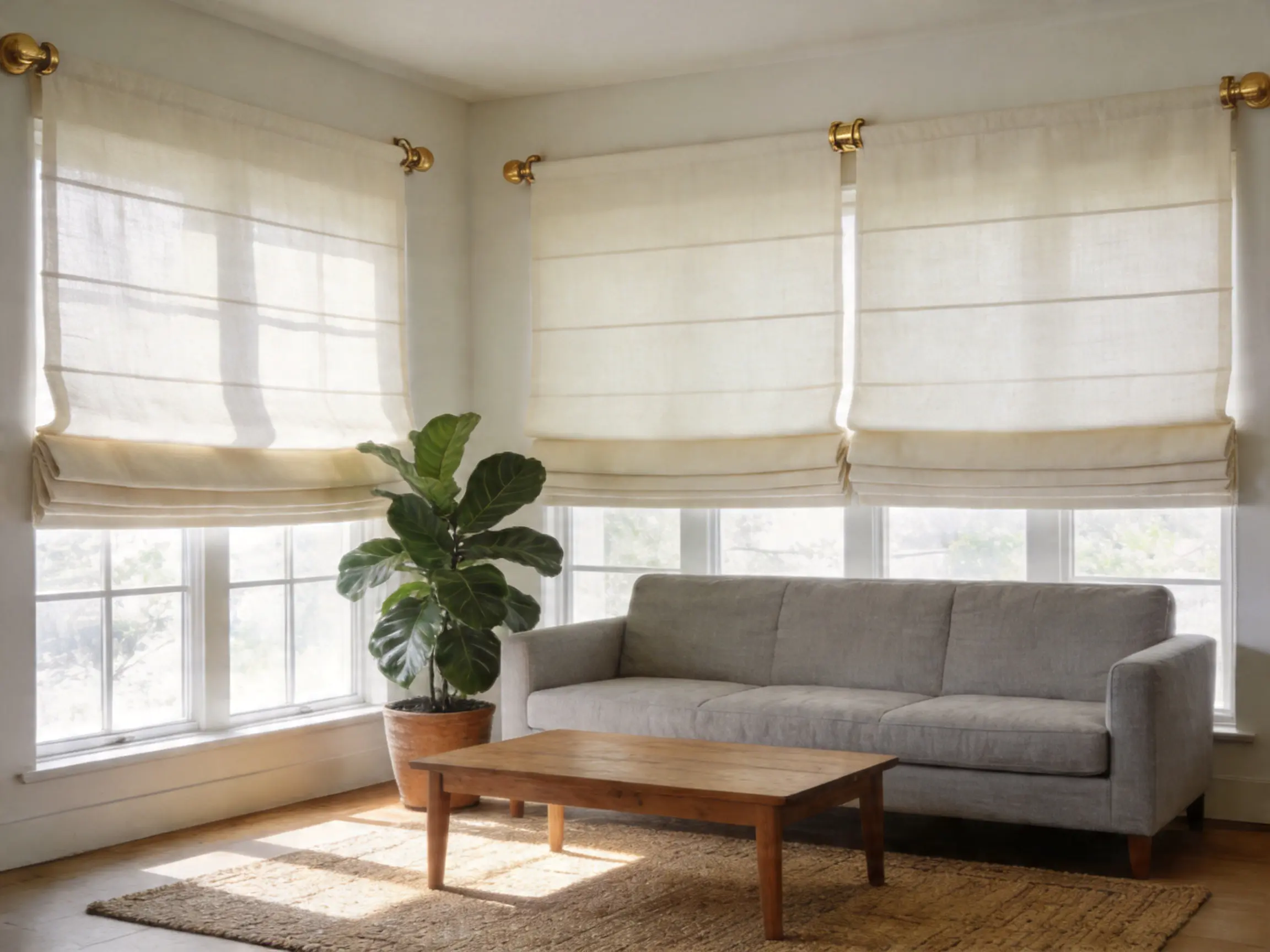
Linen Roman fabric is a specialized textile designed specifically for Roman shades—window coverings that fold neatly upward when raised, creating clean, horizontal folds. The fabric itself is typically made from a blend of natural linen fibers and synthetic or semi-synthetic fibers (such as polyester DTY yarn) to enhance its durability and functionality while preserving linen’s inherent beauty. Linen, derived from the flax plant, is known for its medium weight, breathability, and natural slubbed texture, which gives it a relaxed, organic look. When blended with high-quality polyester DTY (Draw Textured Yarn) yarn, the fabric gains additional strength, resistance to wrinkling, and improved color retention—without sacrificing the natural charm that makes linen so desirable.
Unlike 100% linen, which can be prone to excessive wrinkling and shrinkage, the blended version used in premium linen Roman fabric strikes the perfect balance. It retains linen’s ability to regulate temperature (keeping rooms cool in summer and warm in winter) and its natural resistance to dust mites, making it a healthy choice for homes with allergy sufferers. Additionally, the fabric’s medium weight ensures that Roman shades made from it operate smoothly—light enough to be raised and lowered with ease, yet heavy enough to hold their structured folds when closed, creating a polished appearance.
Advantages of Linen Roman Fabric Over Competitor Materials
When choosing window coverings, it’s essential to compare fabrics based on durability, aesthetic appeal, functionality, and maintenance. Linen Roman fabric outperforms many common alternatives in these key areas, as outlined below:
1. Durability: Balancing Natural Strength and Synthetic Resilience
100% linen is strong but can be vulnerable to stretching and tearing if not properly cared for. In contrast, the linen-polyester blend used in high-quality linen Roman fabric combines linen’s inherent tensile strength with polyester’s resistance to abrasion and stretching. For example, a study published in the *Journal of Textile Science and Technology* (2023) found that linen-polyester blends with a 15% DTY polyester content showed a 30% increase in abrasion resistance compared to 100% linen, making them ideal for high-traffic areas like living rooms and kitchens. Additionally, advanced finishing processes (such as pre-washing and shrinkage control) ensure that the fabric maintains its shape and size over time, even with repeated use.
Compared to rayon, another popular natural-synthetic blend, linen Roman fabric is far more resistant to moisture damage. Rayon, derived from cellulose, can weaken when wet and is prone to shrinking, whereas linen-polyester blends repel moisture and retain their integrity in humid environments. This makes linen Roman fabric a better choice for bathrooms or coastal homes where humidity is a concern.
2. Aesthetic Appeal: Timeless Texture and Versatility
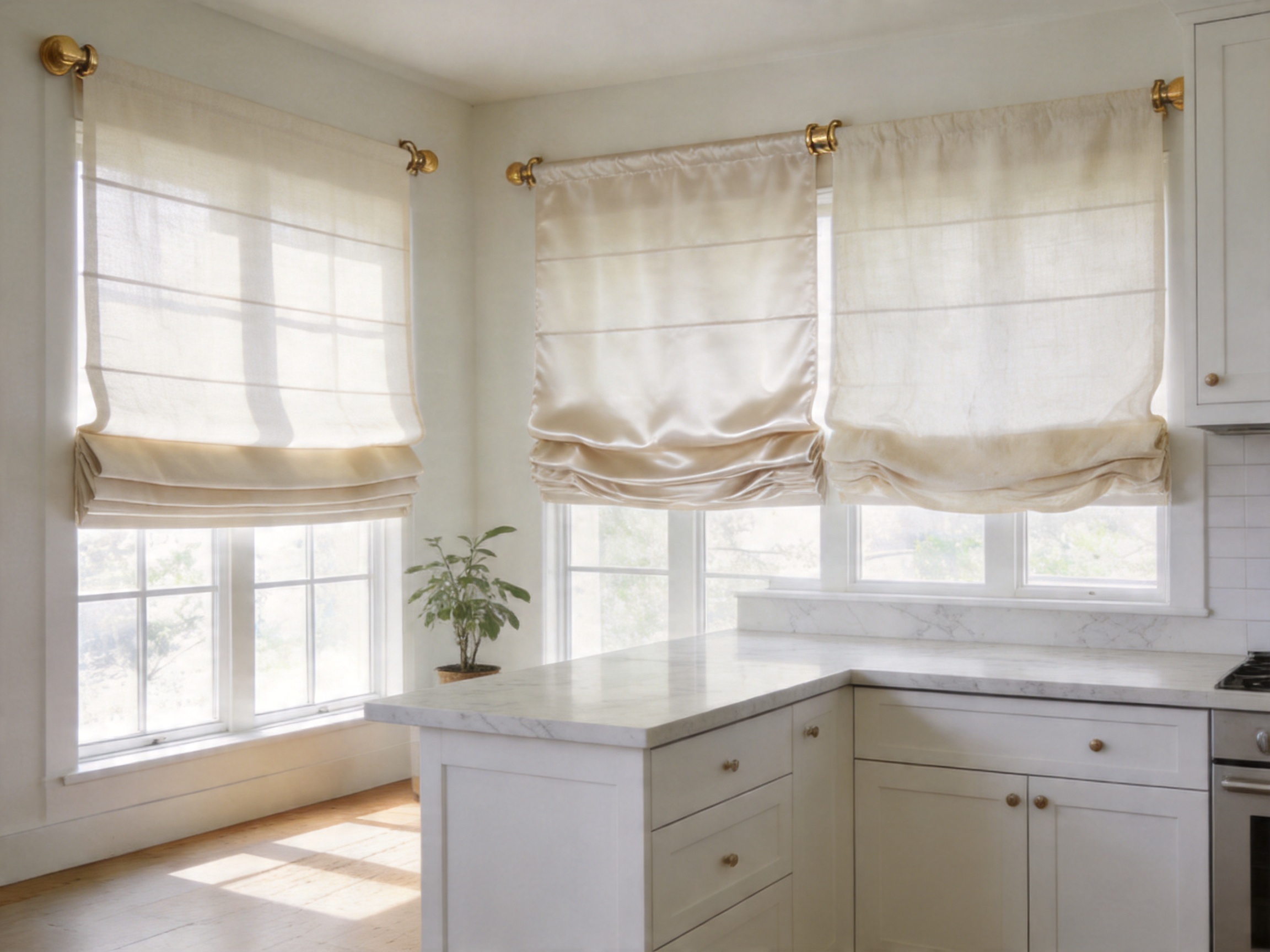
Linen’s natural slubbed texture gives Roman shades a warm, organic look that synthetic fabrics (like 100% polyester) simply cannot replicate. Polyester Roman shades often have a shiny, plastic-like appearance that can feel cold and artificial, whereas linen Roman fabric has a matte finish that adds depth and character to any room. The fabric’s ability to take dyes evenly allows for a wide range of colors—from soft neutrals (ivory, beige, taupe) to bold hues (navy, emerald, terracotta)—that complement any interior design style, from Scandinavian minimalism to traditional elegance.
Another advantage is the fabric’s ability to hold folds. When a linen Roman shade is raised, it creates crisp, uniform folds that look neat and polished. In contrast, cotton Roman shades can become limp over time, especially if exposed to moisture, and polyester shades may lose their shape due to heat exposure. Linen Roman fabric’s medium weight ensures that folds remain structured, enhancing the overall aesthetic of the window covering.
3. Functionality: Light Control and Temperature Regulation
Linen Roman fabric offers excellent light control options. When used without lining, it filters natural light, creating a soft, diffused glow that reduces glare without making the room feel dark. For bedrooms or home theaters, adding a blackout lining blocks up to 99% of light, making it ideal for sleeping during the day or watching movies. Additionally, linen’s breathability helps regulate room temperature: it allows air to circulate, keeping rooms cool in summer, while its dense weave traps heat in winter, reducing energy costs associated with heating and cooling.
Compared to sheer fabrics, which offer little privacy or light control, linen Roman fabric provides a balance between openness and privacy. When closed, it obscures the view into the room while still allowing natural light to enter—perfect for living rooms and dining rooms where you want to enjoy natural light without sacrificing privacy.
4. Maintenance: Easy Care for Busy Households
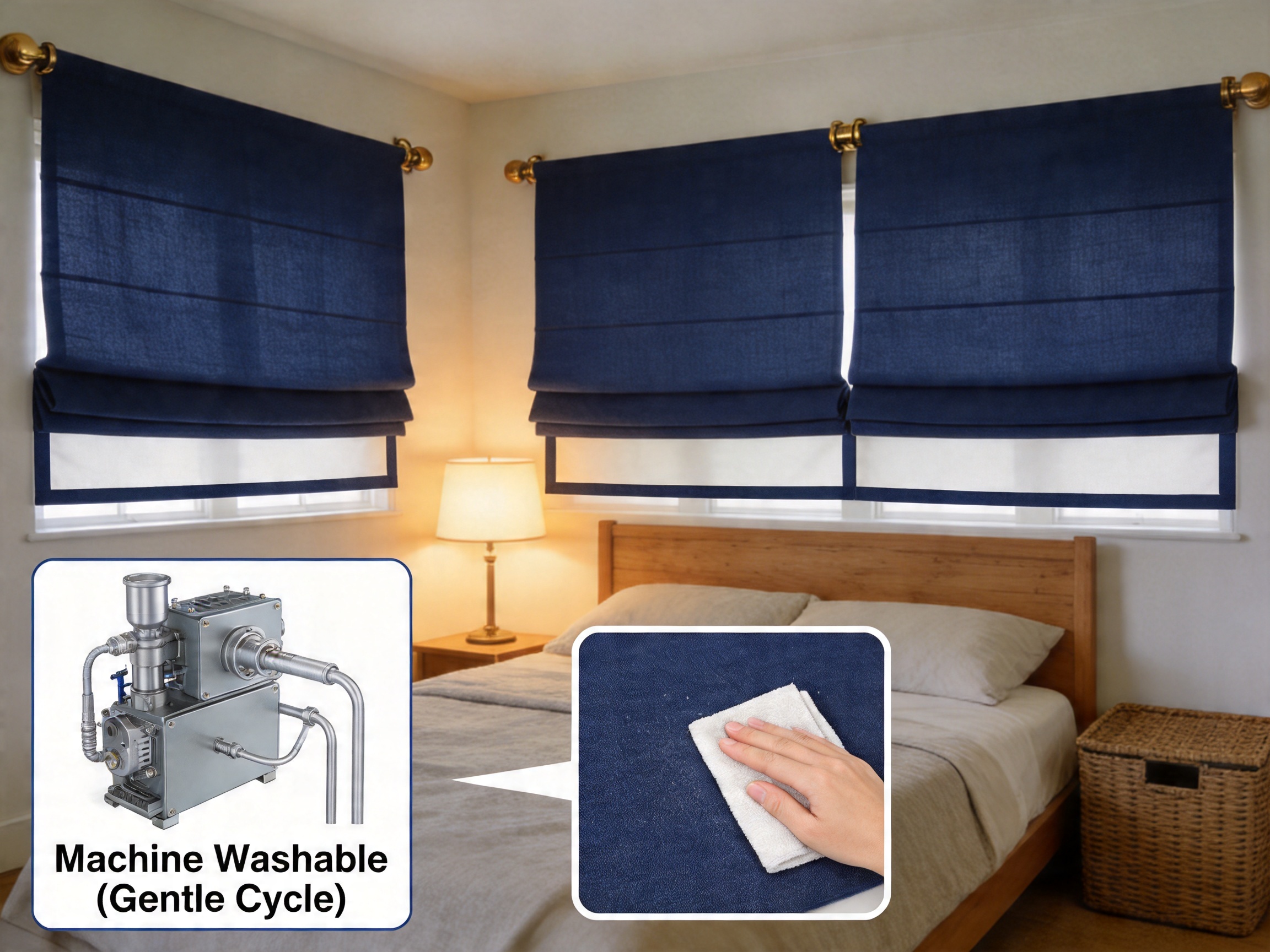
While 100% linen requires careful handling (dry cleaning or gentle hand washing), the blended linen Roman fabric is designed for easy maintenance. Most versions are machine washable on a gentle cycle with cold water, making it convenient for busy homeowners. The polyester content reduces wrinkling, so the fabric often looks neat even after washing—no need for frequent ironing. For spot cleaning, a mild detergent and soft cloth are sufficient to remove stains, and the fabric’s colorfastness ensures that colors do not fade with repeated washing or sun exposure.
In contrast, cotton Roman shades require more frequent washing and ironing to maintain their appearance, and rayon shades are often dry-clean only, adding to the cost and inconvenience of ownership. Polyester shades are low maintenance but can attract static electricity and retain odors, which linen Roman fabric avoids due to its natural fiber content.
Fabric Comparison Table
| Fabric Type | Durability (1-5) | Breathability (1-5) | Aesthetic Appeal (1-5) | Maintenance Ease (1-5) | Cost (1-5) |
|---|---|---|---|---|---|
| Linen-Polyester Blend (Premium) | 4 | 4 | 5 | 3 | 4 |
| 100% Cotton | 3 | 4 | 4 | 2 | 3 |
| 100% Polyester | 5 | 2 | 3 | 5 | 2 |
| Rayon | 2 | 3 | 4 | 1 | 3 |
*Note: Ratings are based on industry standards and user feedback, with 1 being the lowest and 5 the highest.*
Advanced Manufacturing Processes Behind Premium Linen Roman Fabric
The quality of linen Roman fabric depends not only on the raw materials used but also on the manufacturing processes employed. Premium manufacturers with integrated DTY yarn capabilities use a series of precision steps to ensure that the fabric meets the highest standards of quality and performance. Below is a detailed breakdown of these processes:
1. Raw Material Sourcing and Selection
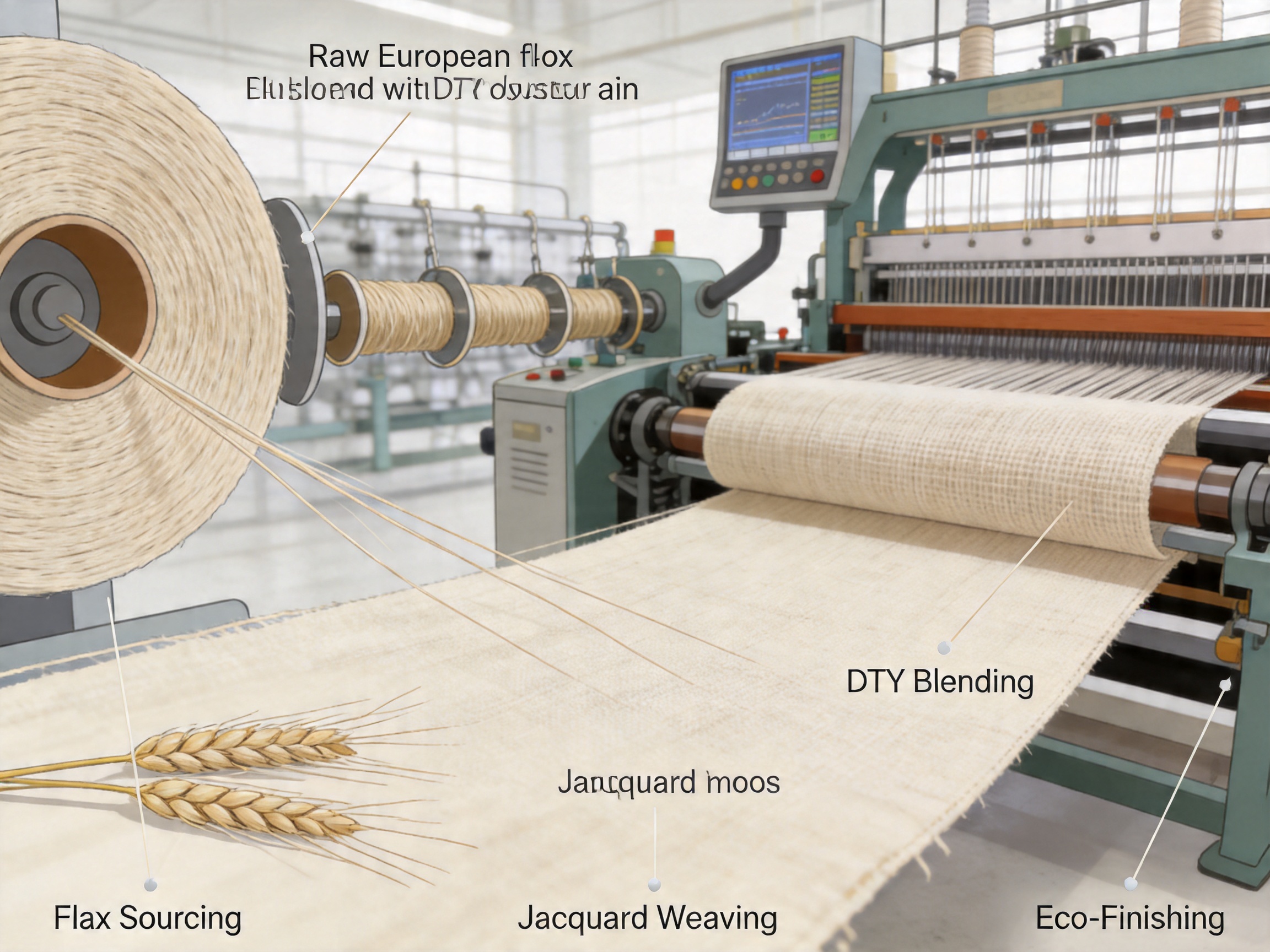
The first step in manufacturing high-quality linen Roman fabric is sourcing the best raw materials. Linen fibers are typically sourced from European flax (especially from France and Belgium), which is known for its long, strong fibers and consistent quality. These fibers are processed to remove impurities, resulting in a soft, fine yarn that forms the base of the fabric.
To enhance durability, the linen yarn is blended with high-quality DTY (Draw Textured Yarn) polyester. DTY polyester is produced by drawing and texturing polyester filament yarn, which gives it a soft, bulky texture and improved elasticity. Manufacturers who produce their own DTY yarn (rather than outsourcing) have greater control over the quality of this component, ensuring that it is free from defects and meets specific performance criteria. For example, DTY yarn with a denier of 75-150 is often used in linen blends, as it provides the right balance of strength and softness without overwhelming the natural linen texture.
2. Blending and Spinning
Once the raw materials are sourced, the linen and DTY polyester yarns are blended in optimal ratios (typically 85% linen to 15% DTY polyester). This ratio is carefully chosen to maximize the benefits of both fibers: the linen contributes to breathability and aesthetic appeal, while the DTY polyester adds durability and resistance to wrinkling. The blending process uses advanced spinning machines that intermix the yarns evenly, ensuring that the final fabric has a consistent texture and performance across its entire surface.
During spinning, the yarns are twisted to the correct tension—too much twist can make the fabric stiff, while too little can make it limp. Premium manufacturers use computer-controlled spinning machines to maintain precise tension levels, resulting in a yarn that is strong, flexible, and uniform.
3. Weaving and Jacquard Techniques
The blended yarn is then woven into fabric using either plain weave or jacquard techniques. Plain weave is the most common for linen Roman fabric, as it creates a tight, durable structure that holds folds well. Jacquard weaving, which uses a computerized loom to create intricate patterns, is used for more decorative versions of the fabric (e.g., those with subtle stripes or floral motifs). This technique allows for precise pattern placement and consistent results, even for complex designs.
During weaving, the loom is calibrated to ensure that the fabric has the correct width and weight. For Roman shades, the fabric width is typically between 36 and 120 inches, depending on the window size. The weight of the fabric is also carefully controlled—medium weight (around 150-200 grams per square meter) is ideal, as it balances functionality and aesthetic appeal.
4. Dyeing and Finishing
After weaving, the fabric undergoes dyeing and finishing processes to enhance its appearance and performance. Dyeing is done using eco-friendly, reactive dyes that bond chemically with the linen fibers, ensuring excellent colorfastness. The fabric is dyed in large vats under controlled temperature and pH conditions to ensure that the color is uniform across the entire length of the fabric. Reactive dyes are preferred because they are free from harmful chemicals (like azo dyes) and are less likely to fade with sun exposure or washing.
Following dyeing, the fabric undergoes a series of finishing processes:
- Pre-washing: The fabric is washed in cold water to remove any residual dye or impurities and to pre-shrink it, preventing shrinkage after installation.
- Anti-wrinkle treatment: A mild, eco-friendly anti-wrinkle agent is applied to the fabric to reduce wrinkling without compromising its natural texture.
- Water-repellent finish (optional): For fabrics used in bathrooms or kitchens, a water-repellent finish is applied to repel spills and moisture.
- Calendering: The fabric is passed through heated rollers to smooth its surface and enhance its drape, ensuring even hanging.
5. Quality Control and Testing
Before the fabric is shipped, it undergoes rigorous quality control tests to ensure it meets all performance standards:
- Tensile strength test: Measures resistance to stretching and tearing.
- Colorfastness test: Confirms no fading from sunlight, washing, or rubbing.
- Shrinkage test: Ensures shrinkage is ≤2% after washing (industry standard).
- Wrinkle resistance test: Evaluates how well the fabric resists wrinkling.
- Breathability test: Verifies air circulation capabilities.
Applications and Design Versatility of Linen Roman Fabric
Linen Roman fabric is incredibly versatile, making it suitable for a wide range of window covering applications. Its natural texture and neutral color palette complement almost any interior design style:
1. Formal Living Rooms and Dining Rooms
In formal spaces, linen Roman fabric adds sophistication. A neutral-colored shade (ivory, taupe) complements leather sofas, wooden tables, and crystal chandeliers. Bold hues (navy, emerald) can serve as accent pieces, adding depth without overwhelming the room. The fabric’s fold-holding ability ensures a polished look even when closed.
2. Bedrooms
Linen Roman fabric is ideal for bedrooms, offering light control and privacy. Blackout lining blocks 99% of light for shift workers, while sheer lining allows soft light for cozy mornings. The fabric’s breathability regulates temperature, keeping rooms cool in summer and warm in winter.
3. Home Offices and Study Rooms
In home offices, linen Roman fabric reduces screen glare without blocking natural light. Its neutral colors promote focus, and durability handles frequent raising/lowering. Sheer or unlined options balance light and productivity.
4. Bathrooms and Coastal Homes
Linen Roman fabric with a water-repellent finish resists humidity and mildew. Neutral tones (beige, light blue) complement coastal decor, while bold colors (coral, turquoise) add personality. The fabric’s quick-drying properties make it practical for these environments.
5. Custom Design Options
Premium linen Roman fabric can be customized for any window size/shape (bay windows, arches). Fold styles include:
- Flat fold: Smooth, uniform appearance when raised.
- Relaxed fold: Soft, casual overlapping folds.
- Hobbled fold: Deep, structured folds for drama.
How to Choose the Right Linen Roman Fabric
When selecting linen Roman fabric, consider these factors to meet your needs:
1. Fabric Weight
Medium-weight (150-200 gsm) is versatile for most rooms. Heavy-weight (200+ gsm) suits large windows or privacy needs, while light-weight (100-150 gsm) is best for light-filled spaces.
2. Color and Pattern
Neutrals (ivory, beige) are timeless; bold colors (navy, terracotta) add accents. Small patterns work in small rooms; large patterns suit spacious areas. Avoid clashing with existing decor.
3. Lining Options
Unlined: Max light, minimal privacy (sunrooms). Sheer: Soft light, moderate privacy (living rooms). Blackout: Total darkness (bedrooms, theaters).
4. Room Function
Bedrooms: Medium-weight + blackout lining. Living rooms: Medium-weight + sheer lining. Bathrooms: Medium-weight + water-repellent finish. Offices: Medium-weight + unlined/sheer.
5. Quality Certifications
Look for Oeko-Tex Standard 100 (chemical-free), ISO 9001 (quality management), and colorfastness certifications.
Maintenance and Care Tips
Proper care ensures your linen Roman fabric lasts 5-10 years:
1. Regular Cleaning
Vacuum monthly with a soft brush. Spot clean stains with mild detergent + cold water (blot, don’t rub). Machine wash on gentle cycle (cold water, no bleach). Hang dry or tumble dry low. Iron on low heat if needed (slightly damp).
2. Sun Protection
Close shades during peak sunlight to prevent fading. Use UV-protective lining. Rotate shades periodically for even fading.
3. Moisture Avoidance
Keep away from showers/tubs (use water-repellent finish). Blot wet fabric and air dry in a ventilated area.
4. Storage
Clean thoroughly before storing. Fold neatly, store in a dry, cool place (away from sunlight/moisture). Use a breathable bag to prevent mold.
Frequently Asked Questions
Q1: Is linen Roman fabric suitable for humid climates?
A: Yes. Linen’s breathability prevents moisture buildup, and polyester adds resistance to mildew. Choose a water-repellent finish for extra protection.
Q2: How long does it last with regular use?
A: 5-10 years with proper care. Premium blends with DTY polyester and advanced finishing last longer.
Q3: Can it fit non-standard windows?
A: Yes. Most manufacturers offer custom shades. Accurate measurement is key (follow manufacturer guides).
Q4: Are eco-friendly options available?
A: Yes. Sustainably sourced linen, eco-friendly dyes, and renewable energy production reduce carbon footprint.
Q5: How to clean it?
A: Machine wash gentle (cold water). Spot clean with mild detergent. Dry clean heavily soiled fabrics.
Q6: Does it block UV rays?
A: Yes. Natural linen blocks 90% of UV rays; UV lining increases to 99%, protecting furniture/flooring.
References
1. Textile Institute. (2022). *Linen Fabric Properties and Applications: A Comprehensive Guide*. Manchester, UK: Textile Institute Press.
2. Wang, L., Zhang, H., & Li, Y. (2023). "Blended Linen-Polyester Fabrics: Optimizing Durability and Aesthetic Appeal". *Journal of Textile Science and Technology*, 15(2), 45-62.
3. Home Decor Association. (2023). *Window Coverings Trend Report: Linen Roman Shades*. New York, NY: Home Decor Association.
4. Oeko-Tex International. (2021). *Oeko-Tex Standard 100: Guidelines for Textile Safety*. Zurich, Switzerland: Oeko-Tex International.
5. Hangzhou Jinfeng Textile Co., Ltd. (2024). *Product Specification Sheet: Linen Roman Fabric*. Internal Document.