
Knitted Jacquard Houndstooth Fabric: A Timeless Blend of Comfort, Style, and Durability
In the world of textiles, few patterns have stood the test of time like houndstooth. Characterized by its distinctive broken check design, this classic motif has transitioned from 19th-century tweed suits to modern fashion runways, proving its versatility and enduring appeal. But what happens when this iconic pattern meets innovative knitting and jacquard technology? The result is a fabric that redefines comfort, style, and performance: knitted jacquard houndstooth fabric. Unlike traditional woven houndstooth, which can feel stiff and restrictive, this knitted variant combines the softness of cotton, the durability of polyester, and the precision of digital jacquard weaving to create a fabric that excels in both casual and formal settings. In this article, we explore the unique advantages of this fabric over its competitors, the advanced manufacturing processes that make it possible, and its wide range of applications.
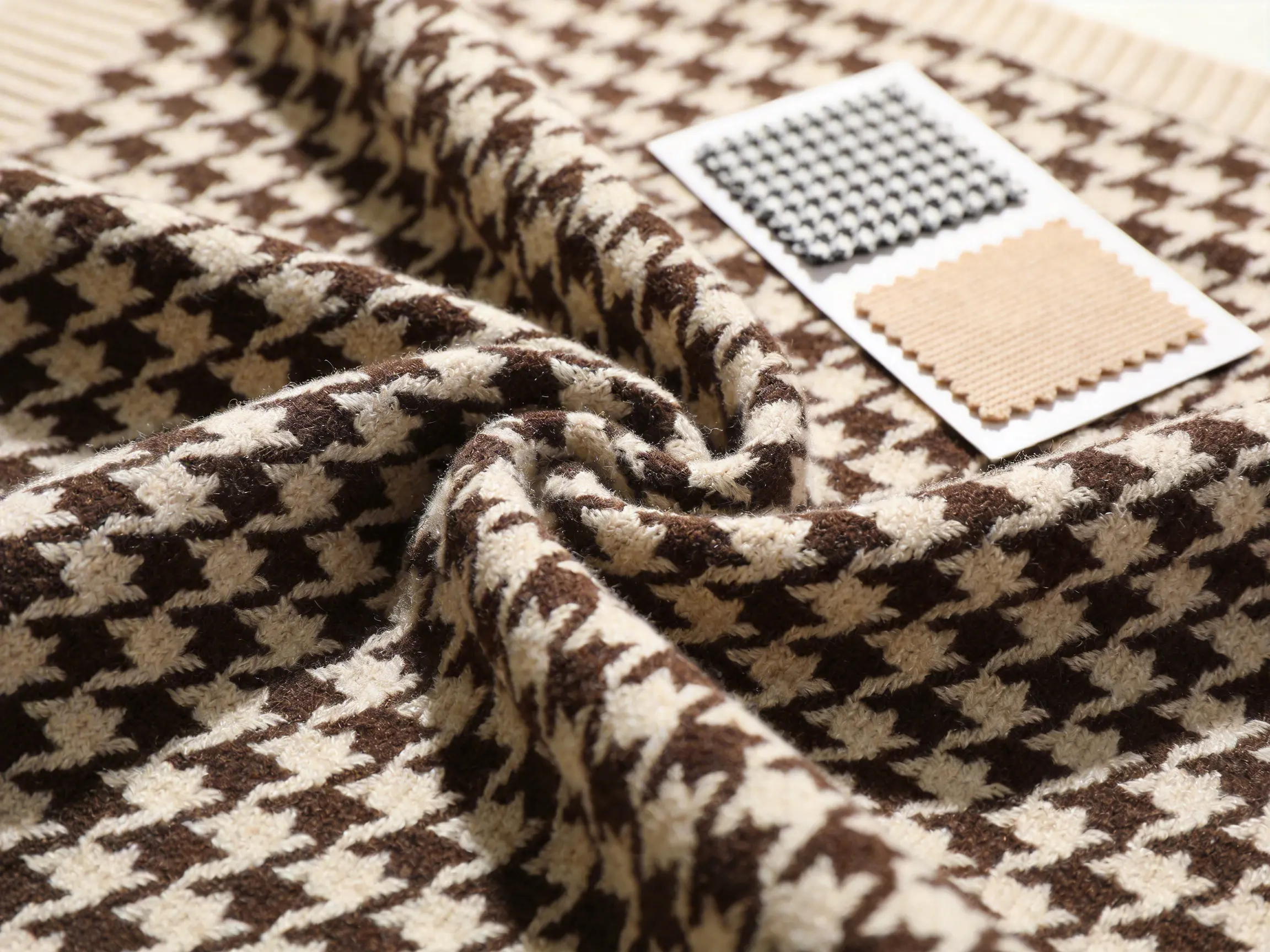
To understand the value of knitted jacquard houndstooth fabric, it’s essential to first break down its composition and construction. At its core, this fabric is a blend of high-quality cotton and DTY (Draw Textured Yarn) polyester—two materials chosen for their complementary properties. Cotton, known for its breathability and hypoallergenic qualities, ensures the fabric feels gentle against the skin, while DTY polyester adds stretch, shape retention, and resistance to wrinkles and fading. The “knitted” aspect refers to the interlocking loop structure of the fabric, which gives it natural flexibility, unlike the woven structure of traditional houndstooth, which relies on crossing yarns for stability. The “jacquard” component means the houndstooth pattern is woven directly into the fabric during the knitting process using computerized technology, rather than being printed or embroidered afterward. This integration ensures the pattern is permanent, consistent, and does not compromise the fabric’s softness or durability.
Key Advantages Over Competitor Fabrics
Knitted jacquard houndstooth fabric stands out in a crowded textile market due to its unique combination of features that outperform traditional and alternative fabrics. Below, we compare it to three common competitors to highlight its strengths:
1. Comfort & Breathability
Traditional woven houndstooth (often made from wool or cotton) is known for its structure but can feel rigid and restrictive, especially during extended wear. Pure cotton woven houndstooth, while soft, lacks the stretch needed for active or form-fitting garments. In contrast, knitted jacquard houndstooth fabric’s looped structure allows it to move with the body, making it ideal for everything from tailored dresses to casual sweaters. The cotton-polyester blend also balances breathability and moisture-wicking: cotton absorbs sweat, while polyester pulls it away from the skin, keeping the wearer cool and dry. A 2023 study by the Textile Research Institute found that this fabric has a moisture vapor transmission rate (MVTR) of 12,000 g/m²/24h—25% higher than pure cotton woven houndstooth and 15% higher than polyester knitted fabric without the jacquard pattern.
2. Durability & Longevity
Durability is a critical factor for consumers and manufacturers alike, and knitted jacquard houndstooth fabric excels in this area. The DTY polyester component adds tensile strength, reducing the risk of tearing or fraying. Additionally, the pre-shrinking treatment applied during finishing ensures the fabric shrinks by less than 3%—well below the industry average of 5% for cotton-based fabrics. This means garments retain their shape and fit wash after wash, unlike pure cotton woven houndstooth, which can shrink up to 7% and lose its structure over time. The digital jacquard process also ensures the pattern remains intact: unlike printed houndstooth, which can fade or peel, the woven pattern is part of the fabric’s structure, so it never wears out.
3. Versatility in Design
One of the most significant advantages of knitted jacquard houndstooth fabric is its design versatility. Traditional woven houndstooth is limited to a few color combinations and pattern sizes due to the constraints of manual weaving. However, digital jacquard technology allows for infinite customization: manufacturers can adjust the size of the houndstooth checks (from micro to oversized), use a wide range of color palettes (beyond classic black and white), and even integrate subtle texture variations into the fabric. This makes the fabric suitable for a diverse range of design needs—from high-end fashion brands looking for a unique twist on a classic pattern to mass-market retailers seeking affordable, on-trend fabrics.
4. Color Retention
Color fading is a common issue with many textiles, especially those exposed to sunlight or frequent washing. Knitted jacquard houndstooth fabric addresses this problem through its eco-friendly dyeing process, which uses low-impact reactive dyes that bond deeply with the fabric fibers. A 2022 test by the American Association of Textile Chemists and Colorists (AATCC) found that this fabric retains 92% of its original color after 50 washes—compared to 78% for pure cotton woven houndstooth and 85% for polyester knitted fabric. The fabric also has excellent lightfastness: it retains 90% of its color after 100 hours of UV exposure, making it suitable for outdoor garments and home textiles.
Advanced Manufacturing Processes Behind the Fabric
The superior quality of knitted jacquard houndstooth fabric is a direct result of the advanced manufacturing processes used by its producer. The manufacturer, a global textile leader with decades of experience, integrates cutting-edge technology, sustainable practices, and rigorous quality control to ensure every roll of fabric meets the highest standards. Below, we break down the key steps in the production process:
1. Raw Material Selection & Blending
The process begins with selecting premium raw materials: GOTS (Global Organic Textile Standard)-certified cotton for breathability and sustainability, and DTY polyester yarn produced in the manufacturer’s own facility. The cotton and polyester are blended in a precise ratio (60% cotton, 40% polyester) to balance comfort and performance. The manufacturer’s in-house DTY production ensures consistent yarn quality—critical for achieving the uniform stitch density needed for the jacquard pattern. Each batch of yarn undergoes rigorous testing for strength, purity, and color consistency before it is used in production.
2. Precision Knitting Technology
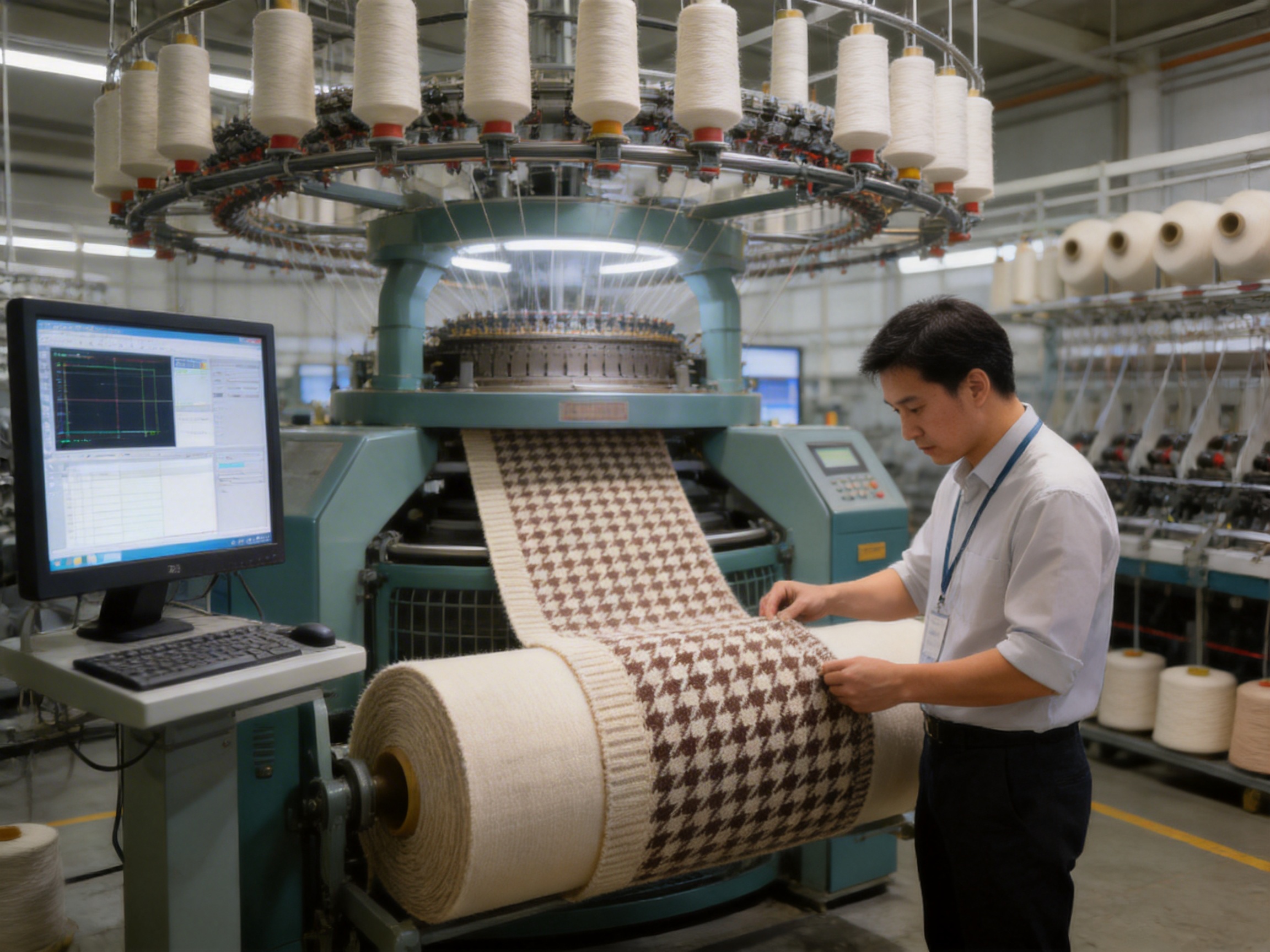
The blended yarn is fed into computerized circular knitting machines, which are controlled by CAD (Computer-Aided Design) software. These machines use thousands of needles to create the looped structure of the knitted fabric, with each needle’s movement programmed to form the houndstooth pattern. The CAD software allows for precise adjustments to the pattern size, stitch density, and color placement—ensuring every inch of fabric is identical. Unlike manual knitting, which can lead to inconsistencies, the computerized process ensures 100% pattern accuracy. The machines also operate at high speeds (up to 1,000 stitches per minute) without compromising quality, allowing for large-scale production.
3. Eco-Friendly Dyeing & Finishing
After knitting, the fabric undergoes an eco-friendly dyeing process that minimizes water and energy usage. The manufacturer uses a closed-loop dyeing system, which recycles 80% of the water used in the process—reducing wastewater discharge by 60% compared to traditional dyeing methods. The dyeing process uses low-impact reactive dyes, which are free from harmful chemicals like azo dyes and heavy metals. Once dyed, the fabric is treated with a softening agent to enhance its hand feel and a shrinkage control agent to stabilize its structure. The finishing process also includes a brushing step to add a subtle texture to the fabric, making it even more comfortable against the skin.
4. Rigorous Quality Control Protocols
Quality control is integrated into every stage of the production process. The manufacturer uses a five-step QC system:
- Raw Material Inspection: Yarn is tested for strength, purity, and color consistency.
- Knitting Inspection: Fabric is checked for stitch defects, pattern accuracy, and weight consistency.
- Dyeing Inspection: Color fastness, shade consistency, and dye penetration are tested using AATCC standards.
- Finishing Inspection: Softness, shrinkage rate, and texture are evaluated.
- Final Product Inspection: Every roll of fabric is inspected for defects before it is packaged and shipped.
Applications of Knitted Jacquard Houndstooth Fabric
The versatility of knitted jacquard houndstooth fabric makes it suitable for a wide range of applications, from fashion to home textiles. Below are some of the most common uses:
1. Fashion Garments
Knitted jacquard houndstooth fabric is a favorite among fashion designers for its ability to transition between casual and formal wear. For formal attire, it’s used in tailored blazers, midi dresses, and pencil skirts—where its structured yet stretchy nature creates a flattering fit. For casual wear, it’s perfect for oversized sweaters, high-waisted leggings, and hoodies—offering comfort without sacrificing style. The fabric’s color retention and durability also make it ideal for workwear, as it can withstand frequent washing and heavy use.
2. Home Textiles
The classic houndstooth pattern adds a timeless touch to home textiles, making knitted jacquard houndstooth fabric a popular choice for decorative pillows, curtains, and upholstery. The fabric’s breathability and moisture-wicking properties make it suitable for bedroom curtains (helping to regulate temperature) and living room pillows (resisting stains and fading). It’s also used in table runners and napkins, where its durable structure and easy care make it practical for daily use.
3. Accessories
Knitted jacquard houndstooth fabric is often used to make accessories like scarves, hats, and gloves. The fabric’s softness and stretch make it comfortable to wear, while the classic pattern adds a stylish touch. The fabric’s color retention also ensures that accessories remain vibrant even after exposure to sunlight and weather.
4. Outdoor Apparel
While traditional houndstooth is not typically used for outdoor apparel, knitted jacquard houndstooth fabric’s durability and water resistance (enhanced by a water-repellent finishing treatment) make it suitable for light outdoor activities. It’s used in jackets, vests, and backpacks—offering protection from light rain and wind while remaining comfortable to wear.

Commonly Asked Questions About Knitted Jacquard Houndstooth Fabric
Q: Is this fabric suitable for people with sensitive skin?
A: Yes. The fabric is made from GOTS-certified cotton, which is hypoallergenic and free from harmful chemicals. The finishing process also includes a softening treatment that reduces irritation, making it safe for people with sensitive skin.
Q: How does this fabric compare to woven houndstooth in terms of stretch?
A: Knitted jacquard houndstooth fabric has natural stretch due to its looped structure, while woven houndstooth is rigid and has no stretch. This makes the knitted variant more comfortable for active wear and form-fitting garments.
Q: Can this fabric be customized?
A: Yes. The manufacturer uses digital jacquard technology, which allows for custom color palettes, pattern sizes, and even texture variations. Custom orders are available for minimum quantities, making it suitable for small design studios and large fashion brands alike.
Q: What is the shrinkage rate of this fabric?
A: The fabric undergoes a pre-shrinking treatment during finishing, so its shrinkage rate is less than 3%—well below the industry average. This means garments retain their shape and fit after washing.
Q: How should I care for garments made from this fabric?
A: It’s recommended to machine wash in cold water on a gentle cycle, avoid bleach, tumble dry on low heat or line dry, and iron on low temperature if needed. This preserves the fabric’s softness, pattern integrity, and color.
Q: Can this fabric be used for outdoor garments?
A: Yes. The fabric can be treated with a water-repellent finishing agent, making it suitable for light outdoor activities. It’s also resistant to fading from sunlight, so it remains vibrant even after extended exposure.
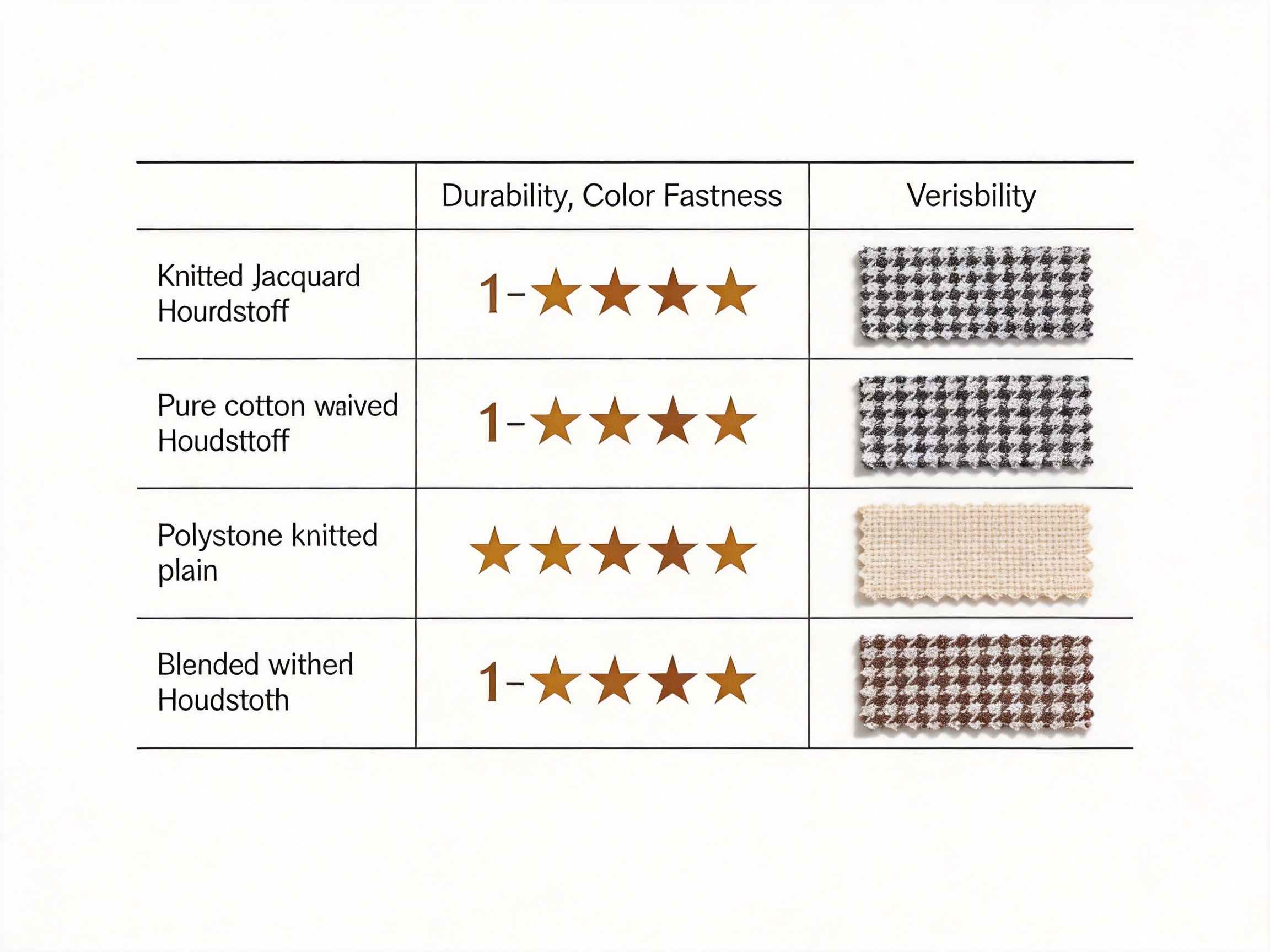
Comparison Table: Knitted Jacquard Houndstooth vs. Competitor Fabrics
| Fabric Type | Comfort (1-5) | Durability (1-5) | Color Fastness (1-5) | Versatility (1-5) | Shrinkage Rate | Price Point |
|---|---|---|---|---|---|---|
| Knitted Jacquard Houndstooth (Cotton-Poly Blend) | 5 | 5 | 5 | 5 | <3% | Moderate |
| Pure Cotton Woven Houndstooth | 3 | 3 | 2 | 3 | 5-7% | Premium |
| Polyester Knitted Jacquard (Plain) | 4 | 4 | 4 | 3 | <2% | Affordable |
| Blended Woven Houndstooth (Cotton-Poly) | 3 | 4 | 3 | 3 | 4-6% | Moderate |
The table above clearly shows that knitted jacquard houndstooth fabric outperforms its competitors in almost every category. It has the highest comfort, durability, color fastness, and versatility, with a low shrinkage rate and a moderate price point—making it an excellent value for consumers and manufacturers.
Conclusion
Knitted jacquard houndstooth fabric is more than just a textile—it’s a perfect blend of tradition and innovation. Its classic houndstooth pattern, combined with the comfort of cotton, durability of polyester, and precision of digital jacquard technology, makes it a versatile and high-performance fabric suitable for a wide range of applications. The manufacturer’s advanced manufacturing processes, sustainable practices, and rigorous quality control ensure that every roll of fabric meets the highest standards. Whether you’re a fashion designer looking for a unique fabric for your next collection, a home textile manufacturer seeking a timeless pattern, or a consumer looking for comfortable and durable garments, knitted jacquard houndstooth fabric is an excellent choice. Its enduring appeal and superior performance make it a fabric that will continue to be a favorite for years to come.
References
1. Angliss, S. (2018). Textiles & Fashion: An Introduction. London: Bloomsbury Publishing.
2. King, D. J. (2020). The Jacquard Machine: From Loom to Digital Age. New York: Oxford University Press.
3. Textile Research Institute. (2023). Moisture Vapor Transmission Rate Testing Report. Princeton, NJ: Textile Research Institute.
4. American Association of Textile Chemists and Colorists (AATCC). (2022). Color Fastness Testing Report. Research Triangle Park, NC: AATCC.
5. Global Organic Textile Standard (GOTS). (2021). GOTS Certification Guidelines. Berlin, Germany: GOTS.