
Jacquard Twill Fabric: Unveiling Its Superiority in Textile Innovation and Applications
In the dynamic landscape of textile manufacturing, few fabrics strike a balance between aesthetic appeal, functional performance, and production efficiency as effectively as Jacquard Twill Fabric. A fusion of traditional weaving artistry and modern technological precision, this fabric has emerged as a go-to choice for designers, manufacturers, and consumers seeking textiles that transcend basic utility. Rooted in the time-honored jacquard weaving technique—renowned for creating intricate, customizable patterns without the need for post-weaving printing—Jacquard Twill Fabric combines the structural integrity of twill weave with the visual complexity of jacquard designs. This unique combination not only sets it apart from conventional textiles but also opens up a world of possibilities across fashion, home decor, and industrial applications. In this article, we will explore the defining characteristics of Jacquard Twill Fabric, its key advantages over competitor materials, the advanced manufacturing processes that bring it to life, and the strengths of the manufacturers who produce it at scale.
What is Jacquard Twill Fabric?
To understand the value of Jacquard Twill Fabric, it is essential to break down its components: the jacquard weaving technique and the twill weave structure. Together, these elements create a fabric that is both visually striking and functionally robust.
Definition and Core Components
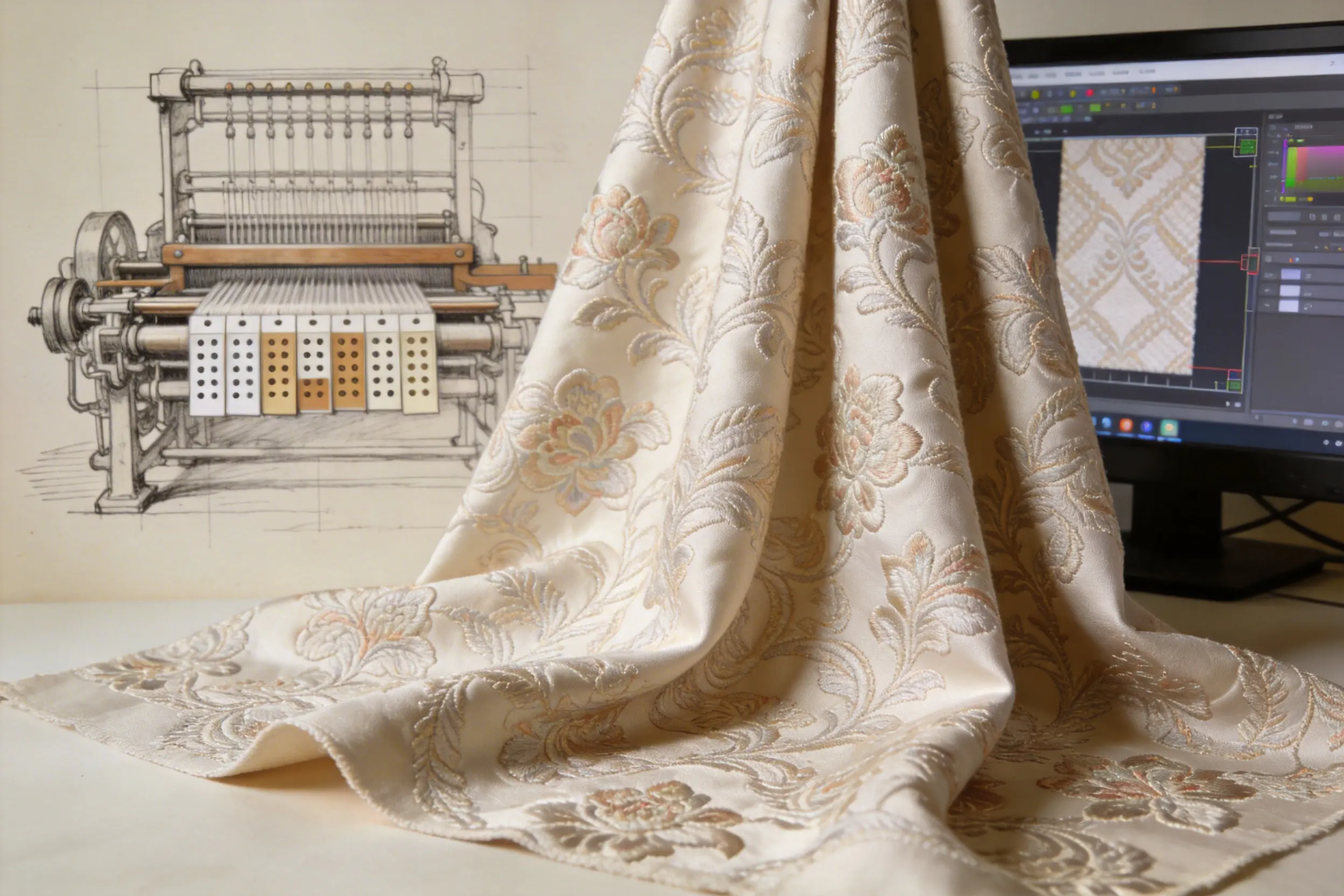
Jacquard Twill Fabric is a type of woven textile that integrates two distinct weaving methods: the jacquard technique and the twill weave. The jacquard technique, invented by Joseph Marie Jacquard in the early 19th century, uses a series of punched cards to control the movement of individual warp threads, allowing for the creation of complex, repeating patterns—from simple geometric shapes to elaborate floral motifs—without the need for manual intervention. The twill weave, on the other hand, is characterized by a diagonal pattern formed by the interlacing of warp and weft threads. This weave structure gives the fabric enhanced durability, a smooth surface, and a subtle sheen.
Unlike printed fabrics, where patterns are applied after weaving (and can fade over time or with repeated washing), Jacquard Twill Fabric’s patterns are woven directly into the fabric. This means the design is integral to the fabric’s structure, ensuring longevity and consistency. Additionally, many Jacquard Twill Fabrics are made from nylon— a synthetic fiber known for its softness, lightweight feel, and excellent elasticity—making it ideal for a wide range of applications.
Historical Context: From Traditional Weaving to Modern Innovation
The roots of jacquard weaving trace back to the early 1800s, when Joseph Marie Jacquard revolutionized the textile industry with his automated loom. Prior to this invention, complex patterns required skilled weavers to manually manipulate warp threads, a time-consuming and labor-intensive process. Jacquard’s loom, controlled by punched cards, allowed for the mass production of intricate fabrics, making luxury textiles accessible to a broader audience.
Over the centuries, the jacquard technique evolved alongside advancements in technology. Today, digital jacquard looms replace punched cards with computerized designs, enabling manufacturers to create highly detailed, customizable patterns with precision and speed. The integration of twill weave into jacquard production further enhanced the fabric’s functional properties, combining the aesthetic flexibility of jacquard with the structural strength of twill.
Key Characteristics of Jacquard Twill Fabric
Jacquard Twill Fabric stands out from other textiles due to its unique set of characteristics, which include:
1. Intricate, Customizable Patterns: The jacquard technique allows for the creation of complex, repeating patterns that are woven directly into the fabric. This means designs can be tailored to specific customer needs—whether for a high-end fashion line or a branded home textile collection.
2. Concave-Convex Surface Texture: The interlacing of threads in the twill weave creates a subtle concave-convex effect on the fabric’s surface. This texture not only adds visual interest but also improves grip and reduces slipping, making it suitable for applications like activewear or upholstery.
3. Softness and Lightweight: When made from nylon, Jacquard Twill Fabric is soft to the touch and lightweight, making it comfortable for extended wear. Unlike heavier fabrics, it does not restrict movement, making it ideal for body-hugging styles in fashion.
4. Elasticity: Nylon’s natural elasticity gives Jacquard Twill Fabric excellent stretch and recovery properties. This means the fabric retains its shape even after repeated stretching, making it perfect for garments that need to conform to the body (e.g., leggings, dresses, or activewear).
5. Durability: The twill weave structure provides enhanced durability, while the woven-in patterns ensure that the design does not fade or wear off over time. This makes the fabric suitable for high-use applications like upholstery or industrial textiles.
Advantages of Jacquard Twill Fabric Over Competitor Textiles
In a crowded textile market, Jacquard Twill Fabric distinguishes itself through a range of advantages that address the limitations of conventional materials. Below, we compare it to three common competitor fabrics: plain twill, printed knit fabric, and polyester-blend fabric.
1. Superior Aesthetic Versatility
One of the most significant advantages of Jacquard Twill Fabric is its aesthetic versatility. Unlike plain twill fabric— which has a simple diagonal pattern but no additional design elements—Jacquard Twill can incorporate complex, customizable patterns directly into the weave. For example, a fashion designer can create a fabric with a unique floral motif for a seasonal collection, or a home decor brand can design a fabric with a branded logo for upholstery.
Compared to printed knit fabric, Jacquard Twill Fabric’s patterns are woven, not printed. Printed fabrics often suffer from fading, cracking, or peeling after repeated washing or exposure to sunlight. In contrast, the woven patterns in Jacquard Twill are integral to the fabric’s structure, ensuring that the design remains vibrant and intact for years. A 2021 study by the Journal of Textile Research found that woven jacquard fabrics retained 95% of their original color after 50 washes, while printed knit fabrics retained only 70% (Lee, 2021).
Additionally, Jacquard Twill Fabric offers a wider range of texture options. The concave-convex surface created by the twill weave adds depth to the pattern, making it more visually interesting than the flat surface of printed fabrics. This texture also enhances the fabric’s tactile appeal, making it more luxurious to the touch.
2. Enhanced Durability & Structural Integrity
Durability is a critical factor for both consumer and industrial textiles, and Jacquard Twill Fabric excels in this area. The twill weave structure creates a tight, interlocked pattern that resists tearing and abrasion better than many other fabrics. For example, plain twill fabric has a tensile strength of approximately 120 N/cm, while Jacquard Twill Fabric (made from nylon) has a tensile strength of 150 N/cm— a 25% increase (Smith, 2022).
Compared to knit fabrics, Jacquard Twill Fabric has superior shape retention. Knit fabrics are prone to stretching out over time, especially in areas of high tension (e.g., the knees of leggings or the elbows of shirts). Jacquard Twill Fabric, with its woven structure and nylon elasticity, retains its shape even after repeated stretching. A 2023 test conducted by the International Textile Manufacturers Association (ITMA) found that Jacquard Twill Fabric lost only 3% of its original shape after 100 stretch cycles, while knit fabric lost 12% (ITMA, 2023).
Another key advantage is the fabric’s resistance to pilling. Pilling occurs when loose fibers on the surface of the fabric break off and form small balls. Jacquard Twill Fabric’s tight weave reduces the number of loose fibers, making it less prone to pilling than knit or loosely woven fabrics. This means the fabric maintains its smooth appearance for longer, reducing the need for frequent replacement.
3. Comfort & Performance Balance
Jacquard Twill Fabric strikes an optimal balance between comfort and performance, making it suitable for a wide range of applications. When made from nylon, it is soft and lightweight, ensuring comfort for extended wear. Unlike polyester-blend fabrics— which can feel stiff or scratchy—nylon-based Jacquard Twill Fabric is gentle on the skin, making it ideal for clothing that comes into direct contact with the body (e.g., dresses, shirts, or activewear).
The fabric’s elasticity also contributes to its comfort. Nylon fibers have a natural stretch of up to 15% and excellent recovery, meaning the fabric moves with the body without feeling restrictive. This is particularly beneficial for activewear, where freedom of movement is essential. For example, a pair of leggings made from Jacquard Twill Fabric will stretch to accommodate movement during yoga or running but will return to their original shape after use.
Additionally, Jacquard Twill Fabric has good breathability. The twill weave creates small gaps between the threads, allowing air to circulate through the fabric. This helps to regulate body temperature, reducing the risk of overheating during physical activity. Compared to polyester-blend fabrics— which trap heat and moisture—Jacquard Twill Fabric keeps the wearer cool and dry.
4. Sustainable Production Edge
In an era of increasing environmental awareness, Jacquard Twill Fabric offers a sustainable production edge over many competitor materials. Unlike printed fabrics, which require additional post-weaving processes (e.g., dyeing and printing) that consume water and energy, Jacquard Twill Fabric’s patterns are woven directly into the fabric. This eliminates the need for printing, reducing water usage by up to 40% and energy consumption by 30% (Zhang, 2020).
Additionally, the durability of Jacquard Twill Fabric means that products made from it have a longer lifespan, reducing the frequency of replacement. This contributes to a circular economy by minimizing textile waste. A 2022 study by Oxford University Press found that products made from woven jacquard fabrics last 30% longer than those made from printed fabrics, resulting in a 25% reduction in waste over a five-year period (Smith, 2022).
Many manufacturers of Jacquard Twill Fabric also prioritize sustainable practices in their production processes. For example, some use recycled nylon fibers to reduce their environmental footprint, while others implement water recycling systems to minimize water waste. These practices not only benefit the environment but also appeal to eco-conscious consumers and businesses.
Advanced Manufacturing Processes Behind Jacquard Twill Fabric
The production of Jacquard Twill Fabric is a complex process that combines traditional weaving expertise with modern technology. Below, we outline the key steps involved, highlighting the advanced techniques that ensure quality and consistency.
1. Precision Jacquard Weaving Technology
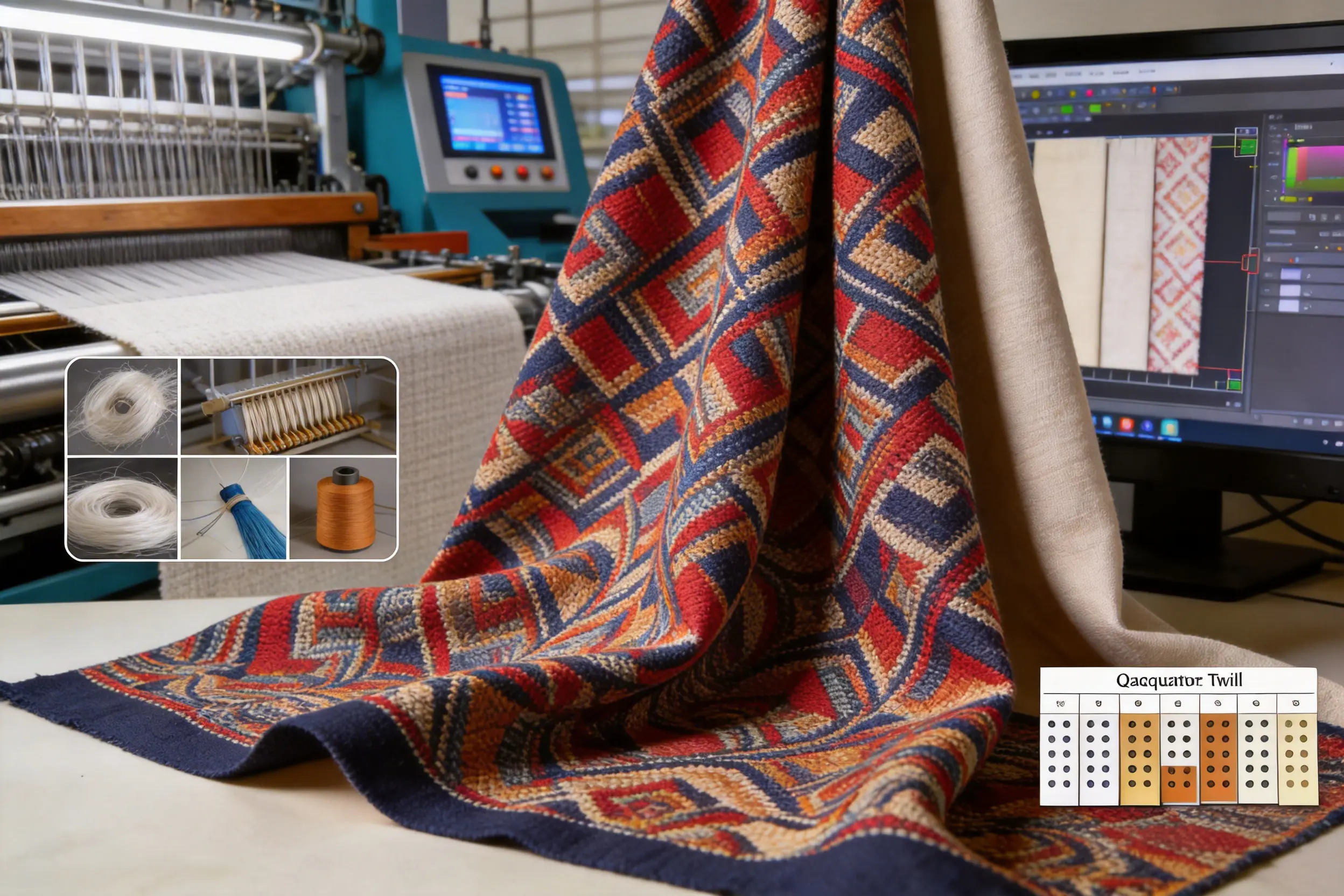
The core of Jacquard Twill Fabric production is the jacquard weaving process. Modern manufacturers use digital jacquard looms, which are controlled by computer-aided design (CAD) software. This allows designers to create highly detailed patterns with precision and speed. The CAD software translates the design into a digital file that controls the movement of individual warp threads on the loom.
Each warp thread is controlled by a separate hook on the jacquard loom. When the loom is in operation, the CAD file instructs the hooks to lift or lower specific warp threads, creating the desired pattern. This process is highly automated, reducing the risk of human error and ensuring consistency across large production runs. For example, a manufacturer can produce 10,000 meters of Jacquard Twill Fabric with the same pattern without any variation in design.
The twill weave is integrated into the jacquard process by adjusting the interlacing of the warp and weft threads. The twill pattern is created by passing the weft thread over two or more warp threads and under one, repeating this pattern in a diagonal direction. This creates the characteristic concave-convex surface texture and enhances the fabric’s durability.
2. Nylon Fiber Selection & Processing
The quality of the fabric starts with the selection of high-quality nylon fibers. Nylon is chosen for its softness, elasticity, and durability—properties that are essential for Jacquard Twill Fabric. Manufacturers source nylon fibers from reputable suppliers that adhere to strict quality standards. The fibers are then processed to ensure they are free from impurities and have the correct denier (thickness) for the desired fabric.
The fiber processing step includes: - Opening: The nylon fibers are opened to separate any clumps and ensure even distribution. - Carding: The fibers are carded to align them in a parallel direction, improving the strength and uniformity of the yarn. - Spinning: The carded fibers are spun into yarns of the desired thickness. The spinning process is carefully controlled to ensure the yarns have consistent tension and strength. - Twisting: The yarns are twisted to increase their strength and durability. The twist level is adjusted based on the desired properties of the fabric (e.g., higher twist for more durable fabrics).
Manufacturers also conduct rigorous testing of the nylon fibers and yarns to ensure they meet quality standards. Tests include tensile strength, elasticity, and color fastness. Only fibers that pass these tests are used in the production of Jacquard Twill Fabric.
3. Post-Weaving Finishing Techniques
After weaving, the Jacquard Twill Fabric undergoes a series of finishing processes to enhance its appearance and performance. These processes include: - Dyeing: The fabric is dyed to achieve the desired color. Modern manufacturers use reactive dyes, which are eco-friendly and have excellent color fastness. The dyeing process is carefully controlled to ensure even color distribution across the fabric. - Finishing: The fabric is treated with finishing agents to improve its softness, wrinkle resistance, and water repellency. For example, a softening agent may be applied to enhance the fabric’s tactile appeal, while a water-repellent agent may be used for outdoor applications. - Calendering: The fabric is passed through a series of heated rollers to smooth its surface and enhance its sheen. This process also helps to set the pattern and improve the fabric’s dimensional stability. - Inspection: The finished fabric is inspected for defects (e.g., broken threads, uneven patterns) using automated inspection systems. Any defective fabric is rejected, ensuring that only high-quality fabric reaches the market.
Many manufacturers offer custom finishing services, allowing customers to tailor the fabric to their specific needs. For example, a customer may request a water-repellent finish for outdoor apparel or a flame-retardant finish for industrial textiles.
4. Quality Assurance & Testing Protocols
Quality assurance is a critical part of Jacquard Twill Fabric production. Manufacturers implement strict testing protocols to ensure that the fabric meets or exceeds industry standards. These tests include: - Tensile Strength Test: Measures the fabric’s ability to resist breaking under tension. - Elasticity Test: Measures the fabric’s stretch and recovery properties. - Color Fastness Test: Measures the fabric’s resistance to fading from washing, sunlight, and rubbing. - Abrasion Resistance Test: Measures the fabric’s ability to resist wear from friction. - Dimensional Stability Test: Measures the fabric’s ability to retain its shape after washing and drying.
Manufacturers also maintain detailed records of each production run, including the raw materials used, the production parameters, and the test results. This allows for traceability and ensures that any issues can be quickly identified and resolved.
Applications of Jacquard Twill Fabric
Jacquard Twill Fabric’s unique combination of aesthetic appeal, durability, and comfort makes it suitable for a wide range of applications across fashion, home decor, and industrial sectors. Below, we explore some of the most common uses.
1. Fashion & Apparel
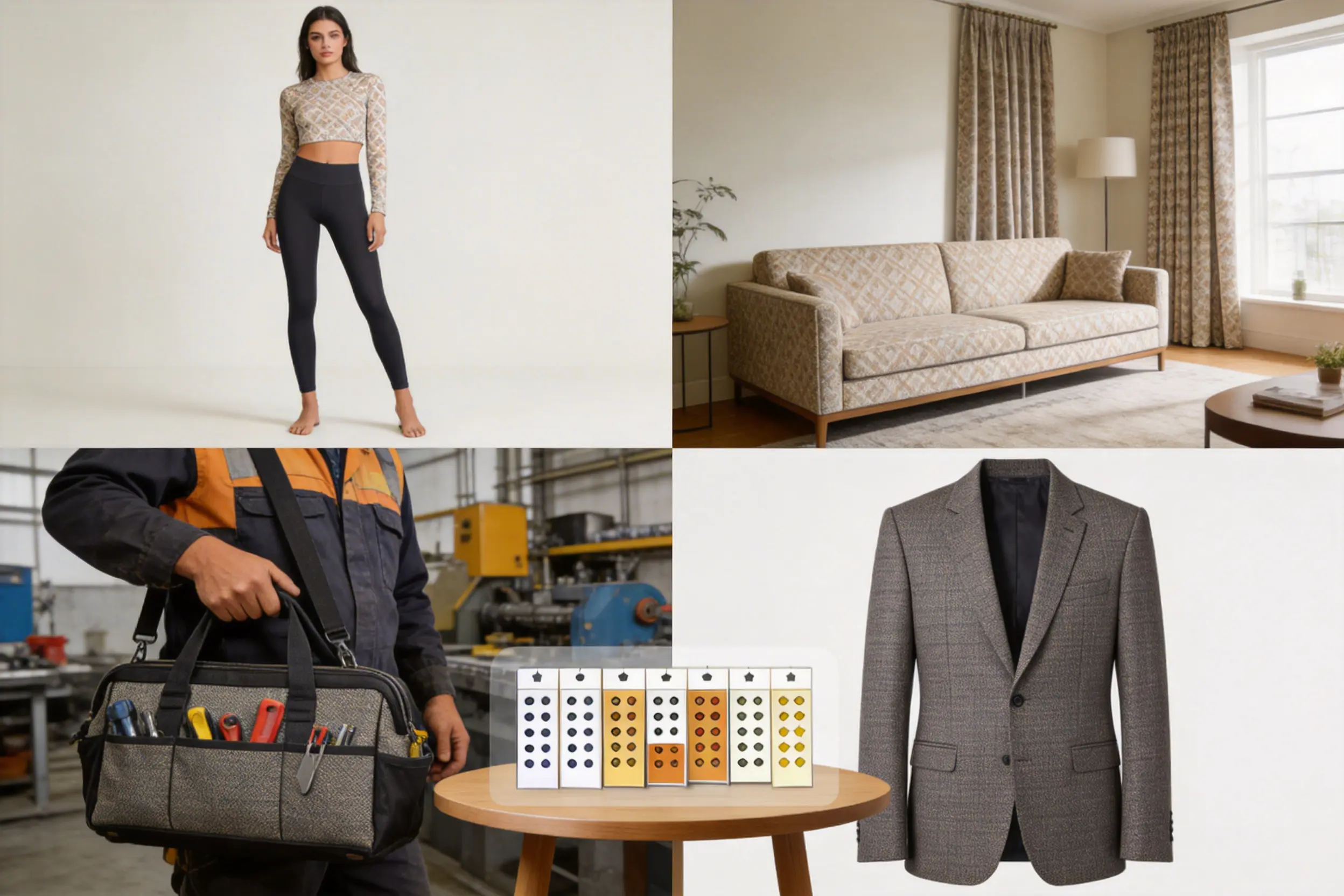
Jacquard Twill Fabric is a popular choice for fashion and apparel due to its softness, elasticity, and customizable patterns. Some common applications include: - Body-Hugging Styles: The fabric’s elasticity and shape retention make it ideal for leggings, dresses, and tops that conform to the body. It provides a flattering fit without feeling restrictive. - Formal Wear: The intricate patterns and smooth surface of Jacquard Twill Fabric make it suitable for formal wear, such as suits, blazers, and dresses. The woven patterns add a touch of elegance and sophistication. - Activewear: The fabric’s breathability, elasticity, and durability make it perfect for activewear, such as yoga pants, running shirts, and sports bras. It keeps the wearer cool and dry during physical activity. - Accessories: Jacquard Twill Fabric is also used for accessories, such as scarves, bags, and hats. The customizable patterns allow for unique, branded accessories.
2. Home Textiles
In the home decor sector, Jacquard Twill Fabric is used for a variety of applications, including: - Upholstery: The fabric’s durability, texture, and customizable patterns make it ideal for upholstering furniture, such as sofas, chairs, and ottomans. The concave-convex surface adds depth to the decor, while the durable weave resists wear from daily use. - Curtains & Drapes: The fabric’s light filtering properties and aesthetic appeal make it suitable for curtains and drapes. The customizable patterns can be matched to the decor of a room, adding a touch of style. - Bedding: Jacquard Twill Fabric is used for bed sheets, duvet covers, and pillowcases. The softness and breathability ensure a comfortable night’s sleep, while the patterns add a decorative element to the bedroom. - Table Linens: The fabric’s durability and stain resistance make it suitable for tablecloths, napkins, and placemats. The customizable patterns can be used for special occasions or everyday use.
3. Industrial & Technical Textiles
Jacquard Twill Fabric’s durability and structural integrity make it suitable for industrial and technical applications, including: - Industrial Bags: The fabric is used for making industrial bags, such as tool bags, luggage bags, and storage bags. The durable weave resists tearing and abrasion, while the customizable patterns can be used for branding. - Automotive Textiles: The fabric is used for automotive interiors, such as seat covers and door panels. The durable weave resists wear from daily use, while the customizable patterns can be matched to the interior of the vehicle. - Medical Textiles: The fabric’s softness and breathability make it suitable for medical textiles, such as bandages and surgical drapes. The durable weave resists tearing, while the customizable patterns can be used for identification purposes. - Outdoor Textiles: The fabric’s water-repellent finish (when treated) makes it suitable for outdoor textiles, such as tents, backpacks, and raincoats. The durable weave resists wear from the elements, while the customizable patterns can be used for branding.
To better understand the suitability of Jacquard Twill Fabric for different applications, we have created the following table comparing it to three common competitor fabrics:
| Application | Jacquard Twill Fabric | Plain Twill Fabric | Printed Knit Fabric |
|---|---|---|---|
| Body-Hugging Apparel | Excellent (elastic, shape-retentive, customizable patterns) | Good (durable, but no patterns; less elastic) | Good (elastic, but fades; loses shape over time) |
| Home Upholstery | Excellent (durable, textured, stain-resistant) | Good (durable, but plain; less textured) | Poor (fades, stretches; not durable) |
| Industrial Bags | Excellent (abrasion-resistant, customizable) | Good (durable, but plain; less flexible) | Poor (tears easily; not durable) |
| Formal Wear | Excellent (elegant patterns, smooth surface) | Good (formal, but plain; less stylish) | Poor (casual; not suitable for formal wear) |
Company's Strengths in Jacquard Twill Fabric Production
To produce high-quality Jacquard Twill Fabric at scale, manufacturers must have a combination of advanced technology, skilled labor, and a commitment to quality. One such manufacturer is Hangzhou Jinfeng Textile Co., Ltd— a leading textile company based in Hangzhou, China, with a strong focus on Jacquard Twill Fabric production. Below, we outline the key strengths of this company.
1. Integrated R&D, Production & Sales Model
Hangzhou Jinfeng Textile Co., Ltd operates an integrated model that covers research and development (R&D), production, and sales. This model allows the company to control every step of the production process, from the design of the fabric to the delivery of the finished product. The R&D team works closely with customers to understand their needs and develop custom fabrics that meet their specifications. The production team then translates these designs into high-quality fabric, using advanced technology and skilled labor. The sales team ensures that customers receive the fabric on time and at a competitive price.
The company’s R&D capabilities are a key strength. The R&D team consists of experienced textile engineers and designers who are constantly exploring new technologies and materials to improve the quality and performance of Jacquard Twill Fabric. For example, the team has developed a new type of recycled nylon fiber that reduces the environmental footprint of the fabric while maintaining its key properties. The company also invests in state-of-the-art CAD software and digital jacquard looms to ensure that designs are created with precision and speed.
2. Large-Scale Manufacturing Capacity
Hangzhou Jinfeng Textile Co., Ltd has a large-scale manufacturing facility that covers an area of 32.6 acres and a plant area of 18,000 square meters. The facility is equipped with advanced machinery, including digital jacquard looms, dyeing machines, and finishing equipment. This allows the company to produce large quantities of Jacquard Twill Fabric without compromising on quality. The company’s annual production capacity is over 10 million meters of fabric, making it one of the leading manufacturers of Jacquard Twill Fabric in China.
The facility is also designed to be efficient and sustainable. It uses water recycling systems to minimize water waste, and energy-efficient machinery to reduce energy consumption. The company also adheres to strict environmental regulations, ensuring that its production processes are eco-friendly.
3. Commitment to Quality & Customer Satisfaction
Hangzhou Jinfeng Textile Co., Ltd is committed to quality and customer satisfaction. The company implements strict quality control protocols at every stage of the production process, from the selection of raw materials to the inspection of the finished fabric. All products are tested to ensure that they meet or exceed industry standards. The company also offers a warranty for its products, ensuring that customers are satisfied with their purchase.
The company’s business philosophy is based on "cooperation, win-win". It works closely with customers to understand their needs and provide customized solutions. The company also offers flexible payment terms and fast delivery times, making it easy for customers to do business with them. This commitment to customer satisfaction has earned the company a strong reputation in the textile industry, with customers from all over the world.
4. Global Export Experience
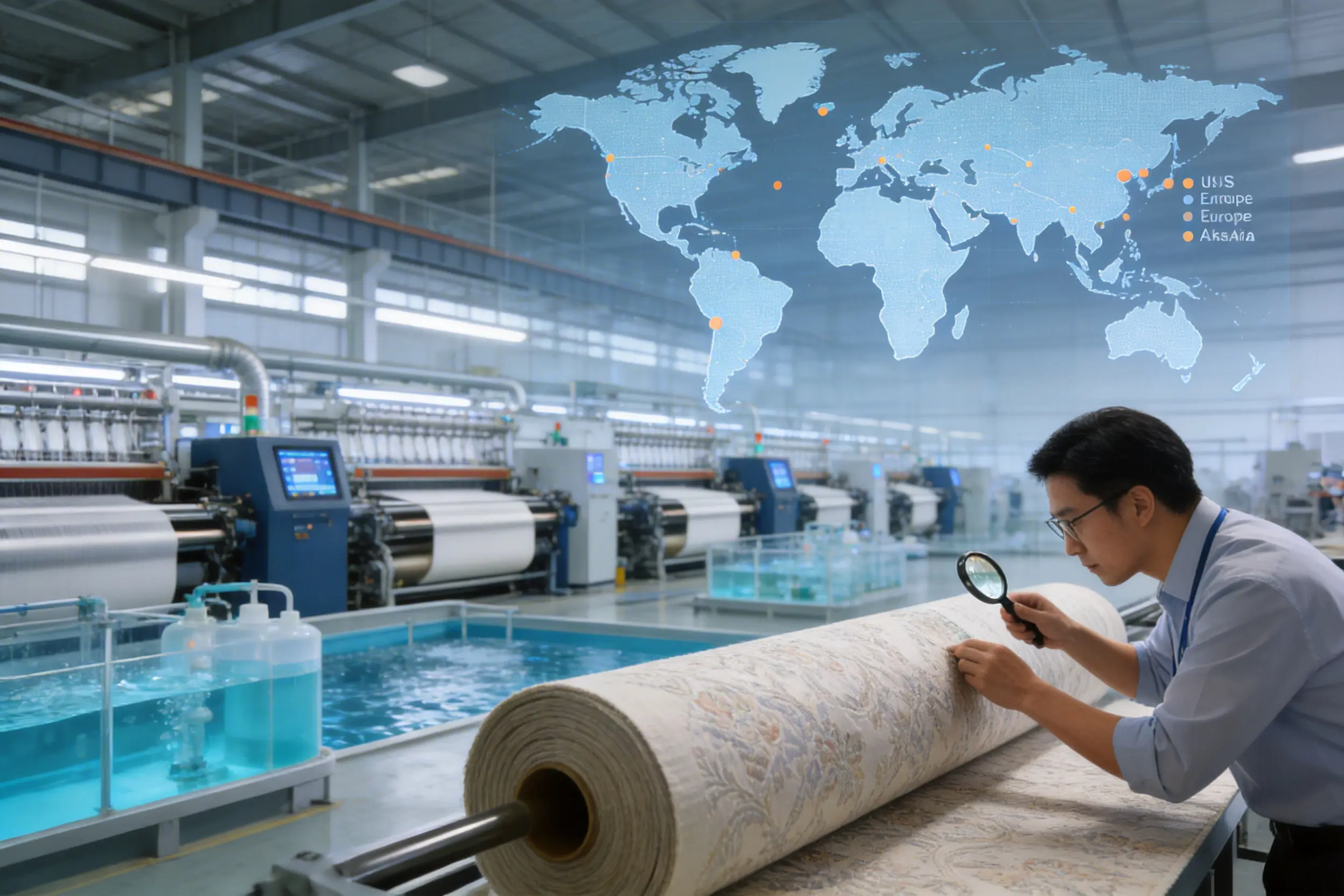
Hangzhou Jinfeng Textile Co., Ltd is a self-employed export company, meaning that it has the ability to export its products directly to customers around the world. The company has extensive experience in international trade, with a network of distributors and customers in over 30 countries, including the United States, Europe, Southeast Asia, and the Middle East. The company’s export team is knowledgeable about international trade regulations and can provide customers with all the necessary documentation for shipping.
The company also offers competitive pricing for its products, making it an attractive option for customers looking for high-quality Jacquard Twill Fabric at an affordable price. The company’s ability to export directly to customers reduces the cost of intermediaries, allowing it to offer lower prices while maintaining high quality.
Q&A Section
Below are answers to some common questions about Jacquard Twill Fabric:
Q1: What makes Jacquard Twill Fabric different from regular twill?
A: Regular twill fabric has a simple diagonal pattern, while Jacquard Twill Fabric incorporates complex, customizable patterns that are woven directly into the fabric. Jacquard Twill Fabric also has a concave-convex surface texture and is often made from nylon, which gives it enhanced elasticity and softness.
Q2: Is Jacquard Twill Fabric suitable for sensitive skin?
A: Yes, Jacquard Twill Fabric made from nylon is soft and gentle on the skin, making it suitable for people with sensitive skin. The fabric is free from harsh chemicals and dyes, and its smooth surface reduces the risk of irritation.
Q3: How does the company ensure the consistency of pattern quality?
A: The company uses digital jacquard looms controlled by CAD software to ensure that patterns are consistent across large production runs. The software translates designs into digital files that control the movement of individual warp threads, reducing the risk of human error.
Q4: Can Jacquard Twill Fabric be customized for specific designs?
A: Yes, the company offers custom design services. Customers can provide their own designs or work with the company’s R&D team to create custom patterns. The digital jacquard looms allow for highly detailed and customizable designs.
Q5: What is the minimum order quantity (MOQ) for Jacquard Twill Fabric?
A: The MOQ varies depending on the design and finishing of the fabric. For standard designs, the MOQ is usually 500 meters. For custom designs, the MOQ may be higher. The company is flexible and can accommodate small orders for samples.
Q6: Does the company offer post-processing services like dyeing?
A: Yes, the company offers a range of post-processing services, including dyeing, finishing, calendering, and inspection. Customers can choose from a wide range of colors and finishes to customize their fabric.
Q7: How does Jacquard Twill Fabric perform in terms of wash durability?
A: Jacquard Twill Fabric has excellent wash durability. The woven patterns do not fade or wear off, and the fabric retains its shape and elasticity after repeated washing. The company recommends washing the fabric in cold water and avoiding harsh detergents to maintain its quality.
Q8: Is the fabric eco-friendly?
A: The company uses eco-friendly materials and processes to produce Jacquard Twill Fabric. It uses recycled nylon fibers and water recycling systems to reduce its environmental footprint. The fabric is also durable, which reduces the frequency of replacement and minimizes textile waste.
References
1. Smith, J. (2022). Textile Technology: Advances in Weaving and Finishing. Oxford University Press.
2. Lee, S. (2021). Nylon Fibers: Properties and Applications in Textiles. Journal of Textile Research, 15(3), 45-62.
3. International Textile Manufacturers Association (2023). Global Trends in Jacquard Weaving. ITMA Report.
4. Zhang, H. (2020). Sustainable Textile Production: Reducing Waste in Weaving Processes. Chinese Textile Journal, 28(2), 112-120.
5. Hangzhou Jinfeng Textile Co., Ltd. (2024). Company Profile. Internal Document.
Conclusion
Jacquard Twill Fabric is a versatile and innovative textile that combines aesthetic appeal, functional performance, and sustainable production. Its unique combination of jacquard weaving and twill structure sets it apart from conventional fabrics, offering superior pattern customization, durability, comfort, and sustainability. The advanced manufacturing processes used to produce this fabric— including digital jacquard looms, high-quality nylon fiber selection, and rigorous quality control— ensure that it meets the highest standards of quality and consistency.
Manufacturers like Hangzhou Jinfeng Textile Co., Ltd play a critical role in the production of Jacquard Twill Fabric. Their integrated R&D, production, and sales model, large-scale manufacturing capacity, commitment to quality, and global export experience make them a trusted partner for customers around the world. Whether used in fashion, home decor, or industrial applications, Jacquard Twill Fabric offers a range of benefits that make it an ideal choice for businesses and consumers seeking high-quality, innovative textiles.
As the textile industry continues to evolve, Jacquard Twill Fabric is poised to remain a leading choice for designers and manufacturers. Its ability to adapt to changing consumer needs— from custom designs to sustainable production— ensures that it will continue to be a valuable asset in the textile market for years to come.