
Jacquard Twill Fabric for Flexible, Lightweight, and Textured Apparel
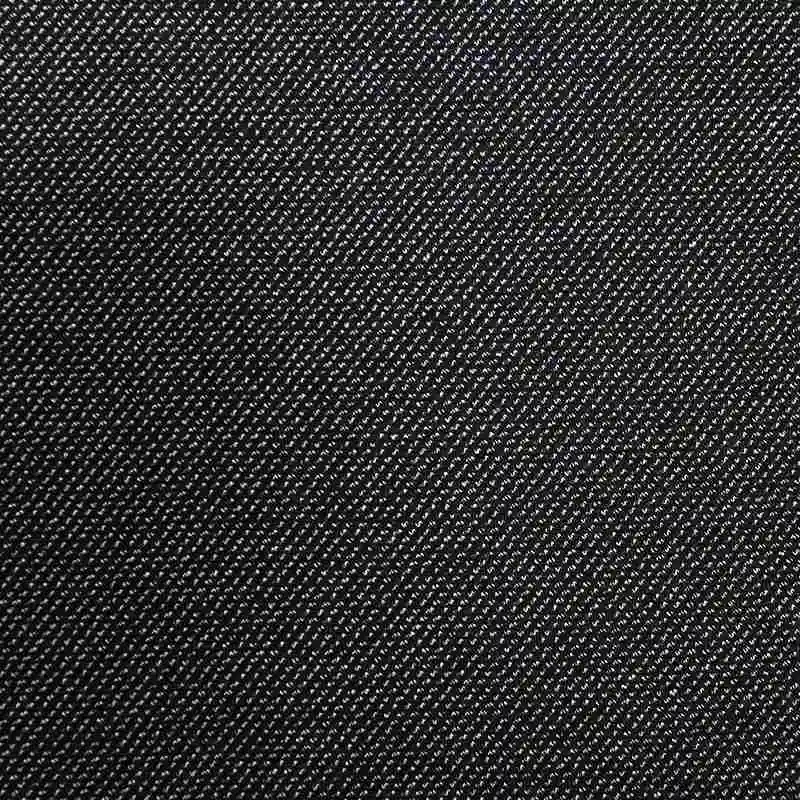
Jacquard Twill Fabric is a refined textile solution designed for apparel makers, fabric buyers, garment developers, and sourcing teams that require a material with visible texture, stable performance, and flexible styling potential. It combines the expressive patterning capacity of jacquard construction with the diagonal character and structural reliability associated with twill effects. The result is a fabric that can deliver a concave-convex surface, a soft hand feel, good elasticity, and a modern appearance suitable for body-hugging garments, fashion collections, casualwear, sports-inspired styles, and customized clothing applications.
As a product in the knitted jacquard fabric category, this Jacquard Twill Fabric offers more than surface decoration. It provides a practical balance between design flexibility and performance. Its texture is created by the interlacing and arrangement of yarns, allowing the pattern to become part of the fabric structure rather than a simple surface print. This feature gives the material a more dimensional look, stronger visual identity, and a tactile quality that many flat fabrics cannot provide.
Product Overview
Jacquard Twill Fabric is often made with nylon-based yarns and can also be developed with blended textile concepts depending on end-use requirements. Nylon jacquard fabrics are known for being soft, lightweight, and resilient. These qualities make the fabric particularly suitable for garments that need to follow body movement without feeling stiff or heavy. The fabric’s elasticity supports close-fitting silhouettes while maintaining wearer comfort.
The defining feature of this fabric is its jacquard surface. Through controlled yarn interlacing, the fabric forms a raised and recessed texture, creating a concave-convex effect. Unlike printed patterns, jacquard patterns are built into the material. This makes the surface more integrated, durable, and visually sophisticated. The twill-inspired structure adds directional texture and a sense of depth, giving garments a premium appearance.
For fashion designers, the value of Jacquard Twill Fabric lies in its adaptability. The pattern can be customized, allowing brands to create exclusive textures, seasonal designs, geometric motifs, subtle repeats, or more expressive surface effects. For garment manufacturers, the value lies in its balance of softness, lightweight comfort, elasticity, and production versatility. For buyers, the value lies in a fabric that can serve multiple market segments while still offering differentiation from ordinary knitted or flat woven materials.
Why Jacquard Twill Fabric Stands Out
In today’s textile market, fabric buyers often compare materials based on appearance, comfort, performance, production stability, and cost-effectiveness. Jacquard Twill Fabric stands out because it addresses these factors together. It is not only decorative; it is functional. It is not only flexible; it is structured. It is not only customizable; it can be produced through systematic manufacturing processes that support repeatability and quality control.
Compared with plain knitted fabric, Jacquard Twill Fabric has a stronger visual effect. A plain surface may be comfortable, but it can appear too simple for fashion products that require distinction. The jacquard texture adds depth and complexity without relying on heavy post-processing. Compared with ordinary printed fabric, the pattern of jacquard fabric is more structural and tactile. Printed designs sit on the surface, while jacquard designs are formed through the fabric itself.
Compared with heavier woven twill fabrics, this knitted jacquard twill-style fabric can feel softer and lighter. It can be better suited for garments where flexibility is important. Traditional woven twill is valued for strength and diagonal texture, but it may not provide the same stretch and body-conforming comfort. Jacquard Twill Fabric offers a refined alternative for brands seeking textured aesthetics with the benefits of knitted flexibility.
Another competitive advantage is customization. Because jacquard structures allow patterns to be developed through controlled yarn placement and machine programming, buyers can request tailored designs. This helps apparel brands create exclusive fabric identities. In a competitive clothing market, fabric uniqueness can support brand differentiation, product storytelling, and consumer recognition.
Key Product Characteristics
The fabric’s most important characteristics include a textured jacquard surface, a lightweight hand feel, elasticity, softness, and pattern flexibility. These features work together to make the fabric useful for garments that need both comfort and style. A garment made from this material can look more dimensional than one made with plain fabric while still feeling wearable in daily use.
The concave-convex surface contributes to the fabric’s rich visual character. Light interacts with the raised and recessed areas, creating subtle shadow effects. This makes the fabric appear dynamic even when the color is simple. For brands that prefer understated elegance, a tone-on-tone jacquard can deliver sophistication without excessive color contrast. For bolder styles, the structure can support more noticeable pattern effects.
Softness is another essential quality. Nylon jacquard fabrics are often smooth and comfortable against the skin. This is important for body-hugging garments, active-inspired clothing, dresses, tops, and fashion pieces where direct skin contact may occur. A fabric may look attractive, but if it lacks comfort, it will not perform well in the finished garment. Jacquard Twill Fabric is designed to support both appearance and wearability.
Elasticity improves garment fit. Clothing made from elastic fabric can follow body movement more naturally, reducing restriction and improving comfort. This is especially valuable in fitted styles, stretch fashion garments, performance-inspired apparel, and modern casualwear. The material can support silhouettes that require shape retention and flexibility.
Lightweight construction enhances seasonal versatility. Heavy textured fabric may be impressive but can limit application. A lighter jacquard fabric offers more design freedom, especially for garments that need drape, comfort, and easy movement. Buyers can use it for a wider range of products while maintaining a premium surface effect.
Product Advantages Over Common Alternatives
Jacquard Twill Fabric provides several advantages when compared with common textile alternatives. These advantages are particularly important for buyers who are selecting fabric for garments that must combine market appeal with production practicality.
| Comparison Item | Jacquard Twill Fabric | Common Alternative | Advantage |
|---|---|---|---|
| Surface Appearance | Textured concave-convex jacquard effect | Flat plain fabric or printed surface | More dimensional, premium, and distinctive |
| Pattern Durability | Pattern integrated into fabric structure | Printed pattern applied to surface | More structural and less dependent on surface printing |
| Comfort | Soft, lightweight, and elastic | Heavier woven twill or rigid fabric | Better for flexible and body-hugging garments |
| Customization | Patterns can be developed through jacquard design | Limited to standard textures or prints | Supports exclusive fabric identity |
| Garment Versatility | Suitable for fashion, fitted garments, and casualwear | Often limited by stiffness, weight, or simple appearance | Broader application potential |
One of the strongest advantages is the integrated pattern. Buyers increasingly seek materials that communicate quality at first glance. A structured jacquard surface can immediately create a more refined impression than a flat textile. This helps finished garments stand out on shelves, in showrooms, and in digital product photography.
Another advantage is the relationship between texture and comfort. Some textured fabrics achieve visual depth by becoming heavy or rigid. Jacquard Twill Fabric can provide texture while remaining soft and lightweight. This balance is important because today’s consumers expect garments to be both stylish and comfortable. A fabric that looks good but feels restrictive is less likely to satisfy long-term wearers.
Customization also provides a commercial advantage. In apparel production, using the same generic fabric as competitors can make a garment difficult to differentiate. Jacquard Twill Fabric allows brands to develop pattern concepts that align with their identity. This can include subtle branding-free motifs, contemporary geometry, traditional-inspired textures, or functional surface designs.
Design Possibilities and Aesthetic Value
The design potential of Jacquard Twill Fabric is broad because jacquard technology enables patterns to be built through the textile structure. This is especially valuable for fashion brands that want to create texture without relying on additional printing, coating, or embroidery. The fabric itself becomes the design language.
A twill-inspired jacquard surface can create diagonal movement, giving the fabric a sense of rhythm. This directional texture can make garments look slimmer, sharper, or more tailored depending on the pattern scale. In monochrome designs, the texture may be subtle and elegant. In contrast designs, the pattern can become a more visible design feature.
The fabric can be used for modern tops, dresses, skirts, fitted garments, lightweight jackets, fashion panels, and decorative garment components. It may also work in styles where the designer wants to combine comfort with a structured visual effect. Because the fabric is elastic and lightweight, it can serve both aesthetic and practical purposes.
Designers can experiment with pattern density, motif size, surface height, and yarn effects. Small-scale jacquards may create a refined technical texture suitable for minimalist fashion. Larger patterns may be used for statement garments. Twill-like effects can be combined with geometric layouts to create a modern industrial look. Organic motifs can soften the fabric and make it suitable for feminine fashion pieces.
For garment developers, this flexibility reduces the need for multiple decorative processes. Instead of purchasing a plain base fabric and then adding printing or surface embellishment, the jacquard structure can deliver visual impact from the start. This can simplify product development and improve consistency when properly managed through manufacturing controls.
Comfort and Wearability
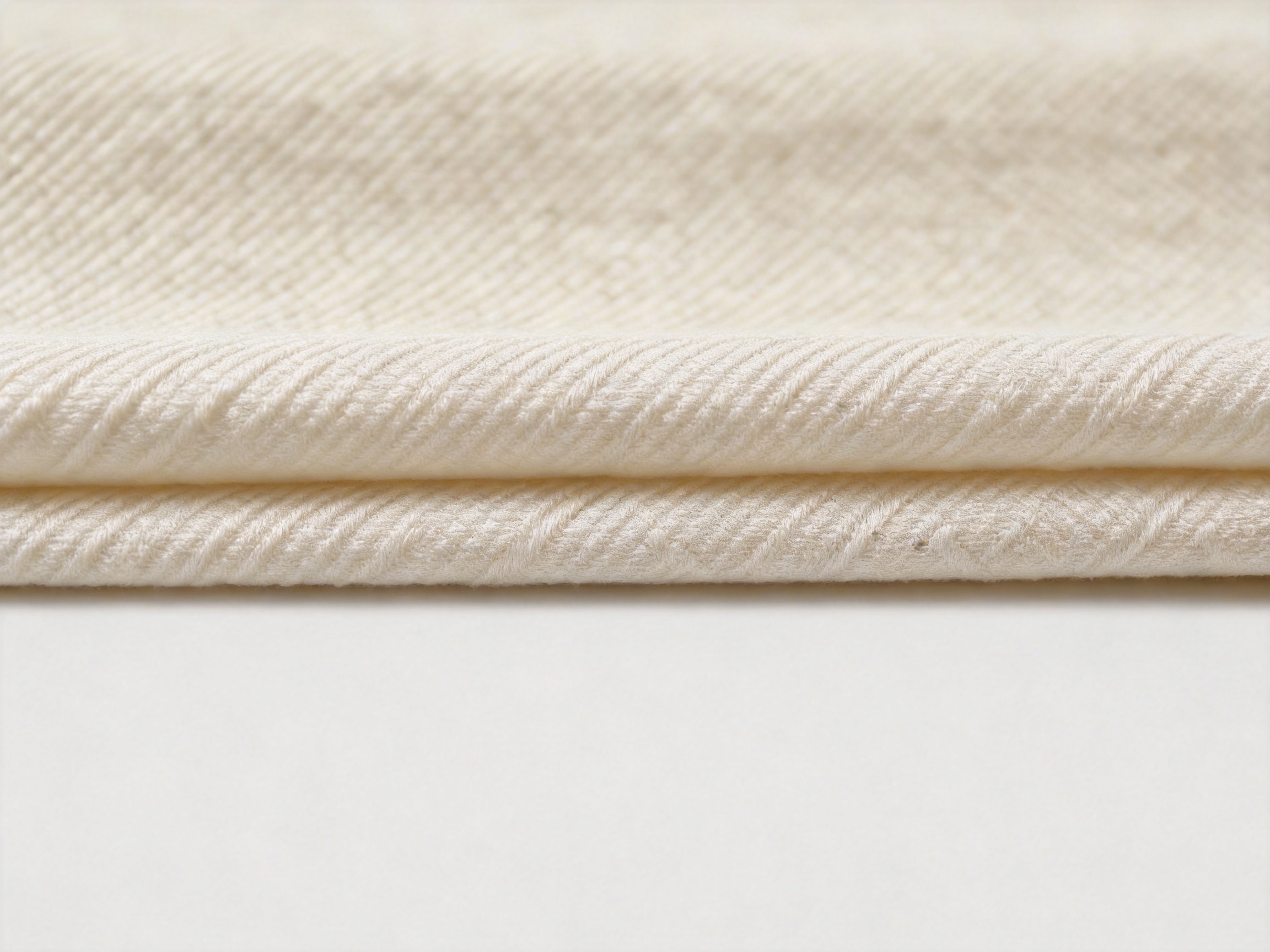
Comfort is a central reason why Jacquard Twill Fabric is attractive for apparel. Nylon jacquard fabrics are often soft and smooth, making them suitable for clothing that touches the skin. The lightweight character helps reduce fatigue during wear, and elasticity supports natural movement. These properties are important for modern consumers who want clothing that fits well without sacrificing comfort.
Body-hugging styles require fabrics that can stretch, recover, and maintain shape. A fabric that does not stretch enough may feel tight, while a fabric with poor recovery may become loose after use. Jacquard Twill Fabric is well suited to fitted designs because its knitted construction can provide flexibility. When engineered and finished correctly, the fabric can support stable fit and attractive garment shaping.
The textured surface may also contribute to a more substantial hand feel without requiring excessive weight. This is useful for garments that should look structured but not feel heavy. A textured fabric can give a garment visual body, helping it appear more refined. At the same time, the lightweight base supports wearer comfort.
Comfort also depends on fabric finishing. Finishing processes can influence softness, surface smoothness, dimensional stability, and overall handle. A manufacturer with integrated production and finishing experience can better manage these qualities. This is one of the reasons why production capability matters as much as yarn selection or fabric structure.
Manufacturing Strengths Behind the Fabric
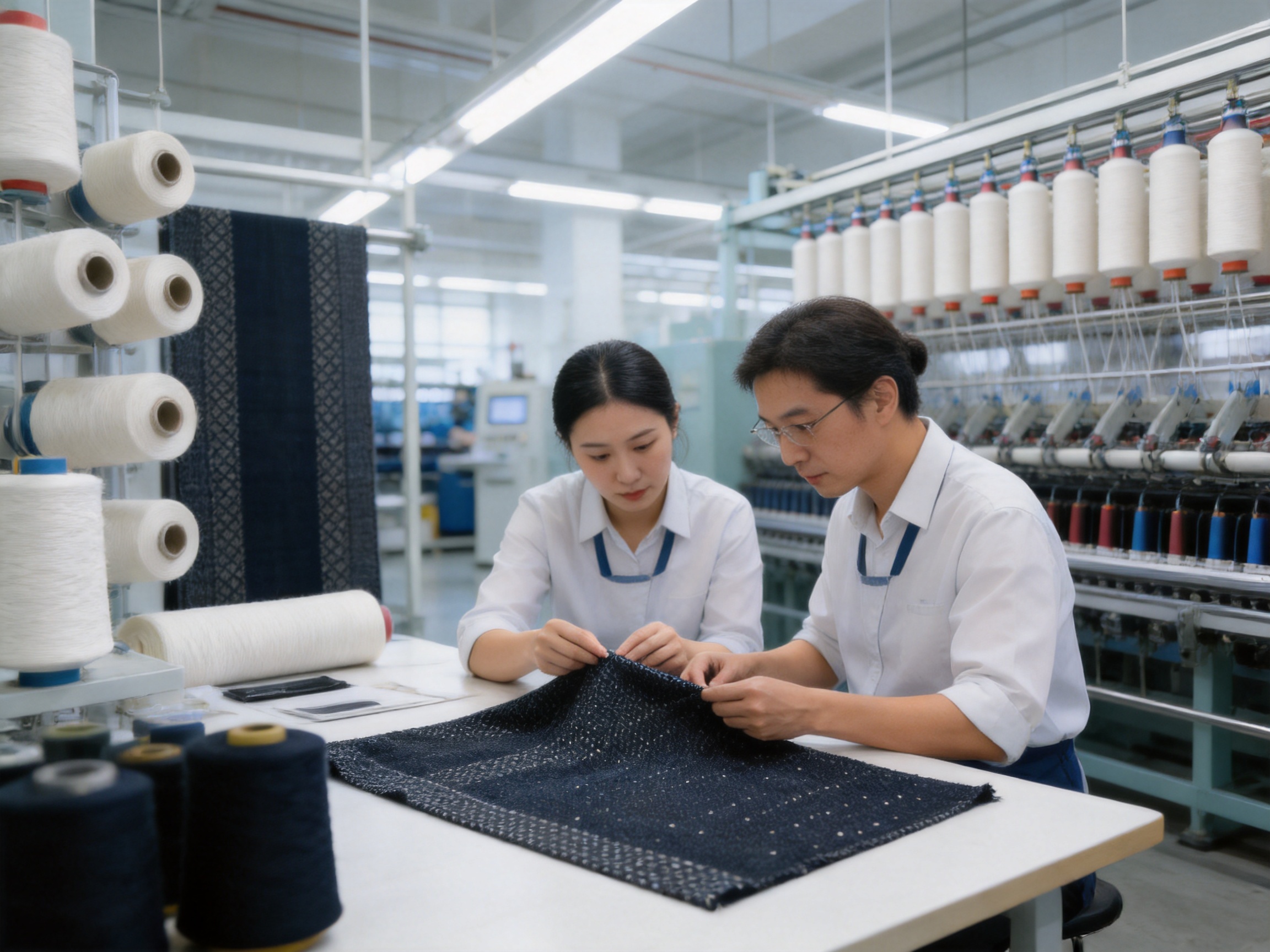
High-quality Jacquard Twill Fabric requires coordinated control from yarn preparation to knitting, dyeing, finishing, inspection, and sales support. Hangzhou Jinfeng Textile Co., Ltd. is located in the Jingjiang Street Industrial Park of Xiaoshan District, Hangzhou, Zhejiang Province. The company operates with a plant area of about 18,000 square meters and is engaged in the production, processing, post-dyeing, finishing, and sales of blended fabrics such as polyester and spandex materials, as well as DTY polyester yarn production, processing, and sales.
This integrated capability is important because jacquard fabric quality depends on many connected stages. The yarn must be suitable for the intended fabric structure. The knitting process must form the design accurately. Dyeing must achieve the correct shade and consistency. Finishing must enhance the hand feel and stabilize the fabric. Inspection must identify defects before shipment. When these processes are coordinated within a manufacturing system, buyers benefit from better communication, more reliable quality, and more efficient development.
The company’s experience with DTY polyester yarn, blended fabrics, and post-dyeing and finishing gives it a strong foundation for producing customized textile solutions. Drawn textured yarn is widely used in fabrics that require bulk, stretch, softness, and performance. Knowledge of yarn behavior helps manufacturers control fabric handle, elasticity, and surface appearance. This is especially useful when developing jacquard structures where yarn arrangement and tension can influence the final pattern effect.
Advanced manufacturing is not only about machines. It is also about process discipline. For jacquard fabrics, technical teams must manage design conversion, machine settings, yarn feeding, tension control, fabric density, dyeing response, finishing temperature, shrinkage control, and inspection standards. A small variation in one stage can affect the final surface. Therefore, a manufacturer’s ability to control the full process is a meaningful advantage.
From Yarn to Finished Fabric
The production journey of Jacquard Twill Fabric begins with yarn selection. Yarn quality influences the fabric’s softness, elasticity, texture clarity, color performance, and durability. Depending on the final requirement, nylon or blended yarn concepts may be used to achieve the desired hand feel and performance. Yarn consistency is essential because jacquard patterns depend on even feeding and stable structure formation.
After yarn preparation, the knitting stage creates the fabric structure. Jacquard knitting equipment allows different yarn movements and loop arrangements to form patterns. The design is not added later; it is constructed during knitting. This is why jacquard fabrics can show a deeper surface character than printed textiles. The fabric may include raised and recessed areas, directional lines, and twill-like visual movement.
During knitting, process control is vital. Needle condition, yarn tension, machine speed, pattern programming, and environmental stability can affect fabric quality. If tension is uneven, the pattern may distort. If yarn feeding is inconsistent, the texture may lose clarity. If machine settings are not accurate, the final fabric may not match the design. Skilled production management reduces these risks.
After knitting, the fabric may move into dyeing and finishing. Post-dyeing allows color development according to customer requirements. Shade consistency is crucial, particularly for bulk orders where multiple rolls must match. Finishing can improve softness, elasticity, dimensional stability, and surface quality. For apparel buyers, these finishing results are extremely important because they influence cutting, sewing, garment appearance, and consumer satisfaction.
Inspection completes the process. Fabric rolls should be checked for visual defects, pattern consistency, color uniformity, width, weight, hand feel, and other agreed specifications. Strong inspection systems reduce production risk for garment factories. By identifying issues before shipment, manufacturers help buyers avoid cutting losses, delivery delays, and quality disputes.
Advanced Process Control and Quality Assurance
Jacquard Twill Fabric requires careful quality assurance because it combines design, structure, and performance. Unlike simple plain fabric, a jacquard surface must be visually accurate and technically stable. The pattern must remain clear, the surface texture must be consistent, and the fabric must meet the required hand feel and elasticity standards.
Quality assurance begins before bulk production. Sample development allows the buyer and manufacturer to evaluate pattern scale, texture height, weight, width, softness, elasticity, and color. Adjustments can be made before the order enters mass production. This reduces risk and improves the chance that the final fabric will meet expectations.
During production, fabric density and tension must be monitored. Jacquard patterns can become distorted if the fabric is too loose or too tight. Proper machine control ensures that the surface texture remains balanced. Yarn quality checks help prevent defects such as uneven loops, broken filaments, or inconsistent surface appearance.
Dyeing quality is also essential. A textured surface can reflect light differently across raised and recessed areas, so shade control must be handled carefully. The dyeing process should aim for even color penetration and consistent roll-to-roll matching. Finishing should preserve the jacquard effect while improving hand feel and stability.
Final inspection provides assurance before delivery. For apparel manufacturers, receiving consistent fabric is essential because cutting plans, sewing operations, and garment measurements depend on stable material. Reliable fabric helps reduce waste and improve production efficiency. This is one of the competitive advantages of working with a manufacturer that has experience across yarn, fabric, dyeing, and finishing.
Applications in Apparel and Fashion Development
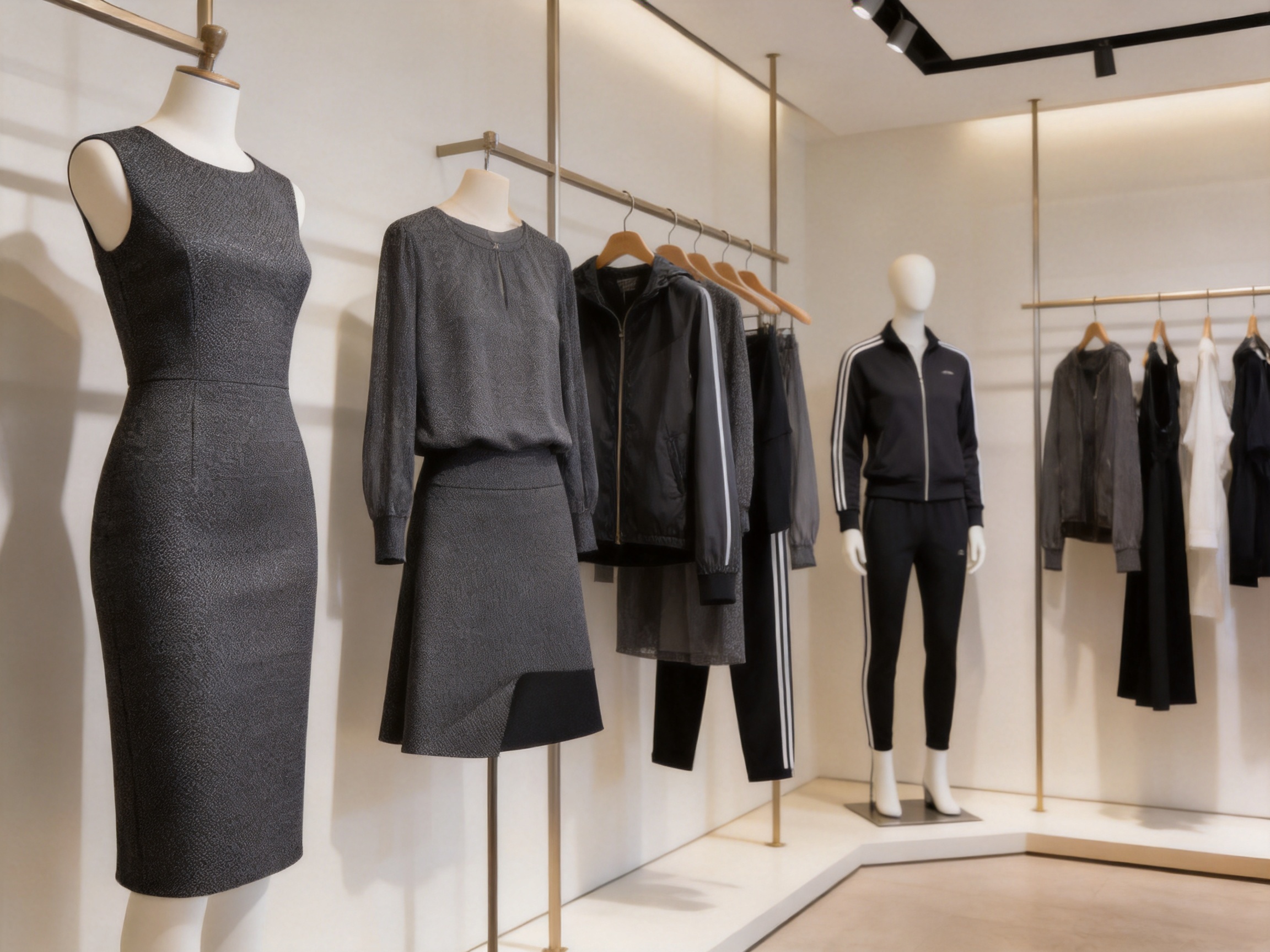
Jacquard Twill Fabric can be used in a wide range of apparel categories. Its soft, lightweight, and elastic properties make it suitable for garments that require comfort and movement. Its textured surface makes it suitable for fashion items that need visual interest. This combination supports both practical and design-driven applications.
In women’s fashion, the fabric may be used for fitted dresses, tops, skirts, and body-contouring garments. The jacquard texture can add sophistication to simple silhouettes. A plain fitted dress may look basic, but the same silhouette in Jacquard Twill Fabric can appear more premium because the surface adds depth and refinement.
In casualwear, the fabric can be used for stylish tops, lightweight pullovers, panels, and fashion-forward separates. Consumers increasingly look for casual garments that feel comfortable but still look designed. The fabric supports this trend by combining stretch comfort with a distinctive surface.
In sports-inspired fashion, elasticity and lightweight comfort are valuable. While the fabric is not limited to activewear, its body-hugging potential makes it suitable for athleisure-inspired styles. Designers can use the jacquard texture to differentiate garments from ordinary stretch knits.
In decorative garment components, Jacquard Twill Fabric can be used for panels, sleeves, collars, waist sections, or contrast areas. Even when not used for the entire garment, it can add texture and visual contrast. This gives designers flexibility in cost management and style development.
Customization for Market Differentiation
Customization is one of the most important strengths of jacquard fabric. In a crowded apparel market, buyers often need materials that help products stand apart. Jacquard Twill Fabric allows the pattern to be customized, which means brands can create unique fabric surfaces without relying entirely on external decoration.
Customization may involve adjusting the pattern, texture depth, repeat size, color concept, yarn combination, weight, or finish. A subtle design may be ideal for premium basics, while a bold jacquard may support fashion statements. A compact texture may create a technical look, while a softer motif may suit elegant apparel.
For private-label brands, customized jacquard fabric can become a signature material. It gives the brand a recognizable texture and helps prevent direct comparison with competitors using generic fabrics. This is valuable for both online and offline retail, where unique material details can influence purchasing decisions.
For wholesalers and fabric distributors, customized jacquard options can expand product offerings. Instead of selling only standard plain fabrics, distributors can present textured materials that appeal to designers and garment factories. This can improve market competitiveness and support higher-value sales.
Supply Chain Value for Buyers
Fabric sourcing is not only about the material itself. Buyers also evaluate supplier reliability, production capability, communication, customization support, and delivery consistency. A strong textile manufacturer can help buyers reduce uncertainty throughout the purchasing process.
Hangzhou Jinfeng Textile Co., Ltd. operates as a company integrating research and development, production, and sales. This integrated structure supports communication between customer needs and production execution. When a buyer requests a specific jacquard effect, fabric weight, softness, or finishing result, coordinated technical and production teams can respond more effectively.
The company’s involvement in DTY polyester yarn production and blended fabric manufacturing provides additional supply chain advantages. Yarn knowledge can support fabric innovation, while fabric production experience supports practical bulk manufacturing. Post-dyeing and finishing capabilities help complete the fabric development cycle.
For international buyers, working with a self-operated export company can be beneficial because export communication, production coordination, and documentation can be handled more directly. Buyers often need clear communication about sampling, order specifications, packaging, inspection, and shipment. A supplier with export experience is better positioned to support these requirements.
Performance Considerations for Garment Manufacturers
Garment manufacturers need fabric that behaves predictably during cutting and sewing. Jacquard Twill Fabric should be evaluated based on width stability, weight consistency, stretch direction, recovery, shrinkage, edge behavior, and surface sensitivity. Proper communication between fabric supplier and garment factory helps ensure successful garment production.
Because the fabric has a textured surface, cutting direction may be important. Designers and production managers should consider pattern orientation and garment layout. If the jacquard effect has a directional twill appearance, consistent cutting direction can improve the final garment’s visual uniformity.
Sewing methods should be selected according to the fabric’s elasticity and weight. Stretch fabrics may require appropriate needles, thread, stitch types, and seam allowances. Testing before bulk garment production is recommended. This helps prevent seam puckering, distortion, or loss of stretch comfort.
Finishing and care instructions should also be confirmed. Different yarn compositions and finishing treatments may require specific care guidance. Accurate care labeling helps consumers maintain garment appearance and performance. It also reduces the risk of complaints caused by improper washing or handling.
Responsible and Efficient Textile Development
Modern textile buyers increasingly value efficiency, waste reduction, and responsible production practices. While every order has different requirements, a manufacturer with integrated production and finishing capabilities can support more efficient development by reducing unnecessary process transfers and improving technical coordination.
Jacquard fabric can also contribute to efficient design because the pattern is created within the structure. This may reduce the need for additional decorative processes such as printing or embroidery, depending on the garment design. Fewer separate processes can simplify development and may reduce production complexity.
Quality consistency also supports responsible production. Defective fabric creates waste in cutting rooms and garment factories. By improving inspection and process control, manufacturers help reduce unnecessary loss. Stable dyeing, finishing, and pattern formation contribute to better material utilization.
For brands developing long-term fabric programs, repeatability is especially important. A fabric that can be reproduced with consistent texture, color, and hand feel supports seasonal continuation and replenishment orders. Reliable repeat production helps brands manage inventory, plan collections, and maintain product identity.
How This Fabric Supports Brand Value
Jacquard Twill Fabric can help apparel brands communicate quality through touch and appearance. Consumers often judge garments by visual texture before reading product details. A raised jacquard surface can make a garment appear more carefully designed and more valuable. This impression can support stronger retail presentation.
The fabric also supports storytelling. Brands can describe the material as a textured jacquard fabric with a dimensional surface, lightweight comfort, and stretch suitability. This gives sales teams and product pages meaningful points to communicate. In online retail, where shoppers cannot touch the fabric before purchase, clear material descriptions and visible texture in photography can help increase confidence.
For premium basics, the fabric adds distinction without excessive decoration. For fashion collections, it provides pattern and structure. For fitted garments, it offers elasticity and comfort. This versatility makes the fabric useful for brands that want to create multiple styles from one material family.
Because the pattern can be customized, the fabric can also support exclusivity. A brand may develop a unique jacquard motif and use it across a collection. This creates consistency and recognition while still allowing different garment silhouettes. Exclusive fabric development is a practical way to build product identity.
Why Choose a Manufacturer with Integrated Textile Capability
Choosing the right fabric supplier is as important as selecting the right fabric. Jacquard Twill Fabric requires expertise in yarn behavior, jacquard structure, dyeing response, finishing control, and inspection. A supplier with integrated capabilities can provide better technical support across these stages.
Hangzhou Jinfeng Textile Co., Ltd. has manufacturing activities related to DTY polyester yarn, blended fabrics, post-dyeing, finishing, and sales. This range of capabilities supports fabric development from raw material understanding to finished textile delivery. For buyers, this can mean more efficient sampling, better process coordination, and clearer communication.
The company follows a business philosophy centered on cooperation and win-win service. This matters in fabric development because successful textile sourcing often depends on collaboration. Buyers may need adjustments to pattern, weight, hand feel, or color. A cooperative supplier can work with customers to refine the product and achieve practical results.
The company’s location in Hangzhou, an important textile and manufacturing region, also supports access to industrial resources and logistics networks. A stable production base with factory space and textile experience can help buyers source materials with greater confidence.
Technical Buying Considerations
Before placing an order for Jacquard Twill Fabric, buyers should define the intended garment application. A fitted dress may require different stretch and recovery than a decorative jacket panel. A lightweight top may need a softer drape, while a structured fashion garment may require more body. Clear application details help the supplier recommend the right specifications.
Buyers should also communicate desired pattern style. Is the jacquard effect meant to be subtle or bold? Should the twill direction be highly visible or understated? Is the pattern geometric, organic, classic, or modern? These questions guide sample development and reduce misunderstanding.
Color requirements should be discussed early. Textured fabrics can show color differently depending on light and surface angle. Lab dips or sample dyeing may be needed to confirm the correct shade. Buyers should evaluate color under relevant lighting conditions and compare with garment design requirements.
Testing requirements should be identified before bulk production. Depending on the market, buyers may request tests for shrinkage, colorfastness, pilling, elasticity, dimensional stability, or other performance factors. Confirming testing standards early helps the manufacturer plan production and finishing accordingly.
Packing and roll specifications should also be confirmed. Garment factories may need roll length, width tolerance, labeling, and packaging details to manage cutting room efficiency. Clear specifications support smoother production after fabric arrival.
Q&A: Jacquard Twill Fabric
What is Jacquard Twill Fabric?
Jacquard Twill Fabric is a textured fabric that combines jacquard patterning with a twill-inspired visual effect. Its surface can show raised and recessed areas, creating a concave-convex appearance. The pattern is formed through the fabric structure rather than simply printed on the surface.
What makes this fabric different from ordinary printed fabric?
Ordinary printed fabric has a design applied to the surface. Jacquard Twill Fabric forms the pattern through yarn interlacing and fabric construction. This gives the material a more dimensional, tactile, and integrated appearance.
Is the fabric suitable for body-hugging garments?
Yes. Nylon jacquard fabrics are often soft, lightweight, and elastic, making them suitable for body-hugging styles. The fabric can follow movement and support fitted silhouettes when engineered with the appropriate stretch and recovery.
Can the pattern be customized?
Yes. One of the key advantages of jacquard fabric is pattern customization. Buyers can develop unique surface effects, motif scales, and texture concepts according to garment design and brand requirements.
What types of garments can use this fabric?
The fabric may be used for dresses, tops, skirts, fitted garments, casualwear, sports-inspired fashion, lightweight jackets, decorative panels, and other apparel items that require texture, flexibility, and comfort.
Why is integrated manufacturing important for this fabric?
Integrated manufacturing helps coordinate yarn selection, knitting, dyeing, finishing, and inspection. Since jacquard fabric quality depends on multiple stages, strong process control can improve consistency, reduce defects, and support customized development.
What are the main advantages for apparel brands?
The fabric offers a premium textured appearance, softness, lightweight comfort, elasticity, and customization potential. These advantages help brands create garments that look distinctive and feel comfortable.
How should buyers begin a development project?
Buyers should provide the intended garment use, desired fabric weight, pattern concept, color requirements, stretch expectations, testing standards, and order quantity. Clear information helps the manufacturer create accurate samples and production plans.
Conclusion
Jacquard Twill Fabric is a versatile and attractive textile choice for apparel brands seeking a balance of texture, comfort, elasticity, and customization. Its concave-convex jacquard surface provides visual depth, while its soft and lightweight nature supports comfortable garment wear. Compared with plain fabrics, printed fabrics, and heavier woven twills, it offers a stronger combination of appearance and flexibility.
The fabric’s value is further strengthened by advanced manufacturing capability. Successful jacquard production requires careful control of yarn selection, knitting, dyeing, finishing, and inspection. A manufacturer with experience in DTY polyester yarn, blended fabrics, post-dyeing, finishing, research, production, and sales can provide meaningful support to buyers developing reliable and distinctive textile products.
For fashion brands, garment factories, fabric distributors, and sourcing teams, Jacquard Twill Fabric offers a practical way to create differentiated garments with a premium surface effect. Its customizable structure supports exclusive design, while its softness and elasticity support modern comfort expectations. In a market where consumers demand both style and wearability, this fabric provides a strong foundation for competitive apparel development.
References
Chen, L. Textile Structures and Fabric Design Principles. Textile Engineering Press.
Grosicki, Z. Watson’s Textile Design and Colour: Elementary Weaves and Figured Fabrics. Woodhead Publishing.
Spencer, D. J. Knitting Technology: A Comprehensive Handbook and Practical Guide. Woodhead Publishing.
Adanur, S. Handbook of Weaving. CRC Press.
Sinclair, R. Textiles and Fashion: Materials, Design and Technology. Woodhead Publishing.
Collier, B. J., and Epps, H. H. Textile Testing and Analysis. Pearson.