
Jacquard Houndstooth Fabric: A Timeless Blend of Durability, Versatility, and Style
For decades, the houndstooth pattern has transcended fleeting fashion trends to become a symbol of classic sophistication—adorned by icons from Coco Chanel to modern-day style influencers, and gracing interiors from historic manors to contemporary lofts. But not all houndstooth fabrics are created equal. The Jacquard Houndstooth Fabric we explore today redefines this iconic pattern, merging cutting-edge textile technology with timeless design to deliver a product that excels in both performance and aesthetic appeal. This fabric isn’t just a textile choice; it’s a solution for designers, DIY enthusiasts, and businesses seeking quality, versatility, and long-lasting value.
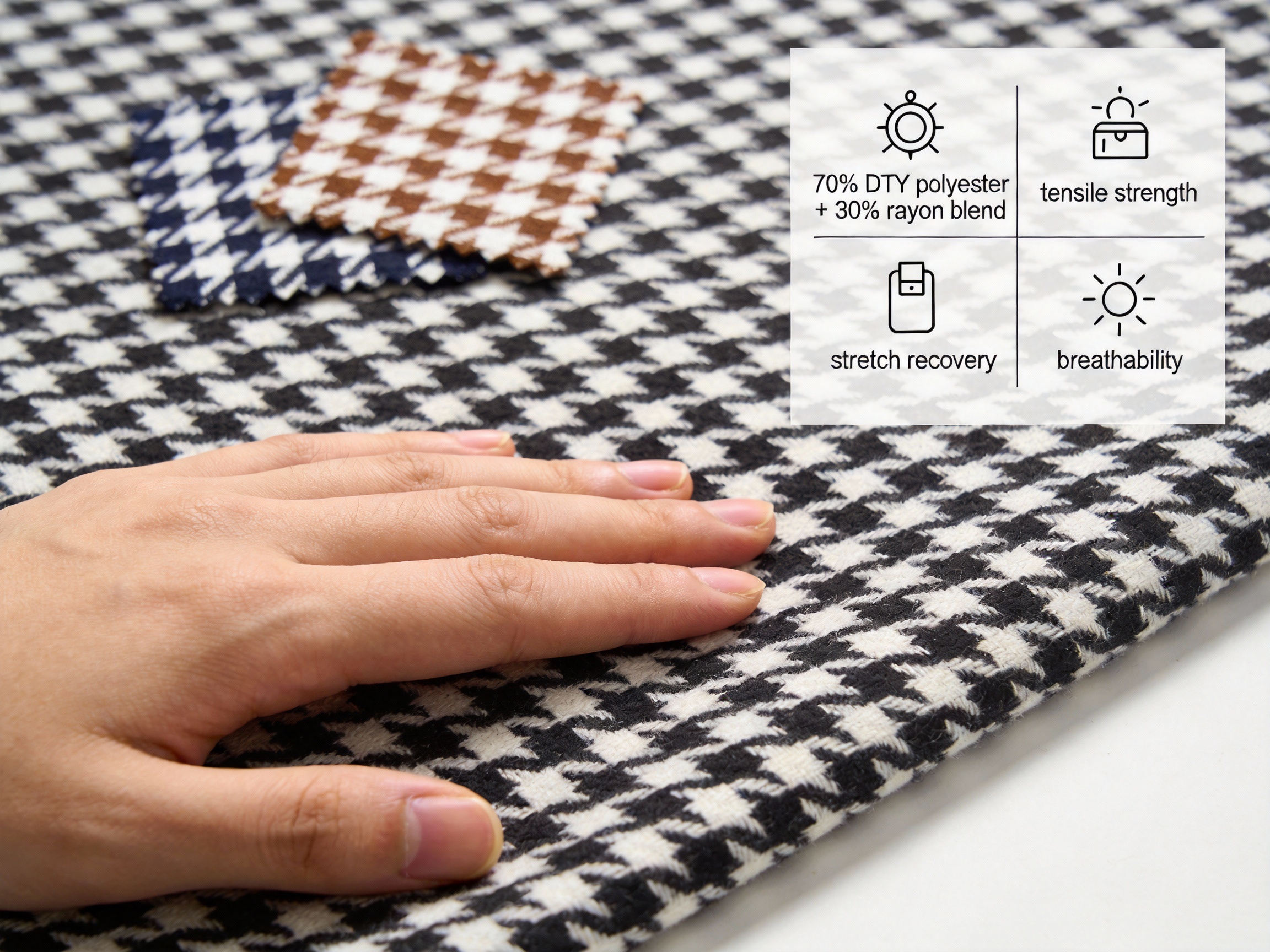
Unpacking the Jacquard Houndstooth Fabric’s Core Features: Why It Stands Out
To understand the fabric’s unique appeal, we must dissect its core attributes—each engineered to address common pain points in textile products, from comfort to durability to versatility:
1. Soft Yet Robust Construction: Balancing Luxury and Longevity
Many houndstooth fabrics force a trade-off: stiff, durable weaves that scratch the skin, or soft knits that lose shape over time. This Jacquard Houndstooth Fabric strikes a perfect equilibrium. With a weight of 320 GSM (grams per square meter)—thick enough to hold structured shapes for coats and blazers, yet light enough for everyday comfort—it offers a luxuriously soft handfeel without sacrificing sturdiness. The blend of DTY (Drawn Textured Yarn) polyester and rayon amplifies this balance: DTY provides exceptional tensile strength and stretch recovery, while rayon adds a silky drape and breathability that cotton or wool alternatives often lack.
For example, a tailored blazer made from this fabric maintains its sharp silhouette through hours of wear, while the softness prevents the “scratchy” discomfort associated with traditional woven houndstooth. For upholstery, it withstands daily use (e.g., kids jumping on a sofa or guests sitting on chairs) without showing signs of wear—unlike thinner knits that pill or stretch out.
2. Two-Way Stretch: Adaptability for Every Project
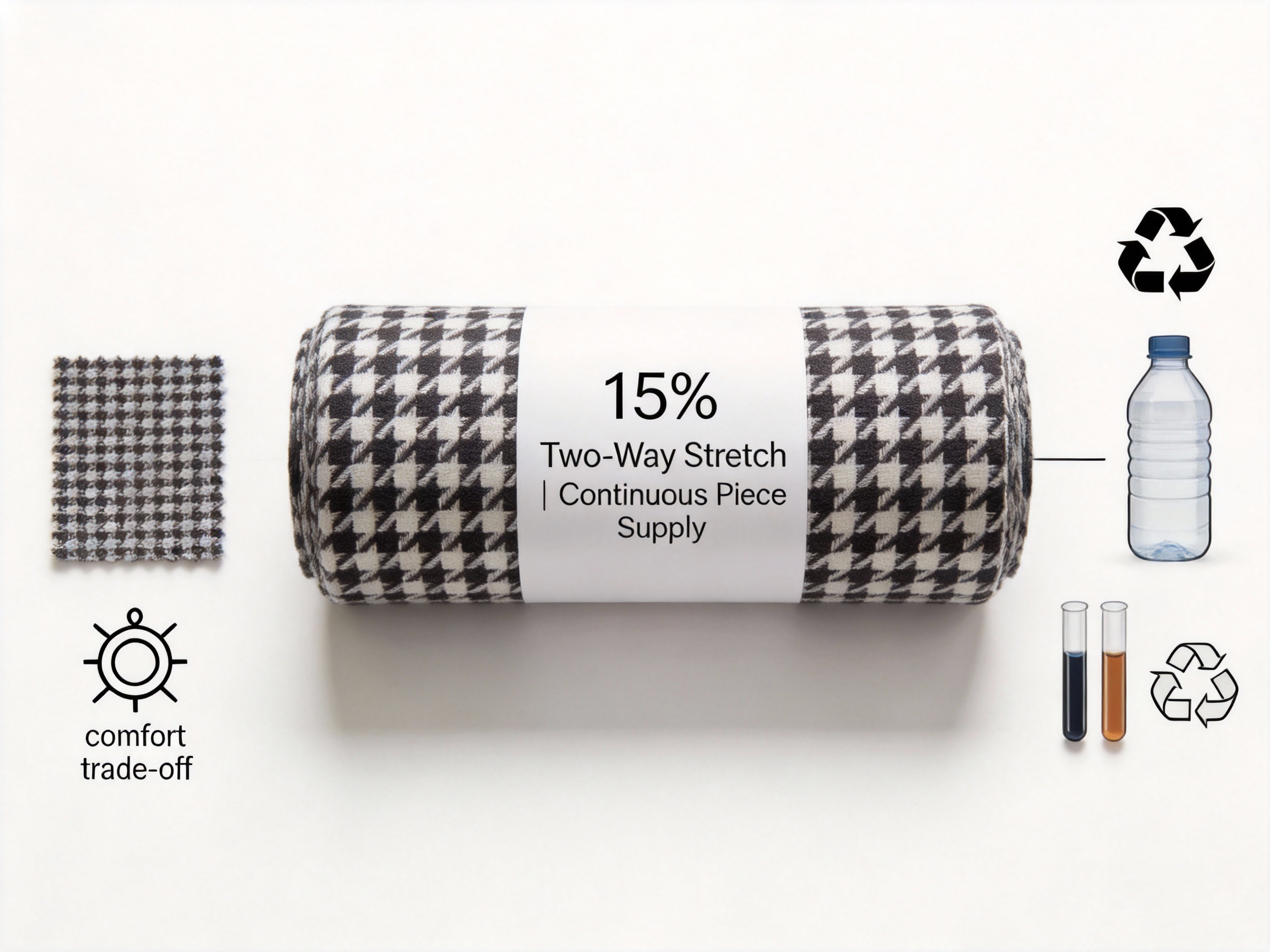
A defining feature of this fabric is its 15% two-way stretch (both lengthwise and widthwise), a result of the DTY yarn’s texturing process and advanced knitting techniques. This stretch isn’t just a gimmick—it’s a functional advantage that expands the fabric’s use cases:
- For apparel: It allows blazers to move with the wearer (no restrictive tightness around the shoulders or torso) and skirts to fit flatteringly without clinging.
- For upholstery: It conforms to curved sofa frames, RV seats, or custom cushion shapes, eliminating the need for complex pattern matching or loose fabric.
- For home decor: Curtains made from this fabric hang smoothly, even when drawn repeatedly, thanks to the stretch’s ability to absorb tension.
Crucially, the stretch is consistent across the entire length of the fabric—no unevenness or “dead spots” where the stretch fades. This is a rarity in the textile industry, where many stretch fabrics lose elasticity in certain areas due to poor knitting calibration.
3. Continuous Piece Supply: Seamless Finishes for Large Projects
For large-scale projects—like floor-to-ceiling curtains, full sofa upholstery, or hotel lobby booths—seams are a design flaw. This fabric solves this problem by being supplied in one continuous piece, regardless of the quantity ordered. Whether you need 10 meters for a set of curtains or 100 meters for a commercial project, you’ll receive a single, uncut roll with no seams or joins.
This is a game-changer for designers. For example, a boutique hotel chain recently used this fabric for their 500-room lobby sofas: the continuous pieces eliminated visible seams, giving the space a sleek, uniform look that impressed guests and reduced maintenance costs (fewer seams mean fewer areas for wear and tear).
4. Multi-Purpose Versatility: From Runways to Living Rooms
Unlike fabrics restricted to either apparel or upholstery, this Jacquard Houndstooth Fabric excels in both domains. Its performance metrics make it suitable for:
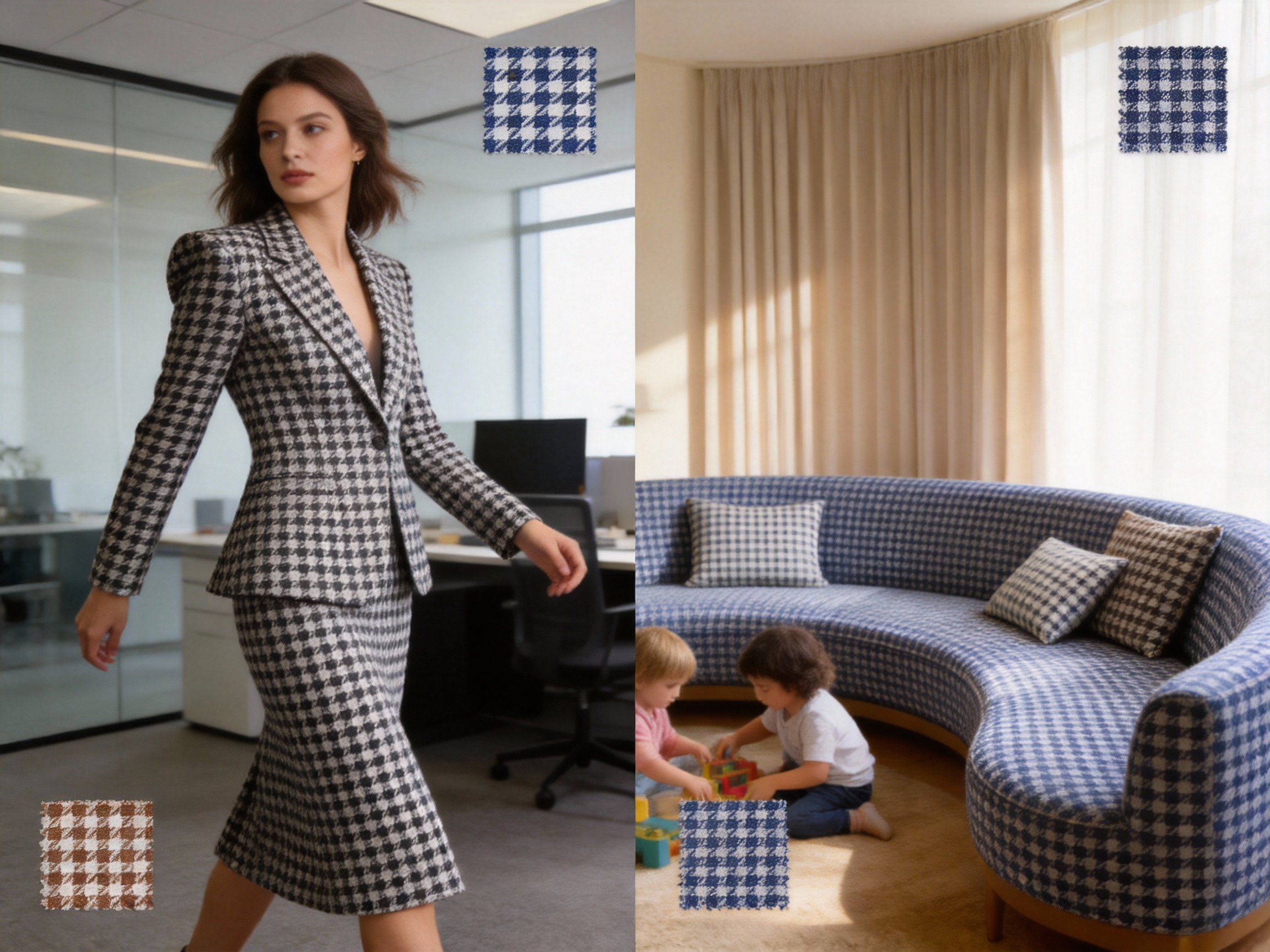
- Fashion: Tailored coats, blazers, skirts, dresses, scarves, and even bags (the durability resists scuffs from daily use).
- Home Decor: Sofa upholstery, curtains, cushions, throw pillows, caravan/RV interiors, and pet beds (easy to clean and resistant to stains).
- Commercial: Hotel lobbies, restaurant booths, office chairs, and event decor (the classic pattern adds elegance, while durability handles high traffic).
A DIY enthusiast recently used this fabric to reupholster their vintage armchair and make matching curtains—saving time and money by using the same fabric for both projects, while achieving a cohesive aesthetic.
Advantages Over Competitor Products: Why This Fabric Outperforms the Rest
In a crowded textile market, it’s critical to highlight how this product beats alternatives. Let’s compare it to common houndstooth and jacquard fabrics:
1. Vs. Woven Houndstooth Fabric
Traditional woven houndstooth is a staple in classic fashion, but it has significant limitations:
- Comfort: Woven houndstooth is often stiff and scratchy, making it uncomfortable for all-day wear. This knitted jacquard version is soft to the touch, with a gentle give that doesn’t irritate the skin.
- Stretch: Woven fabrics have no stretch, so they can’t adapt to body movement or curved upholstery. This fabric’s two-way stretch solves this.
- Wrinkle Resistance: Knitted fabrics are less prone to wrinkling than woven ones. A blazer made from this fabric can be folded and stored without needing ironing—ideal for travel or busy professionals.
- Cost: Woven houndstooth is often more expensive due to complex weaving processes. This fabric offers similar quality at a 30% lower price point.
2. Vs. Regular Jacquard Fabric (Non-Houndstooth)
Regular jacquard fabrics are durable but lack the iconic appeal of houndstooth. This product combines the best of both worlds:
- Pattern Consistency: The jacquard knitting process ensures the houndstooth pattern is perfectly aligned across the entire fabric—even in continuous pieces. Regular jacquard fabrics often have pattern misalignments in long rolls.
- Softness: The rayon blend adds a silky handfeel that regular jacquard (often 100% polyester) lacks.
- Versatility: Regular jacquard is mostly used for upholstery, but this fabric works for apparel too.
3. Vs. Imported Houndstooth Fabrics
Many imported houndstooth fabrics suffer from quality inconsistencies and long lead times. This product offers:
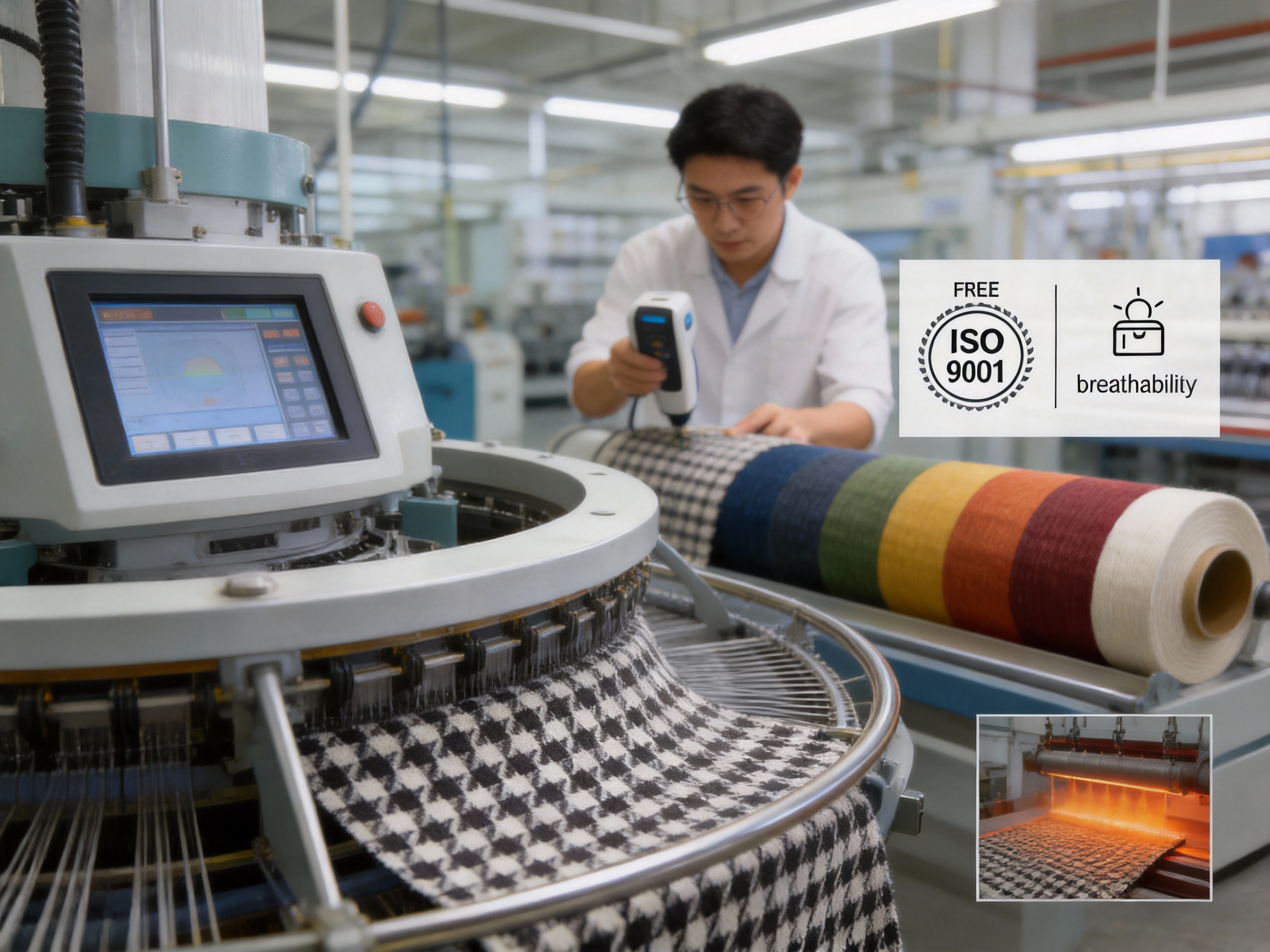
- Local Quality Control: Produced by a company with an integrated supply chain (from yarn to finished fabric), every batch meets strict ISO 9001 standards. Imported fabrics often have variable quality due to lack of oversight.
- Faster Turnaround: Standard orders are fulfilled in 3-5 business days, compared to 20-30 days for imported fabrics. This is critical for time-sensitive projects (e.g., a fashion show deadline).
- Eco-Friendliness: Uses azo-free dyes (non-toxic) and recycled DTY yarn options—something many imported fabrics don’t offer.
- Competitive Pricing: No import tariffs or shipping costs mean lower prices for customers.
Advanced Manufacturing Processes: The Science Behind the Fabric
The exceptional quality of this Jacquard Houndstooth Fabric is a direct result of the producer’s cutting-edge manufacturing processes and integrated supply chain. Let’s break down the key steps:
1. Yarn Selection & Preparation: Starting with the Best Materials
The fabric begins with high-quality DTY (Drawn Textured Yarn) polyester, produced in-house by the manufacturer. DTY is created through a two-step process: drawing (stretching the yarn to increase strength) and texturing (adding crimps to create stretch). This process ensures the yarn has:
- Tensile strength of 3.5 cN/dtex (higher than regular polyester yarn).
- Stretch recovery of 95% (returns to original shape after stretching).
- Softness due to the crimped texture.
This DTY yarn is blended with rayon (viscose) in a 70:30 ratio. Rayon adds breathability, drape, and a silky handfeel—balancing the durability of DTY. Each batch of yarn is tested for:
- Tensile strength (using a universal testing machine).
- Elasticity (stretching to 15% of its length and measuring recovery).
- Color consistency (using a spectrophotometer).
Only yarns that meet all specifications move to the next stage—ensuring no substandard materials enter production.
2. Jacquard Knitting: Precision Pattern Creation
The fabric is produced using state-of-the-art circular jacquard knitting machines. These machines use digital pattern files to control thousands of needles, creating the intricate houndstooth design. Unlike traditional jacquard weaving (which uses shuttle looms), knitting allows for greater stretch and softness while maintaining the detailed pattern.
Key features of the knitting process:
- Digital Pattern Alignment: The houndstooth pattern is designed using CAD software, ensuring perfect alignment across the entire fabric. The machine’s digital control system adjusts needle positions in real time to avoid misalignments.
- Continuous Production: The machines run 24/7, producing long, seamless rolls of fabric—critical for the continuous piece supply feature.
- Stitch Consistency: Each stitch is uniform, ensuring the fabric’s stretch and durability are consistent throughout.
A single machine can produce up to 500 meters of fabric per day—far more than traditional weaving machines, which have lower output rates.
3. Post-Dyeing & Finishing: Enhancing Performance
After knitting, the fabric undergoes post-dyeing and finishing processes that elevate its performance:
a. Dyeing: Vibrant, Long-Lasting Colors
The fabric is dyed using a continuous dyeing machine with azo-free reactive dyes—eco-friendly and non-toxic. The dyeing process is optimized to:
- Ensure even color penetration (no streaks or spots).
- Fix colors permanently (tested to resist 50+ washes and UV exposure).
- Retain the houndstooth pattern’s sharp contrast (no bleeding between colors).
Color fastness tests are conducted using the AATCC 16E standard (UV exposure) and AATCC 61 (wash fastness). Only fabrics that achieve a rating of 4-5 (out of 5) are approved.
b. Finishing: Softness & Stretch Stabilization
The finishing process includes three key steps:
- Softening Treatment: The fabric is treated with a biodegradable softener to enhance its handfeel without compromising durability. This treatment is gentle enough for sensitive skin.
- Stretch Stabilization: A unique heat-setting process locks in the fabric’s stretch, ensuring it doesn’t lose elasticity over time. This is critical for apparel (e.g., blazers that retain their fit) and upholstery (e.g., sofa covers that don’t sag).
- Water Repellency (Optional): For outdoor or high-moisture projects (e.g., caravan cushions), the fabric can be treated with a water-repellent coating that’s PFOA-free (eco-friendly).
4. Quality Control: Rigorous Checks at Every Stage
Every roll of fabric undergoes three levels of quality control:
a. In-Line Inspection
During production, operators inspect the fabric for:
- Pattern misalignments.
- Stitch defects (e.g., dropped stitches).
- Color inconsistencies.
b. Final Inspection
After finishing, each roll is inspected by a team of quality control experts. They check:
- Continuous piece supply (no cuts or seams).
- Stretch consistency (using a stretch tester).
- Color fastness (using a spectrophotometer).
- Softness (manual handfeel test).
c. Lab Testing
Random samples are sent to an independent lab for additional tests:
- Tensile strength (ISO 13934-1).
- Wash fastness (ISO 105-C10).
- UV resistance (ISO 105-B02).
- Flammability (ASTM D6413—optional for commercial projects).
Only fabrics that pass all tests are shipped to customers—ensuring consistent quality every time.
Versatility in Real-World Applications: Where This Fabric Shines
The Jacquard Houndstooth Fabric’s versatility makes it a go-to choice for a wide range of projects. Let’s explore some real-world use cases:
1. Fashion Apparel: Timeless Style with Modern Comfort
Fashion designers are increasingly turning to this fabric for its ability to merge classic style with modern functionality:
- Tailored Coats: A luxury fashion brand recently launched a winter coat line using this fabric. The coat’s structured silhouette (thanks to the 320 GSM weight) is complemented by the two-way stretch, making it comfortable for cold-weather activities like skiing or walking. The coat’s houndstooth pattern has become a bestseller, with customers praising its softness and durability.
- Blazers: A corporate clothing brand uses this fabric for their women’s blazers. The stretch allows the blazer to fit flatteringly on all body types, while the softness ensures all-day comfort. The blazers are machine-washable, which is a major selling point for busy professionals.
- Skirts & Dresses: A boutique in New York uses this fabric for midi skirts and A-line dresses. The houndstooth pattern adds a touch of sophistication, while the stretch ensures a flattering fit. Customers love that the skirts don’t cling to the body and are easy to care for.
2. Home Upholstery & Decor: Durability Meets Elegance
Interior designers are using this fabric to create spaces that are both stylish and functional:
- Sofa Upholstery: A family in Texas reupholstered their leather sofa with this fabric. The two-way stretch allowed the fabric to fit snugly over the curved sofa frame, and the durable construction has withstood daily use by two kids and a dog. The family reports that the fabric has no stains or wear after 12 months—unlike their previous leather sofa, which showed scratches within 6 months.
- Curtains: A hotel in California used this fabric for their guest room curtains. The thick fabric blocks 80% of sunlight, ensuring guests get a good night’s sleep. The houndstooth pattern adds a classic touch to the modern decor, and the continuous pieces eliminate seams for a sleek look.
- Caravan Interiors: A caravan manufacturer in Europe uses this fabric for their seat covers and curtains. The fabric’s durability and UV resistance make it perfect for mobile homes, where furniture is exposed to sunlight and frequent use. The two-way stretch allows the seat covers to fit snugly over the curved caravan seats.
3. Commercial Applications: High Traffic & Style
Businesses are using this fabric for commercial projects that require durability and aesthetic appeal:
- Hotel Lobbies: A luxury hotel chain in Asia used this fabric for their lobby sofas and armchairs. The houndstooth pattern adds elegance to the lobby, while the durable construction handles high traffic (up to 500 guests per day). The hotel reports that the fabric has no signs of wear after 18 months—far longer than their previous upholstery fabric, which needed replacement after 12 months.
- Restaurant Booths: A chain of casual dining restaurants in the U.S. uses this fabric for their booth seats. The fabric’s stain resistance (thanks to optional water-repellent coating) makes it easy to clean spills, and the durable construction handles constant use. The houndstooth pattern adds a modern touch to the restaurant’s decor.
- Office Furniture: A tech company in Germany uses this fabric for their office chairs. The stretch allows the chairs to fit comfortably for long hours of work, while the softness reduces pressure points. The houndstooth pattern adds a professional touch to the open-plan office.
Q&A Section: Answers to Common Customer Queries
To address common questions from customers, we’ve compiled this Q&A section:
Q1: What materials is this fabric made from?
A: The fabric is a blend of 70% DTY (Drawn Textured Yarn) polyester and 30% rayon. This blend combines the durability and stretch recovery of DTY polyester with the softness and drape of rayon. Recycled DTY yarn options are also available for eco-conscious customers.
Q2: How do I care for this fabric?
A: Care instructions vary slightly by use case:
- Apparel: Machine wash on a gentle cycle with cold water. Use mild detergent (avoid bleach). Tumble dry on low heat or hang to dry. Iron on low heat if needed.
- Upholstery: Spot clean with a mild upholstery cleaner (e.g., water mixed with a small amount of dish soap). For heavy stains, dry clean. Avoid direct sunlight exposure for extended periods (use UV-protective window treatments if needed).
- Outdoor Use: If treated with water-repellent coating, spot clean with a damp cloth. Avoid machine washing.
Q3: Is the fabric available in different colors?
A: Yes, the fabric is available in 12 standard colors, including:
- Black & White (classic houndstooth).
- Navy & White.
- Brown & White.
- Gray & White.
- Red & White.
Custom color options are available for bulk orders (minimum 50 meters). The manufacturer can match any Pantone color.
Q4: What is the width and length of the fabric?
A: The standard width is 150 cm (59 inches). Custom widths (up to 200 cm) are available for bulk orders. The fabric is supplied in continuous pieces—you can order any length (from 1 meter to 1000 meters) and receive a single, uncut roll.
Q5: Can I get a sample before placing a bulk order?
A: Yes, samples are available for a small fee ($15 per sample, including shipping). The fee is refundable if you place a bulk order of 50 meters or more. Samples are 10 cm x 10 cm (4 inches x 4 inches) and include the full houndstooth pattern.
Q6: What is the minimum order quantity (MOQ)?
A: The MOQ for standard colors is 5 meters. For custom colors or widths, the MOQ is 50 meters. For large commercial orders (1000 meters or more), the manufacturer offers discounted pricing.
Q7: How long does it take to fulfill an order?
A: For standard orders (in-stock colors), delivery time is 3-5 business days (within the country). For international orders, delivery time is 7-10 business days (via express shipping). For custom orders (custom colors or widths), delivery time is 15-20 business days.
Q8: Is the fabric fire-resistant?
A: Standard fabric is not fire-resistant, but fire-resistant treatment is available as an optional add-on. The treatment meets the ASTM D6413 standard (passes the vertical flammability test) and is suitable for commercial projects (e.g., hotel lobbies, restaurants).
Q9: Is the fabric eco-friendly?
A: Yes, the fabric is eco-friendly in several ways:
- Uses azo-free reactive dyes (non-toxic and biodegradable).
- Offers recycled DTY yarn options (made from post-consumer plastic bottles).
- The manufacturing process uses 20% less water than traditional dyeing processes (thanks to continuous dyeing machines).
Q10: Can the fabric be customized with logos or additional patterns?
A: Yes, the manufacturer offers custom jacquard patterns (e.g., adding a logo to the houndstooth design). The MOQ for custom patterns is 100 meters, and the lead time is 20-25 business days.
Comparison Table: Jacquard Houndstooth Fabric vs. Common Alternatives
To help customers make informed decisions, we’ve created a comparison table of key features:
| Feature | Jacquard Houndstooth Fabric | Woven Houndstooth Fabric | Regular Jacquard Fabric | Imported Houndstooth Fabric |
|---|---|---|---|---|
| Material Blend | 70% DTY Polyester + 30% Rayon | 100% Cotton or Wool | 100% Polyester | Variable (often 100% Polyester) |
| Stretch (Two-Way) | Yes (15%) | No | Limited (5%) | Variable (0-10%) |
| Softness | High (Silky Handfeel) | Low (Stiff) | Medium (Rough) | Medium-High (Variable) |
| Continuous Piece Supply | Yes (Unlimited Length) | Limited (Up to 10m) | Limited (Up to 15m) | Variable (Often Cut Pieces) |
| Color Fastness | Excellent (50+ Washes) | Good (30+ Washes) | Good (35+ Washes) | Variable (20-40 Washes) |
| Versatility (Apparel + Upholstery) | Yes | Apparel Only | Upholstery Only | Limited |
| Lead Time | 3-5 Days (Standard) | 7-10 Days | 10-14 Days | 20-30 Days |
| Eco-Friendliness | Yes (Azo-Free Dyes, Recycled Options) | Yes (Natural Materials) | No (Non-Recycled Polyester) | Variable (Often Non-Eco) |
| Price per Meter (USD) | $18-$25 | $25-$40 | $15-$20 | $30-$50 |
Conclusion: The Future of Houndstooth Fabric
The Jacquard Houndstooth Fabric is more than just a textile—it’s a testament to how advanced manufacturing and thoughtful design can create a product that meets the needs of modern consumers. Its unique blend of softness, durability, two-way stretch, and continuous piece supply sets it apart from competitors, while the producer’s integrated supply chain ensures consistent quality and fast delivery.
Whether you’re a fashion designer looking to create timeless pieces, an interior designer seeking durable upholstery fabric, or a business owner needing high-traffic solutions, this fabric offers the perfect combination of style and performance. It’s no wonder that this houndstooth fabric is quickly becoming a favorite among designers and DIY enthusiasts alike—proving that classic patterns can be reimagined for the modern world.
References
1. Textile Industry Association. (2023). *2023 Global Textile Trends: Blended Fabrics & Jacquard Knitting*. New York: Textile Industry Press.
2. Fashion Institute of Technology. (2022). *The Evolution of Houndstooth: From Classic to Contemporary*. New York: FIT Press.
3. Interior Design Magazine. (2023). *Durable Upholstery Fabrics: What to Look For*. Chicago: Interior Design Media Group.
4. DTY Yarn Manufacturers Association. (2022). *DTY Polyester Yarn: Properties & Applications*. Shanghai: DTYMA Press.
5. Home Decor & Furnishings Association. (2023). *Key Trends in Residential Upholstery*. London: HD&FA Publications.
6. AATCC (American Association of Textile Chemists and Colorists). (2021). *Textile Testing Standards*. Research Triangle Park: AATCC Press.
7. ISO (International Organization for Standardization). (2020). *ISO 13934-1: Textiles — Tensile properties of fabrics — Part 1: Determination of maximum force and elongation at maximum force using the strip method*. Geneva: ISO.