
Jacquard Black and White Grid Fabric: Design, Performance, and Manufacturing Excellence
Introduction to Jacquard Black and White Grid Fabric
Jacquard Black and White Grid Fabric is a visually distinctive knitted jacquard textile designed for manufacturers, fashion brands, garment makers, interior sewing specialists, and other users who require a combination of pattern clarity, comfort, versatility, and dependable production quality. Its defining feature is a geometric grid design formed through a jacquard knitting process rather than through simple surface printing. This construction gives the fabric a more integrated appearance, allowing the pattern to become part of the textile structure.
The contrast between black and white creates a clean, modern, and adaptable visual effect. It can support minimalist fashion, contemporary casualwear, statement garments, accessories, and selected home sewing projects. The grid motif is also easy to coordinate with solid colors, neutral shades, and other patterned materials. As a result, this fabric can be used across multiple product categories without becoming limited to one season or one specific style direction.
Manufactured by Hangzhou Jinfeng Textile Co., Ltd., the fabric belongs to the company’s knitted jacquard fabric range. The company also works with polyester rayon fabrics, NTR knitted fabrics, NR knitted fabrics, blended fabrics, and slightly intermingled draw textured yarn. Its broader manufacturing background supports the development of textiles that balance appearance with practical performance.
For buyers comparing jacquard fabrics from different suppliers, the most important considerations include pattern definition, fabric stability, hand feel, color contrast, production consistency, finishing quality, customization capability, and the supplier’s ability to manage the complete manufacturing process. This article examines those factors in detail and explains why a black and white knitted jacquard grid fabric can provide advantages over ordinary printed or less carefully controlled alternatives.
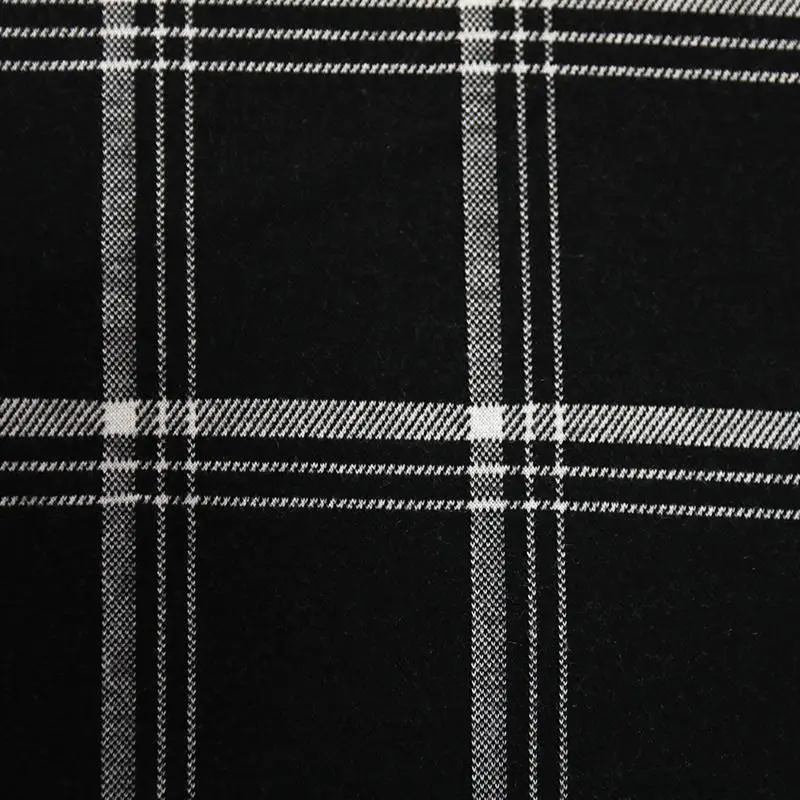
Jacquard Black And White Grid Fabric
What Makes the Grid Design Distinctive?
A grid pattern is one of the most recognizable geometric structures in textile design. It is orderly, balanced, and easy to interpret visually. When produced in black and white, the pattern gains strong contrast and a clear graphic identity. The fabric can appear bold from a distance while still offering texture and dimensional interest when viewed closely.
In a jacquard knitted construction, the design is developed through the controlled arrangement of yarns and knitted structures. This differs from a basic printed pattern, where color is placed mainly on the fabric surface. Because the jacquard effect is created during fabric formation, the pattern can retain a more integrated and substantial appearance. Depending on the specification and finishing treatment, the surface may provide subtle relief, textural variation, or a structured visual rhythm.
The black and white palette also provides excellent design flexibility. Black can bring depth and definition, while white introduces brightness and contrast. Designers may use the fabric as the main material in a garment or combine it with black, white, gray, beige, denim, or muted accent colors. The pattern can work in both youthful and mature product lines, making it suitable for a broad customer base.
Unlike highly seasonal patterns, a grid motif has long-term design potential. It can be interpreted as classic, urban, sporty, contemporary, or refined depending on the garment silhouette and supporting materials. This gives manufacturers and retailers more opportunities to use the same fabric concept in different collections.
Pattern Clarity and Visual Balance
Pattern clarity is especially important in high-contrast fabrics. Uneven knitting tension, inconsistent yarn feeding, or inadequate finishing can make grid lines appear distorted or irregular. A well-controlled production process helps maintain the relationship between the black and white areas, allowing the grid to remain visually balanced throughout the fabric roll.
Good visual balance does not mean that every design must look completely rigid. Minor textural movement can enhance the character of knitted jacquard. However, the overall repeat, line direction, and color distribution should remain controlled. This is particularly important when the material is cut into front panels, sleeves, collars, skirts, or decorative sections where pattern alignment is visible.
Knitted Jacquard Construction and Its Advantages
Knitted jacquard fabrics are valued because they combine the flexibility of knitting with the design possibilities of jacquard pattern formation. Knitting allows the fabric to bend and adapt to the body more easily than many rigid woven structures. Jacquard technology allows multiple colors, textures, and pattern arrangements to be incorporated into the textile.
This combination can provide several advantages over ordinary single-color knitted materials. A plain fabric may offer comfort and flexibility, but it does not provide the same built-in visual identity. A printed fabric may offer detailed graphics, but the print can be more dependent on surface treatment and may not create the same structural depth. A knitted jacquard fabric occupies a useful middle ground: it can offer visual complexity while retaining the softness and movement associated with knitted textiles.
For garment manufacturing, this construction can reduce the need for additional decorative treatments. The fabric itself carries the design, which may help simplify styling and reduce dependence on embroidery, appliqué, or separate pattern overlays. Designers can create an attractive product through cut and construction alone, using the grid as a central visual feature.
Comfort and Movement
Knitted fabric structures are generally valued for their ability to accommodate movement. Depending on fiber composition and construction, the fabric may provide a degree of stretch, recovery, softness, and drape. These properties are useful for apparel that must be worn comfortably during everyday activities.
The final performance of the fabric depends on the yarn selection, knitting parameters, finishing method, and intended application. For this reason, professional buyers should confirm the technical specification before placing a production order. Even within the same design family, changes in fiber content, weight, width, or finishing can influence the final hand feel and dimensional behavior.
Texture and Surface Interest
Jacquard knitting can introduce surface variation that adds depth to the black and white design. The fabric may look more substantial than a flat printed cloth because the visual effect is supported by the knitted structure. This is an important advantage for products where consumers expect the material to feel as interesting as it looks.
Texture can also support premium positioning. A well-made jacquard fabric communicates attention to detail and can make an otherwise simple garment appear more sophisticated. In a home sewing project, the material can provide enough character to become the focal point without requiring complicated construction techniques.
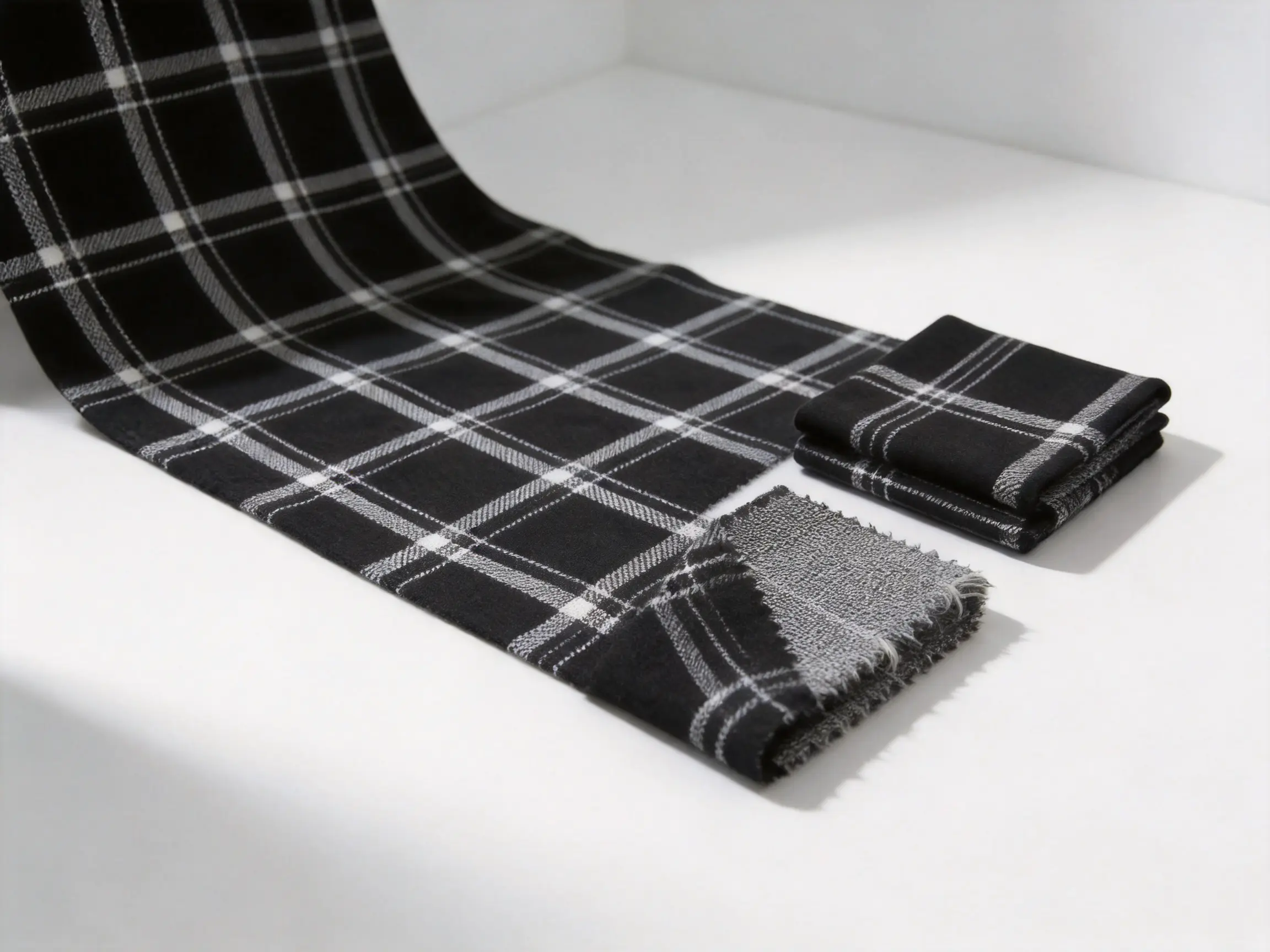
Advantages Compared with Competing Fabric Options
Jacquard Black and White Grid Fabric competes with several alternative textile solutions, including printed jersey, plain knitted fabric, woven checks, embroidered fabric, and lower-grade jacquard materials. Each alternative has its own uses, but the knitted jacquard structure offers a balanced combination of design, flexibility, and practical value.
| Comparison Factor | Knitted Jacquard Grid Fabric | Printed Knitted Fabric | Plain Knitted Fabric | Woven Check Fabric |
|---|---|---|---|---|
| Pattern formation | Integrated into the knitted structure | Applied mainly to the surface | Usually single color or basic texture | Created through woven yarn arrangement |
| Visual depth | Strong structural and color interaction | Primarily graphic surface effect | Limited unless special finishing is used | Can be strong but may feel more rigid |
| Flexibility | Suitable for many stretch-oriented garments | Usually flexible, depending on base fabric | Generally flexible | Often less adaptable to body movement |
| Design impact | Distinctive and highly recognizable | Wide range of graphics and images | Simple and easy to coordinate | Classic checks and structured styling |
| Decorative value | Built-in pattern can reduce added decoration | May require additional finishing for depth | May need embellishment or printing | Often depends on tailoring and construction |
| Application range | Garments, accessories, and home sewing | Garments and promotional products | Basic apparel and lining applications | Outerwear, shirts, skirts, and home goods |
Advantages Over Surface Printing
A printed fabric can reproduce extremely detailed artwork, but the result is generally concentrated on the surface. With knitted jacquard, the pattern is tied more closely to the textile structure. This can create a more substantial appearance and may help the fabric retain its design character through normal handling and use.
The integrated construction also reduces the risk that the fabric will look like an ordinary base material with a graphic added afterward. Instead, the grid becomes part of the material’s identity. This distinction is valuable for brands seeking a more refined or engineered appearance.
Advantages Over Plain Fabrics
Plain fabrics remain essential in apparel production, but they often need support from garment shape, trims, or accessories to create a strong visual statement. A black and white jacquard grid fabric can provide immediate design interest. It can be used in a relatively simple garment silhouette while still producing a memorable finished product.
The pattern also helps manufacturers develop coordinated collections. A single grid fabric can be paired with black or white solids to create panels, contrast sections, cuffs, collars, belts, or accessories. This provides a practical way to create multiple styles while maintaining a consistent visual theme.
Advantages Over Woven Checks
Woven checks can offer excellent stability and a traditional appearance, but they may feel more structured and less adaptable than knitted materials. A knitted jacquard grid fabric can be better suited to garments that require softness, movement, or a closer relationship with the body.
The choice between knitted and woven fabric should always reflect the end use. However, for comfortable fashion garments, casualwear, flexible tops, dresses, skirts, lightweight jackets, and selected accessories, the knitted construction can provide a useful performance advantage.
Material Development and Yarn Considerations
Yarn selection is central to the quality of any knitted jacquard product. The yarn influences color clarity, strength, softness, stretch behavior, surface appearance, abrasion resistance, and finishing response. Hangzhou Jinfeng Textile Co., Ltd. has production experience in draw textured yarn, including DTY polyester yarn, as well as blended textile materials.
Draw textured yarn is commonly used to provide bulk, flexibility, and a more developed surface compared with a completely flat filament yarn. The texturing process changes the yarn’s form and can contribute to a fuller hand feel and improved fabric coverage. When carefully selected for a jacquard application, textured yarn may help strengthen the visual contrast between different areas of the pattern.
Polyester yarn is widely used in textile production because it can offer durability, dimensional stability, color retention, and ease of care. When combined with other fibers in a blended construction, it can be balanced with additional properties such as softness, drape, moisture response, or a different tactile character. The most suitable composition depends on the customer’s target market and product requirements.
Rayon blends are often selected when a softer touch and more fluid appearance are desired. Spandex-containing constructions may be appropriate for products requiring greater elasticity and body movement. The company’s experience with polyester, spandex, rayon, and other blended fabrics provides a foundation for discussing material options according to the intended application.
Color Contrast and Yarn Matching
Black and white fabrics require disciplined yarn matching. Black must remain sufficiently deep and consistent, while white must maintain a clean appearance without unwanted discoloration. The relationship between the two shades affects the sharpness of the grid and the perceived quality of the finished fabric.
Color management begins with yarn selection and continues through knitting, dyeing where applicable, finishing, inspection, and packaging. Small differences in shade can become more noticeable when placed next to a contrasting color. For commercial production, consistent color control across batches is essential for maintaining a uniform product line.
Advanced Manufacturing Process
The quality of Jacquard Black and White Grid Fabric depends on more than the design concept. It also depends on the supplier’s ability to translate the concept into a stable, repeatable production process. A professional workflow normally includes product planning, yarn preparation, knitting, inspection, post-dyeing or color treatment where required, finishing, final quality assessment, and order preparation.
Product Planning and Technical Preparation
Before production begins, the textile specification should be clarified. Important details can include composition, finished width, fabric weight, pattern repeat, stretch requirement, color standard, intended end use, finishing preference, packaging format, and acceptable tolerance range.
Technical preparation is especially important for geometric patterns. The grid repeat must be compatible with the knitting structure and the planned garment pieces. A repeat that looks attractive on a sample may require adjustment when scaled to commercial width or matched at seams.
Yarn Preparation
Yarn preparation establishes the foundation for stable knitting. The yarn must be suitable for the selected machine, gauge, pattern structure, and production speed. Tension, winding quality, yarn cleanliness, and package consistency can affect the appearance of the fabric.
When textured yarn is used, the degree of bulk and texture should be appropriate for the design. Excessive variation can affect pattern definition, while insufficient texture may reduce the desired surface character. Controlled preparation helps the knitting stage produce a more even and attractive result.
Jacquard Knitting
During jacquard knitting, the machine controls the arrangement of yarns and loops according to the programmed pattern. The black and white grid must be formed with accurate repeat control and stable yarn feeding. Machine settings may influence fabric density, thickness, stretch, surface relief, and pattern sharpness.
Experienced production personnel monitor the interaction between the design file, machine parameters, yarn properties, and fabric behavior. This is important because a pattern that appears correct in a digital design may respond differently when knitted with specific yarns and technical settings.
Knitting tension must be managed carefully. Excessive tension may make the fabric feel harsh or restrict movement, while insufficient control may lead to loose areas, distorted lines, or uneven width. Consistent tension supports a more stable grid and improves the efficiency of later cutting and sewing operations.
Post-Dyeing and Finishing
After knitting, the material may undergo post-dyeing, setting, softening, shaping, or other finishing treatments according to the product specification. The company’s capabilities include production and processing, post-dyeing, finishing, and sales of blended fabrics.
Finishing has several purposes. It can improve hand feel, stabilize dimensions, enhance appearance, control width, and prepare the material for garment manufacturing. The correct treatment should preserve the clarity of the black and white design while delivering the desired level of softness and drape.
Finishing must be selected with care because excessive heat, pressure, or chemical treatment may affect color balance, stretch, surface texture, or fabric recovery. A well-managed finishing process brings the different stages of production together and helps create a fabric that is both visually attractive and practical to use.
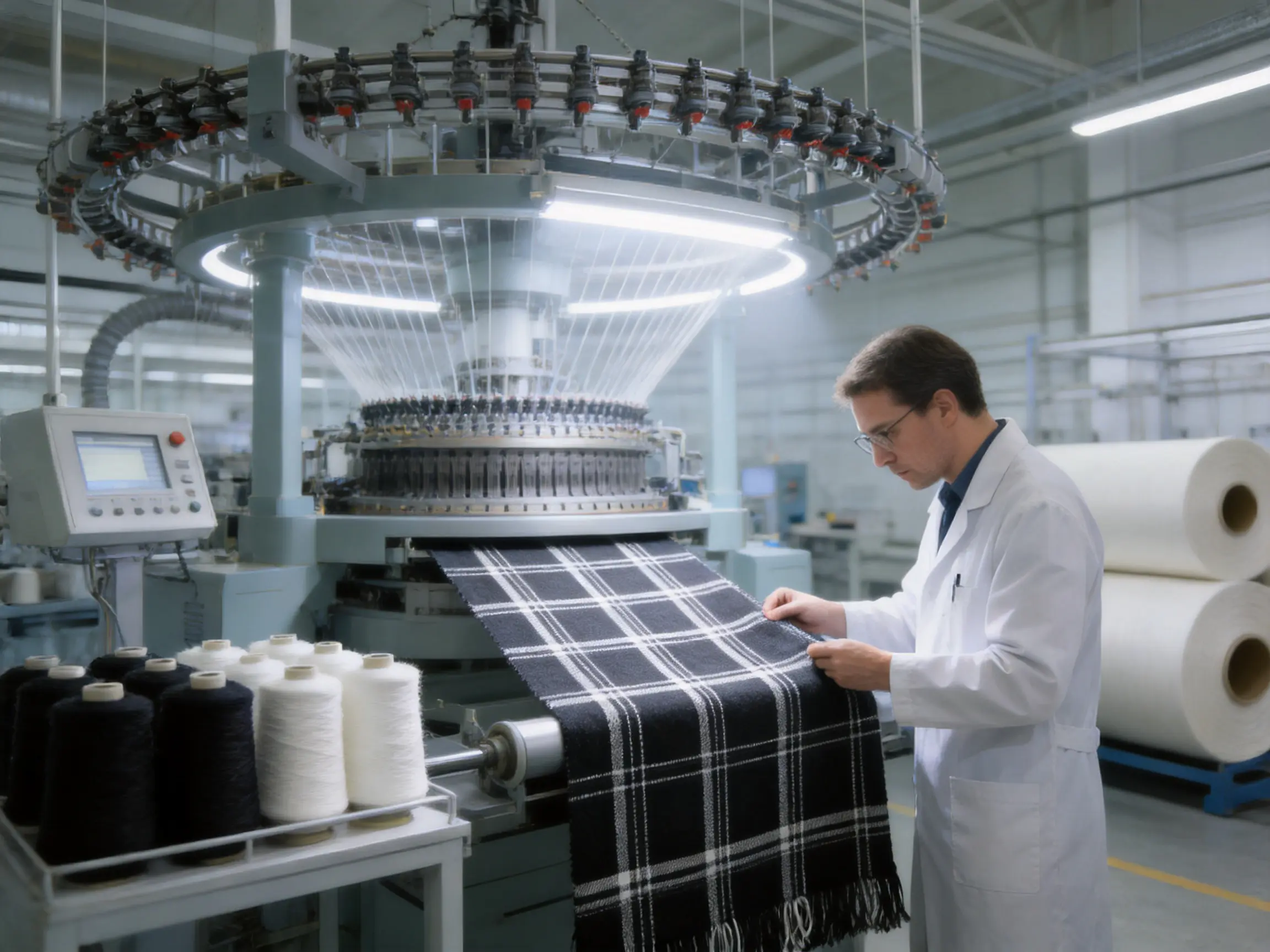
Quality Control and Production Consistency
Quality control is one of the most important differences between a dependable textile supplier and an inconsistent source. For a high-contrast jacquard fabric, inspection should address both visual and technical characteristics. The fabric must not only look attractive on a sample; it must also remain consistent across production lots.
Visual Inspection
Visual inspection may identify broken lines, missing yarns, stains, holes, uneven density, color variation, needle marks, pattern distortion, and finishing irregularities. Inspectors should examine the fabric under appropriate lighting and review the full roll or an agreed inspection length.
Because the grid design contains repeated lines, defects can be especially visible. A small interruption may attract attention in a way that would be less noticeable in a random or low-contrast pattern. This makes systematic inspection essential.
Dimensional Stability
Knitted fabrics can change in length or width if they are not properly stabilized. Dimensional testing helps determine whether the fabric is suitable for cutting and whether the finished garment is likely to maintain its intended shape after care processes.
Customers may request information about width, weight, shrinkage, stretch, recovery, and washing behavior. The appropriate test method depends on the end use and the customer’s internal standards. Clear communication before production helps ensure that the fabric is evaluated against relevant criteria.
Handle and Performance Evaluation
Hand feel is often assessed by touch, but professional evaluation should also consider the garment’s intended purpose. A fabric for a close-fitting top may need a different balance of softness and recovery than a fabric for a structured decorative panel. The ideal handle is determined by the product concept.
Other potential evaluation areas include abrasion resistance, pilling tendency, colorfastness, seam performance, and resistance to ordinary handling. The exact performance level will depend on composition and construction, so buyers should request samples and technical information before confirming large-scale orders.
Applications in Apparel and Fashion
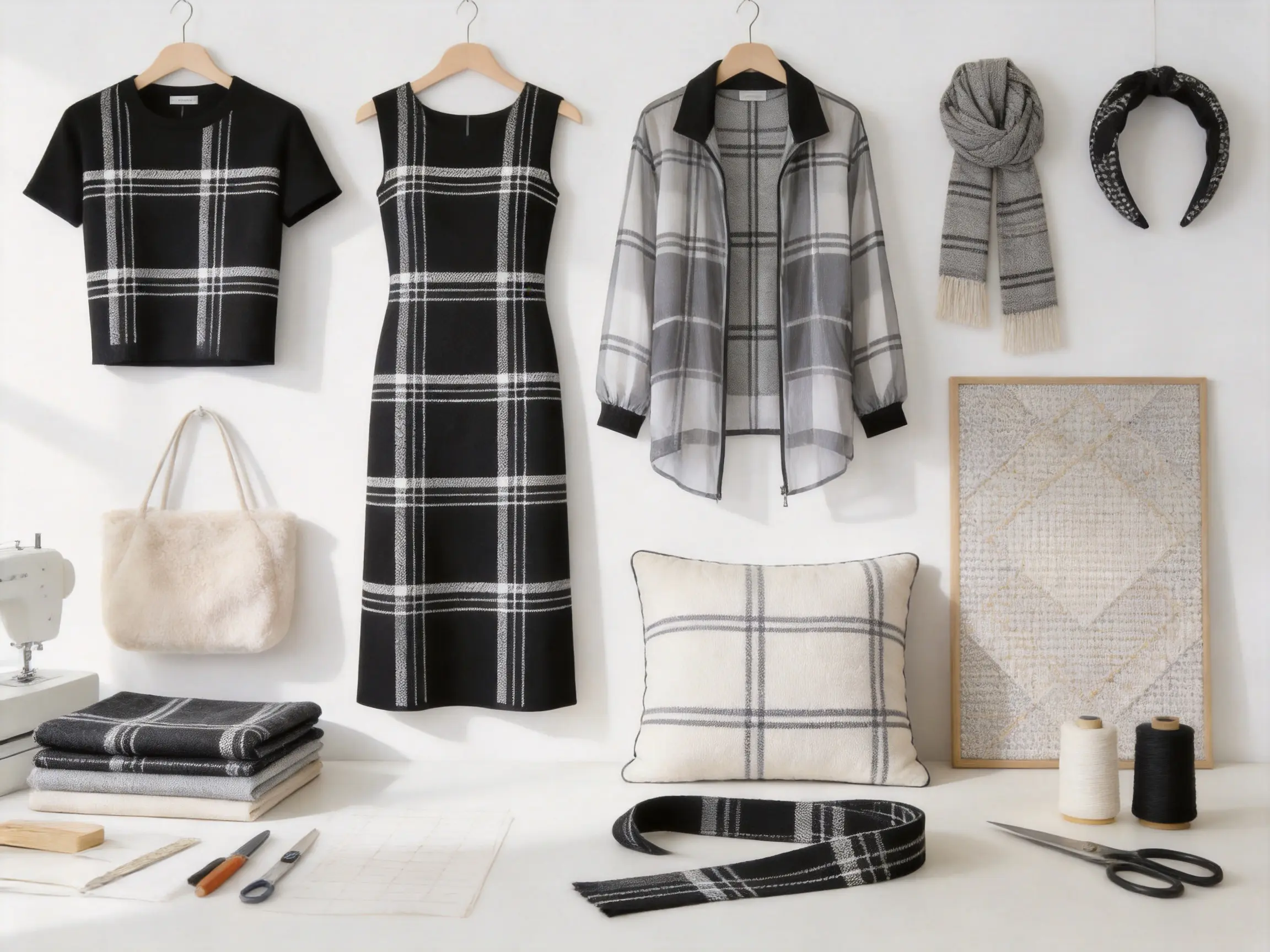
The most popular use for jacquard patterns is garment-making. Jacquard Black and White Grid Fabric is particularly suitable for clothing that benefits from a strong graphic structure and a comfortable knitted base.
Tops and Blouses
The fabric can be used for tops, pullovers, blouses, and casual shirts. A full grid front can create a bold statement, while a partial panel can provide a more restrained interpretation. Designers may combine it with solid black or white fabric at the sleeves, neckline, side panels, or hem.
Dresses and Skirts
Grid jacquard can support both fitted and relaxed dresses, depending on its stretch and weight. In a dress, the pattern can emphasize vertical or horizontal garment sections. In skirts, it can create a strong visual surface while remaining more comfortable than some rigid woven alternatives.
Jackets and Lightweight Outer Layers
When the fabric weight and construction are appropriate, it may be used for lightweight jackets, cardigans, overshirts, or fashion outer layers. A black and white grid can provide a polished appearance without requiring elaborate trims.
Children’s and Youth Fashion
The simple geometry of the grid can be interpreted in a youthful and contemporary way. It can be used for selected children’s garments, youth tops, casual skirts, vests, and accessories. Product designers should consider softness, safety, care instructions, and the appropriate scale of the pattern for smaller garment pieces.
Accessories
Small accessories can use the material as a feature element. Potential applications include scarves, headbands, fabric belts, tote panels, soft bags, hats, and decorative inserts. The pattern can make an accessory visually recognizable even when the construction is simple.
Home Sewing and Interior Applications
Although apparel is the most obvious application, jacquard fabrics are also suitable for selected home-based sewing projects. Their range of colors, textures, and designs makes them useful for creators who want to produce decorative yet practical items.
The black and white palette works well in contemporary interiors. Depending on weight and finishing, the fabric may be used for cushion covers, small decorative panels, table accents, fabric organizers, wall pockets, or other creative sewing projects. It can also be combined with plain black, white, gray, or natural fabrics to create a coordinated interior collection.
Home sewing users should select the fabric according to the project’s structural requirements. A flexible knitted jacquard may be ideal for soft goods but may require stabilizing materials for items that need a firm shape. Proper cutting, seam treatment, and washing preparation are important for achieving a professional result.
The fabric’s integrated pattern can simplify decoration. Instead of adding embroidery or printed details, the maker can allow the grid itself to provide the visual interest. This can save time while producing a finished project with a clear design identity.
Company Manufacturing Strengths
Hangzhou Jinfeng Textile Co., Ltd. is located in Jingjiang Street Industrial Park, Xiaoshan District, Hangzhou City, Zhejiang Province. The company covers approximately 32.6 acres and has a plant area of about 18,000 square meters. Its operating scope includes production and processing, post-dyeing, finishing, and sales of blended fabrics such as polyester and spandex, together with DTY polyester yarn production, processing, and sales.
This combination of textile and yarn capabilities can provide an important foundation for product development. A supplier with knowledge of both yarn and fabric is better positioned to discuss how yarn characteristics affect knitted appearance, hand feel, stability, and performance. It also supports more informed communication when customers require a specific combination of pattern, texture, composition, and finishing.
The company operates as an export-oriented enterprise integrating research and development, production, and sales. This integrated structure is valuable for buyers who need assistance across several stages of a project, from initial product discussion through sample development, manufacturing, finishing, inspection, and shipment coordination.
Its product categories include polyester rayon fabric, knitted jacquard fabric, NTR knitted fabric, NR knitted fabric, and slightly intermingled draw textured yarn. This broader portfolio indicates experience with different textile structures and material combinations rather than dependence on a single product type.
Integrated R and D, Production, and Sales
An integrated business structure can shorten communication paths. When product development, manufacturing, and customer service are connected, technical questions can be transferred more efficiently between departments. This may help reduce misunderstandings related to yarn choice, pattern execution, finishing requirements, and delivery expectations.
For international customers, communication is particularly important. Clear specifications, sample confirmation, production updates, and quality feedback all contribute to a smoother purchasing process. A supplier that understands both production details and export requirements can provide greater practical support than a source focused only on one stage of the supply chain.
Capacity for Customized Development
Jacquard products often require discussion of repeat size, color arrangement, weight, width, stretch, and finish. The company’s experience across knitted jacquard and blended fabric categories creates a useful basis for customized development. Buyers can discuss whether the standard black and white grid should be adjusted for a particular market, garment type, or collection concept.
Customization should be approached systematically. A buyer should provide target specifications, reference samples, application information, expected order quantity, and performance priorities. The supplier can then evaluate the appropriate yarn, knitting structure, and finishing route.
Product Selection and Ordering Guidance
When evaluating Jacquard Black and White Grid Fabric, buyers should begin with the intended end use. A fabric intended for a lightweight top will have different requirements from one intended for a structured jacket, accessory, or home sewing project.
| Selection Item | Why It Matters | Questions for Buyers |
|---|---|---|
| Fiber composition | Affects comfort, durability, stretch, care, and appearance | Which fibers and blend ratios suit the target product? |
| Fabric weight | Influences drape, warmth, opacity, and sewing behavior | Should the material be lightweight, medium weight, or substantial? |
| Finished width | Determines cutting efficiency and garment planning | Does the usable width meet the marker requirements? |
| Pattern repeat | Influences visual scale and seam matching | Is the grid size suitable for the planned garment pieces? |
| Stretch and recovery | Important for comfort and shape retention | Does the fabric need two-way or four-way flexibility? |
| Finishing | Controls hand feel, stability, and surface appearance | Is a soft, smooth, structured, or brushed finish preferred? |
| Color standard | Maintains consistency between samples and production | Are black and white shades matched to an approved reference? |
| Care performance | Supports consumer satisfaction and product durability | What washing and maintenance requirements apply? |
Requesting a sample before placing a production order is strongly recommended. The sample should be reviewed for appearance, hand feel, stretch, sewing behavior, pattern scale, and compatibility with other materials. If the fabric will be used in a commercial collection, a sample garment or pilot production can provide additional information.
Buyers should also confirm packaging, roll length, inspection standards, lead time, payment terms, and shipping arrangements. These operational details are as important as the textile specification when planning a reliable supply program.
Sustainable and Efficient Product Use
Responsible textile use begins with selecting a fabric that performs appropriately for its intended application. A material that delivers the desired appearance and durability can reduce the need for replacement or excessive decorative additions. The integrated jacquard design may also reduce dependence on separate prints, appliqués, or trims.
Efficient cutting is another important consideration. The grid pattern should be planned carefully to reduce waste and maintain attractive alignment. Designers can use the repeat strategically, placing it symmetrically on garment fronts or using intentional contrast between different panels.
Production efficiency can also be improved through clear technical specifications. Accurate information about width, weight, stretch, repeat, and finishing helps reduce sampling errors and unnecessary adjustments. Close communication between the buyer and supplier supports better use of yarn, fabric, labor, and shipping resources.
Specific environmental claims should always be supported by verified technical documentation. Buyers seeking recycled fibers, restricted-substance compliance, or certified production should discuss those requirements directly with the supplier and request relevant evidence before making public claims.
Care and Handling Considerations
Care instructions should be based on the final fiber composition and finishing treatment. Different constructions may respond differently to washing, drying, ironing, and chemical exposure. Before commercial labeling, brands should conduct their own care testing or follow the supplier’s verified recommendations.
Knitted jacquard fabrics should generally be handled carefully during cutting and sewing to protect the pattern and maintain dimensional control. Garment makers may need to consider seam stretch, edge stability, needle selection, thread choice, and pressing temperature.
For storage, fabric should be kept clean, dry, and protected from excessive heat, moisture, and direct sunlight. Rolls should be supported appropriately to avoid unnecessary compression or deformation. Proper handling before production helps preserve the appearance and usability of the material.
Why Choose This Fabric for Competitive Product Lines?
In a crowded textile market, product differentiation is essential. Jacquard Black and White Grid Fabric offers differentiation through a combination of strong visual identity and practical knitted performance. It can make a garment recognizable without relying on complicated decoration or expensive surface treatments.
The fabric is also adaptable. It can support fashion apparel, casualwear, accessories, and creative home sewing. This multi-application potential can help manufacturers use one product concept across different collections or customer segments.
Its black and white palette is commercially flexible. The colors coordinate with many existing materials and can be adapted to minimalist, monochrome, streetwear, office-casual, contemporary, or artistic design directions. This versatility may extend the useful life of the fabric beyond a single seasonal trend.
Finally, the backing of an experienced textile manufacturer adds value. The company’s facilities, blended fabric knowledge, DTY polyester yarn capabilities, post-dyeing and finishing experience, and integrated research, production, and sales structure provide a practical foundation for consistent supply and product development.
Frequently Asked Questions
What is Jacquard Black and White Grid Fabric?
It is a knitted jacquard fabric featuring a contrasting black and white grid design. The pattern is formed through the knitting structure, giving the fabric integrated visual and textural character rather than relying only on surface printing.
Is this fabric suitable for clothing?
Yes. Its most popular application is garment-making. Depending on the specific composition, weight, stretch, and finish, it may be suitable for tops, dresses, skirts, jackets, casualwear, youth fashion, and accessories.
Can it be used for home sewing projects?
Yes. The fabric’s colors, texture, and geometric design make it suitable for selected home sewing projects such as cushion covers, decorative panels, organizers, soft bags, and other creative items. The maker should select a weight and construction appropriate for the project.
How does knitted jacquard differ from printed fabric?
Knitted jacquard forms the design through the arrangement of yarns and knitted structures. Printed fabric places the design mainly on the surface. Jacquard can provide greater structural depth and a more integrated appearance, while printing may be preferable for highly detailed or photographic artwork.
Does the fabric stretch?
The amount of stretch depends on the fiber composition and knitted construction. Some versions may provide natural knitted flexibility, while fabrics containing spandex may offer additional elasticity. Buyers should confirm the technical specification for the exact product.
Can the pattern be customized?
Customization may be possible depending on the required repeat, color arrangement, yarn selection, fabric weight, width, and production quantity. Buyers should provide a clear technical brief and discuss development options with the manufacturer.
What yarns are associated with this product range?
The company works with polyester yarn, DTY polyester yarn, rayon blends, spandex-related fabrics, and other blended textile materials. The appropriate yarn depends on the desired hand feel, durability, stretch, texture, and end use.
What should buyers check before ordering?
Buyers should review fiber composition, weight, width, pattern repeat, stretch, recovery, color consistency, dimensional stability, finishing, care performance, packaging, minimum order requirements, lead time, and inspection standards. A physical sample should be evaluated before confirming bulk production.
Why is quality control important for a black and white grid design?
High contrast makes irregularities easier to see. Broken lines, uneven tension, shade differences, pattern distortion, and surface defects can be visually prominent. Careful inspection helps ensure that the grid remains clear and consistent across the fabric roll.
Where is the manufacturer located?
Hangzhou Jinfeng Textile Co., Ltd. is located in Jingjiang Street Industrial Park, Xiaoshan District, Hangzhou City, Zhejiang Province. The company operates production, processing, finishing, research and development, sales, and export activities in the textile sector.
Conclusion
Jacquard Black and White Grid Fabric combines a recognizable geometric design with the flexibility and comfort associated with knitted textiles. Its integrated jacquard construction gives the material greater visual depth than a basic plain knit, while its strong contrast and adaptable palette provide broad design possibilities.
The fabric is suitable for garment-making, accessories, and selected home sewing projects. It can be used as a complete garment material or combined with solid colors and complementary textiles. Its design can support contemporary, classic, casual, youthful, and minimalist product directions.
Its competitive advantages include pattern integration, visual clarity, flexible styling, textural interest, coordination with other fabrics, and suitability for multiple applications. These qualities are strengthened by a manufacturing background that includes knitted jacquard fabrics, blended fabrics, DTY polyester yarn, post-dyeing, finishing, and export-oriented textile operations.
For buyers seeking a fabric that offers both design impact and practical development potential, this product represents a strong option. Careful specification, sample evaluation, technical communication, and quality inspection will help ensure that the final material meets the needs of the intended market.
References
1. Hangzhou Jinfeng Textile Co., Ltd. Product and company information supplied for this article.
2. Textile Institute. Textile Terminology and Fabric Construction Principles.
3. A. R. Horrocks and S. C. Anand, Handbook of Technical Textiles.
4. A. J. Hall, Textile Finishing and Performance Evaluation Methods.
5. International textile testing practices for fabric dimensional stability, colorfastness, abrasion, and pilling evaluation.
6. General technical literature on knitted fabric structures, jacquard pattern formation, polyester yarn, rayon blends, spandex-containing textiles, and draw textured yarn.