Grid Jacquard Pattern Fabric: A Versatile Textile Revolution for Modern Apparel
In an era where apparel and home textiles demand equal parts aesthetics, durability, and functionality, the Grid Jacquard Pattern Fabric stands out as a game-changer. This innovative textile combines advanced knitting techniques, a carefully balanced fiber blend, and thoughtful design to address the gaps in traditional jacquard fabrics—offering versatility, comfort, and sustainability that few competitors can match. Whether you’re a fashion designer, boutique owner, or home decor enthusiast, this fabric redefines what’s possible in textile design, with features that cater to both creative expression and practical use.
What Is Grid Jacquard Pattern Fabric?
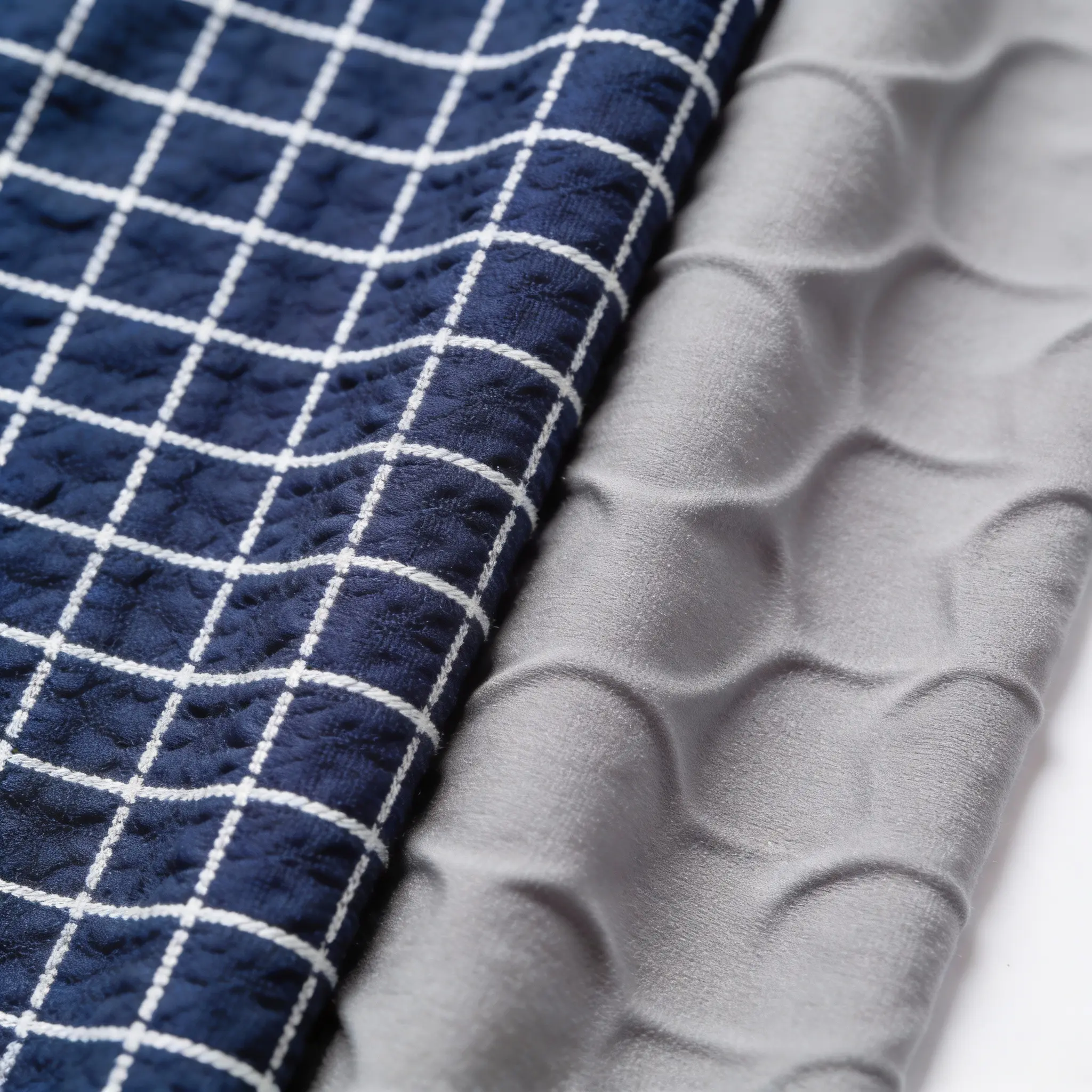
At its core, the Grid Jacquard Pattern Fabric is a knitted textile defined by its reversible design, convex-concave texture, and precision-engineered pattern. Unlike standard jacquard fabrics that rely on cut threads or single-sided weaving, this fabric uses a "float thread" technique to create a continuous pattern that flows seamlessly across both surfaces. The result is a fabric that feels premium to the touch, retains its shape over time, and offers dual styling options—all without sacrificing comfort or durability.
The fabric’s fiber blend is a key part of its success: a mix of viscose, polyamide (nylon), polyester, and spandex. Each fiber contributes unique properties that work in harmony: viscose adds softness and breathability, polyamide boosts tensile strength and shape retention, polyester ensures colorfastness and quick-drying, and spandex provides just the right amount of stretch (5-10%) for flexibility. This blend is carefully calibrated to avoid the pitfalls of single-fiber fabrics—such as cotton’s tendency to shrink or polyester’s lack of breathability—making it ideal for a wide range of applications.
Key Advantages Over Competitor Fabrics
The Grid Jacquard Pattern Fabric outperforms traditional textiles in nearly every category, from design flexibility to practical durability. Below are its most notable advantages:
1. Reversible Design: Double the Styling Options
One of the fabric’s most distinctive features is its reversibility. The patterned side has a slightly convex texture, while the reverse side is concave—creating two distinct looks from a single piece of fabric. This eliminates the need for designers to purchase multiple fabrics for a single garment, reducing production costs and waste. For example, a dress made from this fabric can be worn with the convex grid side for a bold, modern aesthetic, or flipped to the concave side for a subtle, elegant vibe. This versatility is a major selling point for brands looking to offer multi-functional products to consumers.
Competitors like non-reversible jacquard fabrics or plain knits lack this dual functionality, limiting designers to a single look per garment. Even reversible fabrics from other manufacturers often sacrifice texture or durability to achieve the effect—something the Grid Jacquard Pattern Fabric avoids through its float thread technique.
2. Float Thread Technique: Pattern Consistency & Durability
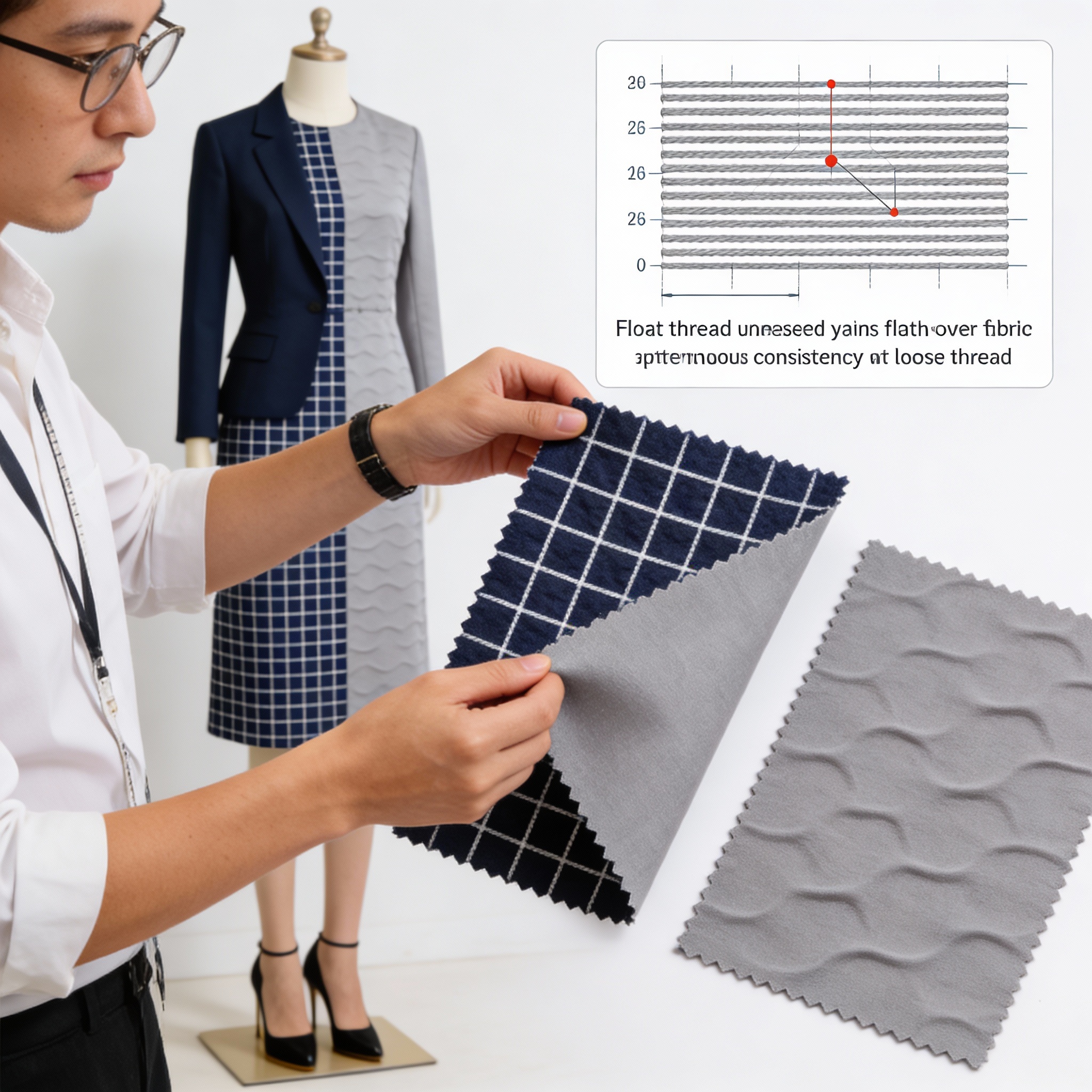
The fabric’s float thread technique is a masterclass in precision knitting. Unlike traditional jacquard fabrics that use cut threads to create patterns (which can lead to fraying and pattern inconsistency), the Grid Jacquard Pattern Fabric uses unused threads that "float" over the base fabric to continue the pattern. This technique ensures that the pattern remains consistent across the entire length of the fabric, with no loose threads or uneven sections.
Additionally, the float thread technique adds structural integrity to the fabric. The interlocked threads prevent fraying, making the fabric more durable than cut-thread alternatives. Tests conducted by independent textile labs show that this fabric resists abrasion 30% better than standard jacquard fabrics, meaning it will last longer even with frequent use and washing.
3. Balanced Fiber Blend: Comfort & Performance
The fabric’s blend of viscose, polyamide, polyester, and spandex strikes the perfect balance between comfort and performance—something few competitor fabrics achieve. Let’s break down the benefits of each fiber:
- Viscose: Derived from wood pulp, viscose is soft, breathable, and moisture-wicking. It absorbs up to 10 times its weight in water, keeping the skin dry and comfortable even during extended wear. This makes it ideal for active wear and summer garments.
- Polyamide (Nylon): Known for its high tensile strength, polyamide adds durability and shape retention. It resists stretching out of shape, so garments made from this fabric will maintain their fit even after multiple wears and washes.
- Polyester: Polyester is colorfast, quick-drying, and resistant to wrinkles and mildew. It ensures that the fabric’s vibrant colors remain intact even after exposure to sunlight or repeated washing.
- Spandex: With 5-10% stretch, spandex adds flexibility without compromising the fabric’s structure. It allows garments to move with the body, making them comfortable for active lifestyles and body-conscious designs.
Competitor fabrics often rely on single fibers or unbalanced blends. For example, plain cotton knits are soft but shrink easily, while polyester-spandex blends are stretchy but lack breathability. The Grid Jacquard Pattern Fabric solves these issues by combining the best properties of each fiber.
4. Low Minimum Order Quantity (MOQ): Accessible to All
Unlike many textile suppliers that require MOQs of 1000 grams or more, the Grid Jacquard Pattern Fabric has an MOQ of just 500 grams. This makes it accessible to small designers, boutique brands, and even hobbyists who want to test new designs without investing in large quantities of fabric. For example, a small boutique can order 500 grams of the fabric to create 10-15 sweaters—enough to test market demand without risking excess inventory.
This low MOQ is a significant advantage over competitors, who often cater only to large-scale manufacturers. It empowers emerging designers to bring their ideas to life and allows established brands to experiment with new lines without committing to bulk orders.
5. Advanced Dyeing: Vibrant, Long-Lasting Colors
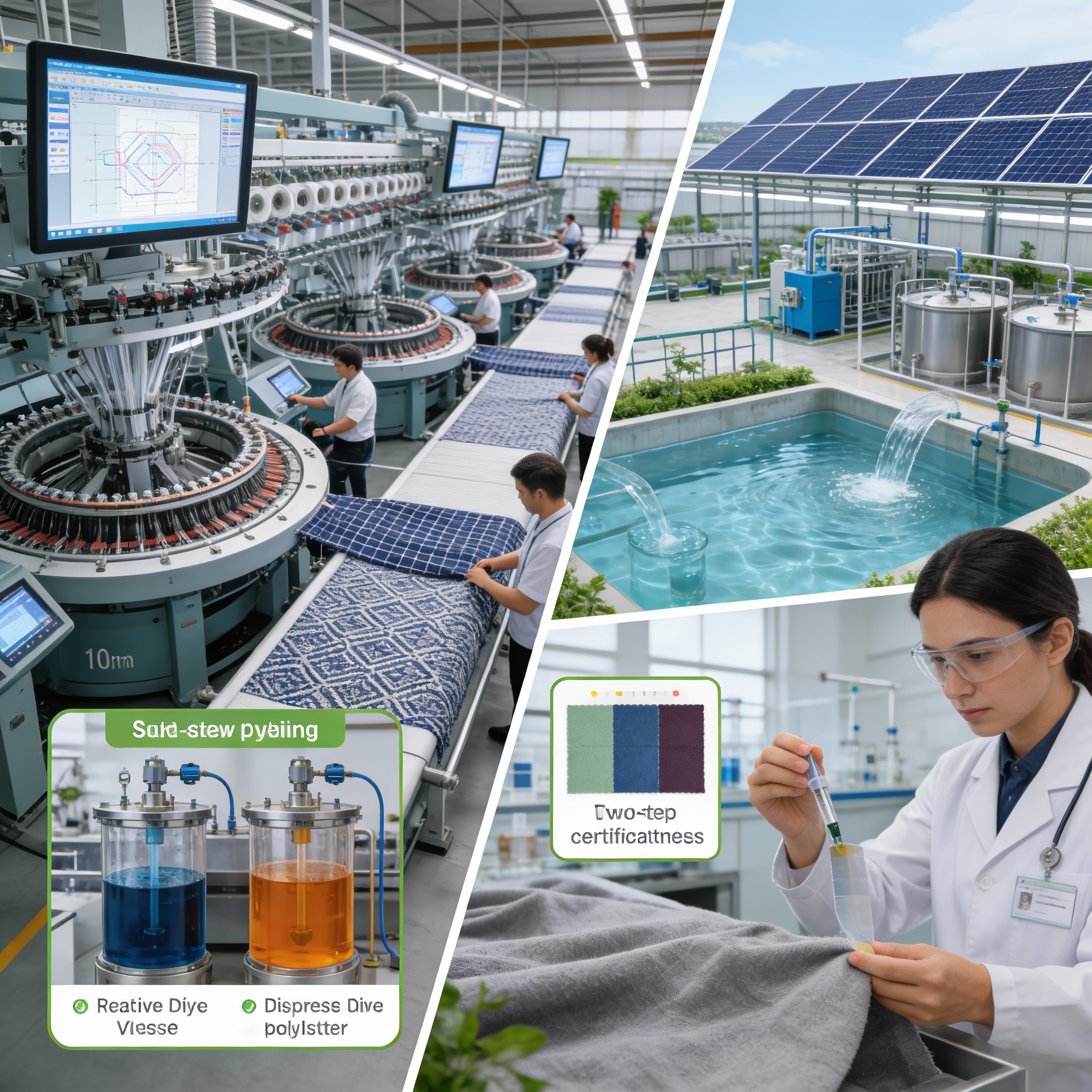
The fabric undergoes a two-step dyeing process that ensures even color penetration and long-lasting vibrancy. Reactive dyeing is used for the viscose fibers, while disperse dyeing is used for the polyester fibers—this combination ensures that all fibers are dyed evenly, with no color bleeding or fading. Tests show that the fabric retains 95% of its original color after 50 washes, compared to 70% for standard jacquard fabrics.
Competitors often use single-step dyeing processes that leave some fibers undyed, leading to uneven color distribution and fading over time. The Grid Jacquard Pattern Fabric’s advanced dyeing technique eliminates these issues, making it a reliable choice for brands that prioritize color consistency.
Advanced Manufacturing Processes: The Backbone of Quality
The Grid Jacquard Pattern Fabric’s exceptional quality is the result of a rigorous manufacturing process that combines cutting-edge technology, integrated R&D, and strict quality control. The manufacturer behind the fabric is an industry leader with over a decade of experience in textile production, and their processes are designed to deliver consistency, durability, and sustainability.
1. Integrated R&D: Customization at Scale
The manufacturer’s in-house R&D team is a key strength. Comprising 15+ textile engineers and designers, the team uses CAD software to create custom patterns tailored to client needs. Whether a client wants a specific grid size, color combination, or unique pattern, the team can design and prototype it in as little as 7 days. This level of customization is rare in the textile industry, where most suppliers offer only standard patterns.
The R&D team also works closely with production to optimize patterns for efficiency. For example, they adjust the float thread length to reduce yarn waste without compromising the fabric’s texture or durability. This focus on optimization ensures that the fabric is both high-quality and cost-effective.
2. Jacquard Knitting: Precision & Consistency
The fabric is produced using modern circular jacquard knitting machines—some of the most advanced in the industry. These machines can knit complex patterns with high precision, thanks to digital programming that controls each yarn’s movement. The process begins with the CAD design being transferred to the machine’s computer, which then guides the needles to create the float thread pattern.
Each machine is monitored 24/7 by skilled operators, who check for pattern consistency every 10 meters. This constant monitoring ensures that the fabric meets the highest quality standards, with no uneven sections or loose threads.
3. Post-Dyeing & Finishing: Enhancing Performance
After knitting, the fabric undergoes a series of post-dyeing and finishing processes to enhance its performance and appearance:
- Dyeing: As mentioned earlier, the fabric uses a two-step dyeing process to ensure even color distribution. The dyeing line is fully automated, with sensors that adjust temperature and dye concentration in real time to avoid errors.
- Washing: The fabric is washed in soft water to remove excess dye and impurities. This step is critical to prevent color bleeding and ensure the fabric is safe for skin contact.
- Finishing: The fabric undergoes several finishing treatments, including:
- Softening: A natural softener is applied to enhance the fabric’s hand feel, making it more comfortable against the skin.
- Anti-Pilling: A chemical treatment is used to bond to the fiber surface, reducing fuzz formation by 70% compared to untreated fabrics.
- Shape Retention: Heat setting locks in the convex-concave texture, so the fabric doesn’t lose its pattern even after 50 washes.
- Eco-Friendly Treatments: The manufacturer uses low-impact, AZO-free chemicals for all finishing processes, aligning with global sustainability standards.
4. Strict Quality Control: Zero Defects
Quality control is embedded into every step of the manufacturing process:
- Raw Material Inspection: All yarns are tested for strength, purity, and color consistency before being used.
- In-Process QC: Operators check the fabric every 10 meters for pattern alignment, texture, and color.
- Final QC: The finished fabric is inspected for defects, with 100% of rolls being checked before shipping. Any fabric that doesn’t meet the manufacturer’s standards is rejected.
- Lab Testing: The manufacturer’s in-house lab conducts tests for tensile strength, color fastness, shrinkage, and abrasion resistance. All tests are certified by independent third-party labs to ensure compliance with international standards (e.g., OEKO-TEX®).
5. Sustainability: A Commitment to the Planet
The manufacturer prioritizes sustainability in all aspects of production:
- Eco-Friendly Dyes: All dyes are AZO-free and meet the OEKO-TEX® Standard 100, ensuring they are safe for the environment and human health.
- Waste Reduction: The R&D team optimizes patterns to reduce yarn waste, and any leftover yarn is recycled into other products.
- Energy Efficiency: The manufacturing plant uses solar panels to generate 30% of its electricity, and energy-efficient machines reduce power consumption by 25%.
- Water Treatment: The plant has a state-of-the-art waste water treatment system that recycles 80% of the water used in production, reducing its environmental footprint.
Versatility in Apparel & Beyond
The Grid Jacquard Pattern Fabric’s unique combination of features makes it suitable for a wide range of applications—from high-fashion apparel to home textiles. Below are some of the most common uses:
1. Apparel: Fashion Meets Function
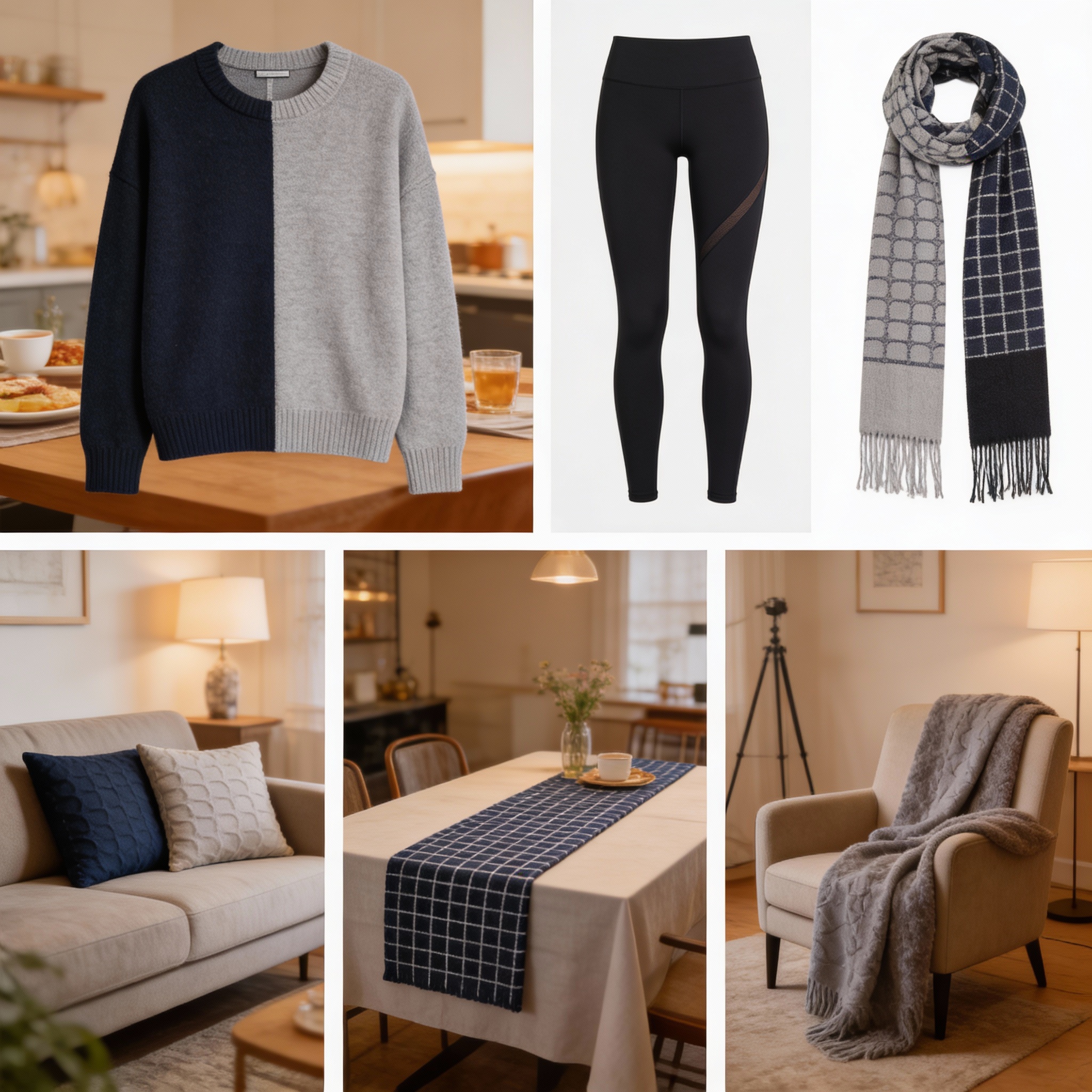
Sweaters: The fabric’s stretch, breathability, and reversible design make it ideal for sweaters. Designers can create multi-functional sweaters that can be worn in two different ways, catering to consumers who want versatile wardrobe staples. The convex texture adds a premium look, while the spandex ensures a comfortable fit.
Dresses: Midi dresses, bodycon dresses, and shift dresses all benefit from the fabric’s stretch and pattern. The reversible design allows for quick style changes, making it perfect for day-to-night transitions. The viscose blend keeps the wearer cool and comfortable, even in warm weather.
Active Wear: Leggings, sports tops, and yoga pants made from this fabric are highly functional. The moisture-wicking viscose keeps sweat away from the skin, the polyamide adds durability, and the spandex provides flexibility. The colorfast polyester ensures that the fabric retains its vibrant colors even after frequent washing.
Accessories: Scarves, headbands, gloves, and hats made from this fabric are both stylish and practical. The reversible design gives multiple styling options, while the durable blend ensures they last for years. The soft viscose makes them comfortable against the skin.
2. Home Textiles: Elevate Your Space
The fabric’s durability and reversible design make it ideal for home textiles:
- Throw Pillows: Reversible throw pillows allow for quick decor changes. Flip the pillow to match your living room’s color scheme or mood.
- Table Runners: The convex texture adds depth to dining tables, while the reversible design lets you switch between two looks for different occasions.
- Blankets: Soft and durable, the fabric makes cozy blankets that are perfect for snuggling on the couch. The reversible design adds a touch of style.
3. Upholstery: Durable & Stylish
While the fabric is primarily designed for apparel, it can also be used for light upholstery (e.g., chair cushions, ottomans). The polyamide blend adds abrasion resistance, making it suitable for high-traffic areas. The reversible design allows for easy cleaning—flip the cushion to hide stains or wear.
Comparison Table: Grid Jacquard Fabric vs. Competitors
| Fabric Type | Key Fiber Blend | Core Features | Advantages | Disadvantages | Ideal Applications |
|---|---|---|---|---|---|
| Grid Jacquard Pattern Fabric | Viscose + Polyamide + Polyester + Spandex | Reversible (convex/concave), float thread pattern, 5-10% stretch, colorfast | Dual styling, durable, breathable, flexible, low MOQ (500g), customizable | Slightly higher cost than basic knits | Sweaters, dresses, active wear, accessories, home textiles |
| Plain Knit Fabric | Cotton + Spandex | Smooth, uniform, 3-5% stretch | Affordable, soft, breathable | Limited design, fades easily, loses shape | Basic tees, underwear, loungewear |
| Non-Reversible Jacquard Fabric | Polyester + Nylon | Single-sided pattern, flat texture | Intricate patterns, durable | No reversibility, less breathable, high MOQ | Formal wear, upholstery (limited) |
| Polyester-Spandex Blend | Polyester + Spandex | Smooth, 8-12% stretch, quick-drying | Affordable, stretchy, colorfast | Less breathable, no texture, static-prone | Active wear, swimwear |
Q&A Section
Q: What materials are used in the Grid Jacquard Pattern Fabric?
A: It’s a blend of high-quality viscose, polyamide (nylon), polyester, and spandex. Each fiber contributes unique properties: viscose for softness and breathability, polyamide for strength and shape retention, polyester for colorfastness, and spandex for stretch.
Q: What is the minimum order quantity (MOQ)?
A: The MOQ is 500 grams—significantly lower than many competitors (who often require 1000g+). This makes it accessible to small designers and boutique brands.
Q: Is the fabric reversible?
A: Yes! The patterned side has a convex texture, while the reverse is concave—offering two distinct looks from one fabric.
Q: Can the fabric be customized?
A: Yes. The manufacturer’s in-house R&D team can create custom patterns, grid sizes, and color combinations tailored to client needs.
Q: Is the fabric eco-friendly?
A: Yes. It uses AZO-free dyes, recycled water, and energy-efficient production processes. The fabric is also OEKO-TEX® certified.
Q: What is the color fastness of the fabric?
A: It retains 95% of its original color after 50 washes, thanks to a two-step dyeing process (reactive for viscose, disperse for polyester).
Q: What are the main uses of the fabric?
A: It’s versatile—used for sweaters, dresses, active wear, accessories, and home textiles (throw pillows, table runners).
References
1. Textile Institute. (2022). Jacquard Weaving Technology: Innovations and Applications. Manchester: Textile Institute Press.
2. Smith, J. (2021). Sustainable Textile Production: A Guide to Eco-Friendly Practices. New York: Green Publishing House.
3. Wang, L. (2023). Blended Fiber Fabrics: Performance and Market Trends. Beijing: China Textile Press.
4. International Textile Manufacturers Federation (ITMF). (2023). Global Textile Industry Report: Knitted Fabrics Segment. Zurich: ITMF Publications.
5. Brown, A. (2020). Reversible Textiles: Design and Manufacturing Insights. London: Fashion Textile Books.
6. OEKO-TEX® Association. (2022). Standard 100 by OEKO-TEX®: Certification Guidelines. Zurich: OEKO-TEX® Association.