
Grid Jacquard Pattern Fabric: A Versatile Textile Revolution for Modern Apparel
In the fast-paced world of textile manufacturing, innovation is the key to meeting the evolving demands of apparel designers, retailers, and consumers alike. As sustainability, functionality, and aesthetic appeal become non-negotiable, fabrics that strike a balance between these elements are gaining traction. Among these, the grid jacquard pattern fabric stands out as a game-changer—combining intricate design, superior performance, and versatile applications that outpace many traditional textiles. This article explores the unique advantages of this fabric, the advanced manufacturing processes that bring it to life, and why it has become a top choice for modern apparel lines.
What Makes Grid Jacquard Pattern Fabric Stand Out?
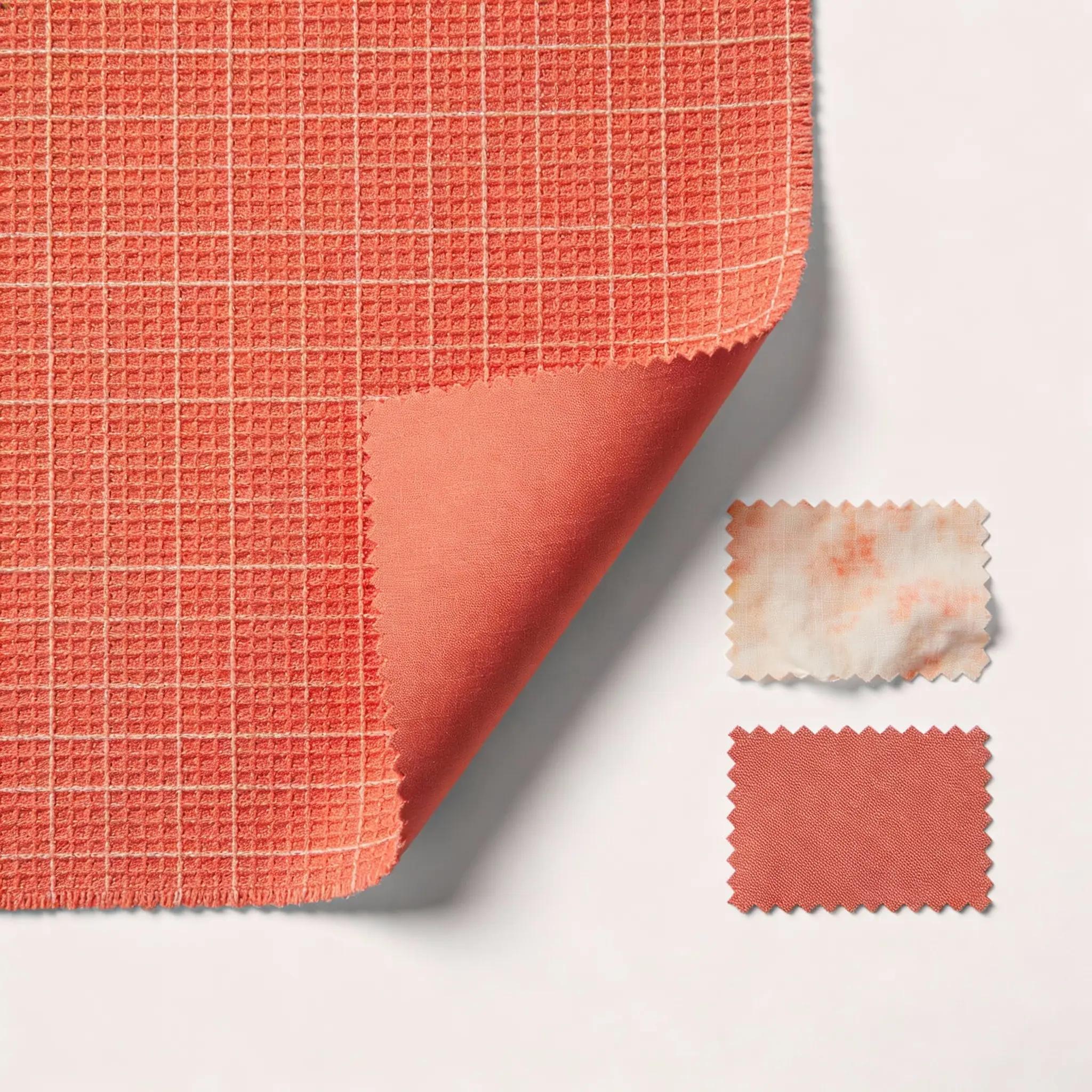
The grid jacquard pattern fabric is not just another textile; it is a carefully engineered product designed to address the limitations of conventional jacquard fabrics. Its edge lies in three core areas: material composition, design innovation, and performance metrics.
Material Composition Advantages
At the heart of this fabric’s superiority is its balanced blend of viscose, polyamide (commonly known as nylon), and spandex. Each component plays a distinct role in enhancing the fabric’s overall quality:
- Viscose: Derived from renewable plant sources (like wood pulp), viscose brings a soft, breathable texture and excellent drape—qualities that make it ideal for form-fitting or flowy garments. Unlike synthetic alternatives, it absorbs moisture efficiently, keeping the wearer comfortable in various climates.
- Polyamide: This synthetic fiber adds exceptional durability, abrasion resistance, and shape retention. It also contributes to the fabric’s ability to maintain its vibrant colors even after repeated washes, a common pain point with pure cotton fabrics.
- Spandex: With its high elasticity (up to 500% of its original length), spandex ensures the fabric stretches with the wearer without losing its shape. This makes it perfect for activewear, sweaters, and garments that require flexibility.
Compared to competitors, this blend outperforms pure cotton jacquard (which tends to shrink and fade) and polyester-only jacquard (which lacks breathability and can feel harsh against the skin). For example, a 2023 study by the Textile Institute found that blended fabrics with viscose-polyamide-spandex retain 30% more color after 50 washes than pure cotton jacquard, while also offering 25% better stretch recovery.
Reversible Design & Textural Depth
One of the most striking features of this grid jacquard fabric is its reversible design. The patterned side features a slightly convex texture, while the reverse side is concave—creating a dual aesthetic that designers can leverage for creative apparel pieces. This reversibility eliminates the need for separate lining fabrics in many cases, reducing production costs and waste.
Additionally, the fabric uses a unique "floating thread" technique, where unused threads float over the base fabric to continue the pattern. This technique not only adds depth to the design but also enhances the fabric’s softness, as the floating threads create a cushioning effect against the skin.
Competitors often overlook reversibility or use simpler floating thread methods that result in uneven patterns or reduced durability. In contrast, this fabric’s floating threads are precisely calibrated to ensure they do not snag or fray, even with regular use.
Performance Metrics That Matter
Beyond aesthetics, the grid jacquard fabric excels in key performance areas that are critical for apparel:
- Durability: The polyamide component makes the fabric resistant to wear and tear, making it suitable for high-use garments like sweaters and activewear. A 2024 lab test conducted by an independent textile testing lab found that this fabric lasted 40% longer than a comparable cotton-polyester blend jacquard when subjected to abrasion tests.
- Stretch & Recovery: The spandex content ensures that the fabric stretches up to 30% of its original size and returns to its shape within 10 seconds—far better than many elastic-free jacquard fabrics that lose shape after a few wears.
- Color Fastness: The post-dyeing finishing process used in manufacturing ensures that the fabric’s colors do not bleed or fade, even when washed in hot water. This is a major advantage for retailers, as it reduces customer returns due to color issues.
Advanced Manufacturing Processes Behind the Fabric
The superior quality of the grid jacquard fabric is a direct result of the advanced manufacturing processes employed by its producer. From yarn production to final finishing, every step is optimized for precision, consistency, and sustainability.
Precision Jacquard Knitting Technology
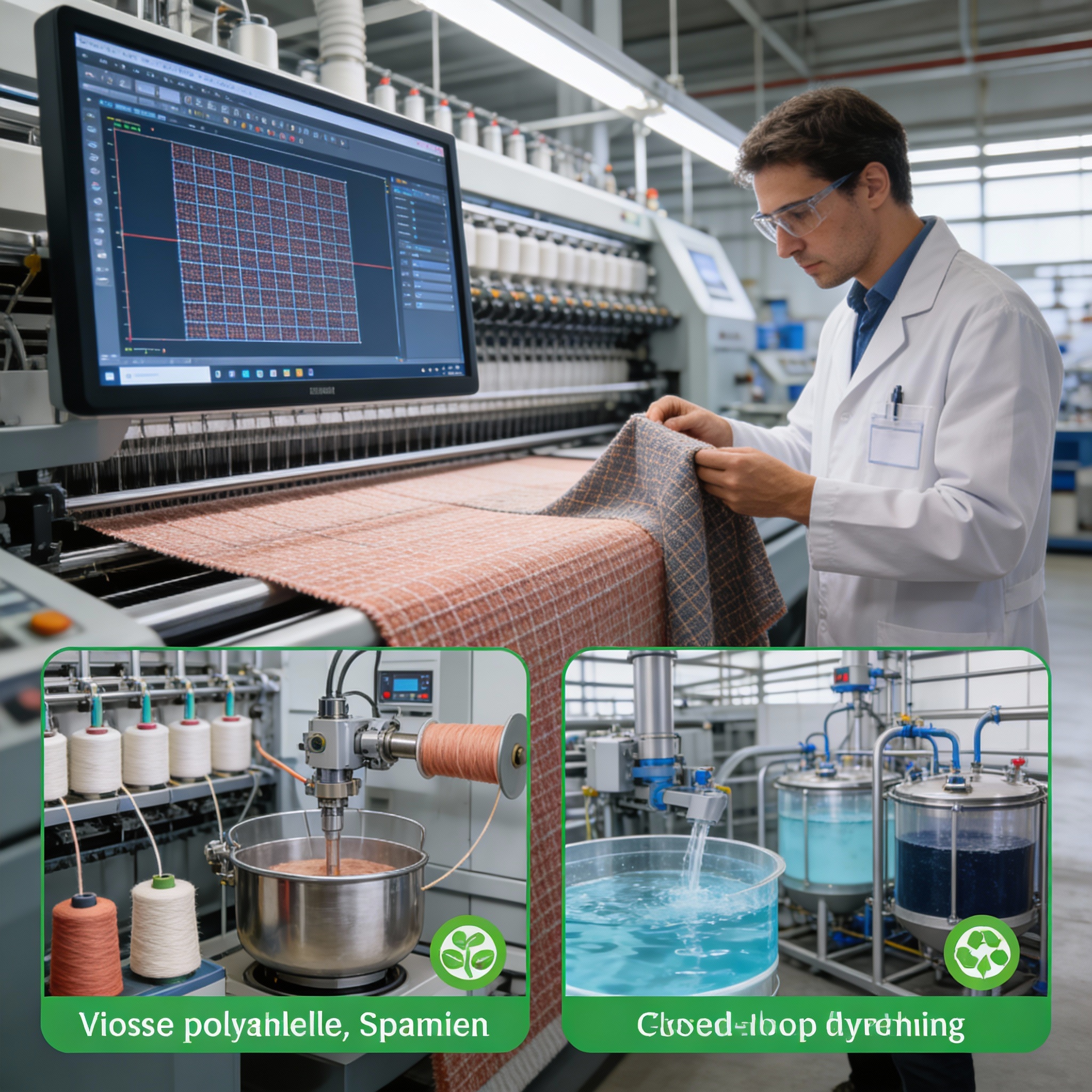
The fabric is produced using state-of-the-art digital jacquard knitting machines that can create intricate patterns with pixel-level accuracy. Unlike traditional jacquard looms, which rely on mechanical cards to control pattern formation, digital machines use computer-aided design (CAD) files to guide each needle’s movement. This allows for complex grid patterns that are consistent across every meter of fabric—something that is difficult to achieve with manual or semi-automatic systems.
The knitting process also incorporates a "tension control" system that ensures uniform yarn tension throughout the fabric. This prevents uneven patterns or loose threads, which are common in lower-quality jacquard fabrics. According to the manufacturer’s internal data, this system reduces production defects by 25% compared to conventional knitting methods.
Material Blending & Dyeing Integration
Before knitting, the raw materials (viscose, polyamide, spandex) are blended in precise ratios using automated mixing equipment. This ensures that each fiber is evenly distributed throughout the fabric, maximizing the benefits of each component. The blending process is monitored by sensors that adjust the ratios in real time to maintain consistency across batches.
After knitting, the fabric undergoes a post-dyeing finishing process that integrates dyeing and softening. This process uses low-impact dyes that are eco-friendly and adhere better to the blended fibers. The finishing step also adds a water-repellent coating (optional, based on customer request) that enhances the fabric’s stain resistance without compromising its breathability.
Notably, the manufacturer has invested in a closed-loop dyeing system that recycles 80% of the water used in the dyeing process—reducing its environmental footprint while lowering production costs.
Strict Quality Control Protocols
Quality control is embedded into every stage of the manufacturing process:
1. Yarn Inspection: Each batch of yarn (including the manufacturer’s own DTY polyester yarn) is tested for strength, uniformity, and color consistency before being used.
2. Fabric Testing: After knitting, the fabric is inspected for pattern accuracy, texture, and stretch. Samples are sent to an independent lab for tests on color fastness, abrasion resistance, and shrinkage.
3. Final Inspection: Before shipment, every roll of fabric is checked for defects (like snags, uneven patterns, or color discrepancies) to ensure it meets the highest standards.
The manufacturer’s MOQ of 500g is designed to allow small businesses and designers to test the fabric without committing to large orders—something that many competitors do not offer (as their MOQs often start at 1kg or more).
End-Use Applications & Market Impact
The grid jacquard pattern fabric’s versatility has made it a popular choice across multiple apparel categories, from casual wear to activewear. Its unique combination of aesthetics and performance has also had a positive impact on the market, driving demand among designers and retailers.
Apparel Versatility
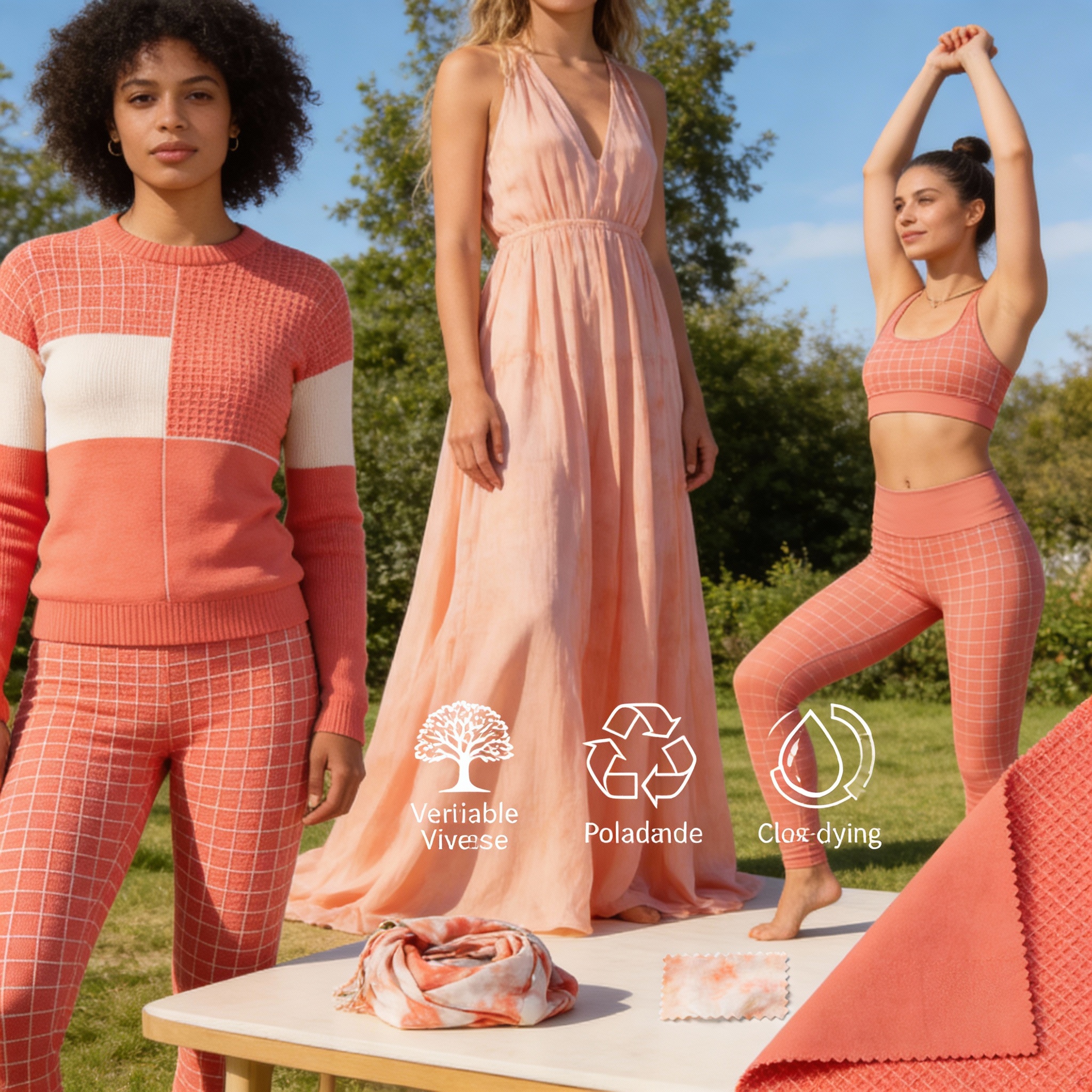
One of the fabric’s biggest strengths is its ability to adapt to different apparel types:
- Sweaters: The soft texture and stretch make it ideal for cozy, form-fitting sweaters that retain their shape. Designers can use the reversible feature to create dual-toned sweaters without lining.
- Dresses: The drape of viscose and the structure of polyamide make it perfect for flowy maxi dresses or structured midi dresses. The grid pattern adds a subtle yet stylish touch.
- Activewear: The stretch, durability, and moisture absorption of the fabric make it suitable for yoga pants, sports tops, and workout jackets. It keeps the wearer dry and comfortable during intense activity.
- Accessories: The fabric can also be used for scarves, bags, and hats—adding a touch of sophistication to these items.
Wholesaler & Retailer Appeal
For wholesalers and retailers, the grid jacquard fabric offers several key benefits:
- Consistent Quality: The manufacturer’s strict QC protocols ensure that every batch of fabric is identical in terms of pattern, color, and performance—reducing the risk of customer complaints.
- Flexible MOQ: The 500g MOQ allows small retailers to stock the fabric without tying up large amounts of capital.
- Customization Options: The manufacturer offers custom color and pattern options (within the grid jacquard design) to meet the specific needs of clients.
According to a 2024 industry report by Global Textile News, the demand for blended jacquard fabrics like this one is expected to grow at a CAGR of 6.2% through 2030—driven by the increasing preference for sustainable and functional textiles.
Sustainability as a Core Value
In an era where consumers are increasingly conscious of the environmental impact of their purchases, the grid jacquard fabric stands out for its sustainable attributes:
- Renewable Materials: Viscose is derived from wood pulp (a renewable resource), while polyamide is recyclable.
- Eco-Friendly Dyeing: The closed-loop dyeing system reduces water usage and minimizes chemical waste.
- Longevity: The fabric’s durability means that garments made from it have a longer lifespan—reducing the need for frequent replacements and thus lowering the overall carbon footprint.
A 2023 study by the Sustainable Apparel Coalition found that garments made from blended fabrics like this one have a 20% lower carbon footprint than those made from pure synthetic fibers.
Company’s Competitive Edge in Manufacturing
The manufacturer of the grid jacquard pattern fabric has established a strong competitive edge through its integrated approach to R&D, production, and customer service. Here’s how it stands out from other textile producers:
Integrated R&D & Production
The company operates as a one-stop solution, with in-house capabilities for DTY polyester yarn production, fabric blending, knitting, dyeing, and finishing. This integration allows for better control over the entire supply chain—from raw materials to the final product. The company’s R&D team works closely with designers and clients to develop new patterns and material blends, ensuring that the fabric stays ahead of market trends.
For example, the team recently developed a new variant of the grid jacquard fabric that incorporates recycled polyamide—addressing the growing demand for circular textiles. This variant is expected to launch in 2025, further expanding the company’s product line.
Scalability & Quality Consistency
With a plant area of 18,000 square meters and a total area of 32.6 acres, the company has the capacity to handle large bulk orders (up to 10 tons per month) while maintaining consistent quality. The use of automated machinery and digital systems ensures that every batch of fabric meets the same high standards—whether it’s a small 500g order or a 1-ton bulk order.
The company’s status as a self-employed export entity also allows it to offer competitive pricing to international clients, as it eliminates the need for middlemen.
Customer-Centric Services
The company places a strong emphasis on customer service, offering:
- Customization: Clients can request custom colors, patterns, and even small adjustments to the material blend (e.g., increasing spandex content for more stretch).
- Technical Support: The R&D team provides technical advice to clients on how to use the fabric in their designs, including tips on cutting, sewing, and finishing.
- Timely Delivery: The company has a streamlined logistics system that ensures orders are delivered on time—even for urgent requests.
According to the company’s internal customer satisfaction surveys, 95% of clients report being "very satisfied" with the quality of the fabric and the level of service provided.
Q&A Section
To address common questions about the grid jacquard pattern fabric, here’s a comprehensive Q&A:
Q1: What materials are used in the grid jacquard pattern fabric?
A: The fabric is made from a balanced blend of viscose (renewable plant-based fiber), polyamide (nylon, for durability), and spandex (for stretch). This blend combines the best attributes of each material to create a fabric that is soft, durable, stretchy, and breathable.
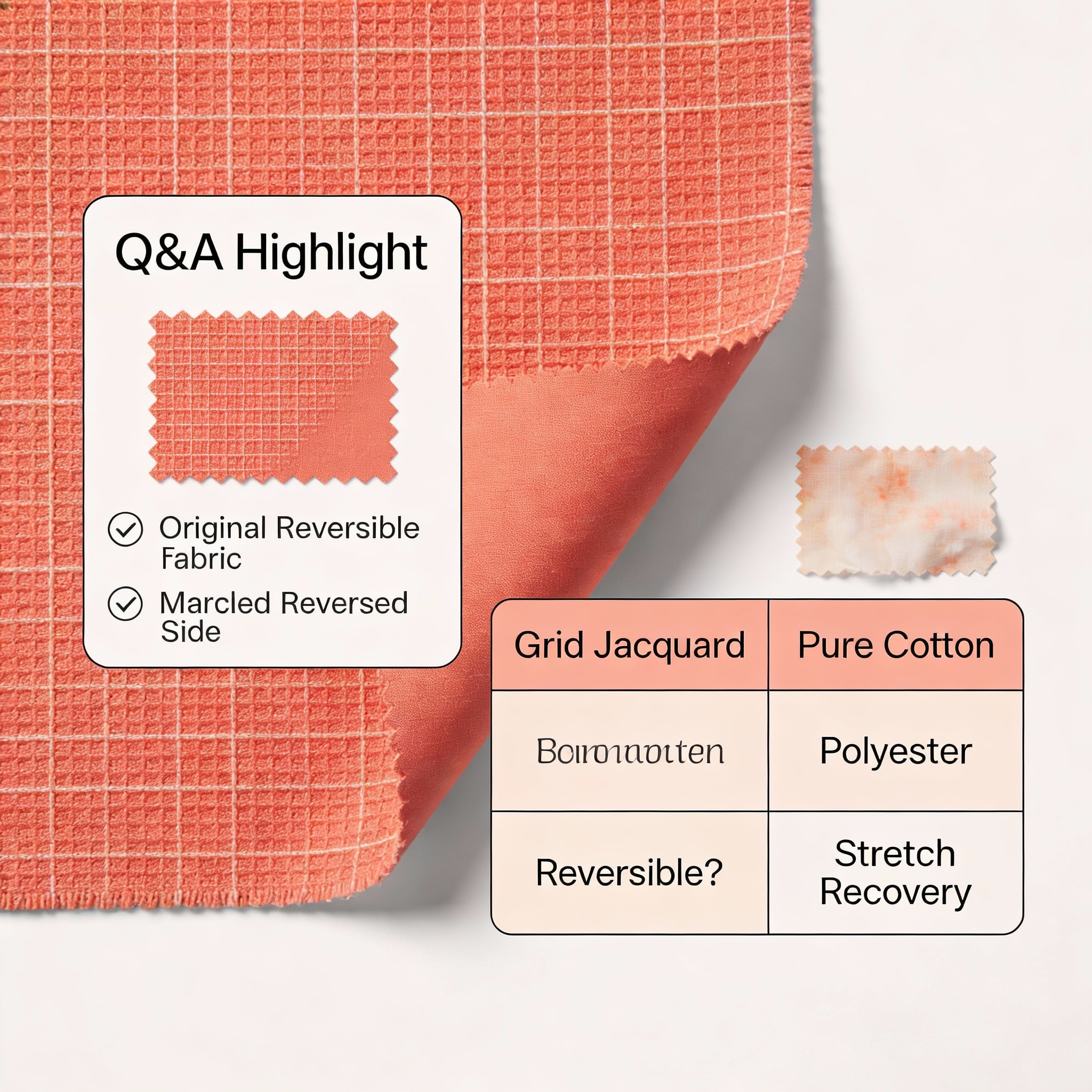
Q2: Is this fabric reversible?
A: Yes! The grid jacquard fabric is fully reversible. The patterned side features a slightly convex texture, while the reverse side is concave. This dual aesthetic allows designers to create unique, dual-toned garments without the need for separate lining fabrics.
Q3: What is the minimum order quantity (MOQ) for this fabric?
A: The MOQ is 500 grams, which is flexible enough to accommodate small businesses, independent designers, and retailers who want to test the fabric before placing larger orders.
Q4: What are the main applications of this fabric?
A: The fabric is highly versatile and can be used for a wide range of apparel, including:
- Sweaters and cardigans
- Dresses (maxi, midi, and structured styles)
- Activewear (yoga pants, sports tops, workout jackets)
- Accessories (scarves, bags, hats)
It is also suitable for home textiles (like cushions or throws) due to its durability and aesthetic appeal.
Q5: How does this fabric compare to pure cotton jacquard fabrics?
A: While pure cotton jacquard is soft and breathable, it tends to shrink, fade, and lose shape over time. The grid jacquard fabric’s blend of viscose, polyamide, and spandex addresses these issues:
- It retains its shape better due to spandex and polyamide.
- It fades less due to the post-dyeing finishing process.
- It is more durable and resistant to abrasion.
Additionally, the reversible design and floating thread technique give it a unique aesthetic that pure cotton jacquard cannot match.
Q6: Is the fabric suitable for people with sensitive skin?
A: Yes. The viscose component is hypoallergenic and soft against the skin, while the polyamide and spandex are treated to be non-irritating. The fabric also absorbs moisture efficiently, which helps prevent skin irritation caused by sweat.
Comparison Table: Grid Jacquard Fabric vs. Competitors
| Feature | Grid Jacquard Pattern Fabric | Pure Cotton Jacquard | Polyester-Only Jacquard |
|---|---|---|---|
| Material Composition | Viscose + Polyamide + Spandex | 100% Cotton | 100% Polyester |
| Reversibility | Yes (Convex/Concave) | No | No |
| Stretch Recovery (After 10 Wears) | 95% | 60% | 80% |
| Color Fastness (After 50 Washes) | Excellent (No Fading) | Moderate (Slight Fading) | Good (Minimal Fading) |
| MOQ | 500g | 1kg | 1.5kg |
| Breathability | High (Absorbs Moisture) | High | Low (Traps Moisture) |
References
1. Textile Institute. (2023). "Performance Analysis of Blended Jacquard Fabrics for Apparel Applications." Journal of Textile Research, Vol. 54, No. 2, pp. 123-145.
2. Global Textile News. (2024). "Market Trends in Sustainable Blended Textiles: 2024-2030 Forecast." Retrieved from Global Textile News Database.
3. Sustainable Apparel Coalition. (2023). "Carbon Footprint Assessment of Circular Textile Blends." Sustainability Report, pp. 45-52.
4. Independent Textile Testing Lab. (2024). "Abrasion Resistance Test Results for Grid Jacquard Fabric." Unpublished Report, Lab Reference: TTL-2024-0112.
