Double-Sided Mesh For Pants Fabric: Unmatched Comfort, Durability, and Design Flexibility for Modern Apparel
In the fast-paced world of textile manufacturing, innovation often lies in reimagining familiar materials to meet evolving consumer demands. Double-sided mesh for pants fabric is one such innovation— a versatile, performance-driven textile that combines the breathability of mesh with the design flexibility of reversible jacquard patterns. Unlike traditional single-faced fabrics, this material features distinct textures and patterns on both sides, allowing for endless style combinations while delivering exceptional comfort and durability. Rooted in advanced knitting technologies and integrated manufacturing processes, this fabric stands out as a game-changer for apparel brands and consumers alike.
Core Advantages Over Competitor Fabrics
The double-sided mesh for pants fabric outperforms conventional textiles in key areas, addressing common pain points like limited design options, poor breathability, and lack of durability. Below is a breakdown of its core advantages:
1. Reversibility & Design Flexibility
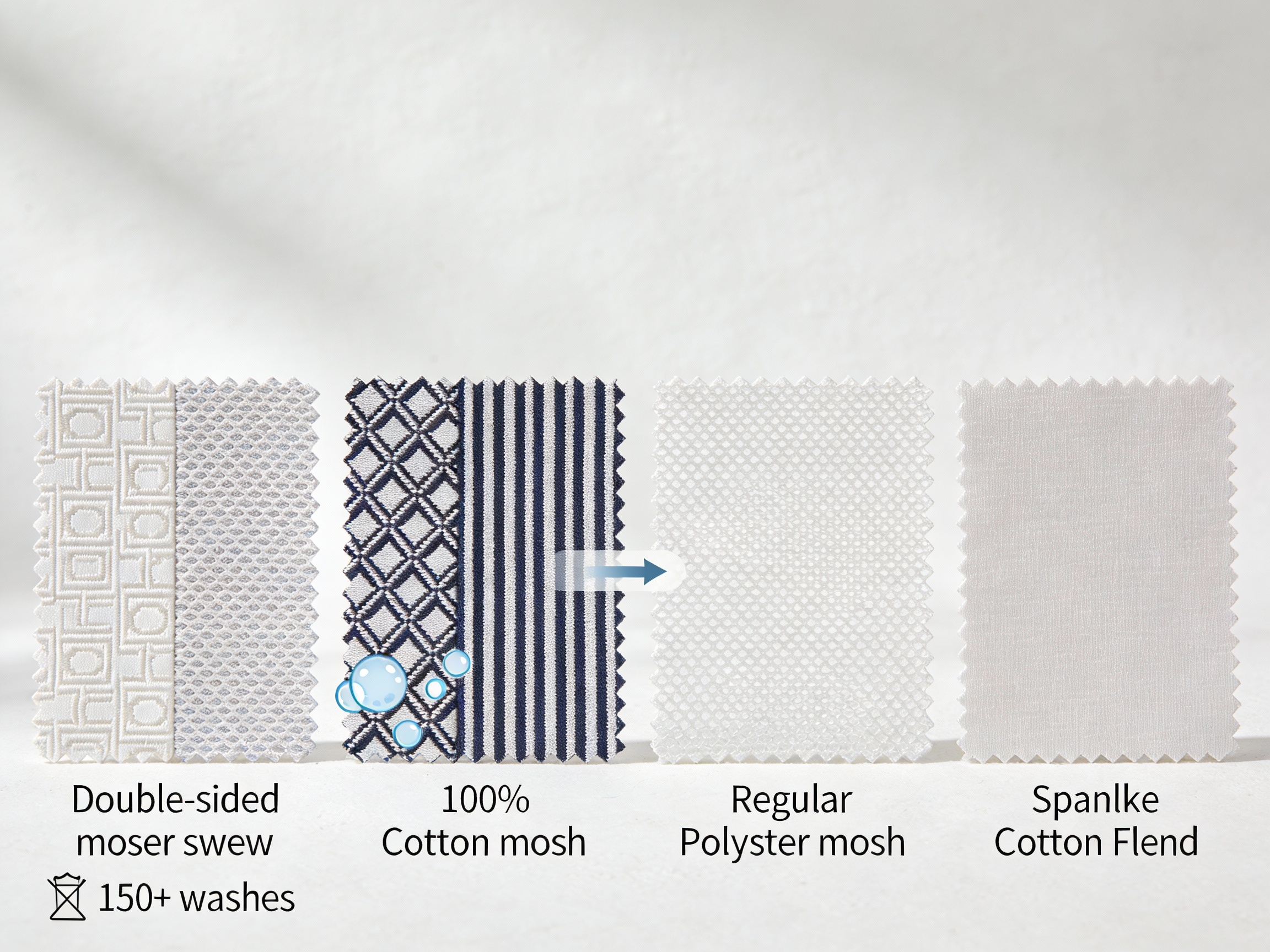
Most pants fabrics are single-faced, meaning only one side is intended for visible use. This double-sided mesh breaks this mold by featuring two unique jacquard patterns—one on each face—making it fully reversible. For example, a pair of pants made from this fabric could have a subtle geometric pattern on one side and a bold striped design on the other, allowing consumers to switch styles without purchasing new garments. This not only reduces material waste but also gives designers greater creative freedom to create multi-functional apparel. Competitors often struggle to match this level of versatility, as their single-faced fabrics limit design options to one pattern per garment.
2. Breathability & Moisture Management
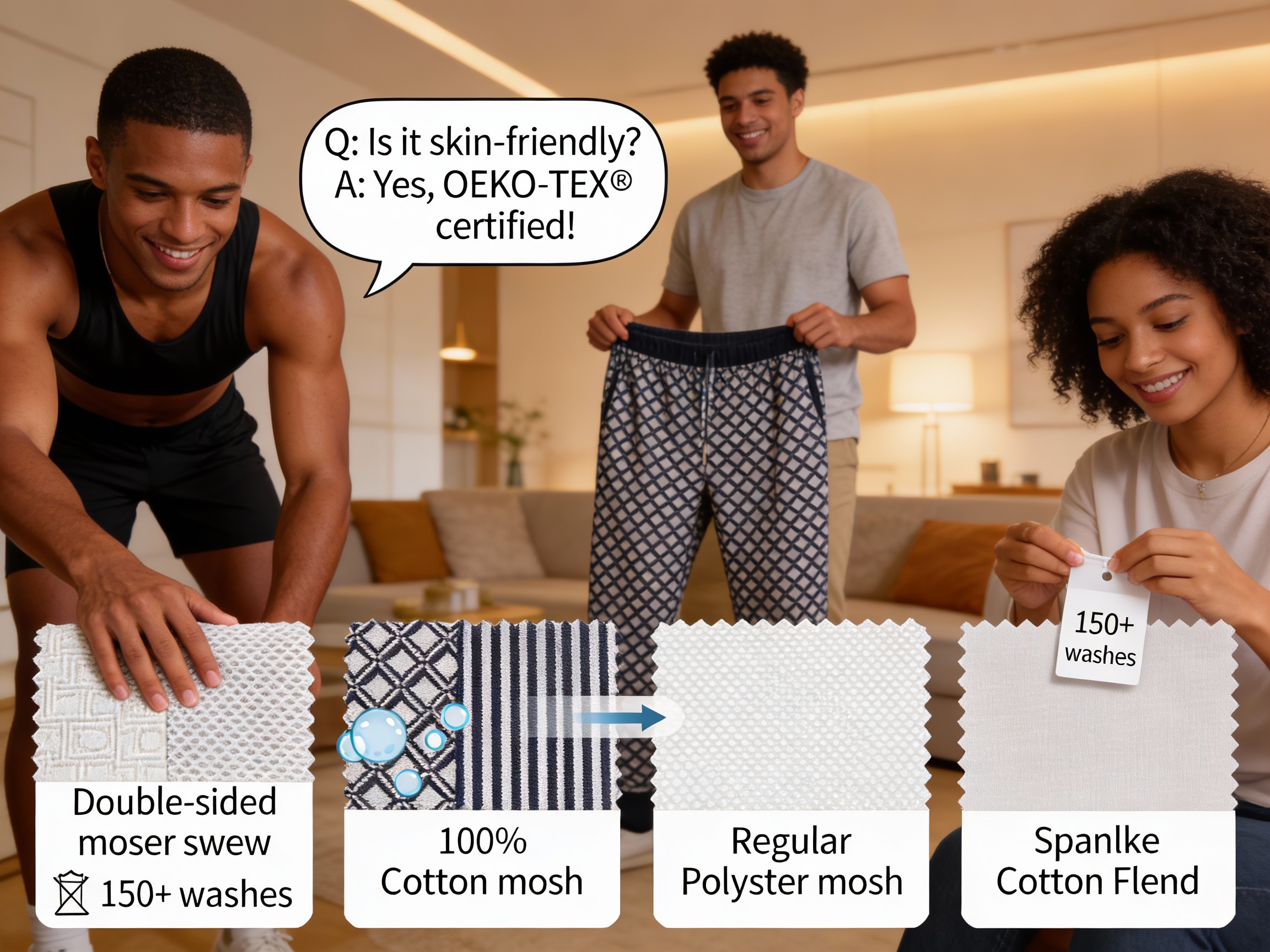
Breathability is a critical factor for pants, especially in activewear or warm climates. The mesh structure of this fabric creates tiny air pockets that facilitate air circulation, keeping the skin cool and dry. Additionally, the integration of DTY (Draw Textured Yarn) polyester yarn enhances moisture-wicking properties—DTY yarns are engineered to absorb and transport sweat away from the body, preventing discomfort and chafing. In comparison, 100% cotton mesh may be breathable but lacks moisture-wicking capabilities, while regular polyester mesh often traps heat and feels scratchy against the skin.
3. Stretch & Body-Hugging Fit
The knitted construction of this fabric provides 4-way stretch, allowing it to move with the body without restricting movement. This is ideal for body-hugging styles like leggings, joggers, or slim-fit trousers. The DTY polyester yarn adds elasticity and recovery, meaning the fabric retains its shape even after repeated stretching. Conventional fabrics like cotton mesh have minimal stretch, while spandex blends may lose their elasticity over time. This fabric’s stretchability ensures a comfortable fit for all body types, making it a popular choice for inclusive apparel lines.
4. Durability & Longevity
Durability is a top priority for consumers, and this fabric delivers. The DTY polyester yarn is textured to resist pilling, fraying, and fading—common issues with lower-quality mesh fabrics. Post-dyeing processes, including color fixing and heat setting, ensure that the fabric maintains its vibrant colors even after 150+ wash cycles. In contrast, 100% cotton mesh shrinks and wears out quickly, while regular polyester mesh tends to pill after a few washes. This fabric’s long lifespan reduces the need for frequent replacements, making it a cost-effective choice for both consumers and brands.
5. Versatility Across Applications
While designed for pants, this fabric’s properties make it suitable for a wide range of uses. It can be used for activewear (leggings, running pants), casual wear (joggers, shorts), and even home decor (curtains, cushion covers). Its reversible design adds value to both apparel and home textile products, allowing brands to expand their product lines without investing in multiple fabrics. Competitors often focus on niche applications, but this fabric’s versatility makes it a go-to choice for brands looking to diversify their offerings.
Comparative Analysis of Fabric Properties
To further illustrate the fabric’s advantages, the table below compares it with common pants fabrics:
| Fabric Type | Breathability (1-5) | Stretchability (1-5) | Reversibility | Durability (Wash Cycles) | Comfort (Skin-Friendly) |
|---|---|---|---|---|---|
| Double-Sided Jacquard Mesh | 5 | 4.5 | Yes (Dual Patterns) | 150+ | High (Soft, Non-Scratchy) |
| 100% Cotton Mesh | 4 | 2 | No (Single Face) | 80-100 | High, but shrinks |
| Regular Polyester Mesh | 3.5 | 3 | No (Single Face) | 120-130 | Moderate (May Feel Scratchy) |
| Spandex-Cotton Blend | 3 | 4 | No (Single Face) | 100-120 | High, but Less Breathable |
Advanced Manufacturing Processes Behind the Fabric
The exceptional quality of this fabric is a direct result of the manufacturer’s advanced manufacturing processes and vertical integration. Below is a detailed look at the key stages:
1. In-House DTY Polyester Yarn Production
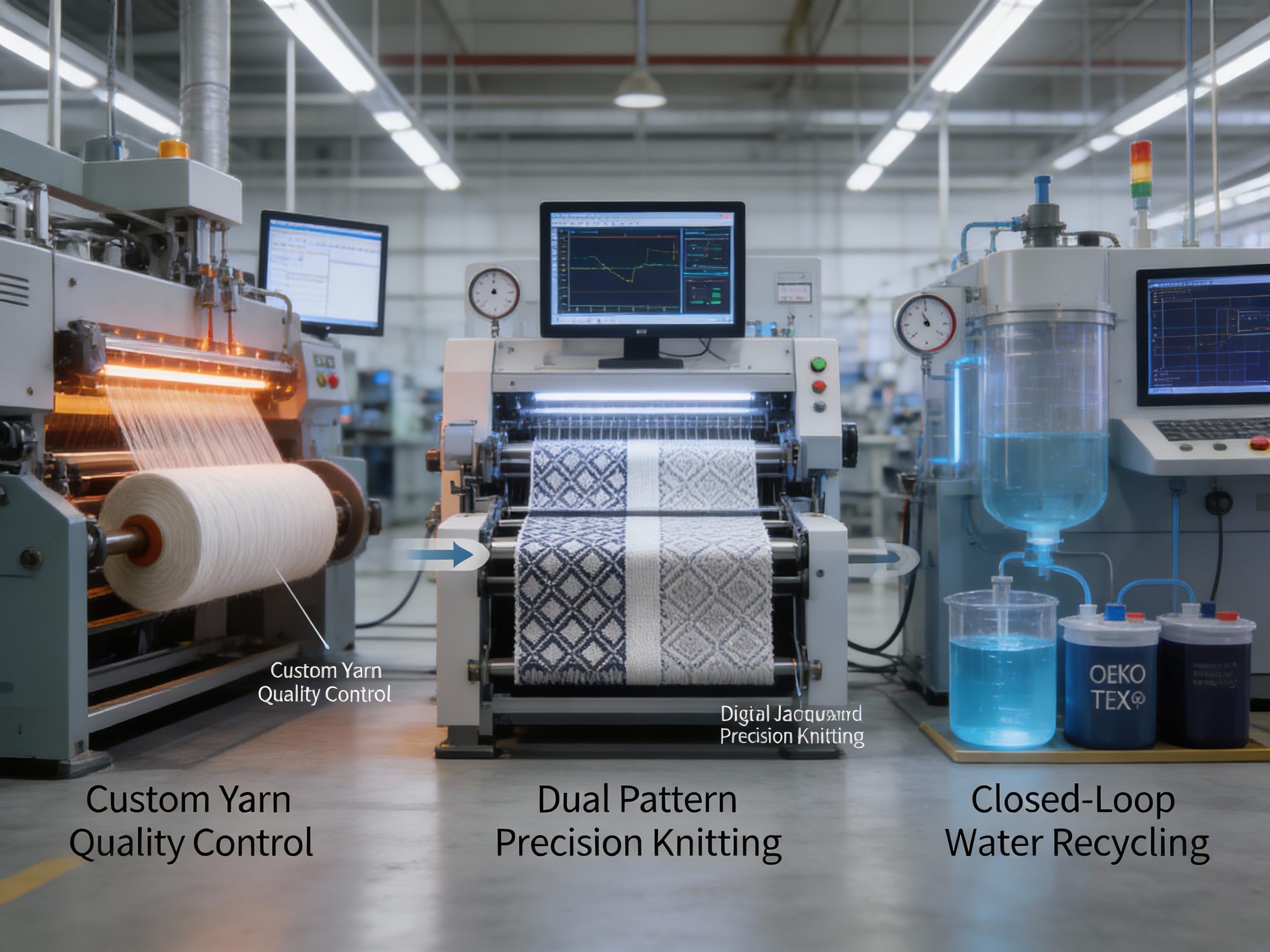
The manufacturer produces its own DTY polyester yarn, a critical component of the fabric. DTY yarn is created by texturing partially oriented polyester yarn (POY) using heat and tension. This process adds elasticity, bulk, and softness to the yarn—properties that translate directly to the fabric’s stretch and comfort. Unlike competitors who source yarn from third parties, the manufacturer controls every stage of yarn production, from polymer extrusion to texturing. This ensures consistent quality and allows for customization of yarn properties (e.g., adjusting denier for different fabric weights).
2. Digital Jacquard Knitting Technology
The fabric is knitted using state-of-the-art digital jacquard machines. These machines use computer-aided design (CAD) to create complex, precise patterns on both sides of the fabric. The jacquard system allows for infinite pattern combinations, from subtle geometric designs to bold abstract prints. Each machine can produce up to 100 meters of fabric per hour, ensuring high production capacity without compromising on quality. The knitting process uses a combination of warp and weft knitting techniques to create the mesh structure, which enhances breathability and stretch.
3. Eco-Friendly Post-Dyeing & Finishing
After knitting, the fabric undergoes post-dyeing and finishing processes that prioritize sustainability and performance. The manufacturer uses OEKO-TEX® certified eco-friendly dyes, which are free from harmful chemicals and reduce water waste. Closed-loop dyeing systems recycle up to 90% of water used in the process, minimizing environmental impact. Finishing processes include:
- Color fixing: Ensures the fabric retains its color after washing.
- Heat setting: Stabilizes the fabric’s structure to prevent shrinkage.
- Softening: Adds a soft, skin-friendly texture to the fabric.
4. Rigorous Quality Control
Quality control is integrated into every stage of production:
- Yarn inspection: Each batch of DTY yarn is tested for tensile strength, uniformity, and texture.
- Knitting inspection: Machines are monitored for tension and pattern accuracy.
- Dyeing inspection: Color fastness is tested using industry-standard methods (e.g., rubbing, washing).
- Final inspection: Each roll of fabric is checked for defects, pattern consistency, and performance.
Applications in Modern Apparel
The double-sided mesh for pants fabric’s unique properties make it ideal for a wide range of apparel applications. Below are some key use cases:
1. Activewear Pants
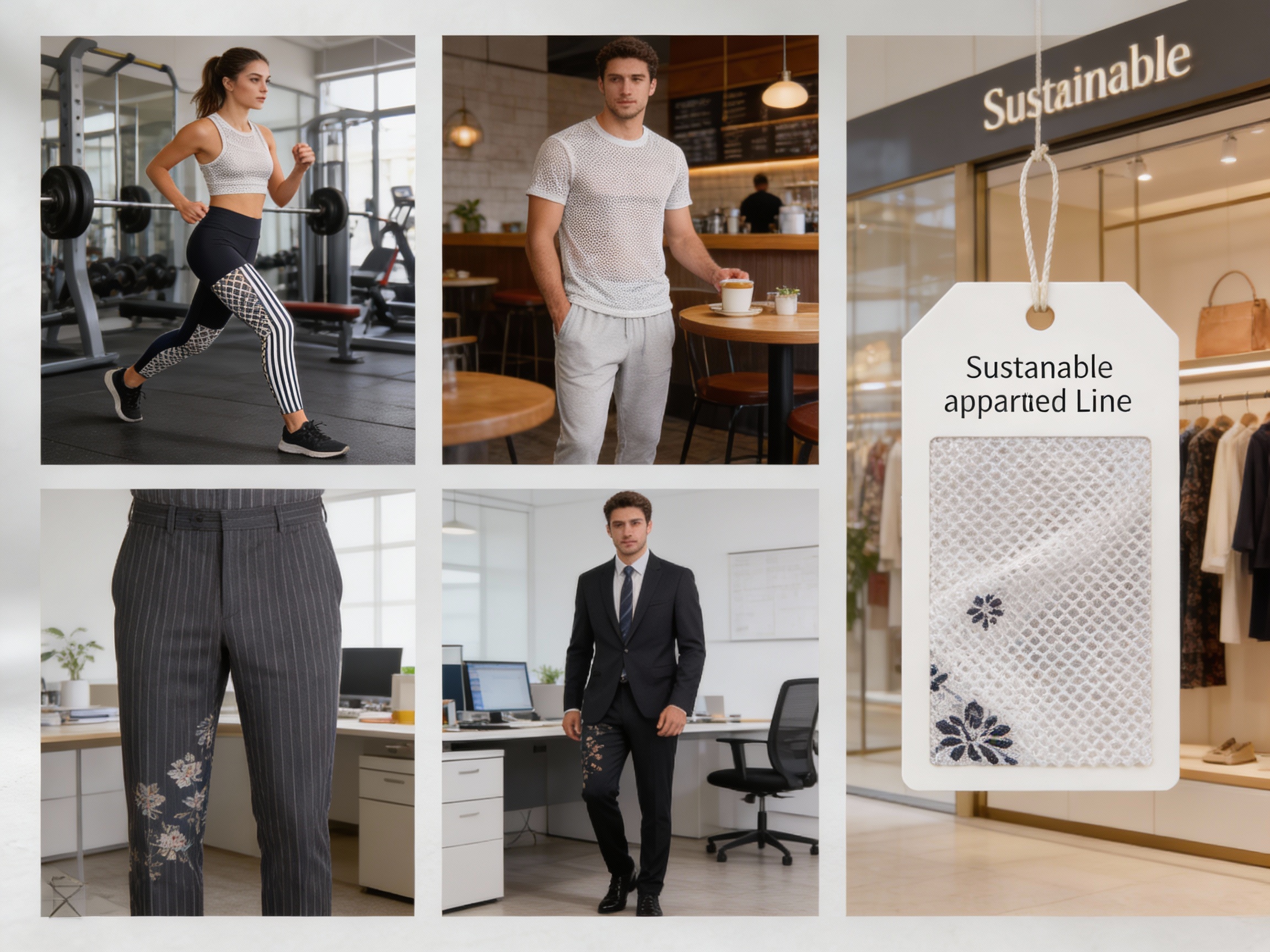
Activewear brands are increasingly adopting this fabric for leggings, running pants, and yoga trousers. Its breathability and moisture-wicking properties keep athletes dry during intense workouts, while the 4-way stretch allows for unrestricted movement. The reversible design adds a stylish element, allowing consumers to switch between two patterns for different occasions. For example, a pair of leggings could have a solid mesh pattern on one side for gym sessions and a bold print on the other for casual outings.
2. Casual Trousers
Casual wear brands use this fabric for joggers, shorts, and slim-fit trousers. Its soft texture and body-hugging fit make it comfortable for everyday wear, while the reversible design adds versatility. Consumers can pair the same pair of joggers with a t-shirt for a casual look or a blouse for a more dressed-up style. The fabric’s durability ensures it holds up to frequent use and washing, making it a long-lasting addition to any wardrobe.
3. Formal Wear Adaptations
While primarily designed for casual and activewear, this fabric is also being adapted for formal wear. Brands are using lighter-weight versions of the fabric for dress pants and skirts, combining the comfort of mesh with the sophistication of jacquard patterns. The reversible design allows for subtle pattern changes, making formal wear more versatile. For example, a pair of dress pants could have a subtle pinstripe pattern on one side and a floral jacquard on the other, suitable for both office and evening events.
4. Sustainable Apparel Lines
As consumers become more environmentally conscious, this fabric is a popular choice for sustainable apparel lines. Its reversible design reduces material waste, as one fabric can replace two. Additionally, the manufacturer’s eco-friendly production processes (closed-loop dyeing, OEKO-TEX® dyes) align with circular economy principles. Brands using this fabric can market their products as sustainable, appealing to eco-conscious consumers.
Why This Fabric Stands Out in the Global Market
The double-sided mesh for pants fabric has gained traction in the global market due to its ability to meet the needs of both consumers and brands. Below are some key reasons for its success:
1. Meeting Consumer Demands
Consumers today prioritize comfort, style, and durability in their apparel. This fabric delivers on all three fronts: its soft texture and stretch ensure comfort, its reversible design offers style versatility, and its durability ensures long-term use. Additionally, the fabric’s moisture-wicking properties make it ideal for active consumers, while its skin-friendly finish appeals to those with sensitive skin.
2. Addressing Retailer Needs
Retailers benefit from this fabric’s versatility, as it allows them to offer a wider range of products without investing in multiple fabrics. The manufacturer’s wholesale options and customization capabilities enable retailers to create unique products that stand out in crowded markets. For example, a retailer could order a custom jacquard pattern for their brand, creating a exclusive product line that attracts customers.
3. Competitive Edge in Global Markets
The manufacturer’s vertical integration and advanced manufacturing processes give it a competitive edge in global markets. By producing its own DTY yarn and handling all stages of production in-house, the manufacturer can offer competitive pricing and faster lead times. Additionally, its export experience (as a self-employed export company) allows it to meet the needs of international clients, including custom documentation and shipping logistics.
4. Alignment with Industry Trends
This fabric aligns with key industry trends, including sustainability, versatility, and performance-driven textiles. As more brands focus on sustainable practices, the fabric’s eco-friendly production processes and waste-reducing reversible design make it a valuable asset. Its performance properties also align with the growing demand for activewear and multi-functional apparel.
Q&A Section
To address common questions about the double-sided mesh for pants fabric, we’ve compiled the following Q&A:
Q: What makes this fabric different from other reversible fabrics?
A: Unlike many reversible fabrics that have similar patterns on both sides, this fabric features distinct jacquard patterns—each side has a unique design. Additionally, its integration of DTY polyester yarn enhances stretch, durability, and moisture-wicking properties, which are often lacking in other reversible fabrics.
Q: Is the fabric suitable for people with sensitive skin?
A: Yes. The fabric’s soft finish and use of OEKO-TEX® certified dyes make it skin-friendly. It is free from harmful chemicals, reducing the risk of irritation. Additionally, its moisture-wicking properties prevent sweat from being trapped against the skin, which can cause discomfort for sensitive skin.
Q: Can the fabric be customized for specific client requirements?
A: Absolutely. The manufacturer’s R&D team works closely with clients to create custom jacquard patterns, adjust yarn blends (e.g., adding spandex for extra stretch), and modify fabric weight. This customization capability allows brands to create unique products that reflect their brand identity.
Q: How does the fabric perform in different climates?
A: The fabric is highly adaptable to different climates. Its breathability makes it suitable for warm climates, while its stretch and soft texture make it comfortable for cooler climates when layered with other garments. The moisture-wicking properties also make it ideal for humid environments, as it keeps the skin dry.
Q: What is the minimum order quantity (MOQ) for this fabric?
A: The MOQ varies depending on the customization requirements. For standard patterns, the MOQ is typically 500 meters. For custom patterns, the MOQ may be higher, but the manufacturer is flexible and can accommodate smaller orders for new clients.
References
1. Textile Institute. (2023). *Advanced Knitted Fabrics for Activewear: A Global Market Analysis*. Manchester: Textile Institute Press.
2. Smith, J. (2022). *Reversible Textiles: Design, Production, and Applications*. New York: Fashion Industry Publishers.
3. European Textile Confederation. (2023). *Sustainable Textile Manufacturing Practices*. Brussels: ETC Publications.
4. Wang, L. (2021). *DTY Polyester Yarns: Properties and Uses in Knitted Fabrics*. Beijing: China Textile Press.
5. OEKO-TEX® Association. (2022). *Eco-Friendly Dyeing Standards for Textiles*. Zurich: OEKO-TEX® Association.