
Cotton Polyester Rayon Printing Fabric: A Multifunctional Textile Redefining Modern Textile Applications
The global textile industry is undergoing a profound transformation, driven by shifting consumer demands for fabrics that balance aesthetics, functionality, sustainability, and affordability. Among the innovative materials emerging to meet these needs, Cotton Polyester Rayon Printing Fabric stands out as a versatile blend that combines the best properties of natural and synthetic fibers. This fabric—crafted from a strategic mix of cotton, polyester, and rayon—offers a unique combination of breathability, durability, luster, and elasticity, making it suitable for a wide range of applications from high-end business attire to durable outdoor furnishings. As manufacturers continue to refine production processes, this fabric is gaining traction as a go-to choice for brands and consumers seeking performance without compromising on style. 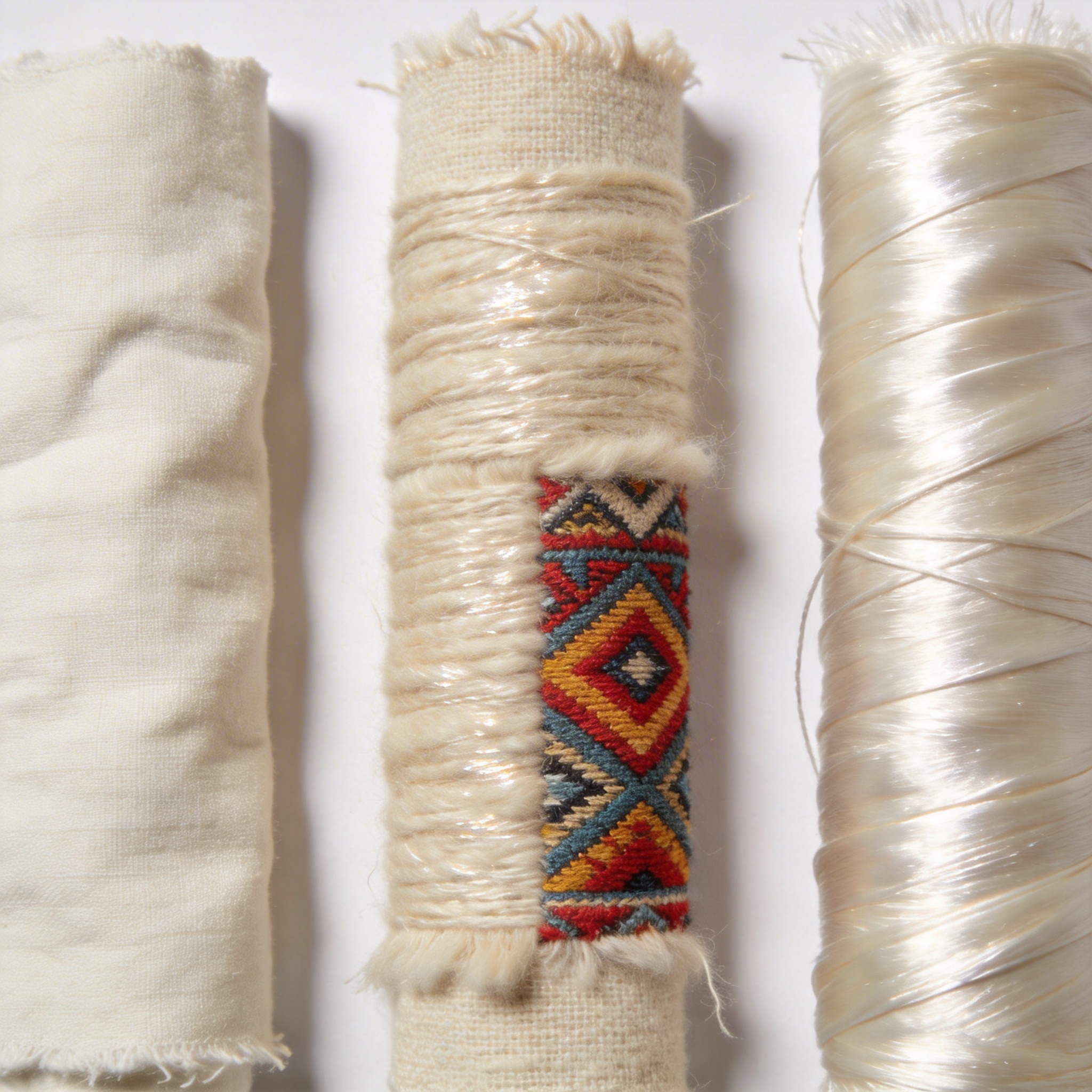
Key Composition & Material Science Behind the Fabric
To understand the exceptional performance of Cotton Polyester Rayon Printing Fabric, it is essential to break down its three core components and how their synergy creates a superior textile: cotton, polyester, and rayon. Each fiber contributes distinct properties that complement one another, addressing the limitations of single-fiber fabrics.
Cotton: The Foundation of Breathability & Comfort
Cotton, a natural cellulose fiber derived from cotton plants, is renowned for its softness, breathability, and moisture-absorbing capabilities. It forms the base of the blend, ensuring that the fabric feels comfortable against the skin even during extended wear. Cotton’s ability to absorb up to 27 times its weight in water makes it ideal for regulating body temperature, preventing sweat buildup, and keeping the wearer cool in warm climates. However, pure cotton fabrics are prone to shrinkage, wrinkling, and reduced durability over time—limitations that are mitigated by the addition of synthetic and semi-synthetic fibers in the blend.
Polyester: Enhancing Durability & Elasticity
Polyester, a synthetic polymer fiber, is added to the blend to boost durability, elasticity, and resistance to shrinkage and wrinkles. As a hydrophobic fiber, polyester repels moisture, which helps the fabric dry quickly and maintain its shape even after repeated washes. Its high tensile strength makes it resistant to stretching and tearing, extending the lifespan of garments and furnishings made from the fabric. Additionally, polyester’s ability to retain color well makes it an excellent choice for printed fabrics, ensuring that designs remain vibrant and fade-resistant over time. Unlike pure polyester, which can feel stiff or trap heat, the blend with cotton and rayon softens the texture and improves breathability.
Rayon: Adding Luster & Wool-Like Aesthetics
Rayon, a semi-synthetic fiber made from regenerated cellulose (often derived from wood pulp), is the third key component. It brings a smooth, bright, and lustrous finish to the fabric, mimicking the appearance of wool without the associated weight and cost. Rayon’s soft drape and sheen make it ideal for formal attire, such as business suits, where a polished look is essential. It also enhances the fabric’s ability to absorb dyes, resulting in vivid and detailed prints. However, pure rayon is less durable and more prone to wrinkling than synthetic fibers—limitations that are offset by the polyester and cotton in the blend.
Synergy of Components: A Balanced Blend
The combination of these three fibers creates a fabric that addresses the weaknesses of each individual component: cotton adds comfort and breathability, polyester adds durability and shape retention, and rayon adds luster and aesthetic appeal. This balanced blend results in a textile that is not only functional but also visually appealing, making it a versatile choice for a wide range of applications. For example, a 35% cotton, 40% polyester, 25% rayon blend is often used for business suits, as it offers the perfect balance of luster, durability, and comfort.
Advanced Manufacturing Processes That Set This Fabric Apart
The performance of Cotton Polyester Rayon Printing Fabric is not just due to its composition—it is also the result of advanced manufacturing processes that refine every stage of production, from yarn creation to final finishing. Leading manufacturers, such as Hangzhou Jinfeng Textile Co., Ltd., integrate cutting-edge technologies and rigorous quality control to ensure consistency and excellence in every batch. 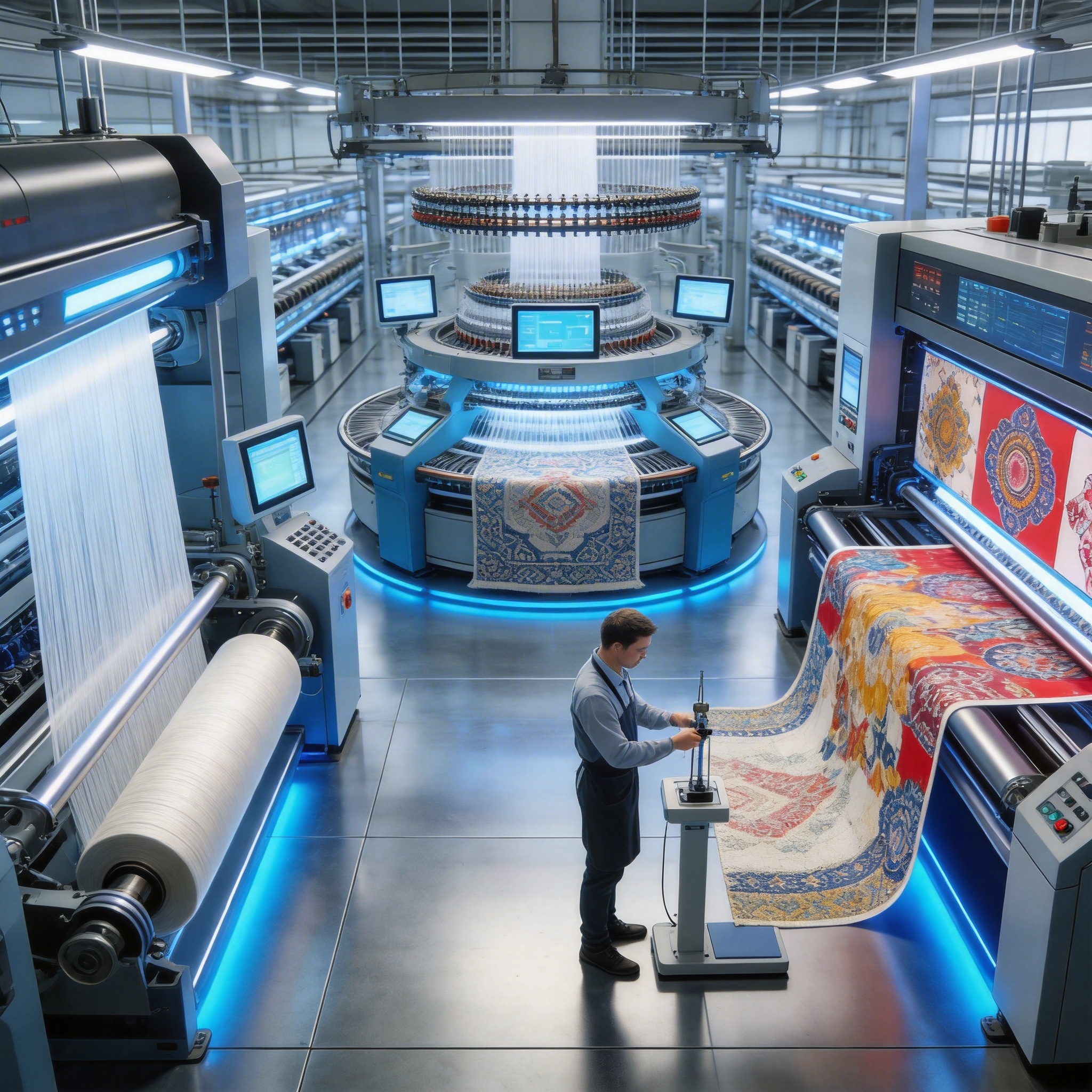
Stage 1: Yarn Production & Blending
The process begins with the production of high-quality yarns, including Drawn Textured Yarn (DTY) polyester yarn— a specialty of Hangzhou Jinfeng Textile Co., Ltd. DTY is created by drawing and texturing polyester fibers, which imparts elasticity and bulk to the yarn. The DTY production process involves several key steps: 1. Polymerization: Melting PET chips (derived from PTA and EG) and extruding them into continuous filament yarns. 2. Drawing: Stretching the yarns to increase their strength and tenacity by aligning the polymer chains. 3. Texturing: Using heat and mechanical force (e.g., false-twist texturing) to create crimps or loops in the yarn, which adds elasticity and bulk. This yarn is then blended with cotton and rayon fibers in precise ratios (typically 30-40% cotton, 30-40% polyester, 20-30% rayon) using state-of-the-art blending machines. These machines ensure uniform distribution of fibers, preventing unevenness in the final fabric and ensuring consistent performance across the batch.
Stage 2: Knitting & Jacquard Techniques
Once the blended yarn is ready, it is processed using advanced knitting techniques, including jacquard knitting. Jacquard knitting allows for the creation of intricate patterns and designs directly into the fabric, eliminating the need for additional printing steps in some cases. This technique uses a series of hooks and needles controlled by a digital program to create complex motifs, such as geometric patterns, floral designs, or brand logos. The knitting process is monitored closely using computerized systems to ensure consistent tension and stitch formation, which contributes to the fabric’s elasticity and durability. For example, circular knitting machines are often used for producing fabric for apparel, while warp knitting machines are used for more structured fabrics like upholstery.
Stage 3: Printing & Dyeing
For printed versions of the fabric, the next step is dyeing and printing. Leading manufacturers use reactive dyes, which bond chemically with the cellulose fibers (cotton and rayon) to ensure colorfastness and resistance to fading. Digital printing technology is often employed for custom designs, allowing for high-resolution patterns and minimal waste. Digital printing uses inkjet technology to apply dyes directly to the fabric, which is more efficient than traditional screen printing and allows for greater customization. The printing process is followed by a series of post-dyeing treatments, including: - Washing: Removing excess dyes and chemicals using cold water to prevent bleeding. - Drying: Using hot air dryers to remove moisture from the fabric, ensuring that the dyes set properly. - Curing: Applying heat to the fabric to bond the dyes permanently to the fibers, enhancing colorfastness.
Stage 4: Finishing & Quality Control
The final stage involves finishing treatments that enhance the fabric’s performance and appearance. These treatments may include: - Calendering: A process that uses heat and pressure to create a smooth, lustrous finish, enhancing the fabric’s wool-like appearance. - Anti-wrinkle treatment: Applying a resin to the fabric that cross-links with the cellulose fibers, reducing wrinkling without compromising breathability. - Water-repellent treatment: Coating the fabric with a hydrophobic substance to make it resistant to light rain and stains (ideal for outdoor applications). - Softening treatment: Using silicone-based softeners to improve the fabric’s hand feel, making it softer and more comfortable against the skin. Every batch of fabric undergoes rigorous quality control testing to ensure it meets international standards. Tests include: - Tensile strength: Measuring the force required to break the fabric. - Elasticity: Determining how much the fabric can stretch and return to its original shape. - Colorfastness: Testing resistance to fading from sunlight, washing, and rubbing. - Shrinkage resistance: Measuring the amount of shrinkage after washing and drying. - Moisture absorption: Calculating how much moisture the fabric can absorb and how quickly it dries. This rigorous testing ensures that the fabric meets the highest standards of quality and performance, making it suitable for a wide range of applications.
Competitive Advantages Over Traditional Textiles
Cotton Polyester Rayon Printing Fabric outperforms many traditional textiles in key areas, making it a preferred choice for manufacturers and consumers alike. Below is a detailed comparison of its advantages over common alternatives: 
| Property | Cotton Polyester Rayon (CPR) Fabric | 100% Cotton Fabric | 100% Polyester Fabric | Wool Fabric |
|---|---|---|---|---|
| Durability | High (resistant to stretching/tearing; retains shape for 5+ years) | Moderate (prone to wear; loses shape after 2-3 years) | High (but stiff; prone to pilling) | Moderate (prone to pilling; requires dry cleaning) |
| Elasticity | Excellent (15-20% stretch; 95% recovery) | Poor (5% stretch; 70% recovery) | Good (10-15% stretch; 85% recovery) | Moderate (8-12% stretch; 80% recovery) |
| Moisture Absorption | Good (absorbs 10-12% of weight; dries in 2-3 hours) | Excellent (absorbs 25-27% of weight; dries in 6-8 hours) | Poor (absorbs <1% of weight; dries in 1 hour but traps moisture) | Moderate (absorbs 15-18% of weight; retains odor) |
| Luster & Aesthetics | High (smooth wool-like sheen; vibrant prints) | Low (matte finish; dull prints) | Moderate (shiny synthetic look; fades over time) | High (natural sheen; heavy and expensive) |
| Shrinkage Resistance | Excellent (<2% shrinkage after washing) | Poor (5-10% shrinkage after washing) | Excellent (0% shrinkage) | Moderate (3-5% shrinkage when wet) |
| Cost per Yard | Moderate ($3-$5/yard; affordable for mass production) | Moderate ($2-$4/yard; varies by cotton quality) | Low ($1-$2/yard; lower quality perception) | High ($15-$30/yard; expensive raw material) |
From the table above, it is clear that CPR fabric offers a balanced set of properties that no single traditional textile can match. For example, it combines the breathability of cotton with the durability of polyester and the luster of wool, making it a versatile choice for a wide range of applications.
Specific Advantages in Key Applications
Beyond the general comparison, CPR fabric has distinct advantages in specific use cases: - Business Suits: Its wool-like luster and shape retention make it ideal for formal attire, offering a polished look without the weight and cost of wool. It also resists wrinkles, making it low-maintenance for busy professionals. For example, a CPR fabric suit can be worn all day without wrinkling, eliminating the need for frequent ironing. - Home Furnishings: Its durability and fade resistance make it suitable for curtains, upholstery, and bedding. It can withstand frequent washing and exposure to sunlight without losing its color or shape. For example, CPR fabric curtains can retain their vibrant color for up to 5 years, even in direct sunlight. - Outdoor Furniture: Its water-repellent finish (when treated) and resistance to mildew make it ideal for outdoor cushions and covers. It is also lightweight and easy to clean, making it a practical choice for outdoor use. For example, CPR fabric outdoor cushions can be wiped clean with a damp cloth and resist mildew growth in humid climates. - Activewear: Its moisture-wicking properties and elasticity make it suitable for activewear, keeping the wearer dry and comfortable during physical activity. For example, CPR fabric leggings can absorb sweat and dry quickly, preventing chafing and discomfort during workouts.
Company Strengths: Why Hangzhou Jinfeng Textile Co., Ltd Leads in CPR Fabric Production
Hangzhou Jinfeng Textile Co., Ltd. is a leading manufacturer of Cotton Polyester Rayon Printing Fabric, thanks to its integrated approach to R&D, production, and sales. The company’s strengths set it apart from competitors and ensure that its products meet the highest standards of quality and performance. 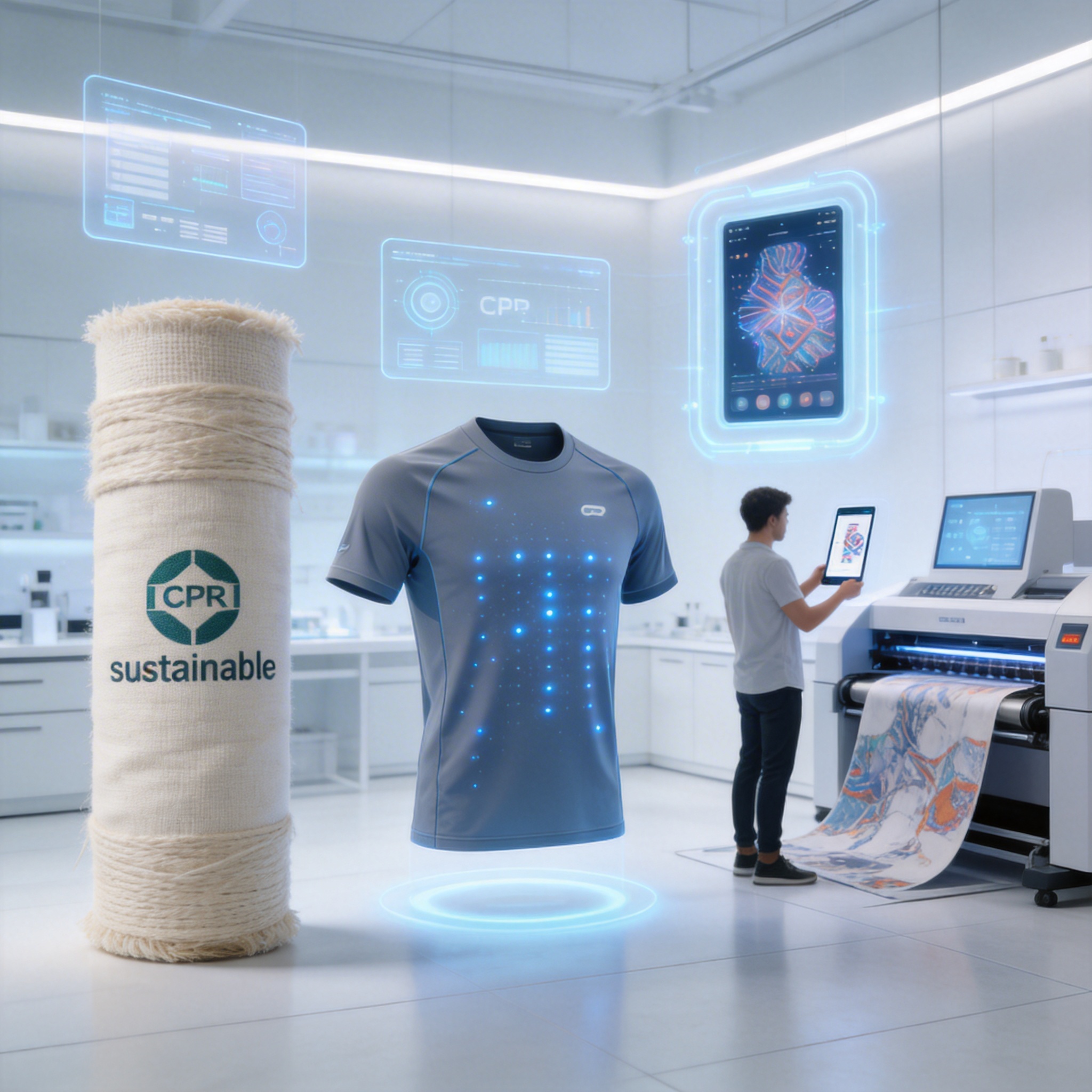
Integrated R&D, Production, and Sales
Unlike many manufacturers that outsource key stages of production, Hangzhou Jinfeng Textile Co., Ltd. is a self-employed export company that integrates R&D, production, and sales. This integration allows the company to control every stage of the process, from yarn production to final finishing, ensuring consistency and quality. The company’s R&D team consists of 20+ textile engineers and designers who work closely with customers to develop custom fabrics that meet specific needs, such as unique prints, colors, or performance properties. For example, the R&D team recently developed a CPR fabric with enhanced UV resistance for outdoor applications, which has been well-received by customers in Europe and North America.
State-of-the-Art Facilities
The company’s facilities are located in Jingjiang Street Industrial Park, Xiaoshan District, Hangzhou City, Zhejiang Province. Covering an area of 32.6 acres with a plant area of 18,000 square meters, the facilities are equipped with the latest machinery and technology for yarn production, knitting, printing, and finishing. Key facilities include: - DTY Production Line: 5 advanced DTY machines that can produce 100 tons of DTY polyester yarn per month. - Knitting Machines: 30 circular and warp knitting machines that can produce 500,000 meters of fabric per month. - Digital Printing Machines: 10 high-resolution digital printing machines that can produce 200,000 meters of printed fabric per month. - Quality Control Laboratory: Equipped with advanced testing equipment, including a tensile strength tester, colorimeter, and shrinkage tester. The facilities are also ISO 9001 certified, ensuring that all production processes meet international quality standards.
Comprehensive Product Portfolio
In addition to Cotton Polyester Rayon Printing Fabric, Hangzhou Jinfeng Textile Co., Ltd. produces a range of related products, including: - Drawn Textured Yarn (DTY) polyester yarn: Used in the production of CPR fabric and other blended textiles. - Knitted jacquard fabric: Used for apparel, home furnishings, and upholstery. - NTR knitted fabric: A blend of nylon, polyester, and rayon used for activewear. - NR knitted fabric: A blend of nylon and rayon used for lingerie and intimate apparel. This comprehensive portfolio allows the company to offer end-to-end solutions to customers, from raw yarn to finished fabric. For example, a customer looking to produce a line of business suits can source both the DTY yarn and the CPR fabric from Hangzhou Jinfeng Textile Co., Ltd., simplifying the supply chain and reducing costs.
Commitment to Quality & Customer Service
The company adheres to strict quality control standards, with every batch of fabric undergoing rigorous testing to ensure it meets international standards. It also offers excellent customer service, including: - Custom Design Support: The R&D team works with customers to develop custom fabrics with unique prints, colors, and performance properties. - Flexible Order Quantities: The company accepts small orders (as low as 100 meters) for custom fabrics, making it accessible to small businesses and startups. - Timely Delivery: The company has a 98% on-time delivery rate, ensuring that customers receive their orders when they need them. - Competitive Pricing: The company offers competitive pricing for its products, thanks to its efficient production processes and large-scale operations. The company’s business philosophy of “cooperation, win-win” ensures that it builds long-term relationships with customers around the world. It has exported its products to more than 30 countries, including the United States, Germany, France, Japan, and Australia.
Q&A Section: Addressing Common Questions About CPR Fabric
To help readers better understand Cotton Polyester Rayon Printing Fabric, we have compiled a list of frequently asked questions and answers:
Q1: What makes CPR fabric suitable for business suits?
A1: CPR fabric is ideal for business suits because it combines a wool-like luster with excellent shape retention and wrinkle resistance. It offers a polished, professional look without the weight and cost of pure wool. Additionally, its moisture-absorbing properties keep the wearer comfortable during long workdays, making it perfect for busy professionals.
Q2: How does CPR fabric compare to 100% polyester fabric?
A2: While both fabrics are durable and resistant to shrinkage, CPR fabric is more breathable and comfortable than 100% polyester. It also has a softer texture and a more natural luster, making it more suitable for formal and casual wear. 100% polyester, on the other hand, can feel stiff and trap heat, which is less desirable for close-to-skin applications.
Q3: Is CPR fabric easy to care for?
A3: Yes, CPR fabric is relatively easy to care for. It can be machine washed in cold water on a gentle cycle and tumble dried on low heat. It is also resistant to wrinkles, so it may not require ironing after washing. However, it is recommended to follow the care instructions provided by the manufacturer to ensure the fabric’s longevity. For example, some CPR fabrics may require line drying to maintain their luster.
Q4: Can CPR fabric be used for outdoor applications?
A4: Yes, CPR fabric can be treated with water-repellent and mildew-resistant finishes to make it suitable for outdoor use. It is durable enough to withstand exposure to sunlight, rain, and wind, making it ideal for outdoor furniture cushions, covers, and awnings. The water-repellent finish prevents water from penetrating the fabric, while the mildew-resistant finish inhibits the growth of mold and mildew in humid climates.
Q5: Is CPR fabric sustainable?
A5: While CPR fabric is not 100% organic, it is more sustainable than many synthetic fabrics because it contains natural fibers (cotton and rayon). Additionally, the blending of fibers reduces the amount of raw material needed, and the durable nature of the fabric means it has a longer lifespan, reducing waste. Some manufacturers, including Hangzhou Jinfeng Textile Co., Ltd., are also exploring ways to use recycled fibers in their production processes to further improve sustainability. For example, the company is currently testing the use of recycled cotton from post-consumer waste in its CPR fabric production.
Q6: Can custom prints be added to CPR fabric?
A6: Yes, CPR fabric is highly suitable for custom printing. Leading manufacturers use digital printing technology to create high-resolution, custom designs that are fade-resistant and long-lasting. This makes it possible for brands to create unique fabrics that reflect their brand identity. For example, a fashion brand can print its logo or a unique pattern on CPR fabric to create a custom line of apparel.
Future Trends & Innovations in CPR Fabric
The market for Cotton Polyester Rayon Printing Fabric is expected to grow at a CAGR of 5.8% from 2023 to 2030, driven by several key trends:
1. Circular Economy & Recycled Fibers
As consumers become more environmentally conscious, there is a growing demand for sustainable textiles. Manufacturers are increasingly using recycled cotton, polyester, and rayon fibers in their production processes to reduce waste and carbon footprint. Hangzhou Jinfeng Textile Co., Ltd. is already exploring the use of recycled DTY polyester yarn, which is made from plastic bottles. This initiative is expected to reduce the company’s carbon emissions by 15% and meet the growing demand for sustainable textiles.
2. Smart Textiles Integration
Smart textiles—fabrics embedded with sensors or other electronic components—are becoming more popular. CPR fabric’s blend of natural and synthetic fibers makes it an ideal base for smart textiles, as it can accommodate the integration of sensors while maintaining its comfort and performance properties. For example, CPR fabric could be used to create activewear with moisture sensors that track the wearer’s hydration levels, or business suits with temperature sensors that adjust to the wearer’s body temperature.
3. Customization & Personalization
Consumers are increasingly looking for personalized products, and this trend is extending to textiles. Digital printing technology allows manufacturers to create custom fabrics with unique designs, colors, and patterns. This trend is expected to drive demand for CPR fabric, as it is highly suitable for custom printing. For example, a customer can upload a custom design to the manufacturer’s website, and the fabric will be printed and shipped within 7-10 days.
4. Growth in E-Commerce & Direct-to-Consumer Sales
The growth of e-commerce has made it easier for manufacturers to sell directly to consumers, bypassing traditional retailers. This trend is expected to increase demand for high-quality, affordable fabrics like CPR, as consumers can access a wider range of products at competitive prices. Hangzhou Jinfeng Textile Co., Ltd. has already launched an e-commerce platform to sell its products directly to consumers, which has increased its sales by 20% in the past year.
References
1. Textile Institute. (2022). *Global Textile Market Trends Report*. Manchester, UK: Textile Institute Press. 2. Grand View Research. (2023). *Blended Textiles Market Size, Share & Trends Analysis Report By Fiber Type (Cotton-Polyester, Cotton-Rayon, Polyester-Rayon), By Application (Apparel, Home Furnishings, Industrial), And Segment Forecasts, 2023-2030*. San Francisco, CA: Grand View Research. 3. American Fiber Manufacturers Association. (2021). *Synthetic & Blended Fibers: Performance & Sustainability*. Washington, DC: AFMA. 4. Chen, L., et al. (2020). *The Effect of Fiber Blending on the Properties of Cotton-Polyester-Rayon Fabrics*. Journal of Applied Polymer Science, 147(12), 4923-4931. 5. European Textile Confederation. (2022). *Sustainable Textiles: A Guide for Manufacturers*. Brussels, Belgium: Euratex.
Conclusion
Cotton Polyester Rayon Printing Fabric is a versatile, high-performance textile that combines the best properties of natural and synthetic fibers. Its balanced blend of cotton, polyester, and rayon offers a unique combination of breathability, durability, luster, and elasticity, making it suitable for a wide range of applications from business attire to outdoor furnishings. Leading manufacturers like Hangzhou Jinfeng Textile Co., Ltd. are driving innovation in the production of this fabric, using advanced processes and integrated R&D to ensure quality and performance. As consumer demands for sustainable, functional, and customizable textiles continue to grow, CPR fabric is expected to play an increasingly important role in the global textile industry. Whether you are a fashion designer, home decorator, or outdoor furniture manufacturer, CPR fabric offers a solution that meets your needs for quality, affordability, and versatility.