
Cotton NR Roman Fabric: Structure, Performance, Applications, and Manufacturing Advantages
Cotton NR Roman Fabric is a versatile knitted textile designed for apparel manufacturers seeking a balanced combination of comfort, stretch, appearance, and sewing convenience. Roman fabric is recognized for its compact double-knit construction, stable surface, smooth handle, and ability to create garments with a refined appearance. When cotton and NR-type fiber combinations are used in the construction, the resulting material can provide a practical blend of natural softness, dimensional stability, recovery, durability, and easy-care performance.
This fabric is suitable for dresses, blouses, skirts, cardigans, jackets, trousers, babywear, casual separates, and other garments that require both comfort and a clean silhouette. Compared with lightweight single jersey, it generally offers a denser body and better shape retention. Compared with rigid woven fabric, it provides more movement and sewing flexibility. Compared with some purely synthetic knitted fabrics, its cotton content can contribute a more natural touch and improved everyday comfort.
The product belongs to the NR knitted fabric category. In textile terminology, “NR” commonly refers to a nylon-rayon combination, although the exact fiber percentage, yarn count, width, weight, and finishing recipe should always be confirmed against the technical specification for a particular production lot. The product title identifies the fabric as Cotton NR Roman Fabric, so buyers should request the precise composition before placing an order, especially when the material is intended for regulated markets or garments requiring fiber-content labeling.
Understanding Cotton NR Roman Fabric
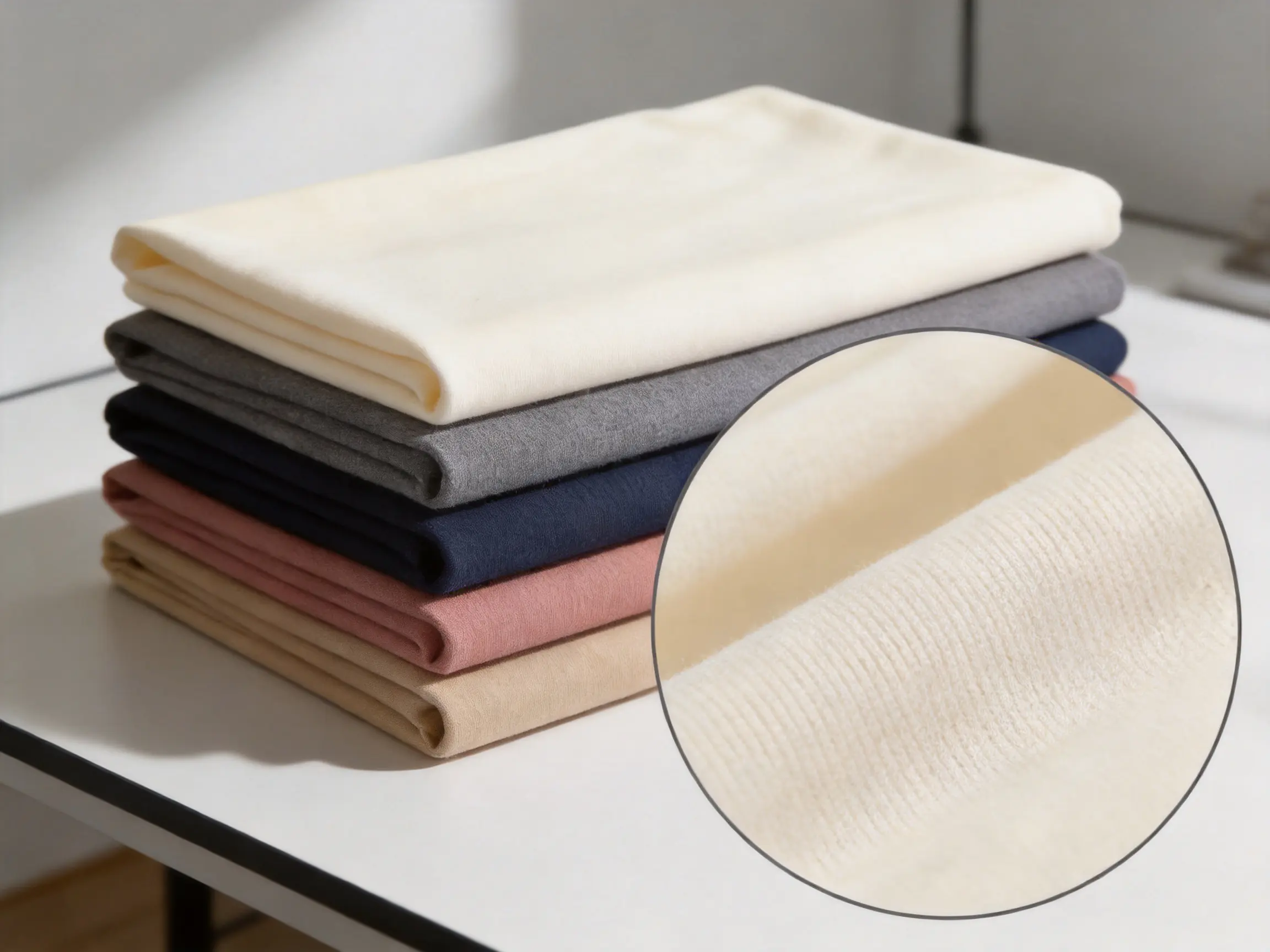
Roman fabric is a type of double-knit fabric made with interlocking knitted structures. Unlike a simple single jersey, which has a relatively light and flexible construction, Roman fabric usually has a fuller body and a more stable surface. The two-sided knitted structure helps reduce excessive curling at the edges and gives the fabric a smooth, substantial hand.
The term “cotton” indicates the presence of cotton fibers or a cotton-based component in the fabric specification. Cotton is widely valued for its familiar hand feel, moisture absorption, breathability, and suitability for next-to-skin garments. The term “NR” indicates a blended fiber system that may include nylon and rayon or another specified combination identified by the supplier. Nylon can contribute strength, abrasion resistance, and resilience, while rayon can add softness, drape, and a fluid visual effect.
The final characteristics depend on much more than fiber names. Yarn type, yarn fineness, knitting gauge, stitch density, finishing tension, dyeing conditions, compaction, and heat setting all influence the result. Two fabrics described generally as Roman fabric may perform differently if they are produced with different yarn arrangements or finishing processes. For this reason, professional buyers should evaluate a physical sample, technical data sheet, and production approval sample before bulk manufacturing.
Cotton NR Roman Fabric is especially useful when a garment must look polished without becoming uncomfortable. Its compact surface can support tailored lines, while its knitted construction allows a degree of natural give. This makes it suitable for fashion items that combine the appearance of structured fabric with the comfort of knitwear.
Key Construction Features
Compact Double-Knit Body
The most important structural feature is the compact knitted body. A double-knit construction places more material into the fabric than a lightweight single jersey, creating a fuller appearance and improved resistance to deformation. This additional body is useful for garments such as fitted dresses, pencil skirts, cardigan jackets, and structured tops.
The fabric can maintain a relatively smooth appearance when correctly knitted and finished. Its surface is generally suitable for solid colors, heather effects, printed designs, and selected fashion finishes. Because the fabric has a substantial body, it can also reduce the risk of excessive show-through compared with some lightweight jersey qualities, although opacity will vary according to color, weight, composition, and garment tension.
Natural Comfort and Soft Hand
Cotton and rayon components are commonly associated with softness and comfort. Cotton can provide a familiar dry hand, while rayon may contribute a smooth, fluid touch. When combined with nylon or another reinforcing fiber, the fabric can achieve a balance between softness and practical durability.
Comfort is particularly important for dresses, tops, lounge garments, and baby clothing. A fabric that feels pleasant against the skin is more likely to support repeated wear. However, comfort also depends on fabric weight, dyeing, finishing chemicals, garment construction, and climate. A heavier Roman fabric may be ideal for cool-weather apparel but less suitable for hot environments. Product development teams should therefore match the fabric specification to the intended season and end use.
Stretch and Movement
Knitted construction gives Roman fabric flexibility even when elastane is not included. The loops in the structure can open and move when the garment is worn. If the specification includes spandex or another elastic component, stretch and recovery may be increased further. The buyer should verify the percentage of elastane, if any, because the term NR alone does not establish the stretch level.
This combination of flexibility and body makes the material suitable for close-fitting garments. It can follow the wearer’s movement without appearing as loose or unstable as some lightweight jersey fabrics. The fabric is also convenient for garments that require moderate ease rather than extreme compression.
Smooth Appearance and Refined Drape
Roman fabric can provide a clean, elegant appearance. Its surface may look more substantial and less casual than a thin jersey, while the rayon portion of an NR blend can support a soft drape. This makes the fabric appropriate for workwear, occasion dresses, modern separates, and elevated casual clothing.
The exact drape depends on weight and construction. A dense, heavier fabric may create a controlled silhouette, whereas a lighter quality may fall more fluidly. Designers can use this range to create different visual effects, from body-skimming dresses to softly draped blouses.

Cotton NR Roman Fabric
Advantages Compared with Other Knitted Fabrics
Compared with Single Jersey
Single jersey is lightweight, flexible, and widely used for T-shirts and casual clothing. However, it can curl at the edges, show more surface distortion, and lack the body required for structured garments. Cotton NR Roman Fabric generally offers a denser handle and stronger visual presence.
The double-knit structure can improve stability during cutting and sewing. It may also reduce the risk of the garment looking overly thin or clingy. For dresses, skirts, and cardigans, this added body can create a more finished appearance. Roman fabric is not automatically superior for every purpose, since single jersey may be better for lightweight summer T-shirts or highly breathable basics, but Roman fabric has an advantage when structure and polish are priorities.
Compared with Lightweight ITY Fabric
Interlock twist yarn, often abbreviated as ITY, is known for softness, stretch, fluid drape, and a smooth surface. It is popular for dresses, blouses, skirts, cardigans, and other garments. Compared with a lightweight ITY quality, Cotton NR Roman Fabric generally offers more thickness and structure.
ITY may be selected for flowing silhouettes and travel garments, while Roman fabric may be preferred for garments that need a more controlled shape. A designer who wants a dress to hang softly and move freely may choose ITY. A designer who wants a dress to appear more tailored, hold a clean line, or resist excessive cling may consider Roman fabric.
Compared with Lace Knit
Lace knit is a more open or decorative knitted fabric. It can provide sheerness, limited sheen, stretch, and visual interest. It is often used for overlays, panels, sleeves, and decorative garments. Cotton NR Roman Fabric is generally more opaque, compact, and suitable as a primary garment fabric.
The two materials can also be combined. Roman fabric can form the main body of a dress or jacket, while lace knit can be used for sleeves, yokes, inserts, or overlays. This approach allows designers to combine stability with decoration.
Compared with Rigid Woven Fabric
Woven fabric can provide excellent dimensional control and sharp tailoring, but it may require darts, closures, pleats, or additional ease to support movement. Knitted Roman fabric can simplify the construction of garments that need moderate stretch and comfort.
Because it is knitted, Cotton NR Roman Fabric may reduce the need for complicated fastening systems in selected designs. Pull-on dresses, elastic-waist skirts, comfortable jackets, and fitted tops can often be developed with fewer rigid components. Nevertheless, knitted fabric requires appropriate pattern engineering because excessive negative ease or poorly planned seams can cause distortion.
Benefits for Garment Manufacturers
Efficient Cutting and Sewing
A stable knitted fabric is easier to handle than an extremely lightweight or highly curling jersey. Roman fabric can lie more evenly on the cutting table, helping production teams improve marker efficiency and reduce handling difficulties. The actual result depends on relaxation time, roll tension, fabric weight, and finishing quality.
For sewing, the fabric can be processed with standard equipment suitable for medium-weight knits. Needle selection, thread type, stitch density, differential feed, and presser-foot pressure should be adjusted according to the specific composition and weight. A test seam is essential before bulk production. Where stretch is required, overlock, coverstitch, or stretch lockstitch construction may be used.
Improved Garment Shape
The fabric’s substantial construction can help garments look more complete and less transparent. It can support smooth side seams, stable hems, and clean necklines. When properly finished, it may also help reduce the tendency of a garment to lose its original shape after wear.
Shape retention is affected by laundering, heat, abrasion, and repeated stretching. A fabric with good initial stability may still shrink or relax if it is not properly pretreated. Therefore, garment manufacturers should conduct shrinkage, spirality, pilling, colorfastness, and recovery tests before finalizing the production method.
Design Versatility
Cotton NR Roman Fabric supports a broad range of garment categories. It can be cut into simple, comfortable designs or used in more sophisticated fashion collections. Its smooth surface can accommodate solid shades and selected prints, while its body allows designers to develop silhouettes that would be difficult to achieve with very thin knits.
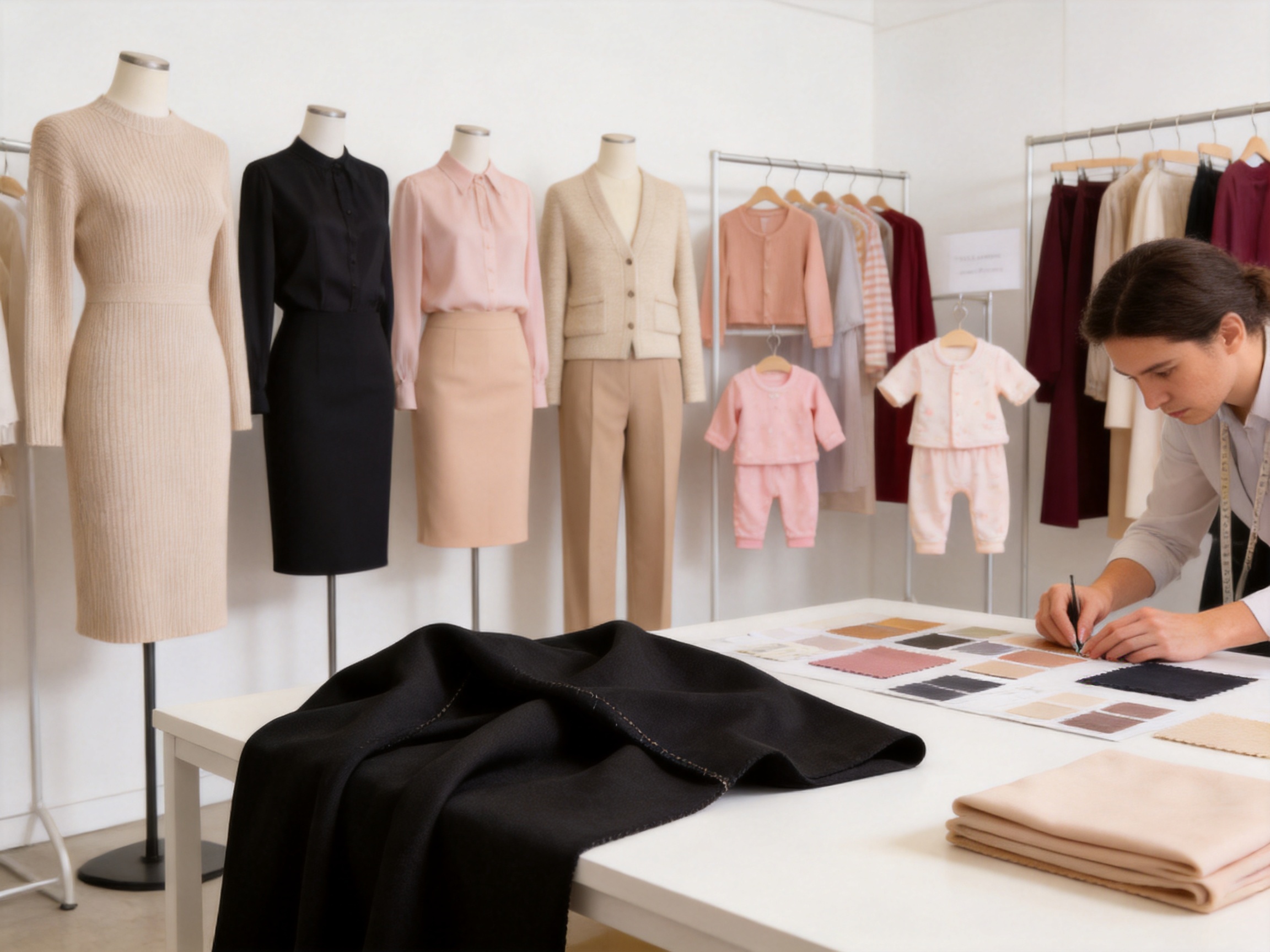
Potential applications include office dresses, casual dresses, skirts, fashion tops, cardigan jackets, pull-on trousers, children’s clothing, baby garments, lounge pieces, and layered outfits. The fabric can also be used for coordinated collections in which the same base quality appears in multiple colors and garment styles.
Balanced Appearance Across Different Markets
The fabric can appeal to both value-oriented and fashion-oriented product lines. For basic apparel, its comfort and durability can support everyday use. For more premium collections, its smooth surface, controlled drape, and substantial hand can contribute to a refined look.
Buyers serving different markets can select variations in weight, color, finish, and fiber ratio while retaining the general Roman construction. This makes the product useful for brands that need a flexible material platform rather than a single seasonal fabric.
Manufacturing Process and Quality Control
Raw Material Selection
Manufacturing begins with the selection of suitable fibers and yarns. Cotton quality can affect softness, strength, moisture behavior, and surface appearance. Rayon quality can influence drape and smoothness. Nylon can contribute strength and resilience. If polyester, spandex, or other fibers are included, their percentage and performance should be documented clearly.
Yarn selection also matters. Ring-spun, open-end, filament, blended, and textured yarns produce different surfaces and levels of strength. The correct yarn must be matched to the desired gauge, fabric weight, stretch, and end use. A professional manufacturer evaluates yarn evenness, tensile strength, hairiness, moisture content, and contamination risk before knitting.
Knitting Preparation
Before knitting, yarn packages are inspected and prepared for stable feeding. Knitting machines must be set according to the planned structure, gauge, stitch length, and yarn arrangement. Correct tension is critical. Excessive tension can make the fabric harsh, narrow, or unstable, while insufficient control may create loose loops, barre, or uneven width.
Machine cleanliness and needle condition are also important. Damaged needles can create holes, lines, dropped stitches, and other defects. Regular maintenance reduces interruptions and supports consistent production across multiple rolls.
Knitting and In-Process Inspection
During knitting, operators monitor fabric width, weight, loop formation, surface appearance, and structural consistency. Defects such as needle lines, oil marks, yarn slubs, holes, missing stitches, and uneven density should be identified as early as possible.
In-process inspection is more effective than relying only on final inspection. If a problem is found near the beginning of production, the machine setting or yarn supply can be corrected before a large quantity is affected. Detailed production records also help trace the cause of defects and improve future orders.
Dyeing and Color Development
After knitting, the greige fabric may undergo scouring, bleaching, dyeing, washing, and other wet-processing stages. The recipe must be chosen according to the fiber composition. Cotton, rayon, nylon, and synthetic fibers do not always respond to the same dye class or processing condition. A blended fabric may therefore require carefully coordinated dyeing procedures to achieve an even shade.
Color development should include laboratory dips and approval samples. Buyers typically evaluate shade, depth, surface appearance, hand feel, and color consistency under relevant lighting conditions. Bulk production should follow the approved standard rather than relying solely on a numerical color code.
Finishing and Width Control
Finishing can include washing, softening, compacting, heat setting, brushing, calendaring, or other treatments. The selected process affects softness, width, shrinkage, surface smoothness, and recovery. For a Roman fabric, finishing should preserve the compact body while delivering the desired hand and dimensional stability.
Compaction can help control lengthwise shrinkage. Heat setting may stabilize synthetic or elastic components. Softening can improve touch, but excessive softener may reduce absorbency or affect sewing behavior. Each treatment must therefore be optimized rather than applied automatically.
Final Inspection and Testing
Final inspection normally covers appearance, width, weight, shade, roll length, surface defects, and packaging. Depending on the buyer’s requirements, laboratory testing may include fiber composition, colorfastness to washing and rubbing, pilling resistance, tensile strength, bursting strength, dimensional change, spirality, stretch, and recovery.
Inspection standards should be agreed before production. A four-point fabric inspection system or another recognized method can be used to classify defects. Clear standards help prevent misunderstandings between the mill, garment factory, importer, and final customer.
Manufacturing Strengths of the Supplier
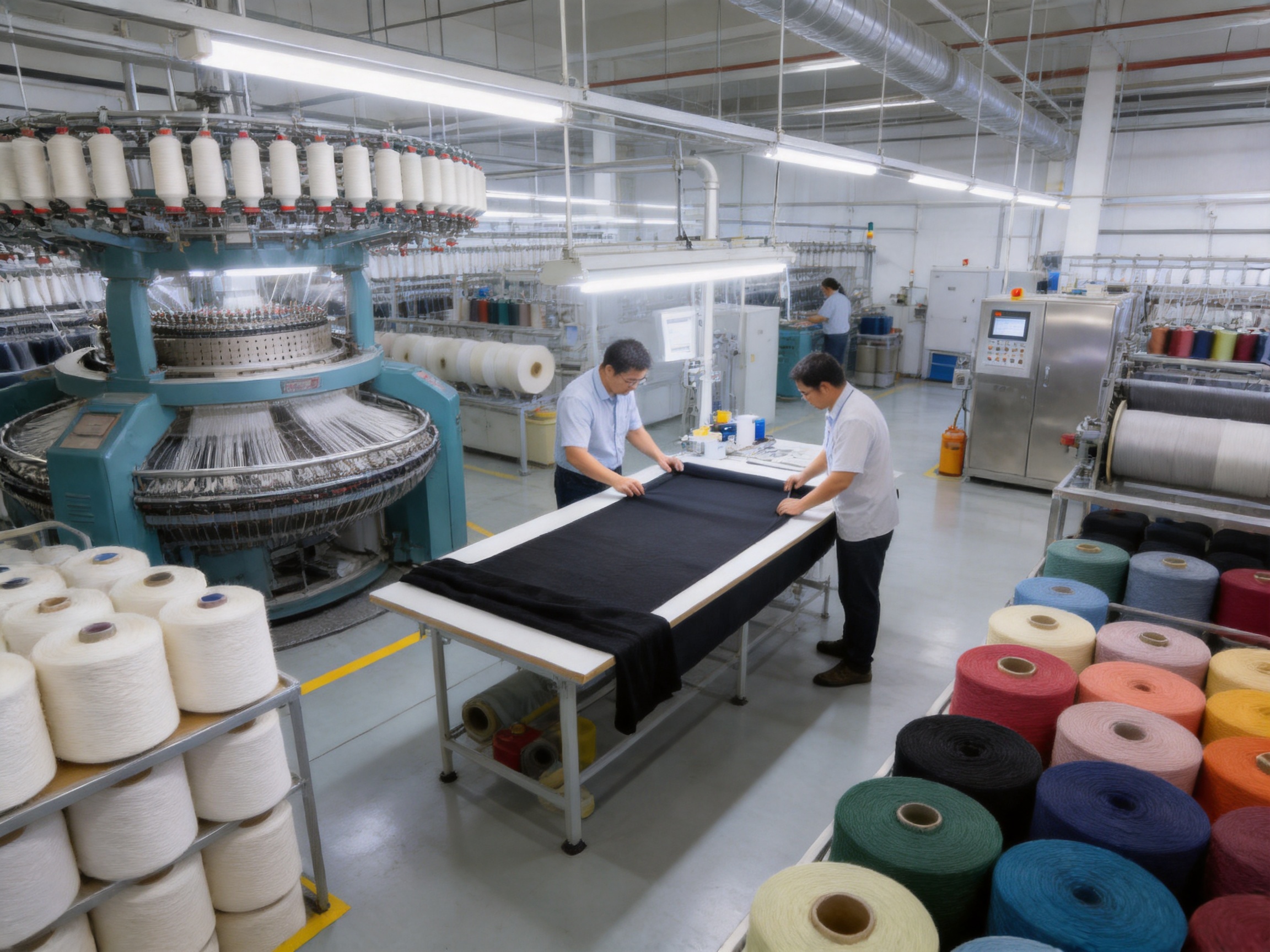
Hangzhou Jinfeng Textile Co., Ltd. operates as an integrated textile enterprise involved in research and development, production, processing, post-dyeing, finishing, and sales. The company is located in an industrial area of Xiaoshan District, Hangzhou, Zhejiang Province, and operates a facility with a reported plant area of approximately 18,000 square meters.
The company’s production scope includes blended fabrics such as polyester and spandex materials, as well as drawn textured yarn, commonly known as DTY polyester yarn. This combination of fabric and yarn experience can support better coordination between yarn selection and knitted-fabric development. It also allows the supplier to understand how different yarn characteristics influence fabric hand, stretch, appearance, and production stability.
An integrated production model can provide several advantages. First, it may improve communication between product development, knitting, dyeing, finishing, and sales teams. Second, it can make it easier to trace quality issues from finished fabric back to yarn or process conditions. Third, it may support more efficient development of customized specifications for different customers.
The company describes itself as a self-operated export enterprise serving customers in domestic and international markets. Export experience is valuable because overseas buyers often require consistent documentation, standardized packing, reliable communication, and adherence to destination-market expectations. A supplier familiar with export procedures can help coordinate samples, color approvals, production schedules, shipping preparation, and technical data.
Its stated business philosophy emphasizes cooperation and mutual benefit. In practical terms, a cooperative textile supplier should provide timely sample development, transparent specifications, realistic lead times, and responsive handling of quality questions. These service factors can be as important as the fabric itself when buyers are planning seasonal collections or repeat orders.
Development and Customization Capability
Fabric buyers may require adjustments to weight, width, color, finish, stretch, softness, or fiber ratio. A supplier with experience in blended fabrics and DTY polyester yarn may be able to develop variations for different garment categories. Customization should be discussed at the beginning of the project because changes in yarn composition or structure can affect minimum order quantity, cost, lead time, testing, and production risk.
Development should follow a documented approval process. The buyer can provide a reference sample, target weight, preferred width, color standard, end use, and performance requirements. The supplier can then prepare a development sample, record the construction details, and submit the fabric for evaluation. Once approved, the technical standard should be retained for bulk production.
Production Coordination
Because the supplier covers several stages of textile manufacturing, production coordination can be streamlined. Yarn, fabric, dyeing, and finishing decisions can be considered together instead of being treated as unrelated steps. This is particularly helpful for fabrics in which a small change in yarn or finish can alter the final hand and appearance.
Coordination does not eliminate the need for independent inspection. Buyers should still approve samples and conduct testing appropriate to the intended market. Integrated production is an advantage when it is supported by documented procedures, trained personnel, calibrated equipment, and clear quality records.
Applications in Apparel and Fashion
Dresses
Cotton NR Roman Fabric is well suited to dresses that need a smooth body and moderate stretch. Shift dresses, sheath dresses, wrap-inspired designs, long-sleeved casual dresses, and workwear styles can all benefit from a stable knitted base. The fabric can support clean panels and shaping seams while retaining comfort.
For a close-fitting dress, the pattern should account for the fabric’s stretch and recovery. Too much negative ease can lead to seam stress and surface distortion. Too little ease may prevent the garment from using the fabric’s comfort advantage. A sample garment should be tested through sitting, walking, bending, and repeated wear.
Blouses and Tops
Blouses made from Roman fabric can combine the softness of knitwear with a more polished appearance. The material may be used for long-sleeved tops, mock-neck designs, tunic tops, peplum silhouettes, and layered office garments. Depending on the weight, it can be used alone or combined with woven collars, lace panels, or decorative trims.
Skirts and Trousers
The fabric’s body makes it suitable for pencil skirts, pull-on skirts, straight-leg trousers, tapered pants, and comfortable travel garments. A stable knitted construction can help the garment retain a neat outline. Waistband engineering remains important, particularly when the garment is worn frequently or designed without a zipper.
Cardigans and Lightweight Jackets
Roman fabric can be developed into cardigan jackets, open-front coats, collarless jackets, and soft blazers. It is especially useful when a designer wants a jacket-like appearance without the stiffness of traditional suiting fabric. Interfacing, seam reinforcement, and edge finishing should be selected after testing because the fabric may respond differently from woven tailoring materials.
Children’s and Baby Clothing
The soft hand and flexibility of a cotton-based knitted fabric can be appropriate for children’s garments and selected babywear applications. However, children’s and baby products require careful consideration of fiber safety, colorfastness, accessory security, seam comfort, and applicable regulations. The supplier should provide relevant test documentation when requested, and the garment manufacturer must verify compliance with the laws of the target market.
Design and Production Recommendations
Designers should select the fabric weight according to the garment silhouette and season. Lightweight versions may work for tops and transitional dresses, while heavier qualities may be better for skirts, jackets, and cool-weather dresses. Fabric width should be considered during marker planning to reduce waste.
Allow the fabric to relax before cutting. Knitted materials can retain tension from winding, transportation, or finishing. Relaxation allows the roll to reach a more stable condition and can improve cutting accuracy. The required relaxation time should be established through testing rather than assumed to be identical for every lot.
Use a cutting layout that respects the fabric’s grain direction and surface appearance. Even when the fabric appears visually uniform, the direction of brushing, finishing, or light reflection may affect garment consistency. All panels should be cut in the same direction unless the design intentionally uses a two-way layout.
Use needles and threads appropriate for blended knits. A ballpoint or stretch needle may reduce the risk of damaging loops. Sewing tests should examine skipped stitches, seam grin, seam puckering, edge curling, and thread breakage. Differential feed can help control stretching during overlock sewing.
Finish hems and necklines carefully. A coverstitch, twin-needle finish, narrow binding, or clean facing may be suitable depending on the design. Excessive heat during pressing can flatten the surface, change the hand, or cause dimensional distortion. Pressing conditions should be tested on a fabric swatch before production.
Care, Durability, and Customer Guidance
Care instructions should be based on actual test results. A cotton NR blend may tolerate routine washing, but rayon and elastic components can require gentler treatment. Excessive heat, aggressive tumble drying, strong alkaline detergents, and prolonged direct sunlight may affect color, shrinkage, surface appearance, or recovery.
For many garments, a gentle wash with a suitable detergent and low-temperature drying or flat drying may help preserve the fabric. However, the correct label must be determined from the finished garment and verified through laundering tests. Garment manufacturers should not rely only on the general fiber composition when assigning care instructions.
Durability depends on both material quality and garment construction. Strong seams, suitable stitch density, reinforced stress points, and correct pattern ease can extend service life. Pilling resistance should be tested if the garment will experience frequent rubbing, especially at underarms, side seams, cuffs, and areas exposed to bags or seat belts.
Purchasing and Specification Checklist
Before purchasing Cotton NR Roman Fabric, buyers should request a complete specification. Important information includes fiber composition, fabric weight, usable width, construction, gauge, stretch percentage, recovery percentage, finishing method, color availability, minimum order quantity, sample lead time, bulk lead time, packing method, and available test reports.
Buyers should also clarify whether the product is piece-dyed, yarn-dyed, printed, brushed, compacted, or treated with a special finish. If the fabric is intended for a high-stretch garment, the buyer should ask for both crosswise and lengthwise stretch data. If it is intended for a structured dress or skirt, dimensional stability and bursting strength may be more important.
Shade approval should be handled with a physical standard or an agreed color reference. Digital screens cannot provide a reliable final color standard because display settings vary. Bulk rolls should be checked for shade continuity, and cutting plans should be arranged to prevent visible panel differences.
Packaging should protect the fabric from moisture, dirt, crushing, and excessive tension during transport. Rolls should be labeled with order number, color, lot number, length, width, and weight where applicable. Proper labeling supports warehouse control and makes later quality investigation easier.
| Specification Area | Why It Matters | Recommended Buyer Action |
|---|---|---|
| Fiber composition | Determines comfort, care, labeling, and legal compliance | Request the exact percentage and test method |
| Fabric weight | Influences opacity, drape, warmth, and garment structure | Approve a target weight and acceptable tolerance |
| Usable width | Affects marker efficiency and fabric consumption | Confirm finished width after processing |
| Stretch and recovery | Influences fit, movement, and shape retention | Test both directions using the intended garment pattern |
| Colorfastness | Protects appearance during washing and rubbing | Request laboratory test results for the target shade |
| Pilling performance | Indicates resistance to surface fuzz and pills | Test according to the expected end-use condition |
| Shrinkage and spirality | Affects garment dimensions and seam alignment | Conduct laundering tests before production approval |
| Finishing method | Changes hand, width, softness, and stability | Record the approved finish in the technical file |
| Roll packaging | Protects quality during storage and shipping | Specify labeling, wrapping, roll length, and inspection requirements |
Environmental and Responsible Production Considerations
Responsible textile production involves careful management of raw materials, energy, water, chemicals, waste, and worker safety. Cotton and rayon each have different environmental profiles, and the impact of a blended fabric depends on the source and processing of all components. Buyers increasingly request information about fiber origin, dyeing practices, wastewater treatment, chemical management, and social compliance.
Efficient production can reduce waste through accurate knitting settings, optimized cutting, proper shade planning, and responsible handling of off-quality material. Digital production records and preventive maintenance can also reduce repeated processing and unnecessary resource consumption.
When sustainability documentation is required, buyers should identify the specific certification or standard applicable to their market. General environmental claims should be supported by verifiable records. A supplier that can provide clear production information, test documentation, and traceability is better positioned to support responsible sourcing programs.
Why Choose This Fabric for Competitive Apparel Programs
The main competitive advantage of Cotton NR Roman Fabric is its balanced performance profile. It is not limited to one narrow product category. Instead, it can serve designers who need a fabric with comfort, moderate stretch, body, smoothness, and broad styling potential.
Its double-knit construction gives it an advantage over many thin jerseys when a garment needs a fuller hand and cleaner silhouette. Its knitted flexibility gives it an advantage over rigid woven materials when ease of movement and simplified construction are important. Its cotton and rayon-related softness can make it more appealing for everyday wear than some fabrics selected solely for strength or low cost.
The fabric also supports product differentiation. By changing color, weight, finishing, surface treatment, or garment design, brands can use the same general fabric category in workwear, casualwear, occasionwear, children’s clothing, and seasonal collections. This flexibility may simplify sourcing and help manufacturers build coordinated product ranges.
When supplied by an integrated textile producer with experience in blended fabrics, DTY polyester yarn, dyeing, finishing, and export sales, the product can be supported by a broader manufacturing service rather than a one-time fabric transaction. The strongest results come from a cooperative development process in which the buyer and supplier agree on composition, construction, testing, shade, packaging, and quality tolerances before bulk production.
Frequently Asked Questions
What does NR mean in NR knitted fabric?
NR commonly refers to a nylon-rayon fiber combination in textile descriptions. However, abbreviations can vary between suppliers and markets. For Cotton NR Roman Fabric, the exact composition should be confirmed through the supplier’s technical specification or a recognized fiber-composition test.
Is Cotton NR Roman Fabric woven or knitted?
It is a knitted fabric. Roman fabric generally uses a compact double-knit structure, giving it more body and stability than many single-jersey fabrics.
Does the fabric contain spandex?
Not necessarily. Some Roman fabrics include spandex to increase stretch and recovery, while others rely mainly on the knitted structure and fiber blend. Buyers should confirm the spandex percentage rather than assuming it is included.
Is it suitable for dresses?
Yes. It can be used for fitted, straight, casual, office, and layered dresses. The correct weight and stretch level should be selected according to the design and season.
Can it be used for skirts and trousers?
Yes. Its body and flexibility can suit pencil skirts, pull-on skirts, tapered trousers, and comfortable travel garments. Waistband design and seam testing are important for reliable wear performance.
How is it different from ITY fabric?
ITY fabric is often lighter, softer, stretchier, and more fluid. Cotton NR Roman Fabric is generally more substantial and structured. ITY may be better for flowing garments, while Roman fabric may be better for controlled silhouettes.
How is it different from lace knit?
Lace knit is usually more open, decorative, and potentially sheer. Cotton NR Roman Fabric is typically denser and more suitable as the main fabric of a garment. The two can be combined for contrast panels or overlays.
Is the fabric easy to sew?
It can be easier to sew than very lightweight, highly curling knits because its compact body provides better handling stability. Sewing settings must still be adjusted for the fabric’s stretch, thickness, and fiber composition.
What tests should be completed before bulk production?
Recommended tests include fiber composition, weight, width, shrinkage, spirality, colorfastness, pilling, stretch, recovery, bursting strength, seam performance, and laundering behavior. The exact test list depends on the garment and destination market.
Can the supplier develop customized colors?
Customized colors may be available subject to the yarn, dyeing method, minimum order quantity, and production schedule. Buyers should submit a physical color standard or an agreed reference and approve a laboratory dip before bulk dyeing.
Can the fabric be used for baby clothing?
It may be suitable for baby clothing when the composition, finish, colorfastness, seam comfort, and applicable safety requirements have been verified. Babywear should be tested and labeled according to the regulations of the target market.
What information should be included in a purchase order?
The order should include composition, color, weight, width, construction, finish, quantity, tolerance, packing method, inspection standard, testing requirements, delivery schedule, and any certification or compliance documents required by the buyer.
Why is finishing important for Roman fabric?
Finishing influences softness, width, shrinkage, surface smoothness, recovery, and overall hand. Correct finishing helps the fabric achieve the desired balance between comfort and stability.
What makes an integrated textile supplier valuable?
An integrated supplier can coordinate yarn selection, knitting, dyeing, finishing, quality control, and export preparation. This may improve communication, traceability, customization, and consistency, provided that the supplier maintains clear technical and quality procedures.
Conclusion
Cotton NR Roman Fabric is a practical and adaptable material for apparel manufacturers who want more structure than lightweight jersey without giving up the comfort and flexibility associated with knitwear. Its compact body, smooth surface, moderate stretch potential, soft hand, and broad application range make it suitable for dresses, blouses, skirts, cardigans, trousers, children’s clothing, and coordinated fashion collections.
The fabric’s advantages become more meaningful when supported by disciplined manufacturing. Yarn selection, knitting control, dyeing accuracy, finishing, inspection, testing, and packaging all contribute to the final product. Hangzhou Jinfeng Textile Co., Ltd. offers experience in blended-fabric production, DTY polyester yarn, post-dyeing, finishing, research and development, sales, and export service. These capabilities can support buyers seeking both a reliable Roman fabric and a responsive textile manufacturing partner.
For the best result, buyers should confirm the precise fiber composition and technical data, evaluate samples, perform garment trials, approve colors, and establish clear quality tolerances before bulk production. With proper specification and process control, Cotton NR Roman Fabric can provide a strong foundation for comfortable, durable, and commercially attractive apparel.
References
1. Textile Institute, Textile Terms and Definitions, reference material on knitted structures, fiber terminology, and fabric performance.
2. American Society for Testing and Materials, Standard Test Methods for Textiles, reference material on colorfastness, dimensional change, strength, pilling, and fabric evaluation.
3. International Organization for Standardization, Textiles — Tests for Colour Fastness, reference material for evaluating color durability under washing, rubbing, light, and other conditions.
4. International Organization for Standardization, Textiles — Determination of Mass per Unit Area, reference material for fabric-weight measurement.
5. International Organization for Standardization, Textiles — Determination of Dimensional Change in Washing and Drying, reference material for shrinkage and dimensional-stability evaluation.
6. Hangzhou Jinfeng Textile Co., Ltd., product and company information supplied for Cotton NR Roman Fabric, blended fabrics, DTY polyester yarn, production, finishing, and export services.