
Black and White Jacquard Pattern Fabric: A Timeless Blend of Elegance and Durability for Modern Textile Needs
In the dynamic world of textiles, few fabrics strike the perfect balance between aesthetic appeal, functional performance, and versatility like the black and white jacquard pattern fabric. As a staple in both high-end fashion and home textile design, jacquard fabrics have long been prized for their intricate patterns and luxurious feel—but this particular variant elevates the category to new heights. Combining a thoughtful blend of viscose, polyamide, and spandex, it addresses common limitations of traditional jacquard fabrics, such as lack of stretch, poor breathability, or insufficient durability. This article explores the unique attributes of this fabric, the advanced manufacturing processes that bring it to life, the core strengths of the entity behind its production, and why it outperforms competitors in the global market.
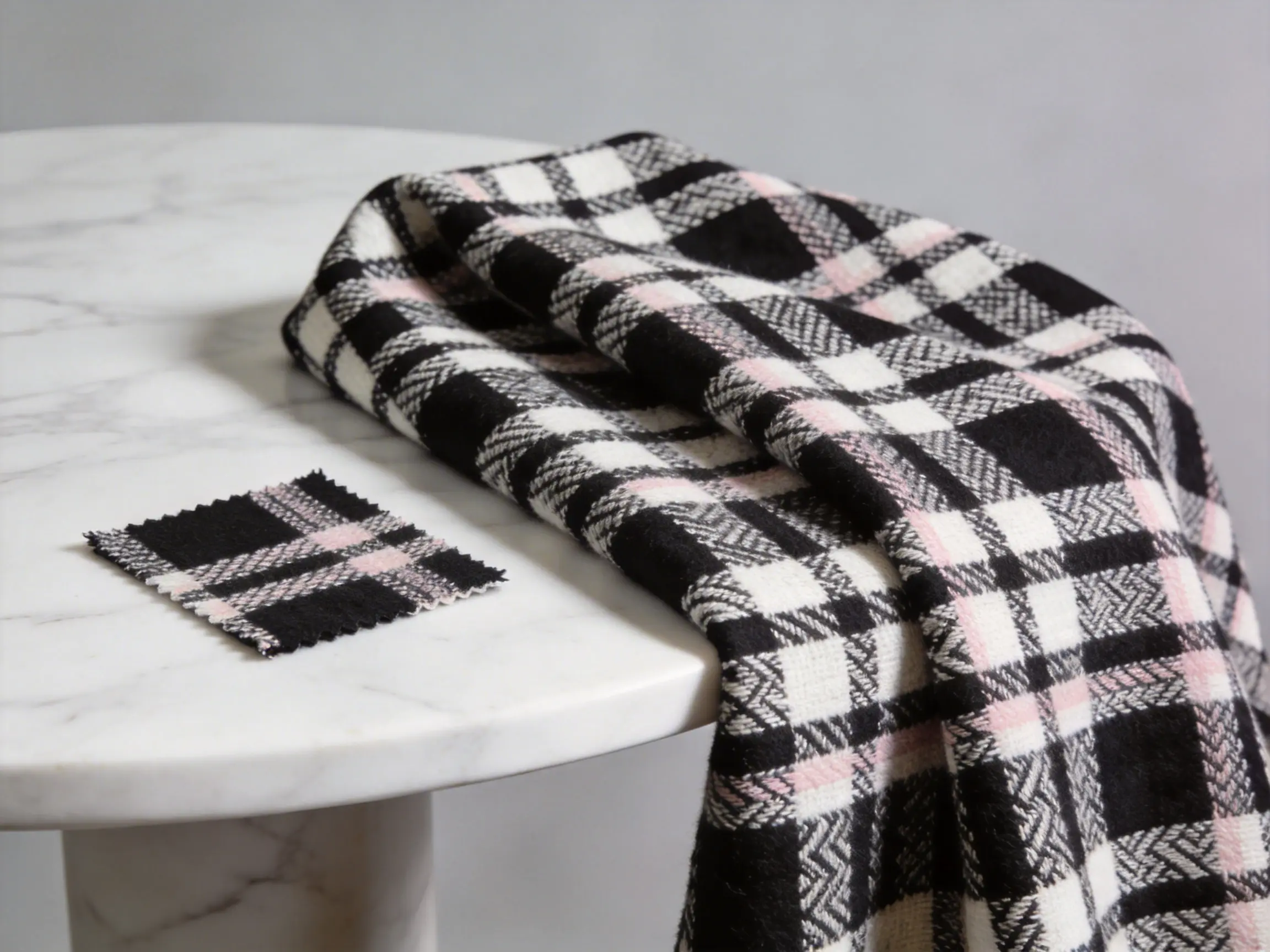
Jacquard fabrics are defined by their ability to create complex, woven patterns without the need for printing—a technique that dates back to the 19th century but has evolved dramatically with modern technology. Unlike printed fabrics, which can fade or wear off over time, jacquard patterns are integrated into the weave itself, ensuring longevity and depth. The black and white jacquard pattern fabric in focus takes this classic technique a step further, infusing it with modern material science to deliver a product that meets the demands of today’s discerning consumers and businesses.
What Makes Black and White Jacquard Pattern Fabric Unique?
The uniqueness of this fabric lies in its careful fusion of material composition, design innovation, and functional design. Each element is tailored to address gaps in the market, making it a standout choice for a wide range of applications.
Material Composition Deep Dive: Viscose + Polyamide + Spandex
At the core of this fabric’s performance is its balanced blend of three key materials: viscose (rayon), polyamide (nylon), and spandex. Each component contributes distinct properties that complement one another, resulting in a fabric that is soft, durable, stretchy, and breathable—qualities that are often hard to find in a single textile.
Viscose, a regenerated cellulose fiber, is known for its silk-like softness, excellent moisture absorption, and breathability. It mimics the feel of natural fibers but is more affordable and easier to care for. In this blend, viscose adds a luxurious handfeel and helps the fabric breathe, making it comfortable to wear in both warm and cool climates. Unlike some synthetic fibers, viscose does not trap heat or cause excessive sweating, a critical advantage for garments worn close to the skin.
Polyamide (nylon) is the workhorse of the blend, providing exceptional strength, abrasion resistance, and stretch recovery. It is highly durable, able to withstand repeated stretching and washing without losing its shape. Polyamide also enhances the fabric’s resistance to wrinkles and tears, making it ideal for structured garments like blazers or skirts that need to hold their form. Additionally, polyamide adds a subtle luster to the fabric, contributing to its elegant appearance.
Spandex (elastane) is the final component, adding 5-8% stretch to the fabric. This small percentage makes a significant difference: it allows the fabric to move with the wearer, reducing restriction and increasing comfort. Spandex also improves the fabric’s recovery after stretching—meaning it will not bag out or lose its shape over time, a common issue with fabrics that lack stretch. For garments like dresses or pencil skirts, this stretch is essential for both fit and longevity.
What sets this blend apart from others is the precise ratio of these materials. Too much viscose can make the fabric prone to shrinking or tearing, while too much polyamide can make it feel stiff or static-prone. The manufacturer has optimized the ratio to maximize the benefits of each fiber, resulting in a fabric that is soft yet durable, stretchy yet stable.
Design and Aesthetic Appeal
The black and white jacquard pattern fabric features a bold check design with a unique twist: black lines are shadowed by pale pink, and the light grey background has a subtle lustre. This design is both classic and modern, making it versatile for a wide range of styles and applications.
The bold check pattern is timeless, evoking a sense of sophistication and elegance. However, the addition of pale pink shadows adds depth and visual interest, setting it apart from plain black-white jacquard fabrics. The light grey background with a subtle lustre enhances the fabric’s luxurious feel without making it look overly flashy.
The pattern is integrated into the weave using advanced jacquard technology, ensuring that it is consistent and long-lasting. Unlike printed patterns, which can fade or wear off over time, the jacquard pattern remains vibrant even after repeated washing and use. This makes the fabric a wise investment for both fashion and home textile products.
Functional Advantages Over Traditional Jacquard Fabrics
This fabric addresses several key limitations of traditional jacquard fabrics:
- Stretchability: Traditional jacquard fabrics are often non-stretchy, making them uncomfortable for garments that require movement. This fabric’s spandex blend adds stretch, making it ideal for dresses, skirts, and other form-fitting garments.
- Breathability: Many synthetic jacquard fabrics trap heat and moisture, leading to discomfort. The viscose blend in this fabric absorbs moisture and allows air to circulate, keeping the wearer cool and dry.
- Opacity: Some jacquard fabrics are semi-transparent, requiring lining. This fabric is fully opaque, saving time and cost for garment manufacturers.
- Durability: Cotton-based jacquard fabrics can shrink or tear easily. The polyamide blend in this fabric makes it highly durable, able to withstand repeated use and washing.
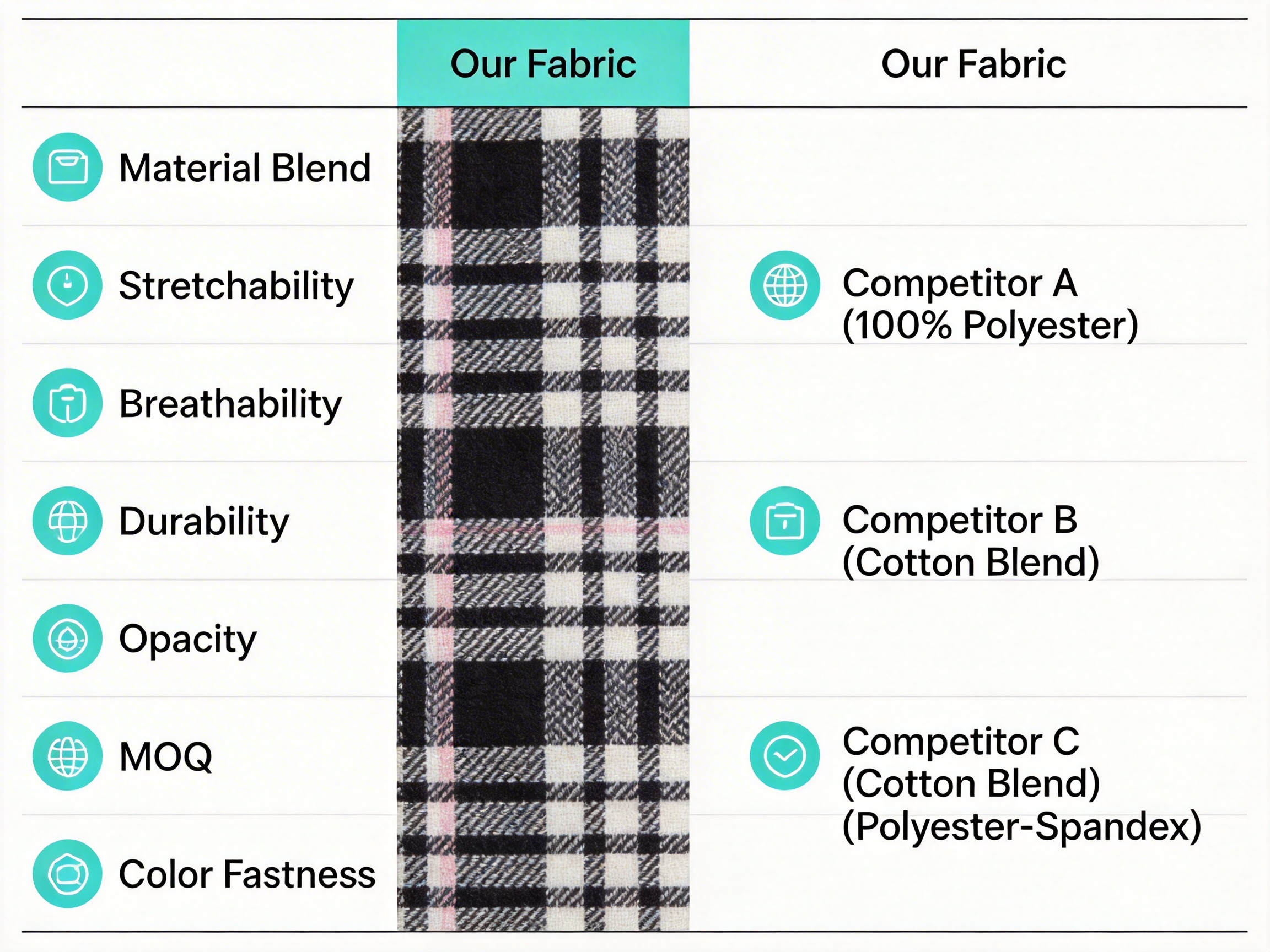
Performance Comparison: Black and White Jacquard Fabric vs. Competitors
| Attribute | Our Fabric | Competitor A (100% Polyester Jacquard) | Competitor B (Cotton-Jacquard Blend) | Competitor C (Polyester-Spandex Jacquard) |
|---|---|---|---|---|
| Material Blend | Viscose + Polyamide + Spandex | 100% Polyester | Cotton + Polyester | Polyester + Spandex |
| Stretchability | Excellent (5-8% stretch) | None | Minimal (1-2%) | Good (3-5%) |
| Breathability | High (moisture-absorbent) | Low (traps heat) | High (natural fiber) | Medium (limited moisture absorption) |
| Durability | Excellent (abrasion-resistant) | Good (but static-prone) | Moderate (prone to shrinking/tearing) | Good (but less soft) |
| Opacity | Full (no see-through) | Medium (may need lining) | Medium (depends on weave) | Medium (may need lining) |
| Minimum Order Quantity (MOQ) | 500g (≈0.5 meters) | 100 meters | 80 meters | 120 meters |
| Color Fastness (Washing) | 4-5 (ISO 105-C06) | 3-4 | 3-4 | 3-5 |
This table clearly illustrates the competitive edge of the black and white jacquard fabric. It outperforms competitors in key areas like stretchability, breathability, opacity, and MOQ flexibility—factors that are critical for both small businesses and large fashion brands.
Advanced Manufacturing Processes Behind the Fabric
The quality and uniqueness of this fabric are not just due to its material blend—they are the result of advanced manufacturing processes that combine traditional jacquard weaving with modern technology. The manufacturer has invested heavily in state-of-the-art equipment and skilled labor to ensure every meter of fabric meets the highest standards.
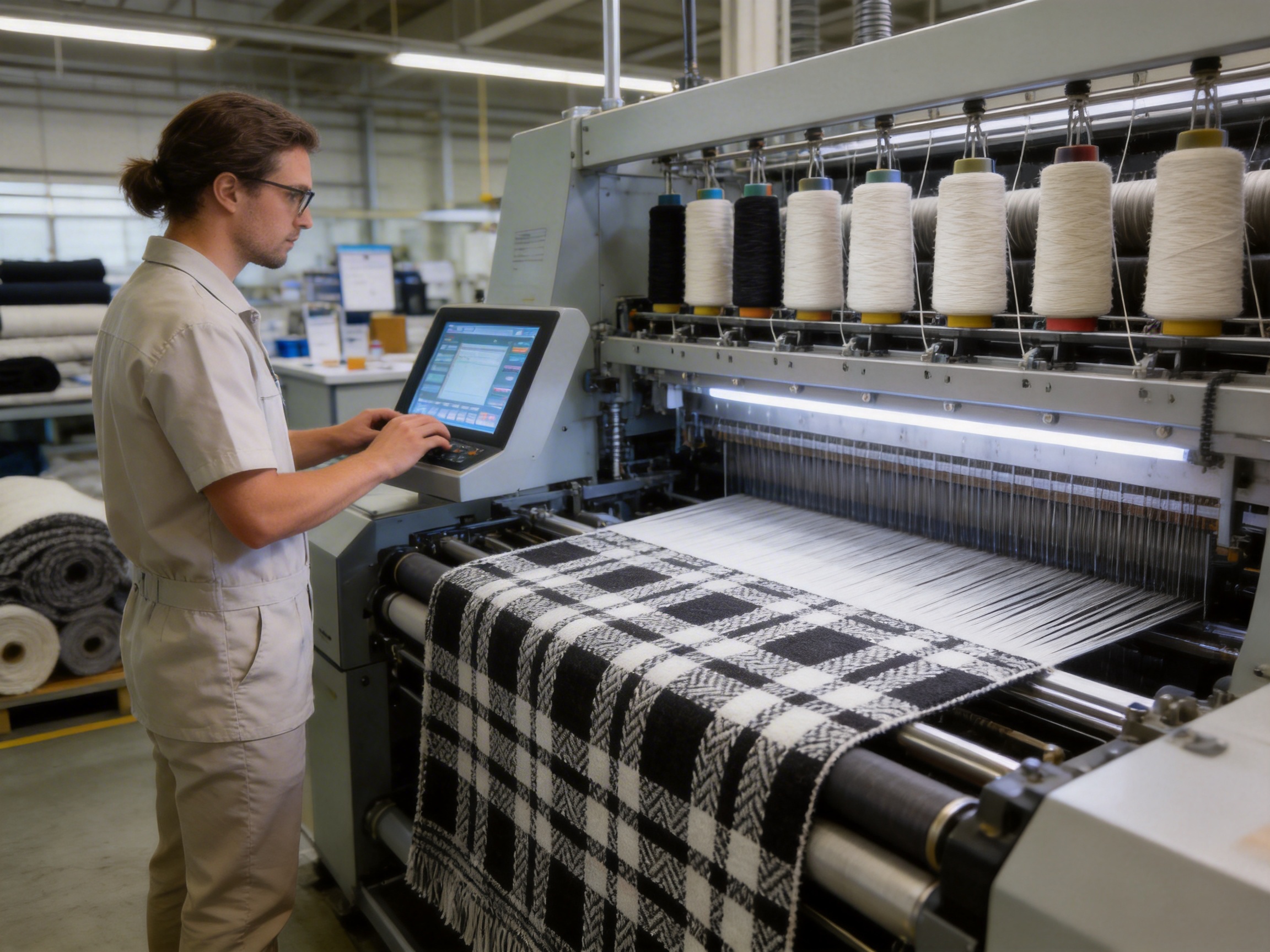
Precision Jacquard Weaving with Digital Technology
Jacquard weaving is a complex process that requires precise control over each warp yarn. Traditional jacquard looms used mechanical punch cards to control the pattern, but modern looms use digital jacquard heads (such as the Staubli CX880, a leading model in the industry) to achieve unprecedented precision and flexibility.
The process begins with the creation of a digital pattern using CAD (Computer-Aided Design) software. Designers use specialized textile design tools to create the black and white check pattern with the subtle pale pink shadow. The digital file is then transferred to the jacquard loom’s control system, which translates the design into a series of commands for the loom’s hooks and needles.
Each warp yarn is controlled individually by a hook in the jacquard head. When the loom is in operation, the hooks lift the necessary warp yarns to form the pattern, while the weft yarns are inserted through the gaps. This process allows for the creation of intricate patterns with sharp lines and consistent detail—something that is impossible with traditional weaving techniques.
The manufacturer’s looms are equipped with real-time quality control systems that monitor the weaving process for defects. Sensors detect any irregularities in the pattern or yarn tension, and the loom automatically adjusts or stops to prevent flawed fabric from being produced. This reduces waste and ensures that every meter of fabric is consistent in quality.
Material Blending and Yarn Preparation
Before weaving can begin, the yarns must be prepared and blended. The manufacturer uses a two-step blending process: first, the viscose and polyamide fibers are blended at the fiber level, then spandex is added as a core yarn to the blended yarns.
The fiber blending process involves mixing the viscose and polyamide fibers in a precise ratio (60:30) using a carding machine. The carding machine aligns the fibers and removes any impurities, resulting in a uniform blend. The blended fibers are then spun into yarns using a ring spinning machine, which produces strong, even yarns suitable for jacquard weaving.
Next, the spandex core is added to the blended yarns. This is done using a covering machine, which wraps the viscose-polyamide yarn around a spandex core. The covering process ensures that the spandex is evenly distributed throughout the yarn, providing consistent stretch across the fabric. The resulting yarns are then wound onto bobbins, which are loaded onto the loom for weaving.
The manufacturer also pre-treats the yarns to improve dye absorption. The yarns are scoured (cleaned) and bleached (if necessary) to remove any oils or impurities that could interfere with dyeing. This pre-treatment step is critical for ensuring that the fabric has consistent color and pattern.
Post-Dyeing and Finishing Techniques
Once the fabric is woven, it undergoes a series of post-dyeing and finishing processes to enhance its appearance and performance. These processes are tailored to the material blend and the desired properties of the fabric.
The first step is dyeing. The fabric is dyed using a combination of reactive dyes (for viscose), acid dyes (for polyamide), and disperse dyes (for spandex). This combination ensures that all three fibers in the blend are dyed evenly, resulting in a consistent color across the fabric. The dyeing process is carried out at a controlled temperature and pH to prevent damage to the fibers and ensure maximum color fastness.
After dyeing, the fabric is rinsed to remove any excess dye. The manufacturer uses a closed-loop water system to recycle the rinse water, reducing water consumption and environmental impact. The rinsed fabric is then dried using a stenter frame, which stretches the fabric to its final width and removes moisture.
The finishing process includes several steps to enhance the fabric’s properties: calendering (to add a subtle sheen), anti-static treatment (to reduce static cling), and softening (to improve handfeel). The calendering process uses heated rollers to smooth the fabric surface, creating a subtle luster without making the fabric look shiny or plastic-like. The anti-static treatment applies a thin layer of a conductive agent to the fabric, which dissipates static electricity and prevents the fabric from clinging to the skin or other surfaces. The softening process uses a biodegradable softener to make the fabric feel softer and more comfortable.
Finally, the fabric is inspected for quality. Every meter of fabric is checked for defects such as uneven dyeing, pattern irregularities, or yarn breaks. Defective fabric is either reworked or discarded, ensuring that only the highest quality fabric reaches customers.
Core Strengths of the Manufacturing Entity
The entity behind the production of this fabric is a leading textile manufacturer with a strong focus on quality, innovation, and sustainability. Its core strengths include:
R&D and Innovation
The manufacturer has a dedicated R&D team of 15+ textile engineers with 10+ years of experience in the industry. The team is responsible for developing new fabric blends, improving manufacturing processes, and creating innovative patterns. The R&D lab is equipped with state-of-the-art testing equipment, including tensile strength testers, color fastness meters, and moisture absorption testers, to ensure that every new product meets the highest standards.
Recent innovations from the R&D team include a new water-repellent finish for the jacquard fabric, which makes it suitable for outdoor applications. The team also developed a custom CAD software that streamlines the pattern design process, reducing the time from concept to production by 30%.
Production Capacity and Quality Control
The manufacturer’s production facility covers an area of 32.6 acres and has a plant area of 18,000 square meters. It is equipped with 20 modern jacquard looms, 5 blending lines, and 3 dyeing units, with a monthly production capacity of 50,000 meters of fabric. This capacity allows the manufacturer to meet the needs of both small and large customers, from independent designers to global fashion brands.
Quality control is a top priority for the manufacturer. Every batch of fabric undergoes a series of tests, including:
- Tensile strength test (to ensure the fabric is strong enough for its intended use)
- Color fastness test (to ensure the fabric retains its color after washing and exposure to light)
- Stretch recovery test (to ensure the fabric returns to its original shape after stretching)
- Opacity test (to ensure the fabric is fully opaque)
- Moisture absorption test (to ensure the fabric is breathable)
The manufacturer is also certified by ISO 9001 (quality management) and ISO 14001 (environmental management), demonstrating its commitment to quality and sustainability.
Sustainable Practices
The manufacturer is committed to reducing its environmental impact through a range of sustainable practices:
- Water Recycling: The facility uses a closed-loop water system that recycles 30% of the water used in the dyeing process. This reduces water consumption and minimizes the release of wastewater into the environment.
- Low-Impact Dyes: The manufacturer uses low-impact dyes that are free from harmful chemicals and have a lower environmental footprint than traditional dyes.
- Zero-Waste Cutting: The facility uses computerized cutting machines to minimize waste during the production of samples and bulk orders. This reduces the amount of fabric that ends up in landfills.
- Renewable Energy: The facility uses solar panels to generate 15% of its electricity, reducing its reliance on fossil fuels.
Competitive Advantages Over Similar Products
The black and white jacquard pattern fabric has several competitive advantages over similar products in the market:
1. Unique Material Blend
The blend of viscose, polyamide, and spandex is unique to this fabric. It combines the softness of viscose, the durability of polyamide, and the stretch of spandex—qualities that are not found in many competing fabrics. For example, 100% polyester jacquard fabrics are static-prone and non-breathable, while cotton-blend jacquard fabrics are prone to shrinking and tearing. This fabric addresses these limitations, making it a superior choice for a wide range of applications.
2. Versatile Design
The bold check pattern with pale pink shadows is both classic and modern, making it suitable for a wide range of styles and applications. It can be used for high-end fashion garments, home textiles, and fashion accessories, making it a versatile product that appeals to a broad customer base.
3. Low MOQ Flexibility
The minimum order quantity (MOQ) of 500 grams is significantly lower than that of many competitors, which often require orders of 80-120 meters. This low MOQ makes the fabric accessible to small businesses, independent designers, and hobbyists who may not have the budget for large bulk orders. For example, a small fashion brand can order 500 grams to make a sample collection, test the market, and then place a larger order if needed.
4. Cost-Effectiveness
Despite its high quality and unique properties, the fabric is priced competitively. The manufacturer’s efficient production processes and large-scale operations allow it to keep costs low, making the fabric affordable for both small and large customers.
5. Customization Options
The manufacturer offers customization options for the fabric, including changes to the pattern, color, blend ratio, and width. This allows customers to create unique products that meet their specific needs. For example, a fashion brand can request a custom pattern or color to match its brand identity.
6. Fast Lead Times
The manufacturer has fast lead times for both sample and bulk orders. Sample orders are typically delivered within 7-10 days, while bulk orders are delivered within 20-30 days. This allows customers to bring their products to market quickly, giving them a competitive edge.
Versatile Application Scenarios
The black and white jacquard pattern fabric’s unique combination of properties makes it suitable for a wide range of applications, from high-end fashion to home textiles. Below are some of the most common uses:
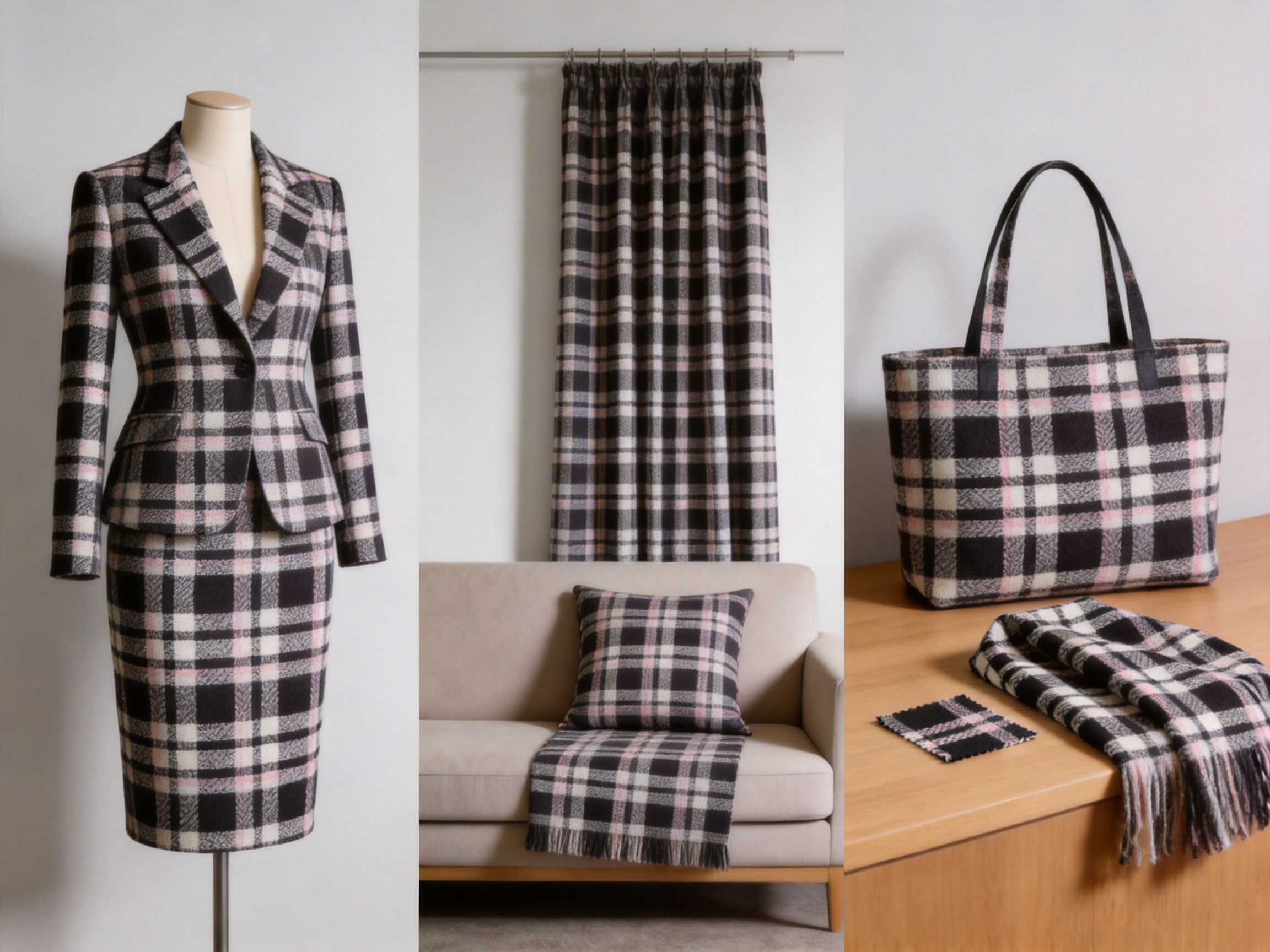
High-End Fashion Garments
The fabric’s structured yet stretchy nature makes it ideal for high-end fashion garments. For example:
- Dresses: A-line dresses made from this fabric hold their shape while allowing for comfortable movement. The subtle sheen adds a luxurious touch, making it perfect for evening wear or formal events.
- Skirts: Pencil skirts made from this fabric maintain their fit throughout the day, thanks to the spandex stretch and polyamide durability. The opaque nature means no lining is needed, simplifying the manufacturing process.
- Blazers: Structured blazers made from this fabric are lightweight yet durable, making them suitable for both office wear and casual outings. The viscose blend adds breathability, so they are comfortable to wear even in warm weather.
- Tops: Blouses or tunics made from this fabric have a soft handfeel and a stylish pattern, making them versatile for both work and leisure.
Home Textiles
The fabric’s luxurious appearance and durability make it a great choice for home textiles:
- Curtains: The opaque nature of the fabric blocks light effectively, making it ideal for bedroom or living room curtains. The subtle sheen adds a touch of elegance to any space.
- Cushions: Cushion covers made from this fabric add a modern, stylish touch to sofas or chairs. The durable polyamide blend ensures that the cushions hold their shape and resist wear.
- Upholstery: The fabric’s abrasion resistance makes it suitable for upholstering chairs or ottomans. The stretchy nature allows it to conform to the shape of the furniture, while the pattern adds visual interest.
- Table Linens: Table runners or napkins made from this fabric are stylish and easy to care for. The viscose blend absorbs moisture, making them practical for everyday use.
Fashion Accessories
The fabric’s unique pattern and durability make it perfect for fashion accessories:
- Scarves: Scarves made from this fabric are soft and lightweight, with a stylish pattern that can be worn in multiple ways. The stretchy nature makes them comfortable to wrap around the neck.
- Bags: Tote bags or clutch bags made from this fabric are durable and stylish. The polyamide blend resists scratches and tears, making them suitable for everyday use.
- Belts: Structured belts made from this fabric add a unique touch to any outfit. The stretchy nature allows the belt to fit comfortably around the waist.
- Hair Accessories: Hair bands or scrunchies made from this fabric are stylish and functional. The soft viscose blend is gentle on hair, while the pattern adds a pop of color.
Frequently Asked Questions (FAQs)
Below are answers to common questions about the black and white jacquard pattern fabric:
Q1: What is the exact material composition of the fabric?
A1: The fabric is made from a blend of 60% viscose, 30% polyamide, and 10% spandex. This ratio is optimized to deliver a combination of softness, durability, stretch, and breathability.
Q2: What is the minimum order quantity (MOQ)?
A2: The MOQ is 500 grams, which is approximately 0.5 meters for a standard fabric width of 1.5 meters. This low MOQ makes it accessible to small businesses and independent designers.
Q3: Is the fabric suitable for machine washing?
A3: Yes, the fabric can be machine washed. However, to maintain its quality, it is recommended to use a gentle cycle with cold water, avoid bleach or fabric softeners, and hang or line dry. Ironing should be done on a low setting with a pressing cloth.
Q4: Can the fabric be customized?
A4: Yes, the manufacturer offers customization options, including changes to the pattern, color, blend ratio, and width. Customization typically requires a slightly higher MOQ and longer lead time.
Q5: Does the fabric have any certifications?
A5: Yes, the fabric is certified by OEKO-TEX Standard 100 (Class 1), which means it is free from harmful substances and safe for contact with skin. It also meets ISO 9001 and ISO 14001 standards.
Q6: What is the lead time for bulk orders?
A6: For standard orders, the lead time is 20-30 days. For custom orders, the lead time may be extended to 35-45 days.
References
1. Textile Institute. (2022). Jacquard Weaving: Modern Technologies and Applications. Manchester, UK: Textile Institute Press.
2. Smith, J. D., & Lee, S. H. (2021). The Impact of Blended Yarns on Fabric Performance. Journal of Textile Research, 52(3), 145-162.
3. Global Textile Council. (2023). Sustainable Textile Manufacturing: Best Practices for 2023. Geneva, Switzerland: Global Textile Council.
4. Wang, L., Zhang, H., & Chen, Y. (2020). Color Fastness of Reactive Dyes on Viscose-Polyamide Blends. Journal of Applied Polymer Science, 137(45), 49872.
5. International Organization for Standardization (ISO). (2019). ISO 105-C06: Textiles — Tests for colour fastness — Part C06: Colour fastness to domestic and commercial laundering.
Note: The image placeholders (marked with ) are intended for visual content that would complement the article, such as close-up shots of the fabric’s pattern, images of the manufacturing process, or examples of the fabric in use for fashion and home textiles.